At 5AM Capital we believe that strong access to financial data and guidance can open new pathways in life. Joining Pledge 1 Percent marks an important milestone in our Investing in Impact journey. We commit 1 percent of employee time, product, profit or equity to causes that advance financial literacy, social equity and future leadership.
Our conviction is simple: when individuals, families and charities are equipped with data, insight and support, they can navigate their paths with greater confidence and purpose. That belief shapes the partnerships we choose to support.
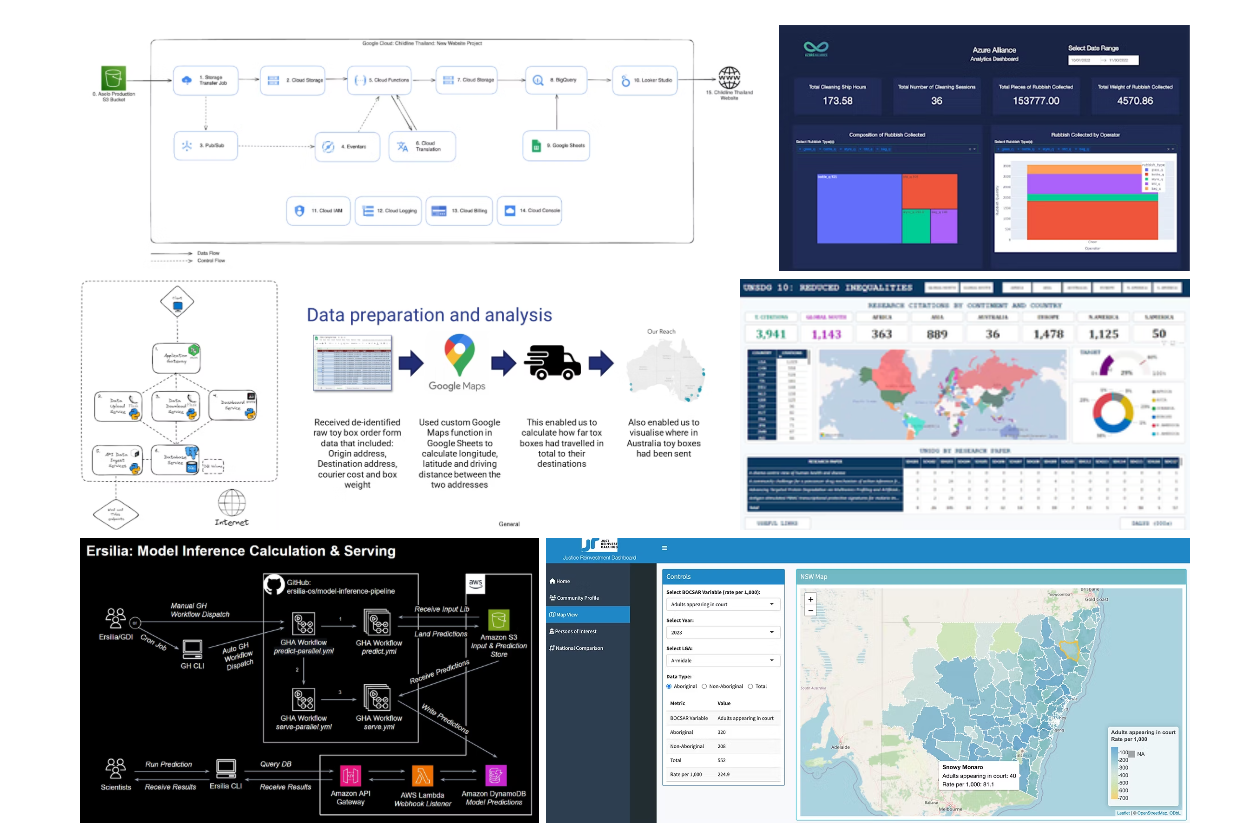
We are proud to work with the Good Data Institute. The organisation was co founded by our partner Tom Perfrement, who also sits on its board. Tom plays an active role in shaping GDI’s mission to bridge not for profits with real data capability. GDI empowers charities that often lack the tools, skills and frameworks needed to understand their data and make evidence based decisions. By connecting skilled data professionals with mission driven organisations, GDI helps them lift their impact and serve their communities more effectively.
We also support the Financial Basics Foundation, which provides free financial literacy resources for educators, young people and parents. We believe that improving the financial capability of young Australians is a meaningful investment in long term social stability.
At 5AM Capital we manage a global portfolio of high quality, durable businesses with a focus on strong cashflows, long term stewardship and healthy corporate ecosystems. We think in decades rather than quarters and we invest where incentives are aligned and everyone can win. That philosophy sits at the heart of our approach to responsible investing and it also shapes the way we show up in our community.

Through Wesley Mission we help deliver targeted programs that support individuals facing housing instability, financial abuse or addiction. These programs give people the tools to rebuild stability and take control of their path forward.
Alongside this we mentor UNSW students, support local schools such as Woollahra Public and contribute to community events that align with positive social outcomes.
For us the Pledge 1 Percent commitment is more than a contribution. It is an extension of our worldview. The world works better when people and organisations operate within healthy ecosystems where incentives align and everyone benefits. At 5AM Capital we aim to invest that way, operate that way and give back that way.
Most of us have donated at some point. Sometimes because someone stopped us in the street or knocked on the door with a story that made us feel guilty. Sometimes because something tragic happened and we reacted.
Tap4Change was born from my own experience as a donor and volunteer, and triggered by the bushfires in 2020.
Places like Mogo in NSW were abandoned to their fate. The system was overwhelmed. Support was slow, confusing and full of friction. While helping the community was inspiring, it also left me frustrated. Everything felt harder than it needed to be.
I could help because I had time, money and a car. Not everyone does. That realisation planted the seed:
Helping shouldn’t be that hard.
Revamping The Donor Experience
Today, giving doesn’t feel good. Letters in the mail. Unwanted calls. Street fundraising that feels uncomfortable. Somehow a one-time donation becomes a subscription that we have no idea how to modify.
Tap4Change changes that by making giving social, transparent, and rewarding. and easy.
We believe generosity is strongest when it’s shared. So we brought donors, charities and brands together to create a better experience:
- People can donate with friends so their impact grows.
- Charities get tools to increase transparency and improve their digital presence.
- Brands offer real rewards that encourage people to support causes they care about.
Everything else in life can be done in a few taps on a phone. Giving should be the same. Modern generations expect it.
The challenge is charities can’t adapt quick enough because donors don’t want their contribution funding infrastructure. No one wants to hear part of their donation paid for a CRM.
That’s why Tap4Change exists.
We take on that burden. Instead of acting like a payment processor with a charity sticker, we create demand and help reshape the culture of giving.
Our goal is simple: make generosity something Gen Z and millennials want to repeat, not something they feel pressured into.
And it’s working. Donors say it feels better. Charities say we solved a real problem. Brands see an ROI, a meaningful return for doing good.
Charity, donor, or brand: join the movement
Building Tap4Change has been a rollercoaster. There are highs and lows. What keeps us moving is seeing impact grow and hearing the stories from the people supported.
Hope also comes from watching collective action rise. Community-led flotillas. Movements around COP30. Groups like GetUp proving ordinary people can create pressure and change. Seeing people show up because they care is powerful.
That’s why we’re proud to align with Pledge 1%. Collective impact is our heartbeat. And it grows when we work together and involve brands that care.
We give time to community groups. We help organisations put more funding into impact instead of fundraising cost. And we make donating something people do with a smile.
If someone is thinking about getting involved, the advice is simple:
Do it.
You can’t go wrong doing good. Something always comes back. Whether it’s donating, giving time, joining Pledge 1%, or simply supporting a project — it matters.
There are 60,000 charities in Australia, yet only a few receive most donations. Many smaller organisations struggle because no one knows they exist.
So even if you can’t give, share them. Tell friends. Tell family. Spread the word.
Awareness is action.
Doing good creates more good, it inspires others to do the same.
About Tap4Change
Tap4Change makes giving social, transparent and rewarding. We help individuals, charities and brands grow collective impact together.
Join the movement at https://app.tap4change.org.
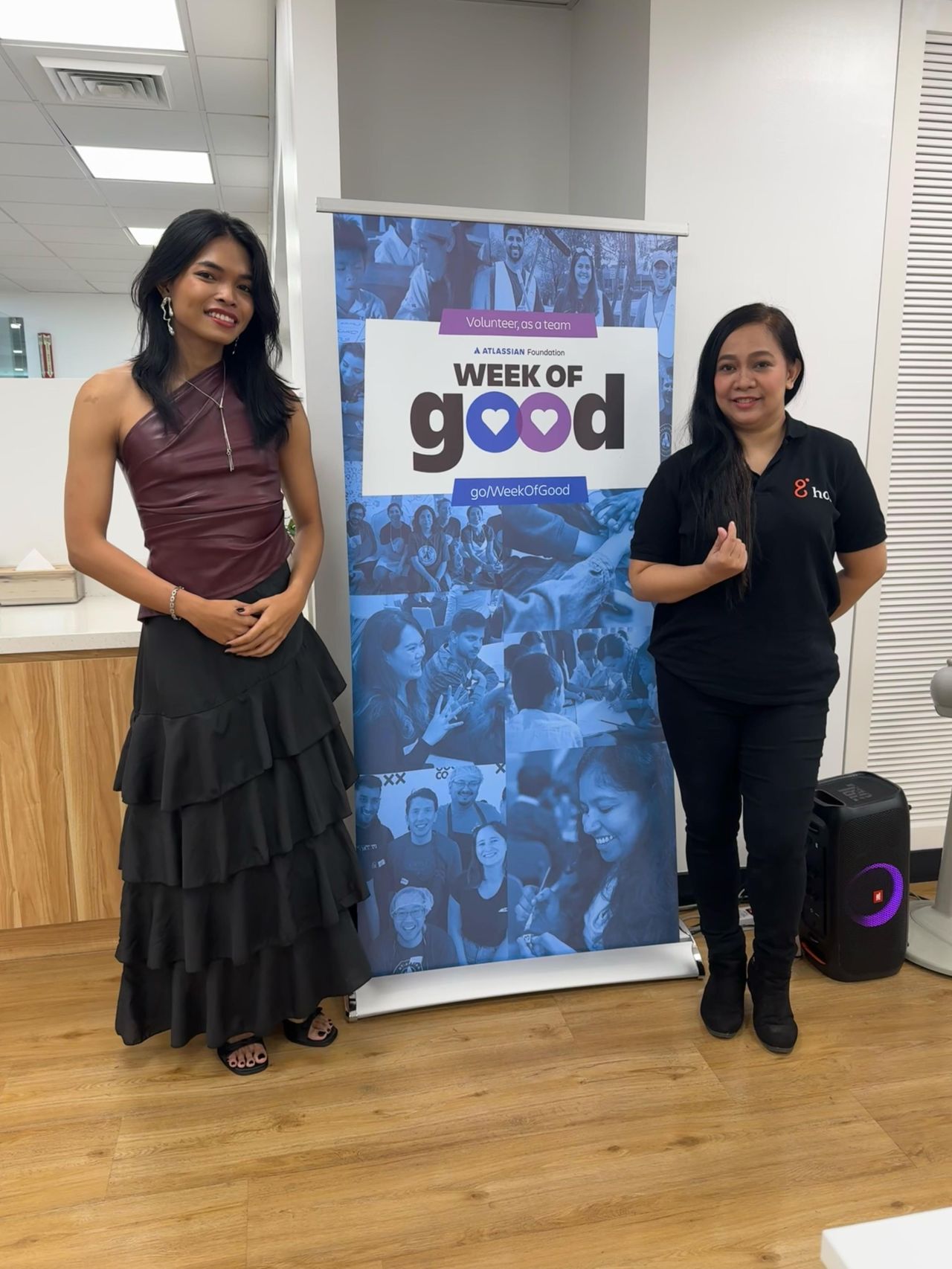
One of our company values is ‘Be the change you seek,’ and we really see that in action during our annual Atlassian Week of Good.
The campaign is now in its 7th year and momentum is building. This week, hundreds of Atlassian employees all around the globe will get together in teams to volunteer and donate, to help make the festive season brighter for people in need in their communities.
This includes a GivingTuesday event and fundraiser to rally behind Mary’s Meals. We’re proud to back Mary’s Meals with Atlassian tools and support, and promote the amazing work they’re doing to provide life-changing meals to more than 3 million children in some of the world’s poorest communities every school day.
Atlassian supports a culture of giving back by providing employees with 40 hours of paid leave to volunteer every year. Our research shows that Atlassian employees who volunteer are less likely to want to seek jobs elsewhere and are more likely to believe Atlassian is a great place to work. We also know that volunteering is good for team health. Atlassian Week of Good is a meaningful way for our people to give back and connect with their teams to cap off 2025.

The Atlassian Foundation is offering lots of in-person and virtual volunteering activities this week, and employees were also empowered to organize their own for causes they care about. If you’re interested, we share what we’ve learned about running employee volunteering campaigns (what’s worked for us and where we’ve fallen short!) in this guide.
Atlassian co-founded Pledge 1% to give back to the community. Since then, we’ve donated US$85M and empowered over 12,500 nonprofits worldwide with free or discounted Atlassian tools. Learn more in our new Atlassian Sustainability Report.
Invites customers, employees, and others to join us in helping to feed families this November
The restaurant industry is fundamentally built to feed and nourish local communities—so it’s no surprise that they’re often the first to step up in times of need. At Toast, we’re committed to supporting them in combating hunger and food insecurity—which is a big part of why we committed $5 million over the next five years to this cause.
As millions of families in the U.S. face a potential gap in SNAP benefits, food banks and pantries are expecting a surge in demand. The restaurant industry has always been defined by generosity, creativity, and care. Restaurants around the country are stepping up in the face of this urgent need, and so are we.
Every November, Toast holds its “Season of Giving,” a month-long Toast.org tradition that unites our Toaster community to help fight food insecurity, a global issue impacting millions of people. Now in its fifth year, there has never been a more crucial time to reaffirm our support for this issue. This Season of Giving, we are doubling down through community and restaurant grants, matching guest donations, and employee giving and volunteering. Toast is also committed to enabling restaurants as changemakers while helping to bridge the gap for families in need.
“Over the past week alone, we’ve seen countless restaurants and retailers across the country step up in extraordinary ways to support their communities,” said Kelly Esten, Chief Marketing Officer of Toast. “From setting up fundraisers for local food banks and pantries to offering free meals to SNAP-eligible families, their compassion and leadership remind us what this industry is all about. At Toast, we’re proud to stand alongside them as they continue to inspire us all to take action against hunger.”
Here’s how we’re expanding our commitment to fight food insecurity and making a difference this Season of Giving:
- Matching donations at participating Toast restaurants and retailers
We’re matching every dollar guests donate to eligible hunger relief organizations through customer-enabled Toast Fundraising1 campaigns, up to $50,000. Restaurants and retailers can enable Toast Fundraising in Toast Web to ask guests if they’d like to round up or make a flat donation in support of eligible hunger relief organizations. - Toast Changemakers Program
In mid-November, we’ll announce 15 restaurants that will each receive $10,000 to expand their local hunger-relief efforts and deepen their impact as part of our inaugural Toast Changemakers Program. - $500,000 in community Hometown Grants
We’re directing funding through Toast employee-led Hometown Grants to local hunger-relief organizations around the world, supporting the nonprofits our teams know and trust in their own communities. - Increased employee giving and volunteering
We’re double-matching all Toast employee donations to hunger-relief nonprofits and organizing 60 hunger relief-related volunteer events.
Join Us
Visit this page for more information on how Toast customers can get involved, from setting up Toast Fundraising to implementing a pay-it-forward campaign.
This is what our community does. Together, our team, Toast.org, and our 156,000 customer locations are stepping up to keep local families fed.
About Toast
Toast [NYSE: TOST] is a cloud-based, all-in-one digital technology platform purpose-built for the entire restaurant community. Toast provides a comprehensive platform of software as a service (SaaS) products and financial technology solutions that give restaurants everything they need to run their business across point of sale, payments, operations, digital ordering and delivery, marketing and loyalty, and team management. We serve as the restaurant operating system, connecting front of house and back of house operations across service models including dine-in, takeout, delivery, catering, and retail. Toast helps restaurants streamline operations, increase revenue, and deliver amazing guest experiences. For more information, visit www.toasttab.com.
Contact
media@toasttab.com
With Congress’s recent passage of what’s being informally called the “Big Beautiful Bill”(H.R.1)— a piece of legislation that reshapes corporate tax policy and charitable giving incentives — CSR and corporate philanthropy leaders are reevaluating how to meet their social impact goals without compromising financial efficiency. One powerful tool rising to the top of the strategic toolkit is the Donor-Advised Fund (DAF). Already well known among larger corporate philanthropy teams, DAFs offer companies a compliant and flexible way to give — while also navigating around new limitations introduced by the bill.
What’s in the “Big Beautiful Bill”—and Why It Matters
While we won’t go into details here, three key implications of the bill for corporate giving:
- Tighter caps on charitable deductions for both individual and corporate donors (starting in 2026, corporations will only be entitled to deduct
- charitable contributions to qualified charities that exceed 1% of their taxable income. Many large corporations may not have taxable income, but if you have taxable income, this will apply to your company).
- Stricter timelines and reporting requirements for private foundations and direct giving programs.
- Reduced flexibility for multi-year commitments, grant carryovers, and general operating support.
In short, the legislation could make it harder for corporations to maintain consistent, flexible funding for the nonprofits they support—unless they adjust their approach.
Enter the Donor-Advised Fund (DAF)
A Donor-Advised Fund (DAF) allows a corporation to make a charitable contribution to a sponsoring organization (see a list of providers at the end of this article), receive an immediate tax deduction, and then recommend grants to nonprofits from that fund over time.
Key benefits:
- Immediate deduction: Contribute now, deduct now—even if grants are made later.
- Strategic timing: Decouple the timing of your tax planning from your giving cycles.
- Administrative ease: Simplify record keeping and avoid complex foundation reporting.
- Increased flexibility: Respond more quickly to urgent needs or changing CSR priorities.
3 Strategic Ways to Use a DAF Under the New Legislation
1. Pre-Fund Future Giving
If deduction caps are expected to tighten further, front-load your CSR contributions into a DAF during favorable tax years. This secures the deduction now while giving your team time to allocate funds thoughtfully in the years ahead
2. Simplify Compliance
Private foundations and direct corporate grant programs may face more oversight or reduced flexibility under the new bill. A DAF offers a streamlined, lower-maintenance alternative that still allows your company to remain an engaged and intentional giver —without increasing compliance burdens.
3. Enhance Agility and Responsiveness
A DAF empowers CSR teams to act quickly when crises arise—natural disasters, humanitarian needs, or emerging community challenges—without needing to wait for the next budget cycle or tax window. You already have pre-allocated, pre-approved funds ready to go.
Using a DAF to ensure impact dollars for the long term
Using a DAF responsibly demonstrates fiscal prudence and a long-term commitment to social impact. To ensure transparency and trust:
- Work with a respected DAF sponsor.
- Publish an annual giving strategy or impact report.
- Ensure funds are actively deployed—not warehoused indefinitely.
A well-managed DAF can be a way to make giving more sustainable in a changing regulatory environment.
Considering a DAF?
Explore Your Options
There are many reputable organizations that sponsor DAFs for corporations of all sizes. Companies often work with community foundations or financial institution-sponsored DAFs. We encourage you to explore providers that align with your company’s values, administrative needs, and impact goals. And, given possible tax and compliance implications, always be sure to involve your financial and legal teams in any decision.
Not all DAFs are the same – each comes with its own set of fees, services, and areas of expertise. It’s worth investing the time to research providers to understand how they can support your specific philanthropic goals.
Sample questions to ask DAF providers:
- What services do you offer for corporate donors? (e.g., employee matching, volunteer grants, CSR strategy support)
- Can we customize our giving program and branding? (e.g., branded giving portal, co-branded reports)
- What are the fees and minimums for corporate accounts?
- Can we contribute complex assets (e.g., stock, IP, crypto)?
- Do you support international grant making and compliance?
- What reporting and impact measurement tools are available?
- How quickly can we distribute grants and to whom? (e.g., restrictions, turnaround times)
- What level of advisory or strategy support do you provide?
- What happens to unspent funds—how are they invested?
The “Big Beautiful Bill” may change how your company gives — but not why you give. Impact programs remain a vital channel for companies to support communities, advance equity, and respond to global challenges. Tools like Donor-Advised Funds allow you to stay focused on impact while adapting to evolving policy. Now is the time to evaluate whether a DAF fits into your broader giving strategy—especially if you aim to maximize year-end tax benefits, plan for multi-year commitments, or insulate your giving from political and economic uncertainty.
In our age of easy clicks and instant access, it’s simple to send your money across international borders. It’s also expensive. According to the UN Dept. of Economic and Social Affairs, it can cost upwards of 7 percent of funds sent from a person in one country to someone in another. Even with more digital providers available, average fees remained high — over 4% in 2024 for formal digital channels, and even higher for traditional cash-based remittances.
This cost burden impacts nearly 800 million people who rely on money sent from family members working abroad. In 2023 alone, 184 million migrants sent $656 billion back home, supporting education, healthcare, small businesses, and emergencies.
Lower fees mean more frequent transfers and greater impact. On average, Remitly keeps about $2.31 for every $100 sent — covering the cost of fast, secure, and reliable money transfers – and the rest goes directly to the recipient.
In 2024, individuals using Remitly sent over $54 billion worldwide, and Remitly estimates they saved their customers over $1 billion in remittance fees — meaning more money reaches the people who matter most. Yet the company wanted to do more to make a positive financial impact — and give its employees the opportunity to do so as well.
So when it came to Giving Tuesday, it made sense to partner with Kiva.
Giving on a global scale
Headquartered in Seattle, WA with offices around the world, Remitly celebrated Giving Tuesday 2024 by gifting every employee $25 to support a Kiva borrower of their choice — encouraging personal connections to places and people that matter to them.
“What I love about Kiva is how it allows us to directly contribute to impactful projects and make a real difference in someone’s life,” says Remitly founder and CEO Matt Oppenheimer.
“This year, I used my credits to support Sarah, a smallholder farmer from the region of Busia. Her inspiring story resonated deeply with me — Remitly’s journey began while I was living in Kenya, and I’ve always felt a strong connection to the country.”
For some, the bonds reached closer to home. Pia Dailo, a Remitly Change Management Specialist based in the Philippines, chose to lend to borrower Jackelyn because it reminded her of her childhood.
“Helping Jackelyn expand her motorcycle business brought back memories of my family’s journey with tricycles as our main income source,” recalls Pia.
“Supporting someone with a similar story feels like giving back to the journey that shaped my own.”
All in all, the campaign reached more than 1,000 Kiva borrowers in 50 countries — reflecting Remitly’s Global Impact Vision: to increase financial security and resilience in communities around the globe.
Enthusiastic execs, increased engagement

In addition to the investment from individual lenders, this Giving Tuesday campaign received a significant boost when CEO Oppenheimer announced that Remitly would double the impact for every $25 credit employees used.
The enthusiasm from top executives spread quickly across the globe, leading to outstanding results, including:
- Over 70% employee engagement with over 2,000 participating employees, representing every single office —their highest employee engagement rate to date
- Employees used Remitly-sponsored credits to invest over $50k in more than 1,000 borrowers
- In their commitment to double the impact, Remitly lent over US$100K to Kiva borrowers
The company garnered such stunning participation with a cohesive communications strategy. Sharing Kiva borrower stories and their impact through internal channels, emails, and webinars piqued interest, while leaderboards created friendly competition between offices.
Feedback acknowledged the leaderboards as “critical,” used on a daily basis to keep employees and leaders informed across time zones. Each office also used their own assets and materials, which made it easy to tailor Kiva resources for their particular office or team.
The success of the campaign also grew from the grassroots level. Employee ambassadors from each office inspired their coworkers, using their own cultural knowledge and regular updates from the executive team. Borrower data revealed that many employees—especially those from international backgrounds—tended to invest in the country where they reside.
“Developing the Giving Champions program across our global offices was a game-changer for engagement. By encouraging local teams to lead, we saw participation jump from 33% to over 70%. The energy and connection it created were incredible — global offices and teams felt personally invested, not just in the campaign but in the impact their lending choices made in communities that matter to them,” says Kiana van Waes, Principal Program Manager of Sustainability and Global Impact, who leads the Kiva program at Remitly.
“This program proved that when we tap into local passion, we can drive real impact at a global scale.”

Sharing stories of borrowers like Julita helped engage employees in the campaign
A partnership for good
Remitly’s commitment to increasing access to digital financial services around the world dovetails with Kiva’s mission of expanding access to underserved communities — though that didn’t necessarily guarantee a Giving Tuesday success.
Even with the best of intentions, engaging thousands of employees globally presents a significant challenge. How can companies align along so many different values, cultures, and communities?
An inspiring strategic plan like the one Remitly applied to Kiva’s global footprint brings organizations together —while allowing individuals to choose where they’d like to make an impact.
“What’s incredibly special for Remitly is that Kiva has options for lending in many of the countries where our customers’ recipients — and where our employees live and work,” says Mallory Boulter, VP of Global Impact.
“We love that Kiva is a meaningful way to engage with our global teams towards a single impact goal while providing employees the flexibility to select causes that are personally meaningful to them.”
Kiva has helped organizations and companies around the world engage employees and customers, while increasing their positive impact. What can partnering with Kiva do for your organization?
Fill in the form to get more stories like this one:
For more information on the form visit here
NEW YORK, September 30, 2025 – Pledge 1%, a global movement that inspires, educates, and empowers every company to leverage its unique assets for good, today presented Australian-founded unicorn Airwallex with the 2025 Pledge 1% Impact Award.
Each year, Pledge 1% selects one company on the Cloud 100 List to receive special recognition for its commitment to social impact. We are thrilled to announce that Airwallex, a leading global payments and financial platform building the future of global banking, is the winner of this year’s Award.
Airwallex joined the Pledge 1% movement in 2024 by committing 1% of their employees’ time, 1% of profits and 1% of products to support the innovation community. Airwallex has activated this commitment through its global impact initiative, Airwallex Impact, which provides a suite of resources to the innovation community through Airwallex employee mentor programs, the Airwallex for Startups program, and product discounts for select nonprofit organizations. Through the Airwallex for Startups program, Airwallex has donated AU$64,000 in acceleration grants in Australia and SG$10,000 in Singapore, plus mentorship and resources to over 1,800 startups globally.
Earlier this year, Airwallex rolled out a company-wide global volunteering initiative, through which all 1,800+ Airwallex employees commit three days each year to volunteering – amounting to roughly 1% of employee time devoted to community service. In the first half of 2025, Airwallex’s global employees have already contributed to an 58% uplift in volunteering across a diverse range of social causes from supporting women of domestic violence in Melbourne, to feeding the community in San Francisco and mentoring young women starting on their STEM journey in Singapore.
This builds on previous philanthropic gifts, including an AU$3M donation to the University of Melbourne, which funded 43 scholarships, with 40% to women and 57% to international students. Airwallex also funded an AU$150,000 donation for financial assistance for an additional 65 students to support non-tuition related costs of attending school.
To date, the Airwallex team has committed more than 400 hours to mentorship since the mentorship program started two years ago. The partnership is expected to continue for at least another two years.
Furthermore, another key pillar of their commitment, Airwallex’s equity pledge, is valued at over US$62M, and will provide the company with a sustainable funding source to ensure impact for years to come.
Airwallex exemplifies what it means to be a leader in the Pledge 1% movement—not only through its own ambitious commitments, but also by serving as a true force multiplier. Beyond giving back within their own company, they have consistently championed Pledge 1% on global stages, inspired other CEOs to join, and integrated the movement into their programs for startups and entrepreneurs. Their efforts extend the reach of the movement itself, helping to spark new commitments and set a powerful standard for how companies can embed purpose at scale.
By accepting this Award, Airwallex joins the company of past Pledge 1% Impact Award Winners, including: Twilio, DocuSign, Slack, Procore, Canva, Guild Education, Snyk, Checkr, and ServiceTitan.
We are also proud to recognize all of the Pledge 1% companies celebrated today on the Cloud 100 List: Airwallex, Algolia, AppsFlyer, Automation Anywhere, Checkr, Cohesity, Guild, LaunchDarkley, Personio, Snyk, and Workato.
——————————————————
About Airwallex
Airwallex is building the future of global banking. As a leading financial and payments platform for modern businesses, we provide trusted solutions to manage everything from global payments, business accounts, corporate cards and spend management to embedded financial services.
Built for scale, our platform removes the friction from global financial operations – empowering over 150,000 businesses worldwide, from startups to global enterprises, to operate and grow beyond borders.
Founded in Melbourne and trusted by leading brands such as BILL, Bolt, Brex, Canva, Deel, Navan and Qantas, Airwallex is redefining how businesses manage their finance and payments globally. Learn more at www.airwallex.com.
A quick guide for CSR leaders helping nonprofits embrace responsible innovation.
Used wisely, AI can be a superpower for social good—helping doctors catch disease earlier, getting food to people who need it faster, streamlining disaster response, and letting nonprofits stretch every dollar and hour further. No wonder more and more companies are looking to help nonprofits boost data quality, level up AI literacy, and even co-create their own AI intelligent tools.
But used frivolously AI can suck up enough energy to power a small city—just to create what your dog might look like as a human being (guilty). So for companies that genuinely want to harness AI for social good, the question is: how do we build tools that help people without wrecking the planet in the process?
One way is to upskill your tech volunteers on ethical and sustainable AI practices. They should know how to build smart and clean. Here are some specific strategies for limiting the environmental impact of AI tools that might help a nonprofit use or build:
1. Just Because You Can Use AI Doesn’t Mean You Should
AI is a powerful tool (like a chainsaw—amazing when needed, dangerous when misused, and wildly unnecessary for slicing bread). And sometimes, the best solution is… a spreadsheet. Or a hotline. Or a human being using their humanity and common sense. One of the best things corporate volunteers can do to help a nonprofit is to ask:
- Is this problem best solved with AI? Will AI significantly outperform existing methods?
- Does the nonprofit actually have enough clean, ethical, useful data to make it a worthwhile investment?
- AI is only as good as the data it’s trained on. Help nonprofits assess whether their data is clean, complete, consent-based, and relevant. Otherwise, have them start with building better data practices.
- Could the AI unintentionally create new risks—such as bias, surveillance, or excessive emissions?
2. Keep It Lean and Green
Not all AI models have the same environmental cost. A large language model with billions of parameters can emit as much carbon as five cars over their lifetime just from training. But smaller, more efficient models can be equally effective—and far less damaging. Your volunteers can encourage environmentally mindful approaches including:
- Using pre-trained or open-source models
- Fine-tuning pre-trained models, not reinventing the neural wheel
- Running models locally or on green cloud infrastructure
- Using tools like CodeCarbon to track emissions
3. Design With the People You’re Trying to Help
Sustainability isn’t just about energy—it’s also about equity. AI tools should be designed with—and for—the communities they aim to serve. Encourage the nonprofits you work with to co-design. Get feedback. Respect cultural context. And don’t scrape data without consent.
Best practices for ethical design:
- Ensure diverse representation in data and design teams
- Involve impacted communities early and often
- Prioritize transparency and explainability
- Avoid extractive data practices and surveillance
4. Measure Emissions and Set Limits
Encourage the nonprofits you work with to track the energy usage and emissions from any AI projects (tools like CodeCarbon can help) and set internal guardrails for what’s acceptable.
This past Spring, Salesforce, in collaboration with Hugging Face, Cohere, and Carnegie Mellon University, launched the AI Energy Score, a tool for benchmarking the energy efficiency of AI models. This score aims to provide a standardized, transparent way to measure and compare the energy consumption of different AI models, enabling developers and organizations to make informed decisions about model selection and deployment.
They use this score to measure the energy efficiency of the projects that come out of there Salesforce Accelerator — Agents for Impact program.
5. Fund “Green” Cloud Providers
Encourage nonprofits to choose cloud services that run on renewable energy and have a strong sustainability commitment (e.g., Google Cloud, Microsoft Azure, AWS with sustainability pledges). Or better yet, provide funding specifically for those services.
6. Know When to Review or Sunset an AI Baby
Not every AI project is meant to live forever. Sometimes the most responsible thing you can do is… let it go. Encourage your nonprofit partners to decommission models that aren’t truly serving their purpose anymore. Or that cost more carbon than they’re worth. Or were, let’s be honest, a little overhyped to begin with. Some companies and nonprofits started with some AI experiments to test things out. Don’t let those applications limp along.
Make sure to:
- Continuously audit environmental and social impact
- Track unintended consequences
- Know when to retire or redesign tools that no longer serve their purpose—or that cost too much environmentally
Balance Is Possible
When designed thoughtfully, AI can do both—powering progress without pollution. As technical experts, make sure your employee volunteers understand the trade-offs so that they can best serve their nonprofit partners.
Cheat sheet for your AI volunteers. If you’re building—or investing in—AI for good, make sure it’s:
✅ Necessary
✅ Efficient
✅ Ethical
✅ Designed with community
✅ Planet-friendly
And if they’re not sure, ask. Organizations like Climate Change AI, AI for Good, and CodeCarbon.
Pledge 1% is proud to announce the launch of its first dedicated country team outside of the United States — in Australia, one of the movement’s most dynamic and fast-growing regions.
Australia has been central to the Pledge 1% story from its very inception. The co-founder of Atlassian, Scott Farquhar, now Chair of Pledge 1%’s board, co-founded the movement nearly a decade ago. Since then, more Australian companies, including Atlassian, Canva, Airwallex, Culture Amp, Employment Hero, and many others, have woven social impact into their business models by pledging equity, profit, product, or employee time. Today, over 1,800 companies across Australia are part of a global community of 19,000+ Pledge 1% members in 130 countries — collectively unlocking billions of dollars and tens of thousands of hours of employee time for benevolent causes.
The establishment of a dedicated team signals the next chapter: deepening support for members, accelerating growth, and providing a blueprint for Pledge 1%’s future global expansion. By localizing resources and relationships while leveraging the strength of the U.S. team, the new Australian office will offer an enhanced experience for current and future members, driving greater community impact.
Leadership for the Next Phase
The team will be led by Antonia Ruffell, appointed as Managing Director, Australia, for Pledge 1%. Antonia brings over 20 years of philanthropic leadership experience to the role. She will split her time between this new appointment and her current position as CEO of StartGiving, a nonprofit founded by Daniel Petre AO to inspire a culture of personal giving among Australia’s tech founders and executives.
Building on Strong Roots
The extensive groundwork laid by the longstanding partnership between Pledge 1% and the Atlassian Foundation made this milestone possible, as well as the support of the Skip Foundation (Scott Farquhar’s family foundation). The Atlassian and Skip Foundations continue their commitments to Pledge 1% with this expansion. Canva co-founders Melanie Perkins and Cliff Obrecht also recently joined the Pledge 1% Global Visionary Council, further underscoring Australia’s outsized role in shaping the future of corporate impact worldwide.
A Blueprint for Global Growth
The launch of Pledge 1% Australia is more than a regional investment — it represents a model for how the movement will scale globally in the years to come. By combining the reach of a global movement with the power of localized leadership, resources, and community, Pledge 1% is creating a blueprint for embedding impact into business norms everywhere.
As we look to the next decade, Australia’s dedicated team will help unlock even greater potential for companies of all sizes to join the movement, integrate giving into their DNA, and amplify the ripple effects of impact at scale.