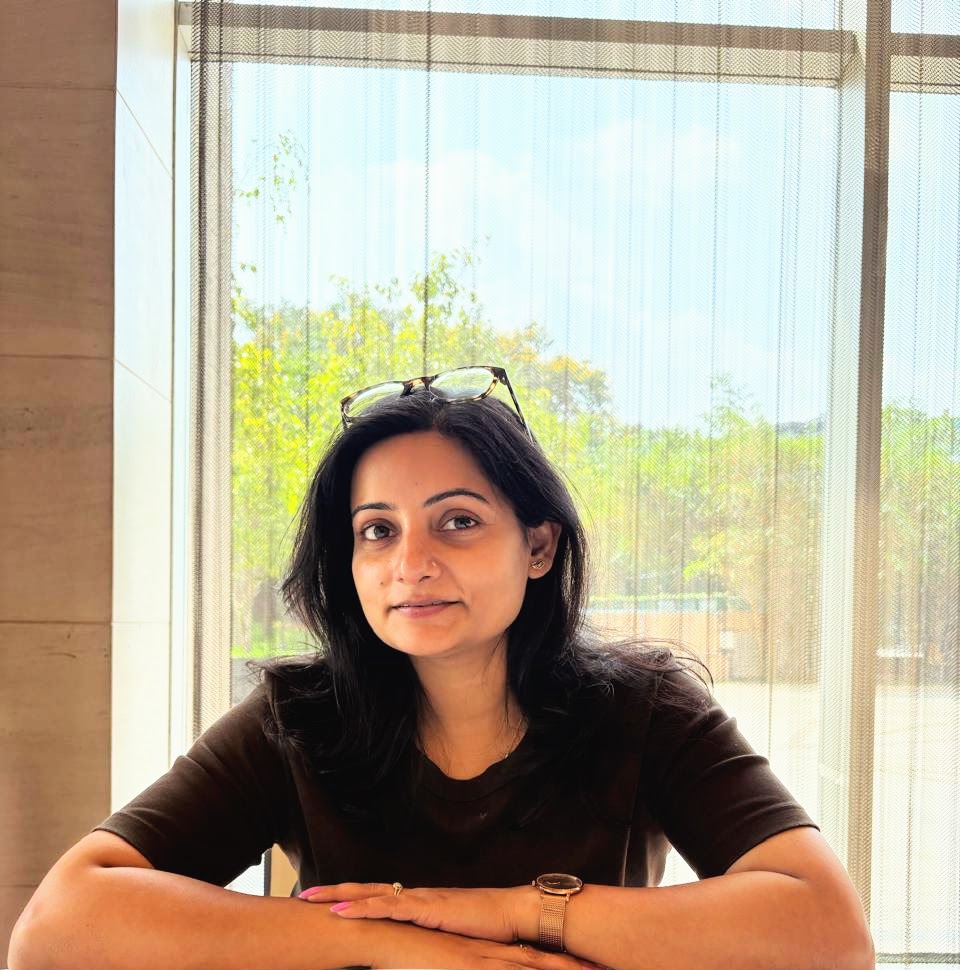
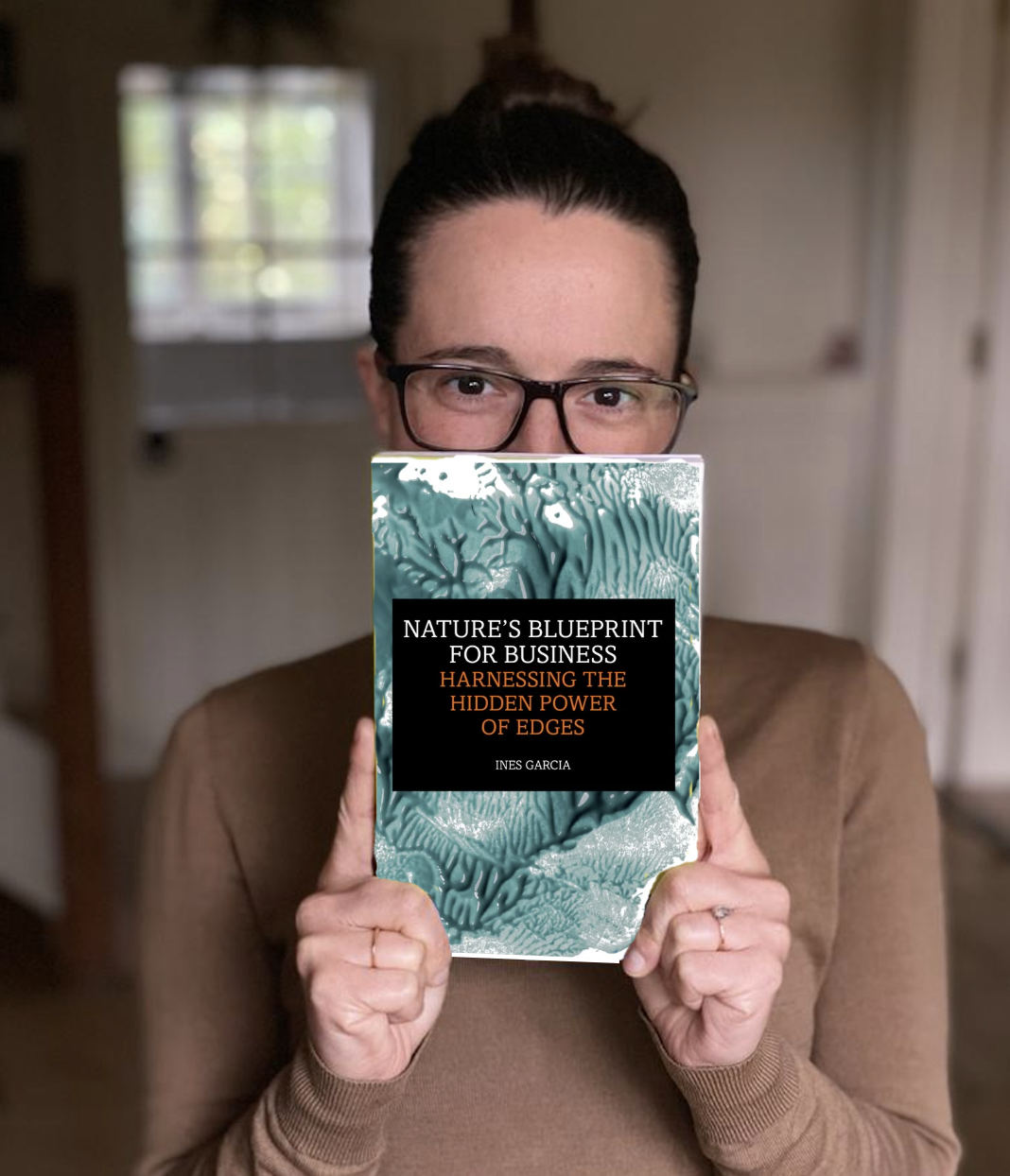
Ines Garcia
Agile & Climate Coach, Get Agile
📍Devon, United Kingdom
What qualities do you think leaders need to have in today’s world?
The leaders we need today are those who can operate at the edges: where disciplines intersect, where the unexpected happens, where innovation truly lives. Nature has shown us for 3.8 billion years that the most resilient and productive systems thrive not at their centres but at their boundaries. Leaders must cultivate that same quality: the ability to hold complexity, to remain permeable rather than siloed, and to draw strength from diversity of thought, background, and experience.
Beyond that, I believe today’s leaders need what I’d call “ecological intelligence”: the capacity to see their organisations as living systems, not machines. That means valuing circularity over extraction, collaboration over competition, and long-term regeneration over short-term gain. Sustainability and happiness are not at the expense of profit; they are a means to it. There is a better way to do business, the question is: Are you willing to be part of the solution?
If you had to describe your leadership style in one word, what would it be and why?
Regenerative. In nature, regenerative systems don’t just sustain: they restore, they enrich, they leave the conditions better than they found them. That’s what I aspire to in every engagement, every programme I design, every community I’m part of. Whether it’s through the “Pay It Forward” model we built into our Agile Sustainability programme, or through the organisations I support like Refugeeforce, Pepup Tech, or the Agile Alliance’s Sustainability Initiative; the intent is always to give back more than I take, and to build conditions where others can thrive independently of me.
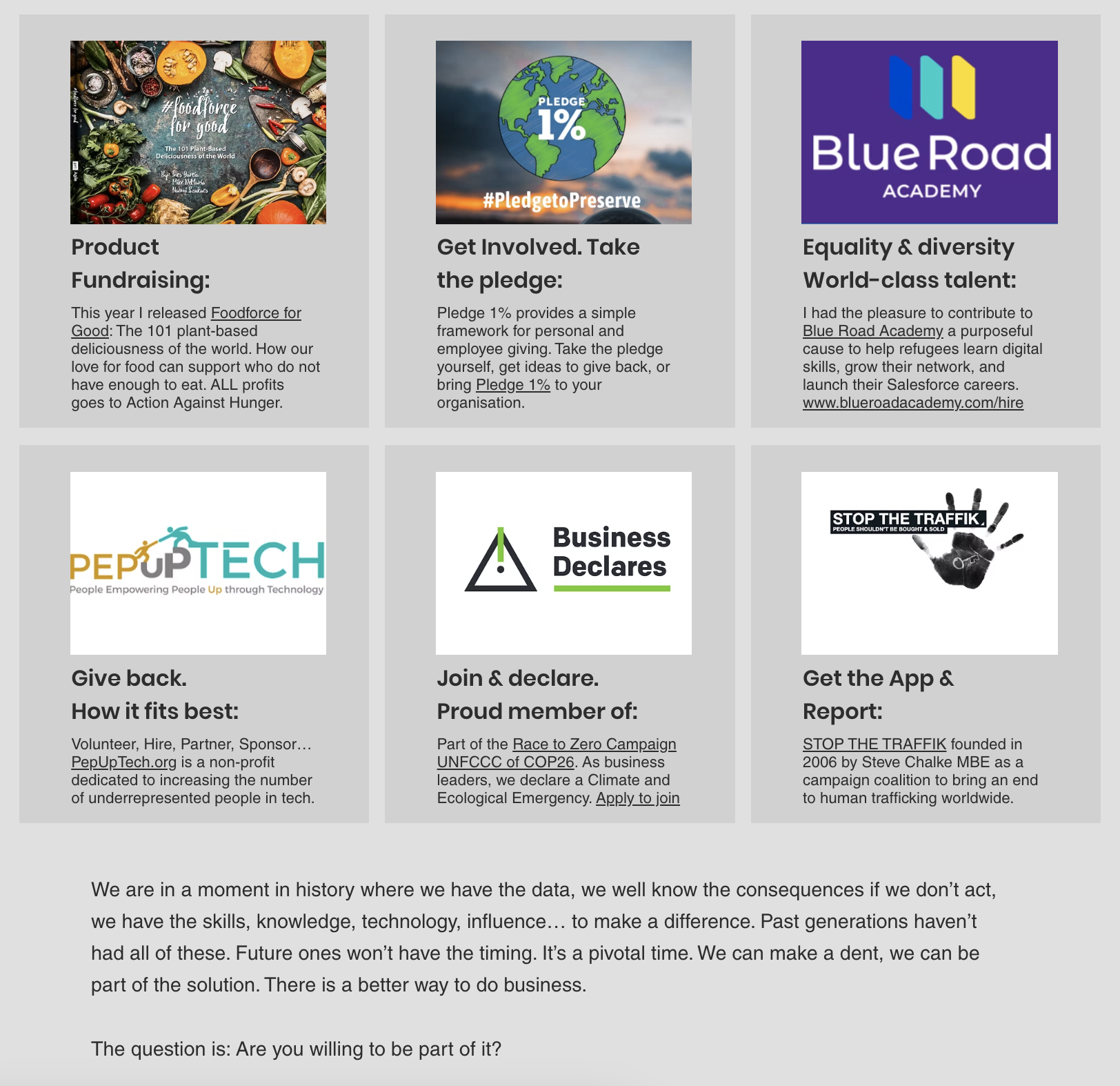
How does your company’s Pledge 1% program help shape the kind of workplace culture you believe in?
Pledge 1% gives structure to something I deeply believe: that doing good and doing well are not in conflict. In fact, they nourish each other. For me, participating in Pledge 1% is a public commitment to the idea that the value of a company’s goods and services must be weighed against the waste it generates (social and environmental), not just financial. It signals to clients, collaborators, and my wider community that impact is not an afterthought. It’s embedded in how we work. It has also been evolving (expanding at the edges) since I first joined in back in 2018.
Culture is built through consistent, visible choices. When a business pledges its time, product, equity, or profit toward something greater, it sets a tone; one that attracts people who share those values and holds the organisation accountable to living them.
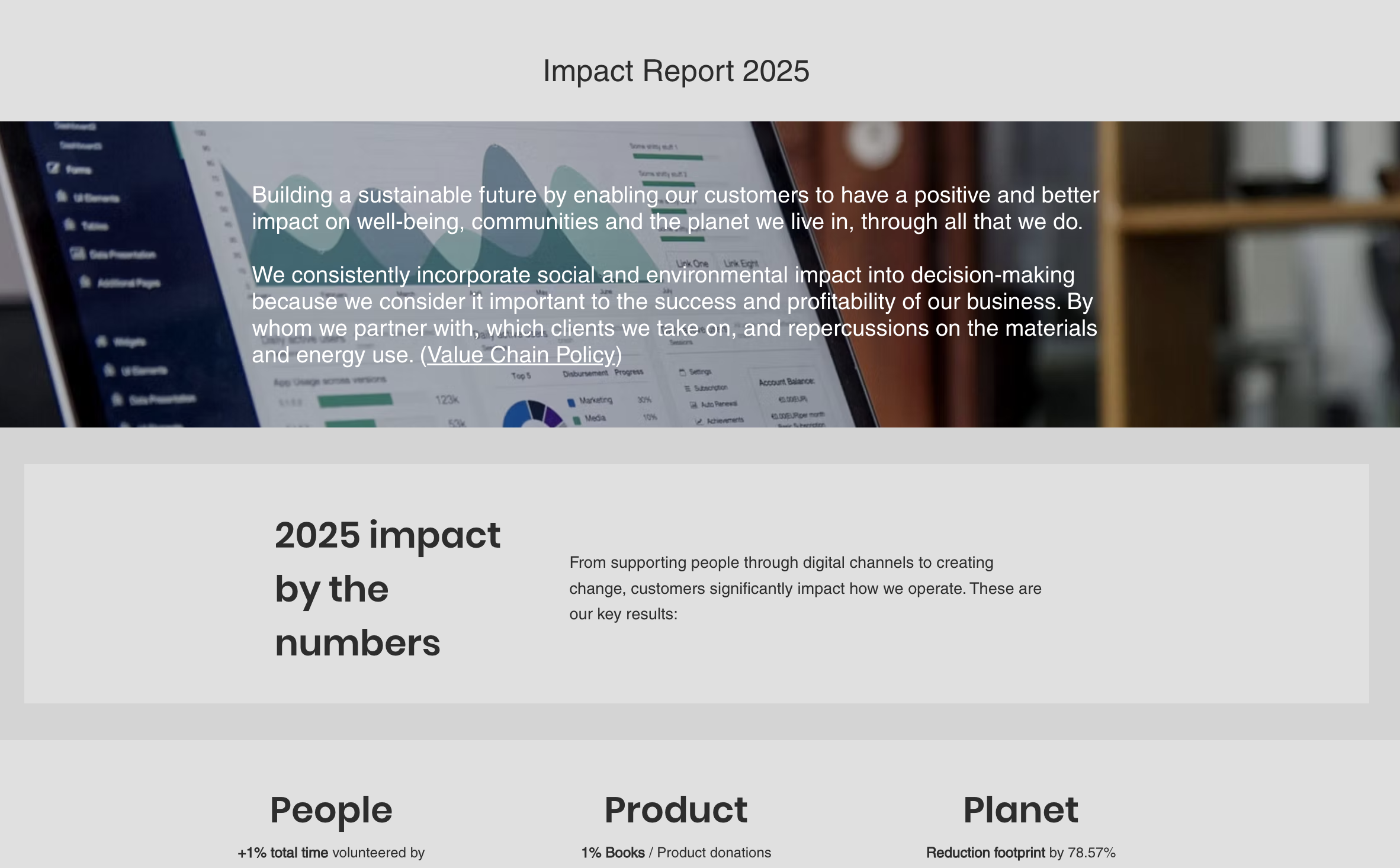
This year marks the 7th year of Pledge 1%’s #WomenWhoLead campaign. How can companies champion and support female leadership?
Start by expanding your definition of diversity itself. I once came across a diversity model that went far beyond gender and ethnicity — it mapped how people relate and connect, how they think and process information, what they believe, how they work, their physical traits and many more dimensions. Rich, functioning ecosystems are diverse in all these ways, and so are thriving workplaces.
For women specifically, companies need to dismantle the structural biases: the echo chambers, the unexamined privilege, the “old fashioned” cultural assumptions that still quietly shape who gets promoted, who gets heard, who gets funded. But equally important is creating the conditions for women to mentor each other, to lead programmes like The Mentorship Central and YeurLeadin, to be visible not just as success stories but as whole human beings.
Being objective is not a default, what we see and therefore what we think depends where we seat (experiences, culture, objectives…) understanding this and willing to work towards the common goal can be a great enabler. Let’s break free from dualism; there is more to us than any single attribute.
If you could write a note to your younger self on her first day of work, what would it say?
Let’s quiet our cleverness. The answers you’re looking for aren’t always found in frameworks or methodologies; they’re all around you, in the patterns of the living world.
Pay attention. The mechanisms, strategies, and solutions to the hardest problems have been evolving for 3.8 billion years; in forests, in coral reefs, in how rivers meet land. That is an R&D archive to tap into. You don’t have to invent everything from scratch. You just have to learn to read the patterns. And know this: the edges are where the magic happens. The places where disciplines intersect, where you don’t quite fit in any single category, where you feel the tension of standing between worlds. Those are your greatest assets, not your weaknesses. Don’t rush to the straight lines, the boxes, the centre. Stay curious at the edges. The world needs you to do both: do good and do well. They are not opposites. They never were.
Jeni Izuel
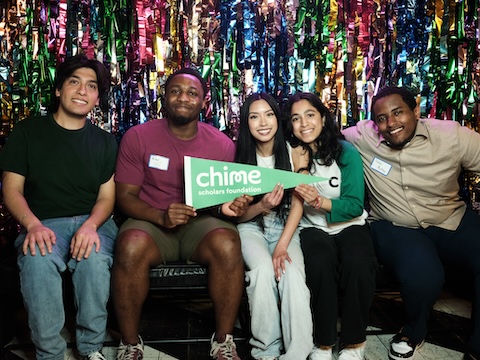
President, Chime Scholars Foundation, Chime
📍San Francisco, CA
What qualities do you think leaders need to have in today’s world?
I think leaders today need courage and humility. Courage to stand for something bigger than short-term results. And humility to listen, especially to people whose experiences are different from their own. As a former scholarship recipient, I know what it feels like to have someone invest in your potential before you fully see it yourself. That experience shaped how I think about leadership. It’s not about having all the answers. It’s about recognizing possibility in others and building systems that make that possibility real. In a world that’s changing fast and leaving too many people behind, the leaders who matter most are the ones who stay deeply human while holding a long-term vision.
If you had to describe your leadership style in one word, what would it be and why?
Unlocking. That word shows up everywhere in my work. At Chime, we focus on unlocking financial progress. The Chime Scholars Foundation extends that mission through higher education, apprenticeships, and trade pathways. For me, leadership is about removing barriers. Sometimes that’s financial. Sometimes it’s confidence. Sometimes it’s simply access to a network or someone saying, “You belong in this room.” I’ve seen scholars walk into their first career panel unsure if they should even ask a question, and months later lead conversations themselves. That shift is powerful. I want to create more of those moments.
How does your company’s Pledge 1% program help shape the kind of workplace culture you believe in?
Chime’s commitment to Pledge 1% reflects something fundamental about who we are. Financial progress should compound over time and across generations. Our products help people build stability in the present. Through the Chime Scholars Foundation, funded by our 1% equity pledge, we extend that mission by investing in education as a long-term driver of mobility. That commitment shapes our culture. It creates pride, but it also creates accountability. If we believe in opportunity, we have to build a workplace where opportunity is real. That means valuing diverse lived experiences, mentoring emerging leaders, and making growth visible and accessible. Purpose has to show up in how you hire, promote, and invest.
This year marks the 7th year of Pledge 1%’s #WomenWhoLead campaign. How can companies champion and support female leadership?
First, expand the definition of what leadership looks like. Not every leader follows a straight line. Some are not college graduates. Some change careers midstream. Some are balancing caregiving. Some are rebuilding after setbacks. When companies recognize and elevate those journeys, they normalize possibility.
Second, move from mentorship to sponsorship. It matters when someone in a position of power says your name in a room you are not in yet. And finally, measure progress honestly. Representation in leadership, pay equity, and access to stretch roles are not abstract goals. They are signals of whether opportunity is truly expanding.
If you could write a note to your younger self on her first day of work, what would it say?
You belong here. You do not need to earn your seat by being perfect. Ask the question. Share the idea. Raise your hand for the role that feels slightly out of reach. The rooms will get bigger. The responsibility will grow. Stay curious. Stay grounded. And when you can, hold the door open a little longer than you need to.
Kim Moore
Founder & Managing Partner, U&I Ventures
📍San Francisco, U.S.A.
What qualities do you think leaders need to have in today’s world?
Integrity, clarity, and conviction.
If you had to describe your leadership style in one word, what would it be and why?
Grit. Building something new – especially as a woman in venture capital – requires resilience. Grit is the commitment to keep going, keep learning, and keep lifting others as you rise. It’s not about being the loudest voice in the room; it’s about consistently delivering needle-moving value.
How does your company’s Pledge 1% program help shape the kind of workplace culture you believe in?
Pledge 1% reflects our belief that success and responsibility are inseparable. Growing up in the foster care system, I learned early that opportunity often has to be created, and education became the door I opened for myself. That experience shapes how we operate at U&I. We believe in being truly helpful by expanding access and providing valuable connections and capital. Giving back isn’t an initiative; it’s an expectation.
This year marks the 7th year of Pledge 1%’s #WomenWhoLead campaign. How can companies champion and support female leadership?
Championing women starts with capital – investing in female founders and emerging managers, elevating women as decision-makers, and creating real sponsorship. When women are funded and empowered, performance follows.
If you could write a note to your younger self on her first day of work, what would it say?
You belong in every room and at every table you’re invited to, and even the ones you’re not. If you don’t see a seat, build your own table – and make it big enough for others.
Elisabeth Carpenter
Chief Strategic Engagement Officer, Circle
📍New York
What qualities do you think leaders need to have in today’s world?
First and foremost: clarity. The world is loud, there are more opportunities for the sharing of opinions than ever, and it’s very easy to confuse motion with progress. Leaders have to be able to say, plainly, what problem we’re solving, for whom, and what a “good” result actually looks like in effect.
Second: the courage to build through uncertainty. Often the answers to the inevitable questions you’ll find yourself asking along the way are not obvious, even if you know exactly where you’re going. Sometimes it’s the facts themselves that change. You have to be willing to change your mind, or your strategy, when presented with new information. The leaders I respect most can simultaneously remain steady on the mission while being flexible on the path forward. I think this only happens if you’re willing to hold on to the humility of reality throughout the process and be honest with, and respectful of, yourself, your team, and the customers, communities, policymakers, and people affected by what you’re building.
If you had to describe your leadership style in one word, what would it be and why?
Direct. I wholeheartedly believe that directness is how you respect people’s time and intelligence. It’s how you tell the truth about what’s working, what isn’t, and what needs to change without mincing words. I’ve heard many times that “clear is kind,” and I abide by that principle. It’s also important to note that direct leadership only works if it’s paired with a genuine and deep respect for those with whom you work. I am relentless about asking “What am I missing?” and making room for debate, especially with those closest to the work. I don’t always have to be the person in the room with the right answer, but I know that I’m the person in the room that will guide us toward it and then make sure we execute against it accordingly.
How does your company’s Pledge 1% program help shape the kind of workplace culture you believe in?
Since Circle began, our mission has been to raise global economic prosperity through the frictionless exchange of value. While we work toward that vision as a team every day, Pledge 1% turns purpose into tangible practice internally too. When you commit equity, time, and attention, impact shows up at Circle in very concrete ways, like giving every employee up to 40 hours of paid volunteer time each year.
It also widens the aperture of our work. When our teams spend time with community and small business organizations or humanitarian partners, we learn to start asking better questions. Who gets left out? Where does financial friction punish people? How do we design infrastructure that’s resilient and equitable? Those shifts in mindset make us better operators and, frankly, better humans.
This year marks the 7th year of Pledge 1%’s #WomenWhoLead campaign. How can companies champion and support female leadership?
Ultimately I think you have to start with the unglamorous basics. Measure it and own it. Track representation by markers like leveling, pay equity, promotion rates, and attrition, and then hold leaders accountable for outcomes. And don’t confuse mentorship with sponsorship. Mentorship is advice, but sponsorship is risk. It’s putting women in roles with real scope and visibility, and then backing them and equipping them with resources when the job gets hard. It’s easy to campaign for change but it’s putting the right systems in place that changes things for good.
If you could write a note to your younger self on her first day of work, what would it say?
I would tell her to always choose the hard problems. Not because the stakes are high but because spending your career building things that move the world in a better direction will make the future you proud. I would tell her that if you pair ambition with integrity, you’ll never have to look back and wonder what you were working for.
Dana Griffin
Co-Founder / CEO, Eldera.ai
📍San Francisco, USA
What qualities do you think leaders need to have in today’s world?
The leaders who will matter most in the years ahead are those who lead with humanity first; who see people before problems and relationships before metrics. Empathy is the foundation: you cannot build for human connection without genuinely understanding human pain. Creativity is essential because the hardest problems are new (loneliness, youth mental health, aging in isolation) have no off-the-shelf solutions; you have to imagine infrastructure that has never existed. And resilience is what carries you through, because building something that truly matters is slow, nonlinear, and often lonely work. These four qualities will make up the core operating system for anyone trying to build something that supports humanity, scales and lasts.
If you had to describe your leadership style in one word, what would it be and why?
Relational. Everything I build – and how I build it – starts with relationships. Our product is relationship. Our mission is relationship. And so is the leadership. I believe you cannot inspire a team, earn trust from a community, or change a broken system without first understanding and building with in the human beings in front of you. One adult, one young person, one hour a week changes two lives, and I run Eldera the same way: one conversation, one connection, one trusted relationship at a time.
How does your company’s Pledge 1% program help shape the kind of workplace culture you believe in?
I joined Pledge 1% because it’s an expression of a commitment already built into our DNA. Eldera is structured for perpetual stewardship: we return the social and economic value we create back to the humans who made it possible. Our golden share ensures that as Eldera grows, the communities we serve always have a seat at the table. Pledging 1% is an additional concrete, visible form of that promise, a signal to our team, our investors, and our community that we are not building to extract. We are building to give back and create opportunities for all involved.
This year marks the 7th year of Pledge 1%’s #WomenWhoLead campaign. How can companies champion and support female leadership?
We need to stop celebrating female leadership like it is something extraordinary, because the data shows it isn’t. Female leaders drive higher ROI, stronger retention, and more sustainable companies. Female leadership is a smart business imperative, not a feel-good story about exceptionalism. If we want all boats to rise, we need to create real pipelines, build genuine mentorship infrastructure, and start funding it. The goal isn’t to celebrate female leadership once a year, but to make it the norm.
If you could write a note to your younger self on her first day of work, what would it say?
Make friends, real friends. The relationships you build on day one will matter more than anything on your resume and will be your champions 20 years into your career. Learn from every opportunity, especially the ones that don’t look like opportunities yet. The unglamorous work, the difficult conversations, the roles that feel too small, they are all teaching you something about the world or yourself.
Think bigger than anyone tells you is reasonable, because the problems worth solving are never small ones. And have fun. I found the more fun I have, the more creative and inspired I feel, and the more opportunities I uncover… or create.
Michelle Baltrusitis
Head of Community & Social Impact, Fiverr
📍New York, United States
What qualities do you think leaders need to have in today’s world?
We’re living in a world where knowledge is instantly accessible and AI can execute many technical tasks, which means the qualities that set leaders apart are increasingly human. Emotional intelligence is essential. It allows leaders to build trust, read nuance, and understand what truly motivates people. Leaders with high EQ regulate their own reactions and respond thoughtfully under pressure. They create environments where people feel heard and valued.
In moments of change or uncertainty, that ability to lead with empathy and self-awareness directly impacts morale, collaboration, and long-term performance. Discernment is just as critical. With constant inputs and rapid innovation, leaders must exercise strong judgment. Discernment is about knowing what’s aligned with your values and strategy, what to prioritize, and when to move versus when to pause. It’s the ability to make sound, principled decisions even when the information is complex or incomplete.
If you had to describe your leadership style in one word, what would it be and why?
If I had to describe my leadership style in one word, it would be intentional. I try not to lead reactively or just for momentum’s sake. I’m thoughtful about where we’re going, why we’re going there, and how decisions impact the people around me. Whether it’s community strategy, partnerships, or broader initiatives, I value clarity, alignment, and purpose, making sure what we build actually serves the people it’s meant to support.
How does your company’s Pledge 1% program help shape the kind of workplace culture you believe in?
Pledge 1% reinforces that impact isn’t separate from the business, it’s part of how we operate. It helps shape a culture where purpose sits alongside performance and where giving back is embedded into how we think about growth. That’s how social impact becomes sustainable in a public company, when it’s woven into the foundation of the business rather than layered on top.
This year marks the 7th year of Pledge 1%’s #WomenWhoLead campaign. How can companies champion and support female leadership?
As someone still relatively early in my leadership journey, I’ve seen how much advocacy and access matter. I’ve grown quickly because I had incredible champions — including strong male leaders — who brought me into rooms before I felt fully ready, trusted me with meaningful responsibility, and advocated for me when I wasn’t there to do it myself. That kind of sponsorship materially changes a career. When companies institutionalize that level of belief, access, and accountability, advancement becomes structural rather than situational and that’s what creates real momentum for young women who are still building confidence and credibility.
If you could write a note to your younger self on her first day of work, what would it say?
On my first day, I’d tell myself: you don’t have to treat every single interaction like it’s a final exam on your worth. Caring deeply is a strength, but the pressure to be impressive, perfectly prepared, and exceptional at all times is something you’re putting on yourself. Most people are figuring it out as they go, even the ones who don’t look like it. When imposter syndrome shows up, it’s not proof that you’re behind; it’s usually a sign you’re in a room that’s stretching you. And when someone praises you at work, don’t immediately assume they just aren’t seeing the flaws or the parts you think you could’ve done better. Use it for what it is: evidence you’re doing a good job!
Aida Rodriguez
Director of Data Insights, Appfire
📍Malaga, Spain
What qualities do you think leaders need to have in today’s world?
I believe today’s leaders need three essential qualities: integrity, strategic thinking, and a learning mindset. Integrity is fundamental because trust is fragile; consistency between words and actions, ethical behavior, and honesty are non-negotiable. Leaders must also think strategically, looking beyond daily operations to identify patterns, anticipate trends, and connect short-term actions to long-term goals. Finally, with technology, markets, and societal expectations evolving so quickly, leaders need to be continuous learners and foster that same culture of curiosity and growth within their teams.
If you had to describe your leadership style in one word, what would it be and why?
If I had to choose one word, it would be empowering. I believe leadership is less about control and more about creating the conditions for others to succeed. An empowering leader builds trust, shares context instead of just instructions, encourages ownership, and supports growth. The goal is not to be the smartest person in the room, but to help others bring their best thinking forward. Empowerment also creates accountability — when people feel trusted and valued, they tend to step up, not step back.
How does your company’s Pledge 1% program help shape the kind of workplace culture you believe in?
Pledge 1% turns values into action and reinforces a culture of accountability and collective responsibility. It ensures that giving back is not a one-off initiative, but a structured commitment embedded in how we operate. At the same time, it brings people together across roles and geographies around shared causes, creating alignment and a sense of belonging. It signals that we measure success not only by what we build, but by how we contribute together.
This year marks the 7th year of Pledge 1%’s #WomenWhoLead campaign. How can companies champion and support female leadership?
Companies can champion and support female leadership by embedding equity into their structures and culture, backed by visible commitment from the top. This means implementing transparent promotion criteria, setting measurable representation goals, conducting regular pay equity reviews, and holding leaders accountable for progress. At the same time, organizations must foster inclusive environments where different leadership styles are valued, psychological safety is prioritized, and biased behaviors are actively challenged. Lasting change happens when executive leadership clearly signals that advancing female leadership is a strategic business priority, not just an initiative, and consistently allocates the attention and resources to support it.
If you could write a note to your younger self on her first day of work, what would it say?
You don’t need to be as perfect as you think you do. Focus on progress, not perfection, and trust your skills, judgment, and work ethic. Speak up sooner and don’t underestimate the value of your perspective — you deserve a seat at the table. Most importantly, remember that a career is a marathon, not a sprint. You don’t have to prove everything at once; confidence and impact are built over time through learning, consistency, and showing up.
Sveta Dawant
Senior Vice President, Head of Academy Business, Guild
📍Denver, CO
What qualities do you think leaders need to have in today’s world?
Adaptability and Humanity. We’re living in a moment of relentless change. The leaders who are thriving aren’t the ones with all the answers; they’re the ones who ask the hard questions, recalibrate quickly, and bring their teams along for the ride. The relentless pace of change is going to come with tough situations and choices – running the marathon rather than the sprint will require keeping humanity and empathy front and center.
If you had to describe your leadership style in one word, what would it be and why?
Grounded – is the word my teams have most frequently used. I have a steady presence driven by strong conviction that challenges are best faced head-on.
How does your company’s Pledge 1% program help shape the kind of workplace culture you believe in?
Guild’s Pledge 1% commitment helps create a culture where purpose and performance are intertwined. It sets the expectation that impact isn’t separate from the work and is a measure of how well we’re doing it. I believe in building teams that think beyond immediate outcomes and consider the broader systems we’re influencing. Pledge 1% reinforces that mindset, encouraging us to lead with intention and ensure that as we grow, the communities around us grow too.
This year marks the 7th year of Pledge 1%’s #WomenWhoLead campaign. How can companies champion and support female leadership?
Pledge 1% is a powerful framework because it asks companies to commit and not just aspire. That accountability is everything. Companies need to create cultures where women don’t have to choose between ambition and humanity. Where advocating for your team isn’t seen as “soft,” where taking parental leave is supported, where leading with empathy is recognized as a strategic strength.
I also believe now companies need to start seeing AI literacy as a gender equity initiative. World Economic Forum estimates that only 22% of AI professionals globally are female. If companies aren’t actively bringing women into AI strategy, AI governance, and AI-adjacent roles right now, they’re going to bake bias into the next decade of technology, and widen an already serious gap. Upskilling women in AI can’t wait.
If you could write a note to your younger self on her first day of work, what would it say?
Dear younger self, You’re going to find your footing as a calm, confident leader in a world that is continuously changing. Learn early that your instincts are data. The moment you feel something is off , or have conviction in an idea, that feeling is information worth noting. Practice honing and trusting those instincts. You’re going to make mistakes. And get feedback. Good. That’s the fastest education you’ll ever get, and surround yourself with people who will give you honest critiques directly. The more senior you become, the more important that is.
Oh and you’re going to spend a lot of energy trying to prove (mostly to yourself) that you belong in certain rooms or conversations. You don’t need to. You already do. Enjoy the ride, prioritize the people who are on it with you. P.S. don’t buy too many skinny jeans – they go out of style far too quickly.
Anjali Jha
Social Impact Lead- India, o9 Solutions
📍Bangalore, India
What qualities do you think leaders need to have in today’s world?
In today’s world, leaders must demonstrate purpose-driven thinking, along with an agile and learning mindset, to navigate a constantly changing environment and drive sustainable, responsible growth.
If you had to describe your leadership style in one word, what would it be and why?
Empower- I believe true leadership is about empowering others to grow by providing the right opportunities, guidance, and support to help them unlock their full potential. By fostering a culture of trust, collaboration, and purpose, I strive to empower individuals to take ownership, innovate, and drive meaningful change both within the organization and in the communities we serve.
How does your company’s Pledge 1% program help shape the kind of workplace culture you believe in?
At o9 Solutions, our Pledge 1% program plays a meaningful role in shaping a culture rooted in purpose and collective impact. Through this initiative, we actively cultivate a spirit of philanthropy and volunteering, encouraging employees to contribute not just financially, but also through their time, skills, and passion. It helps create a workplace where senior leaders and young employees who would become our future leaders, embrace the joy of giving, whether through small acts of kindness or large-scale initiatives. This fosters a culture of empathy, shared responsibility, and purpose, aligning individual values with our broader commitment to social impact.
This year marks the 7th year of Pledge 1%’s #WomenWhoLead campaign. How can companies champion and support female leadership?
Companies can meaningfully champion women’s leadership by intentionally designing systems that enable women to rise, lead and thrive. This means creating equitable opportunities for growth and visibility, building inclusive policies that support work–life integration and fostering safe, bias-aware workplaces where women’s voices are heard, respected and valued. It also requires a strong commitment to pay equity, transparent promotion pathways and equal access to leadership roles- ensuring women are not just present at the table, but empowered to shape decisions and drive impact.
If you could write a note to your younger self on her first day of work, what would it say?
Dear Younger Me, Always walk with confidence. Your voice, your values, and your perspective matter more than you realize today. Never be afraid to ask questions or share your ideas. There will be challenges along the way, but each one will strengthen your resilience and shape the leader you are becoming. Stay grounded in integrity, lead with empathy, and never underestimate the power of consistent effort. Most importantly, trust your journey, you are capable of creating an impact far greater than you can see right now.