
This story was submitted as part of the #Pledge1Gives GivingTuesday campaign, which celebrates the many ways our member companies are having an impact around the world.
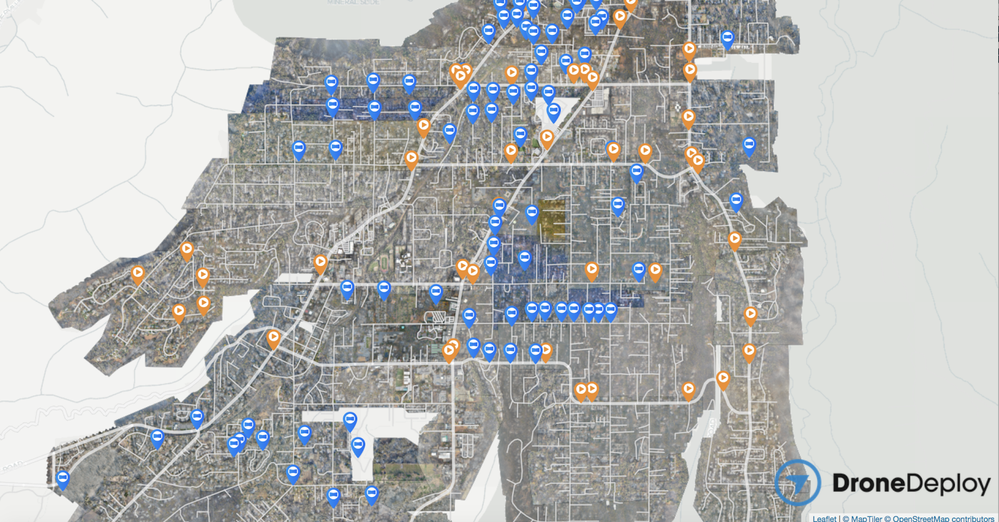
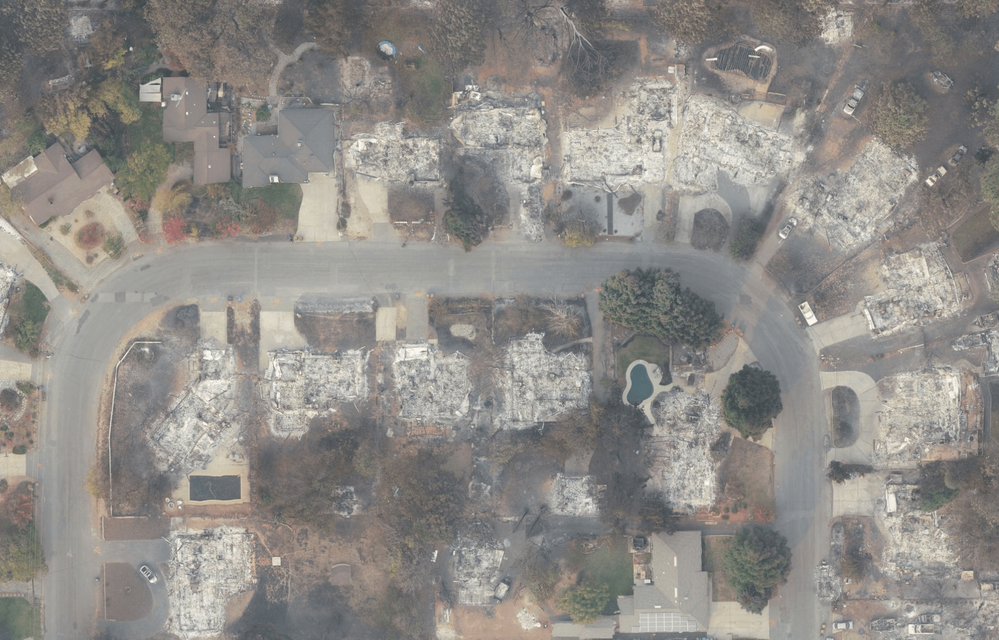
The story of a surprising ally in the fight to save lives during California’s most destructive wildfire: drones. Before containment, the fire tore through urban areas across Paradise, Chico, Oroville, Magalia and other cities destroying almost 14,000 homes, 528 commercial structures, and close to 4,300 buildings in its path. Most of those initially marked as missing have emerged, hundreds of people still remain unaccounted for almost three weeks later. Our hearts go out to all those affected by these devastating events. The Camp Fire is already a source for history books, but one record you may not know about is the largest UAV disaster response to date. Drones have increasingly become go-to tools for collecting aerial insights in the wake of the disaster, but the efforts that unfolded after the Camp Fire are unprecedented. Read on to learn how rescue teams used DroneDeploy to map the destruction to aid the recovery process in the days leading up to its containment. Drones Come to the Aid of Rescue Workers Over three days, 16 teams of public safety professionals from an interstate agency task force of police, fire, and rescue personnel worked day and night to complete 500+ drone flights capturing 70,000+ images of the areas surrounding Paradise and Magalia. The result: close to 500GB of drone data which DroneDeploy turned into 26.5 square miles (15,000 acres) of high-res aerial maps is now accessible to state agencies and the public to assist in the recovery efforts. This data will be used to aid search and rescue operations, assist with the planning and response to potential mudslides, issue FEMA relief funds, and help process insurance claims faster so that wildfire victims can get back on their feet. Coordinating the Largest UAV Task Force in History Individuals from Menlo Park Fire Department, Alameda County Sheriff’s Office, Butte County Sheriff’s Office and others joined forces with UAV experts at DJI and Scholar Farms to collect the data. The images have since been transformed into maps that are highly accurate, geo-referenced, and overlaid with street names. These maps are critical tools in the recovery process, as neighborhoods are no longer recognizable. Street after street of burned buildings and trees now blend together, making it difficult to discern one block from the next. Coordinating all 16 drone teams would have been challenging enough with the dense smoke, high winds, and low visibility — but planning hundreds of flights with dozens of pilots meant everyone needed to be on the same page. And teams on the ground turned to DroneDeploy to manage flight planning and data collection. “We collectively decided to utilize DroneDeploy as the set-up of their flight grids is easy and can be done on a laptop and then shows up on the tablets used for flight.” — Romeo Durscher, Dir. of Public Safety Integration at DJI The next challenge came by way of processing close to 500 GB of data. “When you have 500GB of data, you have to figure out a solution. Greg Crutsinger (Scholar Farms) came up to me and said ‘We need to get this data on a server to be processed. Any thoughts?’ And yes, I did have a thought and contacted Jono Millin, Co-Founder and CPO of DroneDeploy. He was at dinner when I pretty much threw it at him: ‘We need your help.’ These are things you can do when you establish good relationships — which is something I really enjoy about this emerging drone industry. In general, people and companies are very good at working together because there is not only so much to learn, but there is actually a lot to share. Not one company can do it all. What ended up happening is that hard drives were run to DroneDeploy in San Francisco twice and the DroneDeploy team put a tremendous amount of work into getting the data into a format that was useful.” — Romeo Durscher, Director of Public Safety Integration at DJI With no internet access in the region, the UAV teams had to transport hard drives of data to San Francisco, while Jono Millin (DroneDeploy’s co-founder) and members of our sales and engineering teams uploaded imagery throughout the night and the following morning. The next day the data was delivered in 75 maps after the engineering team spun up a massive processing cluster in our cloud to manage the influx of data. In the end, 1.4 trillion pixels of captured drone images would become a 100 billion pixel map. Putting the Data to Work to Fast-Track Recovery Efforts The maps are impressive, but we’re more impressed by how the teams on the ground have put them to use. With up-to-date visuals, fire teams are charting the damage, and planning next steps. Winter rains are now on the horizon, and the burnt foliage increases the risk of floods and impending mudslides, posing even more harm throughout the region. So the Butte County Sheriff’s Office is using the imagery to identify areas of concern and plan their response accordingly. The maps are even being used by search and rescue teams to spot any missing persons who may be in the area. Wildfire victims are also putting the maps to good use. With entire neighborhoods mapped, homeowners have been able to submit the imagery to insurance providers to process claims immediately — a process that traditionally can take days or weeks. Many have used the imagery to gain access to FEMA relief funds for the families affected by the fires. Providing a Helping Hand When it Matters Most In times like these, it’s all about lending a helping hand. And we’re proud our team was able to help play a small role in response to the fires. We wish the remaining fire and rescue teams speed and safety in the recovery. And to all the families, individuals, and businesses in this tragedy that have suffered loss, please know that our hearts are with you. We hope these efforts can help you speed up the rebuilding process. If you’d like to help the communities suffering from the devastation left in the wake of the Camp Fire, please consider donating to the following nonprofit relief funds: Where to Learn More To learn more about the efforts on the ground, please check out the resources below: The next Reverse Recruiting event—the largest session yet with over 1,000 candidates—will be held on February 12th at the Hiring Success Conference in San Francisco. Satellite events will take place concurrently around the globe. Job seekers and/or recruiters willing to participate can find more information on LinkedIn or Facebook.
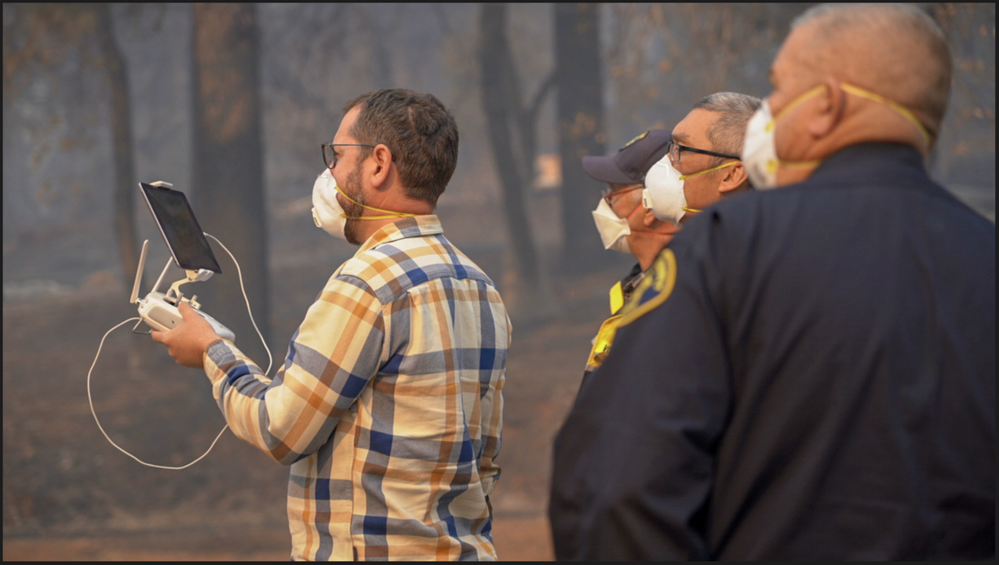 Greg Crutsinger of Scholar Farms gathers drone imagery from the front lines. Photo credit: Casey Tholburn
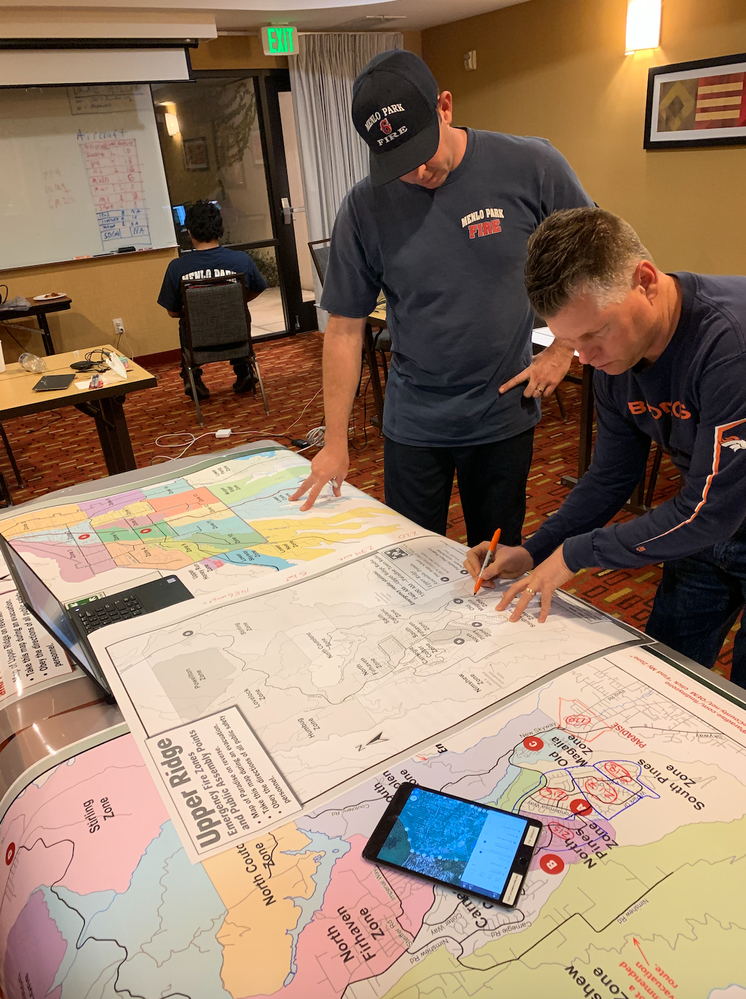 Fire teams plan drone flights with DroneDeploy. Credit: Romeo Durscher
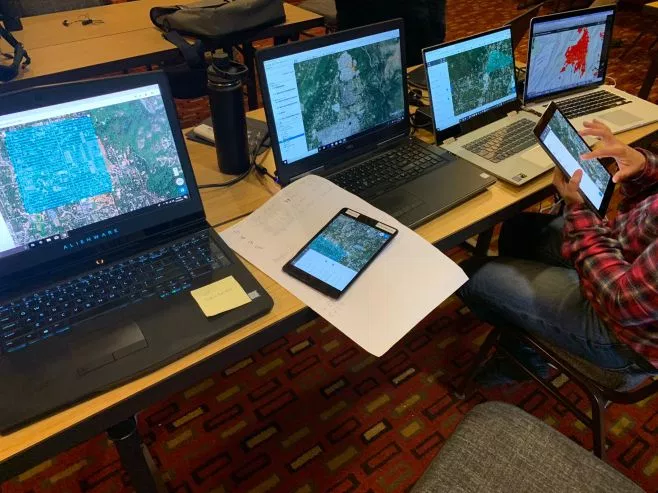 Fire teams plan drone flights with DroneDeploy. Photo courtesy of Romeo Durscher

This story was submitted as part of the #Pledge1Gives GivingTuesday campaign, which celebrates the many ways our member companies are having an impact around the world.
Recruiting is usually defined as the act of attracting and selecting candidates for employment within an organization. Thanks to SmartRecruiters’ Reverse Recruiting initiative, that definition is taking on new dimensions.
On the careers section of their website, the company states the following: “We are on a mission to connect people to jobs at scale.”
However, they realized that in order to truly enact their mission statement at scale, they’d have to come up with a more inclusive strategy. One that could help job seekers who have traditionally been successful, as well as those who have encountered setbacks.
In February of 2019, SmartRecruiters’ CEO Jerome Ternynck introduced Reverse Recruiting— an initiative that offers assistance to job seekers who have experienced difficulty finding stable, long term employment. Among them are immigrants, veterans, formerly incarcerated individuals, parents and caregivers returning to work, as well as senior citizens.
Pilot sessions were held in the spring of 2019 in San Francisco, Paris, Berlin, Spokane, and Krakow—the collective response was overwhelmingly positive. Since then, volunteers from over 100 companies across the world have taken the Reverse Recruiting pledge to help “connect overlooked candidates to jobs at scale.” More than 15 events have been organized where, in total, 250 recruiters coached approximately 400 job seekers on how to market their professional experience, sharpen their resumes, improve their interview skills, and strengthen their personal branding.
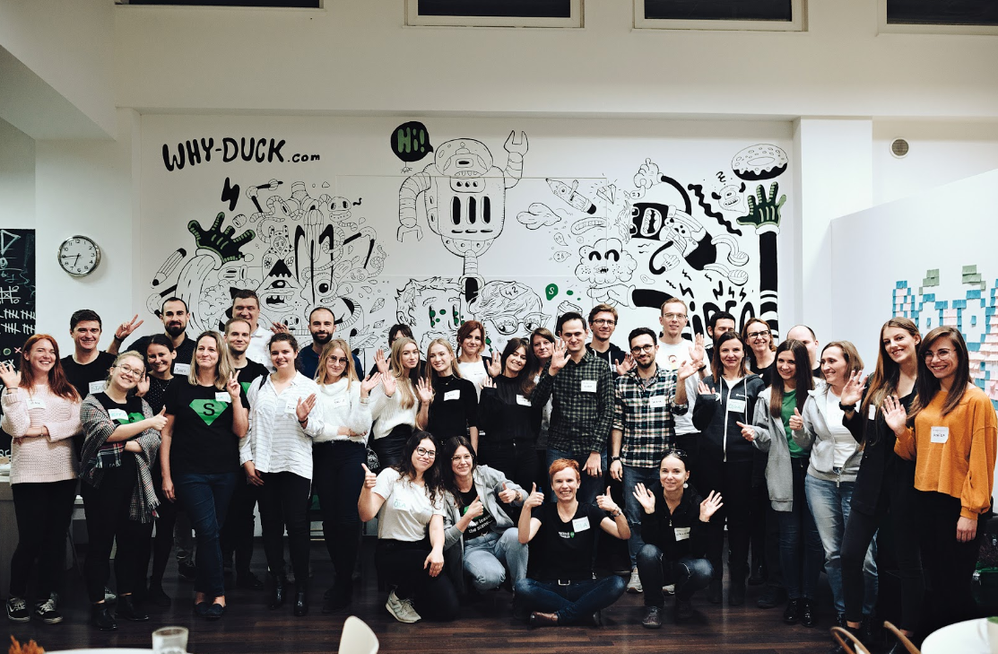 Reverse Recruiting Session in Krakow, October 2019
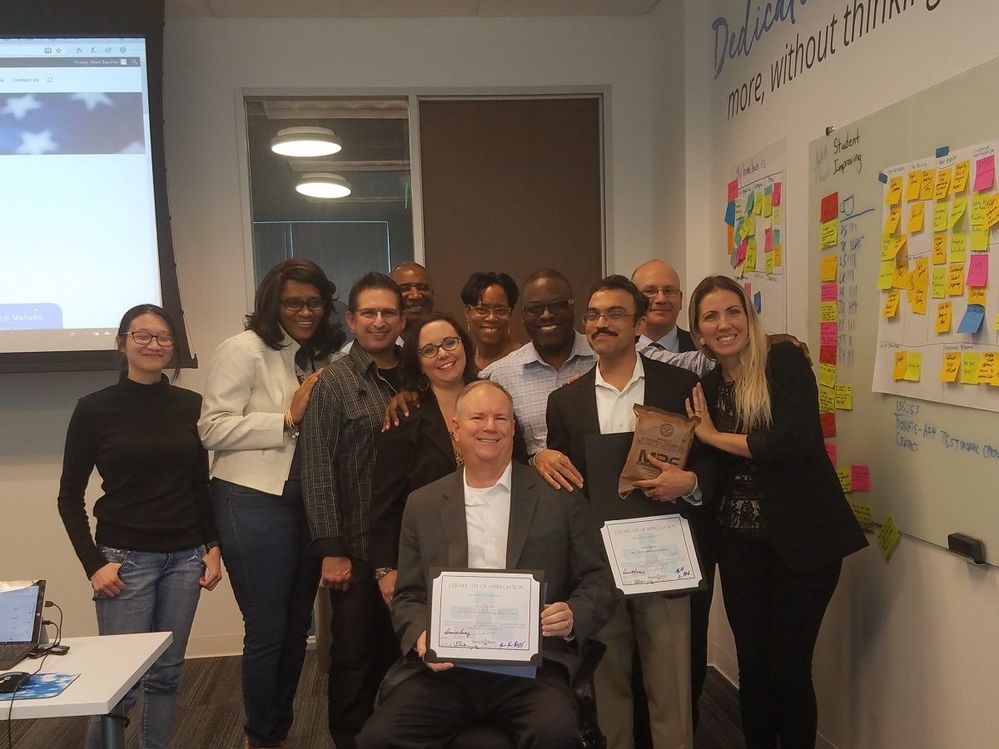
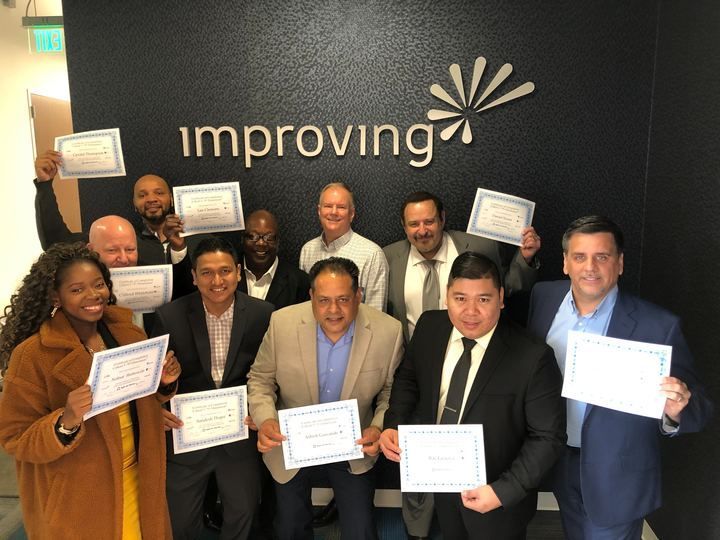
As a boutique consulting firm specializing in Agile training, coaching, and transformation, SmoothApps
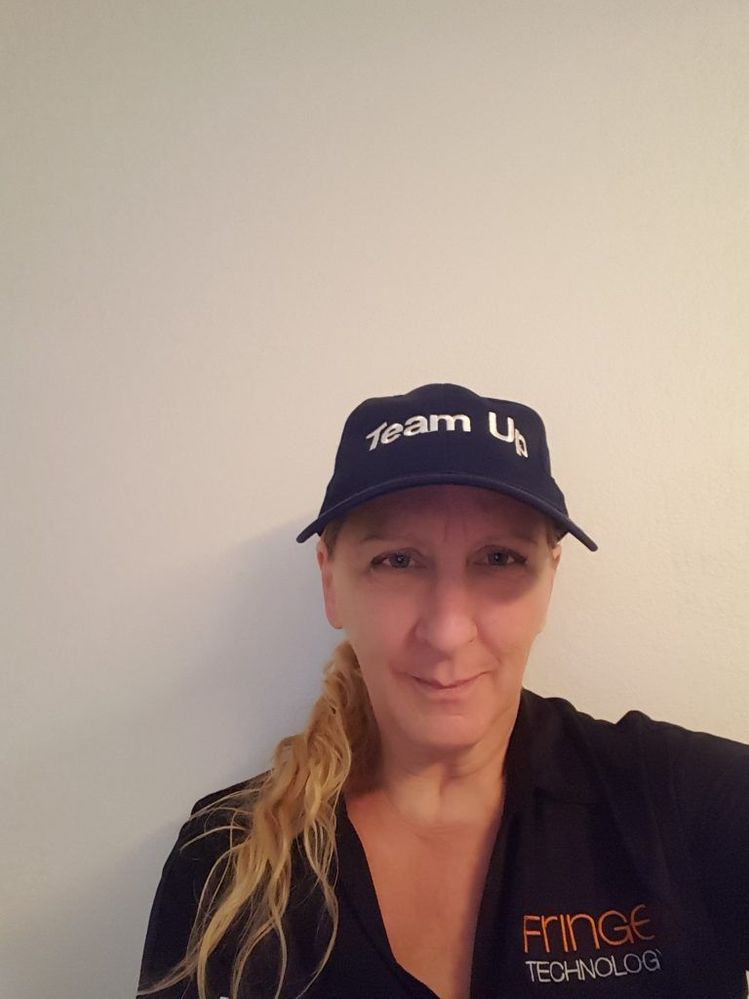
Agile for Patriots’ experience with previous graduates of their program has shown that knowledge of Atlassian products like Jira and Confluence has become a must-have during interviews. Fringe Technology’s generous contributions will help Veterans and their spouses develop new in-demand skills, boost their self-confidence, gain employment and hit the ground running!
This story was submitted as part of the #Pledge1Gives GivingTuesday campaign, which celebrates the many ways our member companies are having an impact around the world.
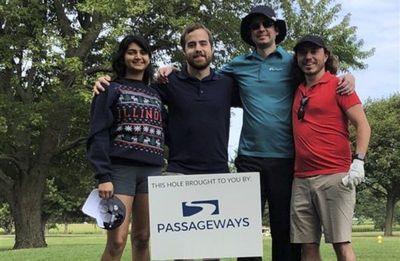
At Passageways, every employee is called a Pathfinder: one that discovers a way and explores untraversed regions to mark out a new route. We’re consciously “marking out a new route” in philanthropy by weaving its collaborative spirit into the very fabric of our daily lives. Indeed, giving back as part of Pledge 1% is not only something we enthusiastically support but have made standard operating procedure.
We are honored to be a part of #GivingTuesday, and wanted to highlight a few ways that Pathfinders demonstrated the spirit of the Pledge 1% movement in 2019:
Volunteer Time
At Passageways, we give back 1% of our time to volunteer in our communities and help local nonprofits. Not only is volunteer time off built directly into our culture of giving, it’s even written into our employee handbook!
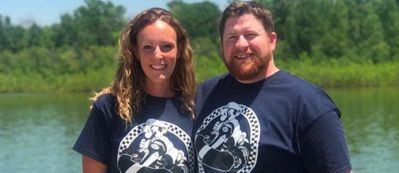
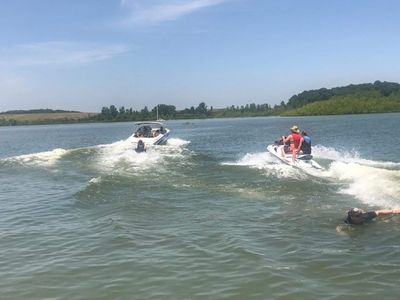
Earlier this year in July, two members of our Customer Success team traded in their headsets for life jackers and headed to Lake Harner in Lafayette, Indiana to volunteer at Camp WACK (Water Adventure Camp for Kids). Camp WACK is an adaptive water-skiing day camp that caters to children with physical or mental disabilities, including Down’s Syndrome, Autism, and Cerebral Palsy. For two days, the two Pathfinders helped children who normally may not be able to join typical community programs enjoy the thrill of flying through the open water.
Read more about their adventure on our blog.
Product
Every year, we donate our OnBoard board meeting solution as part of Pledge 1%. Five worthy nonprofits driving real change in their communities receive the software for life. This year, we wanted to expand our reach and invited our community to nominate a nonprofit of their choice.
Interest has been modest in recent years, so we were prepared to receive only a handful of responses. Instead, we were humbled and honored to receive more than 100 nominations! It certainly made our review committee’s job difficult. In the end, though, we chose 5 nonprofits to receive OnBoard for life and they include:
- Rise Above
- United Cerebral Palsy Association of Greater Indiana=
- Girls on the Run of Montgomery County
- Big Brothers Big Sisters of Flint and Genesee County]
- Happiness Through Horses
Read more about our Nomination campaign adventure.
Profit
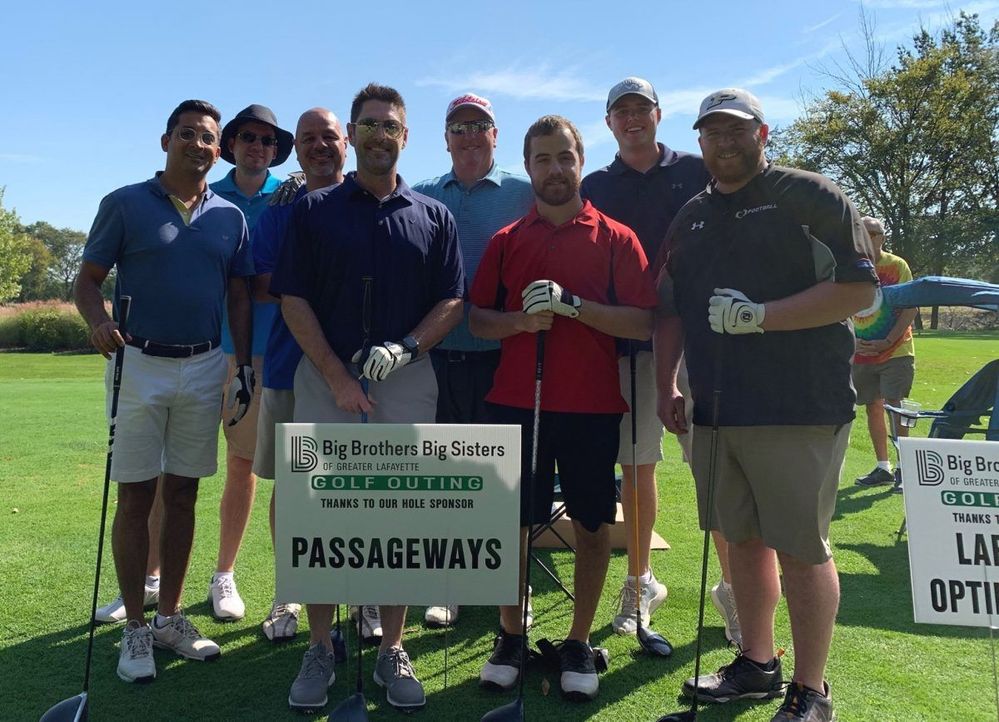
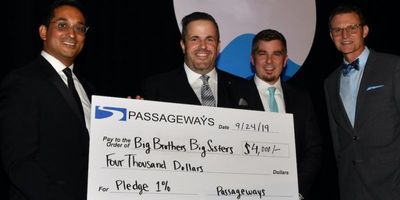
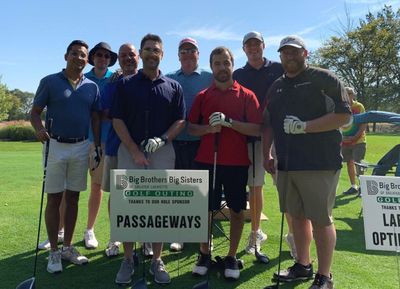
While we donate 1% of our profits to local charities and nonprofits making an impact, we’ve chosen not to just simply write a check. Instead, we’ve committed to investing in our community and fostering civic-minded leaders. We invest both time and money to organizations like Big Brothers Big Sisters and Purdue University’s Women in Management Scholarship. Ultimately, our aim is to amplify the voices of the underserved and create a culture of philanthropy that extends generations.
Being a Pathfinder Means Giving Back
We enthusiastically support the Pledge 1% movement. We’ve made it an active and standard part of our culture by engaging in cooperative community outreach and demonstrating a commitment to helping others. Not because it checks a box or fulfills a PR initiative. Ultimately, we do it because that is what it means to be a Pathfinder.
This story was submitted as part of the #Pledge1Gives GivingTuesday campaign, which celebrates the many ways our member companies are having an impact around the world.
Donating time and money is an important part of Spotlight’s culture. One thing that was important to the co-founders (Rick Nash and Andrew Hsu) as we started incorporating philanthropy into our culture was making sure the causes we were donating time and money to were important to the employees of Spotlight. Rick and Andrew have causes that are important to them, but they understand the employees of Spotlight have different things they are passionate about.
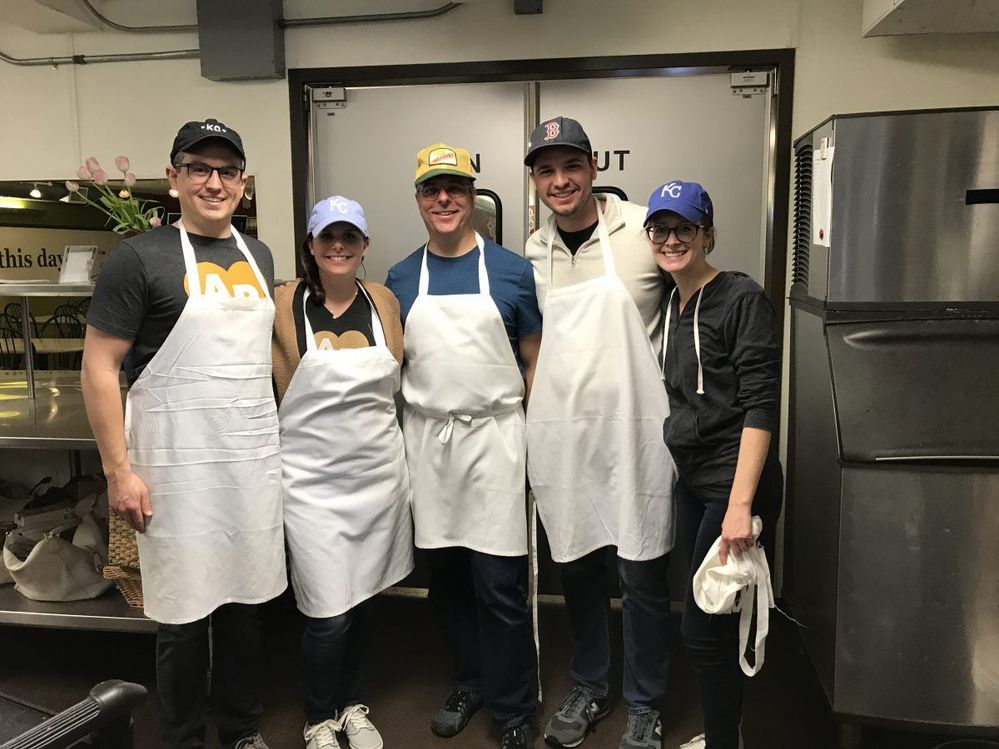
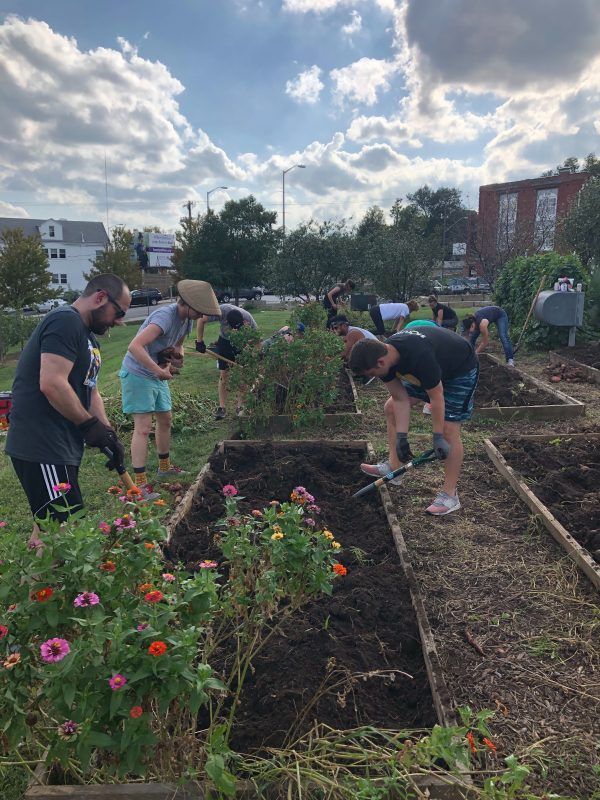
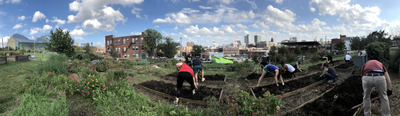
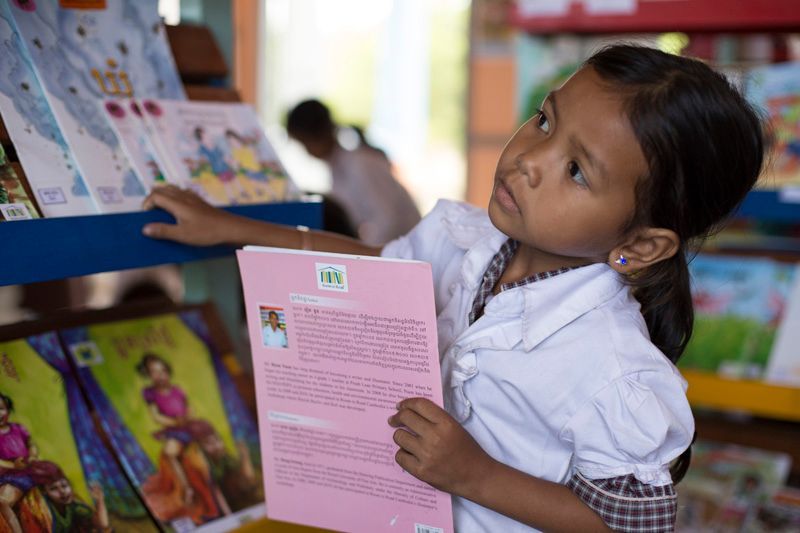
What follows is a serendipitous story about two separate philanthropic efforts Spotlight worked on that ended up being connected. Last Spring, Spotlight employee (and co-chair of our philanthropy committee) Jenni Keyes signed Spotlight up to help maintain 17 garden beds that were two blocks from our office. Jenni is particularly passionate about locally grown food, so she helped lead this effort by teaching us how to prepare the garden beds, plant the sweet potatoes we grew, weed on a regular basis, and ultimately how to harvest the sweet potatoes. It was a fun, dirty, gratifying process that resulted in 550 pounds of sweet potatoes donated to Harvesters (a local food bank) in October.
In November, a few Spotlight employees volunteered at NourishKC, a community kitchen that provides meals to those in need. NourishKC is devoted to the philosophy of “dining with dignity” which means the volunteers that come to NourishKC serve the patrons as if they were in a restaurant setting. The day Spotlight was there, Linda, the woman who helped guide the volunteers through what needed to be done, talked through what was to be served that day. On the menu was a side dish of sweet potatoes Linda said came from Harvesters. The Spotlight employees shared with Linda that there was a chance the sweet potatoes being served that day were the ones we had grown in the garden by our office. We all thought it was special that not only did we grow the sweet potatoes, we had the opportunity to see what ultimately happened with them, and meet some of the people those sweet potatoes fed.
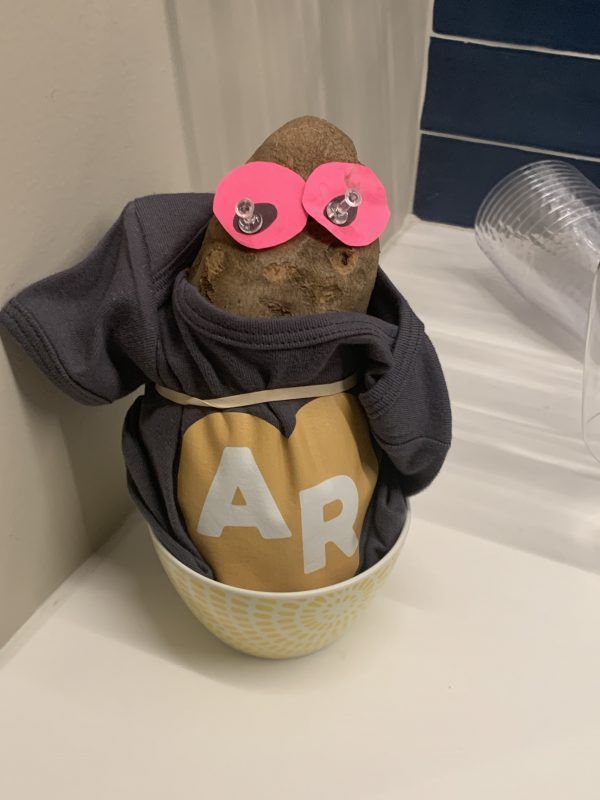
We always planned on continuing our efforts with the garden and with NourishKC, but this fun turn of events helped solidify that plan.
We work closely with PrepKC to help prepare low-income high school students for college. For two years in a row, we have hosted 25-30 students at Spotlight for a day. We taught them about Analyst Relations, shared with them the importance of virtually working with our clients, and gave them a project which showed them a real-life example of how we do work every day. This mentor program also gives students exposure to presenting, creating presentations, and researching as a part of experience they can utilize in their studies and potential future careers. This event is always well-received and we plan on continuing this for years to come.
This story was submitted as part of the #Pledge1Gives GivingTuesday campaign, which celebrates the many ways our member companies are having an impact around the world.
In 2005, I founded Language Lizard to provide creative, fun, educational products in over 50 languages to schools, libraries, and bilingual families. Our aim is to offer resources that not only enhance dual-language literacy and promote early language learning, but also teach children about other cultures and traditions, thus helping to build welcoming and inclusive classrooms.
Nearing our 15th anniversary, our Customer Outreach Representative, Nicole Smith, introduced Language Lizard to Pledge 1%. She inspired our company to make a formal commitment to supporting global literacy with a pledge of funding and time to the non-profit organization, Room to Read.
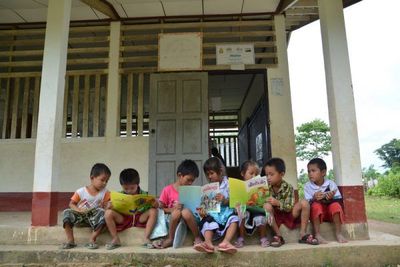
Nicole is a founding member of the New Jersey Chapter of Room to Read. Room to Read focuses on literacy and gender equality in education in 16 countries across Africa and Asia. The organization helps children learn to read and develop a love of reading from an early age. Room to Read ensures girls complete secondary school with the life skills necessary to negotiate key life decisions, be leaders in their own lives, and act as agents of change. Room to Read has benefited over 17.6 million children across 38,000 communities and aims to reach 20 million children by 2020.

Nicole has spent countless hours as a volunteer for Room to Read. Since 2011, she has run programs throughout New Jersey to enhance awareness for Room to Read’s work and to promote global giving. Nicole was familiar with Pledge 1% through her work with Room to Read and felt it was an ideal match with Language Lizard’s values and mission.
Over the last decade, Language Lizard has partnered with charitable companies and local organizations to provide literacy materials to dual language families. By joining Pledge 1%, Language Lizard is able to formalize its commitment to global giving as part of our company culture.
On Giving Tuesday 2019, Language Lizard is initiating an ongoing pledge to support Room to Read’s Book Publishing program. Through this program, Room to Read volunteers conduct writer and illustrator workshops around the world where participants learn best practices in children’s storytelling. Many of the manuscripts developed in the workshops are then produced and distributed in Room to Read school libraries. Room to Read also collaborates individually with talented authors and illustrators who create books for these libraries. Books developed in partnership with Room to Read are regularly recognized for their superior quality, winning several national book awards. In 2011, the UN acknowledged Room to Read’s contribution to children’s book publishing with the UNESCO Confucius Prize for Literacy.
To date, Room to Read has published over 1,500 original titles in 35 languages and distributed 20 million books to students. As a publisher, I love the idea of supporting writers and illustrators throughout the world, and ensuring that culturally relevant books go to children who will learn and be inspired by them.
The coming year is an exciting one for Language Lizard. We will be celebrating 15 years supporting dual language learners. We are publishing a new manual to help educators in diverse communities build welcoming and inclusive classrooms. Language Lizard will be rolling out several new educational product initiatives. I am most excited about this new collaboration to support children’s literacy around the world.

This story was submitted as part of the #Pledge1Gives GivingTuesday campaign, which celebrates the many ways our member companies are having an impact around the world.
By Xandr
Xandr is building a new kind of advertising company that leads with curiosity and courage as we move toward the future. We believe this future, and our long-term business success, is intrinsically tied to the strength and health of our communities and the world.
Xandr Cares, our company-wide Corporate Social Responsibility program, helps us create meaningful change for our communities and for our business, harnessing the passion and generosity of teammates worldwide and leveraging AT&T’s deep commitment to building a better tomorrow.
One of our most recent initiatives is the “Xandr Cares $100K Challenge.” Running throughout the month of November, we have gathered a group of employee social good champions across our global offices to advocate for causes near and dear to their hearts, including: pancreatic cancer treatment, homelessness, increased diversity and humanity in STEM, childhood education, and support for disabled veterans.
With a total donation grant of $100,000, employees are invited to vote for the organization or cause that matters most to them, with the non-profit with the most votes receiving the largest grant. The Xandr Cares $100k Challenge not only provides meaningful contributions to non-profits worldwide, but it creates opportunities for Xandr teammates to deepen their support for the causes they care about after the campaign through volunteerism, lunch and learns, and other activations.
Watch each of the nine stories, and our campaign sizzle, here.
Learn more about Xandr Cares at www.xandr.com/social-responsibility.
This story was submitted as part of the #Pledge1Gives GivingTuesday campaign, which celebrates the many ways our member companies are having an impact around the world.
This story was submitted as part of the #Pledge1Gives GivingTuesday campaign, which celebrates the many ways our member companies are having an impact around the world.

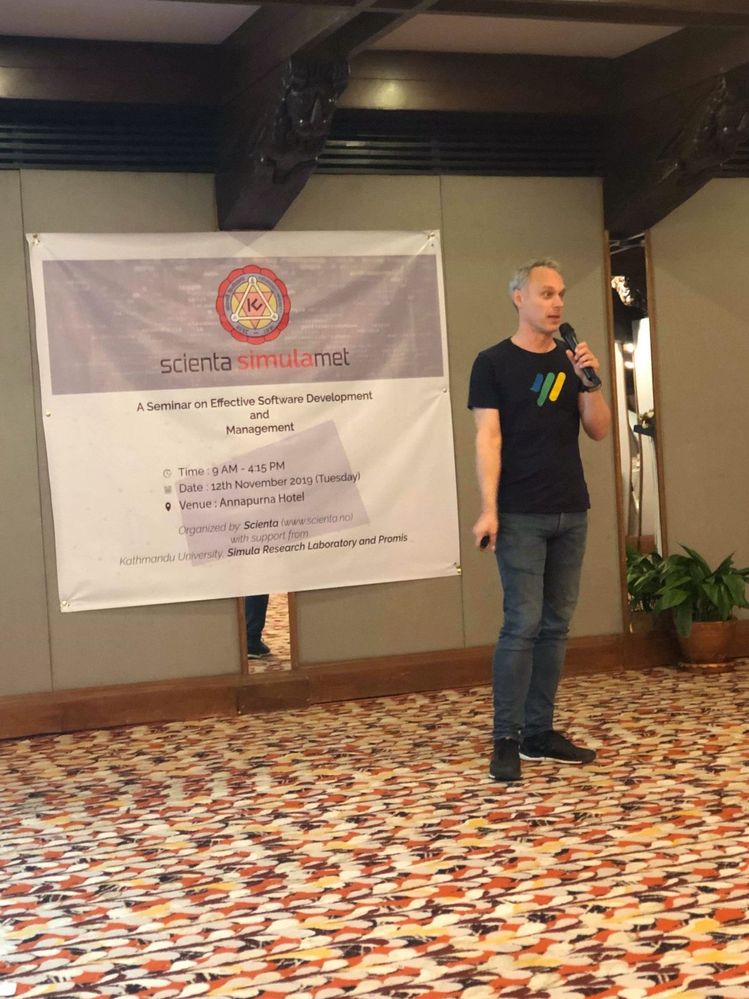
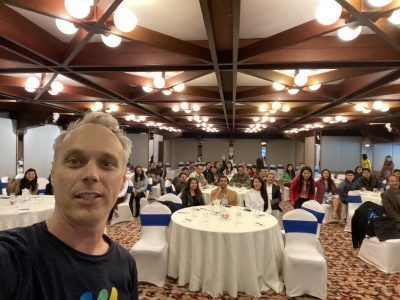
K15t, a 4 year Pledge 1% member, has teamed up with Scienta, a tech consultant company out of Norway. They put together a team of inspiring conference speakers to present at a free and local developer conference in Kathmandu. Our team member, Sven Peters used his Pledge 1% leave time to prepare a workshop, travel to Nepal, and educate 100 developers, project managers, and team leaders working for local companies on how they can start a successful remote work career in the tech industry. A day after the conference, the team of speakers visited the Kathmandu University to learn more about the state of its developer education and to give a guest lecture to the Masters students who attend.
State of Software Development in Nepal
Software development is still a relatively young industry in Nepal. Although Kathmandu University has been teaching software engineering for over 18 years, it benefits a lot by bringing in experienced developers from abroad as guest lecturers. We had insightful discussions on how the western software industry is developing products in a practical, methodical way: Version control, deployment pipelines, serverless development, and agile development practices. It also became clear that students in Nepal can benefit a lot from these real world development experiences from companies abroad.
Continue to Help
Offering sponsored internships, exchanging experiences, and offering guest lectures can help the Nepalese software industry. Organizations like Gitlab, Trello, Zapier, Stack Overflow, and many more are fully remote companies and have proven that it shouldn’t matter where in the world we’re based as long as we have a good and stable internet connection. There’s a lack of software developers in every industry and Nepal is buzzing with great talent. We should continue to work on bridging the gap between theoretical knowledge and the practical development experience in Nepal.