Diagnosing the current state of innovation culture within an organisation working on the frontline to put an end to childhood cancer

This story was submitted as part of the #Pledge1Gives GivingTuesday campaign, which celebrates the many ways our member companies are having an impact around the world.
Children’s Cancer Institute (CCI) in Sydney, Australia ‘exists solely to put an end to childhood cancer’ under the guiding principal “It’s not if. It’s when”. The incredibly talented and passionate staff at CCI work tirelessly to make this vision a reality; they believe every child can be saved and work tirelessly with a focus on the patient. To increase collaboration between clinicians and researchers, CCI is currently undergoing a major organisational transformation; moving to a Comprehensive Childhood Cancer Centre (CCCC) which would mean a change of location, organisational structure, and way of working for the institute.

As part of our 1% Pledge, we worked with the CCI leadership team to help them devise a strategy for the future by, ensuring efficient allocation of resources and funding to enable the talented staff at CCI to focus on their patients in a clinical environment and continue to undertake world-class research, bringing them closer to curing cancer for children.
Venturetec worked closely with the executive team and staff across the organisation, giving them a platform to voice concerns, their vision, and where they see the biggest opportunities to be. With so many talented, and dedicated researchers in the organisation, this allowed us to deeply understand the organisation, and showcase ideas and passionate voices which may otherwise not have had a platform.
“[The diagnostic’s] findings reconfirmed a number of insights (or suspicions) we had about ourselves, our challenges, gaps and general organisational characteristics, but reinforced them in a way that fostered more constructive discussion about how to address them, including the recommendations from Venturetec…It also highlighted risks and opportunities that we hadn’t considered, or had given cursory attention to.” – Mark Bizeray, Head of Business Transformation at CCI
Through our diagnostic process we engaged with staff across the institute, with representation from all teams and levels of seniority. The resulting learnings and insights were presented back to the organisation along with a series of recommendations. Venturetec is now continuing to work with CCI to guide them through the process of implementing these recommendations, paving the way for CCI as they transition towards the Comprehensive Childhood Cancer Centre in the following years and allowing them to continue innovating and creating life-saving treatments for children with cancer.
“The recommendations translated a way forward into actionable work packages across a range of functional/strategic opportunities. The focus of the recommendations was on small quick wins, with an eye to longer term change/goals. This suited us at the present time, as a full program of changes across all recommendations would have been overwhelming for an already busy organisation.” – Mark Bizeray, Head of Business Transformation at CCI

The opportunity to work with CCI not only assisted them to do boost their internal innovation culture and capability, but uplifted our internal culture at Venturetec as well with collaboration across the whole team, and we are looking forward to our next 1% pledge project and continuing to work with CCI long into the future.
– Trey Zagante, Managing Partner at Venturetec
This story was submitted as part of the #Pledge1Gives GivingTuesday campaign, which celebrates the many ways our member companies are having an impact around the world.
By Cloudbyz
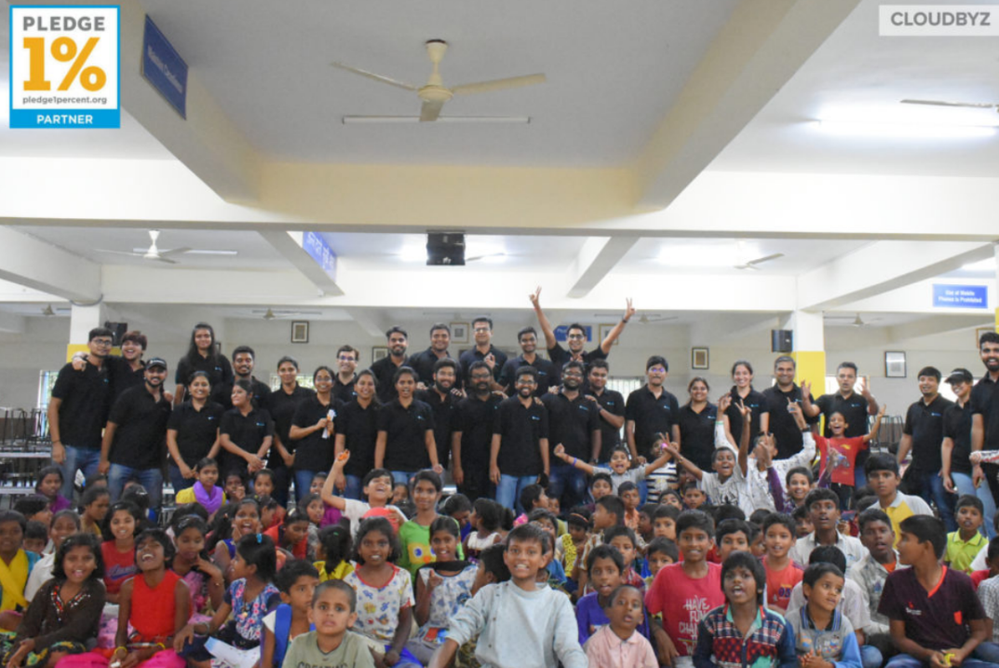
As part of Pledge 1% initiative Team Cloudbyz got together for the most fulfilling time spent on Nov 6th at Samarthanam Trust – an organization for the differently abled located at HSR Layout, Bangalore. The officer on duty at the Trust was very warm and explained about the early days of the institution and the Himalayan strides they have made with the help and support of many philanthropic minds.
Samarthanam Trust is a registered nonprofit organisation founded in 1997 by Mahantesh G Kivadasannavar. The Trust caters to people who are differently abled, underprivileged children and women in distress. It runs schools for early phase education and provides practical support to more than 528 students in pursuing higher education each year paving the way to successful careers. The trust also promotes and participates in sports activities for the differently abled. Cricket Association for the Blind in India is one of its many sports initiatives.
The Cloudbyz team split into various groups and engaged with students by conducting activities like drawing, clay modelling, mystery bag and other team games. There were more than 175 children aged 6 to 15 years on the day of our visit. The children thoroughly enjoyed all the activities and participated with great enthusiasm. The team was awestruck to see the children display their deftness in modelling the clay to beautiful creations and in creating colorful drawings that were picture perfect!
The children filled the place with the spirit of living “in the moment” and brought out the child in us. We took back with us the learning that, with the right opportunities, each person on Earth can excel in their own special way.
We signed off capturing the moments as pictures even though the experience will remain etched in our hearts forever! We thank everyone at the Trust for giving us this opportunity and allowing us to interact with the children. We look forward to continuing our association with the Trust.
Cloudbyz is committed to help social and global communities through Pledge 1% global movement (https://pledge1percent.org/) to give back to society and bring a positive impact through Philanthropic activities.
Message from leadership:
While as a startup we are focused on building products and scaling our operations globally, we are also committed to giving back to the society in whatever way possible. We are delighted to be part of Pledge1% as it provides us a great framework and inspiration to actualize our philanthropic objectives – Dinesh, Founder and CEO – Cloudbyz Inc.
Building innovative solutions and solving customer problems leveraging technology is all exhilarating but what is more rewarding, and fulfilling is being able to channel the team’s collective energy to making a difference to society even in some small way. Our heartfelt thanks to Samarthanam Trust, for allowing us to spend the day with the amazing kids. – Hariharan, Co-founder and COO- Cloudbyz.
A day well spent is a day well lived!! – CSR by Team Cloudbyz
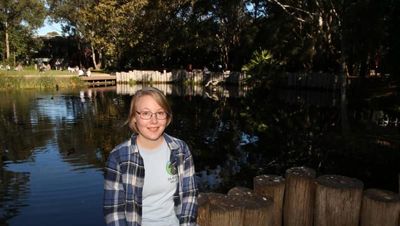
Stephanie; summer Siligong Valley Intern to Software Developer
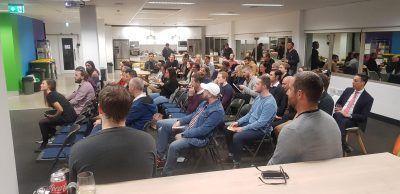 Javascript meetup
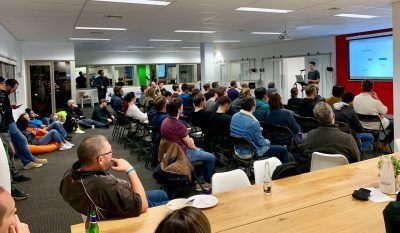
Infracoders meetup
This story was submitted as part of the #Pledge1Gives GivingTuesday campaign, which celebrates the many ways our member companies are having an impact around the world.
Our purpose at Charter Hall is to secure a better future for all. This year, as we celebrate #GivingTuesday, we’d like to share how we used a humble jigsaw puzzle to symbolise the grave impact violence has on women, children and families in Australia, and raise funds for domestic violence shelters.
A Pledge 1% pioneer
Charter Hall’s values focus on thinking bigger, doing better and going further to create value. Community has been a vital part of how we give back for many years. It’s incredibly important to us that we support the communities in which we operate, connect with them and positively benefit them.
So it’s not surprising that we were the first Australian property company to join Pledge 1% in 2017, aiming to give up to one percent of our people’s time, space in our places and our profits to our community partners.
Two Good + Charter Hall = a lot of good
One of those community partners is social enterprise, Two Good.Co which directly assists survivors and women’s refuges with the generous help of Australian culinary superstars like Neil Perry and Maggie Beer. It’s grown from an ad-hoc roadside barbeque to an organisation that delivers meals across 26 communities nationally.
“We are delighted and privileged to partner with Two Good. We take our responsibility of giving back seriously,” says Greg Chubb, Charter Hall’s Retail CEO. “One in four women in Australia experience domestic violence at some point, and many of them end up in refuges whilst they work through this very challenging time in their lives,”
“Two Good is doing extraordinary work in supporting these shelters and the women in them, and Charter Hall is honoured to be able to support Two Good to reach into regional Australia.”
Delivering more good than ever
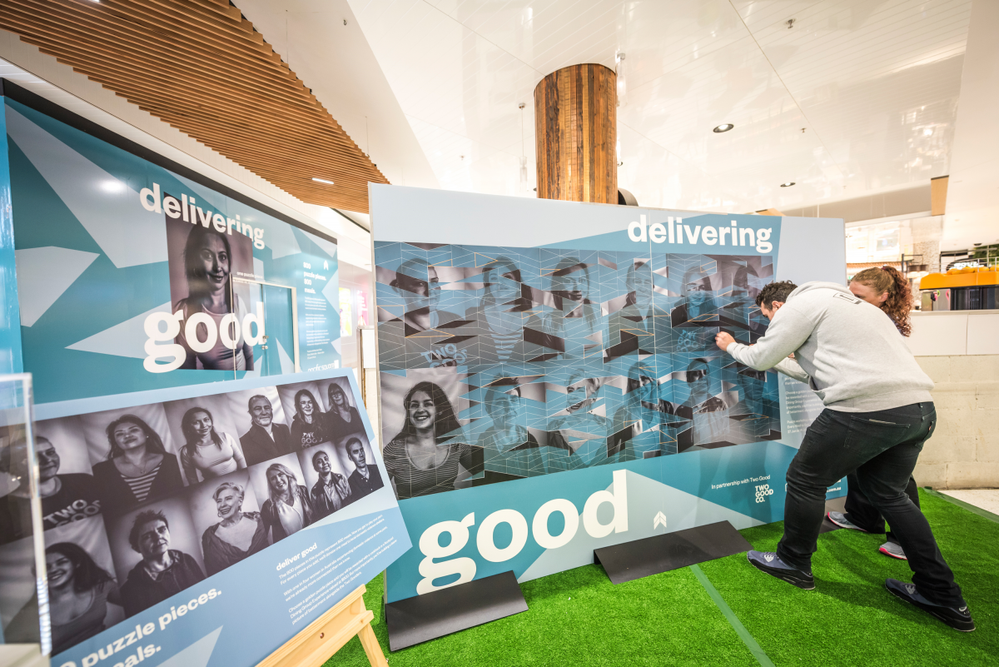
Our “Delivering Good” campaign with Two Good brought a powerful social message home in a very simple way. We engaged 26 of our retail centres to raise awareness about domestic violence and the wider community’s vital role in supporting survivors to rebuild their lives by hosting giant jigsaw puzzles. Shoppers were then encouraged to add to the puzzle, symbolising the way domestic violence survivors rebuild their lives piece by piece, and the way in which the wider community can help.
Every piece represented a meal which was donated to the local community and there were ambassadors on hand to discuss the campaign as well as the topic of domestic violence with shoppers.
“We had a lot of our tenant and retail customers engage with us on the topic of domestic violence and how important it is”, says Margot Black, Head of Sustainability and Community at Charter Hall. “They found it fantastic that we were focusing on the issue and providing education on it.”
The twenty thousand pieces transformed into 20,000 meals for domestic violence shelters – Two Good’s biggest ever donation to date. The meals themselves went directly to shelters and refuges close to our retail centres.
But the benefits didn’t end there. The campaign also resulted in women who had been directly affected by domestic violence being trained and employed by Two Good to deliver the meals out to communities.
Our one percent commitment
Partnerships are an important pillar of the Pledge 1% initiative at Charter Hall. We work closely with national partners and local community groups, to create a positive impact for our people, customers, environment and local communities in which we operate.
Community involvement for us is about participating in programs and activities and services where we can touch and feel the impact we’re making. We want to create a meaningful place for our tenants to work and customers to visit, and for all our people.
Building communities of the future
Although the Delivering Good campaign may be over, our partnership with Two Good continues to flourish.
We introduced Two Good’s beautiful bathroom products to shoppers in our retail centres. For every product sold, we give one to a domestic violence shelter. In our offices we also have Two Good Thursdays where all catering is provided by Two Good. And we have a regular Tuesday morning breakfast, where the muesli provided to our employees across Australia are provided by Two Good as well.
Margot Black, again: “The power of community lies in finding creative and effective ways to work together. We believe we’ve found that through our partnership with Two Good and our involvement with Pledge 1%, we’re able to build stronger communities and better futures for so many Australians.”
Click here for more of our stories.
As originally posted on blog.taskrabbit.com
Making everyday life easier for everyday people has been TaskRabbit’s mission from the start, and that mission has taken form in TaskRabbit for Good (TR4G). Now, as part of TR4G, we’re proud to announce that we’ve joined the Pledge 1% movement along with thousands of other companies worldwide, to strengthen communities by helping neighbors in need find work and a place to call home. Given the unique nature of our technology platform, which connects people looking for work to those who need help around the home, our TR4G mission and now our commitment to Pledge 1%, was built into our DNA since day one.
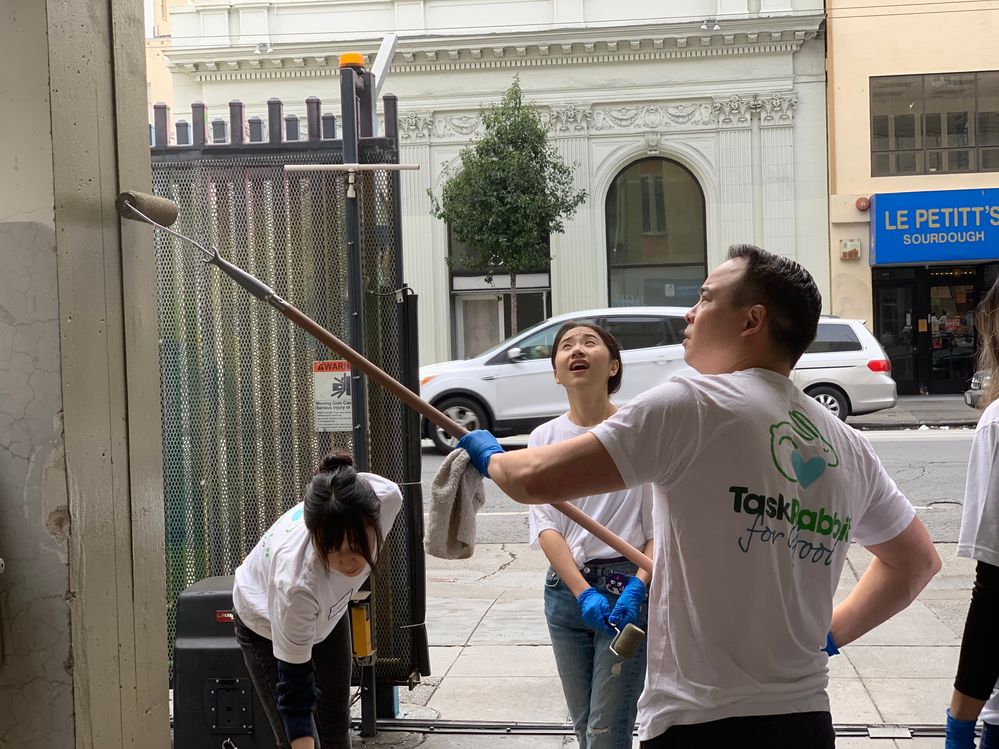
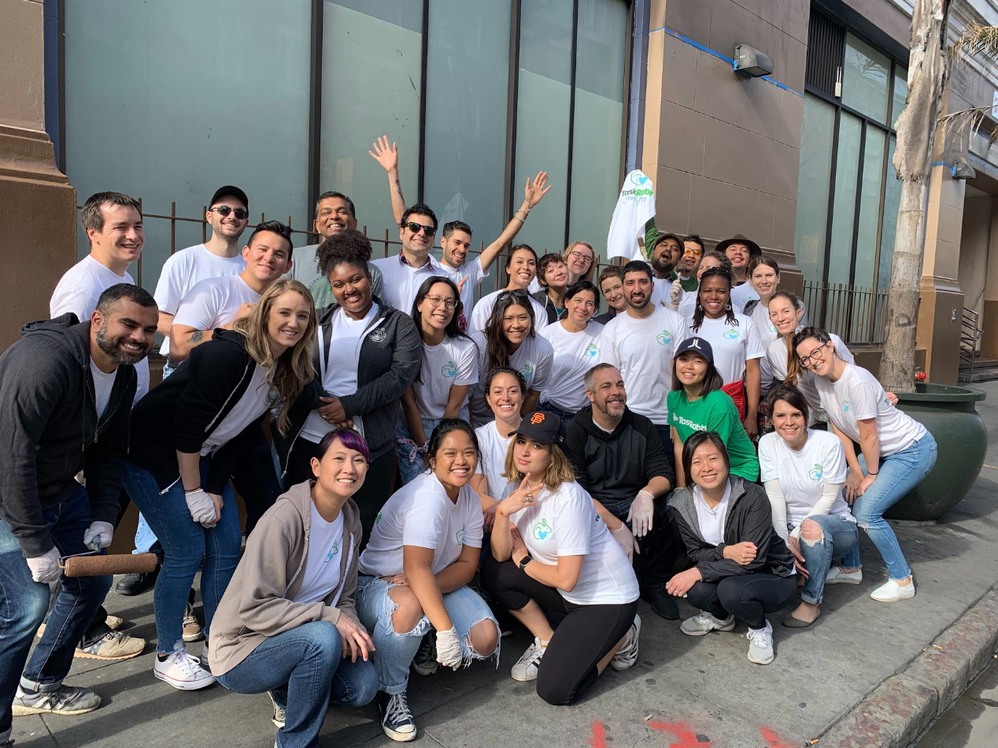
Pledge 1% is a global movement that aims to create a new normal for companies of all sizes, and enable them to have a positive social impact through their business. TaskRabbit will be pledging 1% of our time to volunteer with non-profit organizations dedicated to helping people find work or a place to call home in the communities we serve. We will achieve this through a combination of company office-wide community service days to support organizations such as Breaking Ground (New York, NY), Providence Row (London, UK), Hamilton Families (San Francisco, CA), Episcopal Community Services (San Francisco, CA), and Mobile Loaves & Fishes (Austin, TX), as well as department-specific volunteer events, and volunteer time at a charity of each employee’s choice.
We’ve all experienced moments when we needed a helping hand — and someone reached out offering support — whether it was an organization or a friend. Pledge 1% is an extension of our ethos of neighbors helping neighbors. We’re proud to join the Pledge 1% community and encourage other companies to join us in taking the pledge and leveraging their business as a force for good.

As originally published on NYTimes.com
The current system has led to profound inequality. To fix it, we need businesses and executives to value purpose alongside profit.
Capitalism, I acknowledge, has been good to me.
Over the past 20 years, the company that I co-founded, Salesforce, has generated billions in profits and made me a very wealthy person. I have been fortunate to live a life beyond the wildest imaginations of my great-grandfather, who immigrated to San Francisco from Kiev in the late 1800s.
Yet, as a capitalist, I believe it’s time to say out loud what we all know to be true: Capitalism, as we know it, is dead.
Yes, free markets — and societies that cherish scientific research and innovation — have pioneered new industries, discovered cures that have saved millions from disease and unleashed prosperity that has lifted billions of people out of poverty. On a personal level, the success that I’ve achieved has allowed me to embrace philanthropy and invest in improving local public schools and reducing homelessness in the San Francisco Bay Area, advancing children’s health care and protecting our oceans.
But capitalism as it has been practiced in recent decades — with its obsession on maximizing profits for shareholders — has also led to horrifying inequality. Globally, the 26 richest people in the world now have as much wealth as the poorest 3.8 billion people, and the relentless spewing of carbon emissions is pushing the planet toward catastrophic climate change. In the United States, income inequality has reached its highest level in at least 50 years, with the top 0.1 percent — people like me — owning roughly 20 percentof the wealth while many Americans cannot afford to pay for a $400 emergency. It’s no wonder that support for capitalism has dropped, especially among young people.
As originally published on Geopointe.com
How Geopointe, Salesforce & Pledge 1% are Making a Difference!
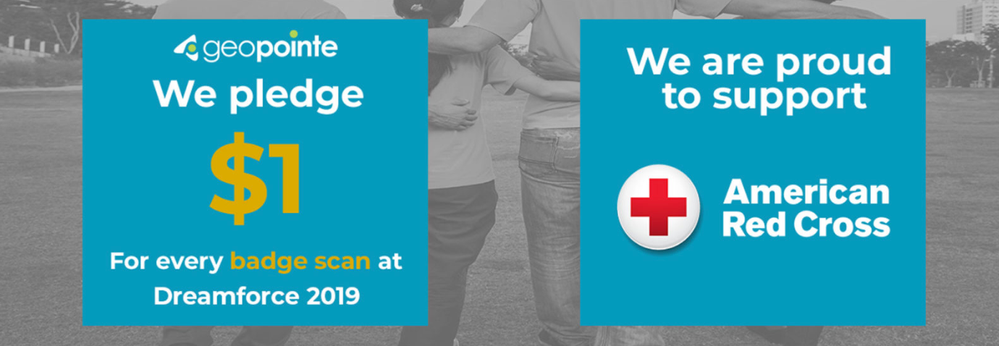
Geopointe is excited to once again be joining Salesforce and Pledge 1% in their efforts to give back at Dreamforce 2019. Geopointe has committed to donate $1 to the American Red Cross for every event ID badge scanned by a Geopointe team member at Dreamforce!
Helping Our Fellow Humans
We are proud to partner with the American Red Cross and support their mission of preventing and alleviating human suffering in the face of emergencies by mobilizing the power of volunteers and the generosity of donors. The American Red Cross, part of the global Red Cross network, holds fast to the seven Fundamental Principles set forth by the global Red Cross network: humanity, impartiality, neutrality, independence, voluntary service, universality and unity.
The American Red Cross has been dedicated to serving people in need since being founded in 1881. In order to fulfill their organization’s mission, they depend on the generous contributions of time, blood and money from the American public. Geopointe is honored to partner with the American Red Cross and contribute to the service they carryout daily.
Our Core Values
As an organization built in the Salesforce ecosystem, Geopointe and Salesforce hold similar philanthropic values. According to Scott Hemmeter, CEO of Geopointe, these values have been at the core of Salesforce for as long as he’s been a part of the Salesforce ecosystem. “Salesforce has been one of the leading organizations both practicing and promoting a commitment to corporate philanthropy. I hope to continue bringing that same commitment to Geopointe and look forward to partnering with Pledge 1% again this year to help make that happen,” said Scott.
Scott has made concerted efforts to keep Geopointe regularly involved in charitable causes. He initiated Geopointe’s $1 per lead scan donation program two years ago at Dreamforce 2017 and has opened Geopointe’s doors to charities in need of a top geolocation solution through Salesforce, offering a special discount to nonprofit organizations.
‘Compassionate Capitalism’
Badge scanning is a standard practice at Salesforce events, creating a cut-and-dry vehicle for commerce. By adding philanthropic importance to each badge scan, it now gives the exchange a feeling of purpose.
Born from the concept of “Compassionate Capitalism,” famously coined by CEO Marc Benioff, efforts like Geopointe’s $1-for-1 scan concept have become more and more frequent at Dreamforce and other Salesforce events. In fact, today, Salesforce events have become a hub for philanthropy, social justice and forward thinking. Every year, Dreamforce provides attendees with opportunities to give back. We’ll be sure to keep you updated on any opportunites or you can check here to see what’s in store closer to this year’s event!
Powered by Pledge 1%
Pledge 1%, officially established in 2016, is the driving force behind philanthropy in the Salesforce ecosystem. Pledge 1% partners with companies to help them give back through various channels: equity, time, product and/or profit to any charity of their choosing.
“Salesforce and Pledge 1% work together to not only provide a great opportunity for companies like ours to giveback to others at Dreamforce, but use their reach and influence to encourage the thousands in attendance to get involved,” said Mark Baird, Geopointe VP of Sales. “Partnering with Salesforce and Pledge 1% makes it even easier for our team to giveback by providing assistance and resources to boost the visibility of our efforts which, in turn, boosts the response from attendees,” Mark added.
Stop by the Booth! (#713)
At this year’s Dreamforce Geopointe is a Groundbreaker Sponsor so make sure to stop by our booth and say “hi”! We’d love to have you come by to meet our team, watch a quick demo and fill your bags with some Geopointe SWAG! But, before you take off, be sure to save a second for a scan.

As originally published on Inc.com
For entrepreneurs deep in the throes of building a company from the ground up, creating a social impact program is rarely a top priority. Building a formal program can seem daunting and time consuming, but committing to giving back in the early days doesn’t have to be a grand gesture or investment– you just have to start.
As my co-founder Todd McKinnon and I learned while building Okta and creating Okta for Good (our company’s nonprofit arm), taking small steps to solidify a commitment early can make a massive difference in shaping the way an organization gives back later. We learned that embracing social impact from day one signals to employees, customers and investors a firm dedication to giving back through every stage of growth.
Here are four ways leaders can kick off a lasting program and pave a path to long-term corporate social responsibility.
1. Make a commitment.
Making a commitment at the start helps ensure social good is at the forefront of your mission and woven into your company values as you grow. To instill giving into Okta’s DNA, we took the 1% Pledge, an initiative challenging companies to pledge one percent of equity, profit, product, and/or employee time for their communities, back in September 2016.
This enabled us to grow our commitment through Pledge 1%’s resources, case studies and one-on-one guidance. By the time we went public, we formalized Okta for Good in our S-1 registration document and made it clear to public investors that if they invested in us, they invested in Okta for Good, too.
This way, giving efforts aren’t relegated to the back burner among other pressing responsibilities. Ideally, a founder-level sponsor should lead the way with a group of employees who have the bandwidth, resources and cultural influence to bring the commitment to life.
2. Connect your product to impact.
It’s not just about employee time spent and dollars invested, the products or services you build can drive social good too. Many technology companies help nonprofits “get out of their own way” when it comes to IT so they can spend more time and resources delivering on their missions. This includes providing nonprofits with licenses for your products, offering deep discounts, giving technology training courses to nonprofit leaders at no cost or leveraging your product to solve community-focused use cases or pain points.
For example, Twilio launched Twilio.org’s “Recipe for Good” book, outlining how social impact organizations have built thousands of Twilio apps to fuel positive change– through mobilizing volunteers, delivering critical info and engaging supporters. Postmates‘s social impact program, Civic Labs, built a product that enables restaurant partners to utilize the Postmates API platform to deliver excess food to local shelters, enabling a zero-waste solution. Once you identify the best way to connect your product to impact, share your findings with other leaders and organizations for inspiration.
3. Activate your team.
Company leaders have a responsibility to engage the broader organization in social good efforts– and to ensure everyone has the bandwidth to contribute time and effort to local volunteering or fundraising events. Make it simple for your team to put day-to-day work aside on a regular basis and to give back to local communities.
One easy way to do this is to give employees time off each year to participate in social good efforts. Bay Area companies like Salesforce, Cisco and Intuit for example have created a contagious culture of giving back that stems from giving each employee a designated number of days off per year to volunteer.
At Okta, each employee gets three days of volunteer time off per year, and we integrate volunteering into our new hire orientation process to infuse giving back into the Okta experience from the start. A commitment to providing this time off benefit ensures social good is on everyone’s mind, and it’s good for team morale, too; a recent study showed companies engaged in CSR programs saw a 50 percent reduction in employee turnover.
4. Don’t go it alone.
I co-founded an integration company– so unsurprisingly, I’ve found that partnering with technology companies committed to driving the future of work and building seamless customer experiences has helped us grow faster and smarter. This partnership mindset applies to joining forces with like-minded companies committed to helping the community. Teaming up with other organizations amplifies efforts and can help build relationships with business partners, customers, prospects and industry peers — furthering both business and community objectives.
Look for initiatives in your community that bring companies together and align with your organization’s social impact goals. As an example, the #ImpactCloud initiative offers inroads for impact-oriented technology companies to combine forces and accelerate digital transformation for social impact organizations. The initiative inspired us, Box.org, DocuSign Impact, Salesforce.org and Twilio.org to collaborate and transform how the technology sector can support greater change together.
Creating a successful social impact program does not stem from just one person at a company; it’s a team effort, ideally supported by leaders dedicated to giving back, motivated employees and community partners who view corporate giving in a similar light. We all have a responsibility to give back, and our success is linked to our communities: businesses can’t thrive unless our communities are thriving as well. The earlier you embed the “giving mindset” into your organization, the easier it will be for your company to scale alongside the mission and build on it as you grow.
As originally published on DeccanChronicle.com
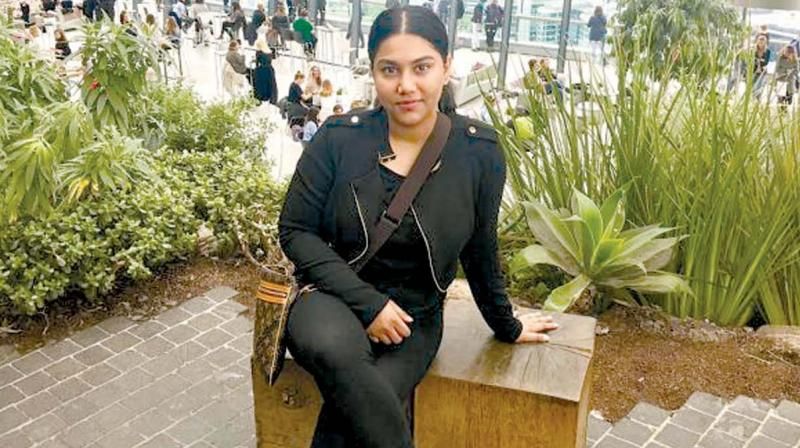
In recognition of her contribution, Madhavi, 29, was invited as a speaker to United Nations.
BENGALURU: Madhavi Shankar is a young, passionate, socially committed entrepreneur who advocates equal educational opportunities through her start-up SpaceBasic- an interactive hurdle free application for student housing. In recognition of her contribution, Madhavi, 29, was invited as a speaker to United Nations. Within two years, her engagements resonated through a series of appreciations, awards and recognition from the country.
Speaking about her encounter with the start-up ecosystem, Madhavi Shankar takes Deccan Chronicle through her two-year journey from an entrepreneur to becoming one among the 9 ambassadors for UN’s ‘One Million Global Youth Leaders for Sustainable Development by 2030 (1M2030) initiative launched in Geneva. She was invited along with her co-founder Aiden Bingham to represent SpaceBasic.
One afternoon, on a working day, I found myself resorting to watch a series after delegating work. This was the initial trigger that urged me to yearn for four-and-a-half years of hard work that resulted in my promotion as a Product Manager at Vodlo Pty Ltd, a start-up in Sydney. I missed the feeling of working at the ground level in a start-up, like we did in building Vodlo with a 5-member team. Instead of looking for a change in job, I decided to experiment by setting up one myself.
While this urge lay deep within, it bore fruits after my meeting with Indu Navar, my mentor and co-founder of SpaceBasic. I decided to move with my parents to India to work towards fulfilling my dreams.
What is SpaceBasic and its social outreach?
SpaceBasic is an interactive networking platform, where we address critical problems like student safety checks, digital data management, open and improved communication channels between all stakeholders within independent student housing communities (SHC) and SHCs in schools and colleges. Founded in 2017, SpaceBasic is headquartered in the US with Bengaluru as the functioning branch in India. We have currently collaborated with over 70 educational institutions and 120,000 users in Karnataka with two set-ups in Delhi and Mumbai.
We also work towards creating equal opportunities for students by connecting them with global companies seeking student engagement in the form of internships, skill development training etc. To provide equal educational opportunities, we have expanded our reach towards tier 2 cities in Karnataka. Based on our collaboration with UAS-GKVK, Bangalore, 20+ students were chosen for a 6 month farming internship in the US. By 2020-21, I want to be able to reach out to 1 million students from the world. With calls of interest from the Middle East and Vietnam, we want to impact lives of students pan India and pan World.
What were the challenges that you faced in the transition from being an employee to that of an entrepreneur?
Challenge for me was to basically sail through the mindset internally and externally. By internally, I mean the effort of getting accustomed to the Indian working space and moving in with parents as I was an overseas student and an employee. Externally, I would directly like to specify the social norms of prejudicing women’s roles in the society.
Can you give some insights about your recent participation at UN’s ‘Beyond 2030’ initiative?
There are about 1.2 billion youngsters globally, and this number is expected to grow by seven per cent in the next two decades. I was one among the 9 young leaders invited as a speaker and panelist at the United Nation’s ‘One Million Global Youth Leaders for Sustainable Development by 2030.’ This was launching event to train the next generation of community entrepreneurs.
On this occasion, 9 speakers including me were appointed as ambassadors and committee members, by Dr. Walters, Director of Global Challenges Forum to lead the march to attain the sustainable goals.
Whom would you like to attribute this successful journey?
Behind every successful man is a woman. However, in my case, I believe, behind my aspiring journey was my father’s support and guidance throughout. Sim ilarly, without Indu Navar’s mentorship and confidence in my spirit was indeed the turning point in my life. My mother and sister raised me to become independent and fierce. Also, my great founding team has made my dream work.
As an advocate for global women educators and employment, what is your contribution?
Giving back is in our corporate philanthropy. We are part of the movement called Pledge 1% movement. We pledge 1% of our profits, time and software to reinvest into our community and towards educating women each year.