
Innovative brand joins Pledge 1% Movement and kicks-off “Right Mission” Campaign
SAN FRANCISCO, CA (June 6, 2019) – RightRice® the delicious breakthrough vegetable rice announced today it joins Pledge 1% to launch its “Right Mission” campaign aimed at fighting hunger and providing better nutrition for children. RightRice® is donating a 1% equity stake in the company to No Kid Hungry to help drive greater impact in the fight to end childhood hunger.
No Kid Hungry launched in 2010 with a simple belief: No child should go hungry in America. But with 1 in 6 kids still living with hunger today, the campaign remains focused on working to end childhood hunger through effective programs that provide kids
with the nutritious food they need. RightRice® is the first of its kind vegetable rice grain that launched nationwide in Whole Foods Markets and on Amazon earlier this year. Packed with the power of vegetables, RightRice® offers more than twice the protein, five times the fiber and almost 40% fewer net carbs than a bowl of white rice. Kids love rice, and one of RightRice®’s core missions is finding ways to share the veggie packed nutrition of RightRice® with kids. By partnering with No Kid Hungry, RightRice® can accelerate its vision to support kids across the country.
“We are grateful to be partnering with the RightRice® team and Founder Keith Belling for his next disruptive food business,” said Peter Kaye, Chief Revenue & Marketing Office for Share Our Strength, the organization behind the No Kid Hungry campaign. “Our alignment could not be stronger to build an innovative, entrepreneurial partnership supported by an equity stake for our organization in RightRice® that gives us the potential for significant future resources to help kids in America that live with the threat of hunger to get the healthy meals they need to succeed.”
“RightRice® has been inspired by companies like Salesforce.com and Patagonia who have clearly prioritized social impact as a core part of their DNA.” said Keith Belling, Founder and CEO of RightRice®. “At RightRice® we believe in a world where all companies are focused on both profits and impact and we are honored to kick off our ‘Right Mission’ campaign by donating 1% equity to No Kid Hungry to help scale their impact even further. We hope we can inspire other innovative, forward thinking food and beverage companies to join the Pledge 1% movement and follow suit.”
Kids should be the ultimate stakeholders of all businesses and donating a significant equity stake in RightRice® is just the beginning of the Company’s “Right Mission” to focus on finding ways to provide kids with better nutrition.
For more information visit RightRice.com, NoKidHungry.com or pledge1percent.org.
###
About RightRice®
Popchips® founder and former CEO Keith Belling loved rice, except for the empty calories and all the carbs. That’s what inspired him to create RightRice®, a tasty new rice grain made from vegetables, that launched nationwide in Whole Foods and on Amazon earlier this year. This shelf-stable grain is what we all love about rice, made even right-er. RightRice® is a complete, plant-based protein that’s delicious, nutritious, and faster (and easier) to cook than regular rice. Every bowl of RightRice® has more than double the protein, five times the fiber, and almost 40 percent fewer net carbs than a bowl of white rice. Anything you can cook with rice, you can cook with RightRice®, and just like rice, RightRice® soaks up your favorite flavors and sauces. Original RightRice® is ready to season your
own way, or you can try one of our delicious, already seasoned varieties like Lemon Pepper, Spanish, and Garlic Herb—all using real herbs and spices, non-GMO, gluten-free, vegan, kosher, all with a low glycemic index. RightRice® launched in 2019 and is headquartered in San Francisco.
About No Kid Hungry
No child should go hungry in America. But 1 in 6 kids will face hunger this year. No Kid Hungry is ending childhood hunger through effective programs that provide kids with the food they need. This is a problem we know how to solve. No Kid Hungry is a campaign of Share our Strength, an organization working to end hunger and poverty. Join us at www.NoKidHungry.org
About Pledge 1%
Pledge 1% is a movement to create a new normal whereby social impact is integrated into the DNA of companies of all sizes and stages. Pledge 1% provides a framework for companies to commit 1% of their equity, profit, time, and/or product to any cause of their choosing. Pledge 1%’s role is to inspire, educate, and empower all founders and companies to leverage their unique assets to be a force for
good. Founded 5 years ago by visionary leaders from Salesforce, Atlassian, Techstars, Rally, and SV Angel, Pledge 1% has grown to over 8500 members in 100 countries. Pledge 1% members have already ignited over 1/2 billion dollars in new philanthropy. To learn more and/or join the movement visit www.pledge1percent.org
Originally posted: June 6th, 2019

Logistics is something most of us take for granted. When we order something online, it just magically appears. Most of us have no idea the journey our new gadget or garment has taken to get to our front door. For MedShare, logistics can’t be taken for granted. It’s vital to their mission of providing life-saving medical supplies and equipment to international communities in need. That’s why it was critical for MedShare to find the cheapest and fastest way to get supplies to those that need it most. Enter startup and Pledge 1% company Flexport.
Global Trade Runs on Logistics
Flexport considers themselves “the Operating System for Global Trade.” To most of us, this is pretty abstract until you realize that all those garments and gadgets you buy online were most likely made overseas. How do you think they got from the factory overseas to the warehouse that shipped it to you? That’s logistics.
Logistics is the art, craft, and science of moving materials within a supply chain. Without the global logistics network, trade would grind to a halt just like your computer would show the blue screen of death if the operating system malfunctions. If you have resources (e.g. money), it’s easy to call the IT person to fix your computer. If you’re an international humanitarian nonprofit, like MedShare, your “support” might be in a remote village, a war zone, or a disaster area that is hard to reach.
Humanitarian Logistics Runs on Good Will
Humanitarian logistics is a delicate dance between availability, infrastructure, governments, and the good will of companies like Flexport who have the resources and technology to understand how to ship a 40 foot container full of medical supplies to the Indigenous Peoples’ Hospital Foundation of the Diocese of Bayombong in a remote area of the Philippines. Without such knowledge, shipments like this would get delayed and cost MedShare both time and money.
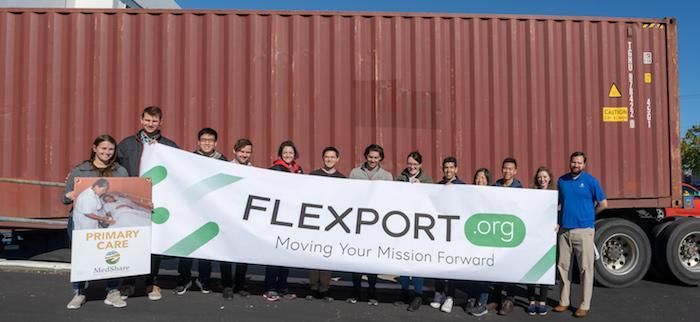 Flexport Employees Volunteering at MedShare sending off a Shipment to the Indigenous Peoples’ Hospital in the Philippines
Giving Back Has a Ripple Effect
Flexport recently did a volunteer event at MedShare San Leandro to support MedShare’s mission of healthcare as a human right as well as reducing Maternal and Child mortality. The 40’ trailer of clean birthing kits, medical supplies, and equipment will treat 12,500 patents. Not only did Flexport employees help sort and organize the medical supplies, they managed the entire logistics of getting the 40’ trailer from San Leandro, CA to Nueva Vizcaya, Philippines.
The power of impacting those 12,500 patents goes beyond those people. In the case of a clean birthing kit, it impacts not only the mother but also the child. That ripple continues generation upon generation because a clean and safe birth improves overall community health.
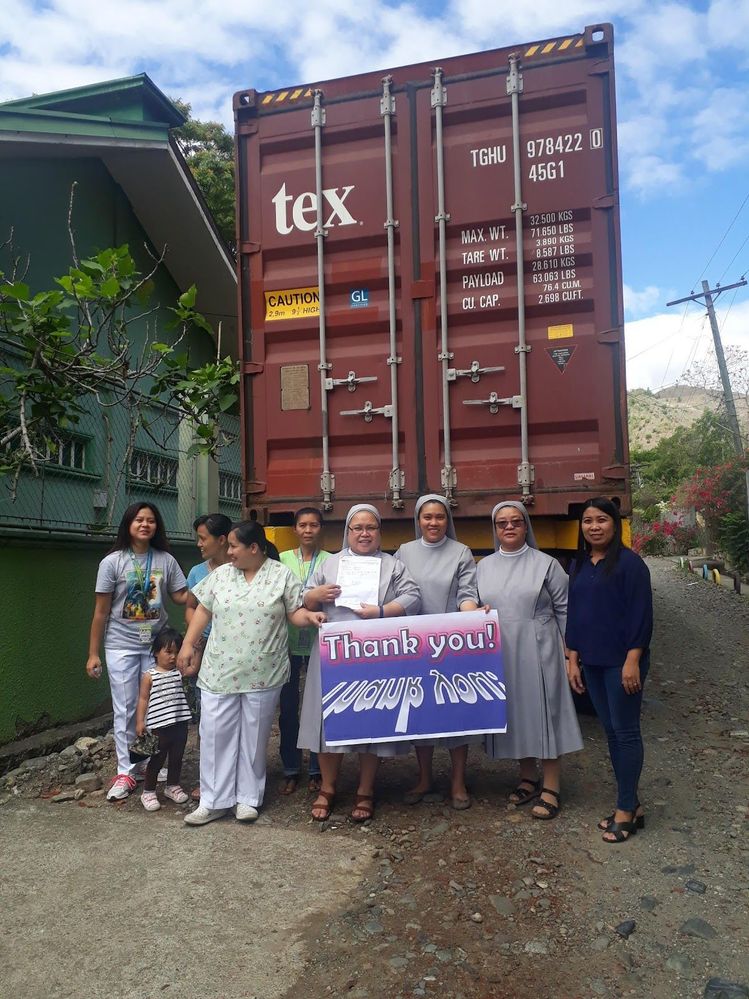 The shipment arrives at the Indigenous Peoples’ Hospital
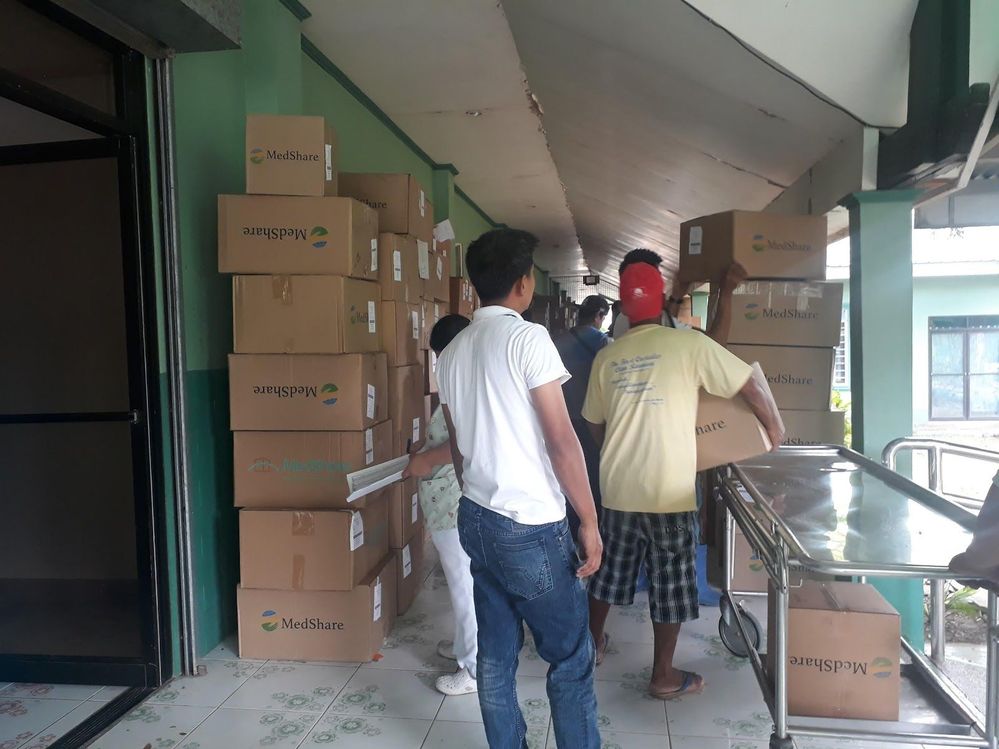 The shipment is unloaded, sorted, and put to use immediately
Hope Arrives Because of Logistics
MedShare has been providing much needed medical supplies to communities around the world for over 20 years. Most of those shipments are like the one to Indigenous Peoples’ Hospital, where local medical providers can order what they need via an online portal. This ability to order what you need, when you need it, is one of the unique aspects of what MedShare provides to its “customers.” MedShare uses this unique method because of their experience with disaster logistics — an aspect of their mission that logistics is critical to.
Disaster Logistics is Critical to Humanitarian Relief
Cyclone Idai hit the coast of Mozambique on March 4th and left millions without food, water, or medical supplies. MedShare has seen these types of disasters before and knows that getting the right materials, to the right people, at the right time is critical to supporting humanitarian relief efforts. As one can imagine after a cyclone or hurricane, or earthquake, the infrastructure is compromised. Logistics becomes challenging because something as simple as a road or a telephone might not be available. Couple this with ongoing rescue and recovery operations, the situation on the ground becomes fluid — making logistics a nightmare.
That’s why the MedShare/Flexport partnership is critical to humanitarian relief. By closely coupling the technology that Flexport has deployed with the on the ground needs of MedShare’s “customers”, it makes it possible to get humanitarian relief to a region as rapidly as possible.
Using Technology to Drive Philanthropy
The Flexport/MedShare partnership is one of many ways companies, especially technology companies, can help drive the kind of philanthropy that scales. Too often, in the rush to provide aid, the wrong supplies are delivered to the wrong place and just pile up unused. That’s why the companies that Pledge 1% are vital to helping nonprofits focus on their core strengths of helping those in need while benefiting from the scale and scope of platforms like Flexport’s. If you want to help technology drive philanthropy, why not Pledge 1%?
Originally posted: June 2nd, 2019

As originally posted on TheDrum.com
Ahead of National Missing Children’s Day on 25 May, MediaMath is launching a program that will scatter Amber alerts across the web.
Adtech company MediaMath and its charitable arm MediaMath.org have partnered with the Federation for Internet Alerts (FIA) to replace online ads with alert creatives that can include information such as a missing child’s photograph, descriptions of likely abductors and vehicle information.
MediaMath is using its TerminalOne platform to serve these geo-located alerts in real-time.
“I’m stoked… about this passion project becoming a reality and, quite literally, helping to save children (and deter would-be abductors) with targeted advertising technology,” MediaMath’s director of policy and data governance Charlie Simon wrote in a blog post.
MediaMath runs a ‘Hackathon’ where it takes and judges project pitches across five different categories. This integration with the FIA was the winning submission in the ‘Social Impact’ category.
“This grassroots project is a fantastic example of how we can use marketing for good using our talent and technology,” said Michael Quinn, director of MediaMath.org.
MediaMath employees worked off hours to develop this initiative as part of a partnership with Pledge 1%, a multi-company collective pushing corporate philanthropy.
Originally posted: May 28th, 2019
As originally posted on Virtual-Strategy.com.
Cloud Pathfinder Consulting (CPC), a national consulting firm enabling clients to fully harness the capabilities of Salesforce customer relationship management (CRM) software tools, announced today that it is partnering with Liberty IT Solutions (Liberty), a service-disabled veteran owned IT firm, to jointly pursue the growing number of IT contracts with U.S. government agencies that require implementation of Salesforce software.
“Liberty’s well-deserved reputation for excellence in meeting tough IT challenges faced by the US Department of Veterans Affairs and other federal agencies makes it an ideal partner for us,” said CPC founder and CEO Jesse Grothaus, a veteran who served eight years in the Army Reserves. “Combining our extensive Salesforce expertise with Liberty’s market presence is a win-win, positioning both of our veteran-owned firms to play major roles in helping federal agencies successfully deploy and benefit from the capabilities of Salesforce.”
The partnership is already off to a good start, with Liberty currently working with several U.S. government agencies on modernization strategies that involve Salesforce. Liberty will partner with CPC to handle the design, configuration, implementation, migration, testing, deployment and training of Salesforce systems for these and future contracts.
“Choosing CPC as a Salesforce partner was an easy decision as they have impressed us with their work and their commitment to employing Salesforce-certified military veterans and spouses,” said Chris Bickell, a Partner at Liberty IT. “The future is bright for this partnership, and together we will jointly pursue opportunities to use the power of Salesforce to help our government clients to effectively modernize in ways the make a difference to the citizens they serve.”
About Liberty IT Solutions
Liberty IT Solutions is a mission-centric Service-Disabled Veteran-Owned Small Business (“SDVOSB”) that supports multiple government agencies across a diverse portfolio of security, digital transformation, and Health IT projects. Liberty IT Solutions currently holds a number of large purchasing contracts including the GSA IT Schedule 70, US Navy NAVSEA SeaPort-E, Transformation Twenty-One Total Technology Next Generation (T4NG), and Strategic Partners Acquisition Readiness Contract (SPARC) contracts for the federal government. In 2018, Liberty was awarded a multi-year $88 million Task Order by the Department of Veterans Affairs (“VA”) to sustain and modernize its Enrollment Health Benefits Systems. In 2018 Liberty IT Solutions also launched the WhiteHouse VA Hotline under VA’s Veteran Integrated Enterprise Workflow Solution (“VIEWS”) program, powered by Salesforce Service Cloud and Mulesoft. Liberty IT Solutions was founded in 2010 and is headquartered in Herndon, VA with approximately 350 employees. More information is available at http://www.libertyits.com.
Originally posted: May 28th, 2019

What is your name and title?
Melissa Grimes, Chief Operating Officer at Nextep.
Briefly describe your role at your company?
As the COO, I’m responsible for the operations of the company, supporting our CEO, and working towards ensuring our business goals and objectives are met and understood throughout the organization . At Nextep we have a people-first culture and as the COO I work with our internal departments to pass that along to our clients.
How long have you been in your current position?
I have worked at Nextep, Inc. for 20 years and was actually Nextep’s first employee. I started during college working in the HR department. Throughout my 20 years I have held many different roles, five years ago taking on the role of Chief Operating Officer.
What advice do you have for women who are just starting their career?
When you are applying for jobs, look at companies that exemplify your personal values. I have worked at Nextep for 20 years because my values and the company’s align. Find somewhere that you can see yourself investing in and will invest in you.
Is there a cause that is particularly close to you? If so, why this cause and how did you get involved?
The Women’s Resource Center in our community is a cause that I love to support. They help women and children escape abusive situations and get back on their feet. Throughout my life,
I’ve had people in my life who’ve empowered me and I want to give that back to other women, especially those who haven’t been dealt the best hand.
Do you serve as a mentor? If so, what does mentorship mean to you?
Within Nextep, I serve as a mentor to our VP’s. For me being their mentor goes beyond our work at Nextep, but ensuring that they are fulfilled at work and personally. Mentorship is more than giving advice, but investing in people’s lives so that they can get the most out of it.
What’s the one piece of advice you would give to yourself 5 years ago?
Invest in people who you can trust to do your job. In the last 5 years our company has grown exponentially, adding a new layer of leadership. In that time I have learned to delegate responsibilities and it has been easy because I know I can fully trust those leaders.
Are you reading anything interesting at the moment? Please share your most recent favorite read!
I love to read but am also big on listening to podcasts. My most recent favorite is Leadership University by Dr. Henry Cloud.
If you could sit down with three women (living or dead) for dinner, who would those three women be (and why!)?
Sheryl Sandberg – As I have grown into my leadership role, I have always admired her people-first attitude and commitment to her team.
Melinda Gates – Melinda has strong philanthropic values and advocates for people who need help getting their voices heard.
Michelle Obama – Michelle is an incredible role-model for leading with grace and poise.
What’s something coming up soon (personally or professionally) that super excites you?
Last year we started the Nextep Charitable Foundation within our company to serve nonprofits and charitable organizations in our community. I am extremely excited to see our foundation grow in the coming years. We have huge goals to meet, one of them being to serve 100 nonprofits with a year of free administrative services to help ease their burden. This foundation is close to my heart because I get to see the impact our entire team at Nextep continues to make outside of our walls.
Originally posted: May 20th, 2019

As originally published on MyJoyOnline.com
Ghana’s leading bulk messaging and e-commerce platform, Hubtel, has donated ICT equipment to five schools in the Greater-Accra Region.
The donation is part of the company’s social responsibility commitments.
Hubtel is Ghana’s first tech company to become a member of the globally acclaimed Pledge 1%.
In 2017, the company pledged to give 1% of profits, 1% of products and 1% of paid employee time towards charity.
The items donated to the five schools included laptops, projectors, projector screen stands, speakers, microphones, internet routers and other computer peripherals.
The schools were selected by employees of Hubtel after several visits to understand the challenges the schools face in the teaching and learning of information technology subjects.
The beneficiary schools are St. Paul Primary & Junior High School at Kpehe, Liberty Avenue 2 JHS at Adabraka, Dr. FV Nanka-Bruce Junior High at Korle-Gonno, the Nima Cluster of Schools and the Bethel AME Zion JHS at Ashaiman.
Until the intervention of Hubtel, these schools either had only one PC for teaching and learning ICT or none at all.
Making the donations at St Paul Primary & JHS, CEO of Hubtel, Alex Bram, said Hubtel is committed to making the teaching and learning of ICT fun and memorable.
“We believe school children should not be intimidated by technology – what we are doing is to provide early access to quality computer education for these pupils – we wish to see more school children take computing programs at higher levels because we believe the illiterates of the future will be people who cannot use computers,” he said.
Officials of all the beneficiary school expressed relief and gratitude to Hubtel for the donation.
Assistant Headmaster at the St Paul Primary and JHS, Michael Owusu, told journalists, “it really feels special. For more than three years, we’ve made frantic efforts to acquire these items with little success. Now, our pupils can have a real chance to understand ICT better. This is a moment of pride for us.”
Hubtel was founded in May 2005 on the campus of Kwame Nkrumah University of Science and Technology, Kumasi.
In its 14 years of operation, the company has carved a reputation as a trusted and admirable tech brand across Africa.
Starting with a bulk SMS messaging platform, the company has evolved into the e-commerce space – offering businesses tools to enhance the customer shopping experience; in-store, online and on mobile.
In becoming a signatory to Pledge 1%, Hubtel joined the ranks of Silicon Valley giants like Salesforce, Yahoo, Box, Glassdoor, DocuSign and other leading companies in over 100 countries.
Originally posted: May 17th, 2019
As originally published on Zylo.com
At Zylo, we believe that community is a pillar to the success of any endeavor.
For us, the concept of community takes many different shapes. From your local neighborhood or a city that actively supports new businesses; to friends and family who lend support; to the guidance of investors and experienced entrepreneurs who help new companies get established; or simply the sense of shared camaraderie within an organization created by a shared vision, the idea of community comes in many forms.
But a common feature is that when companies weave a community focus into their culture early, the impact can be awesome. Because when viewed in this lens, the company’s success translates to the community’s success. For example, in the last four years, companies in the High Alpha portfolio (of which Zylo is a member) have created hundreds of new jobs.
Zylo Pledges to Give Back
In Zylo’s early days, we learned quickly that it’s nearly impossible to achieve success in any form without the support of our community, so we’re proud to take the opportunity to give back.
That’s one reason we’re thrilled to announce that Zylo is partnering with Pledge 1% to maximize support of nonprofits in the Indianapolis community and beyond. Pledge 1% invites participating companies to pledge to share at least 1 percent of their equity, profit, products, and/or employee time with their communities.
Tech’s Impact on the Community
To celebrate Zylo’s commitment to Pledge 1%, we hosted an event at Zylo headquarters to discuss the impact that technology-focused companies can make on their communities.
The event included a panel discussion featuring Byron Deeter from Bessemer Venture Partners, Sara VanSlambrook, Chief Impact Officer of United Way of Central Indiana, and Chris Barbin, from GGV Capital. The session was moderated by Gerry Dick from Inside Indiana Business and the event was made possible by Silicon Valley Bank.
Tech Companies Uniquely Positioned to Give Back Early
A central theme that emerged from the panel conversation was that emerging technology companies represent a new form of corporate philanthropy, one that’s driven both by an entrepreneurial spirit and direct employee activism.
This trend stems in part from the strong focus on culture that tech companies cultivate. Tech company leaders are more actively, directly involved in shaping their company’s culture and identity, making them more likely to undertake charitable initiatives. But it’s not just leadership motivating this focus on philanthropic endeavors.
Employees are influencing organizational change through individual leadership and promotion of worthy causes they believe in. And with strong competition for talent, authentic and demonstrable philanthropic initiatives create a symbiotic advantage for companies and employees. Simply put, employees want to work for companies that align with their values and create positive impacts in their communities.
Understanding the Opportunity to Impact Our Community
Following the conversation with our panel, we had the opportunity to see what’s at stake firsthand. Unfortunately, every year, more families in our community in Central Indiana cross the threshold into poverty and need, or come much closer to it. To gain a more understanding, empathy, and context of this need, the United Way of Central Indiana led Zylo employees and assembled guests in a poverty simulation.
For many families and individuals in our community, the risk of poverty is one missed paycheck or a difficult life event away. Getting a better understanding of this scenario underscored the opportunity we have to make an impact in our community.
The Commitment Starts Now
It’s one thing to pledge your commitment, another to follow through. We capped the day by following through on our commitment by investing some old-fashioned sweat equity in our community.
With the help from the United Way of Central Indiana’s volunteer coordination, Zylo volunteers converged at Flanner House, a local non-profit focused on programs that provide education, social resources, and food equality.
Their mission is to support, advocate for, and empower individuals, children, and families by applying educational, social, and economic resources that move members of the community towards stabilization, and self-sufficiency. We’re proud to contribute to that mission and benefit the Indianapolis community.
And we’re also thankful for that fact that organizations like United Way of Central Indiana to partner with. Without their help connecting and coordinating volunteers to the opportunities that have the most effective impact and outcomes, many companies would miss the chance to give back.
Throughout the afternoon, more than four dozen volunteers including Zylo employees and event guests helped Flanner House prepare their annual produce crop for families in need by weeding and renewing garden beds and landscaping throughout the grounds.
It’s Never Too Early to Give Back
For any organization, it’s never too early to start building community involvement into the DNA of your company. Whether you look at it through the lens of your local neighborhood, your professional community, or the community formed by like-minded companies in the technology category, we’re all direct products of our communities.
Although it feels like we’re just getting started at Zylo, we’re already creating programs that help connect employees with the opportunity to contribute to their communities.
For example, our employee referral bonus includes a traditional cash bonus for a successful referral but also includes a cash donation to a local charity of the referrer’s choice.
We’ve also similarly established a community contribution program for sales referrals, we take part in several team volunteer opportunities each year as a company, and we encourage individual employees to give back to their communities via our PVTO or personal volunteer time off policy. These policies are relatively easy to implement, but over time, their impact is tremendous.
We as a company feel it’s important to give back and reciprocate the benefits that have helped us achieve our success. If you’re able, I encourage you, your employees, and your company to contribute to your community through the Pledge 1% program, United Way, or direct involvement with a charitable organization most suited for your company’s culture.
Because all philanthropy is good philanthropy and our communities need committed partners now more than ever.
Originally posted: May 17th, 2019

As originally published on InsidePhilanthropy.com
Few issues have confounded urban policymakers more in recent years than homelessness. And while agreement has lately been growing among advocates and funders that providing housing first, especially packaged with support services, is a key to confronting this defining challenge for American cities, many questions remain about how to implement such policies and also address the underlying causes of homelessness.
Enter Marc and Lynne Benioff, who recently made a $30 million gift for research into homelessness. The donation comes as state and local governments in California and elsewhere are stepping up spending to tackle homelessness—yet facing tough questions about priorities and impact. Last week, for example, the Los Angeles Times reported that officials there “are bracing for the release of a report that’s likely to show little or no progress in reining in homelessness, despite the $619 million they spent last year to grapple with the crisis.” L.A. plans to spend hundreds of millions more to address homelessness, while California governor Gavin Newsom recently called for doubling state spending in this area. Meanwhile, across the country, New York City is slated to spend $3 billion this year to address its homelessness crisis. Ensuring that such funds are deployed effectively is critical.
The Benioff gift funds the University of California at San Francisco, which has launched the UCSF Benioff Homelessness and Housing Initiative to conduct what it calls “groundbreaking” research into the causes of homelessness and identify evidence-based solutions to the problem. The initiative is a part of UCSF’s existing Center for Vulnerable Populations (CVP). In a press release, Marc Benioff referred to the project rather grandiosely as “a North Star for truth on homelessness… providing the latest research, data and evidence-based solutions to ensure we’re investing in programs that will help solve the homelessness crisis.”
Dr. Margot Kushel, who serves as the CVP’s director and will lead the new initiative, said in the same release that service providers and advocates already know a great deal about how to end homelessness. The problem, she says, is that policymakers aren’t always aware of that knowledge—even as ballot measures like Santa Clara’s Measure A and Los Angeles’ Proposition HHH raise considerable local sums for affordable and supportive housing.
Nevertheless, on Twitter and in articles covering the Benioff gift, commenters called out the Salesforce billionaire for funding research while unsheltered people suffer on San Francisco’s streets. A deeper critique of homelessness funders from tech (and elsewhere) is that these donors fail to acknowledge structural factors behind the problem and that their companies can be complicit as rents rise and neighborhoods gentrify.
Marc Benioff, however, is one tech billionaire who’s long been attuned to soaring inequality in the Bay Area and he’s been a persistent advocate for greater action on homelessness among his ultra-wealthy peers. Last year, he pledged to help raise $200 million to address the problem, and he’s backed a $100 million effort by the Tipping Point Community to create permanent supportive housing in the region.
Also telling is Benioff’s public spat with fellow tech winners—notably Twitter co-founder Jack Dorsey—over Proposition C, a ballot initiative passed by San Francisco voters last year that would tax the city’s biggest businesses to support a homelessness fund. Despite possible repercussions for Salesforce’s profits, the Benioffs spent millions to support the measure, which is expected to raise $300 million—although it’s still mired in lawsuits and hasn’t yet taken effect.
Given the new public and private funding that Benioff is working to unlock for the homeless, it’s not surprising that he and Lynne are now backing research on what solutions are most effective. Since the 1980s, government agencies across the U.S. have spent a fortune on failed approaches to this problem. With the political stars aligned in key cities for a stepped-up push on homelessness, it’s imperative that policymakers and nonprofits direct resources to the solutions that work.
As CEO of Salesforce, Benioff pioneered the Pledge 1% campaign and the associated 1+1+1 model of corporate philanthropy, in which firms commit funds, employee volunteer hours, and product to charitable ventures. The model has caught on.
But where Benioff stands out as a philanthropist—and as an advocate—is right at home in the Bay Area. Both the Benioffs and Salesforce have given extensively to local schools and hospitals, including $50 million to the San Francisco and Oakland school districts over the past five years. On homelessness, the Benioffs have given $11.5 million to Hamilton Families, a nonprofit that locates homes for families on the street. That’s in addition to $3.5 million Salesforce has given to the organization. In a highly publicized move, Benioff also gave San Francisco $6.1 million late last year to preserve a hotel in the Tenderloin district as housing for the homeless.
Originally posted: May 17th, 2019

If you were (or are) the founder or CEO of a start-up company or later-stage firm, would you be willing to pledge one percent of your equity to charity? How about one percent of your profit? Or your products? Or your staff time?
Pledge 1% is a global on-line movement that encourages and empowers companies of all sizes and stages to do just that.
The founders of Pledge 1% believe that all companies have the capacity to give; it just takes the knowledge and flexibility to decide what way best suits a company’s values, culture, business goals and stage of development.
If a company doesn’t have much cash or profit to give at an early stage of development, it’s possible that pledging one percent of your equity is a quick and easy way to get started. Businesses can pledge company equity at an early stage without diluting the value of the company, and this kind of pledge sets the tone for future funders and employees. Alternatively, founders can make personal equity pledges, which most likely will not require board or stakeholder approval.
Another way to give without spending cash or pledging equity is employee time through volunteering in your community. This can be done through traditional hands-on volunteering like serving meals at a homeless shelter or cleaning up a waterfront in teams or individually. Or by encouraging employees to use their business skills (e.g., marketing, finance, technology) to help nonprofit organizations in their communities. One percent of a 40 hour work week is 20 minutes or about two days a year, so making this kind of pledge will motivate your employees to spend time making a difference in their communities.
Likewise, pledging one percent of your products – either your products in full or by discounting your products for charities – can be an effective way of supporting nonprofit organizations in your community. Some typical ways of doing this, according to the Pledge 1% website are: tech products in existing form (via software or licenses), tech products in a form revamped specifically for nonprofit use, hardware or goods, and services.
Pledge 1% counts 8,500 companies (mostly start-ups and early-stage firms) from over 100 countries as members. A few of these companies are highlighted on the organization’s website, including:
- Twilio. This company started by giving product to social impact organizations from its cloud communications platform and then launched an employee volunteer program. Later, it pledged one percent of its equity over a ten-year period and created a donor-advised fund at Tides. “We launched the Impact Fund to support both nonprofits and social enterprises,” said Erika Balbuena, head of strategic initiatives at Twilio. “We want to do even more to deploy capital and provide access to communications that will scale impact.”
- Okta. This identity and access management firm wanted to break down some of the perceived barriers between members of various communities and the tech sector, especially in communities where it operates. So, Okta opened its doors to the public in offices around the world by hosting a week-long event called Tech Week. Tech Week reached 2,000 students and jobseekers through in-person workshops and career counseling sessions, and it provided a great opportunity for Okta employees to come together across offices to give back and connect with their local communities
- Box. Box, a cloud content management and file sharing company, works with TechSoup Global on giving product through Box.org. It started by identifying youth enablement, social equity and health as the pillars of Box.org, and then partnered with TechSoup to donate products through TechSoup’s global network. “Box.org believes that nonprofits and tech can do more together,” said Bryan Breckenridge, executive director of Box.org. “We are committed to enabling nonprofits to innovate and fulfill their social missions be elevating their technology.”
In return, Pledge 1% lists the following benefits to companies for making a pledge:
- Joining Pledge 1%’s community of like-minded leaders will help build your network.
- Pledge 1% boosts your bottom line.
- Pledge 1% helps you hire and keep top talent.
- The 1% model is easy to implement.
It’s completely up to the pledging company or individual to decide what nonprofit organizations and causes to support. Pledge 1% operates as a platform and resource provider, and does not promote specific charities or causes on its site.
Originally posted: May 17th, 2019