
Originally published on the Salesforce blog. By: Robert Gavin, SVP Alliances, NewVoiceMedia
February 2016, NewVoiceMedia officially announced our participation in the Pledge 1% movement, applying a simple yet transformative idea: donate 1% of product, 1% of equity, 1% of profit or 1% of employee time to support non-profit causes around the world. Employees, shareholders, customers and the community all benefit when a company builds giving back into its DNA and, for us, it’s one of the best decisions we’ve ever made.
The program wasn’t our first charitable bid; our employees were already using their paid volunteering days to support charitable projects and taking advantage of our Matched Funding Scheme. But this was a natural progression and the biggest step we’d made towards committing a portion of our success to our community stakeholders and social impact. We are growing faster than ever before, and with a chiselled heart in the bedrock of our company, we want to continue building a kind and forward-thinking enterprise on top of it, supporting the communities that we serve in a way that is meaningful.
Since making our Pledge 1% commitment, our employees have embraced it wholeheartedly, mobilizing campaigns and flagging worthy causes for us to back.
In December, we ran one of our biggest mass fundraising and global volunteering projects to date, with ‘The Apprentice Week.’ The mission was for employees to work as a team to make as much money as possible for a charity of their choice. Starting with just $250 per team, ten groups found innovate ways of increasing it, from selling tickets to pie senior execs, to drawing caricatures and completing expense claims! From their week’s efforts, our entrepreneurs raised $30,000 for charities of their choice.
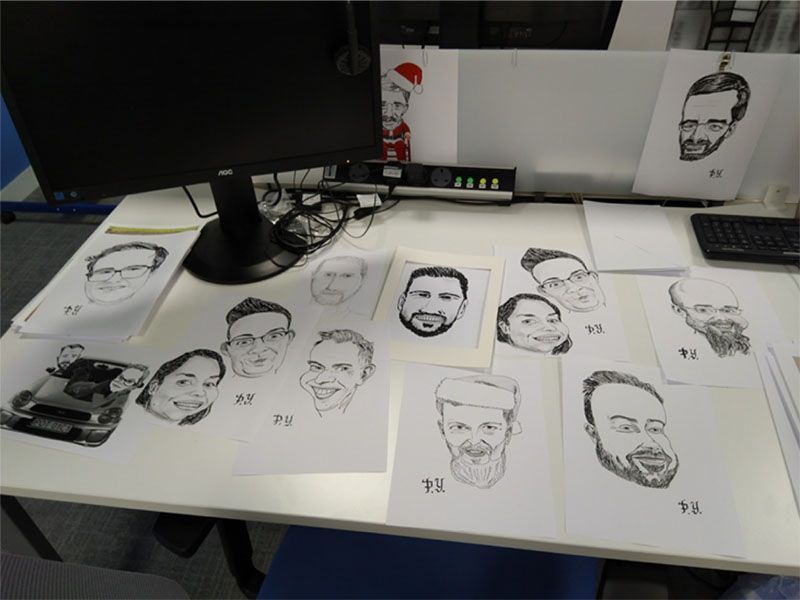 Caricatures for sale as part of The Apprentice Week, an initiative which raised $30,000 for charitable causes.
A program we’re particularly proud of is our participation in the Right to Read program. Established in the UK as a way for businesses to make a positive impact on education, employees have paid time off to volunteer as reading partners to children, to support their literacy development, while improving their confidence, communication skills and attitude towards reading. Similarly, in San Francisco, we took part in Jump Start, a national early education organization, where we prepared 100 literacy kits for children to encourage them to read throughout the summer. We also operate Code Club in three locations, to teach children aged 9-11 about coding and computing, and have seen them complete projects using applications like Scratch, Python, and HTML.
This year, we are hyper focused on diversity and inclusion which has been launched globally. We hosted our fourth Annual Women in Industries Panel in San Francisco, featuring Corinne Sklar, CMO of Bluewolf, an IBM Company; Tara Ryan, CMO of Skuid; Poly Sumner, Chief Adoption Officer at Salesforce; and Allyson Fryhoff, Chief Revenue Officer at Salesforce.org, to discuss how to get to the next level towards your “dream” job. They shared their personal stories of career progression and the tips/lessons they learned that helped get them where they are today. We also partnered with Salesforce and Bluewolf in Sydney to host a “Men as Allies” discussion, and continue to expand our efforts across global internal mentoring programs and quarterly foundation activities.
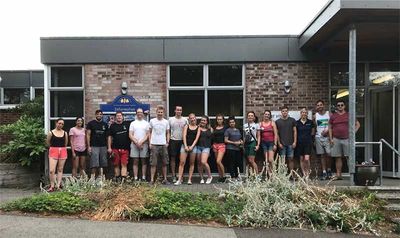 Employee volunteering in action: Volunteers from NewVoiceMedia spent two days at a local school, painting, decorating and making improvements to the grounds.
We’re extremely proud to be sponsoring the ninth annual Concert for the UCSF Benioff Children’s Hospitals, presented by Salesforce.org in conjunction with Dreamfest on September 26th. Held in San Francisco, the concert will directly benefit the hospitals, helping to advance pediatric health in our community and worldwide.
NewVoiceMedia is joined by an impressive network of entrepreneurs and companies across the globe that have committed to philanthropic efforts through the Pledge 1% movement. We’re proud to be able to contribute to the efforts of creating social impact on a global scale, while enabling our employees to support the causes that are important to them.
Even back in 2007, Deloitte’s Volunteer Impact Survey revealed that 62 percent of millennials would prefer to work for a company that provides opportunities to apply their skills to benefit nonprofits. More recently, the Millennial Impact Report, released in 2014 by Achieve Consulting Inc, found that 94 percent of millennials are interested in using their skills to benefit a cause, while 57 percent wish that there were more company-wide service days available to them.
In a stark mismatch, Deloitte’s 2018 Millennial Survey shows a negative shift in millennials’ feelings about business’ motivations and ethics. Only a minority believe businesses behave ethically (48 percent vs. 65 percent in 2017) and that business leaders are committed to helping improve society (47 percent vs. 62 percent in 2017).
Millennials will account for 75 percent of the workforce by 2025. Attracting and retaining them begins with workplace culture and making the world more compassionate, innovative and sustainable.
It’s not just millennials, though. In a new study of U.S.-based Fortune 1000 employees conducted by Povaddo, for nearly 60% of today’s employees, there is an expectation that corporate America and CEOs should play a more active role in addressing some of the most systemic societal issues facing the country. This point of view is consistent across employees of all ages, gender and geographies.
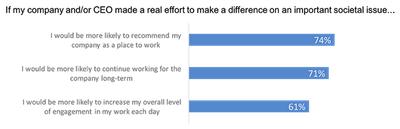 Recent research shows a majority of corporate employees care about working for companies where corporate leaders are making an effort on social issues.
The Povaddo study found that significant majorities of employees who feel their company encourages them to support causes they care about are more likely to recommend their company as a place to work, more likely to stay longer, and more likely to increase their overall engagement at work when their CEO makes a real effort to address an important societal issue. Yet, despite these findings, only 37 percent of employees in the Povaddo study said they felt encouraged to support causes they care about.
The good news is: Your organization can step up and make a difference.
As Marc Benioff told Forbes last year, “The business of business is improving the state of the world.”
Find out how you can build giving back into your company culture at www.pledge1percent.org.

Originally published on PR.com.
San Francisco, CA, September 24, 2018 –(PR.com)– RFPIO, a leader in cloud-based RFP response software, today announced renewed commitment for Pledge 1%, a global movement spearheaded by Salesforce, among other companies, that invites entrepreneurs and their companies to commit important resources (product, time, equity or profit) to support integrating philanthropy into their business from an early stage. The support for Pledge 1% is part of RFPIO’s ongoing “ROI of Compassion” program.
“We are incredibly excited that RFPIO has taken the pledge,” said Amy Lesnick, chief executive of Pledge 1%. “RFPIO can play a pivotal role in building this movement and promoting a new normal in which all companies—big and small—integrate giving back as a core value in their business.”
New Google Chrome extension debuts
RFPIO also announced that it has released the RFPIO Lookup extension for Google Chrome. RFPIO Lookup enables users to access contextually relevant content from a central repository called the Answer Library. Users do not need to log in or navigate to another site or application.
With company knowledge at their fingertips, users can copy proactive recommendations and perform searches of curated company content to be applied to time-saving use cases. The extension simplifies common tasks, including: responding to commonly asked questions in email, fulfilling online questionnaires in third party sites, checking on opportunity progress and other details in Salesforce, and finding company-approved graphics to be used in presentations.
“Automating and optimizing RFP processes can drive major gains in productivity not just in sales and marketing, but across the entire organization,” said Ganesh Shankar, co-founder and chief executive officer of RFPIO. “RFPIO’s new Chrome Extension can help companies transform their RFP processes, so they can spend time focusing on their business goals, rather than writing up RFPs.”
RFPIO will showcase the new extension, along with the full RFPIO solution, at Dreamforce, the most innovative software conference of the year, taking place September 25-28 in San Francisco. Attendees can learn how the RFP process can be streamlined and integrated directly into Salesforce to help sales and marketing professionals save time and increase productivity. RFPIO optimizes the proposal response process through collaboration, centralized content management, technology integrations and reporting.
For more information about RFPIO and its cloud-based RFP response platform, go to https://www.rfpio.com/ and watch a video about how RFPIO works.
Salesforce, AppExchange and others are among the trademarks of salesforce.com, inc.
About RFPIO
RFPIO’s proposal management platform, the industry’s first AI-enabled solution, is trusted by companies around the world and across industries to facilitate a more efficient RFx response process. The solution’s dynamic answer library provides centralized content and a collaboration hub. Robust, bi-directional integrations with many popular solutions, along with an open API, allow teams to connect instantly to people and content. Built by a team with extensive experience in RFP response, RFPIO is an easy-to-use solution that makes RFP response efficient and effective. RFPIO works with many enterprise organizations, such as Google, Adobe, Atlassian, Change Healthcare, Siemens, Tenable, Zoom Video and others. For more information, visit rfpio.com or follow @rfpioinc on Twitter.
Originally published on Airlink’s website.
Airlink, Flexport, Kenya Airways, and International Medical Corps are responding to the complex crisis in South Sudan with medical assistance for Internally Displaced Persons.
Failed crops and ongoing conflict in the young country have led to high levels of internal displacement and low access to food, water, and health services and supplies. In some areas, more than 70% of the local population cannot be reached with humanitarian assistance due to geography and insecurity.
To assist long-time partner International Medical Corps (IMC), Airlink engaged full service freight forwarder Flexport and Kenya Airways for the response.
“Airlink is practiced in humanitarian logistics, but the current circumstances in South Sudan make it incredibly difficult to safely transport relief cargo into the region,” says Airlink Humanitarian Programs Manager Stephanie Austin. “Our partnership with Flexport helps us work on these more complex airlifts and ultimately expands Airlink’s capacity.”
Flexport is a freight forwarder that utilizes an online platform and end-to-end services for their clients. The five-year-old company recently joined the 1% pledge, pledging 1% of its resources to humanitarian organizations sending supplies worldwide.
A new Airlink partner, Kenya Airways is providing the lift and offers a unique opportunity to move cargo from the United Kingdom into Juba, South Sudan.
The 1,500 kg shipment includes basic medical supplies and will arrive in Juba in late August where IMC staff and volunteers will immediately begin utilizing these health supplies to benefit Internally Displaced Persons in South Sudan.

View the original post on Silence Media’s website.
Silence is a Pledge 1% company, which means we give 1% of our time, product and profit to charity.
As part of this pledge, we’ve collaborated with music management company You Me Management to produce Look Up, a pop-up record and bookshop curated by DJ Gilles Peterson.
With Look Up, we’re exploring the positive connection between mental health and the arts while raising money for the vital work of mental health charities – you can visit the website here.
Gilles is raising money for Safaplace, an emerging mental health charity that encourages and enables the support of positive mental health and well-being of students through education and awareness. The money raised by Look Up will go towards mental health training for teachers and peer mentoring for students at Stoke Newington School.
Look Up is open from September 24th to the 30th at the Edwards Lane Gallery, which is behind Stoke Newington library. We’re also hosting gigs at nearby venue The Old Church and a closing party at the Five Miles nightclub in Tottenham. Gilles has curated the albums, books and artwork we’re selling at the shop. He’s also selected the guests we’re interviewing at the shop, the artists performing at The Old Church and the DJs playing the closing party at Five Miles.
You can buy tickets for all the events on Dice.
You can read more about Look Up in these articles on the Evening Standard, Hackney Citizen, Clash, DJ Mag, The Vinyl Factory , DIY, Location Location, The Quietus and Mixmag.

Written by Sarah Goff-Dupont. Originally published on the Atlassian blog.
If 1 in 10 companies shared a business practice in common, would you sit up and take note? If the number moved to 1 in 5, would you think seriously about following suit? What about 1 in 4?
That’s exactly the trajectory of one of the hottest employer trends: paid time off to volunteer (also knows as “volunteer time off”, or “VTO”).
According to the 2018 Employee Benefits Report issued by the Society for HR Management, nearly 1 in 4 companies and non-profits in the U.S. are using VTO to parlay corporate social responsibility into a competitive advantage. So what do these savvy organizations know that the other 3 in 4 don’t?
What is VTO and why is it trending?
Volunteer time off (VTO) is employer-sponsored paid time to do volunteer work in your community. Participating employers typically grant between 8 and 40 hours of VTO per year.
Less than ten years ago, VTO was rare, with roughly 15% of employers offering it in 2009 and only about 1% planning to offer it soon. Over the past decade, however, companies have started to take social responsibility seriously, seeking to counteract all manner of negative externalities from displacement of long-time urban residents to pollution to the spread of fake news.
At the same time, Millennials have surged into the workforce and overtaken Gen X as the most populous age group in the U.S. labor market. Contrary to their reputation for self-centeredness, this generation has a strong sense of purpose and cares deeply about issues of social justice. Factor in yet a third trend, the global war for talent, and the equation suddenly becomes clear.
A 10,000-watt spotlight on corporate social responsibility + the need to attract young, socially-conscious workers in an increasingly competitive hiring environment = an explosion in VTO’s popularity.
That’s all well and good. But what if a company doesn’t have an image problem and isn’t on a hiring spree – would VTO still make good business sense? The answer is a resounding “yes”.
Recruit, engage, retain, repeat
The “selfie generation” isn’t as selfish as they’re often portrayed. According to studies released in 2015 and 2016, 80% of Millennials make charitable contributions, 70% volunteer at least once a year, and 37% spend at least ten hours annually volunteering. Their reputation for being fickle, however, has a stronger basis in fact. The 2016 study showed that 1 in 4 would leave their job after less than a year if a new opportunity arose elsewhere. In a 2-year timeframe, the number goes up to almost 1 in 2.
The recruiting challenge for employers, then, is to meet these purpose-filled candidates where they are and channel all that energy into work they find meaningful. “It doesn’t have to be hard,” says Jeremy Kreitler, CEO of Gliffy, a San Francisco-based software company that runs multiple philanthropic programs internally. “When people talk about what they like most about working at Gliffy, they mention the volunteering and the fact that we give 5% of our profits to charity.”
When coupled with a compelling, bullshit-free mission, VTO is one of the best ways to speak their language. Indeed, 60% of Millennials report choosing (and sticking with) their current employer because they feel a sense of purpose there.
I want to do more with my career than just help somebody make money. VTO is what made me feel comfortable leaving my job in non-profit for a role in the corporate sector. I feel I can do just as much (if not more) good this way. – Claire Cook, marketer (also, dog-lover and Millennial)
It’s not just about courting Millennials, however. The workforce still contains a handful of Boomers and scads of Gen X’ers who don’t just want to make a living, but make a difference while they’re at it. Many have scars from the toxic, burn-you-out corporate cultures that dominated the ’80s, ’90s, and early 2000s, and are thoughtful about the kind of work environment they step into. Turns out, volunteerism is widely regarded as a boost to a company’s reputation as a great place to work.
“Lots of people say they were attracted to the company by our culture of ‘being the change you seek’ and the chance to make a difference that extends beyond our products”, says Jessica Hyman, a member of Atlassian’s talent team. She’s also noticed employees shaping their jobs with an eye toward social impact once they’re in the door. “Most people use their VTO. And we never struggle to fill the seats on the Atlassian Foundation’s employee council.”
Kreitler sees a similar pattern at Gliffy, where they organize dedicated volunteer days with local non-profits that are open to all employees. “The company organized days make volunteering accessible to employees, and stimulate more people to participate,” he says. And ever since they focused these days on organizations that help deal with homelessness (an employee-driven decision), participation is trending upward.
It doesn’t have to be hard. – Jeremy Kreitler, Gliffy CEO
As if employee engagement wasn’t enough, 65% of HR executives point out that VTO is also an investment in workforce development. Volunteering helps cultivate the soft skills that are increasingly important for knowledge workers: collaboration, empathy, adaptability, leadership, and public speaking (to name a few). As repetitive tasks become automated, such skills will be absolutely vital in the creative and analytical jobs still held by humans.
Think globally, invest locally
Despite VTO’s rising popularity, it’s hardly the only way for companies to help employees make a positive impact. Organizations like Pledge 1% encourage companies to invest a small slice of their profits, product, equity, and/or employee time back into the community. To date, over 5000 companies have signed on.
Thousands of other companies are investing in social impact in more focused ways.
- Charitable giving – Many companies, Atlassian and Gliffy among them, choose one cause they want to support, then dedicate a small portion of their profits to cash contributions.
- Donation matching – 18% of companies match employee’s charitable donations, up to a certain amount (typically $500-1000 annually).
- Donation via payroll deduction – Giving is easy when it happens before the money even hits your bank account. For example, Atlassian employees have the option to donate a dollar a day to Room To Read, which is automatically deducted from their paychecks.
- Dedicated volunteer days – Many companies opt to organize one-off volunteer days with local food shelves, schools, or organizations like Habitat For Humanity. This works great at the department and team level, too.
Whether a company tests the waters slowly or dives right in by taking the 1% pledge, it’s important to proceed thoughtfully. Employees view programs like VTO as a cherished benefit, making them hard to take back once a precedent has been set. That said, delaying this kind of investment only makes it harder to get started.
Pledging to give back 1% is really easy in the early days of a company because 1% of nearly nothing is nothing. – Scott Farquhar, Atlassian and Pledge 1% co-founder
Besides: the race to recruit and retain top talent isn’t easing up any time soon. Nor is the increased scrutiny on corporations. Corporate transparency is on the rise, driven by inside whistleblowers, citizen journalism on social media, as well as companies’ own desire to open up and make who they are on the inside a part of their external branding.
As the #DeleteUber movement reminded us, customers care about what goes on inside a company’s walls. The organizations poised to thrive in this new era are those who think not just about their shareholders, but also their employee and community stakeholders.
. . .
For more information on sustainable corporate social responsibility and philanthropy programs, check out Pledge 1%. Thousands of companies have already taken the pledge – will you be next?

Originally published on the Geopointe blog.
How Geopointe, Salesforce & Pledge 1% are Making a Difference
Geopointe is excited to once again be joining Salesforce and Pledge 1% in their efforts to give back at Dreamforce. Geopointe has committed to donate $1 to the American Red Cross for every event ID badge scanned by a Geopointe team member at Dreamforce.
Helping Our Fellow Humans
We are proud to partner with the American Red Cross and support their mission of preventing and alleviating human suffering in the face of emergencies by mobilizing the power of volunteers and the generosity of donors. The American Red Cross, part of the global Red Cross network, holds fast to the seven Fundamental Principles set forth by the global Red Cross network: humanity, impartiality, neutrality, independence, voluntary service, universality and unity.
The American Red Cross has been dedicated to serving people in need since being founded in 1881. In order to fulfill their organization’s mission, they depend on the generous contributions of time, blood and money from the American public. Geopointe is honored to partner with the American Red Cross and contribute to the service they carryout daily.
Our Core Values
As an organization built in the Salesforce ecosystem, Geopointe and Salesforce hold similar philanthropic values. According to Scott Hemmeter, CEO of Geopointe, these values have been at the core of Salesforce for as long as he’s been a part of the Salesforce ecosystem. “Salesforce has been one of the leading organizations both practicing and promoting a commitment to corporate philanthropy. I hope to bring that same commitment to Geopointe and look forward to partnering with Pledge 1% again this year to help make that happen,” said Scott.
Scott has made concerted efforts to keep Geopointe regularly involved in charitable causes. He initiated Geopointe’s $1 per lead scan donation program at Dreamforce 2017 and has opened Geopointe’s doors to charities in need of a top geolocation solution through Salesforce, offering a special discount to nonprofit organizations.
‘Compassionate Capitalism’
Badge scanning is a standard practice at Salesforce events, creating a cut-and-dry vehicle for commerce. By adding philanthropic importance to each badge scan, it now gives the exchange a feeling of purpose.
Born from the concept of “Compassionate Capitalism,” famously coined by CEO Marc Benioff, efforts like Geopointe’s $1-for-1 scan concept have become more and more frequent at Dreamforce and other Salesforce events. In fact, today, Salesforce events have become a hub for philanthropy, social justice and forward thinking. This year Dreamforce is providing attendees an opportunity to give back in some way everyday of the event.
Powered by Pledge 1%
Pledge 1%, officially established in 2016, is the driving force behind philanthropy in the Salesforce ecosystem. Pledge 1% partners with companies to help them give back through various channels: equity, time, product and/or profit to any charity of their choosing.
“Salesforce and Pledge 1% work together to not only provide a great opportunity for companies like ours to giveback to others at Dreamforce, but use their reach and influence to encourage the thousands in attendance to get involved,” said Mark Baird, Geopointe VP of Sales. “Partnering with Salesforce and Pledge 1% makes it even easier for our team to giveback by providing assistance and resources to boost the visibility of our efforts which, in turn, boosts the response from attendees,” Mark added.
Stop by the Booth! (#441 & 443)
At this year’s Dreamforce, in addition to being a Silver Sponsor, we will once again be hosting two booths for you to stop by. We’d love to have you come by to meet our team, watch a quick demo and fill your bags with some Geopointe SWAG! But, before you take off, be sure to save a second for a scan.
Excited about Dreamforce? Follow the link below to learn what else Geopointe has planned for the event!

September 12, 2018 – Forbes The Cloud 100, the definitive list of the 100 top private cloud companies and the 20 rising stars poised to join their ranks, announced today that Slack, the cloud-based collaboration company, has received the prestigious Forbes Cloud 100 Pledge 1% Impact Award.
For the past three years, Forbes has recognized companies around the world who are making a difference with their technology and products. The Pledge 1% Impact Award recognizes one company out of the top 100 who is truly going above and beyond to have a positive impact with their work. We are thrilled to congratulate Slack on winning this year’s award.
Slack recently joined the Pledge 1% movement by announcing their newest initiative – Next Chapter. In partnership with The Last Mile, a technology training program for incarcerated individuals, the W.K. Kellogg Foundation, and John Legend’s FREEAMERICA, Next Chapter helps bring returning citizens back to the workplace through year-long apprenticeship training programs for The Last Mile graduates. Through this program, Slack employees train and mentor participants, equipping them with the skills the need to re-enter the workforce. The program is already having a tremendous impact on participants and is creating a blueprint for other companies to train and hire people who have been incarcerated.
This type of innovation and collaboration is at the heart of the Pledge 1% movement and we are delighted to celebrate Slack today for this groundbreaking work and for their leadership with their Pledge 1% commitment.

Receiving the Pledge 1% Impact Award on behalf of Slack was Co-founder and CTO Cal Henderson, along with Deepti Rohatgi, Director of Slack for Good and Public Affairs. The Award was presented by Kirsten Wolberg, Chief Technology & Operations Officer from DocuSign, who received last year’s Impact Award.
To commemorate Slack’s commitment to giving back, Salesforce.org will be donating $10,000 to the charity of Slack’s choice. In addition, past winners and fellow Pledge 1% members Twilio and DocuSign will be matching this donation, for a total of $30,000.
We congratulate Slack, Twilio, DocuSign, and all of the companies in the Pledge 1% community for all that you do to have an impact. We are proud to see so many members on The Cloud 100 list, including Qualtrics, Rubrik, PagerDuty, nCino, Automattic, Looker, Vlocity, Lookout, Gainsight, Dataminr, Workfront, Collibra, Algolia, FinancialForce, Optimizely, Digital Ocean, New Voice Media, Drift, and Dialpad. Your leadership is a shining example for the larger cloud community to give back.
Lastly, we’d like to thank Forbes and Pledge 1% partners Salesforce Ventures and Bessemer Venture Partners for including the Pledge 1% Impact Award in this exciting event, and for continuing this tradition of recognizing companies who are having an impact.
To learn more about The Cloud 100 and to view the 2018 list, click here.
For more information about Pledge 1% or to join the global movement, visit pledge1percent.org.
Nine additional nonprofits named as Box.org Fund Grant Recipients
SAN FRANCISCO–(BUSINESS WIRE)–Today at BoxWorks 2018, Box, Inc.(NYSE:BOX),a leader in cloud content management, announced the International Rescue Committee (IRC) and Think of Us as its BoxWorks 2018 Social Impact Partners. The company also announced nine additional Box.org Fund grant recipients.
“We are incredibly excited to honor the IRC and Think of Us at BoxWorks this year and support their missions”
“We are incredibly excited to honor the IRC and Think of Us at BoxWorks this year and support their missions,” said Bryan Breckenridge, Executive Director of Box.org. “For Box, teaming up with and empowering social impact organizations world-wide is a reflection of who we are as company. And giving back through the Box.org Fund has enabled us to expand our philanthropic aspirations.”
The BoxWorks 2018 Social Impact Partners
The IRC and Think of Us were honored today during the morning keynote at BoxWorks as this year’s Social Impact Partners. Both organizations shared their missions, where they are making an impact helping refugees around the world and empowering foster youth, while also demonstrating how they are leveraging technology to achieve their goals. They also received grants from the Box.org Fund, a donor-advised fund housed at Tides. The fund was formed in March 2018 to support Box.org’s nonprofit capacity building and social impact investing aspirations. The IRC and Think of Us represent the Box.org Fund’s focus on giving back in three major program areas: youth well-being, inclusion in tech and humanitarian aid.
“An unprecedented number of people – 68.5 million— have been displaced by conflict and persecution and they need our support more than ever before,” said Madeleine Fackler, chief information officer at the International Rescue Committee. “The partnership and support we receive from Box is critical in allowing the IRC to provide essential services and programming that helps these individuals and their families reclaim and rebuild their lives. We are grateful to Box and the commitment it has shown to help solve what is the greatest humanitarian crisis of our time.”
“Every year 28,000 young people are forced out of the foster care system at 18 or 21 without being adopted or returning to their family of origin. Navigating school, a first job and housing become very difficult. It is an honor to partner with Box to ensure young people aging out of foster care without family support have the tools required to thrive both personally and professionally,” said Sixto Cancel, Founder of Think of Us. “The time, talent and treasure Box has brought to Think of Us helps supercharge how foster youth manage the employment process and find meaningful work.”
Box.org Fund Grant Recipients
Additionally, Box announced Girl Scouts of the USA, Team Rubicon Global, Innovations for Learning, Martin Luther King Jr. Freedom Center, Boys & Girls Club of the Peninsula, Full Circle Fund, Shanti Volunteer Association, Team4Tech, and Pledge 1% as Box.org Fund recipients. The Box.org Fund has made over $115,000 in donations to date.
Giving Back Through Box.org
Box.org provides over 7,000 nonprofit organizations with the capacity-building resources they need to innovate and fulfill their mission. In addition to offering donated or discounted access to Box’s cloud content management software, Box.org builds nonprofit capacity through employee-led volunteering and giving programs, coalition building and good business practices. Over 850 Box employees are volunteering with or donating to nonprofits like Year Up, Nethope, Think of Us, and International Rescue Committee.
To learn more visit www.box.org.
About Box
Box (NYSE:BOX) is the cloud content management company that empowers enterprises to revolutionize how they work by securely connecting their people, information and applications. Founded in 2005, Box powers more than 87,000 businesses globally and 69 percent of the Fortune 500, including AstraZeneca, General Electric, P&G, and The GAP. Box is headquartered in Redwood City, CA, with offices across the United States, Europe and Asia. To learn more about Box, visit http://www.box.com/.
https://slackhq.com/next-chapter-a-pilot-program-aiming-to-help-formerly-incarcerated-individuals-find-work-and-succeed-in-tech“By a show of hands, how many of you in here have made a bad choice,” said Kenyatta Leal to a packed all-hands meeting at Slack HQ. The question, echoing the core of Bryan Stevenson’s moving biography Just Mercy, was met by a sea of hands raised high.
“Now, I want you to imagine just for a second what life would be like if you were judged the rest of your life for that bad decision.”
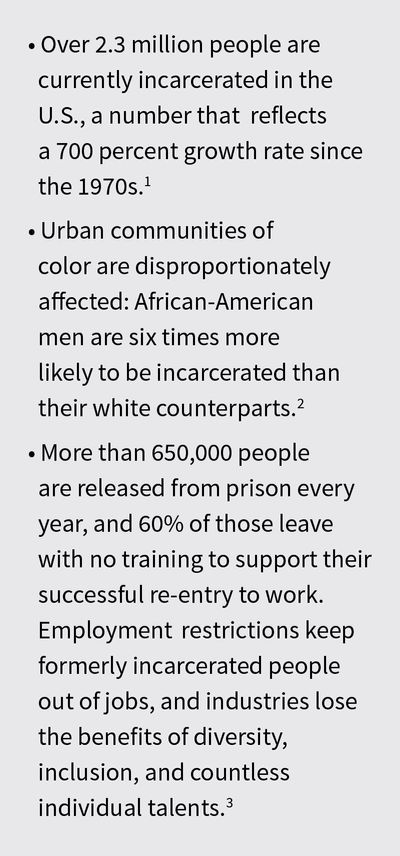
Leal speaks from experience. As a founding member of The Last Mile and a returned citizen himself, he was in the first class of a program that has, in the nine years since its inception, seen 393 students graduate.
The Last Mile, currently operating in seven prisons across the U.S., teaches students to build websites and applications, all without access to the internet. The program boasts a zero percent recidivism rate — meaning that not one of the people who graduated has reoffended. During incarceration, The Last Mile focuses on three pillars:
- Education: The full-time program trains incarcerated students on marketable computer coding skills.
- Experience: Through TLM Works, an in-prison workforce development program, graduates of the coding program gain work experience, earn market wage and create a portfolio of work.
- Expansion: The coding program is designed to be easily replicated across the country.
And then comes the moment of return, and of taking those skills into the workplace. And for that, there’s a need for a fourth pillar — that of partnership with companies who can help turn those skills into a career.
A blueprint for change
“We need to tackle this issue from all different directions,” says Leal. “For folks returning back to the community, the stigma that they’re impacted by is a huge challenge. We’ve come up with thousands of ways to make sure a plastic bottle or aluminum can gets a new life, but we don’t do anything to make sure someone who gets out of prison does. We need to have that same kind of mindset when it comes to human beings, that same kind of passion and persistence.”
Enter Next Chapter: an initiative that we at Slack, in partnership with The Last Mile, the Kellogg Foundation, and FREEAMERICA, have been working on for the past two years to help bring returning citizens back to work and shift perceptions around formerly incarcerated individuals. Through Next Chapter, we are building a year-long apprenticeship program to train and mentor three graduates from The Last Mile — and in doing so, we hope to create a blueprint that other companies will use to train and hire talented people who have been incarcerated.
At a special employee all-hands meeting last week, Leal discussed the hopes for this new program with Grammy-winning singer, songwriter, producer, activist and founder of FREEAMERICA John Legend, comedic actress, writer, sketch and improvisational comedian Robin Thede, and our CEO Stewart Butterfield. This conversation — and the unveiling of Next Chapter itself — was the culmination of an ongoing dialogue at Slack about criminal justice reform, in particular the opportunity to help returning citizens find jobs in tech and business.
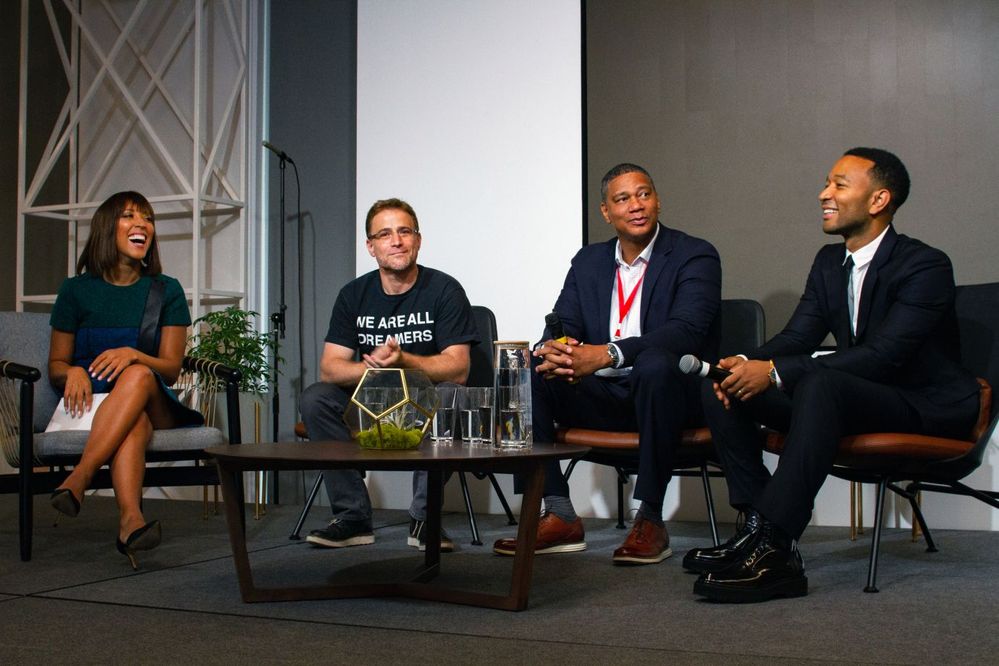 We are grateful to Robin Thede, Kenyatta Leal, and John Legend for being our partners and launching Next Chapter with us last week.
There is a pressing need for skilled knowledge workers, one that will only increase moving forward. Coding is something that any smart, hardworking person can learn, given time — and if there was one thing The Last Mile students had a lot of, it was time. We believe that talent is equally distributed. With the right training, we hope to provide opportunities for those who would not only thrive at Slack, but also fill the massive shortage of engineering talent that the tech community needs from an often-overlooked population.
The way forward
Along with The Last Mile and leading experts in the field, we’ve set out to devise an effort to help these returning citizens find skilled long-term employment and shift perceptions around re-entering individuals.
“This program couldn’t just be about providing training, or even job opportunities to our apprentices,” says Rodney Urquhart, a member of the Developer Relations team who has been instrumental in getting the program established at Slack. “We’ve worked hard to build a safe and special culture at Slack, where people who come from different backgrounds can thrive just as well as those who followed traditional paths.”
The power of partnership
None of this could have been done without our partners in Next Chapter. Make no mistake about it, we’re not positioning ourselves as experts in criminal justice — we make enterprise software. We are in the business of thinking about the way people work, where and how they work, and, of course, the people that do that work. We know how much we have to learn — and we’re humbled and grateful to be working with three organizations full of experts.
- The W.K. Kellogg Foundation, with years of experience in the criminal justice system, racial equity issues, and vulnerable communities, have helped to make this program a reality.
- FREEAMERICA, founded by John Legend, has been working to change the national conversation about and transform America’s criminal justice system, and will help amplify our efforts and encourage other companies to consider similar programs.
- And, of course, The Last Mile, who bring not only the talent and skill of their graduating students — our apprentices — but also the expertise of Kenyatta Leal, whom we will be hosting as our first Re-Entry Director, overseeing the apprenticeship program here at Slack HQ.
We’re just getting started. We have much to learn, but we’re committed to this, to our three apprentices this year, and to whatever comes next. If you’re interested in building a program like this at your company, or to find out more about the Next Chapter, email us at slackforgood@slack.com
Deepti Rohatgi is Slack’s Director of Slack for Good and Public Affairs.
1 The Last Mile
2 “Shadow Report to the United Nations on Racial Disparities in the United States Criminal Justice System,” The Sentencing Project, August 14, 2013.
3 “Recidivism,” National Institute of Justice, June 17, 2014.