By Chris Kohlhardt, Founder and Chairman of the Board, Gliffy
We took the Pledge 1% because I want to be able to give something back to the San Francisco community I have called home for over 22 years. We worked very hard to build Gliffy into a strong company. Myself and the company have been fortunate, given many opportunities and touched by luck. We are humbled to be in a position to take a portion of our success and reinvest it, hopefully sending a little luck and opportunity in the lives of community members who need it most.
Gliffy started our philanthropy by matching employee gifts to organizations that were personally important to them. We joined Pledge 1% in the early stage of our company’s development to ensure it was part of our company’s DNA. As the Gliffy Charitable Fund grew, we realized we were in a position to make larger investments. We have been inspired by the philanthropic efforts of large companies such as Salesforce, Atlassian and Google, but as a company with less than 40 staff we also believe we have a role to play in being active citizens.
Like many San Franciscans we struggle with homelessness in our city. Myself and others on our team have expressed a sense of helplessness faced with men, women and families living on the streets. We chose this as the area we wanted to support believing that taking some sort of action is the only way to reduce the feeling of being helpless.
We recognized we are a software company without any in-house expertise on non-profits or philanthropy. We hired an advisor to help us identify a project that was designed by local experts, aligned with our values and in need of funding. We were inspired by the work of Jeff Kositsky and the leadership at San Francisco’s newly created Department of Homelessness and Supportive Housing. We chose to invest in their expanded “problem-solving” strategy to help minimize the pipeline of people experiencing homelessness in San Francisco.
We built out an additional level of opportunities for our staff to learn about the issue and other organizations working on homelessness. We have created a year of programming for Gliffy staff including activities like volunteering with Downtown Streets Team to help us understand the individual experiences with homelessness. We are also bringing in local experts like Enterprise Community Partners to help us understand the larger policy work that exacerbates Bay Area housing costs across income levels. Importantly, we are including smaller financial contributions for each organization to go along with each of these activities.
At Gliffy we haven’t forgotten about our business goals and objectives, but we are working to expand our place in the community and to do our part to give back. We hope to inspire other smaller companies to incorporate a philanthropy program into their work. We are eager to help. Contact me at pledge-advice@gliffy.com. Chris Kohlhardt is Founder and Chairman of the Board of Gliffy, a San Francisco-based software company that specializes in visual tools that power and help teams work better together. Gliffy is also a member of Pledge 1%, which encourages and challenges individuals and companies to commit 1% of equity, profit, product, and/or employee time for their communities.
Originally published on the Box blog by BRYAN BRECKENRIDGE
Millions of people are suffering unimaginable circumstances around the world, even in the places members of the Box ecosystem live and work. The global social impact sector, especially nonprofits, are more overwhelmed than ever.
For the past four years, Box.org has provided these organizations with the capacity-building resources they need to innovate and fulfill their mission. In addition to offering donated or discounted access to our cloud content management platform, we build nonprofit capacity through employee-led volunteering and giving programs. For example, Thinkof-Us, Year Up, and International Rescue Committee innovate using Box technology, host Box volunteers and partner with Box to elevate their work and garner more support from the expansive Box ecosystem and beyond.
As Box.org has evolved we’ve realized the importance of focusing the bi-directional exchange of value between the Box ecosystem and the social impact sector in a narrower set of social impact areas. In addition to enabling success for all nonprofits leveraging the Box cloud content platform in their work, we’ll now focus more on addressing the needs of organizations working to scale youth well-being, tech sector inclusion and humanitarian aid delivery.
We’ve partnered with over 6,000 social impact [nonprofit] organizations to date and anticipate we’ll serve hundreds of thousands more. Because of these bold aspirations, we feel it’s now time to expand Box.org in three critical ways:
- Creation of the Box.org Fund and a unique funding mechanism supported by philanthropic partner Tides
- A policy offering Box employees (Boxers) 3 paid Box.org Impact Days to build social impact org capacity
- Launch of the Box.org Coaching Corps which will enable Boxers to mentor nonprofits on Box tech
Our expansion of Box.org will empower Boxers, Box tech and the entire Box ecosystem to empower more social impact [nonprofit] organizations and their vital missions. A scaling Box.org means more innovation and mission fulfillment for social impact organizations world-wide, especially organizations focused on youth well-being, tech sector inclusion and humanitarian aid.
Box.org Fund
The Box.org Fund is a donor advised fund housed at Tides Foundation along with Google, Patagonia, Okta, Twilio’s and many other leading organization’s funds. Tides will help Box as we evolve our integrated scalable impact model.
Box will initially fund the Box.org Fund with a transfer of equity and cash, but will also deposit a percentage of the (heavily discounted) services cost that social impact organizations [nonprofits] pay Box on a quarterly basis. All funds re-directed to the Box.org Fund will support grant-making and nonprofit capacity building programs and eventually support Box.org’s social impact investing aspirations. Our approach will be to team closely with Tides to make Box.org grants as unrestricted as possible.
We’re excited to announce this fund and the social intraprise model that fuels it, a model that assures that the more nonprofits succeed with Box cloud content management and invest in it the more resources Box.org can mobilize for nonprofit capacity building. We call this scalable virtuous cycle Biznevolence, the business of scalable well being. We’re excited to see lots of our peers in tech adopt similar corporate social impact models that maximize outcomes for all stakeholders involved.
Box.org Impact Days
For Box, our teaming with nonprofits both local and abroad is a reflection of who we are as company: we habitually give back, and it is a value system that is core to our company culture. Three paid Box.org Impact Days will allow Boxers to do that simply by being a part of Box. These are three days for Boxers to dedicate to social impact work that speaks most to them personally. The Box.org team cant wait to see the programs and capacity-building skilled volunteering and social impact organization support and advocacy these days generate.
Box.org Coaching Corps
We know that the vast majority of social impact organizations doing incredible work don’t have the dedicated IT capacity to maximize the value of the solutions they use. Though Box is extremely easy for nonprofits to deploy and use Box without expert support, we know nonprofits can get more value from the platform with brief coaching sessions with Box experts. Box.org Coaching Corps will help us scale up the number of nonprofits a scaling community of Box expert coaches can serve.
We’re excited to announce that incredible executives will join Box.org’s advisory board. Dylan Smith, CFO and Co-founder of Box Inc. and Erik Arnold, CTO of Microsoft Philanthropies- Tech for Social Impact. Both are passionate about developing scalable capacity-building models. We look forward to their continued thought partnership.
Box.org works hard every day to maximize the way the social impact sector and tech sector maximize positive social impact together. We’re grateful to everyone who has contributed to the expansion of Box.org and the organizations we serve. We look forward to working with all members of our ecosystem to evolve our model. Please learn more about our work at Box.org, start using Box technology in your work and contact us if so inspired.
Finally, we are supporting #GirlScoutsInTech, an effort to prepare more girl leaders for careers in tech. More info here. Please help us support the program here. See the support Box is generating for Girl Scouts here.
Originally published on the inWhatLanguage blog.
Originally posted: March 22nd, 2018
OUR MISSION
Our goal is to unify people and communities from all backgrounds through innovative translation and language service solutions. We’re always developing new technology and human networks to enable knowledge and information to flow more seamlessly between diverse communities. Breaking down language barriers creates an environment of trust and mutual understanding, increased access to critical information, and improved lives.
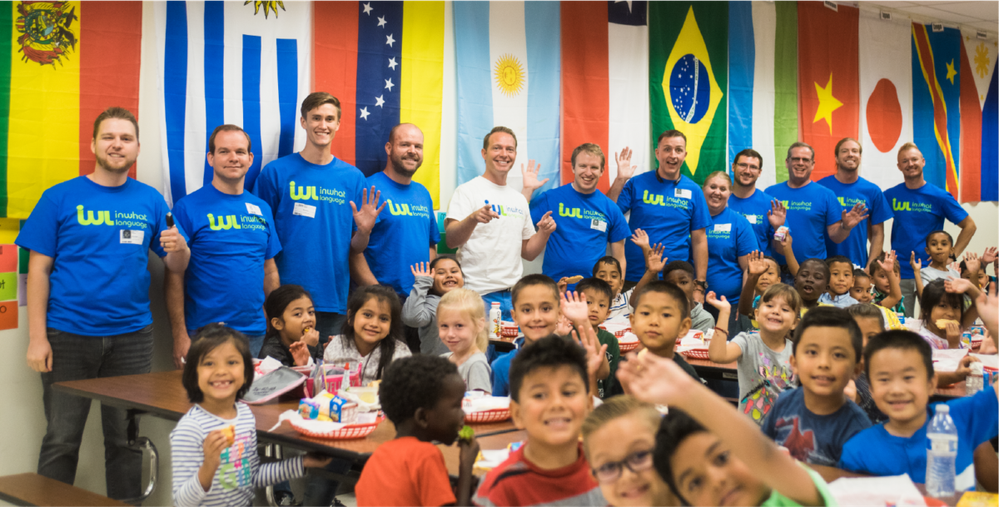
To nurture this vision, inWhatLanguage donated a total of 103,050 words to social impact related projects. The market value of those translations was almost $25,000 from June-December 2017. In addition to translation services, inWhatLanguage regularly volunteers in the community to help bring people from diverse backgrounds together.
ENGLISH LANGUAGE LEARNERS (ELLs)
A report by nprED stated that 1 in 10 public school students in the U.S. is learning to speak English. This group is categorized as English Language Learners (ELLs). Being able to communicate with and educate these ELL students–in English and other valuable school subjects they’ll need to excel in life–is one of the main challenges in public education today.
We recognized this as an opportunity to step in and provide translations for critical documents and parent-teacher communications, to empower diverse, non-English speaking students and their families with the information and resources needed to build successful lives.
Several organizations, including the United Way of Salt Lake, the International Rescue Committee, the Utah Transit Authority and many others have helped to make our mission a reality.
This category alone encompassed over 81,000 words valued at over $21,000 in language services. We are excited to work with these organizations to improve communication with our linguistically diverse community.
For more details on English Language Learners, visit our ELL page.
DISASTER AFFECTED COMMUNITIES
Areas of the world that are affected by devastating hurricanes, violent earthquakes, deadly outbreaks or other disasters, receive aid from around the world. It’s incredible to watch the world unite in times of crisis to assist people in tragic circumstances.
The only problem with volunteers from around the world, is the need to coordinate and communicate with each other to provide the most effective relief strategy. Unfortunately, this challenge has eluded a solution for many years. As a translation and localization company, inWhatLanguage jumped on the chance to offer assistance to people in need.
We’ve translated over 19,000 words for this initiative, worth almost $3,000 in language services. We look forward to developing this initiative to break down language barriers when the world unites to provide assistance in disaster-affected communities.
GRANT PROGRAM
We’re also excited to implement our new English Language Learners Grant program. We are offering 13 grants of varying amounts to organizations committed to supporting ELLs. The following grants will be given as translation services and the award amounts are the value of the translations to be conducted:
1 Grant for $5,000 of language services
2 Grants for $2,500 each for language services
10 Grants for $1,000 each for language services
Deadline for 2018 applications is March 15. All submissions will be reviewed by March 27. Grants will be awarded on March 30. Grant awards must be used for inWhatLanguage language services by August 30, 2018.
For more information about how to apply, visit our Grant Application page.
COMMUNITY OUTREACH
inWhatLanguage worked with the United Way of Salt Lake to provide vision screenings for elementary school students. In South Salt Lake schools alone, 18% of students are refugees and 44% are ELLs.
We were able to translate critical information so that parents would be aware of these free services available to them. Many team members of inWhatLanguage supported the initiative by showing up and helping these students with their vision screening tests.
inWhatLanguage also competed in the Startup Santa Utah initiative, which encourages companies to compete against each other to donate children’s books for kids living in low-income families.
The team quickly rose to the top of the leaderboard for our company size, with a total donation of 925 books. Many of the donated reading materials were written in various languages to support diverse communities.
About inWhatLanguage
inWhatLanguage is a localization and technology provider breaking down language and cultural barriers to unify people and communities around the world. Through technology and professional linguists, we connect organizations to communities by allowing them to create, control and manage all enterprise-wide content through a proprietary, cloud-based translation management platform called UNIFY.
Originally published on the Optoro blog.
Optoro is proud to announce that we have joined Pledge 1%, a global movement creating a new normal where companies of all sizes integrate giving back into their culture and values. Pledge 1% empowers companies to donate 1% of product, employee time, equity, or profit to causes of their choice.
In our initial year, Optoro has committed to donating 1% of our product and 1% of employee time to causes close to our communities, both in Washington, D.C. and Mt. Juliet, TN. By effectively donating goods to those in need and offering paid Volunteer Time Off to all employees, we pledge to continue ingraining giving back into our business. We are excited to stand alongside Pledge 1%’s participating companies, including Salesforce, Atlassian, and numerous others, in this mission to make philanthropy an integral part of our company.
Originally posted by the DeFrame team on Medium.
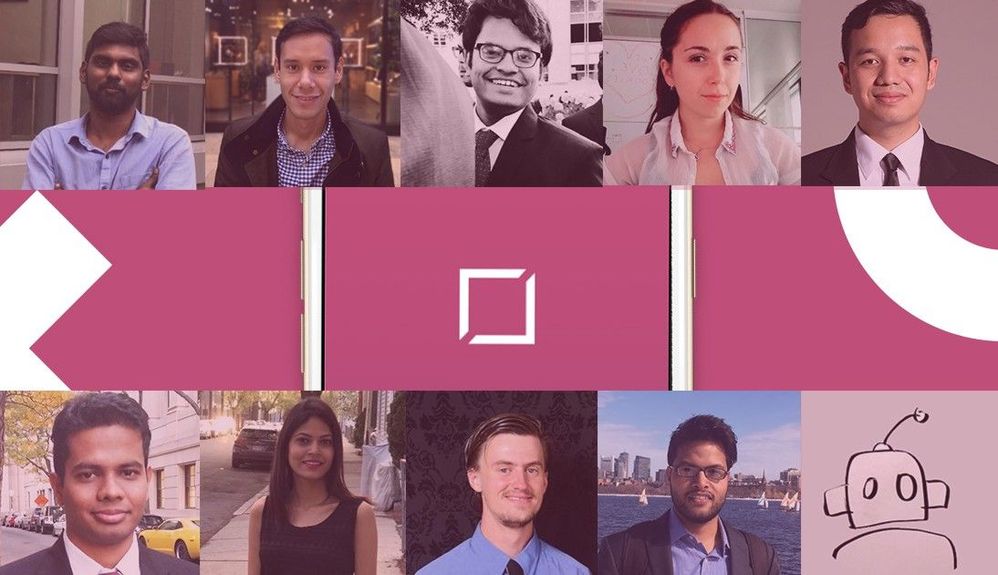
Today, we are pleased to announce that DeFrame has joined the Boston chapter of Pledge 1%, a global philanthropic movement creating new normal where companies of all sizes integrate giving back into their culture and values. Pledge 1% empowers companies to donate 1% of their product, 1% of equity, 1% of profit or 1% of employee time to good causes of their choice. Over 1,500 companies in 40 countries have taken the Pledge and committed to communities around the world.
DeFrame is excited to join Pledge 1%’s network of founders, entrepreneurs and companies around the globe that have committed to giving back. We have committed to pledging 1% of DeFrame’s upcoming software/platform to local Art Galleries and Independent Artists.
At DeFrame we believe in the importance of art culturally, and socially. Our mission of Connecting Museums, Art, and People art goes beyond just sharing your thoughts and feelings about a painting; it is about making art both accessible and interactive to everyone, from art experts to kids who are visiting their first museum.
Also, by utilizing technology, we want to empower everyone’s art experience, creating a user-friendly experience that promotes a collaborative community that shares their perspectives and interpretations of art. We aim to create a more interactive approach to the process of appreciating and learning about art, its beauty, and importance to the world.
We believe in the importance of art culturally, and socially. We want to bring new ways of financial sustainability by keeping Museums and Art Galleries relevant to younger generations.
Lastly, we want to bring new ways of financial sustainability by keeping Museums and Art Galleries relevant to younger generations. Our team at DeFrame want to put their own mark in reaching that goal. Technology will eventually change the way we behave and interact with art; we are aiming to be one of the catalysts that will push this industry to a prosperous financial future by working hand-in-hand with advances in tech and the Art world.
We are proud to be a Pledge 1% member. For more information about Pledge 1%, visit www.pledge1percent.org.
Originally published on Medium by Conor Nolan.
In a recent conversation with a friend, I attempted to do the impossible — Explain Blockchain.
So I described it through football, a medium we both understood, using a cool analogy I recently came across. During a game, everyone playing and watching knows the score; how much time is left; how many players are on the pitch; and this cannot be changed without a good reason for doing so and the referee’s confirmation. Blockchain is essentially the referee, putting the power in the hands of everyone there. So each ‘block’ in a blockchain-based peer-to-peer ‘chain’ is agreed and verified by everyone watching, ensuring the legitimacy of every element of the game.
Taking a step back from football and applying that to real world scenarios, the opportunities are endless.

At Blocknubie, we want to give great teams and great ideas that take advantage of this technology, the best possible chance of success. Our emerging, open source platform acts as a bridge between off-chain organisations, startups and the blockchain ecosystem, something we’ve explained in other blogs.
Blockchain and Social Entrepreneurship
There are already some incredible ideas with ambitious goals to create a massive social change, but current practices and methods are ineffective. This is where blockchain can be a catalyst for positive impact.
According to U.N. Secretary General Ban Ki-moon, 30% of foreign aid never reaches its destination due to corruption, or failure of accountability and transparency. So UNICEF are hiring blockchain developers to explore applications of blockchain to help distribute and deploy foreign aid.
A blockchain powered Foreign Aid system could enable transparency and accountability in the operation – distributing financial aid safely, securely and directly to the people and organisations they were meant for.
This is only one example. Think identity, think security, think financial empowerment. The potential is immense.
So what has Blocknubie got to do with Pledge 1%?
I have personally have been involved in Social Entrepreneurship for a number of years and a company’s corporate social responsibility is something I believe to be of vital importance. From donating to charitable organisations to assisting start-up ventures with a purpose to ‘do-good’.
At Blocknubie, giving back and promoting social entrepreneurship has been a core element of the company since it’s inception, and the 1% Pledge aligns strongly with the values of our team. We will be:
- Allocating 1% of NUB Tokens raised in our ICO to the 1% Pledge
- Guaranteeing at least one Social Venture will be part of the Blocknubie Accelerator Fund per cycle.
- Giving full access to the platform and integrated DApps for Social Ventures
Blockchain technology has been around for a while, it’s mass adoption is still quite premature. New applications for this potentially revolutionary enabler will continue to emerge as more and more people are educated, and the team at Blocknubie hope to help as many ideas prosper as possible.
It is a no-brainer for socially-focused organisations to at least consider blockchain, and we expect our partnership with 1% Pledge breaks down any barriers to entry for those considering it.

Originally published by CAF America.
The China Overseas NGO Management Law, officially the “Law of the People’s Republic of China on Administration of Activities of Overseas Nongovernmental Organizations in the Mainland of China” went into effect January 1, 2017. The law requires that foreign NGOs coordinate their efforts with the Ministry of Public Security (MPS) and provides the framework within which they can continue their activities in the country through two ways: opening a representative office in China or applying for a temporary activity license.
When the law first came into effect there was a lack of detailed guidance on how to comply with the requirements of the law. This led to confusion amongst international philanthropists and grantmakers about how the new regulation would affect their charitable efforts within China. While the government has not yet officially clarified all details regarding implementation, over the past several months it has become clearer how NGOs can become compliant either by opening a representative office in China or applying for a temporary activity license. These two compliance measures enable foreign NGOs to plan their strategy for continuing their work in China. To date, some estimates from The Diplomat and The China NGO Project say that 90 to 250 foreign NGOs have successfully registered their offices in China. The number of temporary activity licenses that have been released is unclear, The China NGO Project estimates there have been less than 150 to date.
What is clear, however, is that donors from the United States can continue to support registered Chinese NGOs through intermediary organizations or through direct grantmaking if that is what they would prefer. Intermediary organizations may choose either option to fund charitable efforts in China, i.e. opening a representative office in the country or working with a “Chinese Partner Unit” and obtaining a temporary activity license. Both avenues are complicated and burdensome on the intermediary, however, a temporary license provides more flexibility for the donor.
When giving to an organization that has a representative office registered in China, the law requires that the registered office submit its entire activity plan by December 31 for the following year. This means that donors to this organization must know what exactly they want to fund a full year in advance and must provide this information to the registered office in due time.
The alternative, providing funding to an organization that works through temporary activity licenses, does not require this level of planning. The donor is therefore able to give at any time during the year, without the burden of 12 months of advance planning. Instead, while obtaining temporary activity licenses requires significant amount of resources (the prescribed documentation is extensive and requires close coordination with the “Chinese Partner Unit”), the temporary license allows for far more flexibility for both the Chinese Partner Unit and the donor.
The following steps should be taken by grantmakers and others applying for a temporary activity license. Please note that this list is not exhaustive, and it may differ based on region of China. Requirements may also change over time. Thus, it is important that you engage with your Chinese Partner Unit directly to ask them what is needed in order to apply before you begin this process.
- The funder should first obtain the following documents
- 501(c)(3) Determination Letter – English and Chinese Translation (may need an original copy from the IRS)
- Articles of Incorporation – English and Chinese Translation (these must be originals from your state of incorporation and require an apostille)
- A document certifying the source of and purpose of funds
- The grant agreement with the intended Chinese Partner Unit
- All of these documents, including an application for notarization, must be submitted to the Chinese Embassy for certification in-person. However, the Chinese Embassy will not certify the documents unless they have already been certified by the U.S. Department of State Authentications office.
- After approximately 10 days, the funder must return to pick up their notarized documents from the Embassy and proceed to coordinate with the Chinese Partner Unit to complete the license application process.
Given that each grant must go through a process similar to that described above, financial and staff costs are burdensome but not prohibitive.
Want more? Listen to our podcast to learn more about the China Overseas NGO Management Law
Originally published on Glassdoor.
You can’t have it all. The popular refrain has been shouted from magazine coverlines and even folk songs as a means to caution women who try to excel in their personal and professional lives. However, it’s a phrase that has also been directed towards all job seekers.
Exciting projects, innovative coworkers, a beautiful office, excellent pay — you can’t have it all.
Or so they said.
According to employees at New York-based Silverline, having it all is possible if you work with them. “You can have a job that you love, at a company you admire, with phenomenal coworkers (both in terms of personality and productivity) – Silverline’s got it all,” raved one team member. A director added, “Silverline has grown significantly over the past two years, the company has been able to retain fun small company culture.”
Pair that with unlimited vacation, flexible work options, education reimbursement programs, learning & development programs, it’s no wonder Silverline has been honored as a 2018 Best Place to Work in Glassdoor’s annual Employees’ Choice Awards.
With a near perfect rating of 4.9, Silverline has become the #1 small business on the Best Places to Work list. At the helm of Silverline’s success is CEO Gireesh Sonnad, who has a 100% CEO approval rating on Glassdoor. We managed to catch up with Sonnad to discuss the win, learn more about Silverline’s culture and to find out “What’s your favorite interview question to ask Silverline job applicants?”
Glassdoor: Congratulations on your huge “Best Places to Work” win! How does it feel to know that your employees made this win happen?
Gireesh Sonnad: Thank you so much! I am honored by the magnitude of this recognition. It is incredibly rewarding to know that the people I see and interact with every day have taken the time to show this type of support for the company. This is truly an amazing accomplishment for all of Silverline.
Glassdoor: What have you done this year to double down on employee engagement?
Gireesh Sonnad: Transparency and consistent communication is key to helping to build a solid foundation. This will support the growth of a trusting environment and a team who feels that they can truly contribute to their success and the success of the company. We regularly employ multiple channels to foster this trust and overall engagement.
One of the best ways to foster trust and employee engagement is simply to listen and discuss feedback. In addition to a complete open-door policy, I hold office hours every other week with the primary purpose of supporting that feedback mechanism. Employees tune in from home and gather in the office to hear about new developments, company strategy, and exciting news. Importantly, I directly answer ANY questions that are submitted (anonymously, through our corporate social intranet) or that are asked on the spot. The company has seen fantastic participation and have found it to be a wonderful opportunity to discover what’s important to our employees.
Additionally, we hold several organization-wide gatherings, such as quarterly All Hands meetings, that bring employees together to discuss the state of the company, share corporate goals and progress, and engage with our colleagues face-to-face.
Finally, I have recently made it a point to physically connect with each of our remote teams who do not come into the main headquarters office every day. I am doing this through a ‘Vision and Values’ Tour in which I travel to each of our satellite offices and hold focused sessions on: where we are as a company, the values we hold dear as an organization, and the future that we see as a team.
Glassdoor: Your employees love working here as we see the strong rating on Glassdoor – How do you make this a great place to work day in and day out?
Gireesh Sonnad: As an organization, we continually look for new ways to help our employees learn, enhance their lives, and further their careers. We implemented learning and development and career path initiatives, called Silverline Synapse and PowerUp!, which offer a variety of programs to foster professional and personal growth. These programs allow individuals to improve their technical and consulting skills, become subject matter experts, and share knowledge with their peers. We are enabling a world-class workforce through high-quality and timely learning opportunities.
Silverline has established a robust system to gain transparency into our employee’s goals at work and at home that everyone can be aware of. We have leveraged the Salesforce Platform to create a tool that allows our team to set individual and department goals, along with objectives for each, then measure and report on their results on a regular basis. However, not all goals are company centered; we encourage employees to also set personal goals to maintain their health and wellness.. Goals can be collaborative and employees are encouraged to push themselves above general expectations.
We also have our philanthropic initiative, Silverline Cares, and we are a proud member of the Pledge 1% movement. The goal of this initiative is to create community engagement opportunities through donations of our time, product, and profit. We recognize that participating in these opportunities to give back will also enrich and inspire the lives of our employees while strengthening our communities. My hope is that every Silverliner feels that they have given back to the community through their involvement with Silverline.
Glassdoor: Good leadership is not just one person – How do you work w/ your management teams to make sure employees have great leadership here?
Gireesh Sonnad: Silverline adheres to a core set of values that every member of the team is aware of and lives by. This includes our management team who knows that the success of the organization is driven by the success of the individual, and uses these values as guiding principles.
We continually emphasize the concept of frequent and meaningful feedback at every level. This includes our management teams providing feedback to our senior leadership, as well as every individual communicating with our management team.
It is important to be able to receive feedback as well, and we strive to give our managers the support that they need to effectively connect with their teams. There is a dedicated group in the organization that combines all ‘Peoples Managers’, who meet regularly to coach, educate, and continually groom our managers to be effective and supportive.
Glassdoor: When you’re hiring, what do you look for in informed candidates?
Gireesh Sonnad: Ultimately, I look for someone who has the passion to be part of an organization that is rapidly growing, is focused on the success of their customers, and driven by the desire to contribute to the team as a whole. Certainly, skill in their role and the ability to bring a unique perspective are important traits. But I believe that if there is a strong and meaningful fit between a candidate and the team at large, then we will be capable of incredible things.
Glassdoor: What interview questions do you ask to ensure your companies recruit great employees?
Gireesh Sonnad: “Are you willing to learn as much as you teach? Are you willing to teach as much as you learn?”
“Describe for me the best example of day that makes you excited to jump out of bed that morning.”
We care deeply about the cultural fit of every new Silverliner – for their success and ours. While it may not be unique, we make sure that our candidates have dedicated sessions with a large cross section of individuals from throughout the company – not just their department – so that we can gauge an individual’s overall fit with what we have built. We spend a great deal of time with every candidate to make sure that they will be wildly successful as a Silverliner.
Glassdoor: What keeps you at the company for the long haul?
Gireesh Sonnad: The people! It has been a truly incredible experience watching this organization grow from just a handful of people to what it is today. I am extremely proud of who we are as a team, and inspired to continue to do better through my interactions with every Silverliner. I absolutely love what I do, and the people that I do it for. I cannot wait to see what we do next.
Glassdoor: How do you recruit talent – what are some of your best practices?
Gireesh Sonnad: We view employee happiness as a competitive advantage. Employees that are excited and engaged develop strong relationships with clients which in turn, ensures our customers are also happy and having a positive experience. Employee well-being can also impact strength in talent acquisition. We encourage our employees to bring in talent that will help grow the organization in a way that they can be proud of as well. The more talented people we have, who enjoy the environment that we have created, the more successful we can become.
Glassdoor: If you could speak to millions of job seekers interested in Silverline, what would you want them to know about what it takes to succeed at Silverline?
Gireesh Sonnad: At Silverline, we pride ourselves on striving for an unparalleled Employee Experience. We are a tight-knit team made up of the best and brightest people. Our employees are problem-solvers, self-starters, and innovative technologists. If you want to succeed at Silverline, you are a person who innately loves finding solutions to difficult challenges in a truly collaborative team environment.
Originally posted: January 15, 2018
By Conor Cawley, Tech.Co
Around the holidays, charitable giving is on the rise. Whether it’s the spirit of Christmas or a recognition of cold weather making things harder for people, there’s no denying that this time of year is best for giving back. However, there are many causes that require your attention year round, which is why Pledge 1% is such a noble and necessary movement in the world today.
Pledge 1% helps companies, especially startups, give back to their communities and causes, as well as build a culture of giving. They encourage everyone from small businesses to large companies to Pledge 1% of their profit, time, product and/or equity to a philanthropy of their choice. Since they launched in 2014, over 1,500 companies in 40 countries have taken the Pledge 1%, including Salesforce, Atlassian, Yelp, Box, Twilio, and many more.
To date, the top Pledge 1% companies alone have already ignited over $500 million in new philanthropy. Pledge 1% was also most recently recognized on Fast Company’s World’s Most Innovative Companies list and #1 most innovative nonprofit.
We are proud to announce our partnership with Pledge 1% and spark some good will at CES Startup Night. We’re also asking startups to join us in the festivities and Pledge 1%.
To spur a little more buzz about giving back, every company that joins Pledge 1% won’t have to wait to get into our CES Startup Night event and can enter via the VIPledge express line. If you have already registered and want to take the Pledge, sign up here.
“We recognize the importance of startups and companies giving back to society,” said Jen Consalvo, COO and cofounder of TechCo. “We are excited to take the Pledge 1% ourselves and encourage other companies to join us!”
Check out Pledge 1% today and join other companies building a culture of giving back to society. Want to attend CES Startup Night? Make sure to RSVP here.
Read more about causes for social good on TechCo
Originally posted: January 4, 2018