
This profile is published as part of Pledge 1%’s Women Who Lead series, which celebrates women in the Pledge 1% community who are creating change within their workplace and communities.
Susan Jones is the COO and Co-founder of Wear+Care, a Pledge 1% Member company.
Q1: What inspired you to work in this industry?
My father passed away from cancer 11 years ago and I always wanted to find a way to get involved in the community. Care+Wear was a passion project at first and was the first time I felt like I had found the right way for me to make an impact on the community.
Q2: What would you tell women who are looking to work in tech?
Any advice on how they can build their career? Do what interests you. I started out in the fashion industry and found a way to take what I loved from that and channel it into Care+Wear and my role here.
Q3: Is your company a Pledge 1% member or do you personally give back to your community? If so, how do you give and to what cause?
Yes, we are a Pledge 1% member and have made giving back a part of our business.
Q4: Do you serve as a mentor? What does mentorship mean to you?
Mentorship means taking the time to teach and listen to team members. I try to always be available as a mentor, especially to our new team members who are still learning about the company and are new to their roles. It’s fun for me to explain concepts and see them learning.
Q5: What’s the best piece of advice you’ve received to help you with your career?
Always care for everybody.
Q6: What’s the one piece of advice you would give to yourself 5 years ago?
Find a good mentor.
Originally posted: March 7th, 2017

This interview is published as part of Pledge 1%’s Women Who Lead series, which celebrates women in the Pledge 1% community who are creating change within their workplace and communities.
Q1: What is your Name and Title?
Gemma Sole, Cofounder and COO/CMO of Nineteenth Amendment
Q2: How long have you been in your current position?
3 years (!). Before this I worked in Venture Capital and Strategy and Communications consulting.
Q3: What inspired you to work in this industry?
I’ve always loved bringing beautiful things to life. I’m an artist on the side and was very into fashion growing up. I went from consulting to the startup space and Nineteenth Amendment allows me to combine things that I care about: 1) helping creative makers do what they love , 2) helping small businesses grow and scale, 3) building things that are awesome.
In terms of fashion tech, the fashion industry really hasn’t had much innovation aside from effects of globalization (good and bad). What out platform does is provide the first real process innovation in fashion that is a win-win for all players. There is nothing more exciting than creating a business where everyone can win and talent is the determining factor.
Q4: What would you tell women who are looking to work in tech? Any advice on how they can build their career?
My greatest piece of advice would be to have conversations with real people in the industry you want to go into. This applies to any industry, but especially startups. The startup environment, the tools people use, the players change so quickly. You will learn so much more in one hour of conversation than an entire week or research, and you’ll be networking to boot.
As a woman, you have the ability to connect with other women in the industry who often want to help. So take advantage of it, just don’t forget to get the coffee and send that thank you. It’s also important you ask what you can do for them to show that you are willing to help and understand the value of their time.
Q5: Is your company a Pledge 1% member or do you personally give back to your community? If so, how do you give and to what cause?
Yes! Nineteenth Amendment is a Pledge 1% member initiated by my cofounder, Amanda. We mentor for Girls Who Code and personally do volunteer work for groups for disadvantaged children.
Q6: Do you serve as a mentor? What does mentorship mean to you?
Yes, I mentor a lot in my college alumni network. I love mentoring. I like to give mentees real world advice to hopefully save them time and effort as they begin the process. Mentorship is really about making the next generation a kinder, smarter generation so they can make the world better for everyone. Sounds wishy/washy but it’s true! If I can pass along lessons and examples of integrity and kindness in business and personal life, I feel like that’s building a better future for everyone.
Q7: What’s the best piece of advice you’ve received to help you with your career?
Have faith in your ability to deliver. If you don’t understand something, speak up and ask about it. The worst thing you can do is just nod… Half of how you achieve in the long run is by trying something, understanding what you did well and what you didn’t, and suggesting ways to do it better next time….and then actually going and doing it (i.e. executing). What you quickly learn, as entrepreneurs or as employees, is that a lot of people have good ideas, but the best people actually do something about it.
Q8: What’s the one piece of advice you would give to yourself 5 years ago?
Five years ago is actually when I met my cofounder and quit my first corporate job. I had a great consulting job, had been promoted early, but wasn’t feeling like it was right for me. At the time, I moved from DC to Boston to live with my parents and figure out what to do next. I was scared and it was a lot of work. I’m so glad I did. My advice would be lead with your head but follow your gut. Mitigate risk but follow your feelings – if you do both of those things, at the end of the day, you know you will have made the best decisions and won’t have regrets.
Originally posted: March 6th, 2017

This profile is published as part of Pledge 1%’s Women Who Lead series, which celebrates women in the Pledge 1% community who are creating change within their workplace and communities.
Lynn is a highly experienced board member. Over the past 25 years she has served on private and public company boards, including listed, in the financial, property and retail sectors. She has also served on Government boards, both state and federal, as well as not-for-profit boards.
She’s currently a trustee of the IFRS Foundation. She’s also a mentor on the AICD Chair’s mentoring program as well as the ON innovation program at the CSIRO.
Lynn’s startup experience is longstanding. She was one of the original members of the startup team for American Express Cards in Australia and NZ as well as later in HK. She was also part of the team that established the first international property fund in Australia (Schroders International Property Fund) as well a private wholesale property fund (Schroders Private Property Syndicate). Based on this executive experience she co-founded a managed fund investment group (United Funds Management).
Her current startup is an Ideas Platform called IdeaSpies.
Her previous board positions include the Financial Reporting Council (Chairman), Noni B (Chairman), Save the Children Australia, Good Beginnings Australia (Chairman), the External Reporting Board-NZ, GPT Funds Management, HSBC Bank Australia, Macquarie Goodman Group, the Foreign Investment Review Board, NSW Lotteries, Schroders Australia, MS Australia and CEDA.
Lynn’s career has also included positions as an executive coach, consultant, a compliance committee member for three major fund managers and chairman of a CEO syndicate.
Her executive experience focused on strategic marketing in the retail, property and financial industries. She was a Marketing Director for American Express Cards (Nth East Asia), Schroders Property, Citibank Cards (Australia) and David Jones.
Lynn is a Fellow of AICD and has an MBA from the AGSM, as well as an MA from the University of Sydney. She was awarded a Centenary Medal for services to Australian society through business and finance in 2003.
Originally posted: March 3rd, 201

The rising philanthropy of the U.S. tech sector has come in waves.
In the first wave, the big winners from the early boom in computer hardware and software shifted billions of dollars into major foundations, creating the Hewlett, Packard, Moore and Gates foundations—all of which emerged as new powerhouses in American philanthropy around the end of the 20th century with global and national agendas. Other tech leaders who began ambitious giving in this first wave include Steve Case, Michael Dell, Pierre Omidyar, Jeff Skoll and Tim Gill.
In the second wave of tech philanthropy, starting around 2010, a new crop of tech leaders began to embrace giving. Philanthropists who emerged in this wave—or dramatically stepped things up—include Mark Zuckerberg, Marc Benioff, Sean Parker, Dustin Moskovitz, Sergey Brin and Larry Page.
Now, it feels like a third wave of tech philanthropy is underway. This one is less about high-profile billionaires turning to giving and more about the rapid spread of philanthropy norms through the world of tech startups and early stage companies. It’s about a culture of giving emerging throughout the younger provinces of the tech sector, with millennial entrepreneurs breaking down the divisions between business and philanthropy. It’s also far more local, with techies looking for ways to make a difference in their own communities.
While people like Bill Gates and Gordon Moore exemplified yesterday’s approach to tech giving—first, you make your pile over decades, then you give it away with plans to eliminate polio or save the Amazon—many younger tech leaders are looking to integrate philanthropy into their businesses early on, even before their companies go public. And quite a few are more likely to be interested in, say, helping a neighborhood tutoring effort than combating climate change.
Marc Benioff, the founder of Salesforce, has been the leading figure preaching this approach in the tech world in recent years. When Benioff founded his company in 1999, he pledged to give away 1 percent of equity, 1 percent of product, and 1 percent of employee time. Benioff’s mantra is that “the business of business is to improve the state of the world.” And through the Salesforce Foundation, which was founded in 2000, his company has successfully executed the 1+1+1 model, channeling nearly $130 million in grants to nonprofits, as well as millions of dollars of software and over one million hours of employee volunteer time. Quite a bit of that largesse has been focused in San Francisco, where Salesforce has its global headquarters and is closely involved in helping the local public school district, and where Benioff has personally given over $200 million to build hospitals, as well as rallying tech leaders in the region behind new anti-poverty efforts.
Suzanne DiBianca was the first president of the Salesforce Foundation, and is now Salesforce’s chief philanthropy officer and executive vice president for community relations. In a recent interview, she said that she and Benioff were keen from the start to spread the 1+1+1 model throughout the tech community. The biggest early convert was Google. The co-founders Brin and Page pledged 1 percent of Google’s equity before its 2004 IPO—a move that resulted in some $1 billion set aside for philanthropy after the company went public.
A few years later, in 2008, DiBianca and a colleague from Google developed a campaign to get more pre-IPO tech startups to pledge 1 percent of equity, product and time. That first effort fizzled, but got back on track in 2013, with the help of two tech companies that had quietly embraced the 1 percent model. One was Atlassian, a cloud-based software firm based in Australia; the other was the Boulder-based Rally Software, which also made cloud-based software and went public in April 2013.
Rally was part of a group of four tech companies that had come together in 2007 to create the Entrepreneur’s Foundation of Colorado, which worked to get companies in that state’s thriving tech sector to pledge a portion of equity for charity or annual earnings for charity, pre-IPO. Over ensuing years, a number of Colorado startups joined this effort.
DiBianca recalls that around 2013—as a new tech scene surged and more companies went public—Salesforce started getting a “deluge” of requests from tech leaders interested in the 1+1+1 model. “Something shifted,” she said regarding the new momentum. “It became more acceptable to leverage your company for social change.”
One factor at work, here, surely, was the rising salience of philanthropy in the tech world, as Zuckerberg and other second-wave donors stepped forward. As well, DiBianca says the “new paradigm” of responsible business, embodied in the 1+1+1 model, meshed naturally with the worldview of millennials coming up in the tech world: These folks were far less likely than earlier generations to put business and social change into separate compartments.
In 2014, Salesforce, Atlassian and Rally launched Pledge 1 Percent as a global campaign to get young tech companies to commit to the 1+1+1 model. DiBianca saw it as a “grand experiment” and wasn’t sure what would happen. But the effort exploded, with five hundred tech companies joining the pledge in the first year. That number now stands at over 1500. Of these, around 70 percent have pledged equity and half have pledged the full trifecta of equity, product and time.
Pledge 1 Percent was originally housed at the Entrepreneur’s Foundation of Colorado, and since then, has moved to Tides in San Francisco. Three staff now coordinate the work. (EFOC has rebranded itself as Pledge 1 Percent Colorado.)
In another sign of the momentum in tech philanthropy, a few new local efforts have sprung up to get tech startups focused on giving. Last fall, Pledge 1 Percent Boston launched under the auspices of the Boston Foundation, which is incubating the effort. Tim Smith got this going after moving back to Boston from the Bay Area, where he had been director of the Full Circle Fund, a network of professionals engaged in giving and social change. In that job, he had collaborated with Salesforce and Suzanne DiBianca, and closely followed the Pledge 1 Percent effort.
Smith sees the Boston pledge as a critical next step in knitting tech firms into the nonprofit sector, by making local connections that are needed to develop these ties on a day-to-day basis. “There was a gap,” he said. “The gap was to make this more than a global movement and connect to local causes.” Pledge 1 Percent Boston, he said, is “really about connecting people at successful tech companies with what’s going on locally.” He says that the Boston Foundation is a strong platform for this work because it’s involved in so many causes throughout the city. It also has the capacity to handle the actual giving by tech firms, offering a cheaper alternative to creating a company foundation.
Since Pledge 1 Percent Boston launched in October, 30 local tech companies have joined. “There’s been a ton of interest,” Smith said. Even some VC firms are getting involved. The group’s initial programming is focused on helping tech leaders leverage their skills to bolster nonprofits by sitting on boards and such, while also helping them learn about social problems in the city like homelessness. Pledge 1 Percent Boston will be launching a drive later this year with the hope of doubling or tripling its membership.
Meanwhile, earlier in 2016, Pledge 1 Percent launched in the U.K., with 25 tech firms joining right off the bat. Pledge 1 Percent has also made some inroads in New York City’s tech scene, although there is not yet an official local campaign that’s recruiting companies in the city to join.
Most recently, an effort by the Annenberg Foundation to galvanize tech engagement in Los Angeles launched just this week. The initiative, dubbed AnnenbergTech, comes amid the explosive growth of L.A.’s tech scene, which is mostly clustered on the city’s west side, on “Silicon Beach.” As these companies have matured, most notably with Snap now preparing to go public in a multi-billion-dollar IPO, interest in philanthropy has also been growing.
Last month, we reported on the decision by Snap’s co-founders, Evan Spiegel and Bobby Murphy, to donate 13 million Class A shares of Snap stock to the company’s foundation over the next 15 to 20 years. With Snap’s last private valuation at $25 billion, it could mean that hundreds of millions of dollars will flow into philanthropy in coming years.
Snap is part of the new Annenberg initiative, which grew out of a series of meetings with L.A. tech leaders who expressed interest in connecting to local nonprofits but needed help finding their way around. As well, in the last year, the Annenberg Foundation conducted a survey of nonprofits in L.A., finding that many of them wanted to make better use of technology to advance social change, but struggled to do so, facing challenges around capacity and know-how.
AnnenbergTech aims to connect some important dots here, linking together L.A.’s tech scene with the city’s nonprofit sector. It could also be a place to nurture some major new givers among a local tech elite that’s gotten much richer lately (both of Snap’s co-founders are billionaires). Wallis Annenberg, who leads the foundation, said, “The leaders of these companies today are our philanthropists of tomorrow, and we hope AnnenbergTech can serve as a hub for this next generation to convene and create new models of civic leadership that will lift up and inspire all Angelenos.”
The new initiative has a few moving parts, including leadership events and also capacity building to help nonprofits with their technology needs. If it succeeds, it could fuel a Southern California philanthropy scene that’s been surging lately, as we’ve reported.
So where does this burgeoning tech philanthropy movement go next? More local efforts like the ones in Colorado, Boston and L.A. seem likely—spreading to Seattle, Austin and elsewhere, as well as globally.
Suzanne DiBianca sees this kind of localization as all-important, since it creates ownership and is needed to forge ties with nonprofits in communities. But she is also hoping that new efforts will embrace the Pledge 1 Percent idea, saying “you need a brand to build a movement.” She adds: “You’re so much more powerful when you’re part of a movement.” Tim Smith suggests that offering local groups hands-on advice and support is critical to scaling tech philanthropy communities in more places, and hopes that Pledge 1 Percent at Tides could play that role, perhaps with a franchise-type approach.
However things unfold, it does feel like the tech world has turned a real corner lately in terms of waking up to its need to engage in local communities and use its resources—both financial and technical—to solve pressing social problems.
This awakening could hardly come soon enough, since concern has been rising in many places, starting with the Bay Area, that the wealth of the tech community is driving inequality upward and that the sector’s highly educated knowledge workers are pulling away from their fellow citizens. How to close this rising divide is a longer conversation. But one part of the solution, certainly, is for tech leaders to roll up their sleeves and open their checkbooks to really start helping their neighbors in need.
Originally posted: March 2nd, 2017

This interview is published as part of Pledge 1%’s Women Who Lead series, which celebrates women in the Pledge 1% community who are creating change within their workplace and communities.
Q1: What is your Name and Title?
Alexandra Lindsay, Head of Marketing for hobbyDB.
Q2: How long have you been in your current position?
A year and a half.
Q3: What inspired you to work in this industry?
One of the best parts of the tech start-up industry is how fast paced and collaborative it can be. Working for a start-up gives me the opportunity and autonomy to influence the creation and development of a new entity. I feel very fortunate to be able to work with some of the best minds in tech to create solutions in the areas of genealogy (at Mocavo) and collectibles (at hobbyDB) used by millions of people.
Q4: What would you tell women who are looking to work in tech? Any advice on how they can build their career?
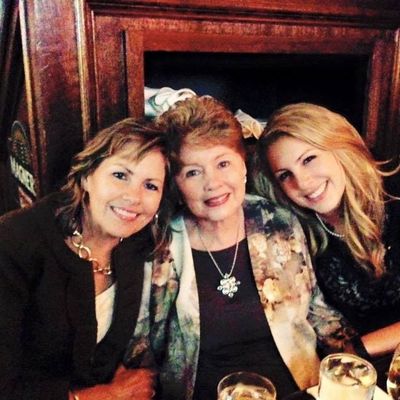
I’m very lucky to have come from a line of strong, working women. When I was talking with my Nana, (who was born in 1939) about this interview, the first thing she shouted when I asked her this question was “DO IT!” Our generation is so fortunate in that we have had many women who came before us who fought to open doors and opportunities that they never had as working women. Although there is still a long way to go in terms of full equality, we owe it to past and future generations to have the courage to push ourselves into male dominated industries such as tech, and into leadership positions where we really can make a positive difference. I would also encourage women to build up and support their women colleagues. The more we can work together to build strong female leaders, the more positive influence we will have.
Q5: Is your company a Pledge 1% member or do you personally give back to your community? If so, how do you give and to what cause?
I’m proud to say that every company that I’ve worked for in Colorado has been a Pledge 1% member. It is such a wonderful way for us to prioritize giving back to a community that continues to support Colorado start-ups.
Q6: Do you serve as a mentor? What does mentorship mean to you?
Throughout my life, I’ve had many important mentors who have helped mold me into the leader that I am today. Because of the positive influence they have had in my life, I knew that I also wanted to be a mentor. Luckily, there are many ways to become involved in your community as a mentor. During my time at the CU Boulder, I decided to take on the challenge of coaching a high school girls’ soccer team. Throughout the three years that I coached these young women, not only did I get to serve as a mentor for them as they prepared for their next adventures after high school, I learned more about myself than I ever expected. These young women gave me the courage to be myself, throw fear to the wind, and embrace vulnerability; all of which have helped me become a stronger leader in my career. That’s the best part about mentorship, that it truly can be a two-way street and you never know what you’re going to learn. I would encourage everyone to both find mentors to help you grow throughout your journey, and also find individuals that you can positively influence through mentorship.
Q7: What’s the best piece of advice you’ve received to help you with your career?
One of the best pieces of advice that I’ve received is to show up and work hard. It’s as simple as that. I believe that responsibility is taken, not earned. The more you can be counted on to show up every day and do a great job when no one is looking, the further you will go in your career.
The other piece of great advice that I’ve received is to lead with vulnerability. What this means to me is to have the courage to put yourself out there and potentially fail, to learn from your mistakes, to have honest, compassionate conversations with your team members, and to always be open-minded and daring.
Q8: What’s the one piece of advice you would give to yourself 5 years ago?
Worrying is never productive. I’ve come to find that if I focus on setting myself up for success, and having a positive outlook, I am exponentially more successful than if I would have just worried. Realize that it’s okay if you don’t know everything and that you’re not ever going to be perfect. It’s always okay to ask for help and seek out the support of those who are rooting for you to succeed. One of the best parts of the journey is pushing yourself to learn and then applying that new knowledge to problems that you never thought you could solve.
Originally posted: March 2nd, 2017

This profile is published as part of Pledge 1%’s Women Who Lead series, which celebrates women in the Pledge 1% community who are creating change within their workplace and communities.
Karen Lawson is the CEO of Slingshot. She is an award winning business executive and leader in the digital industry. She has held executive positions within both global companies and joint ventures. With experience leading teams through change and motivating and developing cross functional teams to peak performance, Karen is extremely passionate about delivering great results and helping others achieve their true potential.
Karen is a prolific networker and an experienced media commentator and guest speaker, with appearances on TV, radio in print and digital, as well as industry forums.
In 2016, Karen took the reins of Slingshot, a corporate accelerator focused on driving collaboration between Startups, Scaleups and corporates to lead the next wave of innovation. More than 50 Startups have participated in Slingshot’s programs, achieving a combined market capitalisation in excess of $60m and creating nearly 100 full time jobs.
Karen is leading the business through its next stage of growth, using her proven experience in driving reinvention and transformation to help Australia’s biggest businesses stay ahead of disruption.
Prior to her role at Slingshot, Karen served as CEO of CareerOne, a joint venture between News Limited and Monster Worldwide. With a remit to forge a new digital strategy, Karen restructured the business from a traditional job board, into a leading targeting and digital business offering media, employer branding, SaaS and sourcing solutions. CareerOne went on to be awarded a spot in the coveted BRW ‘Top 50 most innovative companies’ list for 2014.
BRW Magazine quoted this turnaround as follows: “CareerOne is no longer second to SEEK in the recruitment advertising market – not because it’s caught up, but because it has redefined the market it is in.”
Karen also served as General Manager – Business Development at Yahoo7! where she held full commercial and operational responsibility for data, advertising, publishing, technology, search, mobile and strategic partnerships, including the Microsoft Bing alliance.
Karen has a passion for driving innovation and has worked alongside a number of leading organisations as a consultant including Laureate International (the largest private educator in the world), Harris Farms and the National Breast Cancer Foundation. She was named UN ambassador for Womens Entrepeneurship Day, a Nominee for Telstra Woman of the year and the Australian Growth Company Awards 2015.
Karen is also a huge ‘foodie’ and has been a food and luxury travel journalist for over ten years, writing for a diverse range of publishers. She doesn’t have holidays, but has research and writing trips! To balance this out she is an avid runner having completed both New York and London Marathons, though these days she is more likely to be seen jogging around Blackwattle Bay at a much more sedate pace!
Originally posted: March 1st, 2017
Originally published on Tech.Co.
Charitable giving has become an integral part of the business world in recent years. With over two thirds of millennials preferring to work for a company that gives back, and the incredibly tough competition for top talent, building a culture of giving within your company is officially good for business. And that’s why Pledge 1% has been such a successful movement.
Pledge 1% is a corporate philanthropy movement that aims to make the community a key stakeholder in every business. By encouraging individuals and companies to Pledge 1% of their time, product, profit, and/or equity to ANY cause of their choosing, this movement is creating a new normal where companies of all sizes and stages feel empowered to integrate giving back into their culture and values. In just two years, over 1,500 companies in 40 countries have joined Pledge 1%, including Twilio, Box, Yelp, Docusign, Nutanix, Atlassian, Salesforce, Optimizely, and more.
“Pledge 1% is creating a new business paradigm for startups around the world,” explains Amy Lesnick, CEO of Pledge 1%. “It is helping founders to deliberately shape their company culture and values, empower employees, and leverage their business as a force for good.”
We are proud to announce that Tech.Co is partnering with Pledge 1% in hopes of spurring a little good will at SXSW Startup Night. In addition to encouraging the startups involved in the festivities to Pledge 1% of their equity, product, profit and/or employee time, Tech.Co will be pledging 1% of our product to support this noble cause.
And, as a special perk, all companies that join Pledge 1% will be invited to “jump the line” and access Tech.Co’s SXSW Startup Night event via the VIPledge express line. If you have already registered and want to take the Pledge, sign up here.
“Tech.Co recognizes the importance of companies in giving back to society,” said Jen Consalvo, COO and cofounder of Tech.Co. “That’s why we’re excited to help other companies get involved with Pledge 1% in addition to taking the pledge ourselves.”
In recent months, Pledge 1% has received a number of accolades that should further prove their value in the business world. From being named one of Fast Company’s 2017 Top 50 World’s Most Innovative Companies to having the honor of being #1 on theTop 10 Most Innovative Companies in the Nonprofit Category, this movement is taking the social cause game to a whole new level.
Check out Pledge 1% today so you can make a meaningful commitment to society through your business. Additionally, if you want to attend SXSW Startup Night, make sure to RSVP here.
Originally posted: February 27, 2017
By Ben Paynter. Originally published in Fast Company.
Over the past two years, Silicon Valley unicorns Atlassian, Box, Pure Storage, and Twillio all went public, earning billion dollar valuations. At the same time—and while less profitable—each was already giving back as a member of Pledge 1%, an initiative for companies to donate at least 1% of their time, equity, or product annually to charity. Since the program launched over two years ago, more than 1,300 companies in 38 countries have joined.
We wanted to be able to show up regardless of the company performance or economic climate.
“The reason that we messaged it like that is because every company on the planet has those assets. It doesn’t matter where you are located or what you do,” says Suzanne DiBianca, the former president and cofounder of the Salesforce Foundation, who initially helped pioneer the concept. Eventually, she hopes to see the trend become so successful that the program puts itself out of business. “We want to provide playbooks that make it easy for everyone to get going . . . My vision for this thing is it becomes the new normal for how you start a company,” she adds.
In the meantime, DiBianca and Salesforce broke new ground by giving her a new title and management on the for-profit side of the company starting in April 2016. As chief philanthropy officer and executive vice president of corporate relations, DiBianca hopes to fix what she says is a fundamental hang-up in corporate giving: that generosity often seems market-dependent. “Traditional philanthropy is funded by a percentage of earnings based on quarterly results. There are a whole lot of flaws with that,” she says, noting that a down quarter—or longer if the economy itself stumbles like it has at times over the last two decades—means investments are often pulled back at the times they’re most important. “We wanted to be able to show up regardless of the company performance or economic climate.”
Salesforce’s most basic charitable agreement, which started back in 2000, is dubbed the 1-1-1 model because it covers all three of those Pledge 1% categories at once. Over the last decade and a half, It has become a huge operation, supplying free or heavily discounted services to 30,000 nonprofits and educational institutions, while donating another $137 million in grants to two causes that are in line with improving opportunity that could be related to their own sector. Educational groups such as Black Girls Code and CoderDojo have benefited, along with workforce development organizations such as YearUp and Genesys Works. Employees have cumulatively spent 1.8 million total hours—they get a week of so-called “volunteer time off” annually—to do things ranging from coaching little league to building schools and health clinics.
As CPO, she wants to create a “bigger umbrella” for analyzing how efforts across company divisions can lead to broader social change. Over the last year, that’s meant not just supporting the concept of equal pay for women but auditing their books and making a $3 million adjustment to fix internal discrepancies. And not just fostering an LGBT-friendly work environment but rallying other business leaders to actively oppose bills creating discriminatory policies in Indiana, Georgia, and North Carolina. (It boycotted travel to some areas, discontinued supporting programs there, and moved employees out of Indiana.)
The idea is that instead of letting workers tackle cause work as side projects, the company can adopt those causes affecting its employees—and throw its weight behind them. “Well, these are not my decisions. These are the decisions of my employees. I am advocating on their behalf,” CEO Marc Benioff told Time, noting that from a workplace-happiness perspective and broader social contract with your customers anything that enables “anti-LGBT” rhetoric should be viewed was “anti-business.”
The company’s equality push includes diversifying their own workforce by providing training for underserved future employees. It has launched a veteran training group called VetForce, and actively recruits and trains people with disabilities. It has partnered with public schools in San Francisco to establish computer science as part of the curriculum, which has been shown to correlate with higher math and grade point averages in the area.
In some cases, donating to nonprofits creates a virtuous cycle. Salesforce not only helps fund the nonprofit YearUp, which works with young adults who aren’t necessarily tracking to go to college, but also hires roughly 170 of the program’s students each year—about 70% of whom go on to become full-time employees. On the environmental side, DiBianca’s bigger umbrella includes a plan to convert the company to 100% renewable energy—the company is about 40% of the way there, through a partnership with two U.S.-based wind farms.
What’s important is that she’s empowered both to set these goals and ensure that departments plan ahead for how to achieve them. “You don’t have to do philanthropy as a new program. It’s just thinking differently about your business,” DiBianca says. “A lot of this stuff has been born up in our company but in a real grassroots way. I think the narrative and work is bigger now.”
As with Pledge 1%, they’re hoping other companies see the profitability in following suit.
Originally posted: February 22, 2017
Read the original release here.
Amplifinity, a leader in referral program software, announced today the details of their partnership with Playworks – a nonprofit organization dedicated to creating safe and healthy play in schools. As part of Amplifinity’s Pledge 1% commitment, Amplifinity has donated a portion of its referral marketing software to Playworks to help them grow their customer base and increase their impact across the United States.
The inspiration for the Amplifinity, Playworks partnership was forged by Amplifinity’s belief in the life-changing influence Playworks can have on a child and the incredible growth Playworks has achieved thus far. By harnessing ties with teachers, principals, and parents, Playworks grew from only two schools in Berkeley, California to 1,300 schools in 23 cities across the United States.
“Playworks has had an extremely positive impact on healthy play in schools,” commented Larry Angeli, CEO of Amplifinity. “Their numerous success stories are a powerful testament to the success of their mission. They just needed a way to break through the noise – the same problem our business customers face.”
Tonya Antonucci, CMO of Playworks stated, “Capturing even a small amount of time from principals or teachers was a challenge. We realized that many of our new customers come from word-of-mouth. Partnering with Amplifinity to increase advocacy just made sense.”
The Playworks referral program will launch February 23, 2017 and will give teachers and principals the opportunity to help others implement safe and healthy play in schools. Teachers and principals who refer another school will be rewarded for their support of Playworks with a discount off their school’s next purchase of Playworks training services. Furthermore, teachers and principals can help their referral make safe play a reality in their school with other offers from Playworks.
“Playworks has a very important mission,” said Larry Angeli. “By donating a referral program to Playworks we can help them expand their reach to new communities and school districts across the country to defeat bullying in schools and give all kids a safe environment to learn and play.”
In addition to donating a referral program, Amplifinity also donated $5 for every demo given at Salesforce events in 2016, totaling $4,105 to go toward other Playworks initiatives.
“We have a goal that by 2020 3.5 million children will experience safe and healthy play every day in elementary schools,” noted Tonya Antonucci. “I believe that Amplifiity’s donation of the referral program, along with the generous monetary donation will help us meet that goal.”
About Amplifinity
Amplifinity referral marketing software generates revenue growth for sales-driven companies. Amplifinity turns customer, partner and employee advocacy into high-quality leads by integrating referrals into marketing and sales processes. Enterprise companies trust Amplifinity to enable high-quality acquisition while providing an engaging experience for their advocates. http://www.amplifinity.com
About Playworks
Playworks is changing school culture by leveraging the power of safe, fun, and healthy play at school every day. Playworks provide services for elementary schools and youth-serving organizations around the country to improve the health and well-being of children by increasing opportunities for physical activity and safe, meaningful play. Today, Playworks is the leading national nonprofit leveraging the power of play to transform children’s social and emotional health. Playworks currently serves more than 1,300 schools across the United States and reaches more than 700,000 students directly and through professional training services. http://www.playworks.org/
About Pledge 1%
Pledge 1% is an effort spearheaded by Atlassian, Entrepreneurs Foundation of Colorado, Rally for Impact, Salesforce.org and Tides to accelerate their shared vision of integrating philanthropy into businesses around the world. Pledge 1% encourages and challenges individuals and companies to pledge 1% of equity, product and employee time for their communities, thereby leveraging a small portion of future success to have a huge impact on tomorrow. Pledge 1% offers companies turnkey tools and best practices, making it accessible for any company to incorporate philanthropy into their business model. To learn more or to take the pledge, please visit http://www.pledge1percent.org.
Originally posted: February 20, 2017