Pledge 1% has been recognized as one of Fast Company‘s World’s Most Innovative Companies in 2017. In addition to this honor, Pledge 1% has also been listed as one of the top 10 Most Innovative Companies in the Nonprofit Category.
To read the full list of featured companies, visit fastcompany.com.
- Top 50 World’s Most Innovative Companies
- Top 10 Most Innovative Companies in the Nonprofit Category
Salesforce CEO Marc Benioff pioneered what he calls an “integrated philanthropic model” in his company’s early days, giving away equity and goods, and enabling employees to take 1.8 million volunteer hours to date. Benioff, along with Atlassian co-founder and co-CEO of Scott Farquhar, Rally, and the Entrepreneurs Foundation of Colorado, spun off the initiative in 2014 as Pledge 1%. The nonprofit challenges early-stage startups to bake in philanthropy from the beginning, rather than thinking about it at a later stage or post-IPO, as has been traditionally the case.
Pledge 1% has only three staff members, but it can genuinely claim to be birthing a movement. In 2016, it added 850 pledges, where startups committed to give 1% of equity, product, profit, or time, or combinations to charity. That was more than double its 2015 tally, taking its total to more than 1,300 companies, including Harry’s, General Assembly, Twilio, and Yahoo. Australian software juggernaut Atlassian alone has donated more than $6 million to the education-focused charity Room to Read. At the same time, 180 entrepreneurs have become “ambassadors,” helping spread the message to more countries (40 and counting) and more types of businesses.
CEO Amy Lesnick says the ultimate goal is to make early-stage philanthropy a natural part of setting up a company, and for Pledge 1% to become irrelevant. “In 15 years, we might not even exist,” she says. “[Early-stage philanthropy] will be as common as setting aside equity for future employees.”
Originally posted: February 13, 2017
Originally published on Fast Company.
Amy Lesnick is looking for the next Uber—to commit 1% of its equity, product, profit, or time to charity. As the CEO of the nonprofit Pledge 1%, Lesnick thinks like an angel investor, identifying promising startups. But rather than trying to buy a piece of the action, she encourages young brands to nurture a culture of giving and to maximize the potential for philanthropic contributions as they scale.
Salesforce CEO Marc Benioff pioneered what he calls an integrated philanthropic model in his company’s early days, giving away equity and goods, and enabling 1.5 million volunteer hours from employees. After evangelizing for others to follow his model, Benioff spun off the initiative three years ago as Pledge 1%. In 2016, the nonprofit added 700 pledges (more than double its 2015 tally, for a total of more than 1,300 companies), including commitments from Harry’s and General Assembly. Australian software juggernaut Atlassian alone has donated more than $6.5 million to education-focused charities.
For Lesnick, the growth is a step toward her ultimate goal: irrelevancy. “In 15 years, we might not even exist,” she says. “[Early-stage philanthropy] will be as common as setting aside equity for future employees.”
Originally posted: February 13, 2017
To read the original article, visit Fortune Magazine. Photo credit: Duy Ho Photography.
It might be common for corporations to make charitable donations. But a few companies go above and beyond with their philanthropic work, with initiatives like food drives, cancer walks, and even volunteer bonuses. Fortune partner Great Place to Work combed through more than 350,000 staffer surveys to compile this list of the U.S. companies employees feel are doing the best job at giving back. Employees are asked detailed questions about how proud they are of their impact on the community, the difference they feel they make, and whether their work has special meaning. Outtakes of their responses are below.
Click here to read more about the list, and find out more about how the ranking is compiled here.
#1 Salesforce
Employees say: “This is an extraordinarily special place that really cares about its employees, customers, and community. We are strongly encouraged to give back. I have done everything from volunteering in a soup kitchen, to working at a children’s hospital in Morocco—all supported by the company. Most importantly, I look forward to coming to work everyday, working with our wonderful community, and doing satisfying, challenging work.”
“The thing I think that most separates Salesforce from other companies is the focus on giving back. Personally, it provides me with a greater sense of purpose when I come in each day.”
Worldwide Employees: 22,070
Industry: Information Technology
HQ location: San Francisco
Total Philanthropic Donations: $137,000,000
Offers PTO for Volunteering: Yes
Offers Employee Matching Funds: Yes
Learn more in the Great Place to Work review here.
Originally posted: February 9, 2017
Originally published on the RFPIO blog.
There’s no better way to ring in the new year than by inspiring others to give. As a local company, RFPIO understands the importance of community. Now they are paying it forward in a different way. To kick off 2017, the RFPIO team is giving back to our amazing community with a Q1 initiative…
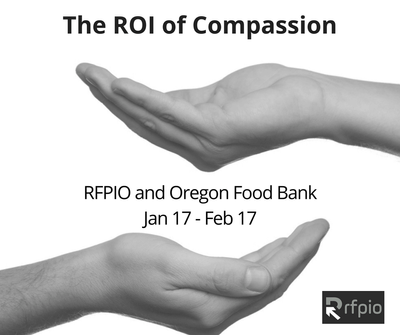
RFPIO has talked a lot about ROI in the business world, focusing on what the ultimate reward will be for the effort we put in. The “ROI of Compassion” puts a little twist on the concept we know well, by channeling the return back into the community for the generosity we invest.
As Salesforce partners, RFPIO works with Pledge 1% to participate in the culture of giving. Though it was challenging to pick just one cause—as there are so many important causes in need of resources—the RFPIO team has decided to pledge their 1% community involvement to the Oregon Food Bank.
Did you know that January is one of the most challenging times for food banks? Giving drops significantly after the holidays—so let’s change that by bringing some warmth and cheer to the people that need it this time of year.
Oregon Food Bank takes a holistic approach to ending hunger by bringing our community together to provide food, education and hope to our neighbors in need.
Last year, the Oregon Food Bank Network distributed more than 1 million emergency food boxes to people facing hunger throughout Oregon and Clark County, Washington. On a monthly basis, Oregon Food Bank helps 1 in 5 households struggling with hunger.
It’s time to add value back into our community with a little time and kindness. We hope you’ll join RFPIO’s culture of giving through mid-February, so they can make a bigger impact on Oregon Food Bank’s needs.
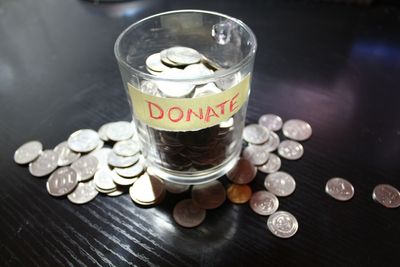
Ready to join the ROI of Compassion initiative?
Donate online at Oregon Food Bank!
Every $10 donation provides 30 meals.
OR…
Stop into the RFPIO office and donate food to our bin at:
1915 NW Amberglen Pkwy #400
(Regus Building)
Beaverton, OR 97006
Originally posted: January 25, 2017
By Tommy Jarvis, FinancialForce4Good Council Chair
Here at FinancialForce, I can’t think of a better way to celebrate the closing of our 2016 volunteerism efforts than to announce our formal commitment to the Pledge 1% community and their efforts to build a movement of corporate philanthropy.
From its inception in 2009, corporate social responsibility, and the philanthropic leadership of the 1/1/1 model led by Salesforce, has been a top priority for FinancialForce. This was viewed on day one when our co-founder and CEO Jeremy Roche initiated FinancialForce4Good, the philanthropic wing of FinancialForce. The vision of this initiative has always been rooted in the belief that we are stronger and more effective when we work together. Therefore, FinancialForce, via FinancialForce4Good, is committed to provide our employees and non-profit partners the resources to maximize the collective impact of their efforts.
Over the past seven years our work to address social causes in our communities and improve lives of others by harnessing the talents, passions, and generosity of FinancialForce employees, partners, and customers has grown tremendously. Whether it was collaborating with our closest partner Salesforce on a number of events (ranging from a National Park cleanup in the San Francisco Bay Area, the Wine to Waves Ride to benefit MS research, or processing food at the Central Texas Food Bank) or raising funds for some of our beneficiary NPO partners (ex. St. Jude Children’s Research Hospital in the US or St. Michael’s Hospice in the UK), we are committed to making a positive impact in our communities.
Recently FinancialForce has taken a number of exciting steps to ensure that we are maximizing that impact. First, we have formally “Taken the Pledge” to commit to giving at least 1% of our employee time for our community. This has long been a goal of ours, but we wanted to formalize this commitment via Pledge1Percent.org not only to celebrate our current efforts, but also to collaborate with other pledged members to grow our Pledge of 1% to equity, profit, and/or product in the future.
Second, and perhaps most importantly, FinancialForce4Good has put forth a new charter of our philanthropic efforts. Now, for the first time since its founding, FinancialForce4Good will be governed by a diverse group of employee volunteers. Tasked with maximizing the resources we provide our employees and partners to achieve the most impact, the Council took on the unique experiment to ask our employees directly where we should focus these efforts and we collectively selected Underserved Youth Education to focus the majority of our efforts.
In conclusion, it is an exciting time to be at FinancialForce and we are excited to leverage the continued leadership of the Pledge 1% corporate community and our partnership with Salesforce to achieve even greater philanthropic success in 2017.
Originally posted: November 30, 2016
By Marisa Lopez, Presence PG. This post was originally published on Medium.
We like to think everyone wants to make positive changes in the world. But where do you start? Corporate Social Responsibility sounds dutiful but very expensive, cumbersome, and, well, corporate. Small businesses may hear the of it and shy away for these reasons. However, being a socially responsible small business is not only important, but completely feasible.
What is Corporate Social Responsibility (CSR)?
CSR is a means by which for-profit organizations can take a stand on public issues, and help to make positive change. CSR refers to the moral obligation of a firm to their stakeholders. Stakeholders include employees, customers, partners, and anyone else affected by corporate policy. It is also an opportunity for company to “give back” to the causes their stakeholders feel passionately about. Typically this includes environmental efforts, philanthropy, ethical labor practices, and volunteering. Companies can launch recycling programs, ensure that they are hiring a diverse staff, and encourage volunteering by presenting volunteer opportunities and/or offering incentives for employees to volunteer. Some companies coordinate “volunteer days” at local nonprofits.
CSR not only helps the community, it also results in many benefits for a firm. For example, strong CSR can help to bolster brand reputation, build trust with key stakeholders, and position your company as a thought leader. Giving back to local communities makes a company more marketable, and more desirable to prospective clients and employees. It is critical that both internal stakeholders (employees) and external stakeholders (clients and prospective clients) are aware of all of the CSR activities your company is engaging in. Communication through social media channels such as Twitter and LinkedIn and tools such as Medium enables prospective customers and partners to identify firms with common values in which they might want to partner with.
What does it mean to be a socially responsible small business?
CSR is often associated with large corporations. This being said, small businesses can also benefit from socially responsible practices. In fact, small and emerging businesses (SME’s) account for a whopping 70% of the workforce! More attention to CSR in small businesses is needed, as the world truly benefits from SME’s developing and implementing a culture of giving.
However, SME’s face unique challenges to CSR, namely a finite pool of resources, including limited equity and time. Fortunately, programs administered by Pledge 1%, CoolCalifornia.org and the U.S. Small Business Association and have been designed to scale down for small businesses. The CSR Wire, a digital newsletter and information repository is also a great resource for small business who are rolling out a CSR program.
Presence Social Impact
With so many entry points into CSR, it is easy to get overwhelmed. We are a small business, with finite resources and very high aspirations for CSR. Here is how we got started.
This year we joined Pledge 1%, a global movement to create a new normal where giving back is integrated into the DNA of companies of all sizes. Pledge 1% encourages and challenges individuals and companies to pledge 1% of equity, product, and employee time for their communities, because pledging a small portion of success can have a huge impact on tomorrow. Pledge 1% also offers companies turnkey tools and best practices, making it accessible for any company to incorporate philanthropy into their business model.
Over 1000 companies in 30 countries have joined the Pledge 1% movement, including Glassdoor, Yelp, General Assembly, Docusign, Salesforce, Atlassian, and Techstars. As a part of our pledge, we are crafting a unique Social Impact practice. We offer discounted rates on services to nonprofits as our services are our product. Companies such as Classy and Twilio have gotten involved other ways. Classy gives their staff paid time off for volunteering and dedicates 1% of their product to their clients by waiving transaction fees on #GivingTuesday. Twilio is investing 1% of their equity through Twilio.org, a foundation that was established in 2013 to provide nonprofits with access to their products, thereby equipping charitable organizations with the power of communication.
Employee-driven corporate social responsibility is common at small businesses. For example, at Presence, Mike Havrilla participated in the 2016 Nonprofit Success Pack Community Sprint. Sara Chieco leads a Girlforce Study Group as well as facilitates Salesforce.org Office Hours. Esther Weon leads coding classes for Girl Develop It as well as joined many other Presence employees as a mentor at CODE2040’s Hack4Diversity Ideation session this summer. With our CODE2040 fellow Scott Paillant leading the charge, it was easy, and frankly a lot of fun, to become involved with the group. We look forward to hosting fellows every summer.
We are proud to join Salesforce.org, Bigger Boat Consulting, Heller Consulting, and several other Salesforce.org partners in sponsoring the Girlforce at Dreamforce Event in October. Girlforce is a nonprofit organization whose mission is to empower women in the nonprofit Salesforce community to be fearless leaders in technology. Girlforce is based in the Power of Us Hub, which is an online community available for Salesforce.org customers and partners. Members include Salesforce users, administrators, developers, and consultants who are working together to improve our careers, our organizations, and our communities.
Whether you are a small or a large business developing a CSR practice is important for your community as well as your business. Small businesses have the power to embrace sustainability and corporate social responsibility — while also strengthening their bottom line. Joining Pledge 1%, CoolCalifornia.org, or the U.S. Small Business Association are great ways to get started. The possibilities of becoming involved are endless. Don’t be frightened by the challenges and get started.
Originally posted: November 29, 2016
By Dan Israel, Vice President and General Manager, Vlocity
This is a time of year when many around the world reflect on giving back to those less fortunate. This year, Vlocity is honored to reflect with Salesforce on a community project we started work on at the end of last year with WoodGreen Community Services, a local non-profit in the Toronto area. WoodGreen had been tasked by the City of Toronto with creating an application to help Syrian refugees find and access the housing and other assistance their families needed. WoodGreen partnered with Salesforce, Vlocity and Deloitte to provide a tool to connect refugees with the local community’s offers of housing, jobs and much more.
This year, Canada took the world stage on the refugee crisis and welcomed twenty-five thousand refugees, all within a short span of time. These refugees arrived in Canada with little or no belongings, shelter, or employment. The rapid deployment of WoodGreen’s H.O.M.E. (Housing Opportunities & Marketplace Exchange) portal made a big difference for those newly arrived to the Toronto area get the support they needed to begin their lives in Canada.
“The need to connect people with much-needed assistance presented a perfect opportunity to leverage the relationship and service capabilities of our Vlocity Public Sector apps to help others,” says Dan Israel, Vice President and General Manager, Vlocity Public Sector. “One of Vlocity’s core values is ‘We Give Back.’ Our pre-built industry cloud application designed to manage the delivery of social assistance programs allowed WoodGreen to quickly deploy the portal when time was of the essence.”
Vlocity’s easy-to-use application connects refugees with housing, jobs, household goods and a range of donated services. Donors, sponsors and refugees are guided through the simple and efficient process of enrolling, listing, and searching for available housing and other services.
The H.O.M.E. portal is powered by Vlocity Public Sector, built on Salesforce’s world-class Customer Success platform. WoodGreen deployed the application within weeks to be ready upon the refugees’ arrival. Today, the platform still connects donors and refugees, giving them access to clothing, electronics, housing and much more. Several refugees have even found employment through the portal.
As the world grows more connected, we all need to support one another in new and innovative ways. The H.O.M.E. portal recently won the prestigious best “Application of New Technologies” award at the annual ISM (IT Solutions Management for Human Services) Conference. Vlocity is proud to provide the tools that are connecting refugees with the assistance they need in the local community. Watch the video to learn more.
For more information about Vlocity’s app for Public Housing, or the Salesforce HHS Case Connect app, please contact Dan Israel at disrael@vlocity.com.
Vlocity, the Industry Cloud app leader and one of Salesforce’s top strategic ISV partners, has put the world’s #1 customer success platform to work in Canada, helping Syrian refugees find housing and other supports as they begin their new lives in Toronto.
Originally posted: November 29, 2016
Bstow is a tech company with social impact at its very core. Jason Grad, CEO and Co-Founder, shares what it means to join a global movement of companies that have pledged 1%.
Tell me about Bstow.
Bstow is a platform that let’s people automatically donate spare change from everyday purchases to a nonprofit of their choice. Our mission is to make it easier than ever for people to support to the causes they care about, and in turn, we help nonprofits raise more funds and engage donors on a deeper level.
What drew you to start Bstow?
I have always been interested in giving back, and after the ALS Ice Bucket Challenge raised over $115 million in 2014, I realized that I was not alone. Everyone wants to make a difference — even people who can’t write huge checks or make a commitment to volunteer regularly. Bstow was my solution to getting people, especially Millennials, giving on a regular basis and in a way that feels achievable for their wallets and schedules.
Why has Bstow joined Pledge 1%?
Everyday, we work with nonprofit partners that pledge 100% to making the world a better place. They open our eyes to innovative ways to address society’s greatest challenges and are the true definition of “grit.” These nonprofits and the impact that we can have collectively are the inspiration for our work and the reason we’ve decided to Pledge 1%.
Also as an entrepreneur, having a meaningful commitment to something beyond the company is crucial. It’s easy to get wrapped up in the company’s goals, but when these goals include social and environmental impact, there can be harmony between what we do and the world that we wish to create.
How has Pledge 1% impacted Bstow’s company culture?
As with any startup, there are ups and downs, and having a purpose greater than ourselves is what makes everyday worth it and having a strong mission pushes us to work harder to achieve our goals.
We ask every new hire what cause they care about in our interview process — it’s that important to us that everyone has a cause that they’re fighting for. Having this passion and drive directly translates into the work we do at Bstow.
When I first proposed that we join Pledge 1% to the team, everyone was thrilled and immediately on board. That’s the kind of culture Bstow has — caring for our communities and the world is woven into our company’s DNA. Pledge 1% is one more way that we ensure everyone who is a part of Bstow’s growth and progress is also invested in this vision.
Originally posted: November 29, 2016
By Okta.
More and more companies today are embarking on an important journey of corporate social responsibility programs and joining the Pledge 1% movement. Okta announced our program, Okta for Good, in August at our annual customer conference and since then we’ve put together the infrastructure, operations and key pieces to making the program a success. In the spirit of “Giving Tuesday”, I’ve outlined some lessons we’ve learned along the way.
Get focused:
There are millions of non-profit organizations in the world and many important causes. It’s hard to decide where to start first. We recommend picking a few causes that you can focus on throughout the year.
We found that it’s easiest to start local, which we did with our commitment to SF Gives to benefit the Tipping Point Community. Through SF Gives, 20 leading technology companies including Box, DropBox, Google, LinkedIn and others have committed to raising $10 million to fight poverty in San Francisco Bay Area. Starting local is a great way to make an immediate impact to your local community.
To help pick additional cause areas, we solicited feedback from our employees. It’s important to build a program that reflects your employee base and we wanted everyone to be involved in the process. Based on the survey results, we will also focus on youth education and wildlife in the upcoming year.
There are also a number of monthly causes that make it easy to get started. We hosted Breast Cancer Awareness programs in October, encouraging employees to wear pink, purchase pink baked goods and donate to fund cancer research.
Get operational:
When thinking about how your company can give back, one of the first places to look is your product. How can you donate your product or extend discounts to the organizations that need it most? In any non-profit organization, every dollar matters and the more dollars they can get directly to their cause, the better.
We’ve long supported non-profit customers with deep discounts, and have extended our commitment with a new offer of 25 free licenses of our product. We have +150 non-profit customers today including well known organizations such as Rotary International, Planned Parenthood, and City Year. However Okta can make any company and organization more efficient and by donating 25 licenses of our enterprise IT product line, any non-profit can better manage how their employees, donors and members access important applications online.
Deciding what portion of your product to donate is one thing, implementing it is another. In order to successfully offer this discount and onboard new non-profits, we formed an operations committee.
First, validating non-profits is a tall order. In addition to determining what types of organizations qualify, every country has different documentation requirements. A number of companies work with TechSoup to help distribute their product to hundreds of thousands of qualified non-profits.
You’ll also need to think about the distribution and tracking of your product and most importantly, how to make your customers successful. Get the right leaders involved from marketing to sales to operations to customer success so that your new non-profit customers are successful and have customized content. And once they are successful, you can capture their success story to share with the world.
Make the time:
Mobilizing your workforce is key for the time commitment. Once we joined Pledge 1%, a number of team members raised their hands to get involved so we formed a volunteer committee. It has been incredibly rewarding to see the grassroots effort with a core Okta for Good committee and regional and departmental ambassadors.
So if you’re considering this, but worried about who will do the heavy lifting, start by asking around. You may be surprised to find ambassadors across your organization who will spend the extra time to source opportunities. Our committee pulled off a number of events in October for Breast Cancer Awareness month and our ambassadors are pulling together activities for the holiday season. I’ve also seen organizations dedicate volunteer days or Volunteer Time Off (VTO) to make their commitments.
There are a number of tools that can help source and track your volunteer efforts, including Benevity, BrightFunds, Golden and VolunteerMatch, so I encourage you to check out these resources as well.
Tap your network:
The great thing about working in social innovation is that you aren’t alone. We’ve partnered with other Pledge 1% companies Box, DocuSign, Tableau, Salesforce, Splunk and Twilio in ImpactCloud, a coalition of cloud vendors focused on helping humanitarian organizations with disaster response efforts. Through this cause, we’ve connected with similar companies building “for good” into their business.
Reach out to your partners, ask how they are giving back to the community and encourage them to Pledge 1%. Odds are you aren’t alone, and there’s a great benefit in being able to partner together.
There are a number of helpful groups and resources that we’ve tapped including the awesome Pledge 1% team, Tipping Point Community and the Social Innovation Summit to share ideas and inspiration.
Create a culture of giving:
Key to making a corporate social responsibility program part of your culture is leadership and cross-functional support.
We’re fortunate that giving back has been part of Okta’s culture since the early days as our co-founders Todd McKinnon and Frederic Kerrest engaged in local non-profits and have always encouraged employees to do the same. As we expand globally, it’s increasingly important to infuse Okta for Good across every department, regional office and to our remote employees to keep our our workforce engaged as we give back to the community.
To make this part of your culture, think about how each department can leverage their skills such as coding or resume-writing “for good,” and keep open lines of communication. We’re talking about Okta for Good in new hire on-boarding, our Weekly All Hands, sharing resources on our Wiki and sourcing volunteer opportunities to tap our team’s talents.
Ready, Set, Go!
While it may be daunting to build a corporate social responsibility program, any commitment you can make is a step in the right direction. Over the past few months I’ve been so inspired by the support across Okta and our network, so I encourage you to form a committee, find a few stakeholders and reach out to your partners for advice. When it comes to giving back to the community, we’re in this together so I hope this info helps get you started in the right direction!
Learn more about Okta for Good.
Originally posted: November 29, 2016