Rushenka Perera
Head of Marketing ANZ, SAP
Sydney, Australia
If you could describe yourself in one word, what would that be and why?
Change agent. Ok that’s two words, but my approach is to look at all things with an open mind and to see how we can facilitate results by reworking our current processes or programs. An example is to use our technology to promote our brand in low cost promotions where we lack brand awareness funding.
Pledge 1% provides a framework for businesses to do good. Do you think it’s important for today’s corporate leaders to prioritize social impact? If so, why?
Social impact is important to me as it allows me to provide focus to my team around the difference they are making in the world which contributes to our well being. The feel good vibes mean it makes a happier person. I believe it is everyone’s responsibility to do good and especially corporates such as SAP when we are responsible for driving upwards of 80% of the world’s commerce.
Do you give back to the community with your team and work? If so, what does this look like?
Every year we participate in some community work whether it is cleaning rubbish on beaches with Clean Up Australia or packing Christmas gifts for under-privileged children.
In 2023 we did a day of tree planting in Mullumbimby with Reforest Now to back up our corporate focus on sustainability.
What’s the best piece of advice you’ve ever received?
Ask for what you want.
This year’s International Women’s Day themes are focused on investing in women and inspiring inclusion. What can we do to make today’s workplaces more equitable and inclusive for women?
More seasoned women should champion younger women and mentor them. Rally your male colleagues to be more considerate of women who are less likely to ask for inclusion in ‘boys clubs’ and to add them in to activities and to consider them for promotion.
What advice do you have for women who are just starting their career?
Be bolder. Ask for what you want.
What are you looking forward to this year? Are there any goals (personal or professional), activities, or experiences you are excited about?
I am looking forward to a more mature relationship with my two sons as they get older and to a number of overseas trips I have planned to Europe with my family and my girlfriends celebrating our significant birthdays.
Professionally I am looking forward to the ANZ marketing team once again being recognized as a top performer within ANZ and more broadly.
“Be bolder. Ask for what you want.”
Soujanya Rachakonda
Associate Director – Marketing, ABSYZ Software Consulting Pvt Ltd
Hyderabad, India
If you could describe yourself in one word, what would that be and why?
Altruistic – I firmly believe in empathy rather than sympathy, as empathy entails understanding others’ perspectives and actively seeking solutions to assist them. In my approach, I consistently strive to identify mutual benefits for the organization, customers, employees, and society/environment. This mindset guides my efforts to find meaningful ways to support and create positive outcomes for all stakeholders involved.
Pledge 1% provides a framework for businesses to do good. Do you think it’s important for today’s corporate leaders to prioritize social impact? If so, why?
Yes. In fostering an empathetic and positive approach, I advocate for every organization to actively contribute to society, particularly in the realms of Education, Environment, and Health. These areas present significant opportunities for impactful change.
Organizations and their leaders should consider incorporating a Key Performance Indicator (KPI) for social and environmental support. Regular reporting on these efforts should be a norm, as this makes a substantial difference and aligns with a broader vision of corporate responsibility.
Embracing such initiatives goes beyond mere altruism; it becomes a powerful tool for brand marketing. These endeavors resonate with people emotionally, creating a lasting connection that transcends the rational mind. Aligning marketing with Corporate Social Responsibility (CSR) isn’t just a strategic move; it embodies empathetic marketing, fostering a sense of shared responsibility and positive impact. Moreover, this approach cultivates mutually beneficial relationships, enhancing the overall well-being of the organization and its community.
Do you give back to the community with your team and work? If so, what does this look like?
At ABSYZ, we take pride in our commitment to philanthropy, and our calendar is adorned with flagship events and numerous activities throughout the year. Embracing the spirit of teamwork, we collectively celebrate these moments by sharing joy and support with the children and women. A recent initiative I spearheaded involved a visit to Sarvodaya School Vidyalaya in Hyderabad in January 2024, which was truly extraordinary.

A dedicated team of over 35 volunteers from ABSYZ Software Consulting came together to create an impactful experience for 300+ students and weave a tapestry of unforgettable moments. This marks the beginning of our year-long commitment to support Sarvodaya School, engaging in various activities, including specialized educational sessions, financial aid for experienced teachers, distribution of school dresses, contribution to Science Laboratory equipment, and educational materials tailored to each student’s standards.
Our team also went the extra mile by supplying meals, distributing healthy fruits, and engaging students in enjoyable activities that broaden their learning experiences. The culmination of these collective efforts left an indelible mark, evident in the countless happy faces and the sparkle in the eyes of the students.
What’s the best piece of advice you’ve ever received?
One valuable piece of advice that profoundly resonates with me is consistently seeking solutions that maximize benefits for both. A concrete example of this principle in action is our initiative to distribute sanitary napkins to orphan and labor women. In this instance, I promptly suggested procuring these essentials from a women-run NGO instead of buying from stores.
The team embraced the idea, and as a result, we not only met the immediate need but also extended our support to the NGO, fostering a positive impact on both fronts. This approach, guided by empathy, extends to various aspects of my role, such as sourcing customer gifts and event goodies from NGOs or individuals supported by the government. It reflects a commitment to making choices that fulfill our objectives and contribute to the well-being of the community and people.
This year’s International Women’s Day themes are focused on investing in women and inspiring inclusion. What can we do to make today’s workplaces more equitable and inclusive for women?
Considering my commitment to maximizing benefits and supporting initiatives that uplift women, I believe we can make today’s workplaces more equitable and inclusive by actively seeking opportunities to invest in women. This involves creating platforms for women’s voices to be heard, fostering mentorship/counselors’ support programs that help them heal from stress, and championing equal opportunities for career growth.
Embracing initiatives(I spoke about in the above question) that empower and support women-owned businesses, internally and externally, can contribute to a more inclusive work environment. Additionally, promoting educational and awareness programs to address unconscious biases and fostering a culture of diversity and inclusion will further enhance workplace equity. It’s essential to recognize and celebrate the diverse contributions of women, ensuring that their achievements are acknowledged and valued within the organizational framework.
I had a notable experience at a previous company where I proposed a solution to address the mid-level women’s team hiring ratio. We organized an exclusive women’s hiring drive for three weeks on weekends. To encourage attendance, we promoted the availability of daycare services and provided food during the interviews, inviting candidates to bring their children along. The response surpassed expectations, creating an unprecedented turnout.
Taking it a step further, we introduced an additional incentive at the interview stage. We shared information about an onsite daycare facility within the building, offering to cover daycare fees and provide free transportation for mothers who joined the company. The impact was remarkable, leading to a significant increase in the joining ratio. By approaching the situation from their perspective and tailoring solutions to address their needs, we created a personalized and welcoming experience. Negotiations with the daycare facility were part of the process, but the result was astonishing. Those who joined found the solutions practical and were deeply touched by the company’s commitment to making their work-life balance seamless. This thoughtful approach improved the hiring ratio and contributed to more extended retention periods, as these initiatives resonated profoundly with the employees’ hearts.
What advice do you have for women who are just starting their career?
Embrace a continuous learning mindset as valuable advice for new women juniors. Strive to absorb knowledge daily, and equally importantly, share your learnings with others. Remember that sharing is essential, whether it’s the wisdom gained from your parents or your time. Giving back, be it through knowledge or your valuable time, forms a crucial aspect of personal and collective growth. Make sure your environment is psychologically safe.
“Remember that sharing is essential, whether it’s the wisdom gained from your parents or your time.”
What are you looking forward to this year? Are there any goals (personal or professional), activities, or experiences you are excited about?
This year, I have set a goal to enhance my leadership capabilities and eagerly anticipate personal and professional milestones. On the professional front, I am committed to advancing my skills in Authentic Leadership, contributing to impactful assignments at work, and exploring new brand activities for growth within the company.
On a personal level, I am excited about my Ph.D. I plan to dedicate my psychology thesis and journals to activities that bring joy to my goal—exploring more books and spending quality time with my little princess to get her dance performances on track. Overall, I am enthusiastic about the prospect of continuous professional and personal learning and embracing new experiences that contribute to my overall psychological growth and well-being.
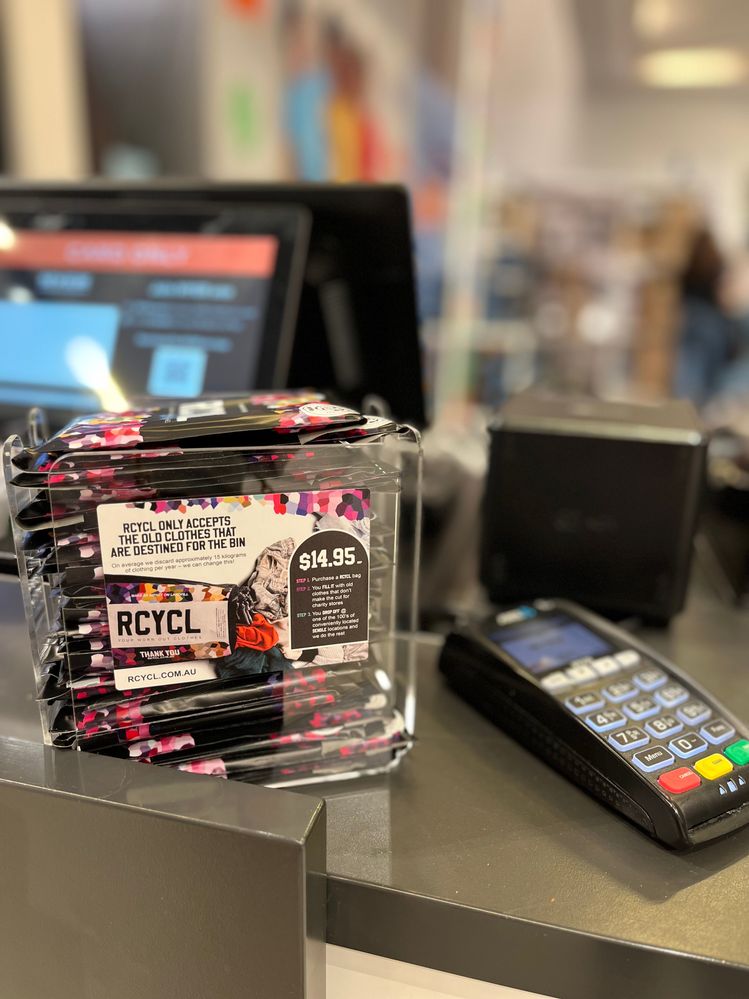
Belinda Paul
Founder and Director, RCYCL
Melbourne, Australia
If you could describe yourself in one word, what would that be and why?
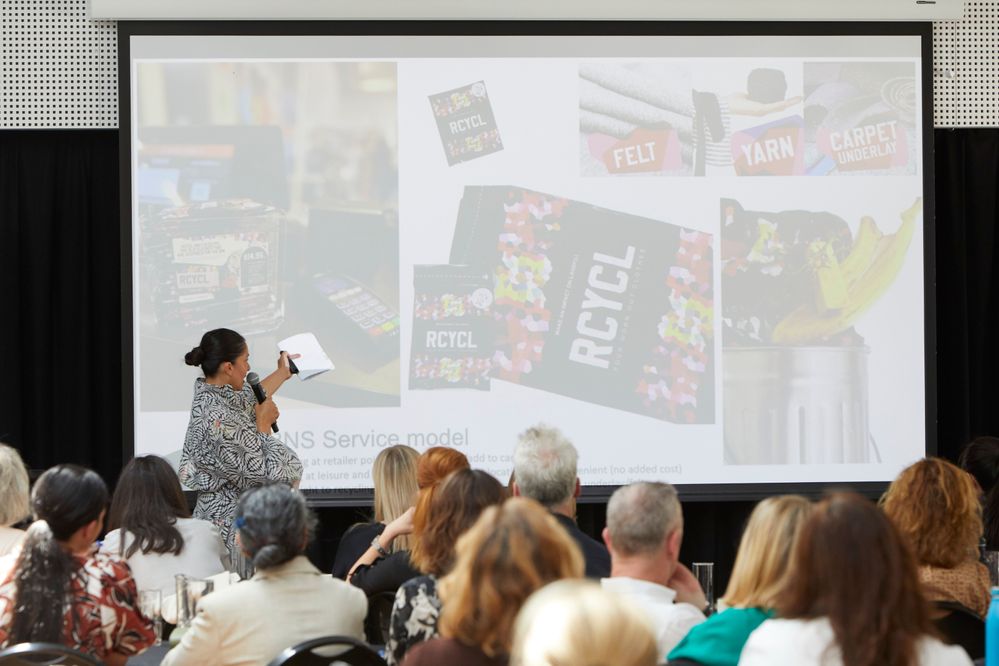
Curious! After being evacuated from the bushfires of the summer of 2019/2020 I questioned the reasons for this catastrophe. I looked inward to work out what skills I had as a professional to make an immediate difference at scale – I came up with RCYCL.
Pledge 1% provides a framework for businesses to do good. Do you think it’s important for today’s corporate leaders to prioritize social impact? If so, why?
Absolutely! It has to come from the top to influence and guide industry decision makers to act not just talk.
Do you give back to the community with your team and work? If so, what does this look like?
100% of my business gives back to the immediate decline in landfill rates in Australia. I work alongside governing bodies, educational institutions and smaller businesses to learn from them.
I also teach what I have learnt on my journey through my experience in the fashion industry for 25 years in addition to the new skills that I have had to manage along the way navigating a space like sustainability and fashion.
What’s the best piece of advice you’ve ever received?
Keep going, do not give up!
This year’s International Women’s Day themes are focused on investing in women and inspiring inclusion. What can we do to make today’s workplaces more equitable and inclusive for women?
The most important thing anyone can have is a voice, a valid voice. To feel respected and appreciated in their roles in life – be it at work or at home.
Women are the general house keepers and play the role of support on all levels yet they are expected to be strong and faultless.
“Sometimes a listening ear can make all the difference to empower and encourage.”
What advice do you have for women who are just starting their career?
Be confident in your abilities to succeed and go for it.
What are you looking forward to this year? Are there any goals (personal or professional), activities, or experiences you are excited about?
I am the finalist for the eBay circular fashion fund which is announced in the coming days and RCYCL is holding it’s first ever Melbourne Fashion Festival event for their Independent Programme in 2024.
I look forward to really empowering everyone to make a difference within their own households and bring RCYCL into that space.

By now, most of us are all too aware that the shift to remote work, economic and political uncertainty, and evolving employee expectations have made it more challenging to deepen employee engagement. At the same time, team volunteering is a proven strategy to boost employee well-being, employee morale and retention, brand value, and community impact. But executing a successful team volunteering program isn’t easy. It requires a thoughtful approach and preparation.
 |
Check out these 5 top tips from Mary Dohrmann, Program Manager, Employee Impact at Twilio.org – a leading Builder member of the Pledge 1% movement. |  |
Twilio.org’s 5 top tips for building an effective team volunteering program
1. Encourage executives to demonstrate the behavior you want to see in other employees.
When employees see executives taking time to volunteer, it shows them that it’s ok for them to do that, too. Encourage your executives to champion a team volunteer event at their gatherings, reminding them the importance of leading by example and the impact that it can have on your company’s social impact goals. This will set your leaders up to be natural ambassadors of social impact across the organization.
2. Create proactive, nonprofit partnerships and start early.
Nonprofit partnerships are key to success in team volunteering. Create and foster nonprofit partnerships with turnkey volunteering opportunities in the cities where your employees gather. Remember that on and offsite meetings get planned months in advance, and volunteer events can often be the first thing to be left off of a tight agenda. Start planning with teams as early as you can to ensure you have time carved out of the agenda and have enough time to create a meaningful social impact opportunity in partnership with your nonprofit partners.
3. Have plug and play volunteer opportunities available.
Build a toolkit with meaningful, skills-based and other volunteering opportunities for teams looking to host a volunteer event during their gatherings. Partner with your people team to help promote that toolkit and, if relevant, to get it incorporated into other guides and resources. Include in your toolkit suggestions for making your volunteer opportunities more engaging. Can you offer 2x matching to the nonprofits that teams volunteer with? Can you create competition and offer giving credits? Incentives such as these can help drive energy and excitement around plug and play volunteering.
4. Build your internal brand and tell your story.
Continuously build cross-functional connections so that you’re aware of what team gatherings are happening and when. Awareness is key to finding the right moments to integrate social impact opportunities. And, once teams start to recognize your team as the ones that can help them create a social impact opportunity, they’ll start coming to you and referring others to you. Be sure you’re asking teams for photos and stories from their volunteer events so that you can share those with others to help generate excitement and new leads.
5. Be prepared to be hands on.
The most successful team volunteer events are the ones in which the organizer feels informed, supported, and prepared. If you don’t have the perfect plug and play opportunity ready for a team, help the lead with the search. If possible, offer to help create the event on your employee impact platform and help bulk upload volunteer hours. To stay organized as the volume of requests increases, have teams fill out an intake form and lean on those proactive partnerships you have in place.
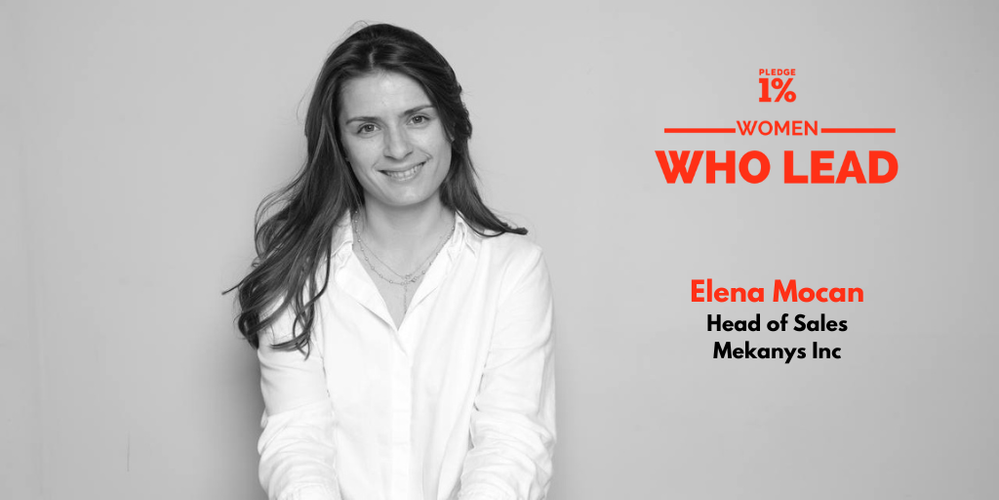
Elena Mocan
Head of Sales, Mekanys Inc
Republic of Moldova
If you could describe yourself in one word, what would that be and why?
Ambitious. I constantly strive to improve and innovate, pushing my limits to achieve new heights. For instance, when faced with a challenging project at work, I set ambitious goals, worked diligently, and collaborated with teammates to not only meet but exceed expectations, showcasing my drive for continuous improvement and success.
Pledge 1% provides a framework for businesses to do good. Do you think it’s important for today’s corporate leaders to prioritize social impact? If so, why?
Yes, it’s increasingly important for today’s corporate leaders to prioritize social impact. Beyond traditional profit-driven objectives, businesses are now seen as integral parts of the larger community and society.
Prioritizing social impact through initiatives like Pledge 1% not only enhances a company’s reputation but also fosters employee morale, attracts socially conscious consumers, and contributes to building a sustainable and responsible business model. In the current business landscape, companies that actively engage in social responsibility are often better positioned for long-term success and positive societal contributions.
What’s the best piece of advice you’ve ever received?
“Embrace failure as a stepping stone to success.” This advice encourages a mindset of resilience and learning from setbacks. It reminds me that failures are not the end but rather opportunities to grow, adapt, and ultimately move closer to achieving my goals.
“Embrace failure as a stepping stone to success.”
What advice do you have for women who are just starting their career?
Remember that every career journey is unique, so stay true to yourself, be adaptable, and enjoy the learning experiences along the way.

Original article here
Author: LOUIS TÊTU
If you take a quick scan of recent headlines about corporate ESG momentum, you’re likely to see the word “trend” popping up time and again. It’s a word that could falsely imply the ESG movement is fleeting. But in fact, all signs point to permanence, with more ESG requirements poised to become mandatory in 2024 and beyond.
None of this is surprising. Investing in environmental, social, and governance (ESG) initiatives is the right thing to do for people and the planet. It also appears to be a sound performance strategy that helps to attract and retain talent—particularly as millennials and Gen Z become more dominant in the workforce.
The big question on the minds of many founders is not whether to embrace philanthropic leadership, but rather when is the right time. The answer might surprise you.
TIMING IS EVERYTHING
Back in 2021, my company, Coveo, joined Pledge 1%, a global movement to inspire, educate, and empower all companies to leverage their assets for good. The movement challenges organizations to pledge 1% of equity, 1% of employees’ time, 1% of profits, and 1% of technology capabilities. While our pledge date may not appear noteworthy on the surface, that changes when I reveal that we took the pledge during the run-up to our IPO.
Pledging equity on the road to IPO might feel off-limits, whether due to concerns around bandwidth, board pushback, investor dilution, or even the misconception that it’s too late. In fact, founders at many companies, including DocuSign, PagerDuty, and Twilio, all successfully spearheaded Pledge 1% commitments within a couple of years, or even a couple of months, of their own IPOs.
Not only is it possible to take action pre- or concurrent-IPO, it’s also much simpler to get shareholder’s approval. The upsides are plentiful, including the amazing potential to create billions of new philanthropy dollars that can be used to address significant societal issues for years to come. But just because it’s possible, doesn’t mean everything is simple.
The good news is you don’t have to go in blind. Here are five takeaways from my team’s experience with committing to Pledge 1%.
5 KEY LEARNINGS FROM A PRE-IPO PLEDGE JOURNEY
1. Get Your Board Aligned And Onside
Leaders who have been through the Pledge 1% process recommend meeting with each board member individually so you can connect and communicate with them in their preferred manner. I support this approach, as it allows you to feel out reactions and address questions one on one.
My company’s board was unwaveringly supportive of joining Pledge 1%, even given the timing. We were also fortunate to have a board member who had already participated in Pledge 1%. That individual’s support was invaluable throughout the process.
2. Think Long Term
The decisions you make early on are binding for years, so it’s crucial to make informed choices and consider all the regulatory complexities. For example, as a Canadian company, we faced constraints related to stock legends in the U.S. Fortunately, nothing proved insurmountable.
Your equity source can be corporate, founder, or a hybrid. We committed to a corporate upfront model with a sale schedule over multiple years. “Upfront” means investor dilution happens all at once and the full amount is on the cap table. This approach could allow you to benefit from stock upsides and speak confidently about your commitments, knowing your philanthropic vision is protected from management changes or M&A activity.
3. Surround Yourself With Experienced Advisors
Tax considerations weren’t a primary concern for us, but yours may require proactive measures to receive charitable receipts. Surrounding yourself with tax, legal, and accounting experts with Pledge 1% experience is a sound strategy, as it helps you avoid unnecessary expenses and time.
We also decided to partner with donor-advised funds, or DAFs, in the U.S. and Canada rather than setting up a private corporate foundation. This allows us to more easily give back to local communities where most of our employees and customers are based.
4. Tap Into The Expert Tools
The Pledge 1% program provides access to tools, networks, and expert guidance from its team and founders who have been through the process. Standing on the shoulders of these giants can help to significantly streamline the implementation process, particularly amidst the madness of IPO preparations.
5. Identify An Owner
Being part of Pledge 1% centralizes ESG efforts, easing reporting and coordination. Identifying a passionate in-house owner helps to drive long-term success. Even smaller companies that can’t invest in a dedicated senior impact executive can do this. For example, we’re fortunate to have our CMO leading our ESG efforts and rallying 50+ employees to join the committees.
At Coveo, we chose to be part of the Pledge 1% movement because it provides a proven, sustainable way to fund our social impact for years to come. It’s also an amazing way to keep us laser-focused on a mission that is highly meaningful to our organization and our people.
We put knowledge and education at the center of our 1% Pledge because we passionately believe that education is the ultimate social equalizer. Our initiatives prioritize programs for young people aged 6-18 years old in vulnerable social groups who are challenged with accessing knowledge and education. We’re already making great strides.
Since taking the pledge in 2021, we’ve donated more than a million dollars, plus thousands of employee volunteer hours, to worthy causes. Achieving this milestone wouldn’t have been possible without the willingness of our leaders and board to explore joining Pledge 1% while on the road to IPO.
I hope the insights I shared in this article ignite meaningful discussions about how to build a long-term liquidity vehicle for supporting organizations aligned with your company’s mission. The more late-stage companies that join Pledge 1%, the faster we can make meaningful corporate philanthropy the new normal.
Co-created by Salesforce and Pledge 1%.
There’s no better advocate for the Pledge 1% movement than a Pledge 1% company. Each company that has taken the pledge has earned the credibility — and has the responsibility — to inspire, educate, and empower other companies to use their business as a platform for change. To face today’s global challenges, we need every business to adopt an integrated approach to philanthropy and to rethink their role as corporate citizens.
Fortunately, one of the most effective ways to activate your network is also one of the simplest: integrating social impact and Pledge 1% into your marquee events. These events are a great way to engage your entire ecosystem already gathered there: your customers, employees and partners. They provide a ready-to-go platform to amplify core messages around your culture and values. By embedding Pledge 1% into those core messages, you can ensure that your values shine through and motivate other companies to get involved in building a better future for all.
The 10 ideas listed were co-created by Pledge 1% and the Salesforce team, who have worked together annually to integrate Pledge 1% into Salesforce’s tentpole events like Dreamforce.

This year, we’ve already seen some great examples of Pledge 1% members activating their networks to grow the corporate social impact movement!
Docusign Momentum 2024
Attendees of Docusign’s had a chance to enjoy a cup of joe while learning about Pledge 1% and their carbon footprint in the Impact Lounge sponsored by Salesforce. Digital signs throughout the conference highlighted the Pledge 1% movement. A short quiz also showed attendees their personal carbon footprint, prompting them to commit to one action that would decrease their carbon impact.
And in case folks missed the signs, Pledge 1% made an appearance in their cappuccinos!

Atlassian TEAM Conference 2024
Pledge 1% was strongly present at TEAM ’24 with the Atlassian Foundation booth proudly representing Pledge 1% on their backdrop and Pledge 1% signs placed at member exhibitor booths. Pledge 1% members Atlassian, Adaptivist, and Appfire even sported Pledge 1% co-branded t-shirts and swag during the conference.
Atlassian, Adaptivist, and Appfire hosted a session to create toy pandas and care packages for children hospitalized with PANS/PANDA. The Atlassian Foundation team also held a volunteering event with 50 of the company’s leaders, where they cleaned, planted and refurbished a community park.

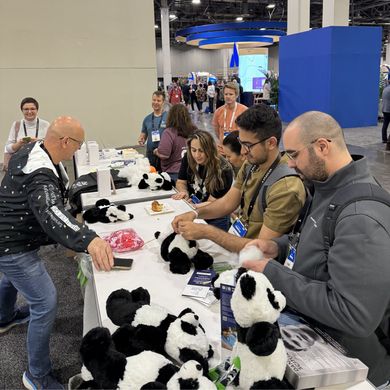
Check out these tips and examples to build an event strategy that works for your company!

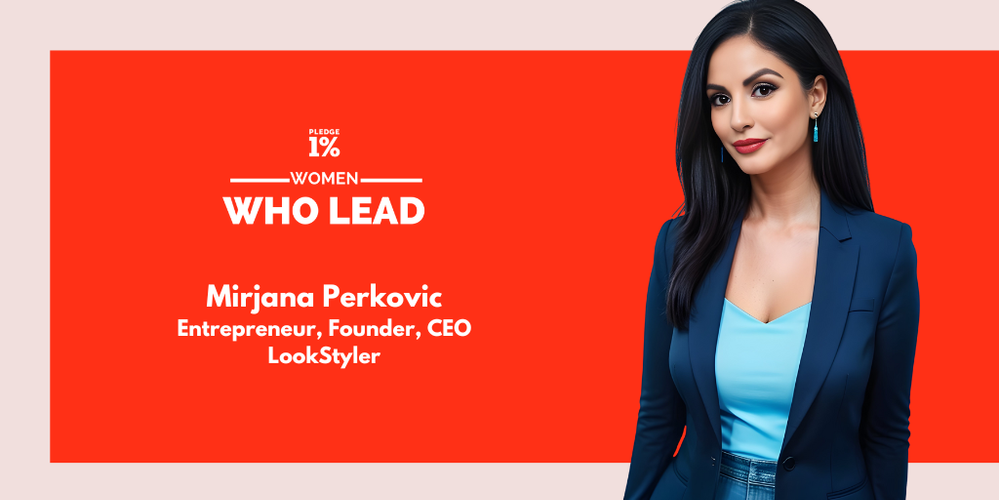
Mirjana Perkovic
Entrepreneur, Founder, CEO, LookStyler
Brussels, New York
If you could describe yourself in one word, what would that be and why?
As a global citizen, I’ve explored 107 countries across six continents already, embodying a pluralistic worldview.
Pledge 1% provides a framework for businesses to do good. Do you think it’s important for today’s corporate leaders to prioritize social impact? If so, why?
Corporate leaders need to explore social impact to ensure equal access to finance and opportunities for all, fostering diversity in leadership and addressing systemic inequalities, thus creating more inclusive and sustainable organizations that benefit society as a whole.
Do you give back to the community with your team and work? If so, what does this look like?
As an entrepreneur, I give back to society by creating jobs, serving as a female role model, and mentoring other female leaders, thus contributing to positive social impact and empowerment.
What’s the best piece of advice you’ve ever received?
The best piece of advice I’ve received is that “When you think you have been buried, you have actually been planted,” inspiring resilience in overcoming adversities and embracing change as opportunities for growth and renewal.
“When you think you have been buried, you have actually been planted.”
This year’s International Women’s Day themes are focused on investing in women and inspiring inclusion. What can we do to make today’s workplaces more equitable and inclusive for women?
Workplaces must prioritize becoming more equitable and inclusive for women, achieved through inspiring women to pursue leadership roles, implementing systemic changes to support their advancement, and emphasizing the promotion and elevation of feminine female leaders who exemplify qualities of grace and empathy.
We must ensure immediate access to substantial financing for all female entrepreneurs who embody the true qualities of inspired leadership.
What are you looking forward to this year? Are there any goals (personal or professional), activities, or experiences you are excited about?
This year, I’m eagerly anticipating scaling my business and publishing my debut book, while also prioritizing investments in both personal and professional growth.
My aim is to inspire fellow female leaders to take decisive action for positive change, fostering a supportive and empowering community for women’s advancement.
Author: Adara Development
It was a desire to make a difference that first put Pledge 1% on Ansarada Co-Founders’, Sam and Rachel Riley’s radar. And it was a transformative meeting with Adara Group Founder and Chair, Audette Exel AO, that led Ansarada to pledge 1% of their equity, time and product to Adara.
Ansarada is a global ASX-listed software as a service business that companies, advisors and governments rely on for securely managing critical information, workflow and collaboration in high stakes processes like deals, risk, compliance, governance and procurement. The Adara Group is an international development organisation delivering quality health and education services to people living in poverty in some of the world’s remotest places.
When Ansarada learnt of Adara’s life-changing work and their innovative business-for-purpose model (more on that here) it seemed like a meeting of minds and a natural alignment on purpose. It marked the beginning of a powerful partnership that is still going strong, ten years down the line.
This partnership has seen Ansarada staff give their time to set up technology platforms or provide marketing support as part of the 1% of time pledge. It’s seen Adara get access to Ansarada’s software thanks to the 1% of product pledge. And it has seen Adara become an Ansarada shareholder through the 1% of equity pledge.
Since the beginning of the partnership in 2015, both organisations have grown and evolved. But what’s held it all together?
“It goes back to the culture,” Rachel says. “As we have gone from start up to scale up, it’s culture that trumps all other strategic outcomes. And as you scale up, that culture can change based on the people you hire and the community around you. Culture is obviously influenced by the people and your growth journey. But the starting culture of a start-up business is arguably built by the values that the founder(s) have.”
The founders of Ansarada always knew they wanted to create impact beyond just their business. They built giving – and Adara specifically – into their culture, right from the very beginning.
“Adara hasn’t just fit into that culture, Adara has actually helped create that culture,” Rachel says. “If we did a survey today of everyone globally across the business, in terms of what philanthropic impacts they’re passionate about, they would say the disadvantaged, the women and children in poverty in remote places. That’s Adara. They’ve grabbed that passion, they’ve heard that story and they can see the impact of what they’re doing.”
By understanding the causes that would resonate with their staff and embedding it early, Ansarada built a powerful culture that has endured recruitment drives, capital raisings, ASX listings and stakeholder changes.
“In a million different ways, the culture of Ansarada and the culture of Adara have clicked really deep,” agrees Adara’s Founder, Audette Exel. “And I cannot emphasise enough how important culture is for a business – everything flows from there.”
It’s been a mutually beneficial partnership. And the decision to choose Adara as the sole beneficiary of Ansarada’s 1% pledge was conscious, according to Rachel.
“Having a foundational rock with a non-for-profit that you support really helps your business,” Rachel says. “Having the pillar that everyone is centred around, that’s where the deep impact comes from.”
This hasn’t stopped the Ansarada team from getting involved with other local volunteering opportunities. But it has meant they approach their corporate giving in a much more strategic and targeted way, with Adara at the centre, bringing it all together and creating a bigger impact.
Audette, a social entrepreneur in her own right, has one key piece of advice for any organisation looking to begin their Pledge 1% or social impact journey: “Do it early. Like really early. Do it quick. And then embed it. When you’re starting, 1% may be 1% of very little. Once you grow a business, if you’re lucky enough and if you’re able to build something to scale, the impact can be massive – as it has been for us at Adara.”
Rachel agrees. “Ansarada wouldn’t be what it is today without the Adara relationship,” she says. “But if these partnerships aren’t embedded early on, it’s a difficult story to tell stakeholders later down the line.”
The tangible impact of a 1% pledge became clear earlier this year when Adara sold their stake in Ansarada. This followed the announcement of the proposed sale of part of Ansarada’s business.
“We poured that money straight into saving lives,” Audette says.
For both Adara and Ansarada, the impact of this 1% of equity is more than you’d ever see on a balance sheet. It’s a baby opening its eyes in a hospital in rural Uganda, who otherwise might have died. It’s a 12-year-old girl in a school uniform, rather than a wedding dress. It’s a child who was pulled out of a basement on her way to the trafficking trade, graduating top of her class.
And that’s exactly what the Pledge % movement is all about. Using the power of business to create change. To save lives.
To be a force for good.