By Rosalyn Retkwa. Originally published on New York Nonprofit Media.
The Robin Hood Foundation has signed on as the New York City partner for the Pledge 1% initiative, a corporate philanthropy movement that encourages private companies to dedicate 1% of equity, 1% of employee time, and 1% of their product to support nonprofits.
The idea for the Pledge 1% model originated 16 years ago with Salesforce Chairman and CEO Marc Benioff. When he launched his San Francisco-based software company, Benioff implemented his “1-1-1 Plan,” which now serves as the foundation of the Pledge 1% movement.
The Pledge 1% nonprofit was co-founded by Salesforce along with the Boulder-based Entrepreneurs Foundation of Colorado, and Atlassian, a software company with headquarters in Sydney, Australia. Officially launched last December on Giving Tuesday, a global day dedicated to giving back, the movement announced its target of “securing 500 pledges” by 2015’s Giving Tuesday. To date, the program has already received pledges from 250 companies, said Dipti Pratt, the director of Pledge 1%.
Robin Hood is the nonprofit’s first East Coast partner. In addition to its Sydney and California locations, Pledge 1% has been launched in Austin, Texas and will be started in London this fall, Pratt reported.
Robin Hood will work through the venture capital community to find start-ups willing to take the pledge, says Claire Chamberlain, Robin Hood’s managing director of development. Known for its roster of prominent hedge fund sponsors, Robin Hood will implement its “model used with the hedge fund community” to co-host breakfasts and after-work parties with venture capitalists who will invite their portfolio companies, Chamberlain said.
“The start-up tech sector is really on fire here in New York City,” Chamberlain said, noting that there also a number of other potential “connectors” in New York City’s tech community, such as incubators and accelerators.
“The concept is to roll this out around the world, region by region, and to use local partners in each area to bring the message to the start-up and tech community,” said Chamberlain. The goal is also to get start-ups involved early on so the commitment to philanthropy is embedded in a company’s DNA, she said.
“This movement is about as you do well – if your company does well – your community should do well, linking that early on,” Chamberlain said.
Robin Hood held its Pledge 1% launch party on May 4th at the Porchlight Bar in lower Manhattan. About 150 people came to hear a panel of speakers that included Suzanne DiBianca, the president of the Salesforce Foundation; Robin Hood board member Lee Ainslie, the head of hedge fund Maverick Capital; Seth Levine, a managing director at the venture capital firm, Foundry Group; and Ryan Martens, the chief technology officer at Rally Software.
Patty Smith, Robin Hood’s managing director for marketing and communications, says that the 11 companies that took the pledge that evening were from a range of businesses, including DEG, a digital marketing firm; small business lender Fundera; General Assembly, which offers classes in technology, business, and design; investment manager Guggenheim Partners; and Native, which specializes in travel management for small- and medium-sized businesses.
Pledge 1% has also received pledges from some of the biggest names in technology – notably, Google, Oracle, and the web optimization platform provider Optimizely.
Given its roots in the investment world, Robin Hood is known for its metrics-based approach – which measures the impact and effectiveness of different programs in fighting poverty – developed by the foundation’s Economist and Chief Program Officer Michael M. Weinstein.
As part of this Pledge 1% initiative, Chamberlain said Robin Hood will share with pledge companies its “road map for what effective philanthropy looks like.”
By Jamal El Hassani. Originally published on Le Figaro.
Le patron de Salesforce veut convaincre les start-up d’allouer 1% de leur capital, 1% de leur temps et 1% de leur production à des projets philanthropiques.
Lorsque le milliardaire Marc Benioff a créé l’entreprise de solutions pour le cloud Salesforce en 1999, il a intégré la philanthropie dans son plan de développement: 1% du capital, 1% du temps des employés et 1% des produits de Salesforce sont attribués à des oeuvres de charité.
Pour étendre son modèle «1-1-1», Salesforce a lancé l’initiative Pledge 1%, qui fournit toutes les ressources nécessaires à une entreprise qui voudrait l’appliquer. Jusqu’ici, les projets se concentraient plutôt sur la Silicon Valley, où plus de 200 compagnies ont rejoint l’initiative. L’organisation s’attaque désormais à New York, en partenariat avec la fondation Robin Hood, qui gère plus de 140 millions de dollars de programmes de lutte contre la pauvreté.
Un modèle pas adapté à toutes les entreprises
Pledge 1% s’adresse en priorité aux start-up, car il est plus facile pour de petites structures de déployer ce modèle dès le départ et de l’ancrer dans leur culture d’entreprise. Il est plus compliqué pour une entreprise cotée en Bourse de s’engager à céder une part de son capital. Pledge 1% recommande aux dirigeants de ces entreprises d’engager leur propre capital, plutôt que celui de leur société.
Donner 1% de sa production ne semble pas non plus adapté à toutes les entreprises partenaires, car nombre d’entre elles proposent des services dématérialisés, à destination d’entreprises, ou déjà gratuits. On voit mal ce que le service de recommandation de restaurants Yelp pourrait offrir pour aider la communauté. Mais d’autres entreprises peuvent avoir plus d’impact. La start-up londonienne Kano, qui fabrique des ordinateurs en kits et des logiciels éducatifs pour apprendre aux enfants à coder, s’est engagée à offrir 1% de sa production annuelle à diverses institutions.
Redorer l’image de la Silicon Valley à San Francisco
Marc Benioff, qui est à l’origine de Pledge 1%, n’en est pas à sa première initiative caritative. Il tente également de mobiliser la Silicon Valley via le programme SF Gives, qui vise à récolter 10 millions de dollars de la part de 20 entreprises high-tech pour lutter contre la pauvreté dans la baie de San Francisco. Quitte à égratigner les initiatives de ses pairs.
Comme celle de la Silicon Valley foundation (SVCF), qui récolte les donations des grands patrons du secteur. Mark Zuckerberg avait donné 18 millions d’actions Facebook d’ une valeur de presque 1 milliard de dollars en 2013. Peu ému par le geste du PDG de Facebook, Marc Benioff doute de sa sincérité et critique l’opacité de la fondation: «Vous donnez votre argent à SVCF et vous obtenez votre déduction fiscale de l’année, mais la fondation n’a aucune obligation de distribuer l’argent. Où est-il passé? À quoi sert-il aujourd’hui? Je suis sûr que les intentions de Mark Zuckerberg sont bonnes, mais on doit voir cet argent distribué.»
Toutes ces démarches visent aussi à redorer l’image des entreprises de la Silicon Valley dans la baie de San Francisco, où les habitants manifestent régulièrement contre la montée des prix et des inégalités. L’arrivée d’employés aux hauts revenus ne cesse de faire grimper les loyers, poussant les moins fortunés à quitter la ville. Les locations à San Francisco sont désormais parmi les plus chères des États-Unis, devant Los Angeles, New York, ou Washington.
By Marc Beise and Ulrich Shafer. Originally published in Suddeutsche Zeitung.
Für Ron Conway, den Mann mit der schlohweißen, etwas ausladenden Frisur, ist es die alles entscheidende Frage, sie beschäftigt ihn, wo immer er redet – sei es vor ein paar Monaten in San Francisco. Oder nun vor zwei Tagen in New York. Die Frage, die Conway bewegt: Was ist nötig, damit die “Tech-Community” nicht bloß an sich selber denkt, an den eigenen Erfolg, sondern auch Verantwortung übernimmt für andere, für die Schwachen der Gesellschaft, für jene Menschen, die nicht das große Geld verdienen?
Darum geht es auch am Montag dieser Woche auf einer Bühne mitten im Big Apple. Conway hat ein paar Hundert zumeist sehr junge Zuhörer vor sich und erklärt der ebenfalls sehr jungen Moderatorin großväterlich: “Vor zehn Jahren war die Tech-Industrie winzig. Heute bilden wir oft einen bedeutenden Teil der Städte. Deshalb müssen wir uns in die Gesellschaft einbringen.” Aber wie? Die Tech-Unternehmer und ihre Beschäftigten sollten als Freiwillige in sozialen Projekten arbeiten, sich um Obdachlose kümmern oder in einer Schule helfen, idealerweise in einem Problembezirk, sagt Conway.
Der Kalifornier ist nach New York gekommen, um die Konferenz “Tech Crunch Disrupt NY 2015” mit zu eröffnen. Disruption ist das Zauberwort des Silicon Valley und der Digitalbranche; es heißt wörtlich “Unterbrechung”, meint aber in Wahrheit “Zerstörung” – Zerstörung des Alten, blitzartige Innovation, Revolution, nicht Evolution. Und es werden dabei nicht bloß neue Jobs geschaffen, Zehntausende, Hunderttausende, sondern auch Millionen von Jobs zerstört. Über diese negativen Seiten der Digitalisierung wollen die meisten bei solchen Gute-Laune-Treffen wie in New York nicht reden, sie interessiert eher der perfekte Businessplan.
Conway aber tut es, auch wenn er ein zentraler Teil des Systems ist, einer der mächtigsten Investoren des Valley. Oder ist, wie manche Kritiker meinen, sein Werben für mehr soziale Verantwortung nur Teil einer wohlkalkulierten Strategie? Taktik? Versucht er so, Wohlwollen zu schaffen für eine Industrie, die im Grunde nur eines will: ungezügelt wachsen?
San Francisco und das Valley kennen solche Versammlungen der Tech-Community schon lange: Konferenzen, bei denen die Stars der Branche aufs Podium kommen und Newcomer sich auf einer Art Hausmesse bekannt zu machen hoffen, auf dem “Battlefield”. Mit einiger Verzögerung ist der Zirkus an der Ostküste angekommen, in der wichtigsten Stadt Amerikas, in New York, das etwas gebraucht hat, den Anschluss zu finden, nachher wird Bürgermeister Bill De Blasio stolz verkünden, dass man gerade dabei sei, dem Silicon Valley den Rang abzulaufen.
Conway ist ein Business-Engel, so heißt auch seine Firma “SV Angel”, die junge Firmen finanziert, und in einer winzigen Straße im Herzen von San Francisco sitzt, in einem schmalen, hypermodernen Haus, das sich zwischen die alten Gebäude in der Maiden Lane zwängt. Kaum ein Investor ist so lange im Geschäft wie Conway, Jahrgang 1951, er hat schon Angel Business betrieben, als noch kaum jemand den Begriff kannte, hat kleine Start-ups finanziert, und dabei häufig den richtigen Riecher gehabt. Das Kapital dafür hat er zuvor in der Computerindustrie verdient, erst als Manager bei National Semiconductor, später als Mitgründer einer Computerfirma namens Altos, die er 1990 für viel Geld verkauft hat.
“Spray und Pray” nennt er selbst seine Anlagestrategie: verteilen und beten. Das Beten hat geholfen, sehr sogar. So hat Conway etwa in das Unternehmen von Sergej Brin und Larry Page investiert, als dieses noch Backrub hieß – und noch nicht Google. Spät hat er bei Google andere Investoren an Bord geholt, größere Wagniskapitalfirmen und damit entscheidend geholfen, das Unternehmen groß zu machen. Er war als Angel Investor, als jemand, der sehr früh in ein Start-up investiert, manchmal nur ein paar Wochen oder Monate nach der Gründung, auch bei vielen anderen Erfolgsgeschichten dabei: bei Twitter und Paypal, bei Dropbox und Pinterest, bei Airbnb und Facebook. Er ist damit ungeheuer reich geworden. Noch heute hält er Beteiligungen an 188 Firmen. Spray und Pray.
Conway ist ein stattlicher Mann mit einem mächtigen Kreuz. Jemand hat mal gesagt, er sehe aus wie ein pensionierter Feuerwehrmann aus Boston, und wenn sich dieser Kerl in New York durch die Menge der Konferenzteilnehmer schiebt, dann ist der Promifaktor nicht zu übersehen. Man sucht seine Nähe, hofft auf seine Aufmerksamkeit, auf sein Geld. Wer einmal in seinen Kreis aufgenommen worden ist, für den ist er da, wenn es sein muss 24 Stunden am Tag. Seine Feste sind legendär, die Gäste dort sind meist keine 30 Jahre alt.
Man nennt ihn den Godfather des Valley, den Paten, und damit hat Conway auch kein Problem, solange sich das auf sein Netzwerk bezieht, das er seit Jahren pflegt – ein Netzwerk, zu dem der ehemalige Außenminister Henry Kissinger ebenso zählt wie der frühere Gouverneur von Kalifornien, Arnold Schwarzenegger, oder der Golfprofi Tiger Woods. Das amerikanische Wirtschaftsmagazin Forbes nennt ihn den “am meisten über-vernetzten Kerl in den Tech-, Politik- und Promi-Kreisen der gesamten Bay Area”, also im Großraum von San Francisco, einer Gegend, die noch weit über das Silicon Valley hinausreicht.
Der Pate – dieser Spitzname klingt weniger schön, wenn damit auf mafiöse Strukturen angespielt werden soll, wie es manche seiner Kritiker tun. Das kann sich dann auf seine enge Beziehung zu Ed Lee, dem Bürgermeister seiner Heimatstadt San Francisco beziehen, den er reichlich mit Wahlkampfspenden versorgt hat und der ein offenes Ohr für die Wünsche der IT-Industrie hat. Conway macht keinen Hehl daraus , dass er Lee schätzt und ihn für einen Segen für San Francisco und die Tech-Firmen hält, und natürlich tut er, was er kann, den Bürgermeister zu unterstützen. Der wiederum senkte, auf Drängen von Conway, die Steuern für Tech-Unternehmen wie Twitter, die sich mitten in der Stadt niedergelassen haben.
Um die Politik zu umgarnen, hat Conway 2011 auch einen eigenen Verband gegründet, einen Zusammenschluss von mittlerweile mehr als 500 Tech-Firmen namens sf.citi. Das steht als Abkürzung für “San Francisco Citizens Initiative of Technology and Innovation”. Sf.citi versteht sich als eine Art Handelskammer für Internetfirmen und fühlt sich einerseits sozialen Projekten verpflichtet; andererseits betreibt sf.citi auch knallharte Interessenpolitik und wirbt für weitere Steuererleichterungen.
By Michael del Castillo. Originally published on New York Business Journal.
Investor Ron Conway today announced that two powerful philanthropic organizations have joined forces to help make sure aspiring entrepreneurs in New York have the resources they need to get started on the right foot.
“Pledge 1 Percent is teaming up with the Robin Hood Foundation to launch in New York,” said Conway, who sits on the board of the Salesforce.com Foundation, while speaking on stage at TechCrunch Disrupt in midtown.
Launched in 2014, Pledge 1% was co-founded by Marc Benioff, founder of Saleforce, Scott Faquhar, co-founder of Atlassian, and others to encourage companies to pledge 1 percent of their equity, product and employee time to their communities.
Based in New York City, the Robin Hood Foundation launched in 1988 to serve the city’s poorest neighborhoods. The company has raised $1.95 billion in goods and services since its founding.
“It’s important that each city’s tech community create some sort of volunteer system,” said Fred Wilson, founder of Union Square Ventures, who was also on stage with Conway at Disrupt. Wilson said it is important for everyone in tech to know who needs their skills, which Salesforce for Startups will help make happen.
Less than a month ago, Saleforce for Startups launched in Boston to fulfill its mission of helping build any kind of app at scale, gain access to content and tools, and in return, build philanthropy into their corporate core.
Those who sign up for Salesforce for Startups gain access to a distribution channel of 150,000 enterprise customers, according to their site. Existing partners include Accelerprise, Upshift, and Work—Bench.
By Kim Mai-Cutler. Originally published on TechCrunch.
Fifth-generation San Franciscan and Salesforce CEO Marc Benioff has been a big proponent of civic engagement and philanthropy among the tech industry.
To that end, when he started Salesforce, he set aside 1 percent of the company’s equity for philanthropic donations, 1 percent of employee time for volunteership and 1 percent of products or services to give away to nonprofits. That has evolved into the “1-1-1” model that he and Suzanne DiBianca, the head of Salesforce’s foundation, are trying to encourage other tech companies to copy.
Last year, DiBianca and Salesforce unveiled a program called “Pledge 1%” that helps startups make a similar commitment to what Salesforce did (although they can adapt it to their own needs.) The Pledge 1% effort assists startups with setting up the paperwork and figuring out how and where to do philanthropic work. More than 200 companies have signed up, including Yelp and Optimizely.
Now they’re bringing it to the East Coast with the Robin Hood Foundation, a nonprofit that oversees $140 million in spending every year on poverty and low-income communities in New York. General Assembly, Javelin and Guggenheim Partners are among the first organizations that have taken the pledge from New York.
“When I talk to startup founders about doing this, my reasons are A) employees are demanding it B) corporations should be accountable to all stakeholders and C) because it’s a great legacy for CEOs who are building a company to create something bigger,” DiBianca said.
She added that the Pledge 1% program has models that work for companies at all different stages. At an early stage, it’s pretty easy to set aside 1 percent of equity and write it into company bylaws. But as a startup scales and goes into later venture rounds, there’s more complexity in figuring out how to work with investors and the cap table.
But she stressed that it’s better to do it earlier rather later so that it is institutionalized into the company culture. San Francisco-based Zendesk, for example, has long used local volunteering in the city and the neighboring area of the Tenderloin as a way to attract and retain mission-driven employees.
“It’s not impossible, but you really need to work with your VCs at the B or C round,” DiBianca said. “You need to be a courageous CEO and make it happen.”
Pledge 1%’s partner in New York, the Robin Hood Foundation, touts a metrics-based approach that examines the long-term financial benefits of different types of intervention, from giving additional funds to primary school classrooms to providing legal services to women.
“Private philanthropy should be risk capital,” said Claire Chamberlain, the managing director of development for Robin Hood. “If it’s successful, then you can put it before other private funders or before city, state or federal policy makers.”
The organization, which has been operating in New York since the 1980s, was one of the first to test some needle exchange programs at the height of the AIDS crisis when it wasn’t politically palatable for the city government to do so. When they were able to prove the efficacy of this approach, the municipal government later took it on.
Of course, doing corporate versus individual philanthropy is a subject of debate.
Warren Buffett, the legendary investor and billionaire who took the Giving Pledge alongside Bill and Melinda Gates and Mark Zuckerberg, has said he shies away from the corporate model because he has an ultimate responsibility to shareholders with corporate funds. (Berkshire Hathaway used to have a shareholder-designated contributions fund for many years until it was shut down more than a decade ago.)
On the other hand, just because donors have done well in the private sector, it doesn’t mean that they are well-equipped to handle the messiness and complexity of public policy, education reform or any number of other causes.
Several of tech’s newly minted billionaires have put their money aside into donor-advised funds at the Silicon Valley Community Foundation, which ballooned from $4.7 billion in 2013 to $6.7 billion last year because of some key donations from WhatsApp co-founder Jan Koum and GoPro CEO Nicholas Woodman.
But donor-advised funds are essentially charitable bank accounts with preferential tax treatments that have yet to be allocated. While they do reflect an upfront commitment to philanthropy at a younger age, it doesn’t mean that money is being used (yet).
“People are just redoing the old model, where you give 5 percent a year. We think you need to put your money to work now,” DiBianca said. “We don’t like this approach of saying you’re going to give away half your wealth, and then it just sits in a charitable account somewhere and doesn’t go anywhere.”
By Michael del Castillo. Originally published in New York Business Journal.
Investor Ron Conway today announced that two powerful philanthropic organizations have joined forces to help make sure aspiring entrepreneurs in New York have the resources they need to get started on the right foot.
“Pledge 1 Percent is teaming up with the Robin Hood Foundation to launch in New York,” said Conway, who sits on the board of the Salesforce.com Foundation, while speaking on stage at TechCrunch Disrupt in midtown.
Launched in 2014, Pledge 1% was co-founded by Marc Benioff, founder of Salesforce, Scott Faquhar, co-founder of Atlassian, and others to encourage companies to pledge 1 percent of their equity, product and employee time to their communities.
Based in New York City, the Robin Hood Foundation launched in 1988 to serve the city’s poorest neighborhoods. The company has raised $1.95 billion in goods and services since its founding.
“It’s important that each city’s tech community create some sort of volunteer system,” said Fred Wilson, founder of Union Square Ventures, who was also on stage with Conway at Disrupt. Wilson said it is important for everyone in tech to know who needs their skills, which Salesforce for Startups will help make happen.
Less than a month ago, Saleforce for Startups launched in Boston to fulfill its mission of helping build any kind of app at scale, gain access to content and tools, and in return, build philanthropy into their corporate core.
Those who sign up for Salesforce for Startups gain access to a distribution channel of 150,000 enterprise customers, according to their site. Existing partners include Accelerprise, Upshift, and Work—Bench.
By Eloise Keating. Originally published on Smart Company.
Apple chief executive Tim Cook plans to become the latest business leader to give away his fortune.
In an extended interview with Fortune magazine, the Apple leader said he will give away $US785 million – or $A1 billion – to charity after he pays for college for his 10-year-old nephew.
“You want to be the pebble in the pond that creates the ripples for change,” Cook says about his philanthropy and his public advocacy for human rights, stopping the transmission of AIDS and immigration reform.
Fortune estimates Cook’s net worth at around $US120 million in current holdings of Apple stock and restricted stock worth $US665 million if it were fully vested.
Cook told Fortune he has already begun privately donating money but he eventually plans to “take time to develop a systematic approach to philanthropy rather than simply writing checks.
Cook joins the likes of other high-profile philanthropists to share their wealth, including billionaire investor Warren Buffett, Microsoft founder Bill Gates and Facebook founder Mark Zuckerberg.
Closer to home, the founders of tech success story Atlassian, Scott Farquhar and Mike Cannon-Brookes, have set aside 1% equity to the Atlassian Foundation, which is now estimated to be worth more than $40 million.
Farquhar and Cannon-Brookes have joined forces with the Salesforce Foundation and Entrepreneurs Foundation of Colorado to encourage other entrepreneurs to also donate 1% of their companies through the Pledge 1% program.
Peter Gahan, founder and director of the Centre for Workplace Leadership at the University of Melbourne, told SmartCompany companies setting aside money for charitable causes has emerged as a “well and truly healthy trend” over at least the past five years.
And Gahan says examples such as Readings booksellers in Melbourne, which supports community programs and events through its Readings Foundation, and IGA Supermarkets, which has put a proportion of its cash back into community projects for years, prove philanthropy is not just the domain of the world’s largest companies.
“There is growing acceptance among companies that just focusing on shareholder value is not going to sustain them in the long run,” Gahan says.
By Nicholas King. Originally published on Corporate Philanthropy Report.
Some might think that strategic corporate philanthropy is the provenance of established and well-heeled companies, but the truth is that any business—at any stage of its life cycle—can launch a tactical, multitiered giving program that incorporates cash, product and employee volunteerism, or some combination of these core elements of citizenship.
According to the backers of the Pledge 1% initiative, even brand-new start-ups at the venture capital stage can take a thoughtful and deliberate approach to philanthropy that capitalizes on the anticipated business success to come.
“Pledge 1% is a movement dedicated to making the world a better place by inspiring, fostering and celebrating corporate philanthropy,” said Dipti Pratt, spokesperson for the initiative, which was founded by senior business leaders at software maker Atlassian and cloud-computing firm Salesforce.com, and aided in its development by the Entrepreneurs Foundation of Colorado.
“It encourages and challenges individuals and companies to pledge 1 percent of equity, product and employee time for their communities”—a goal that Salesforce committed to when it was a young company, Pratt said.
The initiative is well-suited for early-stage companies because it allows founders to easily set aside company equity—usually in the form of stock or options—at a time when it isn’t necessarily all that valuable. But if things go right and the business is successful, that small set-aside can mean large sums of money for the nonprofits the company supports, Pratt said.
Of course, companies can take the pledge at any point in their life cycle. Those that have not yet built programs have the opportunity to develop them with the help of Atlassian, Salesforce and EFCO associates; meanwhile, more established companies have the chance to refine their programs to incorporate more elements—be it adding an employee volunteerism program or identifying the best partners for product donations, she said.
Pratt and others at Pledge 1% aid companies in doing this, by providing the tools, best practices and relevant information to make it easy for any company or person to incorporate philanthropy into their business model.
“From providing a turnkey mechanism to retain equity for a private company to providing resources around a product donation program, we aim to help companies build a culture of giving in their company,” Pratt said.
Instilling that ethos also helps when it comes to attracting and keeping high-valued employees, she said.
“In addition to having great impact in society, integrating these programs into a company assists in retention and recruitment, furthering employee morale, enhanced corporate culture, brand and overall reputation,” she said.
These programs, she said, are critical to strengthening the culture of a company.
“Giving employees the chance to connect with their peers in a meaningful way is integral to building a stronger corporate culture,” she said.
According to Pratt, the group has its work cut out to hit a target of at least 500 corporate pledges by Giving Tuesday 2015—which falls on Dec. 1 this year.
“We are focused on providing visibility for the movement’s growth, impact and partnership through our digital channels; we’ll be doing local launch events in large entrepreneurial cities throughout this year to bring founders together with community leaders; and we’re creating partnerships that will be a big part of reaching entrepreneurs through angels, accelerators, venture capitalists and service providers,” she said.
For more information, visit www.pledge1percent.org.
By Alex Heber. Originally published in Business Insider Australia.
About 10 years ago Atlassian founders Scott Farquhar and Mike Cannon-Brookes pledged 1% of their company to invest in philanthropic ventures. That 1% is now worth about $40 million.
“We’ve since helped over a quarter-of-a-million children just with our partnership with Room to Read. None of that would’ve happened without us originally pledging 1% back when it was really worth nothing,” Farquhar said. “Now that 1% of nothing is worth about $40 million.”
The pledge took the form of the 1-1-1 model which was formed by Salesforce CEO Marc Benioff. The model involves allocating 1% of employees’ time, 1% of product and 1% of equity or profit to charitable causes.
“When you start a business you’re hugely optimistic that you want to change the world and one thing that Mike and I knew we wanted to do as well as run a business was in some way give back,” Farquhar said.
“It was one of the smartest decisions that we made without really knowing it at the time.
“If you asked us now how are you going to give $40 million out of your own dollars to a foundation, you may have to think twice about it. When it’s worth nothing it’s a really easy decision.”
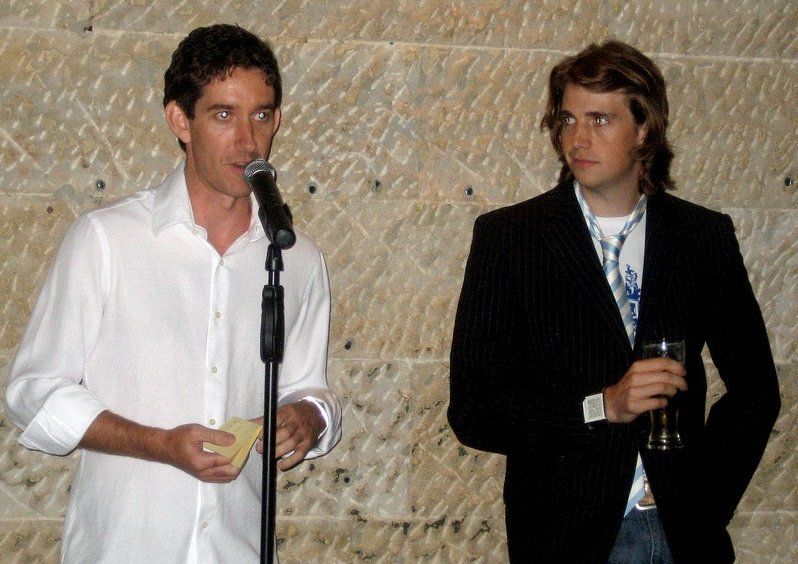
Atlassian co-founders Scott Farquhar and Mike Cannon-Brookes.
At the time Atlassian had less than 100 staff. Fast forward a decade and at the end of last year it had almost 1,000 staff and was still madly hiring. Last financial year Atlassian’s total revenue was $US215 million, it has a valuation of about $3.3 billion and preparing for a US listing, possibly as soon as this year.
Farquhar is now on a mission to get other companies to pledge 1%. It’s his passion project and he’s teamed up with Salesforce to make it happen.
To date, Salesforce has contributed 800,000 hours in time, $80 million in grants and has 25,000 non-profits using its products. Atlassian has to date donated $US3.9 million to charities and given away $41 million worth of product to non-profits.
The two companies are aiming to secure 500 1% pledges from companies before the year is out. So far they’ve received almost 100 pledges and Farquhar has a vision of having half of the ASX100 participating.
Suzanne DiBianca, president of the Salesforce Foundation, said the simple model of giving 1% of a company’s time, equity and product had been popular in the tech scene.
“I’ve got Pinterest calling me, and Yelp, and Workday, and all of these next generation companies,” she said. Yelp and Workday’s pledges generated about $120 million in their foundations last year.
Farquhar said they’ve split the task up between “whale hunting”, which is going after companies that are pre-IPO and will have the biggest impact in a short period of time, and looking at smaller companies that will be worth more in 10 years.
“The goal for us is that in my lifetime more than half the ASX 100 would’ve pledged 1% at some stage,” he said.
DiBianca is focussing on getting the program in front of companies which are about to have big exits and wants to generate about $500 million for the projects. On her list includes companies like Docusign and Pinterest.
Atlassian now works with some of the biggest companies in the world, but Farquhar says he doesn’t lose sight of the amount of impact you can have by working with startups. He is a big investor in Queensland-based startup SafetyCulture and regularly turns up to work in the company’s office.
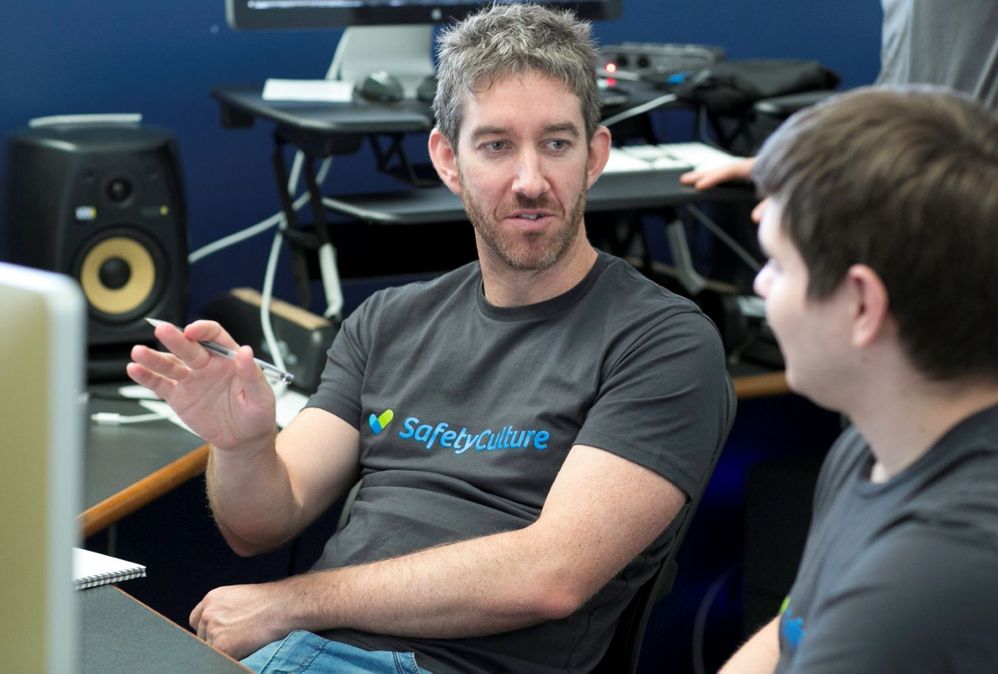
Atlassian co-founder Scott Farquhar. Image: Supplied.
His hands on approach and experience in the trenches is something which gives him an insight into how to get these usually under-resourced companies to stop and think about the future and consider pledging.
“It’s trying to work out the right way to work out the right way to reach out to some of these companies. The great part about it is pledging 1% is easy,” he said. “The goal is you can sign up and pledge in under 15 minutes.”
Salesforce and Atlassian have seen upside in company morale and culture from their investments in philanthropy.
“It’s important to get talent, it’s important for your brand and it’s important for your culture,” DeBianca said. “The brand is almost the least important thing. One thing I’ve seen is a real shift of philanthropy is it’s moving out of marketing and into HR. What CEOs are finding is it’s a talent issue.”
Hiring talented engineers and developers is competitive both in Australia and the US. DiBianca said the new generation filtering into tech companies don’t always distinguish between their work lives and social lives and in many cases both are merged. Because of this, it’s becoming important to many recruits that they work for good companies, she said.
Farquhar says one of the biggest challenges Atlassian faces globally is hiring talent, particularly around computer science.
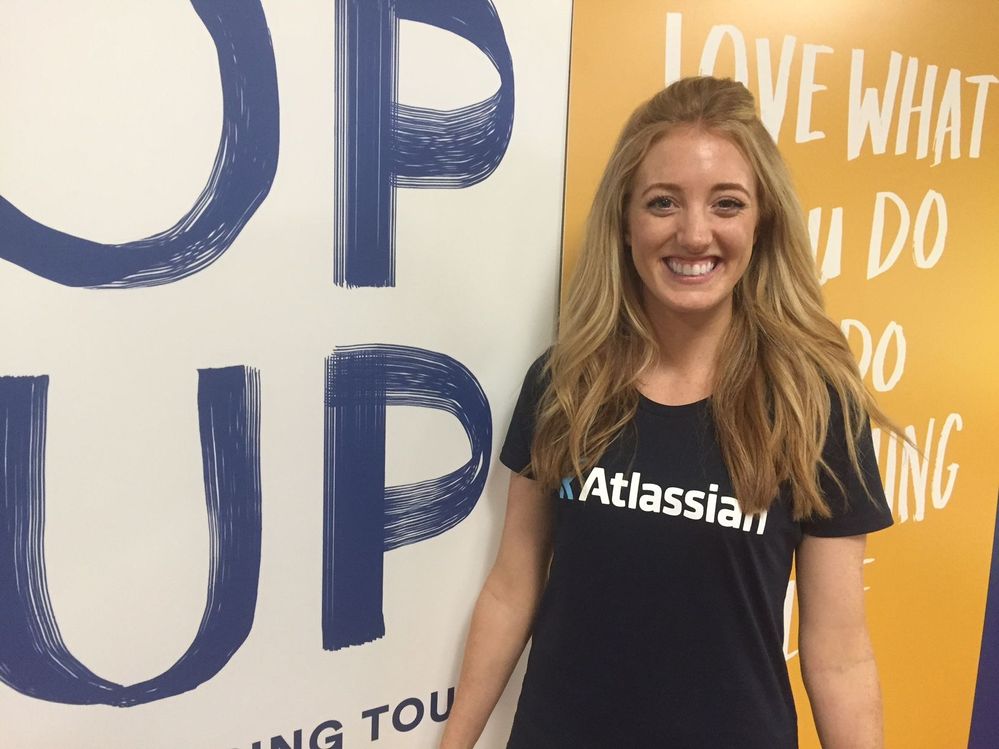
Atlassian APAC recruiting boss Caitriona Staunton.
“We never thought about [philanthropy] as something that is good at recruiting but when I do chat with people around why they joined Atlassian, our philanthropic efforts are the top three of why they joined,” he said.
“We do find that the people who are most aligned with philanthropy are also some of our highest performers.”
DiBianca agrees, saying figuring out which employees are putting their hand up is also a good indicator for leadership.
“We’ve found the people who have given the most time or raised the most money equate to the top performers in the company,” she said.
“If you’ve got an employee who’s volunteering, taking on new projects that wants to go over and above, it’s a really early indicator of high performance and leadership skills.”
She said two of the causes the foundation has supported include Room to Read and boosting the number of women in the tech sector. Both require more than money to get off the ground and volunteering employee time has been critical.