Originally posted on newrelic.com

New Relic 2023 Impact Report
The team at New Relic just launched their FY23 Impact Report. Find it here.
Pledge 1%’s #WomenWhoLead series celebrates female leaders who are paving the way for the next generation. While our featured leaders come from a variety of backgrounds and industries, they are united in their efforts to promote equality for all women in the workplace. We’ve asked them to share a bit about their journey to success, as well as lessons they’ve learned along the way.
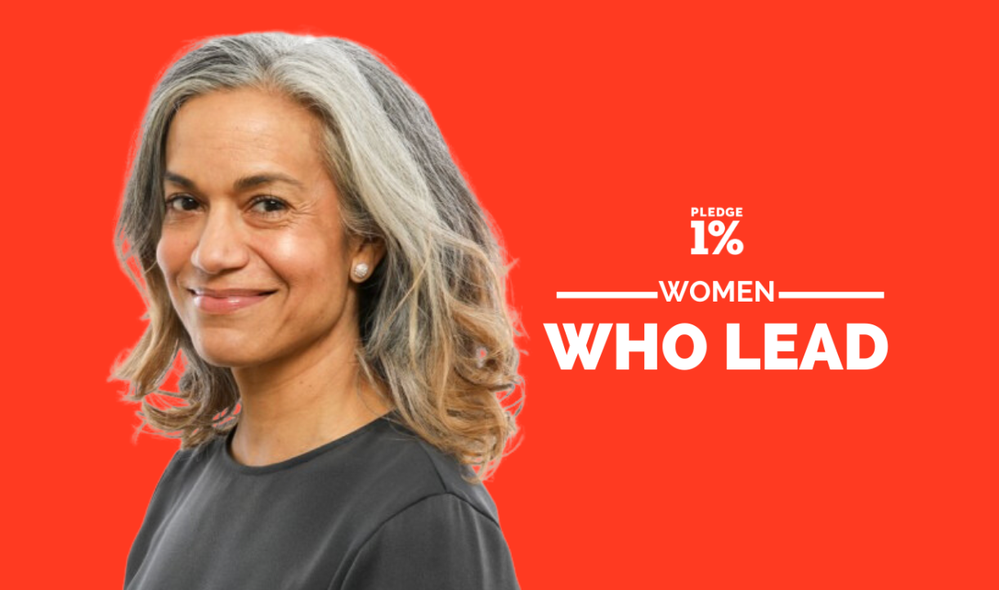
Anita Motwani
COO, Sarla Ventures (Nidra).
San Francisco, CA
What is your current role? Briefly describe in 1-2 sentences.
I run this e-commerce business that my sister started in 2014. I am in charge of all pieces of the business that we currently run on Amazon and Shopify.
This year’s International Women’s Day theme is “Embrace Equity.” What does this mean to you? How can we build workplaces that are more equitable and inclusive?
It means the world to me! I am a minority woman who lived through Wall Street in the 90s! Ha! Not many people looked like me on the trading floor. I have been through more situations in the workplace due to my race and sex that I care to remember. My company is joining a Minority Economic Development Council as we are female/minority led and proud of it!
Do you have any mentors or role models who have helped you on your personal journey?
My mother. She is STILL the CEO Of her biotech company at the age of 82. She is an immigrant from India, came to the US with about $15 in her pocket. She is the epitome of the American Dream in my eyes. She remains fierce and we are convinced she will live to 120!
What’s the best piece of advice you ever received?
Stay on your path, stay in your light (in other words, stay out of the drama, keep moving forward, never let them get you down!)
The past few years have brought many new and unprecedented challenges. What keeps you motivated or inspires you to stay optimistic?
My children. I have 2 daughters and 1 stepson. They inspire me every single day!
Pledge 1% helps companies of all sizes and stages leverage their assets for social good. Why do you think it’s important that companies prioritize social impact? Do you have any specific stories or examples from your work or colleagues you can share?
My sister Mona who started this company (and unfortunately passed away in August of 2021) spent her life giving back. Those of us who are carrying the torch for her will make sure that a certain percentage of our sales go to social good, so we are so happy to be a part of Pledge 1%. Mona was an attorney for underserved populations and helped represent them in cases like the mortgage crisis when they were being taken advantage of. Mona also had severe Lyme disease and was a great contributor to that community in terms of knowledge, helping people with insurance, etc.
If you could describe yourself in one word what would that be and why?
Badass! I am a single mom of 2 young women, a rock climber, and in general someone who gets shit done!
Do you have any unique or useful life hacks to help get through your day?
Meditate every morning, exercise at least 5 days a week, do something every day for yourself!
What are you looking forward to this year? Are there any goals (personal or professional), activities, or experiences you are excited about?
I look forward to building the company my sister started into a brand and educating the world on the absolute incredible benefits of sleep!
Pledge 1%’s #WomenWhoLead series celebrates female leaders who are paving the way for the next generation. While our featured leaders come from a variety of backgrounds and industries, they are united in their efforts to promote equality for all women in the workplace. We’ve asked them to share a bit about their journey to success, as well as lessons they’ve learned along the way.
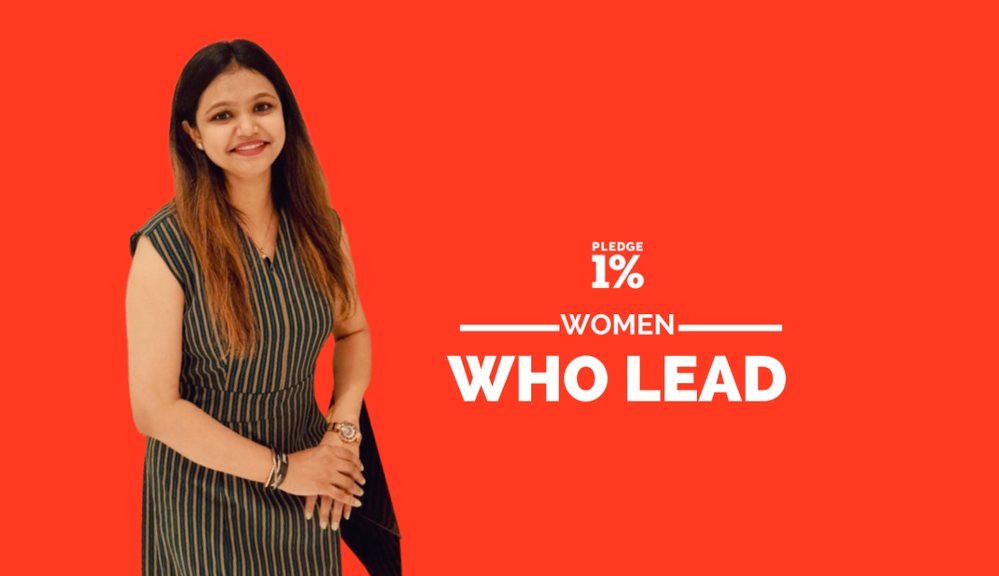
Vartika
Growth Marketing Manager, Dextara Digital
Telangana, India
What is your current role? Briefly describe in 1-2 sentences.
Head of Marketing and Salesforce Partnership Practice. I oversee the Dextara Digital brand’s expansion and am responsible for developing and implementing of marketing strategy align with the business goals. I also ensure the success of my team by supporting the company culture for their professional growth and teamwork.
This year’s International Women’s Day theme is “Embrace Equity.” What does this mean to you? How can we build workplaces that are more equitable and inclusive?
Embracing equity in the workplace means creating an environment where everyone has an equal chance to succeed, regardless of their personal characteristics. To achieve this, it’s essential to educate employees on issues related to equity and inclusion, set clear goals and track progress, implement policies and practices that promote equity, foster an inclusive workplace culture, and hold leadership accountable. When everyone is treated fairly and has an equal opportunity to succeed, it creates a more productive and positive work environment like the one we have at Dextara.
Do you have any mentors or role models who have helped you on your personal journey?
My Parents are my great mentors. They educated me on how to be purpose-driven in life, which keeps me going every day.
What’s the best piece of advice you ever received?
Keep trying until you get it. So always believe in yourself and achieve what you love.
The past few years have brought many new and unprecedented challenges. What keeps you motivated or inspires you to stay optimistic?
If the past brought new and unprecedented challenges, we also have the means to overcome them. Despite the challenges in the past, my optimistic nature helped me think about finding solutions to overcome the challenges. So having the trust, confidence, and positive attitude to handle anything motivated me.
My Belief- Every problem has a solution, and Nothing is impossible. All one can do is be positive and work consistently to become a better person each day.
Pledge 1% helps companies of all sizes and stages leverage their assets for social good. Why do you think it’s important that companies prioritize social impact? Do you have any specific stories or examples from your work or colleagues you can share?
Companies should prioritize social impact because it allows them to make a positive difference in the world and address pressing challenges while also attracting and retaining top talent, building customer loyalty, enhancing brand reputation, and fostering innovation.
If you could describe yourself in one word what would that be and why?
I need two words – Real and Unstoppable because I can’t pretend, and I never give up.
Do you have any unique or useful life hacks to help get through your day?
Surround yourself with positive people, always respond, and don’t react.
Do you have any go-to apps or tools use love to use?
Evernote.
What are you looking forward to this year? Are there any goals (personal or professional), activities, or experiences you are excited about?
Well, nothing new, same as last year to upskill and be able to guide others.
I’m excited about my work with Dextara Digital and will continue to see me grow with the company’s growth this year.
The constant business expansion and being a part of this dynamic work culture always inspire me to take an active part. This excitement uplifts my zeal to be creative and ideate with our teams to improve processes, gain new skills, contribute extra to #Build<Great>, and offer our clients excellence.
We have begun gaining momentum in the market, and we’re pushing ourselves to raise the bar.
A Silver Lining in the Cloud: Ferrilli Helps Hartnell College Leverage Cyberattack Recovery to Modernize IT Infrastructure with AWS
Executive Summary
After a cyberattack disabled Hartnell College’s entire IT infrastructure, Ferrilli helped the institution get back online in days with a new cloud-based infrastructure built on AWS. The scalable, flexible, and stable infrastructure can grow with Hartnell College’s needs for the future. Ferrilli built the infrastructure on AWS Control Tower, and Hartnell is utilizing Amazon AppStream 2.0 to enable remote access to powerful applications.
Seizing an Opportunity
It’s usually hard to find a silver lining in a cyberattack, but for Hartnell College, one of the oldest higher education institutions in California, a security breach gave the IT team the opportunity to build a modern new infrastructure to better serve students, faculty, and staff.
IT leadership at the community college first became aware that something was amiss on a Sunday morning in October 2022. When they received alerts that the network was down, it didn’t take long to discover the college had become the victim of a ransomware attack that disabled its entire IT infrastructure. “A ransomware group had accessed some of our critical data and demanded money to unlock our servers and systems. It was a nightmare scenario,” said Dr. Chelsy Pham, vice president of information technology resources at Hartnell.
With networks, wi-fi, and phones down, Hartnell faced pressure to get systems back online quickly to minimize disruptions. For that, the institution turned to AWS Partner Ferrilli, its trusted IT partner.
“Under normal circumstances, migrating an institution’s entire infrastructure to the cloud could be a long and difficult process taking months or even years, but we couldn’t wait. Luckily, AWS and Ferrilli had all the tools, resources, and expertise we needed to rebuild our infrastructure very rapidly.”
Dr. Chelsy Pham
Vice President of Information Technology Resources, Hartnell College
Recovering and Rebuilding in the Cloud
Ferrilli is a leading technology services provider exclusively serving higher education institutions. With colleges and universities increasingly becoming the targets of cyber criminals, Ferrilli is dedicated to helping institutions recover, which is why the first phase of the recovery effort was supported by Ferrilli’s Pledge 1% commitment. Pledge 1% is a global movement that encourages and empowers companies to donate 1% of their staff time, product, profit, and/or equity to a cause of their choosing. As a Pledge 1% partner, Ferrilli donates 100 hours of security services to institutions that have fallen victim to a cyberattack.
Although not everything was retrievable, Hartnell had backups of a good portion of the College’s data, which provided a foundation for rebuilding what was lost. However, the institution’s IT infrastructure was a traditional on-premises setup, which the CIO had wanted to migrate to the cloud. Rather than rebuild the outdated infrastructure, they decided it was time to quickly transition to an Amazon Web Services (AWS) environment. “Under normal circumstances, migrating an institution’s entire infrastructure to the cloud could be a long and difficult process taking months or even years, but we couldn’t wait,” said Dr. Pham. “Luckily, AWS and Ferrilli had all the tools, resources, and expertise we needed to rebuild our infrastructure very rapidly.”
Within a matter of days, Ferrilli helped Hartnell get its student information system back online and access staff data so that they could make payroll. Then they were able to finish rebuilding the AWS infrastructure to best support the institution moving forward. “We’ve had a long relationship with Hartnell, so they knew they could trust us to help them recover quickly,” said Robert Ferrilli, CEO, Ferrilli.
Building an Infrastructure for the Future
Since they were building the cloud structure from scratch, the team was able to design the cloud-based architecture to be more scalable, flexible, and stable so that it would last many years into the future. Ferrilli built out everything to AWS’ best practices using AWS Control Tower landing zone.
Hartnell and Ferrilli also deployed Amazon AppStream 2.0 to enable remote access to powerful applications — like AutoCAD and Adobe’s design suite — from any location, device, or operating system. “By deploying AppStream 2.0, we were able to provide more flexibility for students and faculty, who previously could only access such programs through a computer lab on campus,” said Ferrilli.
With security a major priority, Ferrilli built a disaster recovery plan into the new AWS-based infrastructure and rolled out CrowdStrike Falcon, a cloud-based platform to prevent all types of cyberattacks. The team ran double scans on all devices to make sure they were safe for the rebuild. They also set up Duo Single Sign-On with multifactor authentication to enhance security and user privacy.
Looking Ahead
In less than two weeks after experiencing a devastating cyberattack, Hartnell had a modern, cloud-based infrastructure with all systems recovered. Since building the new AWS environment, Hartnell’s IT team has seen network stability vastly improve. The modern infrastructure designed by Ferrilli provides the security and flexibility needed to support the institution’s educational mission well into the future.
Hartnell is still in the beginning stages of its cloud journey. Moving forward, the institution plans to work with Ferrilli to implement additional AWS tools and resources to improve efficiency and security. AWS is constantly adding new capabilities, and Ferrilli and Hartnell are looking forward to continuing the modernization journey together.
Pledge 1%’s #WomenWhoLead series celebrates female leaders who are paving the way for the next generation. While our featured leaders come from a variety of backgrounds and industries, they are united in their efforts to promote equality for all women in the workplace. We’ve asked them to share a bit about their journey to success, as well as lessons they’ve learned along the way.
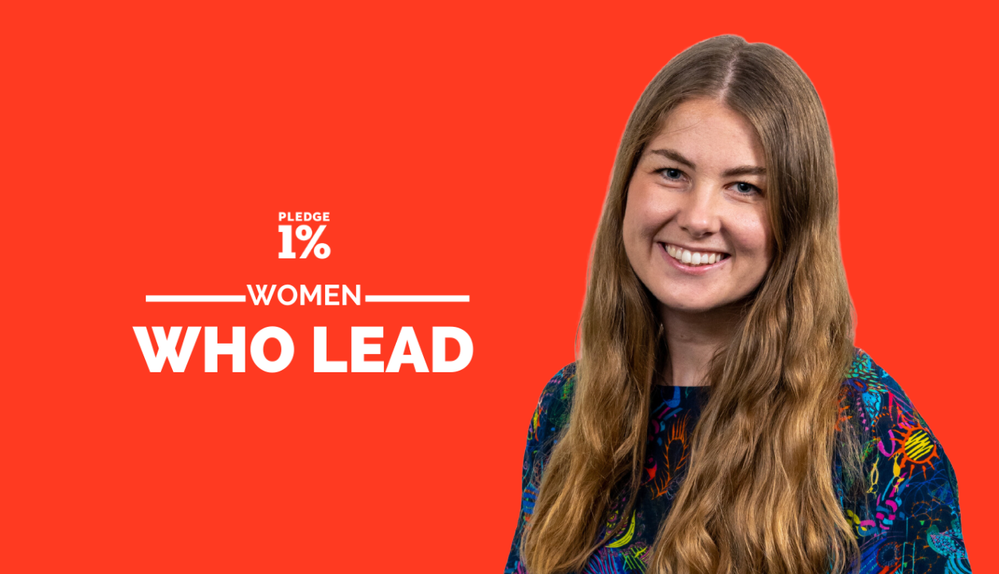
Lauren Black
Social Impact Manager, Atlassian
Sydney, NSW, Australia
What is your current role? Briefly describe in 1-2 sentences.
I lead global skilled volunteering and customer support programs that aim to increase the operational effectiveness and capability of nonprofit and social enterprise teams.
This year’s International Women’s Day theme is “Embrace Equity.” What does this mean to you? How can we build workplaces that are more equitable and inclusive?
Everyone benefits when equity, inclusion and belonging are realised. People feel safer and therefore have the confidence to be more creative. More perspectives fuel innovation and better outcomes for customers. But most importantly, every person is valued equally.
To build more equitable and inclusive workplaces we need every person to truly believe in the value of equity and make consistent, intentional efforts to lift others up and affect systemic change.
Do you have any mentors or role models who have helped you on your personal journey?
I’m very fortunate to have a long list of strong, empathetic women who continue to be guiding voices for me. Karen Iles taught me to root social impact in evidence and gave me opportunities as an intern that accelerated my career. Dr Eva Cheng was the epitome of inclusion, always inviting everyone by default and creating space for others.
What’s the best piece of advice you ever received?
Great careers are discovered, not planned.
I’ve heard this from so many different women, mostly in technology, who have taken interesting opportunities as they arose, rather than having a rigid long-term goal.
The past few years have brought many new and unprecedented challenges. What keeps you motivated or inspires you to stay optimistic?
There are incredibly clever people with lived expertise solving problems in their communities every day. We are seeing a shift in philanthropy to redistribute resources to organisations led by these people which presents a very promising future for us all. There is also much more collaboration in social impact than 5 years ago which reduces redundancies and fosters collective impact.
Pledge 1% helps companies of all sizes and stages leverage their assets for social good. Why do you think it’s important that companies prioritize social impact? Do you have any specific stories or examples from your work or colleagues you can share?
The business case for taking care of our planet and communities is incredibly strong. We attract better talent, have more diverse and creative teams, engage our employees through volunteering, and inspire our customers with stories of how nonprofit customers use our products. But more importantly, redistributing wealth and resources to those who are systemically and structurally disadvantaged is a moral imperative.
Every Atlassian employee has 5 days to volunteer every year. When the partner of an Atlassian software engineer experienced a traumatic birth, he reached out to a local organisation to provide technology support. Being empowered and encouraged to support a cause personally relevant to him has been fulfilling, but more importantly, the organisation has developed new processes allowing them to grow rapidly and reach more parents experiencing birth trauma.
If you could describe yourself in one word what would that be and why?
Optimistic. I always see the good in people (or at least have empathy for their flaws) and trust that humanity can solve the problems we’ve created.
Do you have any unique or useful life hacks to help get through your day?
Action tasks you dislike first – the more they linger, the worse they are to tackle.
Do you have any go-to apps or tools use love to use?
I love Atlassian’s new goal-tracking tool Atlas. It helps me share quick updates on all the different projects I’m working on and learn about what the rest of the team is doing. It avoids duplication of effort and allows you to celebrate the achievements of your team!
What are you looking forward to this year? Are there any goals (personal or professional), activities, or experiences you are excited about?
Atlassian Foundation is currently refining its strategy and I’m enjoying thinking deeply about the problems we are trying to solve and the impact we hope to make. In social impact, there are so many causes you can support, wonderful organisations and potential activities to drive outcomes. It’s really important to be really clear on who you serve, how you serve them and more importantly, what you don’t do.
Pledge 1%’s #WomenWhoLead series celebrates female leaders who are paving the way for the next generation. While our featured leaders come from a variety of backgrounds and industries, they are united in their efforts to promote equality for all women in the workplace. We’ve asked them to share a bit about their journey to success, as well as lessons they’ve learned along the way.
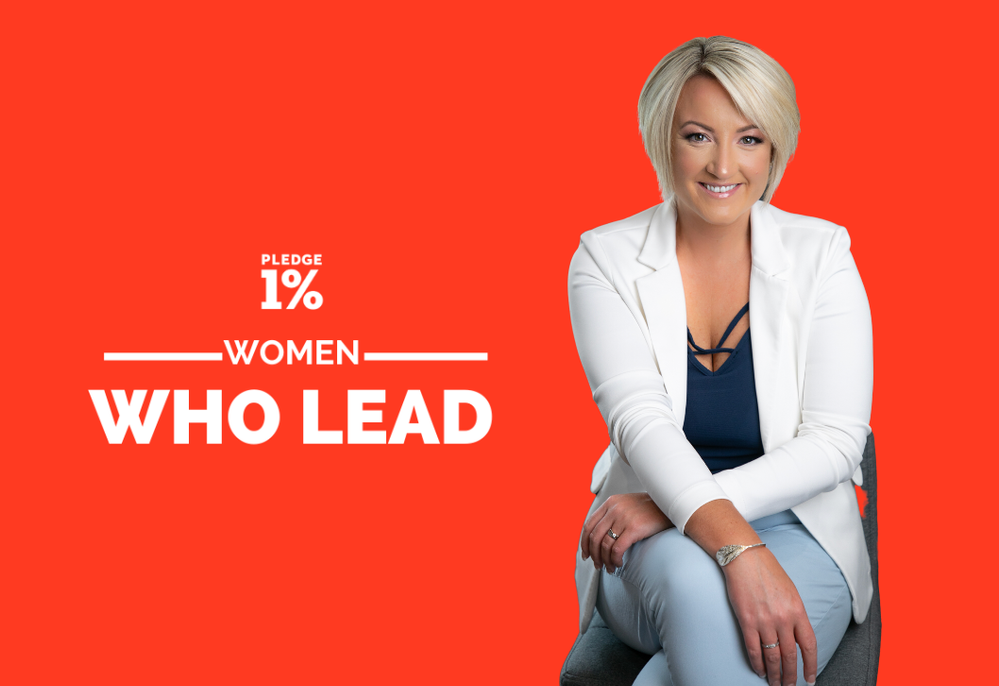
Claire Revell
CEO, Intellek
Devon, UK
This year’s International Women’s Day theme is “Embrace Equity.” What does this mean to you? How can we build workplaces that are more equitable and inclusive?
Understanding bias and building awareness is a big first step towards making real change. We need to build diverse teams in the workplace represented by different cultures, genders, different upbringings and educational backgrounds. There is still a lack of mentors, role models, for young women to look up to in the tech industry. If all of the leadership roles within tech, or any other industry, are filled by men, then women will feel no encouragement or support to aim higher than what is expected of them. Equal opportunities, equal pay and more support for women who want a family AND a career. We shouldn’t have to choose. Women need to feel empowered, they need to be heard, and a strong support network is crucial. I strongly believe that a diverse team is a strong team. I encourage everyone in my team to share their experiences, knowledge, and ideas from their first day of joining the company.
Do you have any mentors or role models who have helped you on your personal journey?
I think that you learn from everyone you meet, whether it’s something positive that influences you or whether it makes you question their approach and how you can perhaps be better or do things differently. My mum taught me the importance of being kind, loving and having it in my heart to forgive. My Auntie Sarah taught me to be fearless and to never give up. My mentor in South Africa, Dawn Leppan who is the founder of our charity partner 1000 Hills, taught me how to pay it forward and how to navigate change. My husband is always there to listen and provide advice, and supports me chasing my dreams so in a way he’s a mentor. My Dad and step-dad taught me to never settle and to never let self-limiting beliefs of others hold me back. To name a few very well-known women, who are not only strong leaders but are also avid philanthropists, who I also see as role models include Melinda French Gates, Amal Clooney, Eva Longoria and Michelle Obama. All of these people have impacted my personal journey in one way or another, so I see them all as mentors.
What’s the best piece of advice you ever received?
Say yes, even if you don’t know how you’re going to do it. You can figure that out later. Don’t ever miss out on an opportunity because you’re unsure, you don’t know where it might take you.
The past few years have brought many new and unprecedented challenges. What keeps you motivated or inspires you to stay optimistic?
My passion, knowing I can make a difference, is what keeps me motivated and keeps me fighting through those challenging days. I’m striving to navigate a change, close knowledge gaps and opening doors to new opportunities in everything I do. It doesn’t always have to be a big change. Sometimes you can do things that impact just one or two people, but the knock on impact of that could be much bigger.
Pledge 1% helps companies of all sizes and stages leverage their assets for social good. Why do you think it’s important that companies prioritize social impact? Do you have any specific stories or examples from your work or colleagues you can share?
Why? Because it’s the right thing to do. One person can make a difference, they can slowly move the needle in the right direction, but a company with 10 employees or 10,000 employees can have a much bigger impact. Today, a percentage of each purchase goes directly from Intellek to children in South Africa, helping to ensure every child gets access to education and a safe environment. Technology has enabled us to reach every corner of the globe and provide the sort of education and opportunities that will improve the world and boost its economy. When I give the team a Christmas bonus they also get the opportunity to donate a set amount to a charity of their choice. It doesn’t have to be thousands of pounds, a small amount from more businesses would make the world a better place. Not only is it the right thing to do, and for those business owners focusing on their bottom line, there are business benefits too. Customers and employees expect more nowadays from companies, and prioritizing social impact can help with attracting new customers and the best talent.
If you could describe yourself in one word what would that be and why?
Determined – Whether that’s in personal or business life. Determined to solve a problem, determined to navigate change, determined to help someone thrive.
Do you have any unique or useful life hacks to help get through your day?
I’m not religious or spiritual, I do believe in manifestations though. Tell yourself you want to be happy, tell yourself you want to be the best version of yourself today and it’s surprising the impact that can have.
What are you looking forward to this year? Are there any goals (personal or professional), activities, or experiences you are excited about?
Intellek has a plethora of big projects this year and I’m looking forward to them all. We’re making some big moves to disrupt the industry. It’s also my 20th year in business this August, and I’ll be 40 in February 2024, so my team and I are currently making plans with 1000 Hills Community Helpers, in Inchanga South Africa, to build a new classroom and potentially a safe house too. I’m so excited and I’m thrilled some of my team will get to be a part of this experience too.
Box’s ESG fact sheet
Follow the link to find Box’s ESG fact sheet: Building a better future through ESG Initiatives.
Originally posted on LiquiDonate
LiquiDonate Joins the Pledge 1% Movement with a Donation of Time, Product, and Equity
With a growing presence across all 50 states, LiquiDonate is proud to announce that it’s joined Pledge 1%, a global movement that inspires, educates, and empowers entrepreneurs, companies, and employees to be forces for good in (and beyond) their communities.
LiquiDonate will contribute 1% of equity to a donor advised fund, held at ImpactAssets, where assets will be invested and granted towards organizations advancing the circular economy. “We’re psyched and humbled to contribute 1% of LiquiDonate’s equity to accelerate the world’s transition to a circular economy and make second-use the first choice,” says Diz Petit, LiquiDonate’s CEO and co-founder.
“There are thousands of forward-thinking, innovative organizations out there confronting some of the world’s toughest challenges that have joined Pledge 1%, and we’re thrilled to be among them.”

Pledge 1% has a growing membership of over 17,000 global companies that, collectively, inject half-a-billion dollars into diverse philanthropic causes in more than 100 countries. It’s a simple—yet hugely impactful—project: organizations have the flexibility to donate 1% of their product, profit, equity, and/or staff time to any charity of their choice, sparking a multifaceted approach to a diverse range of causes and missions.
“There are over 1.5 million nonprofits and more than a million retail establishments in the U.S. At this scale, matching reclaimable goods from retailers to nonprofits is possible only with tech. LiquiDonate’s tech-enabled donation platform has social impact built into it,” says Chai Nadig, LiquiDonate’s CTO and co-founder.
While “making the world a better place” may be a phrase many in Silicon Valley and beyond have rightfully grown wary of, LiquiDonate puts its profit where its mouth is. Since its inception, all LiquiDonate employees have received 24 hours of paid volunteer time to dedicate to philanthropic efforts across the country, including a recent volunteer event put on by A Meal With Dignity, a San Francisco-based nonprofit on whose Board of Directors Petit currently sits.

The San Francisco-based climate tech company recently received its California Green Business Partner certification, and is embedded with nonprofits and community activism. LiquiDonate is building upon its earlier relationship with Pledge 1% from being a Builder Company at Postmates, ringing the opening bell on Giving Tuesday, and contributing to multiple free how-to user guides on giving back to the community.
“There are so many compassionate and community-minded nonprofits confronting some really tough problems, and we’re proud to help them get the goods they need to further their missions,” says Renee Barker, LiquiDonate’s Director of Nonprofit Partnerships.
Originally posted on Charity Digital
The rise of the 1% club
According to 2023’s Sunday Times Giving List, the UK’s most generous philanthropist is Chris Hohn, who gives 15% of his wealth away to good causes by ensuring his firm Children’s Investment Fund’s profits go to its foundation.
In receiving the accolade from the newspaper, Hohn urged more super wealthy individuals to give a significant proportion of their income to good causes.
“If they could understand, even on a simple level, the joy they could have by sharing it (their wealth), I think they might all be happier people,” he says.
But any giving should be significant and avoid “tokenism”, he adds.
One-way corporates and wealthy individuals can give effectively to charities is to commit to donating a minimum of 1% of their wealth to good causes.
Already this global movement is attracting attention among firms, including in the UK.
Pledge 1%
A notable ‘1% club’ campaign group is Pledge 1%, which is headquartered in the U.S. and aims to inspire “early-stage corporate philanthropy” by giving a “portion of your future success to support non-profits”.
The Pledge 1% campaigns founders include Salesforce, Atlassian, and Rally and its partners include Australian Philanthropic Services, Techstars, and Full Circle Fund.
Thousands of firms have already signed up, including notable technology focused corporates such as Adobe and Weebly. 10,000 members have so far pledged more than $500m (£402.5m).
By committing a proportion of future growth, the more successful a business is, the more money is available for charities. This can be through committing 1% of:
- Profits – perhaps by creating a foundation for example to allocate funds to good causes
- Time – perhaps by setting up volunteering schemes for employees to donate time to charity. Alternatively, businesses can donate skills, carry out pro-bono work, and set up a workforce development programme
- Equity – perhaps arranged by setting aside corporate equity to charities. New businesses can issue and transfer shares to charity at the time they are formed, for example. A simpler way is for company founders and chief executives to offer personal equity pledges that do not require board or shareholder approval
- Product – businesses can also commit to giving through giving products, such as computer software, services, and hardware such as computers. This can be through giving away the product itself or offering free or discounted subscriptions and licences. Many of these dealscan be accessed via Charity Digital
1% for the Planet
The 1% for the Planet campaign group was set up buy Yvon Chouinard, founder of the Patagonia clothing brand. Through this scheme corporates commit to giving 1% of their wealth, either financial, in kind or through promotional support directly to environmental groups.
The group says that extra funding for environmental causes is important as only 3% of philanthropic giving goes to green non-profits.
Since it was established in 2002, its members have given $435m (£350m) to environmental causes.
Calls for more UK corporates to join
In the UK the Directory of Social Change is leading calls for more UK corporates and wealthy individuals to join the 1% club.
Through its 2023 Guide to UK Company Giving report, it analysed data provided by 223 companies. This found that 70 had either given or pledged to give 1% of their wealth to good causes.
Based on their financial records for 2020 and 2021 this commitment equates to £230m.
“When we’re talking about companies who can make huge pre-tax profits each year, relatively small commitments (1%) can have a large cumulative effect (£230 million),” states the DSC.
It adds that “despite the difficulties that companies have faced over the past two years, they continue to inject a significant amount of cash and in-kind donations to the charity sector each year”.
“The 1% Club is a great example of corporate organisations supporting charities and helping those who are facing the most challenging of times.”
Case Study: 1% to housing charities
Among UK organisations to already join the 1% club is the Nationwide Building Society. Each year 1% of the building society’s pre-tax profits are donated to good cause, including through its own social investment work.
Through its corporate charity and other initiatives, it uses the money to help good causes involved in tackling housing problems, as well as improve numeracy and money skills among young people.
For example, via its community grants programme, awards of up to £60,000 are made to charities, community land trusts and housing cooperatives. In 2021/22 a combined £4m was awarded to 94 housing projects UK wide.