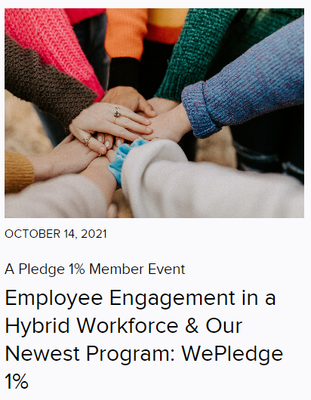
Next in our two-part series on Employee Engagement, this session explores why businesses need to lean in and engage their employees through pro bono programs, including developing opportunities to leverage technology for social impact as we move on to create new normals in this post-pandemic world. Read the recap below and access the session resources here.
The past 18 months have taught us that employees crave human interaction at work. Fatigue, loss and grief are being felt across the board, and people want to feel a sense of purpose, belonging, and a chance to be part of something bigger than themselves that helps make the world better. According to recent studies, current trends show that while 50% of all employees are open to leaving their companies for new roles, this drops to less than 12% if they believe that their company is making a positive impact in their communities.
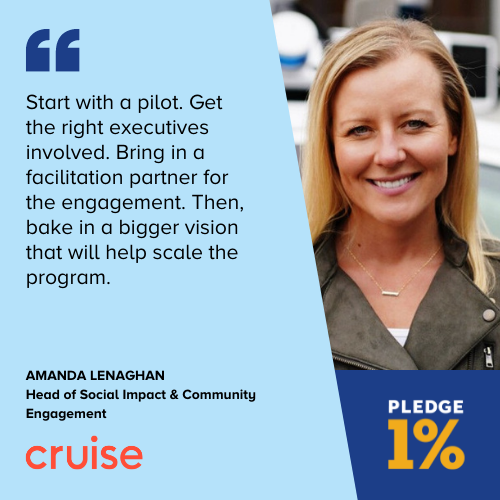
In this session, Erin Dieterich of New Relic spoke with Jessamine Chin of VMware, Amanda Lenaghan of Cruise, and Brian Mattos of Salesforce about their experiences running pro bono programs and how the pandemic has propelled their organizations to come up with new normals to raise awareness about the interconnectedness of employee engagement, ESG, and social impact in the workplace.
Here are our 4 takeaways from the event:
1. Pro bono means putting team talent and professional skills to work with nonprofit partners and customers.
Leveraging your company’s assets for social impact is key to having a successful pro bono program, especially when it comes to your team’s talent and skills. In this hybrid work environment, it’s essential that we explore how our products and services can be key drivers for change.
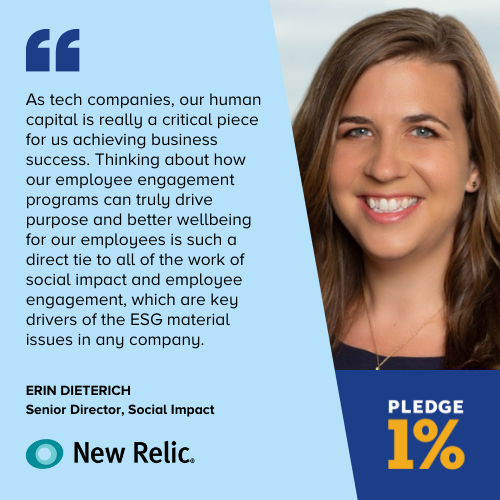
2. The right balance is in helping organizations achieve their goals while providing impactful volunteering opportunities to employees.
Matching a pro bono volunteer with a nonprofit project isn’t always easy. While there’s a lot of great intent and passion towards making a difference, there’s also a rush to implement when the need arises. In managing pro bono programs, beware of skipping certain steps that might lead to missing the root cause, creating a solution that isn’t sustainable, or perhaps leading to an outcome that does not fully address the organization’s needs.
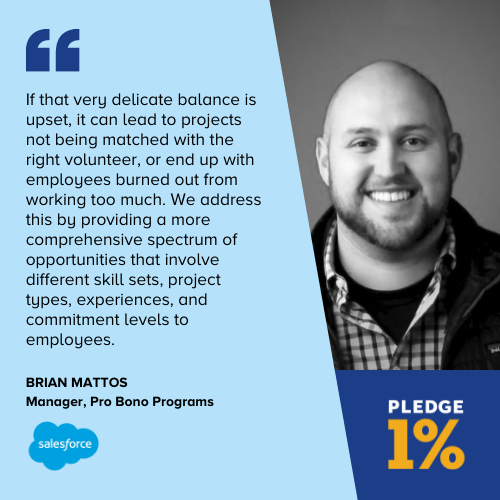
3. Improving employee skill sets in ESG will benefit companies and nonprofits alike.
There are many pathways to a social impact career, starting with the job you currently have. A lot of the day-to-day skills needed right now is the ability to bridge external realities of what potential clients and customers are facing with the internal demands of the workforce and leadership teams. Whether you’re an engineer in R&D or are part of a frontline salesforce , having that knowledge of ESG will naturally evolve the way you create impact through your work.
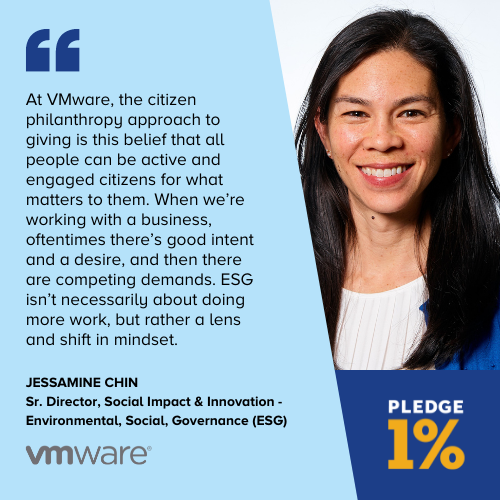
4. The “Work From Anywhere” future leads to “Impact From Anywhere” movement.
The virtual systems and approaches we’ve adopted at the start of the pandemic is a good point to launch employee engagement strategies that should stay post-pandemic, especially in hybrid environments. Developing human-centered programs not only with employees but also with the organizations that need our expertise and help will define the future of pro bono in the workplace.
For more information, explore the tools in our Member Community or watch the full recording below:

In October, 2021, Pledge 1% launched the Pledge 1% Community to create a space for members to connect with tools and resources, as well as each other, in an effort to build and amplify their social impact programs! This resource aims to be the go-to place for members to connect, share experiences and best practices, find collaborative opportunity, and access a growing repository of resources meant to enable social impact teams of various sizes, serving various company sizes/stages/locations. We believe this community will be a significant value-added tool for our members! Read more to get acquainted with the benefits of registering an account and becoming an integrated part of this exclusive community!

ACCESS PLAYBOOKS
The Pledge 1% Team has developed playbooks that address a variety of topics in creating and amplifying social impact programs. From GAIN VALUABLE INSIGHTS FROM YOUR PEERS
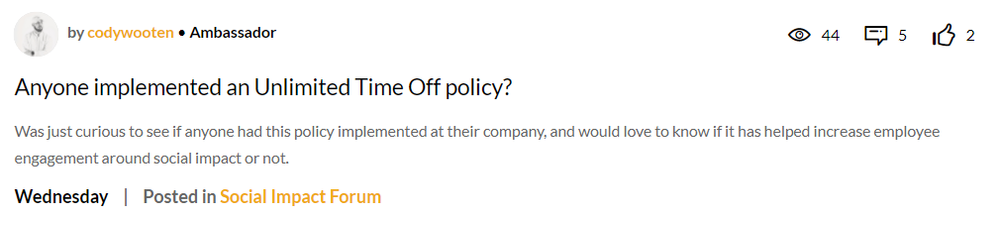
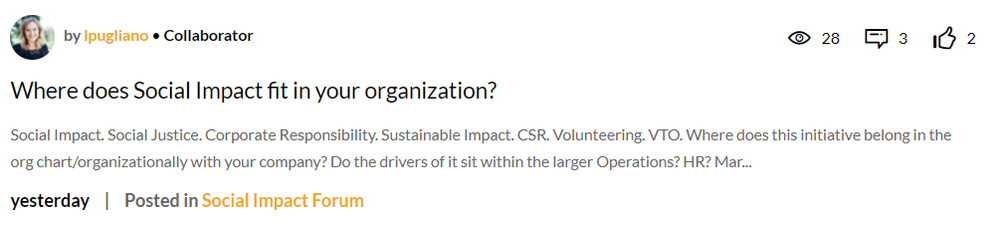
Registered users of the Pledge 1% Community are able to post and comment on discussion threads within the Social Impact Forum. This forum (and future forums to come) is one of the most distinctly valuable areas of the site. At your fingertips, you can connect with members from across the globe, representing the over 15,000 members of the Pledge 1% movement. Whatever questions, challenges, opportunities you see within your own social impact programs are likely to be shared by your peers and by engaging with these discussion forums, you can gain valuable insights to help drive your program forward.
BECOME A THOUGHT LEADER
Whether it’s through engaging with the Pledge 1% Community discussion forums, engaging with our blogs or participating in events, or sharing your own story in our Member Projects, the community offers registered users the opportunity to position themselves as thought leaders within the Pledge 1% movement. As momentum grows around global social impact, active users within the Pledge 1% Community will become the thought leaders helping new members grow their own programs, much like Atlassian’s @LaurenBlack who shared this member project post:
WE LOOK FORWARD TO SEEING YOU IN THE COMMUNITY
As news users register and as the Pledge 1% Community grows, dedicated discussion forums will be added as we see topic trends emerge within the site! We are excited to lead and grow this resource with our members to amplify global social impact in pursuit of advancing the Pledge 1% movement. Take advantage of all of these additional resources by officially joining the community today!
Have questions or need assistance getting registered? Contact support@pledge1percent.org and a member of the community team will be happy to assist you!
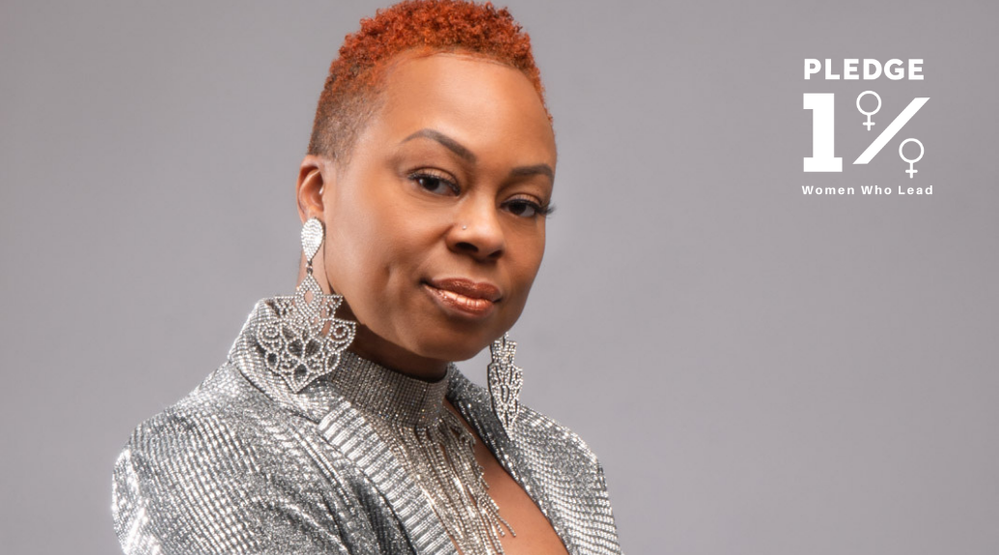
Pledge 1%’s #WomenWhoLead series celebrates female leaders who are paving the way for the next generation. While our featured leaders come from a variety of backgrounds and industries, they are united in their efforts to promote equality for all women in the workplace. We’ve asked them to share a bit about their journey to success, as well as lessons they’ve learned along the way.
What is your name and title?
Katina Washington, President/CEO at the SHE. Event Indy.
Briefly (1-2 sentences) describe your current role.
I am a Black owned women business coach/executor. I assist women business owners with taking their concept from conception to execution.
How did you get here? Please share any quick stories from past work experiences.
I am all about empowering and encouraging women to dream big. Every day I am focused on “she.” SHE stands for She Has Everything because I believe that women should feel empowered to start their own businesses and create jobs, because our community depends on it.
In January, I received the distinguished Jefferson Award for Multiplying Good. Through our events and marketplace, we’ve empowered over 90 percent of vendors to create their own products and services, as well as given scholarships to youth.
In your opinion, what’s the #1 decision or move you’ve made that has helped advance your career?
During Covid, I created SHE. Marketplace to host many black women owned businesses to be able to continue to showcase their products and services when we are unable to do in person events.
What is the most important lesson you’ve learned this past year?
How to pivot!
What’s the number one challenge you face as a woman in your industry?
Funding and resources to propel the SHE. Event. We have proven measurable outcomes and have proven to be a credible fiscal steward for over 8 years.
Do you have any mentors? What does mentorship mean to you?
Yes, I do! I just gained 2 mentors and we have monthly meetings. One of my mentors is an owner of La Z boy.
What advice do you have for women who are just starting their career?
Reciprocity. Practice reciprocity. Always think of how both parties can benefit when approaching others with business deals/meetings/etc.
What is one thing companies can do, big or small, to help create an environment that advances women into leadership positions?
A dollar earned in the black community only stays in the black community for an average of six hours. The purpose of the SHE. Event is to extend the length of time that dollar is circulated through the community where it is earned. The SHE. Event accomplishes this by providing artists, entrepreneurs, and small business owners with a rigorous training program on business operations and an online platform to reach consumers/the community. By providing these resources, the SHE. Event increases economic development and financial stability for both the larger communities and families of the students.
What is one thing you hope to accomplish in the next year?
Through our program S.H.E.Creates, we train women in primarily underserved communities (including Empowerment Zones) on owning their own businesses and manufacturing their own products. We use a cohort style of training to allow participants to collaborate and learn from one another. Aside from learning the basics of business, participants will also learn conflict management, financial literacy, and how to produce handmade products and labeling. We also provide tools such as how to register their business, increase their social media presence and connect them with suppliers and resources to produce their products/services. We’ve also partnered with seasoned entrepreneurs who have operated a successful business within the same area to mentor our participants. I hope that our graduates can utilize these resources and grow their business by selling their products/services at the S.H.E. Event Marketplace.
Is there a cause that is particularly close to you? If so, why this cause and how did you get involved?
Women empowerment. I believe that we are only able to address the economic, health, and safety risks caused by the coronavirus pandemic through entrepreneurship and innovation directed towards underserved individuals who can start their own businesses and become economically empowered. I created the S.H.E. Event Market Place to provide platforms and other opportunities for women-owned businesses and vendors to showcase their goods, products, and services by leveraging technology and e-commerce.
When did your company join Pledge 1%? What does your impact program mean to you?
Our company joined Pledge 1% last year. Because of the pandemic, we were working very hard to keep our business afloat (and we did). Our goal for 2021 is to get more involved as we love your mission.
What do you like to do outside of the office? Any interesting (or unique) habits or interests?
I create accessories. I am an artist at heart. I also promote and browse social media telling others about products I purchased from the marketplace.
Are you reading/listening to anything interesting at the moment? Please share your most recent favorite book or podcast!
I listen to Gary V often. I also listen to meditation music. I meditate daily.
What’s been the one (or two!) things that have helped you navigate this past year? Any tips or tricks to dealing with remote work?
I have learned a whole new meaning to “Eat the meat, and throw away the bones.” Covid taught me how to pivot, manage my time better, my true value, and how to use my human capital until I am able to get access to investors.
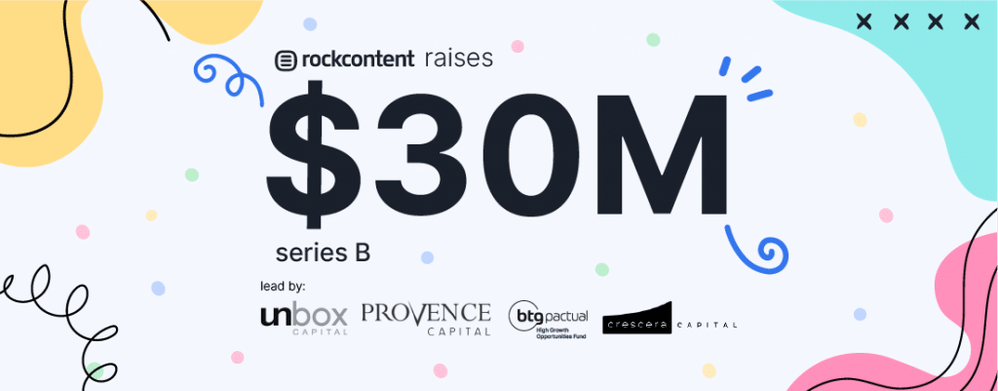
Content marketing company plans to build a “category-defining” organization and enhance social impact initiatives
MIAMI, Oct. 25, 2021 /PRNewswire/ — Rock Content, a global leader in content marketing solutions, today announced a $30 million Series B funding round. After two acquisitions in the past two years, the company aims to consolidate its position as a global leader in the content space.
The funding round was led by existing investors, Unbox Capital with the participation of Provence Capital, and joined by new players: BTG High Growth Opportunities Fund, and Crescera Capital.
“Rock Content has the ability to operate in a wide range of markets, and within different cultures. This ability, in combination with its unique product innovation capability, places them in a privileged position to lead content marketing strategies for brands around the world,” said Unbox Capital’s Founder Patricia Moraes.
With the new investments, the company will continue investing in marketing, sales, and product innovation and evolving its content marketing solutions to empower brands to scale through content.
“We believe that content delivers superior results for brands and a better experience to consumers. Content is a more human-marketing channel impacting positively the experience of every individual with the brands,” said Rock Content’s CEO Diego Gomes.
Gomes said that the current content market is a fragmented space which is why the company aims to build a “category-defining” organization.
“This is why the Series B is an important milestone: we can achieve our goal to define the future of the content industry and become the best partner for marketers that are looking for ways to grow.”
As a pioneer in content marketing, the company determined that its initial challenge was to educate brands about the value of content. Now, as many brands have a diverse content strategy, the challenge is for customers to become content-centric enterprises.
“These brands are facing challenges integrating content at the core of their marketing strategies, an overload of vendors, and an ever-growing Martech stack. We make it easy on them. At Rock Content, we pride ourselves in offering a true solution approach to help navigate these challenges and become their best marketing channel,” explained Gomes.
Since the 2019 acquisition of ScribbleLive, Rock Content has positioned itself to actively evaluate potential acquisition targets in order to increase the breadth of its product suite.
GLOBAL AND LOCAL
Founded in 2013, today Rock Content has more than 2,000 customers worldwide, with a strong footprint in the Americas. The company believes that, although content marketing is a global discipline, content has to be crafted locally. For this reason, it has specialized in supporting global brands with a strong focus on the US, Mexico, and Brazil.
The company’s global product line covers the whole lifecycle of content for digital marketers and is revered as a one-stop shop for CMOs. Its solutions include: Visually, a freelance marketplace for content creation; Stage, a Content Management System (CMS) platform for creation and publishing of content hubs; and Ion, an interactive content platform.
Rock Content’s products are augmented by a world-class professional services team, and an ecosystem of more than 400 partner agencies and 80Kcreative professionals in a global talent network. Among customers, there are enterprise-level brands such LinkedIn, Dell, Spotify, Oracle, DHL, and Salesforce.
SOCIAL IMPACT COMMITMENT
The new funding round will also help Rock Content to improve its social impact initiatives, according to Gomes. The company joined Pledge 1% and reserved 1% of shares to support and finance impact-related projects, coordinated by its social impact arm, Rock.org.
As part of Pledge 1%, Rock Content committed to donating 1% of the time, offering the employees the opportunity to volunteer; 1% of product, with the donation of coursework and education platforms to vulnerable groups; and 1% of the company shares to finance projects.
Since 2019, the company has supported 56,640 students and provided 7,251 volunteering hours for pro-bono projects to help socially and economically underrepresented groups such as women, the Black community, people with disabilities, and the LGBTQIA+ community.
About Rock Content
Rock Content is a global leader in content marketing that designs inventive solutions that allow brands to offer premium content experiences to their online audience. Its workforce of 500 employees and 80,000 content freelancers fuel the strategies of 2,500 customers around the world, including enterprise-level brands such as Oracle, FedEx, DHL, and Pitney Bowes.
The company combines resourceful SaaS platforms and a global network of creative professionals to help its clients generate more revenues and brand awareness.
To learn more about Rock Content solutions for marketers, please go to https://rockcontent.com
Media Contact:
Rodrigo Martins, Rock Content
press@rockcontent.com
Originally published on Twitter.
Today, we’re celebrating the news that as part of our 1% equity commitment through @PledgeOne, we’ve helped to unlock $1B in new philanthropy in just 4 months. pic.twitter.com/B8MxQXZVUl
— BetterUp (@BetterUp) October 26, 2021
With the support of @dougpepper of @ICONIQGrowth, @alexkayyal and @jsomorjai of @SalesforceVC, and @RonConway of @svangel, we’re leveraging our assets to connect corporate philanthropy to community building to help people everywhere live with more clarity, purpose, and passion.
— BetterUp (@BetterUp) October 26, 2021
Beyond our equity commitment, we’re also donating 1% of our revenue, employee time, and product to create positive changes within our communities and support mission-aligned non-profits.
Better all for a better world ⚡️
— BetterUp (@BetterUp) October 26, 2021
Congratulations! We’re proud to have you in the Pledge 1% community. Thank you for your leadership and support, BetterUp!
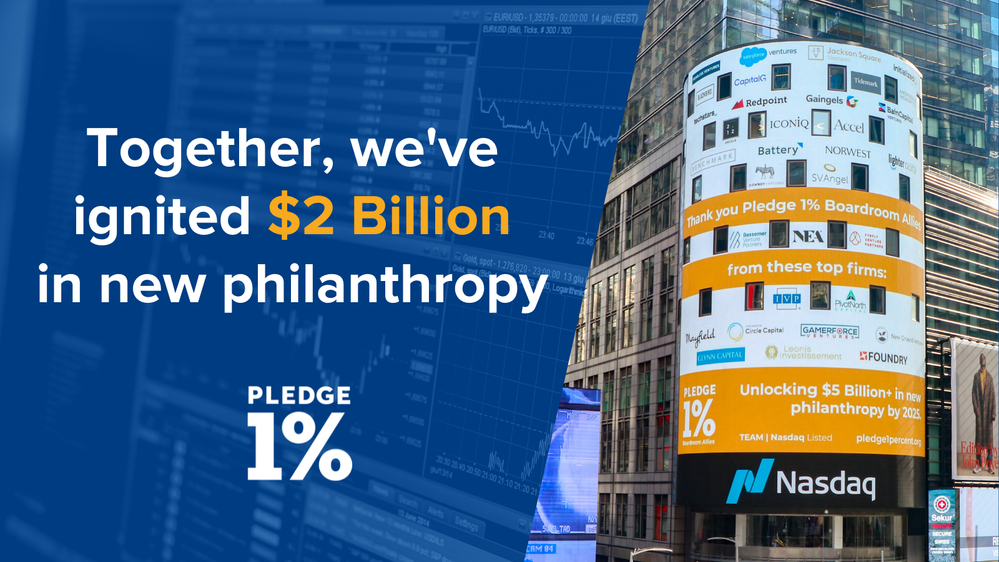
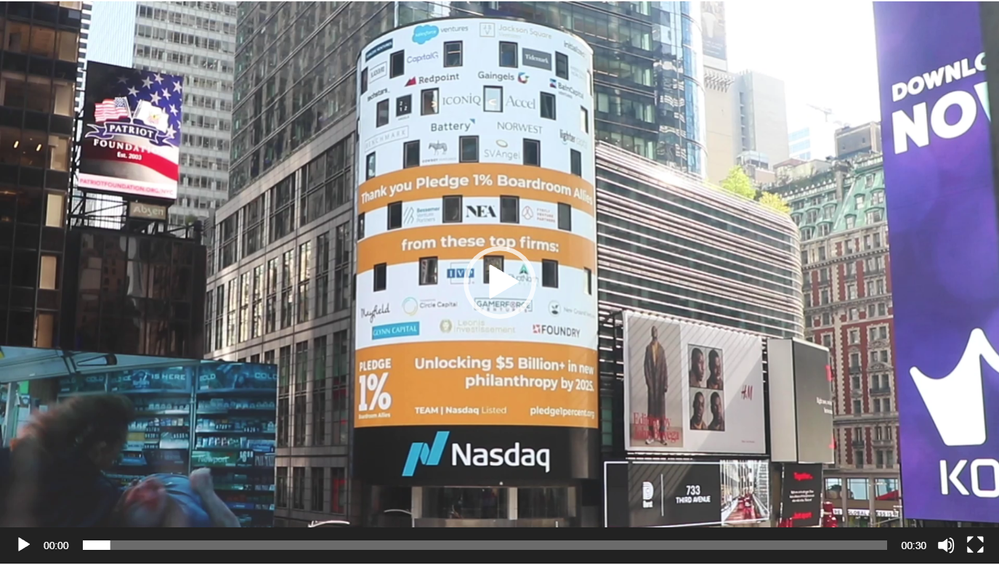
On the 25th & 26th of October, we celebrated reaching this milestone with our Pledge 1% Boardroom Allies, who were featured on the Nasdaq Tower. Scroll down below to see some of the day’s highlights!
Working closely with Boardroom Allies to help top companies set aside equity for social impact prior to liquidity events, Pledge 1% has doubled the $1 billion equity impact announced just four months ago, ensuring proceeds from a record-setting summer of IPO and market activity are earmarked for philanthropy. Pledge 1% ensures nonprofits benefit along with private markets, and is well on its way toward a goal of unlocking $5 billion in new philanthropy by 2025.
This momentum builds on more than $1 billion in philanthropy previously ignited by Pledge 1% industry leaders. Formalizing how executives and their teams can easily join the movement has dramatically accelerated impact. To learn more about the Boardroom Allies who helped us achieve this milestone achievement, click here to read the official press release.
Check out some of the day’s highlights and watch the reel below!
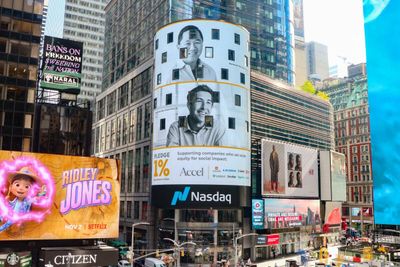 Richard Wong and Andrew Braccia of Accel
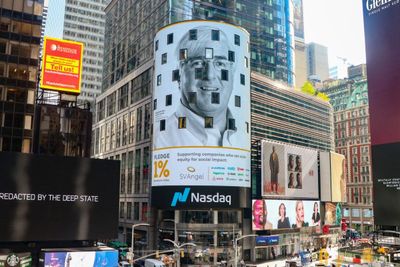 Ron Conway of SV Angel
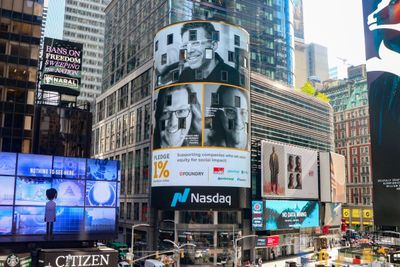 Seth Levine, Ryan McIntyre and Brad Feld of Foundry Group
Originally published at Inside Philanthropy. Written by Ade Adeniji.
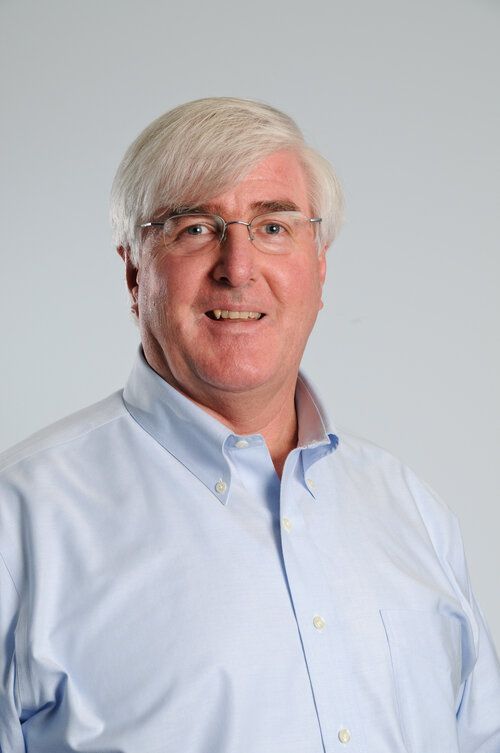 Fellow tech donor Marc Andreessen once called him “the human router.” Others call him the Godfather of Silicon Valley. Ron Conway, 70, has invested in hundreds of internet companies since the early 1990s, including PayPal, Google, Twitter and Airbnb. He founded SV Angel, the San Francisco-based seed fund, in 2009. But his Silicon Valley bona fides go way back to early positions at National Semiconductor Corporation and Altos Computer Systems in the 1970s and 1980s. Along the way, Conway has amassed a rolodex of allies in technology, politics and Hollywood. And he’s advised a number of celebrity figures—Kevin Durant, will.i.am and Ashton Kutcher among them.
Through the years, Conway has been a major donor to the University of California, San Francisco, including via a $40 million donation to the new 207,500-square-foot UCSF Ron Conway Family Gateway Medical Building at the UCSF Medical Center at Mission Bay. More recently, Conway helped organize an all-volunteer COVID Tech Task Force to increase coordination between technology companies and policymakers. And amid new calls for social justice and racial equity, he backs Slauson & Co, which aims to democratize access to entrepreneurship.
At the end of 2020, Conway and his wife Gayle signed the Giving Pledge. A driving force behind their decision to sign, he writes in the pledge letter, is to “encourage more tech founders to join and become role models for their generation.” He goes on, “I encourage founders to see the tipping point when they donate meaningful amounts of their net worth and begin the process of becoming ‘never-billionaires’ by donating their worth now and not later. And advise them not to let their money sit in a donor-advised fund. It’s much better to put it to work in philanthropy and see the good it does.”
I caught up with Conway by phone to ask him about his philanthropic approach and his thoughts on the broader philanthropic landscape in Silicon Valley. This conversation has been edited for clarity.
Tell me about the 1 % pledge and signing the Giving Pledge. Why have you chosen multiple ways to catalyze giving?
I spend vast amounts of time encouraging founders to begin thinking about philanthropy and to give back from the very beginning. The catalyst that I use for that is getting their company to sign up for Pledge 1%, which Marc Benioff of Salesforce started. It’s an effort to invite technology entrepreneurs and their companies to commit 1% of their time, product and pre-IPO equity to develop philanthropic programs at their companies. Each employee also uses 1% of their time on volunteer causes in their community. It’s a public pledge. (Inside Philanthropy covered the launch of Pledge 1% here.)
As the company gets bigger and the founder gets wealthy, or if they become a billionaire, then I pitch them on signing the Giving Pledge. That also places a marker in the ground that this founder is philanthropic. I later introduce them to the [confidential] “Conway philanthropy chart” to show founders how to pick philanthropic sectors they want to donate to and focus on.
By the way, the founders of these companies are not the only wealthy ones. Overall, there’s hundreds of people who become very wealthy from these IPOs. So when a founder says, ‘I’m going to give away 50% of my wealth,’ that sends a message to everyone else on their team who also made lots of money on the IPO that they should be generous and they should start donating money, too.
What do you find are some of the most attractive giving interests for Silicon Valley donors these days? And I’m seeing you using this “Never Billionaire” slogan.
Well, the Airbnb founders, because it’s synergistic with Airbnb, are donating millions for refugees. Many founders are very interested in aspects of healthcare and healthcare research. Others are interested in the education space. Really, it’s whatever floats their boat. I just encourage them.
As for the second part, part of what’s made Silicon Valley great, is that we’ve created all these philanthropists. But you can’t do it on your own. You need a mentor, you need somebody suggesting this to you. They just need a path, and I provide them a philanthropic path. And then they become role models themselves. It just feeds on itself and becomes an ecosystem.
What was the tipping point for you getting involved with social justice causes?
Oh, George Floyd, for sure. It was a huge wake-up call for me. I think racial equality, the only way to solve it is through economic prosperity. The only way to do that is to have more founders of color. Well, the only way to get more founders of color is to have venture capital firms invest in founders of color. So I interviewed 20 Black-led VC firms. I could only partner with one, but I’m helping them all, and make sure they become the next Andreessen Horowitz or Sequoia. I partnered with Slauson & Co in Los Angeles. I’ve helped them raise over $60 million. And they’re already actively investing in founders of color. We need to create, through venture capital funding, the next Google or Facebook-sized company, and we will do that with Slauson & Co. And those founders of color will build a diverse management team naturally.
When those companies go public, then the employees in that company will go out and start their own shops. Just like all the people who left Google and Facebook started companies. That’s how you build an ecosystem of racial equality and racial equity. It’s going to take time, but it’s about time we start. I talk to Ajay and Austin (Ajay Relan and Austin Clements, the managing partners of Slauson & Co) every single day.
You signed the Giving Pledge in the winter of 2020. I saw that interesting line about not really wanting to set up a personal foundation. What do you think are the advantages of this?
I like to give big and give fast. And I encourage that in all the founders that I work with. Once you get going, give big and give fast. The more you give and the faster you give it, the more you’re going to enjoy it. It feeds on itself with a sense of satisfaction and accomplishment. It’s hard to pull the trigger for the first time. What I’ve been doing lately is to get them to pull the trigger in a certain area. I just say, ‘You’re really interested in this, aren’t you? Let me make it easier. I’ll write a check for a million and you write a check for a million.’ I said, ‘Yes, I want to encourage you to get started. So I’m happy to invest a million of my philanthropic dollars to kickstart your philanthropic journey.’ I’ve done that three times in the last few weeks and it works every time. It just gives the founder confidence.
Is there any reason why you’ve conducted a lot of this giving under the radar?
Yeah, I don’t want to take the limelight from the founder. The founder will decide if they want to disclose the gift. If they disclose the gift, I’ll say I’m happy to disclose mine too, or I’ll keep quiet. I just want them to get used to donating and if they want to do it quietly, I’ll do mine quietly. I’ll follow the founders’ lead.
There’s a component of your work that involves connecting with athletes and celebrities and empowering some of their work. When did that start? And why?
That goes all the way back to the very early days of Google. will.i.am of the Black Eyed Peas visited Google. He talked about his goal of helping inner city youth and was just so passionate about it. I went up and introduced myself to him and told him he had a special calling to help inner city youth. I introduced him to Laurene Powell Jobs, who is the founder of College Track, which has a number of branches around the country that help inner city youth with college preparedness. Ten years ago, he started the College Track branch in Boyle Heights, where he grew up. Now, they’ve helped 1,400 kids get placed in college and they do another 400 every year.
And then Ashton Kutcher and I were doing some investing together. He said he wanted to find a charity that would be on his tombstone. Something that he would support for the rest of his life. We did some research and he said that human trafficking and child pornography are what he wants to solve. He went on to start Thorn: Digital Defenders of Children, which is is now a huge charity, stopping online child trafficking and pornography.
Kevin Durant—same type of story. He wanted to help his community in Washington, D.C. I introduced him to Laurene Powell Jobs, too. He’s in his second year into College Track in the D.C. area where he grew up. I [also] helped Goldie Hawn with her mental wellness cause.
So if a celebrity wants to do good, I want to be a facilitator of that. I want to make sure that they’re successful. So I introduce them to the right people who give them infrastructure.
What first got you involved with UCSF and why have you continued to support the school steadily through the years?
First philanthropy I ever did was at Ronald McDonald House at Stanford. We lived down there at the time. I was thankful my young kids were healthy. So I managed the first three capital campaigns for the Ronald McDonald House. When we became empty nesters, we moved to San Francisco and there were some folks in San Francisco I connected with. I was born in San Francisco. I was kind of moving back home, so to speak, and they said, ‘why don’t you get involved in UCSF?’ The largest donation we’ve ever made is at UCSF—$40 million.
Who was someone who helped you when you were coming up?
Well, Laurene Powell Jobs has been a real inspiration. will.i.am has been an inspiration. The people that I collaborate with, we all inspire each other. Chuck Feeney. He is a huge inspiration and he’s in the venture capital business. He came out of venture capital with Atlantic Philanthropies. Marc Benioff, massive inspiration. Benioff’s probably the first person that I had deep conversations with about the importance of philanthropy. We hosted founders at his home, evangelizing. You have to put a stake in the ground that your company’s going to be community-minded.
Originally posted: October 25th, 2021
Originally published in Businesswire.
Equity pledges from Pledge 1% companies like Remitly, Sprinklr, and Toast contribute to $2 billion benchmark in just four months
SAN FRANCISCO–(BUSINESS WIRE)–Pledge 1%, a global movement to inspire, educate, and empower all companies to leverage their assets for good, today announces $2 billion in new philanthropy has been unlocked for good since the launch of its CEO Equity Playbook in the summer of 2020. Working closely with Boardroom Allies to help top companies set aside equity for social impact prior to liquidity events, Pledge 1% has doubled the $1 billion equity impact announced just four months ago, ensuring proceeds from a record-setting summer of IPO and market activity are earmarked for philanthropy. Pledge 1% ensures nonprofits benefit along with private markets, and is well on its way toward a goal of unlocking $5 billion in new philanthropy by 2025.
“Remitly is grateful to be in a position to help model how companies think of their role in the broader ecosystem, and we’re humbled to be part of this important milestone,” said Matt Oppenheimer, Co-founder and CEO of Remitly. “Pledge 1% has helped provide tools we need to transform our philanthropic objectives into impact. Now, the funds we’ve dedicated to invest in the financial, economic, and social inclusion of immigrants and their families can grow in lockstep with our company’s success. We look forward to a future where committing equity for good is part of every IPO.”
After Atlassian, DocuSign, PagerDuty, Salesforce, Twilio, and other top companies found success weaving equity commitments into their overall philanthropic pledges, a coalition of CEOs and board members from these companies sat down with Pledge 1% leadership to develop the step-by-step CEO Equity Playbook that incorporates all the lessons they learned along the way. Formalizing how executives and their teams can easily join the movement has dramatically accelerated impact. In the first year after its publication (June 2020 through June 2021), Pledge 1% had already unlocked $1 billion in new philanthropy — a contribution that has now doubled in the four months since.
“It’s so encouraging to see these large, public companies commit to social change in a real and sustainable way,” said David Yuan, general partner at Tidemark, and Boardroom Ally as a director of Toast. “We are seeing this trend accelerate through Pledge 1%, and it’s thrilling to see the impact on the organizations and causes these companies support.”
“As a longtime supporter of Pledge 1%, it has been amazing to watch the movement ignite,” said Rich Wong, partner at Accel and Boardroom Ally. “Each time we go through the CEO Equity Playbook, it inspires another board member or executive at the table to take the pledge. The social impact is among the most inspiring parts of my job, and I imagine taking part will be essential for top VCs in years to come.”
Pledge 1%’s latest $1 billion milestone is the cumulative value of several types of corporate commitments, including:
- Increased market value (both private valuation and in public market performance) from companies who previously committed equity, such as Canva, Coinbase, and Unity.
- Over $800 million in new equity commitments from pre-IPO companies like BetterUp and Checkr and funds allocated via standout successful exits such as Remitly, Sprinklr, and Toast.
This momentum builds on more than $1 billion in philanthropy previously ignited by the Pledge 1% industry leaders whose equity pledges prior to the release of the playbook in 2020.
“There was no way we were going to build Toast, an organization whose purpose is to enrich the food experience for all, without a commitment to Toast.org, our philanthropic arm which focuses on solving critical food issues that impact communities across the nation,” said Chris Comparato, CEO of Toast. “I first learned about Pledge 1% from our co-founder and co-president Aman Narang long before talks started about our public debut. While social impact was already in our DNA, having the support of Pledge 1% and Boardroom Allies along on our path to IPO made it easy to set aside meaningful assets to fund these efforts for the long term. We are thrilled that our early performance as a public company can contribute to this huge step in the Pledge 1% movement.”
Pledge 1% hopes that the value of the equity Toast set aside for social impact will continue to grow with the success of the company. The estimated value of Coinbase’s equity commitment, for instance, has grown by roughly $65 million since Pledge 1%’s June announcement, in line with the increased value in its stock.
“The meaningful impact our Pledge 1% members and Boardroom Allies have made in such a short period of time underscores the power of the equity model,” said Amy Lesnick, Chief Executive and President of Pledge 1%. “Not only are more business leaders able to bring their values to life by setting aside pre-IPO stock for social impact, but also the dollar value of these commitments has the potential to grow exponentially as these companies succeed and their share price rises. We see today’s milestone as a major step toward a future where leveraging company assets for good is the industry standard.”
This milestone was achieved with the help of the following Boardroom Allies:
*Directly advised/supported and/or currently supporting portfolio company to set aside equity
| Name | Firm | Equity commitments within firm portfolio |
| Andrew Braccia* | Accel | Atlassian, Checkr, Code42, DocuSign, Lookout, PagerDuty, Slack, UiPath |
| Richard Wong* | Accel | Atlassian, Checkr, Code42, DocuSign, Lookout, PagerDuty, Slack, UiPath |
| John O’Farrell* | Andreessen Horowitz | Airbnb, Coinbase, DigitalOcean, Lookout, Okta, PagerDuty, Slack |
| Ajay Agarwal* | Bain Capital Ventures | AvidXchange, DocuSign, Gainsight, Justworks, SendGrid |
| Enrique Salem* | Bain Capital Ventures | AvidXchange, DocuSign, Gainsight, Justworks, SendGrid; individually serves on the board of Atlassian |
| Matt Harris* | Bain Capital Ventures | AvidXchange, DocuSign, Gainsight, Justworks, SendGrid |
| Chelsea Stoner | Battery Ventures | Coinbase, Gainsight, Olo, Sprinklr |
| Neeraj Agrawal* | Battery Ventures | Coinbase, Gainsight, Olo, Sprinklr |
| Roger Lee* | Battery Ventures | Coinbase, Gainsight, Olo, Sprinklr |
| Chetan Puttagunta | Benchmark | Upwork, Yelp, Zuora |
| Eric Vishria | Benchmark | Upwork, Yelp, Zuora |
| Miles Grimshaw | Benchmark | Upwork, Yelp, Zuora |
| Peter Fenton* | Benchmark | Upwork, Yelp, Zuora |
| Sarah Tavel | Benchmark | Upwork, Yelp, Zuora |
| Byron Deeter* | Bessemer Venture Partners | Auth0, Canva, DocuSign, Gainsight, Guild Education, PagerDuty, SendGrid, Toast, Twilio, Vlocity, Yelp |
| Ethan Kurzweil* | Bessemer Venture Partners | Auth0, Canva, DocuSign, Gainsight, Guild Education, PagerDuty, SendGrid, Toast, Twilio, Vlocity, Yelp |
| Kent Bennett* | Bessemer Venture Partners | Auth0, Canva, DocuSign, Gainsight, Guild Education, PagerDuty, SendGrid, Toast, Twilio, Vlocity, Yelp |
| Niki Scevak* | Blackbird Ventures | Canva |
| Laela Sturdy* | CapitalG | Airbnb, UiPath |
| Seth Miller | Fearless Ventures | Not publicly disclosed |
| Mike Jung | Founders Circle Capital | Airbnb, Auth0, DocuSign, Gainsight, Twilio |
| Brad Feld* | Foundry Group | AvidXchange, Glowforge, Rally Software, SendGrid, Xometry |
| Ryan Mcintyre* | Foundry Group | AvidXchange, Glowforge, Rally Software, SendGrid, Xometry |
| Seth Levine* | Foundry Group | AvidXchange, Glowforge, Rally Software, SendGrid, Xometry |
| Philipp Stauffer* | FYRFLY Venture Partners | Altoida, Fluorome, rready, SendGrid, Twilio |
| Julie Maples* | FYRFLY Venture Partners | Altoida, Fluorome, rready, SendGrid, Twilio |
| David Beatty | Gaingels | Not publicly disclosed |
| Scott Mosser | Gaingels | Not publicly disclosed |
| Lance Quek | Gamerforce Ventures | Not publicly disclosed |
| Charles W. Friedland | Glynn Capital | DocuSign, Okta, Slack, Zuora |
| David Glynn | Glynn Capital | DocuSign, Okta, Slack, Zuora |
| Jacob Ziemann | Glynn Capital | DocuSign, Okta, Slack, Zuora |
| Jacqueline Glynn | Glynn Capital | DocuSign, Okta, Slack, Zuora |
| John W. Glynn | Glynn Capital | DocuSign, Okta, Slack, Zuora |
| Kim Moore | Glynn Capital | DocuSign, Okta, Slack, Zuora |
| Scott Jordan | Glynn Capital | DocuSign, Okta, Slack, Zuora |
| Doug Pepper* | ICONIQ Capital | BetterUp, DocuSign, Guild Education, Pluralsight, Skilljar, Sprinklr |
| Alda Leu Dennis | Initialized Capital | Coinbase |
| Parul Singh | Initialized Capital | Coinbase |
| Brett Gibson | Initialized Capital | Coinbase |
| Garry Tan* | Initialized Capital | Coinbase |
| Jen Wolf | Initialized Capital | Coinbase |
| Kim Mai-Cutler | Initialized Capital | Coinbase |
| Somesh Dash | IVP | Checkr, Coinbase, Slack, UiPath |
| Pete Solvik* | Jackson Square Ventures | DocuSign, Upwork |
| Gabriel Jarrosson | Leonis Investissement | Not publicly disclosed |
| Melissa Widner | Lighter Capital | Not publicly disclosed |
| Rajeev Batra* | Mayfield Fund | Crunchbase, SmartRecruiters, Skilljar |
| Rishi Garg | Mayfield Fund | Crunchbase, SmartRecruiters, Skilljar |
| Tim Chang | Mayfield Fund | Crunchbase, SmartRecruiters, Skilljar |
| Peter Sonsini | New Enterprise Associates | Code42, Salesforce, Upwork |
| Rick Yang | New Enterprise Associates | Code42, Salesforce, Upwork |
| Zac Zeitlin | New Ground Ventures | Not publicly disclosed |
| Dave Zilberman | Norwest Venture Partners | Not publicly disclosed |
| Tim Connors* | PivotNorth Capital | Cloud Apartments, Stremium |
| Jeff Brody | Redpoint | Guild Education, Twilio, Zuora |
| Scott Raney* | Redpoint | Guild Education, Twilio, Zuora |
| Alex Kayyal | Salesforce Ventures | Auth0, BetterUp, Crunchbase, DocuSign, Gainsight, Guild Education, SmartRecruiters, Twilio, Vlocity |
| John Somorjai* | Salesforce Ventures | Auth0, BetterUp, Crunchbase, DocuSign, Gainsight, Guild Education, SmartRecruiters, Twilio, Vlocity |
| Ron Conway* | SV Angel | Airbnb, BetterUp, Coinbase, Crunchbase, Lookout, Okta, PagerDuty, Slack, Twilio, Upwork, Weebly |
| David Yuan* | Tidemark | Firm commitments not publicly disclosed; individually serves on the Board of Toast |
| David Cohen* | Techstars | DigitalOcean, Remitly, SendGrid, Skilljar, Twilio |
| Jason Seats | Techstars | DigitalOcean, Remitly, SendGrid, Skilljar, Twilio |
| Nicole Glaros | Techstars | DigitalOcean, Remitly, SendGrid, Skilljar, Twilio |
| Ben Orthlieb | 2.12 Angels | Not publicly disclosed |
To download Pledge 1%’s CEO Equity Playbook and Companion Guide for CFOs and GCs, visit pledge1percent.org/equityplaybook. To learn more about how to set aside social impact at your company or join this alliance of top VCs as a Boardroom Ally, email allies@pledge1percent.org or visit pledge1percent.org.
About Pledge 1%: Pledge 1% is a global movement that inspires, educates, and empowers every entrepreneur, company, and employee to be a force for good. Over 15,000 members in 100 countries around the world have used Pledge 1%’s flexible framework to ignite billions of dollars and hundreds of thousands of volunteer hours in new philanthropy. To learn more about Pledge 1%, and how your company can get involved, visit pledge1percent.org.
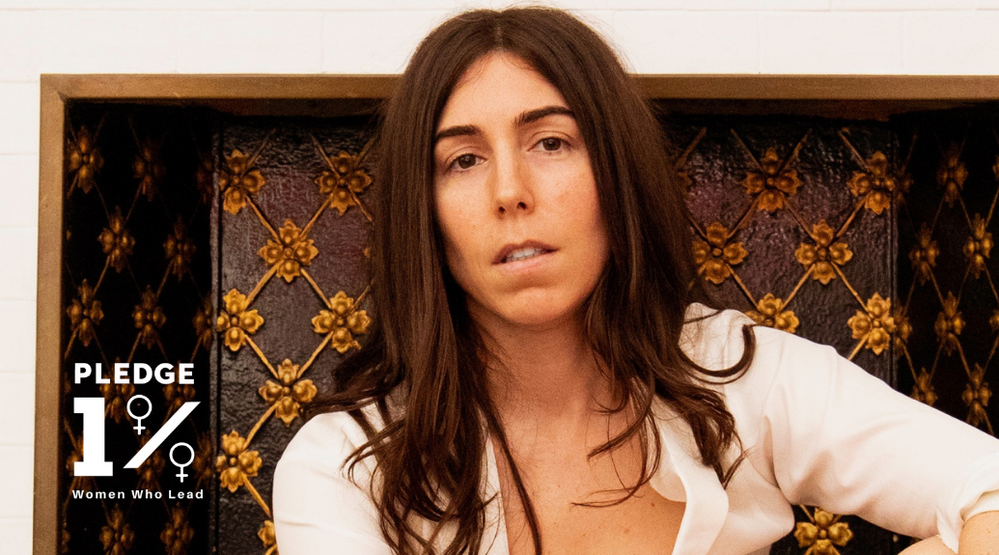
Pledge 1%’s #WomenWhoLead series celebrates female leaders who are paving the way for the next generation. While our featured leaders come from a variety of backgrounds and industries, they are united in their efforts to promote equality for all women in the workplace. We’ve asked them to share a bit about their journey to success, as well as lessons they’ve learned along the way.
What is your name and title?
Stephanie Benedetto, CEO & Founder at Queen of Raw.
Briefly (1-2 sentences) describe your current role.
Queen of Raw is a global marketplace equipped with AI-powered supply chain tools to eliminate and monetize textile waste and tracking. It also analyzes data to keep unused raw materials out of landfills and turn pollution into profit.
How did you get here? Please share any quick stories from past work experiences.
In 1896, my great-grandfather came over on a ship from Austria and landed at Ellis Island. After settling into the Lower East Side, he had to make a living for his family as an immigrant chasing the American Dream. So he started working with his hands. He would find materials and supplies nearby consisting of old fabrics and materials other immigrants had brought with them on the ships but weren’t using anymore. He’d create beautiful fashion garments with minimal waste and minimal toxins because his bottom dollar depended on it. He sold finished goods to local customers, and it was a very successful, profitable, and sustainable business. I still wear many of his fur coats today.
Of course, today’s supply chains are much more complicated. Hundreds of steps involving millions of people across the globe and metric; tons of water, chemicals, crops, and oil are used in the process. But given where we are today, with trade wars and pandemic disruption, how can we use technology to get back to what my great-grandfather did? He didn’t talk about it in terms of sustainability, but it absolutely made sense for people, for the planet, and for profit!
In your opinion, what’s the #1 decision or move you’ve made that has helped advance your career?
Women need to become key decision makers in their organizations in order to bring about change. We know many women leave work for a variety of reasons, including having children. I launched my business at the same time as I had my first child. This has only made my personal and professional life stronger. I am working to make a difference in the world not just for myself anymore but for my children and future grandchildren. Because of this mission, I am even more focused and passionate, and so, I find the strength to meet any challenge.
What is the most important lesson you’ve learned this past year?
According to research, women’s choices impact up to 85% of purchasing decisions. By some analyses, they account for $4.3 trillion of total U.S. consumer spending of $5.9 trillion, making women the largest single economic force not just in the U.S., but in the world! That is power. Having women not just on staff, but in positions of leadership in the tech industry is a huge advantage to businesses.
What’s the number one challenge you face as a woman in your industry?
Being active in organizations that promote female entrepreneurs and women in tech is important. But it takes money to make money. We need more women to receive venture capital funding. According to PitchBook, investments in women-led companies this year are on pace to be the worst since 2017. This has to change.
What advice do you have for women who are just starting their career?
Don’t be afraid! Take risks, put your ideas out there, and test your solution in the market — these are important steps to being able to improve your offering and iterate your product effectively. Another thing no one tells you: Don’t be afraid to move into a crowded market space with many competitors. You can learn from the mistakes of those who came before you, do it better than them, command their market share, and be the last player in the market who really dominates!
What is one thing companies can do, big or small, to help create an environment that advances women into leadership positions?
Diversity means more than just gender. Other facets include race, ability, age, and orientation. To have diversity evolve in tech in a meaningful way, we can’t have organizations just publish statistics and hire people to check a box. Companies need to engage in meaningful conversations around these issues to see how they can have a lasting impact on their businesses. How can we provide mentorship and nurture our talent as they rise up in the ranks? How can we educate those who may not be aware of diversity issues and include them in the conversation? These are just some of the questions we should be asking.
Is there a cause that is particularly close to you? If so, why this cause and how did you get involved?
We are a founding member of the New York Circular City Initiative. It includes representatives from the mayor’s office, city agencies, multinational corporations, foundations, startups, and academic institutions to reimagine New York. How can we create a city where no waste is sent to landfill, environmental pollution is minimized, and thousands of good jobs are created through the intelligent use of products and raw materials? Our white paper answers this very question while supporting COVID-19 recovery efforts.
What does your Pledge 1% impact program mean to you?
We have helped 250,000+ users save millions of dollars—and more than a billion gallons of water. That’s enough clean water for 1.43 million people to drink for 3 years. Never doubt that the actions that you take can have a massive impact and change the world!
What’s been the one (or two!) things that have helped you navigate this past year? Any tips or tricks to dealing with remote work?
It’s interesting to look back at 2008 and talk about what we’re going through right now. I was on Wall Street as a corporate attorney and in 2008, of course, the market crashed. It got very dark – talk about seeing the height of waste, greed, and excess. I took it as my opportunity to re-evaluate what I was doing and how I could best serve society and the future. Now, again, we’re in this period of downturn and uncertainty and in some ways, darkness. How can we find the light, build opportunities, new business models, and new visions of the future?