We are excited to announce today that we have joined Pledge 1%, a global movement to create a new normal for companies of all sizes and stages to have a positive social impact through their business. Maven Mule is joining over 15,000 companies around the world who have committed to Pledge 1% of either their product, profit, equity, and/or staff time to whatever charity of their choosing. We are proud to announce our commitment to donate 1% of time, product and profit to several good cause NGOs and nonprofits.
Giving back to the community is very important to Maven Mule, because we believe in co-creating a better future for everyone.
Our profit donations in the past have gone to the UNESCO Milky Way fundraising event for special needs children, to the government budget and non-profit organizations helping the families whose homes have been destroyed by the earthquake in Croatia, sponsoring a student learning program where we mentored the students and helped them develop professionally. An NGO Naš Hajduk, which is a football fans association, gets a significant discount on our services and gets our product Maven Documents free of charge. We’re also a sponsor of a Five-a-side football League of one of the colleges in Croatia.
Apart from sponsorships, donations and our time, we have made a free tool – Maven Tools, which is available as a Chrome extension. We wanted to contribute to the Salesforce community as well, and make life easier for Salesforce technical consultants and developers.
Our other two products – Maven Documents and Maven Integration Platform are available at a discount for nonprofits and NGOs.
[Quote from the CEO, Dragan Vujnović]
We are excited to hold a Pledge 1% badge as a multiple pledger, as we’re dedicated to giving away our time, our product and our profits. By sharing this badge, we’re further spreading the idea of giving back as well as aligning Maven Mule with Pledge 1% values of making the world a better place.
Maven Mule is proud to join the Pledge 1% community and we encourage other companies to take the pledge and leverage your business as a force for good.
ABOUT MAVEN MULE
We’re a Consulting and ISV Salesforce partner. Maven Mule professionals bring disruptive innovation and technology to serve our clients’ needs, and deliver successful value-driven solutions and products.
ABOUT PLEDGE 1%
Pledge 1% is a global movement that inspires, educates, and empowers every entrepreneur, company, and employee to be a force for good. Over 12,000 members in 100+ countries have used Pledge 1%’s flexible framework to ignite half a billion dollars in new philanthropy. To learn more about Pledge 1% and to take the pledge visit www.pledge1percent.org.
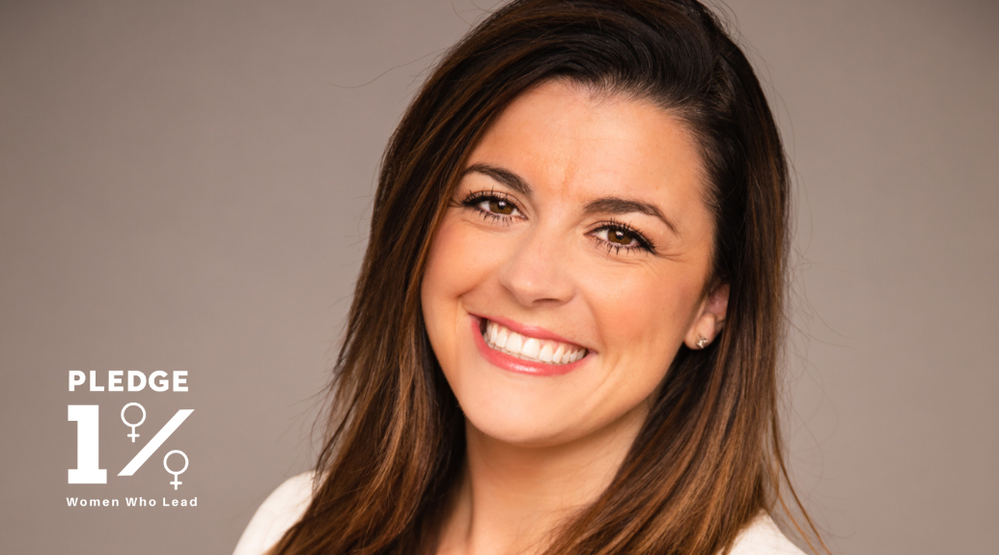
Pledge 1%’s #WomenWhoLead series celebrates female leaders who are paving the way for the next generation. While our featured leaders come from a variety of backgrounds and industries, they are united in their efforts to promote equality for all women in the workplace. We’ve asked them to share a bit about their journey to success, as well as lessons they’ve learned along the way.
What is your name and title?
Melanie Fellay, CEO at Spekit Inc.
Briefly (1-2 sentences) describe your current role.
As the CEO & Co-founder of Spekit, I’m responsible for driving the company vision, ensuring we hire the right team, cultivating our culture and values, and leading the company through each unique phase of evolution and growth.
How did you get here? Please share any quick stories from past work experiences.
I’ve always worked in fast-paced, high-growth business environments where change is constant. In a previous role, I managed the implementation of Salesforce and felt the pain and struggle of technology adoption and training first-hand. Despite having spent thousands of dollars on implementing this solution, employees were reluctant to use the tool in the right way. Our training and documentation were scattered across PDFs, PowerPoints and Google Docs, making it difficult for our team to get the answers they needed, when they needed them.
I asked myself, “what if there was a way to consolidate all of the information our team needed to be successful within their roles and make it instantly accessible, right where they’re working?” Thus, the idea of Spekit was born.
I cornered Zari Zahra (former co-worker and now, my co-founder and Spekit’s Head of Product & Technology) in an elevator to pitch her the idea, and shortly after we set out to build Spekit!
In your opinion, what’s the #1 decision or move you’ve made that has helped advance your career?
It was really the decision to join a startup instead of pursuing a career at a more traditional company that helped to advance my career. Startups are inherently challenging. You need to learn multiple aspects of the business at a rapid pace and learn how to build a company from the ground up. This opportunity, combined with my natural curiosity, really helped to accelerate my growth in a short amount of time. I was never afraid to raise my hand, address problems outside of my scope of work, and speak up when I felt it was necessary. This allowed me to learn every aspect of growing a business and strengthened my confidence which helped to propel my career to the next level.
What is the most important lesson you’ve learned this past year?
This year the biggest lesson was the true definition of agility. As a first-time founder, I never imagined being faced with the challenges that shook the world in 2020 and continue to shift our landscape. Before 2020, agility for us was quickly seizing new opportunities or turning around new product features in record time. During 2020, it wasn’t about taking on the new opportunities thrown at us, but instead identifying new ones that would help our customers adapt to these challenging times.
What’s the number one challenge you face as a woman in your industry?
I think the greatest challenge women face is finding mentors that have been down the same road as them. As an entrepreneur in the tech space, there are thousands of men who have started companies, but very few women. In doing our research on companies in the LMS, Adoption, and Enablement space, only 3 companies out of 178 have female co-founders. That’s less than 2%! It can feel isolating at times and in many ways, you have to pave your own path.
Do you have any mentors? What does mentorship mean to you?
I’ve been lucky enough to find incredible mentors along the way, but it wasn’t easy. It’s taken years and a significant amount of “putting myself out there” to identify the right mentors who would help to support and guide my growth. I believe that mentorship is a crucial component of success and have made myself available as a mentor to other female founders to help pay it forward along the way.
What advice do you have for women who are just starting their career?
Confidence is everything. When just starting your career, I’d recommend taking a deep, long look at who you truly are as an individual. What makes you unique? What do you stand for? Write it out and bring that genuine version of yourself to the world.
Initially, I was self-conscious about aspects like my age and gender. Now, I focus on how I can bring my most authentic self to every interaction I have. At the end of the day, people connect with people. It’s not about your company or your product, it’s about you. Figure that out and you’ll have the world ahead of you!
What is one thing companies can do, big or small, to help create an environment that advances women into leadership positions?
At Spekit, we learned early on that you don’t have to be a giant company to make a giant impact. For example, in 2019 we learned that less than 1% of the businesses on Salesforce’s AppExchange were led by women.
At the time, we were a small seed stage company and even so, we were determined to do something to change that. Being a female-founded company on the AppExchange, we personally knew the benefits of having a booth at Salesforce’s Dreamforce conference. It’s an opportunity for exposure of your brand and product to a huge audience and for us, really propelled our growth at an early stage.
However, it’s expensive and as we all know, most female-founded companies do not receive the venture backing required to participate in an event like this.
So, we partnered with a few other smaller, female-founded companies in the AppExchange ecosystem and launched our own Diversity at Dreamforce scholarship. As a result, we were able to send an incredible company to Dreamforce that wouldn’t have had the opportunity otherwise. They were able to meet potential customers, drive the pipeline and get incredible brand exposure.
The point being, there are opportunities all around you to support women if you look. Seek them out and you’ll be surprised how even the smallest efforts can have an incredible impact.
What is one thing you hope to accomplish in the next year?
In 2021 my one goal is growth. First, the growth of product and customer base. It’s really exciting to have such an engaged and enthusiastic customer base. We’ve got an exciting set of upcoming product releases that will only further build that enthusiasm and connection with our customers. And, then the growth of our team. We have an incredible team already that I’m really excited to work with (and more new hires on the way). It will be incredible to see where we are at the end of 2021 and how our team has expanded.
Is there a cause that is particularly close to you? If so, why this cause and how did you get involved?
Public education is particularly important to me. I think education is at the core of elevating society and creating opportunities. However, there’s a lot that’s broken with the public education system today. One day I hope to take my passion for learning and operations to help drive change in public education. In the US, the assumption is everyone goes to college. Going to college equals creating a massive debt which automatically sets people up for failure. I grew up in the Swiss educational system, and from an early age, I learned that it’s about finding your strengths and going into apprenticeship programs. These programs set individuals up for success (no, not everyone needs to be on a path to become a doctor or lawyer — carpentry is a great career) and reduces debt because people make money much earlier in their careers.
When did your company join Pledge 1%? What does your impact program mean to you?
Our company joined Pledge 1% in June of 2020. To us, it means that we are committed as an organization to elevate underrepresented minorities in technology through awareness, partnerships, and our scholarships to do our part in changing the status quo. Being a part of the Pledge 1% community gives us access to other organizations who are sharing their stories, lessons, and achievements and serves as an inspiration for our own progress.
What do you like to do outside of the office? Any interesting (or unique) habits or interests?
I’m a big live music fan! In Colorado, we’re lucky to have one of the best music venues, Red Rocks, where you can enjoy some incredible music under the stars. I’m also the proud new momma of a Mini Goldendoodle puppy named Rufus!
Are you reading/listening to anything interesting at the moment? Please share your most recent favorite book or podcast!
Brene Brown – her new podcast, specifically the episode with Melinda Gates was eye-opening.
What’s been the one (or two!) things that have helped you navigate this past year? Any tips or tricks to dealing with remote work?
The balance between productivity and mental/physical wellbeing: There’s an old quote that I like: “You’ve got to slow down to move fast.” There’s this current epidemic of “busy-ness” in America, it’s almost a social currency to discuss at the start of every conversation. But I’m a big believer in the idea that productivity falls off a cliff after a certain time of the day — we are humans, not machines, and I think it’s so much wiser to focus on “working smart” not just “working more”. This last year I’ve focused on being strategic, thoughtful, and deliberate.
New techniques for keeping my remote team engaged: Videos on during conference calls! It’s been said before but we need to say it again — video calls allow us to be personable and have the full human interaction. Also, there’s a lot of new tools we’ve seen like Hopin for virtual events or Icebreaker for games that help to recreate that fun in-person experience for our team.
Originally published at Australian Financial Review. Written by Michael Bailey.
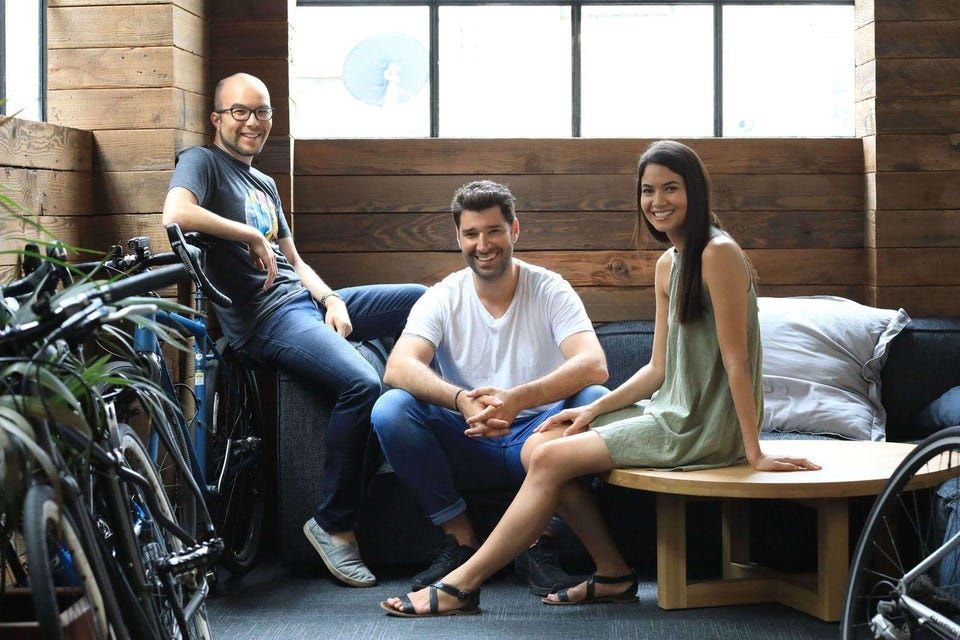
The married couple behind Canva are worth $16.5 billion after the visual communication platform hit a $55 billion valuation on Wednesday, but Melanie Perkins and Cliff Obrecht plan to give almost all of it away.
Canva, which employs 1200 people in Sydney’s Surry Hills and 800 more around the world, hit a $US40 billion ($55 billion) valuation, on par with iron ore giant Fortescue, after it raised $US200 million from selling new shares to investors.
As flagged by The Australian Financial Review’s Street Talk column in July, the raise – led by T. Rowe Price and joined by returning local investors Blackbird Ventures and AirTree Ventures among others – is more than double the $20 billion valuation which Canva announced after a $71 million equity sale in April.
Perkins and Obrecht, who married earlier this year after COVID-19 scuttled planned 2020 nuptials, revealed they continue to own 30 per cent of Canva – a paper wealth of $16.5 billion which would place them seventh on the Financial Review Rich List were it to be published today.
However, the couple have pledged to give the “vast majority” of their wealth away, starting with a $10 million southern African pilot program in partnership with GiveDirectly, in which cash will go straight to impoverished people in the form of mobile phone SIM cards.
“It has felt strange when people refer to us as ‘billionaires’ as it has never felt like our money, we’ve always felt that we’re purely custodians of it,” Perkins said.
“We have this wildly optimistic belief that there is enough money, goodwill, and good intentions in the world to solve most of the world’s problems, and we want to spend our lifetime working towards that.”
At a virtual press conference on Wednesday, Perkins explained why she and Obrecht would not wait until they cashed out on an exit from Canva to start giving.
“We believe Step 1 – that is, the creation of value by our team and community at Canva – fuels Step 2, which is doing good in the world,” she said.
Canva is already part of the ‘1% Pledge’ in which businesses commit a fraction of their profits and time to charitable causes, and Perkins said the “pride and motivation” she had seen it foster among staff and customers created a virtuous circle.
War chest to fuel growth soon
Obrecht also confirmed that a cash-out through a listing was not on the horizon.
He revealed that Canva had not spent any of the capital it had raised since 2015 – so did not need to go to the public markets for more – and had also been able to create liquidity events for early investors and staff, by swapping shares off-market to new investors.
Obrecht foreshadowed that Canva – which has made six acquisitions – would soon begin drawing down on its war chest to fuel growth, revealing that 1000 people had been hired in the past 12 months.
“We’re only 1 per cent of the way there,” Perkins said.
While the latest raise is all new shares, the $71 million raising in April was the latest of several liquidity opportunities the firm has provided, which in future will also allow Perkins and Obrecht to gradually draw down to fund their philanthropy.
Perkins said the couple caught the giving bug on a trip to India several years ago, when they met a man “working as hard as he possibly could”, yet who earned only 30 rupees a day – less than $1 – and was homeless, sleeping in a computer cafe.
“Even without Canva, just if I was in a normal job, I’d earn many times that,” she said. “We wanted to use our privileged opportunity to help others like him.”
Canva now claims to have over 60 million monthly active users, up from 55 million at its last raise, and said it was on track to exceed $US1 billion in annualised revenue by the end of 2021. The company has been cashflow positive since 2017.
It claimed there are now more than 500,000 paying teams subscribed to Canva, including from companies like American Airlines, Zoom, SkyScanner, Intel, Salesforce, PayPal, Live Nation and Marriott International.
“Visual communication has emerged as a universal need for teams of every size across almost every industry,” said Perkins, whom with Obrecht launched the start-up in her mother’s Perth living room in 2012.
“People are now using Canva for everything from launching startups to raising awareness for nonprofits, supporting remote learning, collaborating in distributed teams, and managing global enterprise brands at scale.”
Canva said its community had now created more than 7 billion designs since launch, claiming 120 new designs are created every second using Canva’s library of over 800,000 templates and over 100 million design ingredients including photos, videos, stickers, audio tracks, and illustrations.
Over 2 million orders have been received for its printing service, which sends customers their designs on T-shirts, coffee mugs and the like.
Most valuable company
Canva’s new valuation means Canva is possibly Australia’s most valuable unlisted company, with only two companies from the lower-multiple iron ore and manufacturing industries – Hancock Prospecting (at $15.8 billion revenue in 2020-21) and Anthony Pratt’s box-making Visy and Pratt Industries empire ($9 billion) providing serious competition.
Canva is however technically an American company, switching its domicile to Delaware as serious venture capital began flooding in some years ago.
This latest raise will elevate Canva’s founders, who live in Australia and are citizens, further up the Financial Review Rich List.
It is understood that the founding share held by Perkins and Obrecht, alongside that of technical co-founder Cameron Adams, plus a roughly 5 to 10 per cent allocation for an all-employee share scheme, together represents around half of Canva’s equity.
Canva’s success has delivered huge returns to its early Australian backers, some of which Blackbird Ventures has already liquidated in a $100 million return to its limited partners in late 2019.
One of those Blackbird investors, Rayn Ong, put the enormity of Canva’s achievement in context on Wednesday morning.
“I have made over 100 direct angel investments,” he tweeted. “But my indirect investment in Canva is now worth more than everything else combined.”
One follower asked Ong why, after at least fourteen rounds of fundraising, Canva continues to seek capital it doesn’t desperately need.
“When the demand is way greater than the supply, why not?” Ong replied.
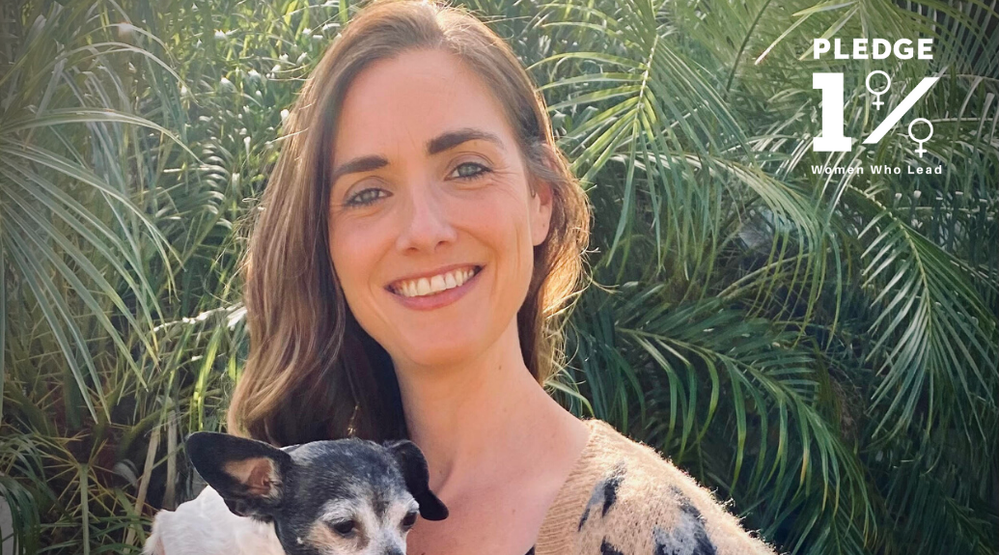
Pledge 1%’s #WomenWhoLead series celebrates female leaders who are paving the way for the next generation. While our featured leaders come from a variety of backgrounds and industries, they are united in their efforts to promote equality for all women in the workplace. We’ve asked them to share a bit about their journey to success, as well as lessons they’ve learned along the way.
What is your name and title?
Pamela Wickersham, VP, Product & Engineering at Litify.
Briefly (1-2 sentences) describe your current role.
In my role I’m responsible for setting product strategy and roadmaps for all of our product lines at Litify. This requires working closely with our customers, partners and internal team to understand what will make customers happy but also propel our business forward at the same time. The best part is working with the product managers, user experience designers, engineers and quality assurance teams to bring those ideas to life and release amazing products.
How did you get here? Please share any quick stories from past work experiences.
I’ve worked in cloud tech for the past 12 years and more specifically with document management/generation platforms, so when I met the Litify team and knew they wanted to invest in creating a new document product line for legal it was the perfect fit. My experience with writing code, and then leading implementation teams and working directly with customers and seeing the problems and frustrations firsthand led to being able to create a new piece of software that could address pain points and work the way the legal industry needed it to.
In your opinion, what’s the #1 decision or move you’ve made that has helped advance your career?
Early on as a software engineer I had a choice of the next feature I was going to work on. It was between a ticket for a new document action or to learn Salesforce and write apex to create the first integration to our platform and package it for the app exchange. Everyone else was avoiding the Salesforce tickets so eventually, I grabbed them all and decided to learn something new and get it done. Our company pivoted to focus solely the majority of our sales effort on the Salesforce ecosystem 6 months later and I was the only person that knew anything about the platform and integration and it catapulted my career into an upward direction that I’ll never forget. All these years later I’m still working with Salesforce and now leading the team that builds out of software that runs entirely on the Salesforce platform. Definitely happy I took those tickets over a decade ago.
What is the most important lesson you’ve learned this past year?
Would have to be that flexibility is key to the success of a company, team and individual. So many curveballs lobbed our way as a whole this past year and almost every decision that we made before the pandemic had to be re-evaluated and maybe even completely halted. While it was a year of making difficult decisions, some much easier than others, the way we got through it as a company and team was to allow ourselves to make a decision and then if it wasn’t the right one, change it. It’s painful to start on a product and abandon it or restart it later with a different objective but if it’s right for the company and the market then it’s what we needed to do. Those that understood and were also flexible and patient were able to react with grace and poise better than others. It’s hard to be flexible but it’s led to better product, better outcomes and us becoming a better team.
What’s the number one challenge you face as a woman in your industry?
Early on and sometimes even now, I still think the challenge is not being heard. I learned pretty quickly that I wasn’t going to be asked for my opinion and waiting patiently for my turn to speak wasn’t going to get it done. I had to speak up, maybe even speak over and demand the attention of the room to get equal time in a conversation. Adding some humor goes a long way. I am often the only woman in a room or on a team and have tried to turn that into a strength, knowing I often bring a different perspective and have earned my spot at the table. I’m lucky to be with a team now where I’m just seen as part of the team and a valued member of that team, it’s one thing that drew me to Litify and continues to impress me.
Do you have any mentors? What does mentorship mean to you?
I consider the past CEO I worked for as a mentor because he taught me so many things and I didn’t even realize it at the time. I thought I’m an engineer, why do I need to know our sales targets and other “business” data, and he changed my mind and grew my business sense and other softer skills in ways that have benefited my career so much. He also taught me the importance of making sure everyone feels important and heard. He had this way of making everyone in the room shine a bit more because he took the time to get to know something about them, always remembered everyone’s names and looked for a way to include them in the conversation. He’s an amazing leader and I’m grateful to have spent so much time with him.
What advice do you have for women who are just starting their career?
Don’t be afraid to put yourself out there and try something. So many times I thought I’m not quite qualified enough for that, or there’s no way I’ll get that job. I talked myself out of something before I even applied or started. I also saw male counterparts going after those opportunities with less experience and fewer qualifications and going well and realized that I had to throw my hat in the ring and be bolder. Not being afraid to fail and feeling happy that I tried became my new way of looking at things. Go after what you want, don’t self-doubt, don’t let others talk you out of it, you’re a big deal, you’re amazing, they’d be lucky to have you.
What is one thing companies can do, big or small, to help create an environment that advances women into leadership positions?
I would suggest making sure that female candidates are always included and the team evaluating these candidates is also diverse. Many times I see a pool of all male applicants and an all male hiring team. We have to remember to be more inclusive at the top of the funnel to expect any change to occur. In my experience women also want to be able to see women on the leadership team at a company to know it’s possible for them. It starts with one and from there the change is already occurring.
What is one thing you hope to accomplish in the next year?
I am doubling the size of my team next year, and while more product and faster releases are an expected outcome, I’ll know we’re succeeding or not by how the team is working together. I would like to promote from within, see new leaders emerge and watch those leaders take over. When I see the team taking initiative, working together, motivating each other, challenging ideas and answers while also lifting each other up, the rest of the product goals just fall into place. I hope to foster a team environment where this is possible and everyone feels comfortable, understood, heard and valued.
Is there a cause that is particularly close to you? If so, why this cause and how did you get involved?
Encouraging more women to go into tech and/or write code. I need to get involved directly in an organization again but love talking to anyone considering that type of role and being a positive influence on that decision. I think that women tend to talk themselves out of things before trying so just being there to say it’s possible, you can do it, and look what a career in tech can lead to is impactful and I hope to do more of it.
When did your company join Pledge 1%? What does your impact program mean to you?
We joined in October of 2019. It has helped us maintain our focus on giving back within our local communities and continuing our own to push our .org efforts within Litify. More details on that program here.
What do you like to do outside of the office? Any interesting (or unique) habits or interests?
I’ve always been into running and have completed a couple of marathons but have more recently started attending a mega reformer pilates class that I absolutely love, no better way to start the day than with a good workout and then immediately after coffee. On the weekends, that turns into hours of beach volleyball to enjoy the beautiful Miami weather.
Are you reading/listening to anything interesting at the moment? Please share your most recent favorite book or podcast!
I have been tearing through all of Margaret Atwood‘s books lately. Specifically the Oryx and Crake trilogy, odd timing with what’s going on in the world but a great read.
What’s been the one (or two!) things that have helped you navigate this past year? Any tips or tricks to dealing with remote work?
I didn’t like working remotely at all before this year, I found it distracting and less engaging at first. I felt the same way last March but then switched it up and realized how important a routine is. I make sure I wake up around the same time as before, get a workout in and get ready for the day like I was heading into the office and then go out to grab a coffee and head back to start my workday. I also like making sure that my camera is on for most if not all meetings to get that personal interaction with my team. I know it’s not for everyone but seeing someone’s face vs a phone call helps me feel more connected. Also, being home with my dog is a nice bonus and I love getting to steal a moment with her to give me a little boost of energy.
Originally published at Tech.mn.
With our newest $55 million Fund III, we are thrilled to announce Matchstick Ventures will continue our investments in pre-seed and seed-stage technology startups with a connection to the Rockies and the North regions of the United States.
Over the last six years, we have invested in over 100 companies and watched the tremendous growth and interest in supporting these regions. In Colorado, investors have already committed $2.6 billion across 168 rounds through mid 2021, more than any full year prior to 2019 and matching what was raised in 2020. The North region is also seeing incredible growth and interest, showing the strength of the entrepreneurs in the market and the interest from investors.
With the close of Fund III, we will continue our investments in software-centric companies, with a focus on pre-seed and seed rounds for companies with a connection to the Rockies and North, such as being based here, a founder here, customer relationships, or a network in these regions.
As our largest fund to date, we will also have more flexibility to write checks between $500,000 and $1.5 million in each company, both leading rounds and also working as a helpful syndication partner. We will always choose the vision and ambition of the entrepreneurs we work with over a specific industry or vertical, and look forward to finding new breakout companies to add to our list, which currently includes:
- Soona – creating fast casual content for ecommerce brands (raised $10.2M Series A from Union Square Ventures)
- Ordermark – powering online ordering for restaurants and ghost kitchens (raised $120M from Softbank)
- Inspectorio – running critical compliance infrastructure for the global supply chain (raised $10M Series A from Techstars)
- Branch – providing accelerated payments to workers (raised $42M Series B from Addition Partners)
- Fiveable – modernizing remote education communities
- Spekit – streamlining employee training and onboarding (raised $12.2M Series A from Foundry Group)
- Parallax – helping service employees stage engaged and accounts profitable (raised $7M Series A from Grotech)
- Cured – enabling healthcare systems to better engage users
- Airspace Link – making drones safer for operators and communities (raised $10M Series A from Altos Ventures)
- and many more!
Beyond just offering funding, as part of Fund III we are also excited to expand our community around the fund and our founders. Much like what we’ve developed at Techstars, we believe that mentorship, connections and access to amazing people can help startups make more progress, faster.
That’s why we are also announcing the launch the Matchstick Strikers, a network of amazing local and national leaders to help companies in the following areas:
- Creating community so our founders have a big network to rely on for help and support
- Finding and attracting great talent
- Solving key problems through hands-on mentorship from experienced operators and leaders
- Connecting with more customers through a network who will facilitate introductions and help our portfolio companies get in front of the right people, partners, and potential customers
- Accessing additional capital through an organized network of co-investors who are specifically interested in investing in these geographic markets and providing additional capital when needed
- Creating world-class cultures and cultivating leadership through an emphasis on personal growth as a catalyst to professional success via coaching
- Adding diversity and focusing on sustainability through resources and connections to help companies understand how diversity and sustainability show up in their company and how they can help to meet their goals
To facilitate this network and help our portfolio companies navigate these new resources and others across our community, we will also be bringing on a Head of Network.
Beyond their financial success, we are also proud that in our last fund 31% of our portfolio companies are impact companies, companies that we believe will generate a measurable, beneficial social or environmental impact alongside financial returns. 54% of our companies are led by at least one underrepresented founder, 31% of our companies have a female founder, 37% of our companies have a non-white founder, and 14% of our companies have a Black founder. We share this data to express pride in our history of working with underrepresented populations, and to ensure they feel comfortable engaging with us as we continue our work with Fund III. We are also proud to have joined Pledge 1% with this Fund and will be donating 1% of our returns to charities through the Pledge 1% organization.
We know we couldn’t have done any of this without you, our community.
We are incredibly grateful to Foundry Group for their continued backing with this fund, as well as a host of incredible institutional and individual limited partners, many of whom call the Rockies and the North home. And the Techstars network, which continues to be a key relationship for us. We appreciate your support and involvement.
We also thank the many founders who have trusted us as a partner on your journey already, and our friends and family who support us on our mission of helping founders.
Lastly, we thank our startup communities in the Rockies and North for your inspiring, positive, and ambitious attitudes, big dreams, and interest in improving our corner of the world.
We’re looking for ambitious founders with novel ideas and who move fast. If that is you, and you have a connection to the Rockies or North regions of the US, we want to hear from you. Please visit matchstickventures.com or reach us on Twitter @MatchstickVC, @NattyZ, @rbroshar.
If you are an investor interested in co-investing in these markets with us at Seed or Series A, please let us know so we can add you to our list of co-investors.
If you are a leader with startup experience and are interested in applying to be part of the Matchstick Strikers, let us know.
Originally posted on: September 20th, 2021
We have joined Pledge 1%, a global movement to create a new normal for companies of all sizes and stages to have a positive social impact through their business. We are proud to announce our commitment to donate 1% of our staff time to several initiatives in Uruguay.
One of our pillars is to help people grow and thrive with Salesforce and technology. Our staff will lead initiatives to help reduce the gender gap in IT and promote inclusive opportunities to rewrite your career in the industry.
Add to that, at Modelit we are committed to helping the community. We will team up with non-profit organizations and volunteer groups to support and strengthen low-income families in the Montevideo area.
Our co-founder, Diego Febles, said that it’s a great way to give back to the community.
“We’re very excited about being part of Pledge 1%. We think that with these initiatives we can give back and create a positive effect on our communities”.
Modelit is proud to join the Pledge 1% community and encourages other companies to take the pledge and leverage their business as a force for good.
To learn more about Modelit’s program, contact communications@modelit.xyz
ABOUT PLEDGE 1%
Pledge 1% is a global movement that inspires, educates, and empowers every entrepreneur, company, and employee to be a force for good. Over 12,000 members in 100+ countries have used Pledge 1%’s flexible framework to ignite half a billion dollars in new philanthropy. To learn more about Pledge 1% and to take the pledge visit www.pledge1percent.org.
Originally published at Forbes. Written by Alex Konrad.
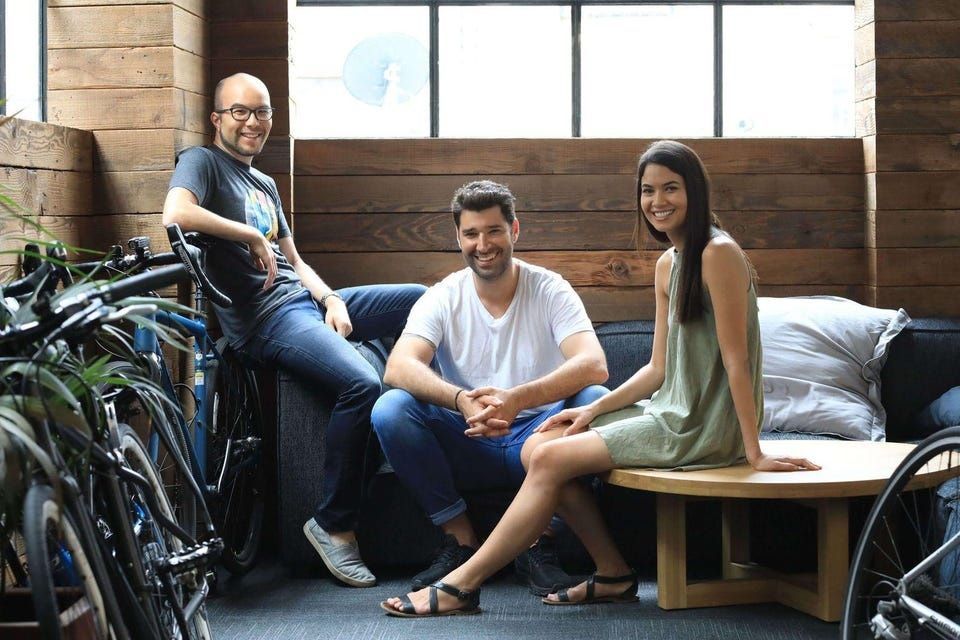
Canva is now one of the world’s most valuable startups after raising $200 million in new funding at a $40 billion valuation.
The round, led by T. Rowe Price with Franklin Templeton, Sequoia Capital Global Equities, Bessemer Venture Partners, Greenoaks Capital, Dragoneer, Blackbird, Felicis and AirTree all participating, more than doubles the Australian design software company’s valuation in five months.
Canva’s already on a level few startups have reached — not just for a valuation second only to Stripe on the Forbes Cloud 100 list of top private cloud companies. Long profitable and cash-flow positive, Canva continues to more than double in sales, the company says, on pace to reach a $1 billion annualized revenue run-rate by December 2021, the “vast majority” of that recurring subscription revenue. “Moving in the right direction,” cofounder and CEO Melanie Perkins says matter-of-factly.
Profitable, doubling growth and with hundreds of millions of revenue — why bother raising at all? One reason, says Perkins, is to keep doubling headcount, which reached 2,000 this year (Perkins says Canva received 180,000 job applications over the past 12 months). Another could be acquisitions, sources close to Canva add. Then there’s Perkins’ own lifelong mission for Canva, one for which she thinks it’s worth it to play it safe.
“It’s a huge vote of confidence in what we’re doing and where we’re going,” Perkins tells Forbes. “I always like to have enough money in the bank that if the lights turned off tomorrow and everything disappeared, we’ve got enough capital to keep us together for a long time.”
With unusual origins in Perth, Australia, and then Sydney, where the company has long been based, Canva defied early skepticism to emerge as one of the world’s most popular and fastest-growing software tools, putting Perkins, a Forbes 30 Under 30 alum, on the cover of the magazine in December 2019. Started in 2012 by Perkins, now-husband Cliff Obrecht and Cameron Adams, Canva launched the following year as a tool to help anyone design, from better-looking resumes to menus, business cards and other graphic assets.
Today, Canva’s product has evolved to support video, presentations and most recently, live collaboration. With new websites tools, Perkins says she hopes to help do away with PDF resumes or event invites in favor of responsive sites complete with custom web domains (a product that will pitch Canva, already competitive with Adobe and Vistaprint, up against the likes of Squarespace and Wix). Canva’s library now consists of more than 800,000 templates and 100 million photos, illustrations and fonts. More than 7 billion designs have been created in Canva to date, the company says, with 120 new designs each second.
Originally known as a tool for amateur designers or small businesses, Canva’s freemium software is used by more than 60 million monthly users. But more than 500,000 paying teams now use Canva, too, including companies like American Airlines, CBRE, Intel, Kimberly-Clark and Zoom, for everything from social media assets to sales and human resources presentations, or, in the case of Live Nation, assets for upcoming rock concerts.
The new funding dramatically increases the value of Canva’s founders’ stakes in the business, previously valued at $15 billion valuation in April. Forbes estimates that Perkins and Obrecht each own about 18% of Canva, and Adams 9%. At a $40 billion valuation, that means Perkins and Obrecht each hold stakes valued at $6.5 billion, while Adams’ stake is valued at $3.2 billion. (Forbes deducts 10% for private company holdings.)
But already on the record that they didn’t plan to “hoard” such wealth, Perkins and Obrecht are now pledging to give away 30% of Canva — the “vast majority” of their stakes — to the Canva Foundation to be used for charitable causes. “If the whole thing was about building wealth that would be the most uninspiring thing I could possibly imagine,” Perkins tells Forbes. “It has felt strange when people refer to us as ‘billionaires’ as it has never felt like our money, we’ve always felt that we’re purely custodians of it,” she added in a blog post.
Canva first plans to pilot its charitable giving through a $10 million donation to non-profit GiveDirectly to distribute to vulnerable families in Southern Africa; it plans to ramp up its giving after that.
It’s all part of what Perkins has long described as a “two step plan” for maximum impact: “become one of the most valuable companies in the world, and do the best we can do.” On the first count, Canva’s well on its way, with no shortage of investors looking to pony up money even at a valuation more typical of a public company (Perkins says she has no current interest in an IPO). On the second, Canva joined the Pledge 1% movement in the past to donate time, money, equity and resources to charity; the startup works with 60,000 schools today and 130,000 non-profits. Canva has also committed to plant one tree for each print order it services, a tally that’s reached 2 million to date.
“As we continue to make progress on step one, step two becomes more important than ever,” says Perkins. “We really feel a huge responsibility… it shouldn’t matter where you are in the world, or socioeconomic status, or your skills and experience, everyone should have the ability to design.”
Pledge 1%’s #WomenWhoLead series celebrates female leaders who are paving the way for the next generation. While our featured leaders come from a variety of backgrounds and industries, they are united in their efforts to promote equality for all women in the workplace. We’ve asked them to share a bit about their journey to success, as well as lessons they’ve learned along the way.
What is your name and title?
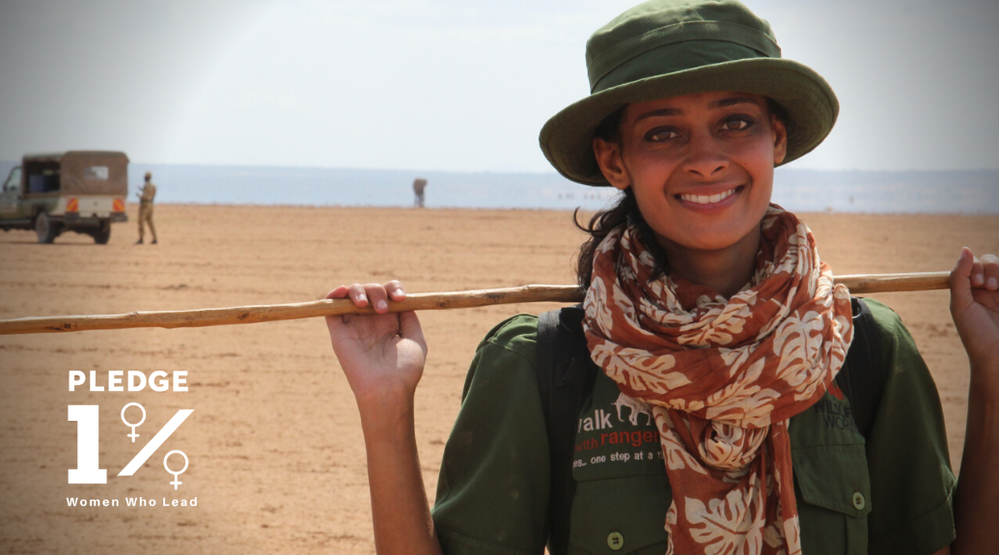
Raabia Hawa, Founder & Executive Director at Ulinzi Africa Foundation.
Briefly (1-2 sentences) describe your current role.
I manage a team of wildlife rangers operating in a 40,000-acre conservation ecosystem close to the Kenya-Somalia border to ensure wildlife is safe from poachers and communities thrive via ecosystem services.
How did you get here? Please share any quick stories from past work experiences.
I used to work in mainstream media, and highlighted the elephant poaching crisis on my programmes. In 2009 I was invited to join some rangers and saw a poached elephant for the first time, I couldn’t look back.
In your opinion, what’s the #1 decision or move you’ve made that has helped advance your career?
Leaving media and focusing full time on wildlife conservation.
What is the most important lesson you’ve learned this past year?
Train hard fight easy – unless your fight is against corruption, then simply never give up.
What’s the number one challenge you face as a woman in your industry?
Being underestimated.
Do you have any mentors? What does mentorship mean to you?
Yes, Will Travers of Born Free Foundation. Mentorship means passing on knowledge and contacts that can further your goals.
What advice do you have for women who are just starting their career?
Believe in yourself, especially when no one else does – you can do it!
What is one thing companies can do, big or small, to help create an environment that advances women into leadership positions?
Lock in on potential, more than performance, when you empower and encourage women, the results come automatically. Implement inclusion and gender balance in leadership positions for success.
What is one thing you hope to accomplish in the next year?
Empowering at least five members of the community, men and women, into leadership roles within the ecosystem and communities around it.
Is there a cause that is particularly close to you? If so, why this cause and how did you get involved?
Yes, wildlife conservation. I believe that biodiversity is the key to keeping ecosystems thriving, and this is crucial for impoverished communities that rely on ecosystem services for their survival. By protecting wildlife, we protect the people.
When did your company join Pledge 1%? What does your impact program mean to you?
Not joined yet. I was nominated.
What do you like to do outside of the office? Any interesting (or unique) habits or interests?
I like giving talks in schools.
Are you reading/listening to anything interesting at the moment? Please share your most recent favorite book or podcast!
What’s been the one (or two!) things that have helped you navigate this past year? Any tips or tricks to dealing with remote work?
The commitment of my team. Always keeps me going as they are my responsibility, if I give up they fall too, and I would never let that happen.
CHICAGO, Sept. 7, 2021 /PRNewswire/ — Zing Health, a physician-founded-and-led provider of Medicare Advantage health plans, has made official its Pledge 1% program, raising its commitment to corporate philanthropy, community engagement, and STEM education.
The healthcare startup pledges 1% of its profit, equity, and staff time to support local nonprofit initiatives, amplifying the social impact goals of Zing Health’s founders and employees.
“Our mission at Zing Health is to create a positive effect on our communities and ensure that everyone reaches optimal health,” said Zing Health Founder and CEO Dr. Eric E. Whitaker. “Corporate philanthropy is an important component of that, and we encourage our employees to be a part of the solution.”
As part of this mission, Zing Health is a partner in Pledge 1%, which champions corporate donations and public engagement among early-stage companies. Pledge 1% aims to make a difference in the world by inspiring startups to give 1% of their product, profit, equity, or employee time to a charity of their choosing. Its founding partners include Salesforce, Atlassian, and Rally (now Broadcom), three successful tech companies that have shown how pledging a small portion of future success today can have an enormous impact tomorrow.
“We are incredibly excited that Zing Health has taken the pledge,” said Amy Lesnick, chief executive of Pledge 1%. “Zing Health can play a pivotal role in building this movement and promoting a new normal in which all companies—big and small—integrate giving back as a core value in their business.”
Forging Ahead with Philanthropy
Zing Health has promised to donate 1% of future profits to local groups that address social determinants of health, including those who deal with community and workforce development or provide access to care, education, food, or housing. For example, Zing Health has teamed up with local food pantries, churches, and other not-for-profit groups to support and strengthen low-income families in the Chicago area through a collaboration with Acumen America.
“Addressing the disparities related to social determinants of health is a big part of Zing Health’s mission to ensure equal and accessible healthcare to all,” said Dr. Whitaker, who was named by Modern Healthcare this year as one of the nation’s top population health innovators. “Everyone deserves the same care, regardless of their race, background, or situation.”
As part of its pledge, Zing Health has seeded 1% of investor equity to the CPASS Foundation, a diversity STEM education initiative. CPASS partners with SMASH Academy, a college prep institute that provides students of color with viable pathways to healthcare careers. CPASS is also known for its Mini Medical School at Rush University and other programs to bring STEM education to underserved communities.
Volunteer Ethos Fosters Community Engagement
The company’s workers have also pledged to spend at least 1% of their staff hours volunteering at local nonprofits. Zing Health lets them mark volunteer time off, and an internal leaderboard recognizes their initiative. As work patterns shift during the pandemic recovery, corporate events will incorporate offsite community engagement opportunities.
The policy allows Rachel Sobel, Zing Health corporate communications director, to log volunteer hours for Recovery Dharma, a peer-led recovery support community. She has also served as an election judge without needing to use valuable PTO time. “I would be leading meetings during evenings or weekends anyhow, but Zing Health lets me accomplish things I can do only during work hours, such as maintaining our group’s website, doing outreach to treatment centers, or serving as an election judge,” Sobel said.
Pledge 1% sharpens the Zing Health focus on volunteering and making a difference, continuing its mission to build better communities. Zing Health will align its strategy and work with the Pledge 1% community to make positive impacts and work towards ending disparities brought on by social determinants of health.
“We believe that a commitment like this is one that everyone should be pledging,” Dr. Whitaker said. “Ideals like this have been part of our DNA since the beginning, and we strive to create a better world for the communities we serve.”
About Zing Health
Founded in 2019, Zing Health Holdings Inc. is a groundbreaking tech-enabled insurance company making Medicare Advantage the best it can be for those 65 and over or with long-term disability. Zing Health’s community-based approach addresses social determinants of health to keep individuals and communities healthy and returns the physician and the member to the center of the healthcare equation. This gives each member personalized care and service tailored to their singular needs. Members also receive individualized assistance to make their transition to Zing Health as easy as possible, and have the ability to personalize their plans, access to facilities designed to help them better meet their healthcare needs, and a dedicated care team. For more information on Zing Health, visit myzinghealth.com.
About Pledge 1%
Pledge 1% is a global movement that inspires, educates, and empowers every entrepreneur, company, and employee to be a force for good. Over 12,000 members in 100+ countries have used Pledge 1%’s flexible framework to ignite half a billion dollars in new philanthropy. To learn more about Pledge 1% and to take the pledge visit www.pledge1percent.org.