Pledge 1%’s #WomenWhoLead series celebrates female leaders who are paving the way for the next generation. While our featured leaders come from a variety of backgrounds and industries, they are united in their efforts to promote equality for all women in the workplace. We’ve asked them to share a bit about their journey to success, as well as lessons they’ve learned along the way.
What is your name and title?
Peggy O’Flaherty, Co-Founder & Chief Community Officer of Mavely.
Briefly (1-2 sentences) describe your current role.
As CCO, I bring together over 25,000 women and 300 plus brands, mostly female-founded, to empower growth. The women are creating income and content, and the brands are acquiring customers at a lower cost and gaining a higher lifetime value of a customer from trusted referrals.
How did you get here? Please share any quick stories from past work experiences.
Mavely is my 4th company. I have spent my entire career building up women and women businesses, as well as women’s faith. I strongly encourage women to reach out and offer a hand to support another women on their journey. I admire men that do that for women as well. My last investor and I made an enormous impact in the church and tech space, and we took those learns to build Mavely – with the goal of empowering everyday women and brands.
In your opinion, what’s the #1 decision or move you’ve made that has helped advance your career?
Making a decision to take the gifts and talents that have been given to me and use them as a channel of love to build others up. Living with a spirit of generosity has helped me advance my career. As well as being transparent about the fact that for me, work comes second to raising my 5 children.
What is the most important lesson you’ve learned this past year?
In the midst of 2020, that old saying of hindsight is 2020 couldn’t be more true. Looking back, living life with childlike curiosity and vulnerability has really helped me persevere through personal challenges. It also helped me build trust in my team, foster better relationships with customers, and ensure trust with my investors.
What’s the number one challenge you face as a woman in your industry?
Maintaining my voice and standing tall in my strengths.
Do you have any mentors? What does mentorship mean to you?
Yes, I have several mentors in various areas of life. Mentorship is huge for me as a way of giving back. I have 13 interns right now, and through Pledge 1% we are working with Technovation, assisting teen girls in STEM to build apps that change the world.
What advice do you have for women who are just starting their career?
Build a business and life that you are passionate about, stay true to your North Star, run your business focussed on KPI and OKR, understand the numbers, and learn quickly how to trust your gut.
What is one thing companies can do, big or small, to help create an environment that advances women into leadership positions?
Ensure that everyone has an equal voice across all areas of the organization. When women are using their voice and strengths, they will naturally rise to the top.
What is one thing you hope to accomplish in the next year?
A mission trip to Africa.
Is there a cause that is particularly close to you? If so, why this cause and how did you get involved?
Watts of Love brings solar lights and economic stability to the poorest regions of the world, replacing kerosene. The money they save on not buying kerosene (an extremely toxic and fire hazard) is used to purchase pigs, goats and supplies for their farms. Extra light extends their day for learning and family time.
When did your company join Pledge 1%? What does your impact program mean to you?
We joined Pledge 1% in Fall 2020. Having our entire team rally around an organization that we can impact has brought great momentum and helped us increase the spirit of giving back.
What do you like to do outside of the office? Any interesting (or unique) habits or interests?
Building experiences with my 5 children, cooking, travelling, and being active and in nature.
Are you reading/listening to anything interesting at the moment? Please share your most recent favorite book or podcast!
The 15 Commitments of Conscious Leadership and Draw The Circle.
What’s been the one (or two!) things that have helped you navigate this past year? Any tips or tricks to dealing with remote work?
Meditation.
Pledge 1%’s #WomenWhoLead series celebrates female leaders who are paving the way for the next generation. While our featured leaders come from a variety of backgrounds and industries, they are united in their efforts to promote equality for all women in the workplace. We’ve asked them to share a bit about their journey to success, as well as lessons they’ve learned along the way.
What is your name and title?
Julia Robinson, Sustainability Program Manager at Atlassian.
Briefly (1-2 sentences) describe your current role.
As a founding member of Atlassian’s Sustainability Team, I work on projects that deliver measurable, meaningful impact across the issue areas that we’ve prioritized as a company – climate change, human rights, and diversity, equity, and inclusion. I lead our sustainability reporting strategy and human rights and ethics focus area.
How did you get here? Please share any quick stories from past work experiences.
I’ve always looked for roles where I’m trying to change the status quo or work within systems to change them for the better. I started my career in women’s empowerment and global health in Sierra Leone and South Africa, before coming back to the United States to work on corporate sustainability and responsibility. I’ve done a lot of searching in my career! Every job I’ve had has helped me hone my purpose and my “theory of change” – basically how I want to make a difference in my small corner of the world.
In your opinion, what’s the #1 decision or move you’ve made that has helped advance your career?
My privilege has given me access to opportunities that absolutely helped me advance my career. So, I don’t want to imply that one lucky move got me where I am today. The decision to join a tech company after only working at nonprofits very much felt like a leap of faith – one that I’m glad I made! It’s given me the opportunity to learn about entirely new ways of working and thinking, in addition to being able to make a tangible difference within and beyond my organization.
What is the most important lesson you’ve learned this past year?
It’s OK to ask for help – whether that’s time off, seeking out therapy, or support from a loved one or colleague.
What’s the number one challenge you face as a woman in your industry?
As a white, cis-gendered woman in sustainability and tech, the challenge is always asking whether what I’m doing or how I’m going about things is holding up systems and structures that continue to perpetuate discrimination, bias, and inequity against BIPOC and people of under-represented identities. This is an ongoing conversation I have with myself (and others!).
Do you have any mentors? What does mentorship mean to you?
For me, mentorship is about an exchange, and it comes in many forms. I learn from peers, from people I mentor, from leaders and managers, and from loved ones.
What advice do you have for women who are just starting their career?
Don’t be afraid to spend some time searching for what gives you meaning and purpose. Also, set up strong work/life boundaries – once you get into the “grind culture” mindset, it’s really hard to stop.
What is one thing companies can do, big or small, to help create an environment that advances women into leadership positions?
Companies should look at the data first to understand where the issues are. Likely what’s required is going to be deep structural shifts, and it might not be something that immediately feels good or can be turned into a positive news story. And companies need to challenge themselves to think intersectionally. It isn’t enough to only advance the careers of cis-gendered white women.
What is one thing you hope to accomplish in the next year?
I’d like to keep seeking out joy and intention in both my career and my personal life.
Is there a cause that is particularly close to you? If so, why this cause and how did you get involved?
Although I get a lot out of my job, I also have volunteered for political campaigns and causes, especially in the past four years or so. Lots of phone banking, door knocking (when that was safe to do!), and other forms of organizing to get out the vote. I think civic engagement is a vital responsibility. A lot of people undervalue how much of a difference it can have.
When did your company join Pledge 1%? What does your impact program mean to you?
Atlassian is a founding member of Pledge 1%, and it was one of the top reasons I joined the company. I’m really proud of the contributions of the Atlassian Foundation and our employees.
What do you like to do outside of the office? Any interesting (or unique) habits or interests?
I love cooking, and that’s been a great hobby to pick back up in the past year of social distancing and sheltering in place.
Are you reading/listening to anything interesting at the moment? Please share your most recent favorite book or podcast!
I just finished Interior Chinatown by Charles Wu. It was one of the most inventive novels I’ve read in a while.
What’s been the one (or two!) things that have helped you navigate this past year? Any tips or tricks to dealing with remote work?
Back to the work/life boundaries thing – I make a phone call, usually to my dad, at the end of every work day. This gives me a hard stop to shut down the laptop, and it means I get to hear how he’s doing. It’s something I’d like to continue once we’re past the pandemic.
Pledge 1%’s #WomenWhoLead series celebrates female leaders who are paving the way for the next generation. While our featured leaders come from a variety of backgrounds and industries, they are united in their efforts to promote equality for all women in the workplace. We’ve asked them to share a bit about their journey to success, as well as lessons they’ve learned along the way.
What is your name and title?
Neha Sampat, Founder and CEO at Contentstack.
Briefly (1-2 sentences) describe your current role.
As CEO of Contentstack, I represent the company and our interests, facilitate sustainable growth, and unblock and rally to help my team move our vision forward. Our vision is to use technology to break down barriers for better human connection.
How did you get here? Please share any quick stories from past work experiences.
In 2007, I left VMWare to found Raw Engineering to help enterprise brands adopt new technologies. We offered a service. In offering that service over time, we became digital trend spotters. Content was critical to building customer relationships, but it could no longer be confined to a website alone. Also, enterprises needed to be liberated from all-in-one suites, which hampered business and tech teams’ creativity and productivity.
The need defined the product. That product is Contentstack. We launched in 2014, created a stand-alone company in 2018, and raised capital in 2019. Since launch, we have partnered with over 100 brands to modernize their storytelling.
In your opinion, what’s the #1 decision or move you’ve made that has helped advance your career?
Splitting my companies. In 2018, we had a profitable services business and several product lines, but limited resources. I spun out Contentstack and sold Built.io to Software AG. It allowed us to scale Contentstack as far as we have. Running Contentstack – building relationships with employees and clients and delivering on a better way to tell stories – has been the most meaningful role of my career.
What is the most important lesson you’ve learned this past year?
Over-communicating is a must during tough times. In a year of so many things feeling out of control, transparent communication is very much in our hands. No surprises should be the goal – except for the fun kind.
What advice do you have for women who are just starting their career?
1. Be authentically you. Work on understanding the unique value you bring to the table and own that value.
2. Be curious. Use every learning opportunity that comes your way.
3. Build allyship by focusing on what you can give rather than what you can get.
What is one thing companies can do, big or small, to help create an environment that advances women into leadership positions?
Pay women equitably and make workplace flexibility the norm.
Is there a cause that is particularly close to you? If so, why this cause and how did you get involved?
I relentlessly work toward achieving equity in the workplace. I do this through committing to initiatives like Pledge 1% and Insight’s ScaleUp DE&I pledge, and hiring talent through Gainsight & SVA Academy’s CSYou – which helps underrepresented groups enter the customer success industry. I also focus on broader strategies like looking for talent in undiscovered places and mentoring aspiring female founders on their path to entrepreneurship.
When did your company join Pledge 1%? What does your impact program mean to you?
We took the pledge in 2018 for all Surfboard companies (Built.io, Raw Engineering and Contentstack). Today, Surfboard companies pledge a combination of 1% Time (Raw Engineering) 1%+ Product (Contentstack) and 1% Revenues $$ via donations (Surfboard) to the communities we serve.
What do you like to do outside of the office? Any interesting (or unique) habits or interests?
I’m a certified sommelier and I like to find ways to share that passion with others. I host virtual wine-tasting networking events and fireside chats with employees and customers that include tastings.
Are you reading/listening to anything interesting at the moment? Please share your most recent favorite book or podcast!
My podcast, Dreammakers, of course. I host candid conversations with women that focus on profit, purpose, and what it takes to bridge the two. My guests fuel my creativity. I’ve spoken with a Founder and CEO of an online payments company that also runs a foundation that relocates victims of domestic violence, a product manager writing a second novel and obsessed with creating psychological safety at work, and a founder who facilitates allyship between professional women in Austin. I’m constantly in awe.
What’s been the one (or two!) things that have helped you navigate this past year? Any tips or tricks to dealing with remote work?
I elevated the value of fun. Cultivating happy cultures has always been core to what I do and how I operate. So, while it was a bit of a shock to be physically isolated from my tribe this year, it was also a fun challenge to keep the heart of our culture beating virtually.
Technology helped us do that through: Awards for best pandemic hair and best Zoom backgrounds, a David Hasselhoff Cameo during our QBR, team fitness via Zoom and customer-themed trivia and prizes.
Pledge 1%’s #WomenWhoLead series celebrates female leaders who are paving the way for the next generation. While our featured leaders come from a variety of backgrounds and industries, they are united in their efforts to promote equality for all women in the workplace. We’ve asked them to share a bit about their journey to success, as well as lessons they’ve learned along the way.
What is your name and title?
Karina Capulong Cerdan, DEI & Social Impact Program Manager at SurveyMonkey.
Briefly (1-2 sentences) describe your current role.
I channel the power of community, inclusion, and data to bring out the best in our people, products, and the communities we serve.
In my role, I manage our employee resource groups, volunteer programs, matching gifts platform, and am responsible for tracking belonging and quarterly diversity progress against annual goals.
How did you get here? Please share any quick stories from past work experiences.
I’ve had an unconventional path – a jungle gym rather than a ladder, so to speak. My love affair with DEI started at UC Davis driving student recruitment and retention programs. Then, it was nonprofit, and another 8 years in biotech before landing at SurveyMonkey. I’ve been a case manager, an administrative assistant, a barista, a project coordinator for hematology advocacy and operations. Regardless of the role, there was always an opportunity to learn and grow, but it took my own audacity, hustle and folks who were willing to share access and opportunity that helped land me my dream job.
In your opinion, what’s the #1 decision or move you’ve made that has helped advance your career?
Leave behind what does not serve you so that you can fly. Do what you love.
What is the most important lesson you’ve learned this past year?
You’re not going to make everyone happy, and you can’t take care of everyone or every issue that arises. That’s not the point. Focus on impact and on meaningful change. Be helpful. Be confident. Listen.
What’s the number one challenge you face as a woman in your industry?
I only know one woman who reflects my identity in an executive role in the DEI and social impact space. I want to see more. It’s incredibly motivating to see and meet someone you can relate to succeed and do amazing things. Everyone should have that, woman or otherwise.
Do you have any mentors? What does mentorship mean to you?
I’ve been fortunate to have had mentors throughout my career. A mentor coaches you to think for yourself, asks you questions you haven’t considered, and drops knowledge you otherwise may not be aware of.
What advice do you have for women who are just starting their career?
Don’t wait. If you’re curious about a role or if you have a defined goal – meet with as many people as you can to get the information you need and just go for it. Identify mentors and advocates along the way, communicate what it is you want, and take the steps to get closer. As my dad always tells me and my sisters, “You can do it!”
What is one thing companies can do, big or small, to help create an environment that advances women into leadership positions?
Your approach cannot be one-size fits all. Your women (and non-binary folks!) have intersectional experiences and the data shows this. SurveyMonkey participated in the Women in the Workplace Report, and data shows us that the pandemic has presented us with new challenges. How women of color, women caregivers, and women of different generations experience the workplace varies, and as such, should be considered in hiring (and return-to-work!), advancement, and daily support that managers and colleagues are held accountable to at work. If you don’t support your women, your business will suffer.
What is one thing you hope to accomplish in the next year?
I’d like to take our employee resource group program to the next level and grow us into a center of excellence in the industry. Influence and impact doesn’t happen in a vacuum. We’re all responsible for creating an inclusive, impactful environment regardless of our functions and roles, and employee resource groups help drive our DEI and social impact work.
Is there a cause that is particularly close to you? If so, why this cause and how did you get involved?
I’ll always have a special place in my heart for Big Brothers Big Sisters. I was matched to my Little Sister in the program for several years and matched and counseled dozens of Bigs and Littles in the Greater Sacramento region. It was also my first time recruiting a board of young professionals to champion the work, and I loved the entire experience. Role models and mentors make a huge difference.
When did your company join Pledge 1%? What does your impact program mean to you?
I believe SurveyMonkey joined Pledge 1% in 2019 under the leadership of Melynnie Rizvi alongside my colleague, Rebecca Nalder. Our impact program leverages our products and the expertise of our people to serve our customers and the communities they serve. It’s how we live our values and use technology for the greater good.
What do you like to do outside of the office? Any interesting (or unique) habits or interests?
This reformed plant-killer became quite the plant-mom during quarantine. I tried roller skating, but that was a bust. I used to dance when I was younger and try to keep up using the app, Steezy. I also enjoy food-travel TV, biopics, and walks by the ocean.
Are you reading/listening to anything interesting at the moment? Please share your most recent favorite book or podcast!
The last book I finished is Disability Visibility edited by Alice Wong. I’m learning so much about people with disabilities and the disabled community. Shoutout to our ERGs/DIIGs at SurveyMonkey for introducing this book to me.
What’s been the one (or two!) things that have helped you navigate this past year? Any tips or tricks to dealing with remote work?
I’m a work in progress when it comes to remote work. Time to unplug is important, so take care of yourself.
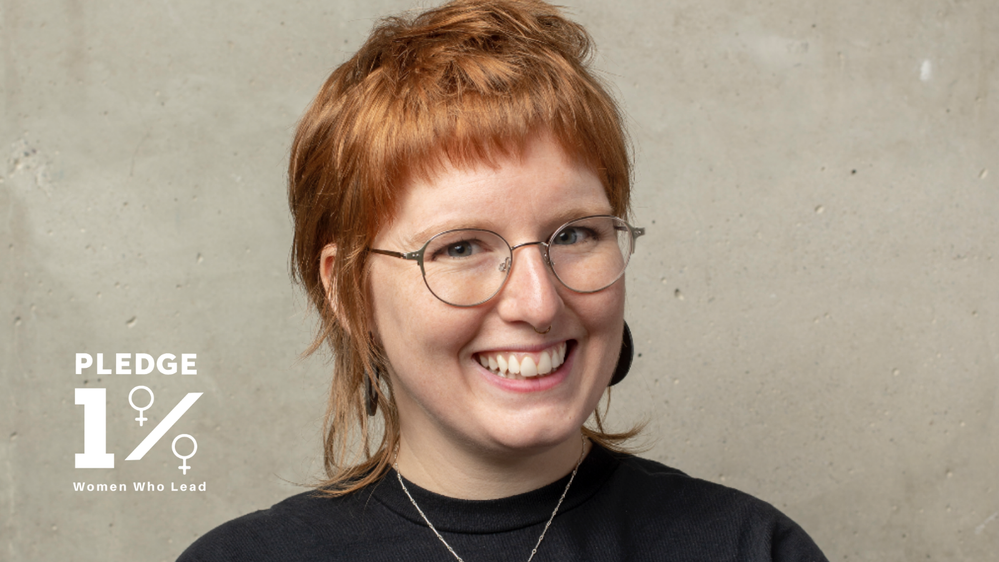
Pledge 1%’s #WomenWhoLead series celebrates female leaders who are paving the way for the next generation. While our featured leaders come from a variety of backgrounds and industries, they are united in their efforts to promote equality for all women in the workplace. We’ve asked them to share a bit about their journey to success, as well as lessons they’ve learned along the way.
What is your name and title?
Diz Petit, Head of Civic Labs (Social Impact) at Postmates.
Briefly (1-2 sentences) describe your current role.
Civic Labs mission is to positively impact our neighborhoods through community engagement and innovative technology solutions to combat complex, pervasive issues.
How did you get here? Please share any quick stories from past work experiences.
After joining Postmates in 2013, I worked to build the customer service team from the ground up, launching new Postmates markets in Seattle, New York, DC, and Chicago, co-building the sales team, opening up a new stream of revenue for the company through the Postmates Partner program, and standing up a new 900+ employee Customer Service, Sales, and Operations office in Nashville, TN. In the summer of 2017, I created the Civic Labs team, Postmates’ social responsibility arm.
What is the most important lesson you’ve learned this past year?
The definition of Toxic Positivity. Kendra Cherry defines it as this – “Toxic positivity is the belief that no matter how dire or difficult a situation is, people should maintain a positive mindset. It’s a good vibes only approach to life. While there are benefits to being an optimist and engaging in positive thinking, toxic positivity instead rejects difficult emotions in favor of a cheerful, often falsely positive, facade.”
What’s the number one challenge you face as a woman in your industry?
Wow, just one? It changes depending on the situation, company, colleagues, etc. Overall, I feel that my credentials are scrutinized more than men. I find that I usually have to offer more examples of my work and it’s impact than my male colleagues.
Do you have any mentors? What does mentorship mean to you?
Gabriella Wong from AccesSOS! We were connected via FastForward for a mentoring program and just totally hit it off. She is doing amazing things in the text-to-911 space as a tech nonprofit. I value her input, insight, and experience so much. She’s always just an email away to listen to my quandary of questions. Hopefully it’s a two way street, but I’m not sure it totally is.
What advice do you have for women who are just starting their career?
Prepare for your interviews and meetings with concrete facts that you have memorized. A lot of companies want someone who is “data-driven” and being able to put numbers down in a first interaction will help establish credibility. Yes, you shouldn’t have to do that, but it is my advice.
What is one thing companies can do, big or small, to help create an environment that advances women into leadership positions?
Hire more women and promote more women! It’s not that hard. If you don’t have at least one woman at the table where decisions are being made, what are you doing? It’s 2021.
What is one thing you hope to accomplish in the next year?
Graduating from Saybrook University with my MBA in Sustainable Social Impact!
Is there a cause that is particularly close to you? If so, why this cause and how did you get involved?
Right now I have been volunteering with Muttville, Rogers and Rosewater, and Berkeley Humane. I am a life-long animal rights advocate which will never change, but currently homelessness and saving dogs and cats are where I’m spending most of my time.
When did your company join Pledge 1%? What does your impact program mean to you?
I think Postmates joined in 2017 when we formed Civic Labs! This impact program has meant the world to me. Looking back on all the things that we have done and built to change hearts and minds – I am forever grateful to Postmates for the opportunity.
What do you like to do outside of the office? Any interesting (or unique) habits or interests?
Foster dogs! Read! Grad School! Apply to Y Combinator! Beat Saber on the Oculus 2! Learn Japanese! Play guitar and sing in my band, Plush Palace!
Are you reading/listening to anything interesting at the moment? Please share your most recent favorite book or podcast!
I just finished reading Why Zebra Don’t Get Ulcers. My favorite book right now is Systemic Racism by Ian Haney Lopez and my favorite non-true crime podcast is the Ezra Klein Show.
What’s been the one (or two!) things that have helped you navigate this past year? Any tips or tricks to dealing with remote work?
Remote work is challenging when it’s forced. It used to be a little treat when you would work from home, but I am craving the feeling of the marker dragging across the giant whiteboard in front of a room of people during a massive brainstorm session.
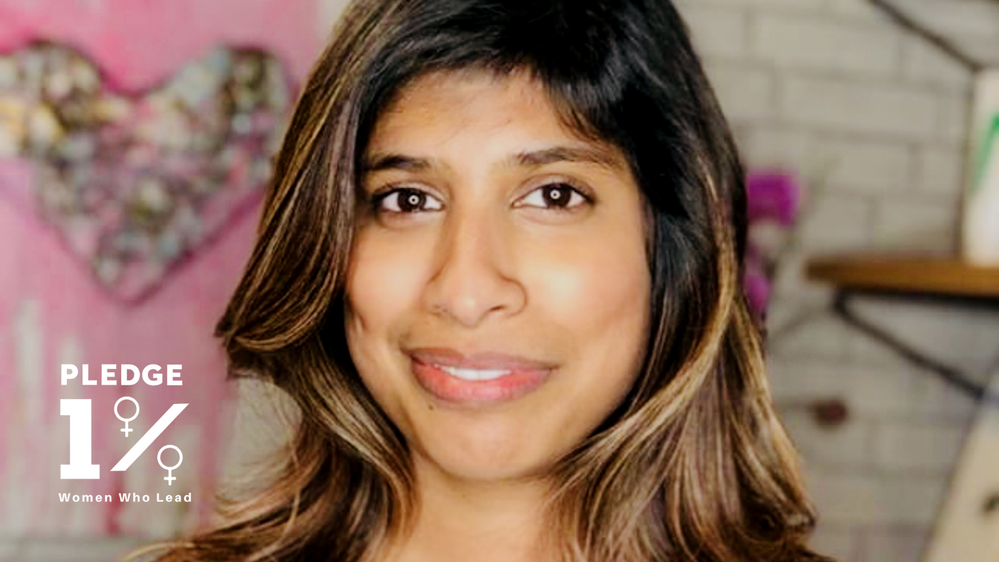
Pledge 1%’s #WomenWhoLead series celebrates female leaders who are paving the way for the next generation. While our featured leaders come from a variety of backgrounds and industries, they are united in their efforts to promote equality for all women in the workplace. We’ve asked them to share a bit about their journey to success, as well as lessons they’ve learned along the way.
What is your name and title?
Nisha Kadaba, Global Social Impact Programs at PagerDuty.
Briefly (1-2 sentences) describe your current role.
I channel our company’s resources to accelerate change in our local and global communities. I’m a passionate builder – from strategic partnerships and deep relationships, to innovative programs and campaigns.
In your opinion, what’s the #1 decision or move you’ve made that has helped advance your career?
I took the plunge and left my first job in Los Angeles to attend the University of Edinburgh in Scotland to get my Masters Degree in Environment and International Development. It was one of the first programs of its kind, critically examining the inter-relationship between development and the environment, with a specific focus on social and environmental justice. This foundational knowledge inspired me to investigate the role technology plays in solving the world’s most pressing challenges. I’ve embarked on a career working at the intersection of tech and social impact.
What is the most important lesson you’ve learned this past year?
Let go of what you can’t control. I had a baby in June 2020, and bringing our son into the world during such a tumultuous time forced us to focus on what we could control and hone in on what was really important for our family.
What’s the number one challenge you face as a woman in your industry?
The age-old question – how do you achieve work/life balance, especially during challenging times? I am passionate about motherhood and passionate about my career – how do I succeed at both?
Do you have any mentors? What does mentorship mean to you?
Yes – I have several mentors. I view them as my “personal board of directors” and engage different people for different purposes. I’m lucky I’ve built a network of people that I can lean on when I need advice, both professionally and personally.
What is one thing you hope to accomplish in the next year?
I’m really looking forward to building out our new pro bono program at PagerDuty.org. We have incredibly passionate employees with valuable expertise, and I’m excited to connect them with nonprofit customers and grantees that will leverage PagerDuty’s platform and technology to further their critical work.
Is there a cause that is particularly close to you? If so, why this cause and how did you get involved?
I spent the summer of 2011 doing research for my thesis in the Amazon forest in Northern Paraguay at the Centro Educativo Mbaracayú – a unique school for adolescent girls that teaches entrepreneurship, environmental sustainability, and natural resource management. The students at the school impacted me for life – their resilience, commitment to their communities, and love for the environment was unparalleled. I’ve since supported the school and even keep in touch with some of the students – one in particular is now a Sustainable Tourism leader!
When did your company join Pledge 1%? What does your impact program mean to you?
PagerDuty joined Pledge 1% in 2017, and I joined our team in 2019. We have a small but mighty team, but we really move mountains to build thoughtful, meaningful programs that inspire our colleagues and make a tangible impact in our local and global communities.
What do you like to do outside of the office? Any interesting (or unique) habits or interests?
My husband is a true mountain man, and has inspired me to look to nature to replenish and re-energize. You can find us hiking, fishing, or picnicking in Marin.
Are you reading/listening to anything interesting at the moment? Please share your most recent favorite book or podcast!
I’m almost finished with “Milkman” by Anna Burns. I’m really moved by immersive stories from Northern Ireland, since my husband is from there.
What’s been the one (or two!) things that have helped you navigate this past year? Any tips or tricks to dealing with remote work?
Walking meetings – take a Zoom call to-go and walk around the block and get some sunshine. It’s tough being on camera/staring at a screen all day long, so walking meetings have been a great change of pace.
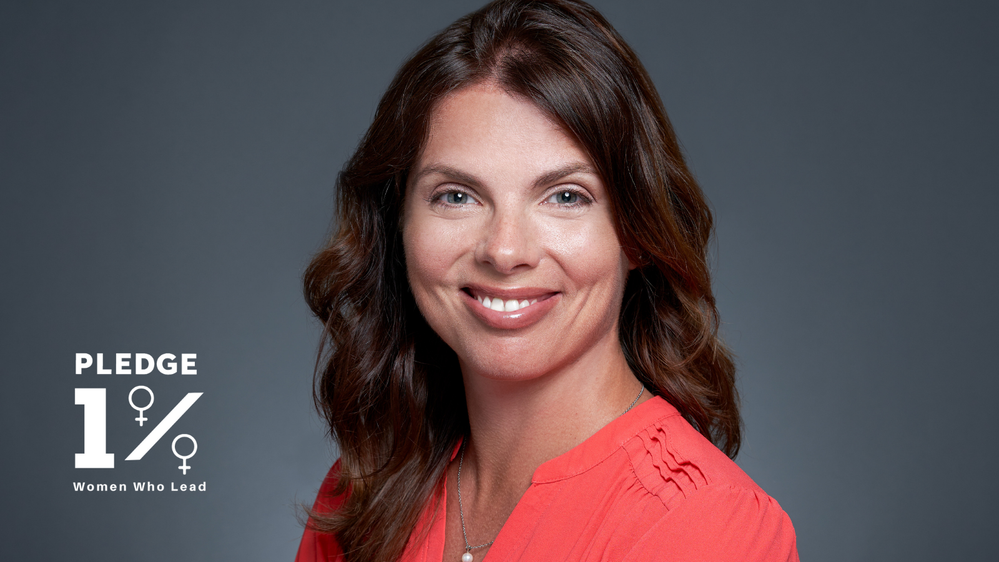
Pledge 1%’s #WomenWhoLead series celebrates female leaders who are paving the way for the next generation. While our featured leaders come from a variety of backgrounds and industries, they are united in their efforts to promote equality for all women in the workplace. We’ve asked them to share a bit about their journey to success, as well as lessons they’ve learned along the way.
What is your name and title?
Ania Smith, CEO at TaskRabbit.
Briefly (1-2 sentences) describe your current role.
As the CEO of TaskRabbit, I determine the company vision and lead our global growth and expansion. Driven by our mission of making everyday life easier for everyday people, and in partnership with IKEA, I work to ensure our two-sided marketplace scales effectively.
How did you get here? Please share any quick stories from past work experiences.
I came to TaskRabbit with more than 20 years of experience in global business operations and strategic planning at large multi-sided marketplace companies, including UberEats and Airbnb. Along with the support of wonderful people at TaskRabbit, the soft and hard skills I’ve picked up throughout my career have made the transition to CEO so rewarding.
In your opinion, what’s the #1 decision or move you’ve made that has helped advance your career?
I don’t think about my career as a progressive upward trajectory. Instead, I like to think of it as a Google Map. Sometimes you’re flying down the highway at full speed, other times you may take a wrong turn down a bumpy road. Occasionally, you’re parked at a long stoplight. Through it all, the most important thing for me was to be open to new opportunities — take risks and have faith that I would wind up exactly where I need to be.
Choosing the less conventional path has paid off in several ways — including recognizing that it’s not always a climb up. As an example, for some part of my career, while working on strategy at Walmart eCommerce, I really wanted to ‘own’ a business which meant becoming a merchant. This was hard to do without any merchandising experience. Many senior leaders told me that it would be a tough road to get there. Still, through several lateral career moves, I finally got offered a role that I really wanted. Yet, in the end I turned it down in order to start a completely new business. That then led to a great opportunity at Airbnb which I think would have been more difficult to obtain had I accepted the merchandising role.
What is the most important lesson you’ve learned this past year?
This past year has taught me the importance of being nimble and adaptable, both personally and professionally. The COVID-19 pandemic changed everything — and despite making several important adjustments to our business at TaskRabbit — a level of uncertainty is always there.
What’s important is the ability to adapt and pivot quickly. We’re all navigating through uncharted territory, so we’ll inevitably take some wrong turns along the way. However, I think about everything as a learning experience that will allow us to make more informed decisions next time.
What’s the number one challenge you face as a woman in your industry?
Learning to be comfortable being the “only” in a room — the only woman, mother, or the only immigrant — was a challenge. When I started out in my career, I sometimes felt intimidated, but over time I began to think about it as an opportunity. I embrace what makes me unique and strive to show others around me how these differences can create value for my team/company. I am fortunate at TaskRabbit that more than 70% of my leadership team is women — I no longer have to feel like I’m the only one in the room.
Do you have any mentors? What does mentorship mean to you?
There are a few qualities that I’ve grown to appreciate in a mentor. In my mind, the best mentors are those who can listen and help to solve problems without providing solutions. I also appreciate when mentors are able to see blindspots that I may have a harder time identifying, especially when it comes to leadership skills. Finally, the notion of a one-sided mentorship is not something I generally subscribe to. I am certain that I learn as much from those I mentor, if not more, than they learn from me. I hope I also provide value to those who have been by my side helping me to navigate my career.
What advice do you have for women who are just starting their career?
Be confident and don’t be afraid to speak up. Also, if you want to continue growing and progressing in your career, rather than always focusing on that next step, make it your primary goal to do a phenomenal job in your current role. When it’s time to talk about promotions, then you’re already top of mind because you’ve demonstrated value and growth potential to the company.
What is one thing companies can do, big or small, to help create an environment that advances women into leadership positions?
Although “diversity” and “inclusion” may seem like buzzwords these days, workplaces must prioritize diversity of thought and experience as they hire and promote employees. At TaskRabbit, we have a top-down approach to ensuring women are treated as equals to men; in fact, more than 70% of our senior leadership team is comprised of women. We prioritize D&I not only because it’s the right thing to do, but also because we’ve seen that it has made our company more successful overall.
Is there a cause that is particularly close to you? If so, why this cause and how did you get involved?
As a first-generation child to go to college in my family, and an immigrant, it has been particularly rewarding to work with first-generation immigrant children, especially young women, as they navigate high school and apply to college. I’ve been involved in a program that mentors these women to get them ready for college and supports them once they arrive. It helps that I’ve gone through what they’re about to go through, and I’m excited to share the joys and the challenges with them as they prepare for adulthood.
When did your company join Pledge 1%? What does your impact program mean to you?
TaskRabbit officially joined Pledge 1% in November 2019. TaskRabbit has been a mission-driven company since its founding, and giving back is an extremely important part of our culture. Through our TaskRabbit for Good initiative, TaskRabbit employees have pledged 1% of our time to volunteer with non-profit organizations dedicated to helping people find work or a place to call home in the communities we serve. We achieve this through a combination of office-wide community service days to support local nonprofits, department-specific volunteer events and individual volunteer time at charities of each employee’s choice.
What do you like to do outside of the office? Any interesting (or unique) habits or interests?
My family — including my husband and our three children — is a very active bunch. Together, we love to travel (which unfortunately has been put on pause during COVID-19) and enjoy hiking, rafting, biking and skiing. In fact, we spent a gap year living in Argentina, and I’m so grateful for that experience.
Are you reading/listening to anything interesting at the moment? Please share your most recent favorite book or podcast!
I have been reading a lot of non-fiction lately including the latest book from Adam Grant, whom I adore, “Think Again”. I also just fished Bob Iger’s “Ride of a Lifetime” and am deeply immersed in “Walt Disney, the Triumph of the American Imagination” by Neal Gabler to follow on the Disney theme. Recently, I also finished “A Gentleman in Moscow” by Amor Towels which was one of my favorite novels I have read in years.
What’s been the one (or two!) things that have helped you navigate this past year? Any tips or tricks to dealing with remote work?
The realities of the pandemic have helped me become an effective leader remotely — although I would still much prefer to be getting to know everyone in person. I strive to build connections and trust from the very start, and make the most out of every minute I have with people over Google Hangouts or Zoom.
I also bring my whole self to work. I try to be authentic, engaging, and empathetic and encourage others to do the same.
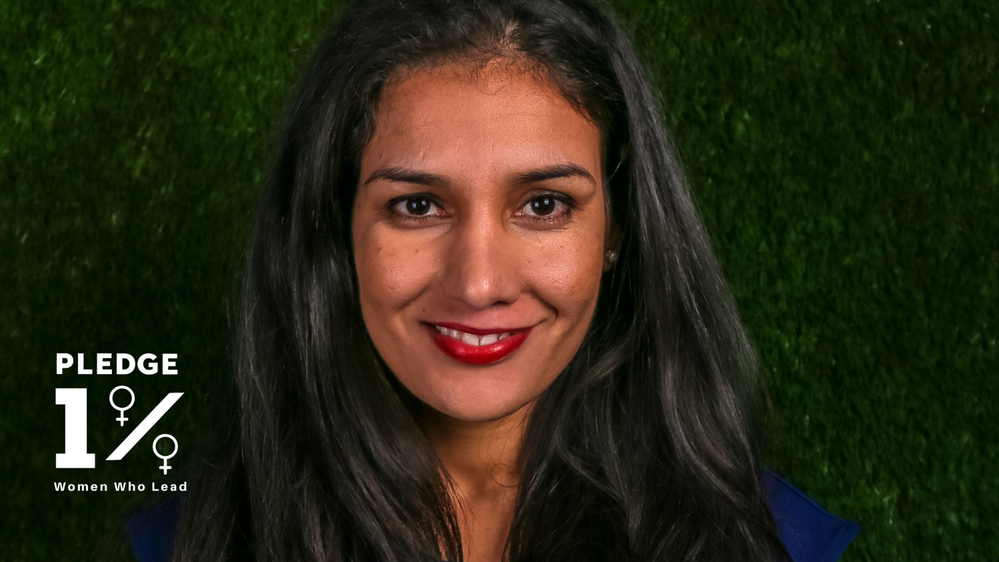
Pledge 1%’s #WomenWhoLead series celebrates female leaders who are paving the way for the next generation. While our featured leaders come from a variety of backgrounds and industries, they are united in their efforts to promote equality for all women in the workplace. We’ve asked them to share a bit about their journey to success, as well as lessons they’ve learned along the way.
What is your name and title?
Amanda Deol, Co-Founder & SVP at Addteq.
Briefly (1-2 sentences) describe your current role.
I help create sales strategies, account growth, and new customer acquisitions. I am particularly focused on
aligning sales to business goals. In addition, I work to build company culture and maximize our community impact.
How did you get here? Please share any quick stories from past work experiences.
My upbringing, family and spouse have all had a lot to do with my career success. I came from a culture where boys were cherished and girls were frowned upon. That motivation helped me strive to always be better and promote women in leadership at Addteq.
In your opinion, what’s the #1 decision or move you’ve made that has helped advance your career?
Not overpromising and under delivering .
What is the most important lesson you’ve learned this past year?
Working remote is possible.
What’s the number one challenge you face as a woman in your industry?
Flexible work hours.
Do you have any mentors? What does mentorship mean to you?
Yes, I do. Mentors are extremely helpful for gathering advice and receiving another perspective.
What advice do you have for women who are just starting their career?
Commit to a goal, and go for it!
What is one thing you hope to accomplish in the next year?
This year, I would like to expand the Addteq community impact model.
Is there a cause that is particularly close to you? If so, why this cause and how did you get involved?
Education is really important to me as a way to get out of generational poverty. My husband and I both come from similar backgrounds and education really helped us to lift ourselves out of poverty.
When did your company join Pledge 1%? What does your impact program mean to you?
Addteq joined Pledge 1% in 2015. The impact program for us is to build a culture of giving back along with delivery of those commitments.
What do you like to do outside of the office? Any interesting (or unique) habits or interests?
I recently became really interested in public school education and what it has to offer. I also like to read, take hot pilates classes and take long walks with my husband.
Are you reading/listening to anything interesting at the moment? Please share your most recent favorite book or podcast!
I am currently reading “Keep Sharp: Build a better Brian at Any Age” by Sanjay Gupta M.D.
What’s been the one (or two!) things that have helped you navigate this past year? Any tips or tricks to dealing with remote work?
Working on things that result in a high ROI, and cutting out what is not needed.
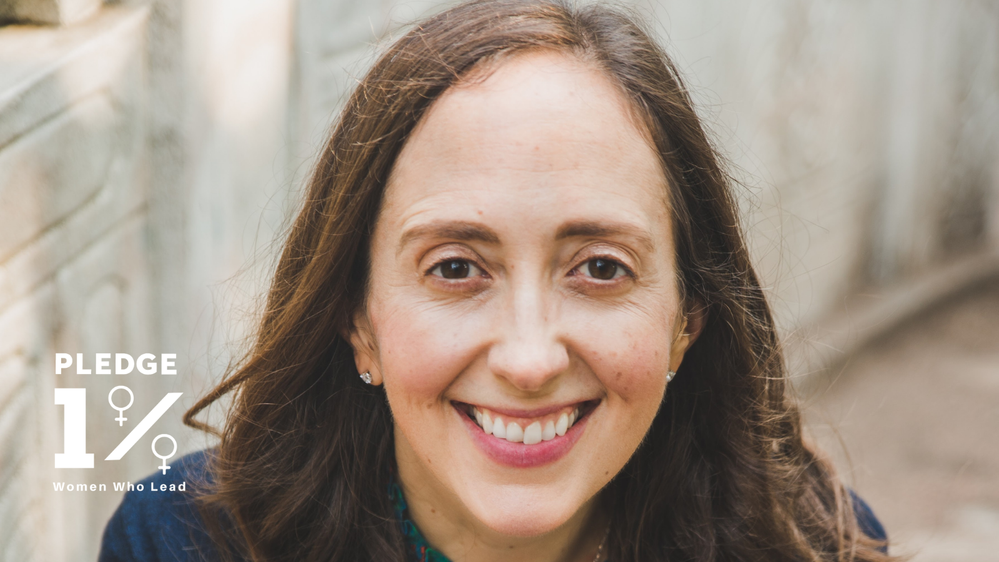
Pledge 1%’s #WomenWhoLead series celebrates female leaders who are paving the way for the next generation. While our featured leaders come from a variety of backgrounds and industries, they are united in their efforts to promote equality for all women in the workplace. We’ve asked them to share a bit about their journey to success, as well as lessons they’ve learned along the way.
What is your name and title?
Claudine Emeott, Sr. Director of Impact Investments at Salesforce Ventures Impact Fund.
How did you get here? Please share any quick stories from past work experiences.
Impact has always been my career through-line. That North Star has taken me to some very different places and given me a range of experiences I am very grateful for. I began my career in economic development consulting, both in emerging markets and in the U.S. In 2011, I left a consulting job in Chicago to move to Kathmandu as a Kiva Fellow. This experience with Kiva opened my eyes to the power of technology to address some of the world’s most pressing challenges. After spending a year in Nepal, I moved back to the U.S. for a full-time role with Kiva, working on a new impact investing initiative for social enterprises.
In my five years at Kiva, I loved working at the intersection of investing, impact, and technology.I knew that I wanted to commit my career to the field. When Salesforce announced a new impact investing initiative, I was really excited about the opportunity to work for a much larger, but still mission-driven company. I joined Salesforce in 2017 to lead the Salesforce Ventures Impact Fund.
In your opinion, what’s the #1 decision or move you’ve made that has helped advance your career?
I have always been open to taking a major leap when the opportunity on the other side has the potential to meaningfully shift my career – whether that was moving to Kathmandu with Kiva or making the transition to a large company like Salesforce. I welcome the chance to stretch myself.
What is the most important lesson you’ve learned this past year?
Early on in the pandemic, I read something that strongly resonated with me — “We expect women to work like they don’t have children and raise children as if they don’t work.” In the chaotic transition to working, parenting, and schooling all happening at home, many women found themselves still fighting against that double standard in impossible circumstances. I personally had to combat the urge to apologize when one of my young children burst into a room while I was on a video call. I made the conscious decision to be candid with my immediate team about the very real challenges of juggling this stressful dynamic.
Sharing my own challenges paved the way for my team to open up about whatever they were encountering as well. Ultimately, this brought us closer together in a year of distanced working.
What is one thing companies can do, big or small, to help create an environment that advances women into leadership positions?
There are so many ways you can show up and speak out for gender equality. One thing companies can do is to close the pay gap. If you’re a hiring manager, take steps to close the gender pay gap at your company. Salesforce has invested more than $12 million to ensure that our employees are receiving equal pay for equal work. We conduct annual pay audits, evaluating by both gender and race. As a hiring manager, you can also examine your hiring practices to evaluate whether they are inclusive.
When did your company join Pledge 1%? What does your impact program mean to you?
Since the beginning, Salesforce has aspired to be a different kind of company — from our subscription-based software model, to our 1-1-1 giving model that put community service in the center of our culture. In 2014, leaders from Salesforce joined Atlassian and Rally to launch Pledge 1% and accelerate our vision to integrate philanthropy into businesses globally.
Our approach to the 1-1-1 model has evolved and expanded to address the needs of all stakeholders. The Salesforce Ventures Impact Fund, launched in 2017, advances social and environmental causes alongside strategic and business goals.
Is there a cause that is particularly close to you? If so, why this cause and how did you get involved?
I started my career in international development, and this work has always been close to my heart. A couple years ago I joined the board of the nonprofit Project Concern International. Last year, PCI served over 20 million people around the world with programs that enhance health, end hunger, and combat hardship. PCI has a strong focus on supporting women and girls in particular. That really resonated with me as a woman and mother. It has been a great experience serving on the board of PCI, and now the transition board of Global Communities (which PCI merged with in 2020).
What’s been the one (or two!) things that have helped you navigate this past year? Any tips or tricks to dealing with remote work?
Walk and talk alternative for some meetings — I think we can all agree that an old-fashioned phone call can be a nice break from Zoom meetings. It’s even better if we can get outside for a walk and fresh air!
In place of a commute, when I would listen to podcasts and read the news, I have had to develop a new morning routine. My morning workout is sacred, as is my first coffee of the day. I’ve also started using a paper journal every day to document gratitude, intentions, and top priorities. I find that using paper and pen is also a welcome change from my laptop. I’m still working to create other rituals to close the day.