This story was submitted as part of the #Pledge1Gives GivingTuesday campaign, which celebrates the many ways our member companies are having an impact around the world.
Justice reform in America has never been more vital to our country’s health or more urgent than it is today. There are 2.3 million incarcerated individuals in the U.S.¹, who together make up 20% of the worldwide prison population.² When formerly incarcerated people are released in America, they’re confronted by a harsh and unforgiving job market, with unemployment rates nearly five times as high³ as those faced by other job seekers. But there are actions we can take to create new opportunities for these individuals and change that statistic for the better.
As Bryan Stevenson, the founder and executive director of the Equal Justice Initiative, says, “Proximity has taught me some basic and humbling truths, including this vital lesson: Each of us is more than the worst thing we’ve ever done.”
That’s why Slack co-created Next Chapter, an apprenticeship program designed to bring formerly incarcerated individuals into highly skilled engineering roles. And today we are announcing that Dropbox and Zoom are joining us to launch Next Chapter within their own organizations.
“We are thrilled to welcome Dropbox and Zoom to the Next Chapter program,” says Natrina Gandana, the project director for Next Chapter. “The two companies’ involvement in the program is critical to helping advance justice reform. Our focus is not only to help formerly incarcerated individuals secure these positions. Our goal is to transform the tech sector and make it an equitable and inclusive space in which to work.”
Eight apprentices are starting the program this year and will receive financial support, professional and technical mentorship, and reentry services. The apprentices will begin working with their respective companies this summer and fall.
A partnership for change
“If you want to solve any problem, you have to understand what the problem is first. You have to get close to the issues in order to do that,” says Kenyatta Leal, the reentry director for Next Chapter. “With the addition of Dropbox and Zoom, we’re going to be able to make an even broader impact together.”
This partnership is a small but meaningful step toward addressing the long-term, systemic changes that are needed to make our companies and our country more just and inclusive places to work and live.
“Providing a critical investment in the skills and potential of formerly incarcerated people and working closely with employers to shift how they work to be more equitable and welcoming are key to Next Chapter’s success,” says Tameshia Bridges Mansfield, a program officer at the W.K. Kellogg Foundation, a Next Chapter partner. “It is this combination of individual investment in the people and partnership with leaders in the tech sector that creates the conditions for systemic change necessary to realize the vision that we hold for children, families and communities.”
A small but significant step in the right direction
Since graduating from Next Chapter’s pilot last year, all three former apprentices have joined Slack full-time as engineers.
“All three are thriving in their roles within Slack Engineering and are making significant contributions to the company,” says Drew McGahey, a senior engineering manager at Slack. “Our former apprentices, now engineers, are on different teams: building our product design system, working on our product onboarding flow, or building tooling for our Engineering Productivity organization. The work ethic and determination displayed by all three of them is inspiring and a stark reminder that there is untapped talent just waiting for an opportunity.”
“If you want to solve any problem, you have to understand what the problem is first. You have to get close to the issues in order to do that. With the addition of Dropbox and Zoom, we’re going to be able to make an even broader impact together.”
Charles Anderson, a former apprentice who is now a full-time Slack engineer, observes that program participants bring more than coding skills to the table. “We’re hardworking, we’re passionate about change, and we’re going to try and give back in so many different ways,” he says.
Besides excelling as engineers, the former Next Chapter apprentices have found ways to give back to their communities. Shortly after finishing the program, Anderson began tutoring young adults from local youth detention centers.
“I let them know about my experience and that no matter what, if you truly want to change, that it’s possible, and there are people out there who care about you and support you,” he says. “My hope is to get a group of kids prepared, get them into a coding boot camp, and then, with the connections that I’ve built, get them a job in engineering.”
Apprentices, and the communities they serve, aren’t the only ones who benefit from the Next Chapter program. Participating companies stand to gain engaged, committed employees—a huge boon in tech’s hyper-competitive talent marketplace.
“We might not have the same education as the typical engineer, but we haven’t been given many chances in our life,” Anderson says. “Every chance that we now have, especially after we’ve decided to change and do something with our lives, we don’t take lightly.”
While the Next Chapter program has a significant impact on the lives of the apprentices and their families, we recognize that it is just one small step forward for participating companies and the broader technology industry.
Call to action: How can you help?
“For companies committed to making a difference for formerly incarcerated people, simply donating isn’t enough,” says Slack co-founder and CEO Stewart Butterfield. “You have to create opportunity, and you have to start by looking inward. Through programs like Next Chapter, we believe the technology industry has a chance to design new pathways to skilled, high-paying jobs that can create a better future not only for people leaving prison but their communities.”
This story was submitted as part of the #Pledge1Gives GivingTuesday campaign, which celebrates the many ways our member companies are having an impact around the world.
Empower your employees to give back at the individual level by downloading our newVirtual Volunteering Playbook, which includes ideas and best practices on how to excite and inspire individual giving.
Or, a beginner’s guide for launching a global Social Impact strategy during a global pandemic … and why I should have made it happen earlier.
In the midst of a global pandemic, a massive recession, civil unrest, and the end of “normal” as we know it — combined with an upcoming IPO — Unity decided to create and launch Unity Social Impact. The following is a hazy account of what went down, including my mistakes, and where we knocked it out of the park.
It All Started on a Flight
In February, 2020, I was traveling for work and had the fortuitous coincidence of being seated next to our CEO, John Riccitiello, for the long flight. We discussed everything from physics to US election politics to “enlightened capitalism,” a term John coined to mean essentially “doing well by doing good.” During the flight, we reflected on “enlightened capitalism,” noting that it had been the soul of our company since Unity’s founding, with a focus on democratizing access to Unity’s technology.
This belief has enabled thousands of Unity creators to leverage the platform not just to create 3D content, but experiences that encourage and inspire social change. We see experiences that run the gamut, from education to sustainability to health and well-being. This evolution solidified our company philosophy: “The world is a better place with more creators in it.”
On this flight, we realized now was the time to structure and proactively propel a focus on social change, within Unity and beyond. By the time we landed, there was a sketch of an approach in our heads, which we would “get to at some point.”
Four weeks later, most of our company (in 40+ offices around the world) went on lockdown in our homes while trying to seamlessly carry on with business as usual. The evolving pandemic, recession, and civil unrest fueled our company’s passion to make a much more significant, structured commitment to Social Impact. We went from “get to it at some point” to “launch fast.”
A Timeline for the Overly Ambitious
Despite my best efforts to find the “How to Set up Corporate Social Impact …Fast” CliffsNotes, I quickly realized no such manual existed. Instead, I doubled down on our vision to keep Social Impact deeply rooted in our core business (not a side CSR program) and called on a few trusted advisors to mentor me (Dr. David Washington and Jan D’Alessandro were critical).
April, 2020 — Roll out the vision internally at a company All-Hands. Vision includes structure our Social Impact work by combining existing, related programs like Education, Unity for Humanity, Safety, and Accessibility.
May, 2020 — Landscape analysis to quickly figure out who is doing what in our peer groups and make as many friends as possible. Pledge 1% was and still is my go-to. Reorganize existing team members into Social Impact.
June, 2020 — Present to the board of directors a top-level approach to Social Impact strategy while asking for a significant pre-IPO equity donation 3 months before IPO. Learn that Pledge 1% was in the process of releasing the ”how-to” manual that I sought and get early access to their methodologies.
July, 2020 — Not going on holiday anyway in a pandemic, double down with our core team of big thinkers to create the strategy (Theory of Change, Logic Model, Landscape Analysis, Program Strategies tied to UN SDGs, Business Model and Financial Model. Yes, this is about both making money and giving away money).
August, 2020 — Do all of this simultaneously:
— CEO aligns board on significant equity donation
— Align all key stakeholders (almost 200 people: employees, exec team, external partners) on the strategic plan with slight adjustments.
— Set up DAF for pre-IPO donation with the Tides Foundation, saving both significant time and money to focus our efforts on impact v. paperwork
September, 2020 — Oh yeah … and go public virtually with all employees virtually ringing the bell together while showcasing our creators making social change.
October, 2020 — Hold our first post-IPO virtual event with new investors, the inaugural Unity for Humanity launch event, with 150 speakers from all over the world, more than 12,000 attendees, most new to Unity, from over 7,000 companies. More than 100 countries are represented, with both executives and students making up most of the attendees (more on this in my next article).
November, 2020 — Bring onboard key hires to round out the team. Ours were in Sustainability, Employee Giving, and Social Impact Outcomes Analysis.
My Mistakes
Here’s where I screwed up and wish I would have done things differently:
Start Earlier — I should have structured a formal approach earlier. Our equity donation would have been easier, our strategy would have been clearer, and our employees would have felt deeper engagement.
Company Impact is Not Personal Giving — The company Social Impact playbook is not well known, and as a result, stakeholders often default to their personal giving approach as opposed to what is best to drive the business forward. I should have started off with a clearer hypothesis on how our Social Impact approach propels our business forward so it wasn’t subjected to personal experience. Once I learned about Pledge 1%’s 1–1–1 model of corporate philanthropy (time-product-profits and/or equity), I quickly got up to speed on how to formalize our equity pledge and educated our CEO. He embraced the concept and built board consensus around donating equity to a corporate Donor Advised Fund that would fund our Social Impact work for years to come. (To be confirmed, but our view right now is that our approach generates more creators, more experiences, and essentially more revenue opportunities.)
Start with Employees — We should have launched a structured employee giving approach with employee volunteerism first. At Unity, we have the most passionate employee base I have ever had the privilege of working with. And we do a lot of ad hoc giving — employees volunteer sporadically, and we dedicate pro bono teaching, support, and development time when teams see fit — but we are just getting around to a global, structured program that provides access and engagement to all employees. At 40+ locations and almost 4,000 employees, we missed out on the massive impact their passion can fuel.
Our Wins
Here’s what made all the difference in the world:
Doing Even Better by Doing Good — we structured our strategy with a focus on both impact and incremental direct revenue that will be created by the Social Impact strategy. It’s not just about increased employee engagement, elevated brand perception, ESG ratings, etc. — we committed to annual direct revenue we would generate as part of our strategy by selling discounted licenses for our products to nonprofits.
CEO Champion — ESG informed investments by asset managers are real, but too early-stage for some to take seriously. I’d love to think that the hours or days of due diligence to make our board case for pre-IPO donation made a difference, but really it all comes down to the CEO’s passion and commitment to see it through.
Killer Team — I’m the luckiest. I have the incredible privilege of supporting the most amazing team focusing on education, sustainability, health, and Social Impact. But even more, I’m so lucky to work with the most passionate, talented global team of global change-makers: Unity employees.
Mentors — it takes a village … but really for me, it was two key people:
Dr. David Washington is the founder of Partnerships for Purpose, a Social Impact consulting firm leveraging our shared culture to unify and align the superpowers of influencers, policy, philanthropy, frontline non-profits, and corporate Social Impact to make a scalable change. If you need a silo breaker who understands how to empower each of us to make social change, he is the best.
Jan D’Alessandro is the co-author of the Pledge 1% Equity Playbook, in addition to this treasure trove, she is a proven corporate Social Impact executive and investor. When going toe-to-toe with a seasoned Board and CEO, there is no stronger partner to aid you in the negotiations, and no better advisor to help you build your Social Impact program.
Telling the World — We announced our Social Impact strategy in the longest speaking slot at our IPO debut and followed up six weeks later with our two-day Unity for Humanity event, showing the world that our Social Impact program is core to our business — and we mean business.
Originally posted: December 1st, 2020
This story was submitted as part of the #Pledge1Gives GivingTuesday campaign, which celebrates the many ways our member companies are having an impact around the world.
On this Giving Tuesday we’re reflecting on how grateful we are to the organizations that provide critical services and support to those in need. Not only are we offering employee donation matching and virtual volunteer opportunities, but we wanted to feature and raise awareness around some of the organizations we’ve worked with this past year.
This year has challenged us all, in very complex and different ways, and to address this we launched our first Community Impact grant cycle earlier this year. We encouraged non-profits that are addressing their communities highest needs and barriers to economic participation to apply for a grant of up to $50,000, and the response we saw was huge.
The Impact Fund Advising Committee, made up of 10 ZEOs (Zuora employees) from all across Zuora, selected recipients with two criteria in mind. As we looked at applications, we identified organizations that were providing immediate and emergency relief to those most negatively impacted by COVID-19. This relief includes disbursement of food, rent relief, affordable housing placement, and individual and small family micro grants. And secondly, organizations shifting their delivery models to accommodate the new COVID-19 world we live in. These shifts enable organizations to more effectively and safely reach their constituents virtually or through social-distanced delivery methods.
(staff from Hospitality Helps)
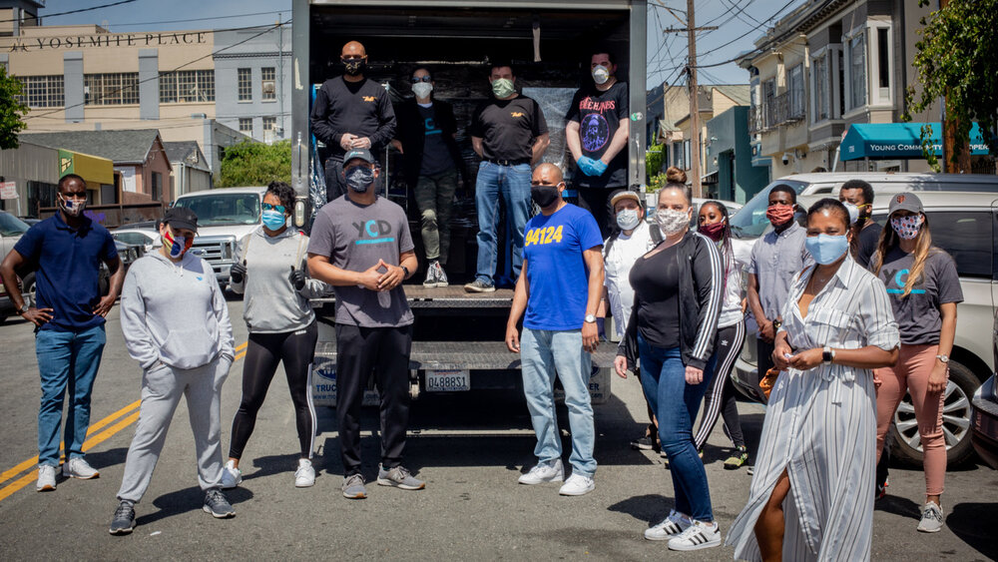
One of our recipients, Hospitality Helps, a San Francisco catering company teamed up with Meals on Wheels, transformed their 9,000sq-ft catering kitchen and rehired vital furloughed kitchen staff to deliver safe, healthy, nutritious family-style meals to those in need. Since March, they have delivered close to 100,000 meals to San Francisco’s District 10 (Hunter’s Point/Bay View), a community disproportionately affected by COVID-19, living in the “food desert” of San Francisco and cut off from school based nutrition.
We’re inspired by Hospitality Helps and were proud to name them one of our Community Impact Grant awardees.
Here’s a full list of our 2020 recipients:
Aruwe: Serving Tamilnadu, India, Aruwe provides emergency relief such as food and household items to those most negatively affected by COVID-19. Working closely with local families they provide knowledge on how to stop the spread of the virus and provide programs to help these families regain their livelihood.
Farming Hope: Farming Hope is a San Francisco based farm-to-table nonprofit social enterprise empowering and promoting self-sufficiency for people who have experienced homelessness or incarceration through job training and employment in the culinary industry.
Hack the Hood: Hack the Hood launched with a mission to build a tech sector that works for everyone. They do this by providing technology education and workforce opportunities to early career youth of color, ages 16-25. To deepen their technical skills and career development, youth serve as digital marketing and technology consultants to local small businesses. They build websites and leverage analytics to help entrepreneurs drive revenue. As one of the first organizations in this field, Hack the Hood has a commitment to implementing a project-based, rigorous curriculum that is relevant to the communities they serve.
Hospitality Helps: Hospitality Helps/Taste Catering (in partnership with Young Community Developers, Inc.) is producing and delivering delicious, fresh and ready-to-eat family meals to SF’s District 10 (Hunter’s Point/Bay View), a community disproportionately affected by COVID-19, living in the “food desert” of San Francisco and cut off from school based nutrition.
Monthly Miracles: Monthly Miracles saves the Tri-Valley residents from homelessness every month by mobilizing the community through $1/month donations.
NPO e-Education: Serving Bangladesh, e-Education provides emergency educational support to underserved high school students by matching them with local university student tutors who are out of work due to COVID-19.
Oasis for Girls: Oasis for Girls partners with young girls of color, aged 14-18, from under-resourced communities in San Francisco to cultivate the skills, knowledge, and confidence to discover their dreams and build strong futures.
Open Heart Kitchen of LIvermore: Open Heart Kitchen serves prepared, nutritious meals free of charge to the hungry people of the Tri-Valley, California. They are the only hot meal program of its kind in the Tri-Valley area and given new COVID-19 demand, have increased meal delivery to people experiencing homelessness or escaping domestic violence.
SFMade: SFMade’s mission is to build and support a vibrant manufacturing sector in San Francisco and the Bay Area, that sustains companies producing locally-made products, encourages entrepreneurship and innovation, and creates employment opportunities for a diverse local workforce including for women and people of color.
Tri-Valley Haven for Women: Tri-Valley Haven creates homes safe from abuse, contributes to a more peaceful society one person, one family, one community at a time. Together, they build a world without violence.
We are also excited to announce the Zuora Impact Fund has received another $1,000,000 of funding to fuel our philanthropic work. For more information on Zuora’s philanthropic work, visit Zuora.org.
Originally posted: December 1st, 2020
This story was submitted as part of the #Pledge1Gives GivingTuesday campaign, which celebrates the many ways our member companies are having an impact around the world.
Empower your employees to give back at the individual level by downloading our newVirtual Volunteering Playbook, which includes ideas and best practices on how to excite and inspire individual giving.
From the global pandemic to the Black Lives Matter movement, our status quo will never be the same. But despite the exceptional challenges we face today, we also have an unprecedented opportunity to build a better world. This past year has shown how critical it is for businesses to become more value-driven and play a role in moving the needle on social issues— to step up and find new ways to respond in these extraordinary times of need.
Salesforce is proud to participate in the #GivingTuesday movement and to encourage others to join the wave of generosity, engagement, and action. In celebration of giving back and the customers we support, we’re recognizing three inspirational Salesforce partners who are reimagining how to make an impact for our communities.
Home improvement retailer Lowe’s is a prime example of backing up principles with action. Lowe’s donated $55 million in grants to the Local Initiatives Support Corporation, with $30 million in new funding for minority- and women-owned businesses,which continue to be disproportionately impacted by the pandemic. More than 2,000 businesses nation
wide have received critical funding since the summer when the grant funds were first announced. The next round of funding applications launches Nov. 30 and closes Dec. 6.Visit LISC.org/lowes to learn more or apply for a grant.
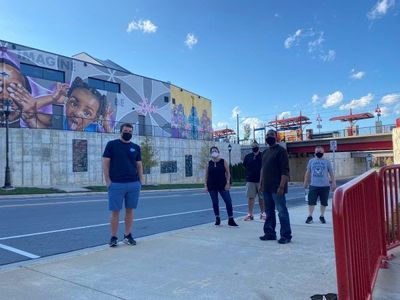
With the company’s ongoing commitment to empower minorities and economically vulnerable communities, Lowe’s teamed up with Salesforce to beautify an underserved Black community in Charlotte, N.C. Collaborating with the Art Pop Gallery, Lowe’s and Salesforce commissioned Abel Jackson — a local Black artist (also one of 22 artists who worked on Charlotte’s Black Lives Matter mural). Titled “Self Love,” the mural brought to life a message of hope, inspiration, and unity for the future, with the depiction of children “Hearing, Imagining, and Being Love.”
Lowe’s also launched a social media campaign,#BuildThanks,to encourage Americans to make DIY thank you signs for healthcare (and other essential) workers and first responders. The initiative inspired communities to get creative with supplies they already had at home, showing their gratitude to front-liners on their front yards — and sharing these messages online with the hashtag #BuildThanks.
Gap Inc: Helping communities return to work and school
According to a recent Salesforce survey of more than 20,000 people in 10 countries,people believe that the highest priority for businesses should be ensuring workplace health safety.
With the onset of COVID-19, leading global retailer Gap Inc. responded to this need with the production of masks. They leveraged their deep supply chain relationships and agile operations, to provide companies and healthcare communities with high-quality reusable, non-medical grade cloth face masks for employees.
John Strain, Chief Digital and Technology Officer explained: “At the beginning of the pandemic, Gap Inc. quickly responded to a customer need for high-quality reusable, non-medical grade cloth face masks.” As offices began re-opening, “We started hearing from companies who wanted to help meet the high demand for personal safety, by providing masks to employees. This led to the launch of our B2B mask program.”
Launching their mask program in only a few weeks, they leveraged Salesforce Commerce Cloud to quickly create a B2B channel and digital storefront. To date, the B2B product program has sold more than 10 million face masks to employers, including the City of New York, the State of California, Kaiser Permanente and a leading consulting firm.
To help amplify the efforts of Gap Inc, Salesforce purchased 100,000 Gap masks for company employees. And as children and teachers began returning to school, Salesforce donated 16,000 of these masks to public schools in Oakland and San Francisco.
“We’re thrilled to extend our masks to a fellow SF-based organization like Salesforce, and that they are supporting the community by donating to schools in Oakland and San Francisco,” said Strain.
American Family Insurance: Supporting fearless dreamers
In the same Salesforce survey, 60% of respondents said they trust businesses to build a better future for younger generations, a figure that has risen since last fall. But 66% felt that progress has stalled on widening access to education. Others were concerned about work opportunities, with 80% reporting that access to jobs is not improving.
With a mission to inspire and help communities discover, pursue and protect their dreams #DreamFearlessly, American Family Insurance stepped up to support and celebrate education — especially in underserved Black communities.
AmFam co-sponsored the YouTube Originals HBCU Homecoming 2020: Meet Me On The Yard. This global live stream featured celebrity guests and influencers, to celebrate the traditional fall homecoming weekend at Historically Black Colleges and Universities (HBCU) across the country. Proceeds were donated to the Funds of the United Negro College and the Thurgood Marshall College.
According to Sherina Smith, Marketing Vice President at AmFam: “American Family welcomes the opportunity to support an event that will bring joy to the lives of many, while underscoring the important role that HBCUs have played in producing fearless dreamers, leaders and achievers who have changed our world.”
The sponsorship also reflects AmFam’s commitment to a diverse and inclusive workplace: “We want to create a thriving workplace and be an employer of choice for diverse talent who can grow their careers and contribute to our inclusive culture,” Smith explained.
Additionally this year, AmFam’s Community of Dreamers program provided $2,500 grants to 200 non-profits in communities across the United States. “In 2020, due to the devastating and continuing effects of the pandemic, contributions were focused on charitable organizations that have stepped up to provide COVID-19 relief,” said Maggie Pascaly, American Family Community Investment Manager.
A Platform for Change
These three Salesforce customers proved that companies can become more values-driven and find creative ways to give back to their communities. We couldn’t be prouder of our partners for taking a stance and making an impact on a large scale. And we’redoing our part too.
At Salesforce, we believe the corporate sector can and should be a platform for change. Indeed, we have an unprecedented opportunity to make powerful changes that elevate our brands and build a better world.
Learn how your company can empower employees to give back and make a difference with Philanthropy Cloud.
Originally posted: December 1st, 2020
This story was submitted as part of the #Pledge1Gives GivingTuesday campaign, which celebrates the many ways our member companies are having an impact around the world.
At Crunchbase, we recognize that not all innovators have equal access to opportunities, and their ideas–no matter how great–may not have the same chances to break through.
That’s why we joined Pledge 1% in 2018 and have since donated at least 1 percent of our product, equity and employee time to help support nonprofits working to close the opportunity gap. To further our impact and provide additional resources to support the communities where our employees live and work, we’ve also created the Crunchbase Pro Bono Licensing Initiative.
Do More Good With The Help Of Crunchbase Pro
With the Crunchbase Pro Bono Licensing Initiative, eligible community organizations (501(c)(3) or equivalent non-profit status) can get all the benefits of Crunchbase Pro, for free.
You and your organization will be able to discover and engage with more potential corporate sponsors than ever before.
Growing your reach and accomplishing more meaningful change is made easier with expansive features including:
Advanced search: With unlimited search features, find companies that align with your mission and values.
Diversity Spotlight: Use company diversity data as a filter, particularly for nonprofits with racial and ethnicity clients or students.
Data visualization: Analyze trends with charts on Crunchbase company profiles to see if a company is in an appropriate position for potential sponsorship.
Personalized alerts: Get customized alerts on the companies and news you care about for more meaningful engagement with companies.
Crunchbase is here to help and support you in your world-changing initiatives, whether you use Crunchbase Pro within your organization to assist in your own due diligence and outreach process, or share it with those going through your program to help them complete a project or find their next opportunity.
Pledge 1% is a recipient of the Crunchbase Pro Bono Licensing Initiative and uses Crunchbase daily to help with a variety of different initiatives. According to their team, this is a powerful tool to help them better learn about and serve their members.
If you, or the organization you work with, are interested in applying for the Crunchbase Pro Bono Licensing Initiative, all eligible community organizations are invited to complete and return this application form.
Have questions about the program? Reach out to Halee Morgan, Corporate Social Responsibility Associate at Crunchbase:haleem@crunchbase.com.
Originally posted: December 1st, 2020
2020 has been a year like no other, but we are pleased to share that Pledge 1% companies continue to do more to address them. In 2020, for example, DocuSign has made bigger commitments of its resources – itspeople, products and financial philanthropy –to address the world’s challenges. Here are some of the ways that they are doing that:
People:On November 18, DocuSign held its annual Global IMPACT Day with thousands of employees in dozens of cities around the world engaging in team-based and individual service activities – from promoting healthy urban forests to helping children in need to supporting isolated seniors. This year, they were volunteering from home and in many cases, with their families. For the first time, given the virtual setting, the company offered a number of kid-friendly events so that Global IMPACT Day was both a moment to make a difference and also an opportunity to help children broaden their understanding of the world’s challenges.
Products: As many nonprofits have pivoted their own operations to the virtual environment, their need for scalable technology to aid them in this digital shift has increased. In 2020, DocuSign increased the budget for in-kind product donations to small nonprofits over four-fold to ensure that every nonprofit that applied for a product donation through its partnership with Techsoup would be served.
Philanthropy: On #GivingTuesday, DocuSign is pleased to share that it is reallocating funds originally earmarked for in person holiday parties to support organizations helping those in need in our communities who are suffering. Employees in dozens of DocuSign’s locations around the world are helping to allocate this new $500k fund to organizations providing critical services in their communities.
Originally posted: December 1st, 2020
This story was submitted as part of the #Pledge1Gives GivingTuesday campaign, which celebrates the many ways our member companies are having an impact around the world.
By Ally Kozel, Social Impact Specialist, Okta for Good
As this year’s intersecting crises continue to unfold, it’s more clear than ever that nonprofits provide a critical safety net for our local communities. These extraordinary times are laying bare the true risks — and opportunities — of nonprofit technology. As so many organizations must pivot to remote work, virtual service delivery and effective online fundraising, funding nonprofit technology is essential.
We are committed to leveraging our philanthropy, people, and products to help more nonprofits around the world accelerate their missions with technology. Earlier this year, Okta for Good launched a $10M/3 year philanthropy commitment and Nonprofit Technology Initiative, which is laser-focused on supporting the foundational technology needs of nonprofits. Our goal is to contribute to a paradigm shift in how nonprofits are funded and empowered to make the digital transition.
Benetech is one of ten grantees within the Nonprofit Technology Initiative whose mission it is to provide communities with software for social good. With its Service Net product, Benetech is investing in the critical but invisible work of streamlining and expanding access to information on social services. Never has this mission been more important than this year, as COVID-19 has put enormous strain on the social safety net and forced organizations to rely even more on technology to address urgent community needs.
With our Nonprofit Technology Initiative, Okta is also deepening our commitment to support community needs by enabling nonprofits with technology through our products and services. With the onset of COVID-19, many organizations had to quickly transition to remote work including Achievement First, a public charter school system that believes all children, regardless of race or economic status, can succeed if given access to a great education. By using Okta’s workforce identity products, Achievement First was able to deploy critical technology such as Zoom for 2,700 staff members in only four days. This seamless support allows Achievement First to focus on providing education and supporting its families.
It’s critical for companies to support our nonprofit partners now to ensure they are prepared for the next crisis. Here’s how you can help:
Fund for infrastructure, capacity and technology including unrestricted and multiyear grants
Don’t just give away your products, but rather solve for enablement with pro bono support and education
At Okta, we continue to be guided by our belief that nonprofits should be as powerful as their missions, and we’re inspired by the leaders who are driving change. We hope our initiative is just the starting point to address this critical need. Find out more about our work and how to partner with us on this journey here or watch the video below:
Originally posted: December 1st, 2020
This story was submitted as part of the #Pledge1Gives GivingTuesday campaign, which celebrates the many ways our member companies are having an impact around the world.
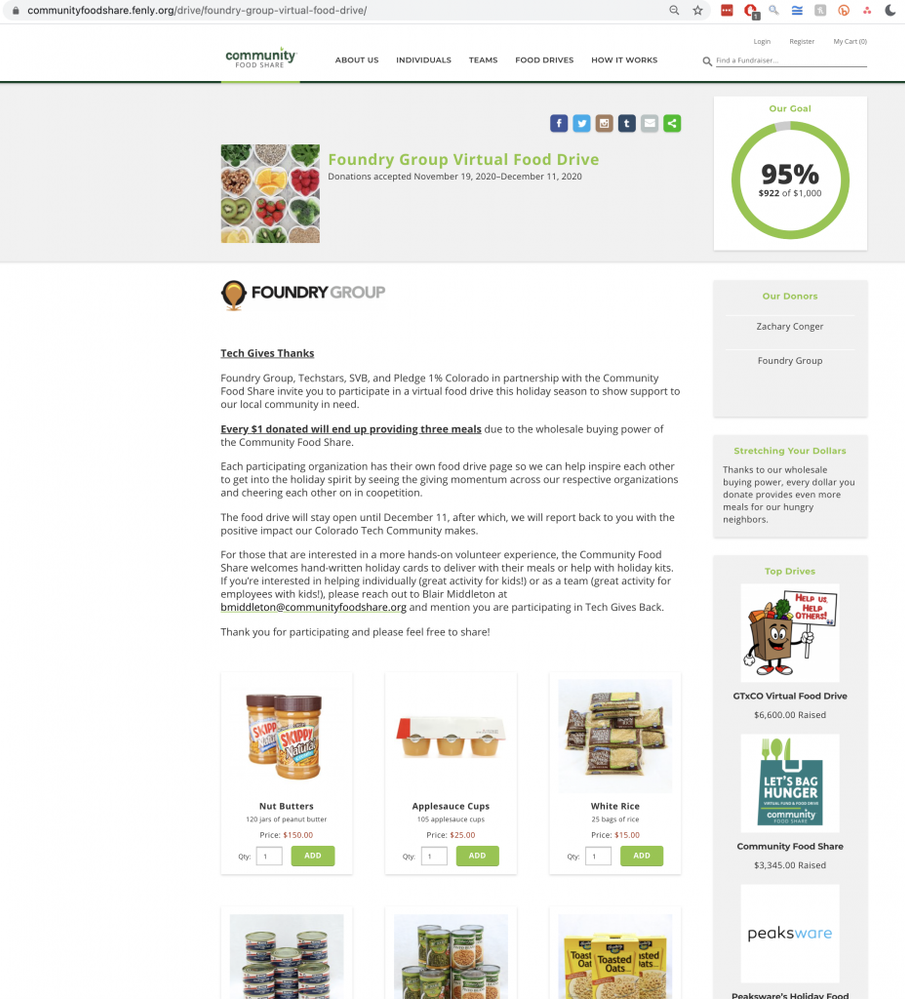
While we were disappointed we couldn’t gather in-person for our annual Tech Gives Back volunteer event, we were excited to invite our portfolio companies and members of the community to participate in a Tech Gives Thanks virtual food drive hosted byTechstars,SVB,Foundry Group, andPledge 1% Coloradoin partnership with theCommunity Food Share.
The food drive went live on 11/20 and folks can learn more and donatehere. Every $1 donated will end up providing three meals due to the wholesale buying power of the Community Food Share. We hope to inspire each other to get into the holiday giving spirit by seeing the giving momentum across our community and cheering each other on in co-opetition.
The food drive will stay open until December 11, after which, we will report back with the positive impacts our community makes.
This story was submitted as part of the #Pledge1Gives GivingTuesday campaign, which celebrates the many ways our member companies are having an impact around the world.
Empower your employees to give back at the individual level by downloading our newVirtual Volunteering Playbook, which includes ideas and best practices on how to excite and inspire individual giving.
As for so many communities and individuals, the murder of George Floyd and ensuing protests challenged how we operate as a company and how we think about our role to enable new systems that advance equity and actively combat systemic discrimination. Recognizing that business either perpetuates current systems or creates new ones, we’re taking steps to ensure our actions—through both core business operations and social impact—generate greater racial equity.
We made rapid response grants to get dollars flowing to the front lines of this work and instituted a company day of reflection on Juneteenth, Day For Change, during which all Dutonians (that’s PagerDuty employees) were asked to take meaningful action and advocate for equity and critical reform for the Black community. From education to volunteerism and giving, we offered opportunities for Dutonians—alongside their colleagues, friends and family—to engage and work toward true change.
Giving
In June, we announced contributions to NAACP and Black Lives Matter and pledged $500,000 towards creating Just & Equitable Communities with a specific goal to combat systemic discrimination. We launched a special match campaign to benefit the NAACP. With matching funds provided by our CEO Jenn Tejada, a set of pooled donations from our leadership team, and the PagerDuty.org Fund, the 3:1 match inspired more than 200 employees to contribute and raised over $150,000. Dutonians held grassroots fundraisers as well, including Tobi from our Toronto office who inspired his peers toRace for Actionwith a 100-meter race challenge supporting an organization advancing racial equity in Canada’s Black community.
Employee Time
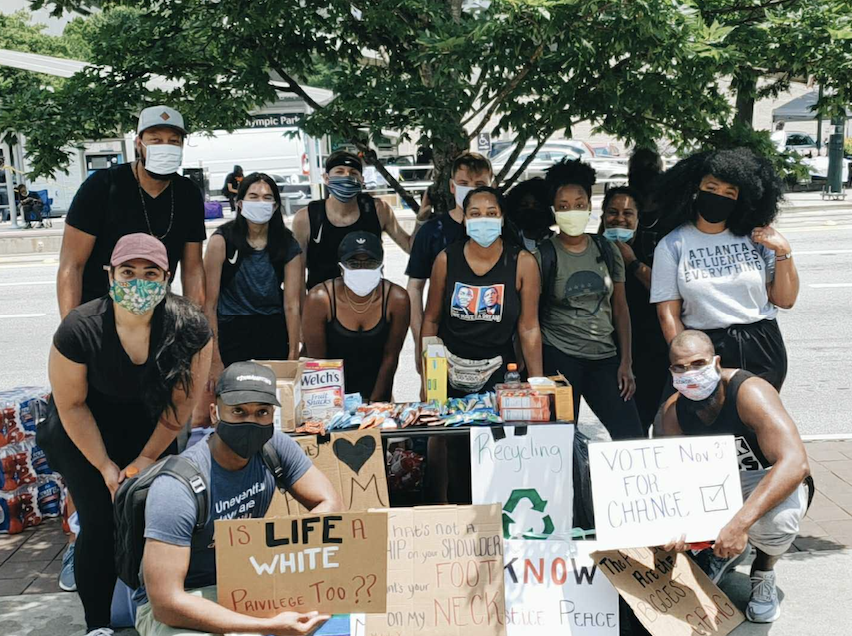
PagerDuty expanded its volunteer time off (VTO) policy to include participation in peaceful civil and human rights demonstrations, as well as voting and nonpartisan voter engagement with a focus on voter turnout in underrepresented communities. Juneteenth will be an annually recognized paid day off at PagerDuty. During our inaugural Juneteenth day of action, employees were asked to share their action plans for Day for Change, with more than 100 employees committing to activities ranging from self-education through reading books and watching film to engaging in advocacy efforts with organizations that supported the Black community. While many took the time to reflect individually or with their families, the day also brought colleagues together for collective action. One group of Dutonians came together to build “The Peoples’ Police Registry,” a web-based resource for the everyday citizen to learn more about the officers policing their communities. In Atlanta, another group volunteered to distribute water and food to demonstrators participating in a local protest.
Amplification
Jenn Tejada publicly announced on CNBC a call for tech companies, industry leaders and individuals to join PagerDuty in standing in solidarity with the Black community, and use their collective power and influence to drive demonstrable change, equality, and justice. We open-sourced our Day for Change toolkit with our peers in the Pledge 1% community and the broader tech industry to make it easy for others to join us in education and action.
While strategic philanthropy and employee activation are critical levers for impact, we recognize the power of core business operations to drive change. PagerDutysigned an open letter, alongside 15 other tech companies, requiring vendors and investors to invest in inclusion, diversity and equity in order to do business with PagerDuty, and is implementing new guidelines to inform acceptable use of our platform. In September, we became a founding pledge member of the Board Challenge and committed to appointing a Black director to our board in the next 12 months.
We recognize that change will not happen overnight, and that it requires honest assessment of our progress and continued diligence, accountability and collaboration.