Jacqueline Purcell
CFO, Rokt
📍New York, USA
What qualities do you think leaders need to have in today’s world?
Leaders need to be curious, courageous and humble.
If you had to describe your leadership style in one word, what would it be and why?
Grounded. I try to lead with perspective and calm judgment, especially when things are moving quickly or stakes are high.
How does your company’s Pledge 1% program help shape the kind of workplace culture you believe in?
Being a force for good is one of Rokt’s core values, and our Pledge 1% commitment brings that value to life. It helps shape a culture where giving back is embedded in how we think about success and the role we play in the communities in which we live and work.
This year marks the 7th year of Pledge 1%’s #WomenWhoLead campaign. How can companies champion and support female leadership?
Companies champion female leadership by creating environments where women have real opportunities to grow, lead, and take risks. That means investing in mentorship and sponsorship, ensuring equitable access to opportunities, and building cultures where diverse perspectives are genuinely valued and supported.
If you could write a note to your younger self on her first day of work, what would it say?
Don’t hold back. Be confident in your voice, take the opportunities in front of you, and remember that growth often comes from stepping forward before you feel completely ready.
Kim Cooper
Founding Operating Partner, U&I Ventures
📍San Francisco, U.S.A.
What qualities do you think leaders need to have in today’s world?
Empathy, courage, and accountability.
If you had to describe your leadership style in one word, what would it be and why?
Empathic.
I lead by listening first. People do their best work when they feel seen and understood. Empathy builds trust — and trust is what drives strong, lasting teams and organizations.
How does your company’s Pledge 1% program help shape the kind of workplace culture you believe in?
Pledge 1% reflects our commitment to global citizenship. We believe companies have a responsibility beyond profit — to contribute to community, advance equity, and expand opportunity at scale. It helps embed those values into how we show up every day.
This year marks the 7th year of Pledge 1%’s #WomenWhoLead campaign. How can companies champion and support female leadership?
By allocating capital equitably. If we want more women in leadership, we need to fund them, as founders, emerging managers, and decision-makers. Capital doesn’t just support companies; it changes trajectories.
If you could write a note to your younger self on her first day of work, what would it say?
Your strengths matter, even if they’re hard to quantify. Be yourself — trust will follow.
Heather Black
CEO, Supermums
📍London
What qualities do you think leaders need to have in today’s world?
Resilience, Flexibility, Ethics, Innovative
If you had to describe your leadership style in one word, what would it be and why?
Dynamic.
How does your company’s Pledge 1% program help shape the kind of workplace culture you believe in?
We support our trainees to give back and volunteer their time to support non-profits with their technology systems to maximise fundraising and impact. We believe giving helps people to gain new experience and skills.
This year marks the 7th year of Pledge 1%’s #WomenWhoLead campaign. How can companies champion and support female leadership?
Introducing new approaches and practices to support the diversity and selection of applicants within the recruitment process will increase the number of women in tech related roles at all levels.
If you could write a note to your younger self on her first day of work, what would it say?
Everyday is a school day. If you don’t know something, go and find out.
Jenna Nicole
Marketing Director, AbsoluteLabs
📍Newbury, UK
What qualities do you think leaders need to have in today’s world?
I believe effective leadership is about navigating challenges while spotting opportunities others might miss, all while staying anchored to a clear vision of the end goal. Leadership is never a one-person effort. The strongest leaders harness the strengths around them, bring people with them on the journey, and recognise that the most meaningful success is shared success.
Working in marketing, where the landscape evolves constantly, I’ve seen how important it is to balance strategic thinking with emotional intelligence. Stay humble, build trust, communicate with clarity and empower diverse teams to challenge ideas and drive innovation. Modern leadership is less about hierarchy and control, and more about agility, innovative thinking, and self-belief.
If you had to describe your leadership style in one word, what would it be and why?
Collaborative.
How does your company’s Pledge 1% program help shape the kind of workplace culture you believe in?
We have a great culture already, but as we grow, we need to foster that same spirit of collaboration and purpose while continuing to give back to the communities and organisations we’re part of.
This year marks the 7th year of Pledge 1%’s #WomenWhoLead campaign. How can companies champion and support female leadership?
Companies can champion and support female leadership by creating environments where women are encouraged to step forward, lead, and shape decision-making at every level. That means building clear pathways for progression, supporting mentorship and sponsorship, and fostering cultures where diverse perspectives are genuinely valued and heard.
Research shows that companies with gender-diverse executive teams are around 25% more likely to outperform financially, demonstrating that supporting female leadership isn’t just the right thing to do, it’s also good for business.
If you could write a note to your younger self on her first day of work, what would it say?
Believe in yourself more than you think you should. Don’t doubt your place in the room, you’ve earned it. Ask questions without worrying about being an inconvenience; curiosity is how you learn and grow. Back your ideas, speak up with confidence, and remember that strength often comes from trusting your own instincts.
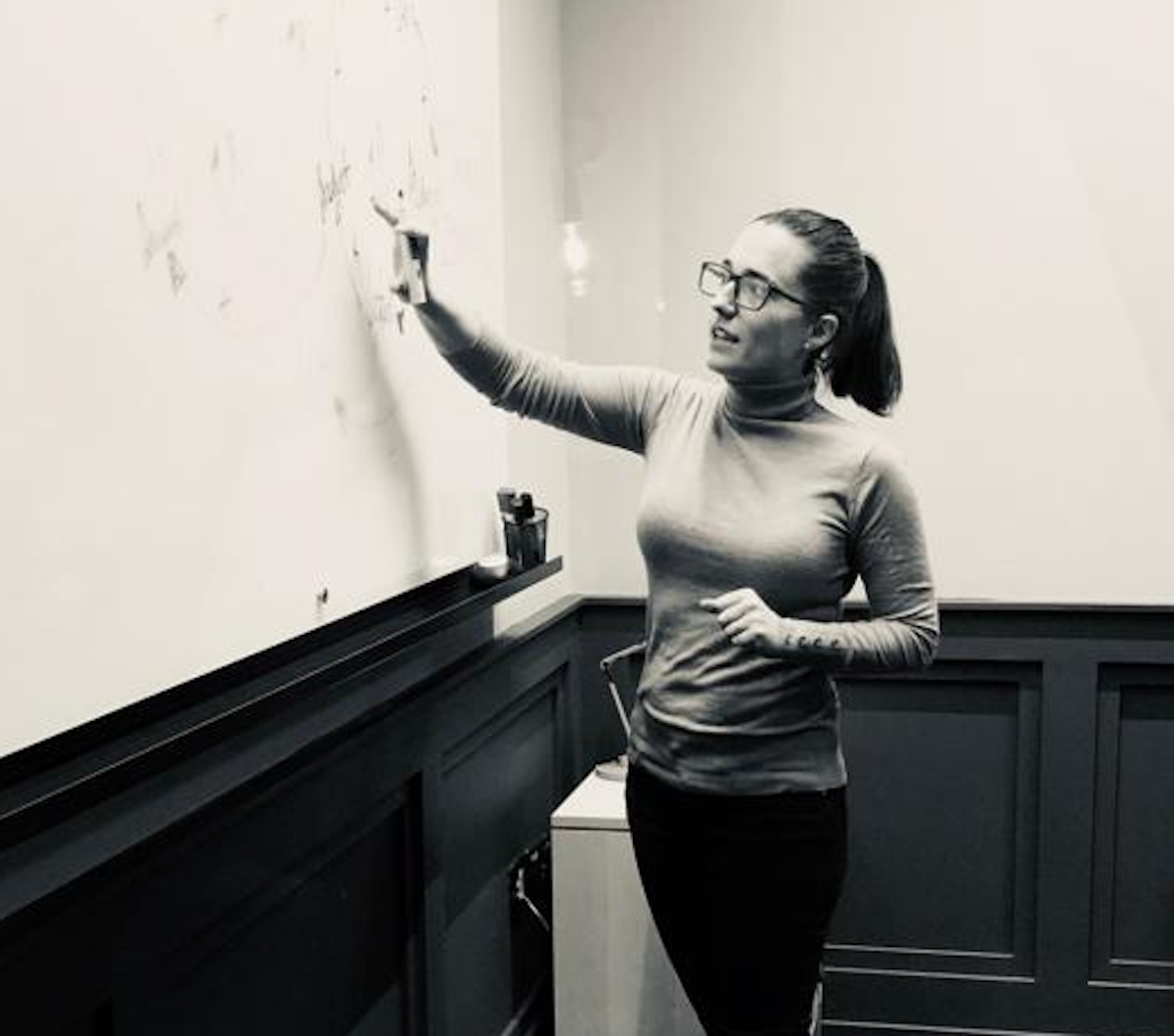
Ines Garcia
Agile & Climate Coach, Get Agile
📍Devon, United Kingdom
What qualities do you think leaders need to have in today’s world?
The leaders we need today are those who can operate at the edges: where disciplines intersect, where the unexpected happens, where innovation truly lives. Nature has shown us for 3.8 billion years that the most resilient and productive systems thrive not at their centres but at their boundaries. Leaders must cultivate that same quality: the ability to hold complexity, to remain permeable rather than siloed, and to draw strength from diversity of thought, background, and experience.
Beyond that, I believe today’s leaders need what I’d call “ecological intelligence”: the capacity to see their organisations as living systems, not machines. That means valuing circularity over extraction, collaboration over competition, and long-term regeneration over short-term gain. Sustainability and happiness are not at the expense of profit; they are a means to it. There is a better way to do business, the question is: Are you willing to be part of the solution?
If you had to describe your leadership style in one word, what would it be and why?
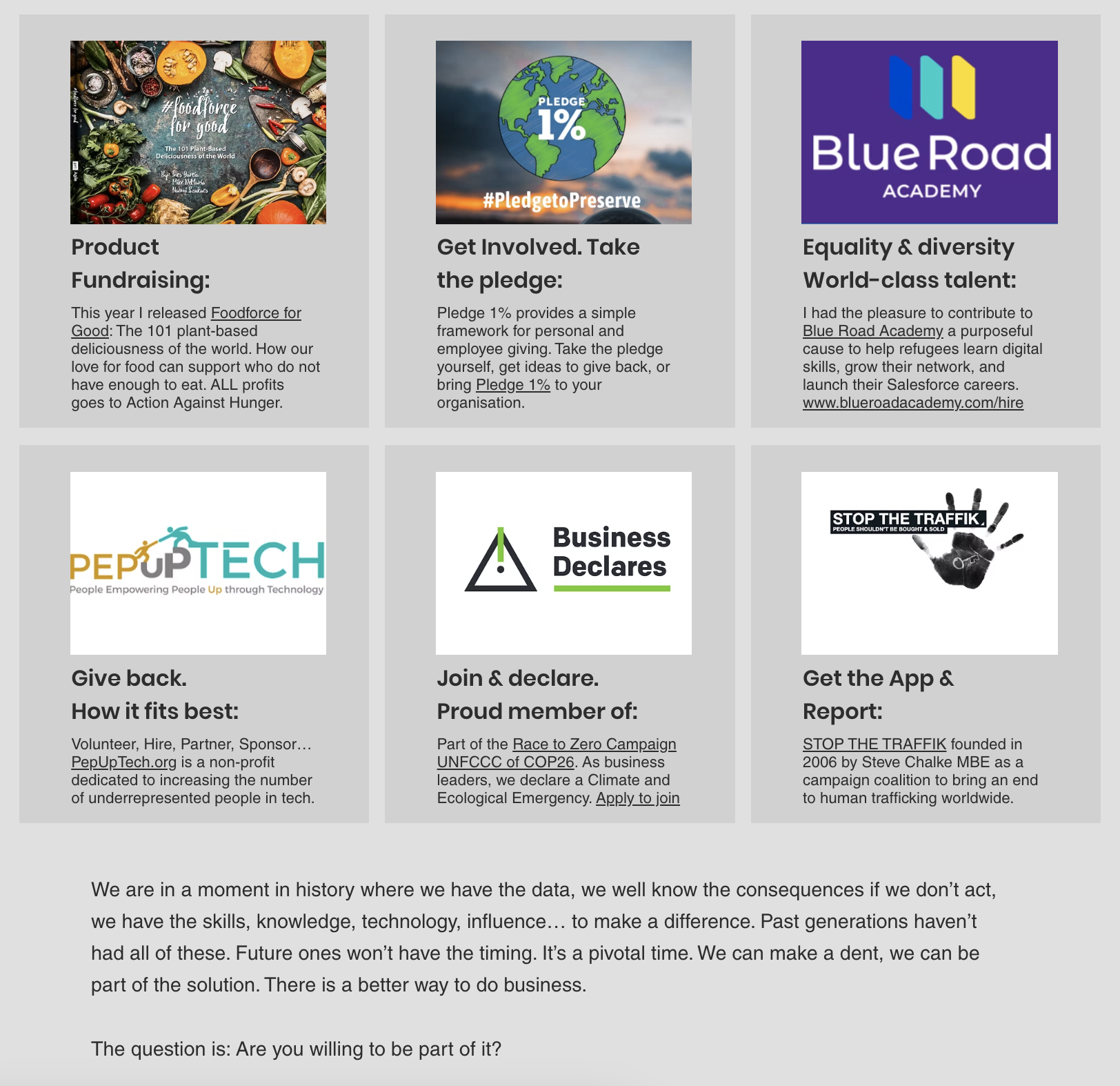
Regenerative. In nature, regenerative systems don’t just sustain: they restore, they enrich, they leave the conditions better than they found them. That’s what I aspire to in every engagement, every programme I design, every community I’m part of. Whether it’s through the “Pay It Forward” model we built into our Agile Sustainability programme, or through the organisations I support like Refugeeforce, Pepup Tech, or the Agile Alliance’s Sustainability Initiative; the intent is always to give back more than I take, and to build conditions where others can thrive independently of me.
How does your company’s Pledge 1% program help shape the kind of workplace culture you believe in?
Pledge 1% gives structure to something I deeply believe: that doing good and doing well are not in conflict. In fact, they nourish each other. For me, participating in Pledge 1% is a public commitment to the idea that the value of a company’s goods and services must be weighed against the waste it generates (social and environmental), not just financial. It signals to clients, collaborators, and my wider community that impact is not an afterthought. It’s embedded in how we work. It has also been evolving (expanding at the edges) since I first joined in back in 2018.
Culture is built through consistent, visible choices. When a business pledges its time, product, equity, or profit toward something greater, it sets a tone; one that attracts people who share those values and holds the organisation accountable to living them.
This year marks the 7th year of Pledge 1%’s #WomenWhoLead campaign. How can companies champion and support female leadership?
Start by expanding your definition of diversity itself. I once came across a diversity model that went far beyond gender and ethnicity — it mapped how people relate and connect, how they think and process information, what they believe, how they work, their physical traits and many more dimensions. Rich, functioning ecosystems are diverse in all these ways, and so are thriving workplaces.
For women specifically, companies need to dismantle the structural biases: the echo chambers, the unexamined privilege, the “old fashioned” cultural assumptions that still quietly shape who gets promoted, who gets heard, who gets funded. But equally important is creating the conditions for women to mentor each other, to lead programmes like The Mentorship Central and YeurLeadin, to be visible not just as success stories but as whole human beings.
Being objective is not a default, what we see and therefore what we think depends where we seat (experiences, culture, objectives…) understanding this and willing to work towards the common goal can be a great enabler. Let’s break free from dualism; there is more to us than any single attribute.
If you could write a note to your younger self on her first day of work, what would it say?
Let’s quiet our cleverness. The answers you’re looking for aren’t always found in frameworks or methodologies; they’re all around you, in the patterns of the living world.
Pay attention. The mechanisms, strategies, and solutions to the hardest problems have been evolving for 3.8 billion years; in forests, in coral reefs, in how rivers meet land. That is an R&D archive to tap into. You don’t have to invent everything from scratch. You just have to learn to read the patterns. And know this: the edges are where the magic happens. The places where disciplines intersect, where you don’t quite fit in any single category, where you feel the tension of standing between worlds. Those are your greatest assets, not your weaknesses. Don’t rush to the straight lines, the boxes, the centre. Stay curious at the edges. The world needs you to do both: do good and do well. They are not opposites. They never were.
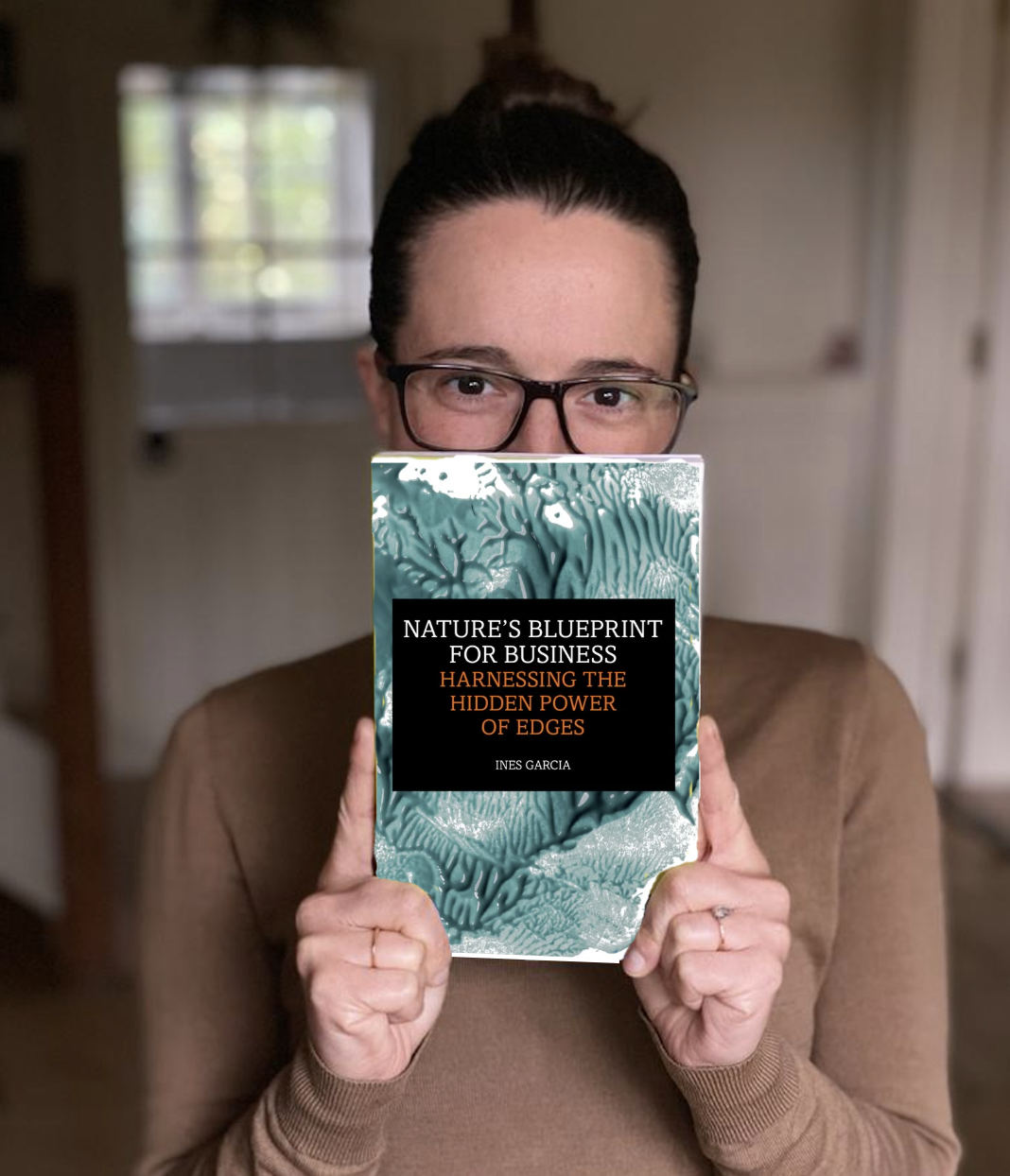
Jeni Izuel
President, Chime Scholars Foundation, Chime
📍San Francisco, CA
What qualities do you think leaders need to have in today’s world?
I think leaders today need courage and humility. Courage to stand for something bigger than short-term results. And humility to listen, especially to people whose experiences are different from their own. As a former scholarship recipient, I know what it feels like to have someone invest in your potential before you fully see it yourself. That experience shaped how I think about leadership. It’s not about having all the answers. It’s about recognizing possibility in others and building systems that make that possibility real. In a world that’s changing fast and leaving too many people behind, the leaders who matter most are the ones who stay deeply human while holding a long-term vision.
If you had to describe your leadership style in one word, what would it be and why?
Unlocking. That word shows up everywhere in my work. At Chime, we focus on unlocking financial progress. The Chime Scholars Foundation extends that mission through higher education, apprenticeships, and trade pathways. For me, leadership is about removing barriers. Sometimes that’s financial. Sometimes it’s confidence. Sometimes it’s simply access to a network or someone saying, “You belong in this room.” I’ve seen scholars walk into their first career panel unsure if they should even ask a question, and months later lead conversations themselves. That shift is powerful. I want to create more of those moments.
How does your company’s Pledge 1% program help shape the kind of workplace culture you believe in?
Chime’s commitment to Pledge 1% reflects something fundamental about who we are. Financial progress should compound over time and across generations. Our products help people build stability in the present. Through the Chime Scholars Foundation, funded by our 1% equity pledge, we extend that mission by investing in education as a long-term driver of mobility. That commitment shapes our culture. It creates pride, but it also creates accountability. If we believe in opportunity, we have to build a workplace where opportunity is real. That means valuing diverse lived experiences, mentoring emerging leaders, and making growth visible and accessible. Purpose has to show up in how you hire, promote, and invest.
This year marks the 7th year of Pledge 1%’s #WomenWhoLead campaign. How can companies champion and support female leadership?
First, expand the definition of what leadership looks like. Not every leader follows a straight line. Some are not college graduates. Some change careers midstream. Some are balancing caregiving. Some are rebuilding after setbacks. When companies recognize and elevate those journeys, they normalize possibility.
Second, move from mentorship to sponsorship. It matters when someone in a position of power says your name in a room you are not in yet. And finally, measure progress honestly. Representation in leadership, pay equity, and access to stretch roles are not abstract goals. They are signals of whether opportunity is truly expanding.
If you could write a note to your younger self on her first day of work, what would it say?
You belong here. You do not need to earn your seat by being perfect. Ask the question. Share the idea. Raise your hand for the role that feels slightly out of reach. The rooms will get bigger. The responsibility will grow. Stay curious. Stay grounded. And when you can, hold the door open a little longer than you need to.
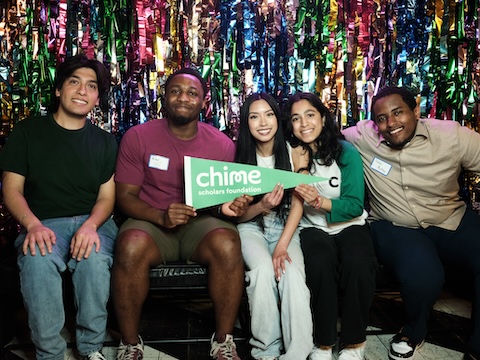
Kim Moore
Founder & Managing Partner, U&I Ventures
📍San Francisco, U.S.A.
What qualities do you think leaders need to have in today’s world?
Integrity, clarity, and conviction.
If you had to describe your leadership style in one word, what would it be and why?
Grit. Building something new – especially as a woman in venture capital – requires resilience. Grit is the commitment to keep going, keep learning, and keep lifting others as you rise. It’s not about being the loudest voice in the room; it’s about consistently delivering needle-moving value.
How does your company’s Pledge 1% program help shape the kind of workplace culture you believe in?
Pledge 1% reflects our belief that success and responsibility are inseparable. Growing up in the foster care system, I learned early that opportunity often has to be created, and education became the door I opened for myself. That experience shapes how we operate at U&I. We believe in being truly helpful by expanding access and providing valuable connections and capital. Giving back isn’t an initiative; it’s an expectation.
This year marks the 7th year of Pledge 1%’s #WomenWhoLead campaign. How can companies champion and support female leadership?
Championing women starts with capital – investing in female founders and emerging managers, elevating women as decision-makers, and creating real sponsorship. When women are funded and empowered, performance follows.
If you could write a note to your younger self on her first day of work, what would it say?
You belong in every room and at every table you’re invited to, and even the ones you’re not. If you don’t see a seat, build your own table – and make it big enough for others.
Elisabeth Carpenter
Chief Strategic Engagement Officer, Circle
📍New York
What qualities do you think leaders need to have in today’s world?
First and foremost: clarity. The world is loud, there are more opportunities for the sharing of opinions than ever, and it’s very easy to confuse motion with progress. Leaders have to be able to say, plainly, what problem we’re solving, for whom, and what a “good” result actually looks like in effect.
Second: the courage to build through uncertainty. Often the answers to the inevitable questions you’ll find yourself asking along the way are not obvious, even if you know exactly where you’re going. Sometimes it’s the facts themselves that change. You have to be willing to change your mind, or your strategy, when presented with new information. The leaders I respect most can simultaneously remain steady on the mission while being flexible on the path forward. I think this only happens if you’re willing to hold on to the humility of reality throughout the process and be honest with, and respectful of, yourself, your team, and the customers, communities, policymakers, and people affected by what you’re building.
If you had to describe your leadership style in one word, what would it be and why?
Direct. I wholeheartedly believe that directness is how you respect people’s time and intelligence. It’s how you tell the truth about what’s working, what isn’t, and what needs to change without mincing words. I’ve heard many times that “clear is kind,” and I abide by that principle. It’s also important to note that direct leadership only works if it’s paired with a genuine and deep respect for those with whom you work. I am relentless about asking “What am I missing?” and making room for debate, especially with those closest to the work. I don’t always have to be the person in the room with the right answer, but I know that I’m the person in the room that will guide us toward it and then make sure we execute against it accordingly.
How does your company’s Pledge 1% program help shape the kind of workplace culture you believe in?
Since Circle began, our mission has been to raise global economic prosperity through the frictionless exchange of value. While we work toward that vision as a team every day, Pledge 1% turns purpose into tangible practice internally too. When you commit equity, time, and attention, impact shows up at Circle in very concrete ways, like giving every employee up to 40 hours of paid volunteer time each year.
It also widens the aperture of our work. When our teams spend time with community and small business organizations or humanitarian partners, we learn to start asking better questions. Who gets left out? Where does financial friction punish people? How do we design infrastructure that’s resilient and equitable? Those shifts in mindset make us better operators and, frankly, better humans.
This year marks the 7th year of Pledge 1%’s #WomenWhoLead campaign. How can companies champion and support female leadership?
Ultimately I think you have to start with the unglamorous basics. Measure it and own it. Track representation by markers like leveling, pay equity, promotion rates, and attrition, and then hold leaders accountable for outcomes. And don’t confuse mentorship with sponsorship. Mentorship is advice, but sponsorship is risk. It’s putting women in roles with real scope and visibility, and then backing them and equipping them with resources when the job gets hard. It’s easy to campaign for change but it’s putting the right systems in place that changes things for good.
If you could write a note to your younger self on her first day of work, what would it say?
I would tell her to always choose the hard problems. Not because the stakes are high but because spending your career building things that move the world in a better direction will make the future you proud. I would tell her that if you pair ambition with integrity, you’ll never have to look back and wonder what you were working for.
Dana Griffin
Co-Founder / CEO, Eldera.ai
📍San Francisco, USA
What qualities do you think leaders need to have in today’s world?
The leaders who will matter most in the years ahead are those who lead with humanity first; who see people before problems and relationships before metrics. Empathy is the foundation: you cannot build for human connection without genuinely understanding human pain. Creativity is essential because the hardest problems are new (loneliness, youth mental health, aging in isolation) have no off-the-shelf solutions; you have to imagine infrastructure that has never existed. And resilience is what carries you through, because building something that truly matters is slow, nonlinear, and often lonely work. These four qualities will make up the core operating system for anyone trying to build something that supports humanity, scales and lasts.
If you had to describe your leadership style in one word, what would it be and why?
Relational. Everything I build – and how I build it – starts with relationships. Our product is relationship. Our mission is relationship. And so is the leadership. I believe you cannot inspire a team, earn trust from a community, or change a broken system without first understanding and building with in the human beings in front of you. One adult, one young person, one hour a week changes two lives, and I run Eldera the same way: one conversation, one connection, one trusted relationship at a time.
How does your company’s Pledge 1% program help shape the kind of workplace culture you believe in?
I joined Pledge 1% because it’s an expression of a commitment already built into our DNA. Eldera is structured for perpetual stewardship: we return the social and economic value we create back to the humans who made it possible. Our golden share ensures that as Eldera grows, the communities we serve always have a seat at the table. Pledging 1% is an additional concrete, visible form of that promise, a signal to our team, our investors, and our community that we are not building to extract. We are building to give back and create opportunities for all involved.
This year marks the 7th year of Pledge 1%’s #WomenWhoLead campaign. How can companies champion and support female leadership?
We need to stop celebrating female leadership like it is something extraordinary, because the data shows it isn’t. Female leaders drive higher ROI, stronger retention, and more sustainable companies. Female leadership is a smart business imperative, not a feel-good story about exceptionalism. If we want all boats to rise, we need to create real pipelines, build genuine mentorship infrastructure, and start funding it. The goal isn’t to celebrate female leadership once a year, but to make it the norm.
If you could write a note to your younger self on her first day of work, what would it say?
Make friends, real friends. The relationships you build on day one will matter more than anything on your resume and will be your champions 20 years into your career. Learn from every opportunity, especially the ones that don’t look like opportunities yet. The unglamorous work, the difficult conversations, the roles that feel too small, they are all teaching you something about the world or yourself.
Think bigger than anyone tells you is reasonable, because the problems worth solving are never small ones. And have fun. I found the more fun I have, the more creative and inspired I feel, and the more opportunities I uncover… or create.