Pledge 1%’s #WomenWhoLead series celebrates female leaders who are paving the way for the next generation. While our featured leaders come from a variety of backgrounds and industries, they are united in their efforts to promote equality for all women in the workplace. We’ve asked them to share a bit about their journey to success, as well as lessons they’ve learned along the way.
What is your name and title?
Erin Angerer, Co-founder & COO at Floodlight Invest.
Briefly (1-2 sentences) describe your current role.
Floodlight is an early-stage fintech startup, which means my co-founder and I wear many of the hats required to operate the business. My background and passion have led me to focus extra attention on our product and customers.
How did you get here? Please share any quick stories from past work experiences.
I spent more than 10 years in banking, first in wealth management and later in corporate banking where I covered fintech and enterprise software companies. I spent my time in wealth management trying to innovate around impact investing, but I like to say, I was in the right place, but at the wrong time (I can tell you many stories of pitches I made to management). After wealth management, I started covering venture-backed startups which landed me a job with a fantastic team at Silicon Valley Bank. Working for the bank of innovation made it all too tempting to join the entrepreneurial party. I left SVB in 2019 and launched Floodlight with my good friend and co-founder.
In your opinion, what’s the #1 decision or move you’ve made that has helped advance your career?
It took until I was well into my career to own my personal brand. It took me a while, but once I leaned in and allowed myself to voice my opinions things really took off.
What is the most important lesson you’ve learned this past year?
With hardship comes resilience, and when you make it to the other side the feeling of satisfaction is incredibly powerful. And that feeling will carry you through the next hurdle you encounter. #theyearof2020
What’s the number one challenge you face as a woman in your industry?
UNCONSCIOUS bias. I capitalize unconscious because it is the people who say they are huge supporters of women, but who act in opposition to that statement that creates the biggest challenge because they really think they are supporters. It takes a really special person to break down their bias and learn how to support women and act accordingly.
Do you have any mentors? What does mentorship mean to you?
Mentors/friends/confidants. I’m incredibly fortunate to be surrounded by inspiring, thoughtful and ambitious people. The best mentors in my life aren’t the people who celebrate everything I do. The best mentors, in my experience, point out my missteps and challenge me to do better.
What advice do you have for women who are just starting their career?
Be confident and be yourself. The tides are changing in corporate America and the highest value you bring is your unique perspective. Don’t be timid, the world needs to hear from you.
What is one thing companies can do, big or small, to help create an environment that advances women into leadership positions?
Get women in the room where decisions are made. If you have an MD meeting at your company and you don’t have any female MDs, bring a female Director or a VP into the room, count her vote and listen to her.
What is one thing you hope to accomplish in the next year?
As an early-stage company in the middle of the Barclays Techstars Fintech program, my goal is for Floodlight to find product-market fit.
Is there a cause that is particularly close to you? If so, why this cause and how did you get involved?
Best Buddies. This organization holds a special place in my heart because of the incredible people it serves, who I’ve been fortunate enough to meet. BB is dedicated to ending the social, physical and economic isolation of the 200 million people with intellectual and developmental disabilities (IDD). I originally learned about the organization through Silicon Valley Bank who sponsors the annual century bike ride fundraiser in California.
When did your company join Pledge 1%? What does your impact program mean to you?
Floodlight officially joined Pledge 1% when we were accepted into Techstars in Q1 2021. Pledge 1% is a perfect complement to our corporate mission to leave the industry we serve better than we found it. One way we are committed to this mission is to actively engage communities with less access to resources and do our best to share the prosperity afforded to our company.
What do you like to do outside of the office? Any interesting (or unique) habits or interests?
I absolutely love spending time outside, I ride bikes, play tennis, golf, and love long walks. But as a new mom with a 3-month-old baby, many of my hobbies now include staring at him for awkwardly long periods of time
Are you reading/listening to anything interesting at the moment? Please share your most recent favorite book or podcast!
A Promised Land by Obama (must read). A friend recently turned me on to the Smartless podcast, and those guys are hilarious. I want to be their friend to just hang out and laugh at all their low key jokes.
What’s been the one (or two!) things that have helped you navigate this past year? Any tips or tricks to dealing with remote work?
Ha! Be pregnant during the pandemic, it means you can work in sweats and have your feet up during all calls. But more seriously, I couldn’t have survived this last year without my village of amazing women.
Pledge 1%’s #WomenWhoLead series celebrates female leaders who are paving the way for the next generation. While our featured leaders come from a variety of backgrounds and industries, they are united in their efforts to promote equality for all women in the workplace. We’ve asked them to share a bit about their journey to success, as well as lessons they’ve learned along the way.
What is your name and title?
Masami Sato, Founder and CEO at B1G1 (BUY1GIVE1).
Briefly (1-2 sentences) describe your current role.
I am the founder and CEO of B1G1, a social enterprise and a global giving initiative that helps businesses around the world integrate effective giving into their everyday activities and create great impacts in the world. Founded in 2007, B1G1 has worked with thousands of businesses and those businesses have created more than 200 million giving impacts to date.
How did you get here? Please share any quick stories from past work experiences.
20 years ago, I became an entrepreneur. Travelling around the world, being touched by the spirit of people, and discovering the joy of sharing food with others, I decided to start a food business. My first business was a fast-food takeaway shop in Christchurch, New Zealand. And over the next 2 years, I managed to purchase another food business, improved those two businesses, sold them and moved to Australia to start a new business. I wanted to have a food company that made a positive difference in the world. My food company in Australia eventually became a wholesale frozen meal producer, and we were distributing packaged frozen meals to over 150 stores in three states. But as an owner of a growing business, I had no time or sufficient funds to do what I really wanted to do — to help feed and educate disadvantaged children. We wanted to build a soup kitchen when we become more ‘successful’.
One day, a simple idea came to me: “What if we just gave one meal for every meal sold?” I discovered that it costs only about 25 cents to give a meal through a school lunch program through an experienced NGO in India (India was one of the countries I used to backpack in and was confronted by the fact there were so many street children). With this approach, we could start making a difference every day instead of waiting for a grand success in the future. Several months later, we decided to sell our food business and move to Singapore to start B1G1 (which stood for the idea of “buy 1 give 1”). We imagine a world where everything businesses did make a difference.
It’s been more than 13 years since then. And today, the world of B1G1 is no longer just an imagination. We have coffee shops that give access to life-saving clean water or nourishing meals for every drink and food they serve. We have accounting firms, consultants and coaches that help educate children, support social entrepreneurs or help women start their own businesses. We have health practitioners who provide access to life-saving medication or access to good hygiene for every patient they care for. And these are just examples. The real stories are endless.
We see this as the ‘power of small’. We cannot change the world alone. But together small businesses can help transform many things in the world.
In your opinion, what’s the #1 decision or move you’ve made that has helped advance your career?
Realising that I don’t have to do it alone. Instead of always trying to do big things (what’s not achievable for a long time), we can start something small today and do it everyday. Having a big goal can be important but appreciating our everyday progress is also very important. At the end of the day, we never know what will happen tomorrow.
What is the most important lesson you’ve learned this past year?
Evolving quickly whenever circumstance challenges us to change. It’s important to have clear plans. But sometimes, our plans don’t work out as expected. So, balancing between having great goals, good strategy and solid plans with being flexible and adaptable is important (and critical too).
What’s the number one challenge you face as a woman in your industry?
I don’t think I experienced much discrimination or disadvantage because of being a woman. If anything, I think I somewhat benefitted from the fact that I’m a woman. But this is probably because of the industry I’m in (‘giving’ industry ), the countries I’ve lived in and the type of companies we’ve worked with. If anything, being a mum while running a business created more challenges for me. Juggling these two major responsibilities can be very challenging for many women who have children.
Do you have any mentors? What does mentorship mean to you?
Yes. I used to think I didn’t really need a mentor (or a coach) and I thought I just needed to keep learning from every experience, mistakes and lessons. But in the past few years, I started to actively reach out to people I really admire and look up to, and asked them to mentor me or be an advisor to our initiative. Since I started that, the pace of progress became much faster because these advisors and mentors helped me question my own thinking and approach. And it’s not so much about receiving specific input for the challenges we face. But it’s more about creating a new level of accountability – to keep growing to become a better leader by learning from all different positions, perspectives and unique experiences.
What advice do you have for women who are just starting their career?
If a new entrepreneur tried to do everything alone, it can be really overwhelming. Until you have a team, you really need to wear so many hats in your business and it can be stressful. There are days you feel lost, discouraged and defeated. So, breaking down your goals into small steps and setting priorities matters. And it is also good to operate with a sense of joy and gratitude everyday (rather than frustration and guilt) no matter where you are at in your journey.
If you can appreciate your everyday small progress, the entire journey can be much more meaningful and rewarding. Knowing that you are on the right path makes you feel ok about failures and unexpected challenges.
What is one thing companies can do, big or small, to help create an environment that advances women into leadership positions?
I think it’s good for businesses to understand the real value of having female leaders. Many companies today try appointing more female leaders because of the fear of being criticised. But I think more businesses would naturally create diversity in their workforce if they simply understood the value people with different backgrounds and circumstances bring to the mission of the company. And it’s not just about gender diversity. Having diverse perspectives and contributions from people with different cultural backgrounds, personalities, experiences, and circumstances are very important in holistic business development. In order for that to work, we need to create a culture of understanding, open-mindedness and empathy. This is the way companies can also create long-term sustainability within their own business AND in the world. And perhaps female leaders can bring more of these perspectives naturally because of the background of being ‘nurturers’ in their families and communities.
What is one thing you hope to accomplish in the next year?
We have worked with 3,000 businesses so far and these businesses have created more than 200 million giving impacts together. While this is a great feat, we are looking at scaling our work much more over the next decade. Our goal is to reach 1 million businesses by the end of 2030 and make a big dent toward all of the 17 Sustainable Development Goals. In this coming year, we are looking at some important partnership development, working with various businesses networks and establishing specific regional models.
Is there a cause that is particularly close to you? If so, why this cause and how did you get involved?
Initially, I wanted to ensure that all the children in the world have access to resources like nourishing food, medical care, education and opportunities to thrive. And fundamentally, that’s how I got into business.
I also deeply care about the bio-diversity and the eco-system of the environment. But there are so many issues I care about too. I think that the level of trust and caring in our communities really matter. I believe that there is nothing we cannot achieve together if we felt connected and came together to help each other. And I’m sure everyone cares about something. Working on B1G1 is a perfect way I can help every business and every person in the world to be part of the solution for many important issues in the world.
When did your company join Pledge 1%? What does your impact program mean to you?
We already allocate a budget to give to different causes for every business activity we have. For example, every book we publish (even as a digital book) plants trees or helps educate disadvantaged children. We work on carbon offset for our activities and want to make these things easy for other businesses to do. We also engage our team in important debates and giving activities. We talk about how to improve our own business activities and resource management so that we can make our company more socially responsible and environmental too. Being part of other social movements is important for us to keep improving our standards. And we look forward to connecting many more like-minded businesses and causes in the world through that.
After all, we cannot do it all alone. But together we can make a huge impact.
What do you like to do outside of the office? Any interesting (or unique) habits or interests?
I love running. So, I run every day. I particularly love running in nature. It gives me time to connect with the surrounding and I get lots of ideas while running. I also do things like growing hydrophobic herbs and veggies inside the house because I love nature (I used to do farming in Japan) and we cannot have a house with a garden in Singapore. My hobby changes over time too because I’m not really attached to anything specific. I enjoy life quite simply.
Are you reading/listening to anything interesting at the moment? Please share your most recent favorite book or podcast!
At the moment, I’m reading Jim Collin’s “BE 2.0 – Turing Your Business into an Enduring Great Company” and it’s great.
What’s been the one (or two!) things that have helped you navigate this past year? Any tips or tricks to dealing with remote work?
Having a group of new mentors and also taking on a business degree in Leadership. Last year, our team worked remotely most of the time (and we saved our travelling time), so I actually had more time to work on my own personal development. It was GREAT.
Pledge 1%’s #WomenWhoLead series celebrates female leaders who are paving the way for the next generation. While our featured leaders come from a variety of backgrounds and industries, they are united in their efforts to promote equality for all women in the workplace. We’ve asked them to share a bit about their journey to success, as well as lessons they’ve learned along the way.
What is your name and title?
Joni Roberts, Founder and Chief Evolution Officer at Evolution University.
Briefly (1-2 sentences) describe your current role.
My role is to empower changemakers to evolve our world through education, everyday actions, and entrepreneurship. I help people make meaningful change for themselves, their companies, and the world by aligning their purpose and actions to social and environmental sustainability initiatives such as the UN Sustainable Development Goals.
How did you get here? Please share any quick stories from past work experiences.
Education became a surprise love of mine 13 years ago after returning from an entrepreneurial venture in Romania. Now I combine both of these passions into creating a more joyful, prosperous, and sustainable world with my startup school for changemakers.
In your opinion, what’s the #1 decision or move you’ve made that has helped advance your career?
To keep learning and growing even when your career isn’t where you want it to be. Diversify your skill set and be agile and adaptable to new opportunities when they arise. Sometimes saying “yes” came from necessity and those experiences made me better by pushing my boundaries. Embrace what shows up and see where it goes.
What is the most important lesson you’ve learned this past year?
That the world can come together to solve tough problems. We witnessed and experienced how from the top down and the bottom up, nations and citizens participated in managing and solving one of the biggest health and economic crises humanity has faced.
I believe this is the beginning where over the next decade we will draw on the best of humanity to reimagine and recreate a world that is much better than the one we have now. It will be hard, and it will also be the most exciting thing we will have ever achieved as a global community.
What’s the number one challenge you face as a woman in your industry?
Being underestimated.
Do you have any mentors? What does mentorship mean to you?
Mentoring is the way we spread knowledge and uplevel humanity. We see this happening in the natural world all the time. Educators have many opportunities to influence others in positive ways and I enjoy it immensely. I look to people across many fields for inspiration and knowledge. Personally, I would like to have a mentor to help guide me and my company to the next level.
What advice do you have for women who are just starting their career?
Surround yourself with people who see the best in you and help you to cultivate your passion and purpose. Receive feedback from people whose opinions you value. Not everyone is qualified to give constructive feedback. Some people are dealing with their own unresolved stuff and may be projecting that on you.
What is one thing companies can do, big or small, to help create an environment that advances women into leadership positions?
Whenever I see an executive team or board of directors that is all or nearly all men, it’s a red flag for me because the decision-making will be based on a narrow set of perspectives. We all need to think like this, then do something about it where we can.
What is one thing you hope to accomplish in the next year?
Evolution University is a startup. I balance goals and intentions with what I cannot plan for that emerges. For example, my goals for the summer were to develop two new courses. Instead, I developed a new EVOLVE Framework in sustainability featuring a Compassion-Centered Stakeholder Approach. The ideas were sparked from a blog article I wrote. Another example is a comment I made on a Simon Sinek post, which led to sharing out a leadership practice I created a few years ago. That became a book I just published called Celebrations, Appreciations & Frustrations: A simple, yet powerful practice for bringing MORE connection and authenticity to our relationships. I am very happy with these developments, although I did not plan for them. What I did do is create a foundation of knowledge cultivated over years from where these ideas can spring forth.
Is there a cause that is particularly close to you? If so, why this cause and how did you get involved?
I believe compassion is the foundational mindset for creating better relationships and a better world. It’s not just about being kind as compassion can also be fierce by taking a stand for something you believe in. I got involved in compassion training in 2012 by founding MOREcompassion after going through some challenging personal relationships. I wanted my relationships to be better. A compassion mindset is what I believe will transform our experiences with one another and the world we share.
A MOREcompassion course for people and the planet is available for free on Evolution University as part of our spirit of giving and provides a way to generate discussions and competencies for individuals and teams.
When did your company join Pledge 1%? What does your impact program mean to you?
Being a member of Pledge 1% is automatic for any company I am a part of or when advising others. Evolution University was incorporated in January 2020 and joined Pledge 1% in February 2020.
From experience, I know that when you give, you grow. It’s a reciprocal energy exchange.
What do you like to do outside of the office? Any interesting (or unique) habits or interests?
I am all about nature immersions. This is how I decompress, get grounded, and ready for the next project. I live in Florida on the St. Johns River and near to the ocean, springs, and forests. I go for hikes, swims, and love to camp. It’s magical.
What’s been the one (or two!) things that have helped you navigate this past year? Any tips or tricks to dealing with remote work?
I’ve worked remotely most of my career. What I love about 2020 is how the world got onboarded with Zoom meetings and virtual conferences. I was able to attend conferences in the past year that I otherwise would not have due to time constraints and travel costs. It’s opened up more opportunities for global knowledge sharing and collaborations. This is part of the upside of 2020 that we can take with us into the future.
Pledge 1%’s #WomenWhoLead series celebrates female leaders who are paving the way for the next generation. While our featured leaders come from a variety of backgrounds and industries, they are united in their efforts to promote equality for all women in the workplace. We’ve asked them to share a bit about their journey to success, as well as lessons they’ve learned along the way.
What is your name and title?
Rachel Mellers, Co-Founder at Apéro Label.
Briefly (1-2 sentences) describe your current role.
I am the co-owner and director of Apéro and drive the creative spaces of the business including Art Direction and all of our Design & Production.
In your opinion, what’s the #1 decision or move you’ve made that has helped advance your career?
Before starting Apéro I worked for a small fashion business, which was an invaluable experience, as I was thrown in the deep end and wore a hundred different hats in a day, meaning I had to learn a lot of different areas of the business. This sort of understanding was pivotal in helping me grow my skill set. From there I got a job working under a really strong mentor, which helped me perfect some of my more specific skills in design and production. Getting a strong mentor in an area that I was wanting to focus on, helped me go to a new level in my confidence, knowledge, and hands-on abilities.
What is the most important lesson you’ve learned this past year?
After developing and dealing with a chronic illness for most of 2020 the biggest lesson I learned was to never take health for granted. It is one of the most important gifts we have and we should be grateful for our good health every day.
What’s the number one challenge you face as a woman in your industry?
I often feel the need to justify how hard I work and how much I do in the day to day to men in my world, and this mindset of striving just to be “on the same level” as men and justifying how much women are capable of is something I am working on breaking.
Do you have any mentors? What does mentorship mean to you?
A mentor to me is someone I admire, not only for their skill set but for their general character and attitude toward the things they do. The people I want to mentor me and be around are those that ignite a greater passion in me and push me to want to be better at my craft and as a person.
What advice do you have for women who are just starting their career?
Where possible, intern as much as you can in different sectors of the field you are wanting to get into. The more you do this the more you will learn about what you like and don’t like doing before you even hit the workforce. It will give you more of a clear path and clarity in your career and help you connect with people in the industry that you can call on later down the track. If you can find a mentor or someone you admire working in the industry, take them out for a coffee and pick their brain as much as possible too.
What is one thing companies can do, big or small, to help create an environment that advances women into leadership positions?
First and foremost companies need to make sure they have women in those leadership and senior positions. I have had discussions with girlfriends (as recent as this year) who work with all-male bosses and this has led them to feel they can’t aspire to one day have one of the more senior leadership roles in that business. Subconsciously it made them feel they would be disqualified from the running and if they wanted to progress they would need to move to a new company – how crazy is that?
Is there a cause that is particularly close to you? If so, why this cause and how did you get involved?
I am super passionate about a million different things but particularly focused on causes that empower women. We have been giving a percentage of our sales to Women’s Community Shelters since we started Apéro and I see it as a real privilege and joy to get to do the donation every month. WCS helps women in need, particularly those who are homeless or have suffered from domestic violence situations and helps provide them with a safe environment and practical/emotional support. It’s an amazing cause to be a part of.
When did your company join Pledge 1%? What does your impact program mean to you?
2020
What do you like to do outside of the office? Any interesting (or unique) habits or interests?
I have recently started swimming and love it. I wouldn’t say I have unique hobbies, but love going out for a good meal, spending time with friends, going to the beach, running, bingeing a good tv series, shopping, morning walks with my dog, painting, going for saunas…
Are you reading/listening to anything interesting at the moment? Please share your most recent favorite book or podcast!
I love listening to the How I Built This podcast every week. Its stories about entrepreneurs and how they built these amazing businesses from the ground up. It’s very inspirational.
What’s been the one (or two!) things that have helped you navigate this past year? Any tips or tricks to dealing with remote work?
Slack – I have found this channel an awesome tool for easy communication with staff and creating different channels for different areas in the business, that can be easily looked back on.
Pledge 1%’s #WomenWhoLead series celebrates female leaders who are paving the way for the next generation. While our featured leaders come from a variety of backgrounds and industries, they are united in their efforts to promote equality for all women in the workplace. We’ve asked them to share a bit about their journey to success, as well as lessons they’ve learned along the way.
What is your name and title?
Malinda Gagnon, Founder + CEO at Uprise Partners.
Briefly (1-2 sentences) describe your current role.
I’m the Founder and CEO of Uprise Partners. Uprise is a consultancy and investment firm. We help business leaders launch, scale, and operate their organizations.
How did you get here? Please share any quick stories from past work experiences.
I’ve been in business strategy and communications for 20 years. At Google, I was fortunate to be on the ad technology organization’s founding team in the Cambridge, MA office.
At WPP/GroupM, the world’s largest media investment holding company, I started two organizations. I founded and led a consulting practice advising clients such as Procter & Gamble, General Electric, Volkswagen, Unilever, Land Rover Jaguar, Allergan, Walmart, and many others. I then founded and led the Product Development and Technology group to expand their technology and services portfolio.
In your opinion, what’s the #1 decision or move you’ve made that has helped advance your career?
I didn’t know what I wanted to do when I left WPP/GroupM in 2017. I knew my career had plateaued there, and it was time for me to move on – but that’s all I knew. I planned to take some time off to figure out my next step. Part of that discovery process was interviewing at other companies. A pivotal moment for me was during a final round interview at a major consulting firm. They asked me what I envisioned for myself in five years. I said, without hesitation (and one could say, in this context, without tact as well!), “I want to run my own company.” It was clear to me when I walked out of that interview, that running my own company was my next step. Why wait five years?
What is the most important lesson you’ve learned this past year?
Just keep going and have faith in what you’re doing. Sometimes it may feel like each day doesn’t bring change or progress, but it does. I’m experiencing the tipping point now when all of the small right steps are adding up, and big things are happening.
What’s the number one challenge you face as a woman in your industry?
Now that I have my own company, I feel that being a woman doesn’t hinder me. I can now more easily create my own destiny.
When I was at WPP/GroupM, I felt challenged as a woman more acutely. I had to advocate for myself and fight for the promotions and roles I knew I deserved. I also had to fight for the pay I deserved fiercely, and I know I still didn’t surpass male colleagues who were in similar roles.
Do you have any mentors? What does mentorship mean to you?
At WPP/GroupM, I had a few tremendous mentors. A couple, in particular, served as my sponsors as I started the two organizations that I led while I was there. Mentorship to me is a supporter, a sounding board, and offering advice. Being a sponsor is advocating for someone when they aren’t in the room. These people were both my mentors and my sponsors. I knew they had my back. I’m incredibly thankful for them.
What advice do you have for women who are just starting their career?
As women, we have to stand up for what’s ours and not accept any less. If you find you’re at an organization that’s not valuing you after putting in the effort to change that, it’s time to move on. They don’t deserve you. Vote with your feet.
What is one thing companies can do, big or small, to help create an environment that advances women into leadership positions?
The big things a company can do to advance women into leadership positions is twofold:
1) Examine the criteria that go into promoting women into leadership roles and ensure that masculine leadership qualities don’t sway that criteria. Often women are not perceived as leaders because they have a different leadership style than men, which doesn’t at all mean they will be less effective – it’s just different.
2) Invest in leadership training, presentation skills training, networking, and mentorship opportunities for women. This will help women feel more confident with sharing their skills and connect them with people who can help their careers.
The little things a company can do to advance women into leadership positions are the everyday aspects of culture and make a big difference over time. These things include:
• Notice if a woman hasn’t contributed in a meeting and ask what she thinks.
• Notice if a woman is being talked over in a meeting (maybe because her voice is softer or she’s not as aggressive) and ask whoever interrupted to pause because you would like to hear what she has to say.
• Give a woman an assignment that will help her shine and earn the respect of her colleagues.
• Notice if a woman takes the task as note-taker in a meeting or starts to clean up the conference room afterward. This is not her default role and needs to be shared by everyone.
What is one thing you hope to accomplish in the next year?
My theme for this year is to be a better listener and a better teacher. Each year, I set a theme for myself based on how I need to grow personally and professionally and what my team and family need from me. Here’s my blog post on why I chose it and some reflections on that.
Is there a cause that is particularly close to you? If so, why this cause and how did you get involved?
I’m passionate about promoting wellness so people can live full lives and realize their potential. We can only give from a full well. I’m a yoga and meditation teacher and have a donation-based practice called Yogamoto. It’s my passion.
I’ve been practicing since I was a kid with my mom and started taking classes in high school. My meditation and yoga practice is essential for me to feel grounded and well – physically, mentally, and spiritually. I start every day with meditation and prayer, and it makes a tremendous difference for me. It helps me show up as my best self every day.
When did your company join Pledge 1%? What does your impact program mean to you?
Uprise joined Pledge 1% in our first year of the company’s existence. It’s important for my co-founder, Brian Gagnon, and I, to commit to core values from the beginning to build the company we want. Uprise has also been quick to offer retirement and health benefits because of this philosophy. We are a team that believes in caring for each other and giving back, and I want each person who joins the team to be excited about that. It’s part of who we are.
Here are some of the things we’ve done in the past as a 1% organization:
• Sponsor Green Up Day in our local community. We promoted the event to pick up trash around the neighborhood and put on a BBQ for participants afterward.
• Financial donation to Black Girls Code
• Donation of computer equipment to a local high school
• Volunteer as mentors with multiple startup accelerators and as session educators
• Volunteer each year as judges in a local high school startup pitch competition
• Volunteer yoga teacher with Maine Adaptive Sports & Recreation
What do you like to do outside of the office? Any interesting (or unique) habits or interests?
I love the outdoors – hiking, skiing, camping, riding my motorcycle. I’m also a yogi and yoga teacher.
Are you reading/listening to anything interesting at the moment? Please share your most recent favorite book or podcast!
I’m listening to a Pema Chodron book called Smile at Fear. She’s such a wealth of wisdom. I read a lot of her books.
What’s been the one (or two!) things that have helped you navigate this past year? Any tips or tricks to dealing with remote work?
I’ve worked remotely for many years to this past year hasn’t been a difficult transition for me. My top tips and tricks for dealing with remote work are:
• Set work boundaries for yourself – with both time and space. Have work hours and a workspace. Even if that workspace is a corner of the room, and at the end of the day, you close your computer and notebook and push in your chair, that’s enough to signal that work is over. We tend to work longer hours when we work at home, and that can lead to burnout.
• Over-communicate and pass the baton with your colleagues. Remember, with remote work – out of sight is out of mind. Stay connected. When you finish something, don’t just send a note to your colleague and move on; get confirmation they understand they now have the baton. That ensures close communication, and nothing gets lost. When you’re remote, communication has to be more conscious and more frequent because it won’t happen naturally by running into that person. This doesn’t mean more meetings! It does mean having a good chat program like Slack or Microsoft Teams – email and calls won’t work alone.
• Schedule team happy hour or game time. We have a fantastic culture at Uprise, and we grew a lot in the past year. I haven’t met half our team in person! We still have a great culture because we have time to connect, and we keep it fun and informal. Every Friday, we have Celebrations and Lessons Learned, which is also a happy hour (drinks optional!). We informally share the ups and downs of our week. We also have game time when we plan online games together. It’s really fun.
Pledge 1%’s #WomenWhoLead series celebrates female leaders who are paving the way for the next generation. While our featured leaders come from a variety of backgrounds and industries, they are united in their efforts to promote equality for all women in the workplace. We’ve asked them to share a bit about their journey to success, as well as lessons they’ve learned along the way.
What is your name and title?
Renée van Poppel, Senior Consultant and Strategic Advisor at Supply Value.
Briefly (1-2 sentences) describe your current role.
My role is twofold. First, I work at large (Government) organizations as a strategic consultant focused on IT and organizational change. Second, I am the strategic advisor of Supply Value, meaning that I investigate possibilities and start initiatives that focus on reaching our long term goals. For this, my horizon is at t+12 months to t+4 years.
How did you get here? Please share any quick stories from past work experiences.
Straight out of university, I started at Supply Value as a procurement trainee and from there, grew along with the company. In five years, we grew from 6 to around 45 employees, so there were many opportunities to learn and grow. I was able to support this growth at Supply Value with challenging assignments at interesting organizations, which led me to join the management team of Supply Value in January 2020.
In your opinion, what’s the #1 decision or move you’ve made that has helped advance your career?
Forcing myself to reflect on my growth and taking control of my next career steps. I discovered that I am driven by creating value for society, so I’m motivated by stakeholder value rather than shareholder value. My decisions since then have centered on these values: value for society and professional growth. That corresponds with how I view decisions; I don’t think I make a lot of big decisions at all. For me, it’s more about having values on which you can base many small decisions. Additionally, I try to explore and substantiate my alternatives by talking about them with people I trust. Their point of view and their reflections mean a lot because it enables me to broaden my scope of thinking.
What’s the number one challenge you face as a woman in your industry?
I am very happy to work in an organization that is very welcoming and open to everyone. Unfortunately, this is not always the case. Discrimination has no place in society and we should all work to diminish this. For me, at some organizations, I have experienced ageism. As a young senior consultant with a name that is also often used for men, I experience that I really have to prove myself before being taken seriously. I always strive for my next assignment to be challenging, this often means that I haven’t done it before. The reflex is usually to value experience (in years) over eagerness and the ability to learn and grow quickly. The fact that someone does not have 20+ years of experience in a field does not mean that someone isn’t able to do the job well.
Do you have any mentors? What does mentorship mean to you?
Not explicitly, but I have a number of people who I look to for advice or with who I like to discuss ideas or thoughts. This interaction brings ideas to a higher level and generates new insights. To me, this interaction is key in personal and professional growth; always broaden your view.
What advice do you have for women who are just starting their career?
Contact professionals in positions you find interesting and request to have a (virtual) cup of coffee. Usually, people are very willing to tell about their work and help you. Ask questions and keep in touch after.
When looking for a job, also look at the type of organization you want to work for. Find an organization that connects to your values and supports you in your growth and ambitions.
Are you reading/listening to anything interesting at the moment? Please share your most recent favorite book or podcast!
I loved “The Ride of a Lifetime” by Robert Iger (CEO of Walt Disney). I’m currently reading “Thinking, Fast and Slow” by Daniel Kahneman. I’m not one for listening to many podcasts but prefer conversing and discussing ideas with colleagues and other professionals. Neither is better or worse, find what works for you!
What’s been the one (or two!) things that have helped you navigate this past year? Any tips or tricks to dealing with remote work?
Last year was challenging (to say the least). For me, there were two things that I kept telling myself.
1. This too shall pass. Everything always changes. Good times pass, but so do times of struggle.
2. In a month or three, when I look back at this period, I will think about how much this period has taught me.
Other than that; make time to talk to colleagues about non-work-related things and prioritize mental health. Sounds easy enough but we all know it takes time and effort too.
Pledge 1%’s #WomenWhoLead series celebrates female leaders who are paving the way for the next generation. While our featured leaders come from a variety of backgrounds and industries, they are united in their efforts to promote equality for all women in the workplace. We’ve asked them to share a bit about their journey to success, as well as lessons they’ve learned along the way.
What is your name and title?
CEO/Founder at Resilia.
Briefly (1-2 sentences) describe your current role.
I’m the CEO and Founder of Resilia where I set the vision and lead the strategic execution of the company.
How did you get here? Please share any quick stories from past work experiences.
I started my career working at a stakeholder developer at Louisiana CASA. It was there that I began to hone my skills working within the nonprofit sector. In 2009, I left CASA to start my first business Solid Ground Innovations, then a nonprofit management and consulting agency. Through my work with various clients from large private foundations to small nonprofits, I began to envision a world where technology could be used in our space in a way to put nonprofits back at the center of the work.
In your opinion, what’s the #1 decision or move you’ve made that has helped advance your career?
I believe that one of the top decisions I’ve made to help me advance my career is to think without limits. Over the course of my career, I’ve imagined the world I’d like to live in and the world I’d want children to live in and I have worked hard towards that goal.
What is the most important lesson you’ve learned this past year?
The most important lesson I’ve learned this past year is that we are all resilient. Resilient is defined as the ability to withstand and recover from difficult situations, and I believe we all have this in us. People came together in ways I couldn’t have imagined.
What’s the number one challenge you face as a woman in your industry?
I’m not just a woman in tech but I’m a Black woman in tech. One of the biggest challenges I face is double bias due to both race and gender. This in turn has created difficulties when it came to funding, potential partners, networking and representation.
Do you have any mentors? What does mentorship mean to you?
Yes, I do have mentors but I do not call them mentors I call them guides, because these individuals have been guiding force and light in my life. I can say it is because of the individuals who have taught me from their lessons, successes and failures that I’ve become the business leader and person that I am today.
What advice do you have for women who are just starting their career?
My advice to women who are just starting in their career is to be steadfast regarding what they want, be curious to learn and embrace change as it can women better leaders.
What is one thing companies can do, big or small, to help create an environment that advances women into leadership positions?
One thing that companies can do to help create an environment that advances women into leadership positions is ensuring that women have a voice and are being promoted and hired into roles where they can truly make decisions.
What is one thing you hope to accomplish in the next year?
I am always thinking about ways where I can serve more people through my work at Resilia and with our products, and even in my personal life. When I look to next year I hope this continues to manifest itself in even more innovative and scalable ways.
Is there a cause that is particularly close to you? If so, why this cause and how did you get involved?
Closing the income and wealth gap is a cause that is close to me. I actually talk about it in my book Resilient. This cause is very personal to me as I was raised as a first-generation college student and my mother brought home less than $30K a year raising a household of 4. When she was diagnosed with late-stage cancer in 2008 that she would eventually succumb from, I always knew had she had the ability to take off work and keep her doctor’s appointments then perhaps her fate would have been different.
When did your company join Pledge 1%? What does your impact program mean to you?
Resilia joined Pledge 1% in 2018 when I first heard about it at SXSW. I was compelled then by the effort that I believed really spoke to the current and particularly the next generation of business leaders. Those building companies while also trying to build a better world.
What do you like to do outside of the office? Any interesting (or unique) habits or interests?
When I am home in New Orleans and pre-Covid I would love to go to festivals. It’s a continuous celebration of music, culture and experience, and no one does them as we do in New Orleans. I look forward to the return of festivals.
Are you reading/listening to anything interesting at the moment? Please share your most recent favorite book or podcast!
The book I’m reading right now is Professional TroubleMaker by Luvvie Ajayi Jones. It’s a smart, witty and hilarious take on how to overcome fear.
What’s been the one (or two!) things that have helped you navigate this past year? Any tips or tricks to dealing with remote work?
I believe the one thing that has helped me navigate this past year is being flexible. The tip I have on dealing with remote work is to engage as much as possible with your team.
Pledge 1%’s #WomenWhoLead series celebrates female leaders who are paving the way for the next generation. While our featured leaders come from a variety of backgrounds and industries, they are united in their efforts to promote equality for all women in the workplace. We’ve asked them to share a bit about their journey to success, as well as lessons they’ve learned along the way.
What is your name and title?
Founder, Strategic Consultant and Executive Coach at Smooth Consulting Services.
Briefly (1-2 sentences) describe your current role.
My programs are a hybrid of coaching and consulting looking at everything from mindset, defining vision and values, strategic growth opportunities, offer positioning, strategic planning, financial forecasting, team planning and hiring support, change management, leadership development.
How did you get here? Please share any quick stories from past work experiences.
Having built and led high performing, diverse teams in scaling, fast paced organizations, and now in my own business, I know first hand what it takes to ditch hustle mode, and truly thrive both in life and in business. I successfully overcame my own obstacles, and I leverage the skills, knowledge and experience I’ve gained to help others realize their true personal and professional vision in their business too.
In your opinion, what’s the #1 decision or move you’ve made that has helped advance your career?
After working within one organization for nearly 11 years, I made a major decision to leave and follow my interests. I received a lot of mixed feedback about this decision but the exponential growth I gained by moving to a scaling digital agency challenged me in ways I couldn’t have imagined. The lessons I learned along my journey set me up for where I am today as an entrepreneur.
What is the most important lesson you’ve learned this past year?
Entrepreneurship required a lot of mental fortitude – investing in a diverse team with varying skill sets and interests complimentary to my own has been the best thing I could have done for myself, my business, and my clients.
What’s the number one challenge you face as a woman in your industry?
Unlearning social conditioning and redefining what it means to be a woman and a business leader who is willing to challenge the status quo.
Do you have any mentors? What does mentorship mean to you?
Absolutely – I wouldn’t be here without them. I surround myself with mentors who have been through similar challenges before and can challenge me to think differently while I grow and learn. I’m also a mentor to others and own that identity proudly because I want others to succeed and have opportunities I’ve been privileged to have too.
What advice do you have for women who are just starting their career?
Listen and acknowledge your feelings and intuition – it’s counter to what we have been conditioned to believe but it’s our natural guiding system and the more we can tap into it, the happier, healthier and more successful we will be.
What is one thing companies can do, big or small, to help create an environment that advances women into leadership positions?
Listen. I can’t tell you how often I was overlooked or dismissed for my insights and opinions – not all women are as vocal as I am and so it’s prudent that we create space for women, and marginalized groups, to share their voice in open and inviting conversations.
What is one thing you hope to accomplish in the next year?
As I continue to evolve my consulting practice, I’m also building out a lifestyle brand and hope to progress my efforts in both ventures.
Is there a cause that is particularly close to you? If so, why this cause and how did you get involved?
I’ve always been committed to giving back – most of my focus over the years has been supporting future generations. In late 2020 I signed up with Future Possibilities Canada – a Toronto-based organization focused on teaching leadership skills to young minds.
When did your company join Pledge 1%? What does your impact program mean to you?
Officially in late 2020 and it was always something I aspired to participate in prior to establishing my company. To me, it symbolizes my ongoing commitment to giving back and is a value I hold close even in the work that I do.
What do you like to do outside of the office? Any interesting (or unique) habits or interests?
I like to relax by indulging my creativity and playfulness with things like painting or drawing, dancing to upbeat music, and working out as well as get in touch with nature by going for long walks around the local parks. I also love to travel and explore new places and meet new people. I’m a lifelong learner and love reading both for pleasure and for business.
Are you reading/listening to anything interesting at the moment? Please share your most recent favorite book or podcast!
Podcasts:
The Juicy CEO – Monique Bryan
Momentum for the Entrepreneurial Personality Type – Alex Charfen
The Mind Your Business Podcast – James Wedmore
On Purpose – Jay Shetty
Books:
Shakti Leadership: Embracing Feminine and Masculine Power in Business by Nilima Bhat & Raj Sisodia
You Were Born For This by Chani Nicholas
Dare to Lead by Brené Brown
What’s been the one (or two!) things that have helped you navigate this past year? Any tips or tricks to dealing with remote work?
Having worked in a digital agency previously, and established my practice prior to Covid, the virtual learning curve was less impactful for me. What changed most was networking. Instead of going to places and meeting a handful of people, I’ve turned to meeting people virtually in different forums and it’s given me more reach than I’ve ever thought possible! I’ve also come to learn that video fatigue is a real challenge and I’ve had to factor that into how I schedule my time.
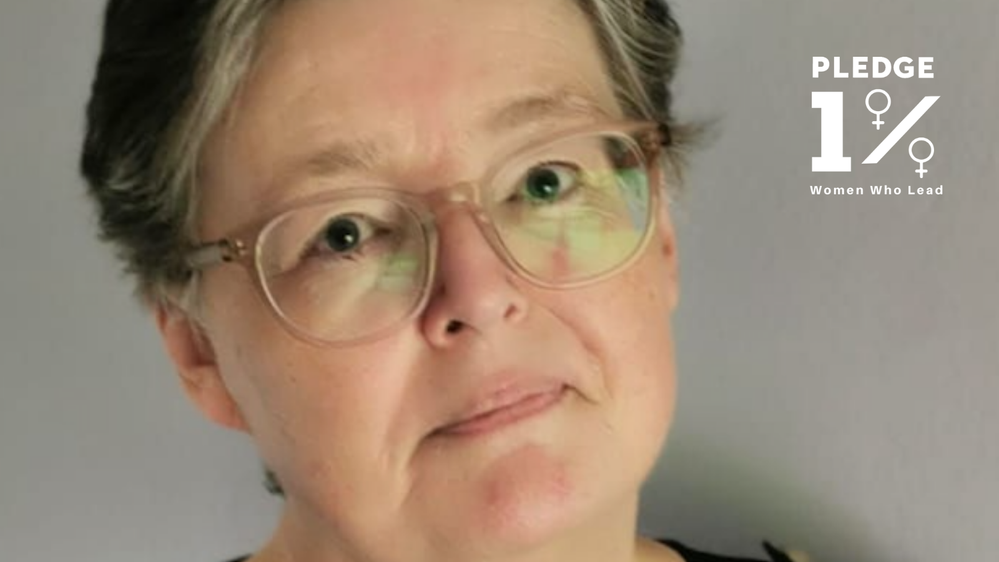
Pledge 1%’s #WomenWhoLead series celebrates female leaders who are paving the way for the next generation. While our featured leaders come from a variety of backgrounds and industries, they are united in their efforts to promote equality for all women in the workplace. We’ve asked them to share a bit about their journey to success, as well as lessons they’ve learned along the way.
What is your name and title?
Lone Andersen, Partner at Step Forward Partners.
Briefly (1-2 sentences) describe your current role.
I am the APAC Managing Partner of a niche consultancy company focused on Treasury, Risk and Wealth Management. We help financial institutions and corporate treasurers with their software projects from selection through execution to production support. We are a small company with no plans to grow too big – our focus is on quality services delivered by a group of very senior industry experts. Our team are all people we know and have worked with both in FinTech as well as in financial institutions. Everyone here is a veteran of the banking and software business. Our aim is to be the go-to company, in our niche market, when a bank embarks on a project. Either in the selection process, the delivery process or indeed both.
How did you get here? Please share any quick stories from past work experiences.
I worked 16 years in private banking then moved to work for financial software vendors utilising my banking knowledge to create a great career. Coming from private banking where you really have to listen and believe in what your customer is telling you, I entered a very different world where it was all about delivery and quick turnaround. I moved up the echelons and took over services sales and support management for Europe and Latin America. Then Head of Services for APAC at Misys followed by Head of Operations Risk Division APAC at Thomson Reuters. Then global head of Customer Engagement at Finastra followed by global head of Partner Engagement. End of 2019 it was time for a change and a well-deserved rest. Right in the middle of this Covid-19 hit and the rest period extended through the lockdown till Zsolt, our founding Partner here at Step Forward Partners, whom I have known and worked with since 2009, called saying how about building the business in APAC. There is a time to work for big corporates and then there is a time to work for yourself – so here I am making the coffee, building the brand and marketing, the services and customer base and I am loving every minute of it.
In your opinion, what’s the #1 decision or move you’ve made that has helped advance your career?
That has to be the decision to move from banking to FinTech. Not that I couldn’t have made a long term career in banking but I love what I do, just about every day on the job has been interesting in some form or other, the people I have met all over the world, the challenges and learnings it has thrown me over the years.
What is the most important lesson you’ve learned this past year?
Letting people do things at their own pace. Before Covid-19 the general expectation was that things were to happen overnight, people (including me) worked all hours of the day and at weekends. I wanted and delivered things in the now. With the lockdown we all suddenly had this extra time on our hands from not travelling. Learning to use that gift of extra time meaningfully has been very valuable.
What’s the number one challenge you face as a woman in your industry?
I see this differently – I don’t think there is one challenge that is fixed because I am woman, certainly not in the FinTech industry. There are still cultures where, even today, it is a challenge for women in general – Japan for example has been in the news for this recently. As a child in the early 60’s I remember being in Moscow and seeing women who were road workers, builders and stevedores on the river, so very different from the west where women traditionally stayed in the home. I was very privileged that my parents never ever doubted that I could do and become anything I wanted. So from home, I didn’t grow up with the mindset that as a woman I was inferior or different in any way – which has shaped how I am and how I comport myself. You have to believe in yourself firmly and show the world that you do, then the question of gender becomes irrelevant.
To break free from thinking of women as somehow inferior or less deserving we need to start long before a girl enters the workforce. The question I always pose is why are parents not consistently educating their children (boys and girls) about the truth that there is equal opportunity for everyone. To break free women need to develop an inner strength to rise above this and they need this from home – from their mothers, their grandmothers, aunts, uncles, fathers. Many already have but there is still lots of work to do.
Do you have any mentors? What does mentorship mean to you?
Yes, I have a group of people whose opinions I really value and who have been great idea-sparring partners over the years. I am a mentor to quite a few people and I especially enjoy taking up mentorship of young people just starting out. I believe that all successful people need to pay it forward and help others on their path. We need to listen to them, give them our learned wisdom and never forget that we can also learn from them.
What advice do you have for women who are just starting their career?
There is so much to say but let me keep it to 4 points.
- You do not have to decide today exactly where you want to go or what you want to do. Gain some experience first and by the time you have worked a couple of jobs, you will be in a much better position to decide on a long-term career strategy.
- Listen and learn from others but form your own opinions and learn to formulate and express them in a compelling argument and you will do well.
- Do not be afraid to change your mind, when you do, do make sure you have thought it out well and are able to articulate the change so others understand your thinking.
- Finding the market or niche you like and can thrive in is key, so don’t be afraid to switch if you feel the need.
What is one thing companies can do, big or small, to help create an environment that advances women into leadership positions?
Make 100% sure you walk the talk at all levels in your organisation. Lip-service is the biggest killer of good intentions. I have seen so many instances where the head of the company is super focused on providing opportunities for women, offering flexible working conditions etc. Only to have it all undermined by the next level(s) down who don’t think it’s important, don’t believe in it, or don’t have/make the time to address it. These nay-sayers are women as well as men, so not just a discrimination thing.
When did your company join Pledge 1%? What does your impact program mean to you?
We are brand new to Pledge 1% and have pledged our 1% to UNICEF this year. I didn’t make that choice but it was an inspired one, which I wholeheartedly support. Throughout his career, my father worked for various UN entities as well as the World Bank and was stationed all over the developing world. When there were UNICEF projects in those locations my mom would do volunteer work with UNICEF, so this pledge has a very personal meaning for me.
What do you like to do outside of the office? Any interesting (or unique) habits or interests?
In my spare time I and a group of like-minded women run a small company, coaching people for job interviews and helping them with career planning. Whether this is someone interviewing for their first internship, an important new role in a different business, jumping to a C-level job or they just want to talk about career options we can help. We are a diverse group of women (not intentionally only women) who have all worked in big jobs around the world and seen and felt what success is like.
Are you reading/listening to anything interesting at the moment? Please share your most recent favorite book or podcast!
I have just finished reading The Myth of Multitasking by Dave Crenshaw. A book with a simple but powerful message about how to become more efficient and productive in your day-to-day work and life at home. Well worth the read, I find myself planning my day and working differently and the benefits in productivity are truly gratifying.
What’s been the one (or two!) things that have helped you navigate this past year? Any tips or tricks to dealing with remote work?
My granddaughter first and foremost – I have had the privilege of spending all that non-travel time with her. She is 2 years old and just delightful. For 7 years I have been in global roles based out of Asia and not worked out of a fixed office. So I was already working from home and the change was not a problem for me. Though I have missed the travel, even dreamed of airplane food for goodness sake. Frankly I think you are more productive when working from home but there is a danger that you could slack off conversely you can also do far too much. So set some goals and work practices and stick to them. You must build-in some down time or you will reach burn-out very quicky. The one positive thing coming out of these lockdowns, is that people working from home are no longer viewed as lazy and slackers. This will drive a much better work experience for many people. The offices of the past will very quickly disappear.