
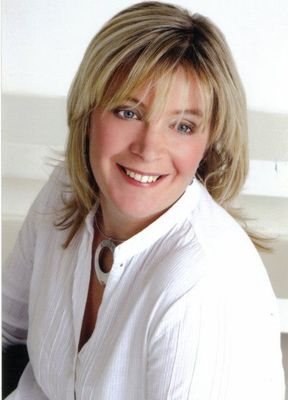
 Q1: What is your name and title?
Cathy McCabe, CEO Proximity Insight
Q2: Briefly (1-2 sentences) describe your role at your company?
Following a diverse 30-year career in retail moving from shop floor to shop tech I am now the CEO of an innovative retail tech startup – I work with an awesome, global team who are passionate about helping brands to get closer to their customers. My role varies every day encompassing sales, marketing and product vision and I love the variety of working with leading retail brands and great visionary people. It is a tough but hugely rewarding role.
Q3: How long have you been in your current position?
18 months
Q4: What advice do you have for women who are just starting their career?
I have been lucky to enjoy a diverse career. Finding your path and enjoying what you do is really important and I often put my hand up to work on something that no-one else wanted to do. So never be afraid to try new things.
You absolutely have to work hard, take risks and lead by example but don’t let your career consume you.
My Mum always said “You can never make a bad decision. If something does not work out you simply change track and move forward onto the next path”
Q5: Is there a cause that is particularly close to you? If so, why this cause and how did you get involved?
I am particularly drawn to Africa after visiting my son in Uganda where he was working with a youth trust helping to train young Ugandans to construct water tanks and school buildings with eco-friendly bricks that are sustainable and do not require firing with wood. It was an inspiring and thought-provoking journey in a very beautiful country. I want to continue exploring ways to help out with causes in Africa and I am hoping to join a Building Blitz with Mellon Educate in November 2019.
Q6: Do you serve as a mentor? If so, what does mentorship mean to you?
I love mentoring and I currently mentor a variety of different people – it provides me with a simple way to give back, to help, to guide and to continue to learn about myself and new ways of working.
Q7: What’s the one piece of advice you would give to yourself 5 years ago?
Don’t chase a title or the money – in the end the title and the salary does not mean that much. It is more important to keep learning and trying new things.
Q8: Are you reading anything interesting at the moment? Please share your most recent favorite read!
Super Engaged by Nikki Gatenby – absolutely fabulous book about how to transform business performance by putting people and purpose first – great nuggets that any business can use regardless of size.
Q9: If you could sit down with three women (living or dead) for dinner, who would those three women be (and why!)?
Gosh this is a tough one – so many women I admire for lots of very different reasons!!!
Angela Ahrendts – an amazingly strong, astute woman, ahead of her time and yet super approachable and a great leader. Angela leaves a footprint on your life and the time I spent with her as part of the leadership team at Burberry was truly inspirational.
Mary Portas – I love her frankness, openness and her downright pragmatic approach to revamping retail and her wacky confidence and ability to be just so utterly true to herself.
Jose Powell – my maternal Grandmother – a working woman with four children who had a strong work ethic and amazing family values – she taught me to be strong, inspired me to travel, to read and taught me to be kind and thoughtful. A woman who grew up in the 1930’s and continued to travel until her 80’s passing away in when I was only at the very start of my career.
Q10: What’s something coming up soon (personally or professionally) that super excites you?
Personally, I am writing a book about the future of retail which provides me with my space to reflect and develop my own perspective. It can be a struggle to fit in the research and writing time but the moments I find to take stock and breathe help me to think about how the real principles of retail have not changed yet the purchase path has changed incredibly in the last 10 years.
Professionally we are about to embark on our first round of funding and that will be a completely new and important learning journey for me – a pivotal and exciting moment in my career!
Please share your Twitter handle (if applicable):
@cathymccabe

This profile is published as part of Pledge 1%’s Women Who Lead series, which celebrates women in the Pledge 1% community who are creating change within their workplace and communities.
Leigh Christie is the Executive Director of the Entrepreneurs Foundation. In this role, Leigh oversees the daily operations of the organization; leads member company programming and events; manages the philanthropic contributions for realized equity donors; directs the corporate community involvement programs for member companies; and supports the organization’s leadership projects.
Leigh is a lawyer by trade and has more than 20 years experience in program development and operations. Building and supporting strategic and impactful collaborations to address community needs is her greatest strength and joy.
She is a graduate of the Leadership Austin Essential Class, the Acton Leadership Edge Program , the AISD UpClose Program, and a sustaining member of the Junior League of Austin. Current roles include: Greater Austin Chamber of Commerce, Board Member; City of Austin, Corporate Engagement Council, Member; Austin Gives, Executive Council Member; and SXSWedu Advisory Board Member.
Leigh was named one of the 2016 Austin Business Journal’s Profiles in Power & Women of Influence Finalist. She’s also getting geared up to complete her 4th and 5th marathons in 2017 and 2018.

This profile is published as part of Pledge 1%’s Women Who Lead series, which celebrates women in the Pledge 1% community who are creating change within their workplace and communities.
Adhamina Rodriguez is the founder and CEO of AR Green Consulting, a boutique sustainability consulting firm based in San Francisco that strives to change the World one building at a time.
Adhamina brings over 20 years of experience in the construction industry managing interdisciplinary teams to improve sustainability in buildings and organizations. In her roles of Director of Sustainability, Project Executive, and Senior Project Manager for large corporations, Adhamina has managed hundreds of complex projects from beginning to end, has established strategic sustainability policies, and implemented green building design and construction to deliver healthier and better performing buildings.
Adhamina has served in the Board of several Energy and Sustainability Committees, is an official instructor in sustainability at U.C. Berkeley and has lectured at Stanford University since 2001. Adhamina is an Architect/Civil Engineer from the University of Seville (Spain), and has a Master’s Degree from Northwestern University’s Civil and Environmental Engineering Department. In 2011 Adhamina was recognized by Engineering News Record (ENR) as one of California’s Top 20 Under 40.
Read the full interview below to hear Adhamina’s ideas for leadership and how to have an impact in the workplace.
Q1: How long have you been in your current position?
2 years. Before that I worked for almost 17 years for a large corporation as Director of Sustainability and Project Executive.
Q2: What inspired you to work in this industry?
I am Architect and a Civil Engineer with a Master in Project Management. I was drawn to the building industry because of its unique combination of art and technology, and the enormous impact that buildings have on our environment and on our every-day life. We spend 90% of our time indoors, buildings are our habitat.
Q3: What would you tell women who are looking to work in tech? Any advice on how they can build their career?
Technology surrounds us, it is in every aspect our life, but even so, there is so much that we still can improve. There are traditional industries, like construction, that take longer to adapt than other industries like transportation or manufacturing. I encourage women to take on the challenge of transforming traditional men-dominated niches into progressive markets that help us close the gap towards a sustainable future.
Q4: Is your company a Pledge 1% member or do you personally give back to your community? If so, how do you give and to what cause?
Yes, my firm is a Pledge 1% member from day one and I have personally given back to my community during my whole career. I have a passion for sustainability, protection of the environment, and children, as they are our future. I have volunteered hundreds of hours to my local community educating and feeding people in need, and worked pro-bono to create a new playground in the City, and community centers in low-income areas. I have also volunteered as a role model in organizations that strive to close the gender and minority achievement gap in the STEM field including: “Techbridge Girl”, “Scientific Adventures for Girls”, and “Tech-women” ( a program managed by the U.S. Department of State’s Bureau of Educational and Cultural Affairs to mentor to young women from Africa and the Middle East through exchange).
Q5: Do you serve as a mentor? What does mentorship mean to you?
Mentoring to me means teaching and coaching. I strongly believe that if we allow others to build on our foundation of knowledge, we will reach higher levels of sustainability from which we will all benefit. I have been a mentor and lecturer on green design and construction at Stanford University for the past 17 years to students from all over the world, and I am an official instructor at UC Berkeley Extension since 2009. My mentorship to many students has continued to date through email, and in person with some that followed me throughout my professional career as new employees.
Q6: What’s the best piece of advice you’ve received to help you with your career?
Always move forward. Do not set yourself back, not even to get impulse!
Do not give up, work hard, and show confidence. If you do not believe in yourself, none else will.
Q7: What’s the one piece of advice you would give to yourself 5 years ago?
Do not be afraid to explore new possibilities. It took me many years to venture into opening my own firm, and now I could not be happier with my decision. Yes, managing your own company takes a lot of work, a learning curve, and making some mistakes. Learn from them and move on!

This profile is published as part of Pledge 1%’s Women Who Lead series, which celebrates women in the Pledge 1% community who are creating change within their workplace and communities.
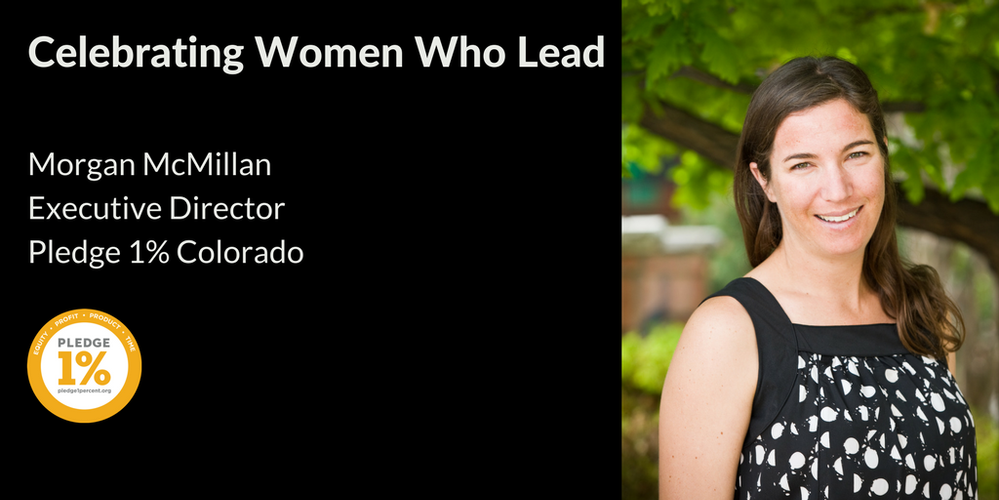
Morgan McMillan is the Executive Director of Pledge 1% Colorado. She was hired as the first E.D. (and paid staff) for the Entrepreneurs Foundation of Colorado (EFCO) in 2012. After partnering with Salesforce, Atlassian, and Rally for Impact in 2014 to launch the global Pledge 1% platform, the EFCO board decided to rebrand and expand to Pledge 1% Colorado to better align our work with the global movement.
Read the full interview below to learn more about Morgan’s experience and what inspires her to give to her community.
Q1: What inspired you to work in this industry?
I had been working in the nonprofit sector for a decade and observed the struggle to connect nonprofits with the startup community in a meaningful way. Often participating organizations from both sides of the aisle were left feeling dissatisfied from their interactions. EFCO sought to positively impact community nonprofits in a way that aligned with startup culture. Ryan Martens’ (founder of Rally Software) passion and vision for how startups could intentionally establish a culture of giving at the earliest stages was also really inspiring! You could really see how that commitment drew employees to Rally and sparked a deep loyalty to their company.
Q2: What would you tell women who are looking to work in tech? Any advice on how they can build their career?
I respectfully acknowledge that my role is more on the periphery of technology companies so I can’t directly speak to the challenges women might face – but my experience working with Pledge 1% companies demonstrates an authentic desire by many tech companies to be inclusive of a broader workforce. Leadership matters. A company may have an HR department that values inclusion but if it isn’t shared broadly by the leadership team, the culture won’t reflect it. I’ve also seen the importance of establishing a network of support. Connecting and meeting regularly with other women in tech and the broader startup sector provides emotional support – but it’s also a great business strategy.
Q3: Is your company a Pledge 1% member or do you personally give back to your community? If so, how do you give and to what cause?
I’ve been a longtime volunteer with Intercambio Uniting Communities, a local organization that teaches English to adult immigrants and works to build cross cultural understanding.
Q4: Do you serve as a mentor? What does mentorship mean to you?
I’ve mentored people formally and informally over the years. Sometimes that looks like advice or bouncing around ideas – and sometimes it means intentionally inviting a mentee to a meeting or a network gathering. Professionally and personally I’ve realized that so much of success depends upon strength of network and that too often our networks look just like us – ethnically, economically, education level, and sometimes gender. I look for opportunities to mentor and include people who aren’t currently ‘at the table’ to expand their network – and mine, too!
Q5: What’s the best piece of advice you’ve received to help you with your career?
Your priorities shift at different times in your life. You do the best you can and try not to feel guilty about the things that get put on the backburner. (This was particularly poignant for me as I had two children after joining EFCO and while launching Pledge 1%.)
Q6: What’s the one piece of advice you would give to yourself 5 years ago?
Work to maintain focus. You will be pulled in many directions. Listen, reflect, and filter out those that don’t align with your purpose. And enjoy all the new stuff you’re about to learn!
This profile is published as part of Pledge 1%’s Women Who Lead series, which celebrates women in the Pledge 1% community who are creating change within their workplace and communities.
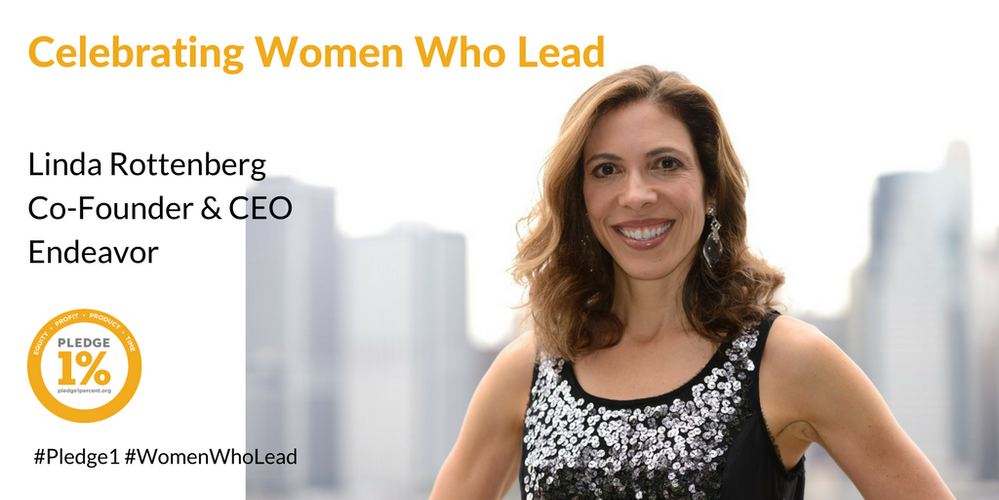
Named one of “America’s Best Leaders” by U.S. News and one of TIME’s 100 “Innovators for the 21st century,” Linda Rottenberg is among the foremost experts on entrepreneurship, corporate innovation, and leadership. Dubbed the “Entrepreneur Whisperer,” Rottenberg has won acclaim for her pioneering work, with profiles in the Wall Street Journal, Forbes, The Economist, and appearances on GMA, The Today Show, Morning Joe, and more. For years, Rottenberg was known as “La Chica Loca” (the crazy girl) for insisting that scalable entrepreneurs existed in emerging and growth markets.
As co-founder and CEO of Endeavor, Rottenberg has led the global entrepreneurship movement for two decades. Headquartered in New York, with 50 offices worldwide, Endeavor rigorously selects, mentors, and co-invests in innovators with the greatest potential to grow their businesses and move the needle of their economies. Currently, the 1,500 Endeavor Entrepreneurs, screened from over 50,000 candidates, provide nearly 700,000 jobs and generate $10 billion in annual revenues. Today, Rottenberg also leads Endeavor Catalyst LP Funds I and II, rules-based funds that invest in Endeavor Entrepreneurs.
Rottenberg is the author of the New York Times bestseller, CRAZY IS A COMPLIMENT: The Power of Zigging When Everyone Else Zags. Additionally, Rottenberg serves on the boards of ZAYO (NYSE: ZAYO), the world’s leading bandwidth infrastructure group, and Olo, a premier online ordering platform. She is a member of Young Presidents Organization (YPO) and served on the entrepreneurship steering committee of the World Economic Forum.
A graduate of Harvard University and Yale Law School, Linda Rottenberg lives in Brooklyn with her husband, author and New York Times columnist Bruce Feiler, and their identical twin daughters.
Read the full interview below to learn more.
What inspired you to work in this industry?
The idea for Endeavor was born—of all places—in the back of a Buenos Aires taxicab! My driver, I learned, had a PhD in Engineering, but could not find any other job. When I suggested that he become an entrepreneur, he looked at me dumbfounded—“A what?” he had never heard of the term, so foreign was the concept there of someone successfully launching and running a new venture, outside the purview of government cronies and private business tycoons. I did some digging and found that there was a pervasive donut hole in investment for entrepreneurs that neither qualified for microfinance nor private equity funding.
I connected with an old friend, Peter Kellner, and at my parents’ kitchen table we started mapping out our vision for an organization that would help for-profit entrepreneurs in emerging markets get started and go to scale. Twenty years later, that hazy vision is now a global network of over 1,400 entrepreneurs leading 900 companies that have collectively created half a million jobs and generated $8 billion in annual revenues.
Is your company a Pledge 1% member or do you personally give back to your community? If so, how do you give and to what cause?
Endeavor is thrilled to be part of Pledge 1%’s Escrow UP initiative, alongside other great organizations working on entrepreneurship. Likewise, “paying it forward” is truly at the heart of Endeavor’s mission, and many of our entrepreneurs become Endeavor mentors or board members, multiplying their impact by inspiring future generations of founders within their local ecosystems and around the world to innovate and take risks.
Do you serve as a mentor? What does mentorship mean to you?
Yes. Running an organization “of, for, and by entrepreneurs,” I can’t presume to support and mentor high-impact companies if I’m not one myself! As such, at Endeavor we’re hyper-conscious to practice what we preach on thinking big, taking risks, doing the unexpected and disrupting the status quo. The idea behind Endeavor was always to nurture people with big ideas and big dreams, starting with my own team.
I want people to know that they don’t need a hoodie or a Silicon Valley zip code or a rolodex of impressive contacts to be an entrepreneur. The most important thing entrepreneurs can do for their businesses is to surround themselves with a circle of mentors who can offer a rotating mixture of tough love, wise counsel, fresh insight and clear direction. In a survey we conducted, our entrepreneurs overwhelmingly found that the most valuable contribution to their success was not financial investment but rather mentor capital. As one put it, “There’s lots of money out there, and it’s all worth the same. But there’s not a lot of good advice.”
What’s the best piece of advice you’ve received to help you with your career?
The best piece of advice I ever received came from a 5 year old – my daughter! With sage wisdom, she pulled me aside just as I was leaving for a business trip to caution, “Remember, you can be an entrepreneur for a short time, but you’re a mommy forever.” Since that day, the business trips have lessened and thankfully so have the schoolings from my children!
What’s the one piece of advice you would give to yourself 5 years ago?
“Go big AND go home!” For years, I, like many others, had adopted the mantra “Go big OR go home,” a rallying cry I delivered to myself, to our entrepreneurs and to our staff. If we were to keep growing we had to keep pushing.
In 2004, I was pregnant with identical twin daughters but I was determined not to let this slow me down. I kept up my demanding work travel schedule, setting off for Mexico, Chile and South Africa, until my doctor had to impose a mandatory no-fly zone and three months of bedrest. It worked—the girls arrived, healthy and happy, at 38 weeks—and I walked away with a valuable lesson: to go forward, sometimes you have to take a step back; to go big, you have to go home.

This profile is published as part of Pledge 1%’s Women Who Lead series, which celebrates women in the Pledge 1% community who are creating change within their workplace and communities.
The Upside Foundation of Canada enables Canadian startups to give back by donating equity to charities. Members of the Upside Foundation form a community of entrepreneurs across Canada, with opportunities for connection and collaboration with like-minded peers, investors and influencers.
The Upside Foundation is led by three co-founders, Janie Goldstein, Mark Skapinker, and Rob Antoniades, and one staff member, Jennifer Couldrey. Janie and Jen comprise the management duo for the organization.
Janie Goldstein is the Executive Director and has been working pro-bono for the Foundation since its inception. Janie leads the organization’s strategic direction and partnerships. Both Janie and Jen built their careers working for boutique consulting firms which were later acquired by Deloitte (different ones!). Janie’s background also includes technical marketing, Venture Capital, and independent business strategy consulting. Janie has spent considerable time working on philanthropic endeavours, including as current Chair of the Governance Committee of the Board of Directors of Bialik Hebrew Day School. She is the mother of three children in grades 6, 8 and 9, and proud that they are already committed to charitable giving. “I have lofty goals for Upside. I think we can get a high percentage of our startups pledging options and it could become the way we do business in Canada,” she said. “Ideally, philanthropy will become one of the many things that define Canadians and how we work. We’re making it easy for startups to share a small percentage of their upsides. Canada needs this.”
Jen Couldrey is the Foundation Manager of the Upside Foundation, and has been running the Foundation on a day-to-day basis since May 2016. As Foundation Manager she leads business development, member engagement, partnership management, and marketing & communications. Jen has focused her career on the intersection of business and social impact, having worked in Corporate Social Responsibility consulting, as well as with a Kenyan microenterprise focused on women’s economic empowerment and community health. “I have always believed in using business and entrepreneurship as tools to solve the world’s greatest challenges. It’s exciting to live in a world that is advancing so quickly and to be surrounded by the startups leading us into that future, but there are also consequences to innovation. I believe we have a responsibility to funnel some of that new wealth creation back into the community to ensure no one is left behind in the 21st century economy. I love that I have the opportunity to help this community make a huge positive impact for Canada.”
The Upside Foundation is the Canadian partner for the Pledge 1% movement, and is pleased to work closely with the dynamic team on this fast growing global movement.

This profile is published as part of Pledge 1%’s Women Who Lead series, which celebrates women in the Pledge 1% community who are creating change within their workplace and communities.
Kriss Deiglmeier is CEO of Tides, a philanthropic partner and nonprofit accelerator working with innovative partners to solve society’s toughest problems. Kriss has more than 20 years of senior executive experience that spans business, social enterprise, nonprofit, academic and philanthropic sectors. She is recognized as a pioneer in the field of social innovation and has presented nationally and internationally on social innovation, social entrepreneurship, design thinking and public-private partnerships as well as guest-lectured at universities around the world.
In 2016, Pledge 1% joined forces with Tides as a special initiative.
What inspired you to work in this industry?
I started in the corporate sector with a traditional business background. What moved me into social change work was, first, I wanted to do something with impact that pushed the boundaries around innovation. I also was really drawn to the people and performance side. I wanted to work with an organization that cared about people, impact and performance, in a field that tends to care about one or two of those things but not all three.
I also love messiness! I love working at the intersection of business, government and civil society. I’ve worked in a number of organizations that are at that nexus, because I feel like it pushes me – and all of us – to think differently. If you’re always working with the same folks who think like you, it just reinforces your thinking and doesn’t push you as much.
What’s the best piece of advice you’ve received to help you in your career?
Find a great boss! Especially when you are starting your career, don’t get so caught up in what the company is, or what the job title is. When you’re taking a bold step in your career, it’s all about who your boss is. You’ve got to believe you can learn from them, and that they are a role model.
I had great bosses and mentors that wouldn’t micromanage, but they also wouldn’t let me go over a cliff. There’s a balance there – you want someone who will give you just the right amount of autonomy.
Do you serve as a mentor to women in your field?
I have served as both a formal and an informal mentor, and I have a strong preference for informal mentor relationships. I believe that every boss you have should be a mentor, and if you are a manager, you should be a mentor. When we come to work, it’s personal and professional. The best thing to do is find somebody who will commit to your development as an individual.
What’s the advice you’d give yourself 5 years ago?
As an older professional now, I don’t have mentors, I have networks of women that have my back and inspire me. In your younger career days you think about mentorship, but as you grow, what you really need are peers that can support you.
I wish someone had told me about 10 years ago to focus on building networks of support more consciously and earlier. I think it’s hard – you’ve got a family, you’ve got work, you’ve got kids. But in hindsight I wish I had had those support networks when I was younger – they could have helped with transitions differently. Mentorship is an older model – I think we should focus on networks that can provide emotional support.
What other thoughts do you want to share with women in the social sector?
I believe that women in social change fields are particularly suited to be successful. The field is messier, and change doesn’t happen in quarters – it takes time. By and large, it takes collaboration and deeper listening skills. Women leaders are inherently suited to take on those challenges.
As a field right now, hopefully we are learning the consequences of traditional male leadership. An “I know everything” leadership style will never work in the social change field.
My big takeaway from this past election is that we need to redefine what leadership looks like. We wholeheartedly need to embrace women leaders and a woman’s style of leadership. Sharing power, collaboration, integrity, listening is as important as being smart and doing the hard work. We still have only about 20% women in elected positions and on Fortune 500 boards. We are finally starting to get more women in CEO positions but we have a long way to go.

This profile is published as part of Pledge 1%’s Women Who Lead series, which celebrates women in the Pledge 1% community who are creating change within their workplace and communities.
Charlotte Creech is the CEO of Patriot Boot Camp. Read the full interview with Charlotte below to learn more about her experience and advice for women working in tech.
Q1: What inspired you to work in this industry?
My husband’s military service in the Air Force is initially what prompted me to start a tech company. Watching his disjointed and frustrating experience transitioning out of the military left me thinking there had to be a better way to connect and match veterans with the best fit higher education programs at scale. I partnered with a fellow MBA classmate who witnessed the same problem while serving in the Coast Guard, and together we launched a tech startup to build a solution. As non-technical founders trying to build a SaaS product, we were fortunate to be selected to attend Patriot Boot Camp, where we received world-class mentoring from the Techstars network to help us execute our vision.
Following my experience, I now have the privilege of working with other veteran and military spouse startup founders to help them launch and grow companies of scale and impact via Patriot Boot Camp’s program.
Q2: What would you tell women who are looking to work in tech? Any advice on how they can build their career?
The best way to learn and succeed is by doing! It’s easy to be intimidated by “tech” when you don’t have a technical background, but anyone can learn and join in. You don’t need to be a software developer to break into the industry. Think of a topic you’re passionate about, find someone who’s building a scalable solution to address it, and get involved as an employee, mentor, volunteer, beta user, etc.
If your goal is to build your own solution, surround yourself with experienced mentors and advisors that have the skills and subject matter expertise you are lacking so you can learn from them and make informed decisions.
Q3: Is your company a Pledge 1% member or do you personally give back to your community? If so, how do you give and to what cause?
Yes, Patriot Boot Camp is a proud Pledge 1% member and partner. We also encourage our alumni to become members and incorporate philanthropy into their business model. We find that military & veteran entrepreneurs already have a strong commitment to give back and #givefirst. Pledge 1% makes it easy for them to do so!
Q4: Do you serve as a mentor? What does mentorship mean to you?
In my current role, I view myself as more of a facilitator and network connector to stellar mentors than a direct mentor. However, I always look forward to working with founders and lending my experience and guidance when asked.
To me, mentorship is about helping others advance without expecting anything in return. I’m a big believer in the Mentor Manifesto created by David Cohen from Techstars.
Q5: What’s the best piece of advice you’ve received to help you with your career?
I’ve been fortunate to benefit from the experience and coaching of many great mentors, but one piece of advice that continues to drive my decision-making is this: choose the one thing that you want to be the best at in the world and focus relentlessly on executing.
This was advice that Nicole Glaros from Techstars gave me to help redirect product development for my startup, but I find myself coming back to it in both professional and personal contexts. Time is limited and resources are scarce, so don’t waste your efforts focusing on things that don’t matter or on trying to be all things to all people. Take pride in doing one thing really well, and grow from there.
Q6: What’s the one piece of advice you would give to yourself 5 years ago?
Plan less! Be focused and work hard, but don’t try to predict or architect the future. The beauty of life lies in the journey and there are many paths that lead to meaningful outcomes. Don’t waste time stressing out over trying to pick the right “one.”