Article originally posted on Brinkwire
The Duke of Sussex has issued a new rallying cry, stating that quitting should be ‘celebrated.’ The fact that more people are deciding to put their mental health and happiness first by leaving jobs that don’t make them happy should be “celebrated,” according to Prince Harry.
In a new interview, Prince Harry discussed how certain job resignations can benefit one’s mental health.
For the first time, the Duke of Sussex discussed his role as chief impact officer at BetterUp, a coaching and mental health firm founded in California eight years ago. Harry touched on job resignations and burnout as one of the topics he discussed.
These issues, according to the Duke, were “brewing for quite some time” before Covid brought them to the forefront of people’s minds. People are “finally paying attention” to the importance of mental fitness in the workplace, according to Harry, who believes we are in the midst of a “mental health awakening.” “I’ve actually discovered recently, courtesy of a chat with [BetterUp science board member] Adam Grant, that a lot of the job resignations you mention aren’t all bad,” he told Fast Company. “In fact, it’s a sign that self-awareness necessitates change.” “Many people all over the world have been stuck in jobs that don’t make them happy, and now they’re prioritizing their mental health and happiness.” “This is a cause for celebration.”

In March, Harry became a member of BetterUp, a company that provides mental health services and coaching to individuals and businesses. The Duke, who has long been an advocate for mental health and has spoken openly about his own struggles, has a wide range of responsibilities as chief impact officer, including public advocacy on mental health, philanthropy, product strategy, and advising the company on how to use capital raised through its commitment to Pledge 1 % – an initiative that encourages companies to donate 1% of staff time, profit, or equity to charitable causes.
During the interview, Harry also revealed that BetterUp worked with his former patronage, the Queen’s Commonwealth Trust, “earlier this year.” In 2019, the Duke and Duchess of Sussex were named President and Vice President of this organization, which supports young leaders throughout the Commonwealth. They resigned in February after informing Her Majesty that they would not be returning to their full-time positions as senior members of the Firm.

Less than 8% of people in low-income countries have been vaccinated compared to more than 60% in high-income countries. That means 1 in every 13 people in a low-income country has received their first vaccine compared to 1 in every 2 people in high-income countries which continue to stockpile more vaccines while others continue to wait. With the risk of mutations and a ripple effect on the global economy, vaccine inequity and rising COVID-19 rates impact us all.
By donating $5 to Go Give One, you can fund one COVID-19 vaccine for someone most in need and help end the pandemic. We’re all on the same team in the fight to end the COVID-19 pandemic. What gift could be better?
https://gogiveone.org/coalition/
https://gogiveone.org/coalition/
Interested in engaging your employees and external partners in this campaign? Check out our Marketing Resources for the Go Give One Donation Giving Season Communications Toolkit . Make sure to subscribe to the Marketing Resources for updates on toolkits and collective action!
Now—more than ever—our 1% matters, and we are excited to announce that we are joining 15,000+ Pledge 1% members around the world in rallying our teams and partners to give back.
Our profit donation went to SOS Children’s’ Village (SOS Dječje selo, part of the largest international NGOs SOS-Kinderdorf International.) which is a nonprofit helping children who can’t live with their families anymore, as well as children whose parents are about to lose custody. They provide a warm home and quality care with professional support. Their work also focuses on strengthening families in order to prevent child abandonment and child neglect.
“We are excited to hold a Pledge 1% badge as a multiple pledger, as we’re dedicated to giving away our time, our product and our profit to co-create a better future for everyone. By participating in GivingTuesday, we’re further spreading the idea of giving back as well as aligning Maven Mule with Pledge 1% values of making the world a better place – one community at a time.”
-CEO, Dragan Vujnović

In today’s digital economy, seconds matter. For mission-driven organizations, seconds can be a matter of life and death, and service reliability can make or break access to suicide and safety hotlines, disaster relief, time-critical health care, food assistance, and more. That’s where real-time digital operations comes in. At PagerDuty, we’re also helping nonprofit organizations achieve their missions by maximizing uptime at critical times like GivingTuesday, the largest annual global day of giving.
To maximize this critical fundraising opportunity, it is important to ensure your organization has the tools to manage your digital operations most efficiently. Improving incident response and maximizing uptime boosts the overall experience for donors. Furthermore, with a reliable incident management plan and tools in place, you can minimize the need to pull team members away from family gatherings and celebrations throughout the holiday season. Because uptime is money, PagerDuty is proud to support the global generosity initiative #GivingTuesday with digital operations tips and through the efforts of PagerDuty.org.
What Is GivingTuesday?
Nearly a decade ago, people started to look at the holiday shopping season in a different way. Black Friday represented a major shopping opportunity for retailers. The growth of GivingTuesday (which takes place on the Tuesday following Black Friday) from $10 million in nonprofit donations in 2012 to more than $2 billion in 2020 shows that many people in the U.S. and other countries are looking for an alternative to the consumerism of Black Friday shopping.
Today, GivingTuesday’s focus to encourage a day of radical generosity has spread to more than 70 countries. In 2020, GivingTuesday saw 34 million donors give over $2.4 billion to nonprofits and charities, according to Charity Navigator. More than 3,000 organizations rely on this event to raise critical funds that power their direct services to communities and the environment.
On GivingTuesday, your website will likely attract traffic from far more potential donors than any other time of the year. Keeping your digital operations up and running is crucial. More uptime means more donations on this critical day, as well as the ability to focus on delivering great digital experiences as opposed to remediating outages.
Giving platforms Global Giving, Kiva, and DonorsChoose leverage PagerDuty to maximize uptime of their systems to reliably connect donors to projects or causes they care about.
To make the most of GivingTuesday’s fundraising potential, taking the time to prepare your organization is essential.
Getting Ready for GivingTuesday Fundamentals
Site traffic for Charity Navigator, the world’s leading independent evaluator of nonprofits, increased 27% from 2019 to 2020. With significant increases in traffic and donor activity, you’ll want to be sure your website and digital operations are ready for the load.
From a technical point of view, there are a few fundamental ways to achieve high uptime. Start by reviewing your alert management program and services. PagerDuty reduces the noise of less critical alerts so your team can solve real problems fast. Once you filter the noise in your alerts, consider adding automation to your alert management using Event Intelligence.
The next step is to review the key systems likely to face significant strain on GivingTuesday.
- Donor-facing websites
It is essential to review your organization’s website and any third parties you might rely on, like Charity Navigator. For example, ask about their capacity to handle a sudden increase in traffic. If there are no plans in place, investigate if you need to add additional short-term capacity before, during and after GivingTuesday.
- Back-end systems
Your back-end systems also need high uptime to track performance, issue receipts and send thank-you messages. For this analysis, focus on back-end systems directly impacted by donor activity, like Classy, Click & Pledge or Give Lively.
- Uptime of payment processing systems
A sudden increase in payment activity may alarm some payment processors. To avoid surprises, reach out to your payment processing providers early and tell them about your GivingTuesday goals. If you anticipate unusually high payment volumes, set up a secondary payment processing provider.
4 Ways for IT to Prepare and Plan for GivingTuesday
Evaluating critical systems is an excellent first step because it will help you identify vulnerabilities and weak points in your operations. Once you understand those weak points, here are some additional steps to consider.
1. Define your “hypercare” model
Before asking your IT staff to work extra hours around GivingTuesday, have an open discussion with your team about your concerns. You might be worried that downtime will make the organization look bad and cause a critical year-end fundraising goal to fail. Acknowledging these concerns in an authentic way can help ground your proposal to launch a hypercare support model. Use this checklist to help your team prepare.
Meet with IT staff in advance and ask them to be ready for the demands of the holidays. For example, you might temporarily increase your incident response standards to maximize uptime and donations during this crunch period. This might include asking people to expand their on-call responsibilities or work longer hours than usual for a short period of time.
Once GivingTuesday is over, look for ways to reward IT for their extraordinary contribution. At a minimum, offset the heavy demands of hypercare by easing IT workload in the days following GivingTuesday or offering additional time off during the holiday season.
2. Reduce alert fatigue before the holidays
Reducing alert fatigue before the holidays is important because it means your teams can take time off without being interrupted. Specifically, consolidate your alerts and events into a single platform so staff can easily respond. With PagerDuty, you can leverage machine learning and your organization’s business rules to quickly identify which alerts require action and which are noise.
3. Practice makes perfect
Scheduling dry runs and simulations is helpful to prepare your team for the stresses of GivingTuesday. For example, you might simulate a crisis event like your primary payment system failing at 10:00 a.m. on GivingTuesday. Tailor the scenarios you practice based on your organization’s specific technology and weak points. Reviewing past incident reports can give you clues about where to focus your efforts.
To further inform your efforts, read our post: Uptimes During the Holiday Shopping Season.
4. Plan a continuous improvement session
After your organization finishes GivingTuesday, don’t lose the opportunity to improve. Start by reviewing your uptime results and incident response information. Next, reach out to your key stakeholders to ask them how GivingTuesday unfolded. This type of informal feedback is essential because it may reveal technical problems that didn’t rise to the level of a formal incident.
Delivering hypercare and high uptime is much easier when your organization has the right tools. That’s why PagerDuty offers special support for nonprofits.
How PagerDuty Helps Nonprofits
PagerDuty’s commitment to nonprofits goes deep. Through PagerDuty.org, we donate 1% each of company equity, employee working time, and product to accelerate change in our local and global communities. In 2020, PagerDuty gave over $1.1 million to more than 400 organizations and provided discounted product to 255 nonprofit and social enterprise customers.
In addition to grants, matching employee donations, and paid employee volunteer time, PagerDuty also helps nonprofits by making its products available through Impact Pricing. Eligible organizations include 501(c)(3) organizations and B Corporations. For additional information, see the Eligibility Guidelines.
Global Giving, a nonprofit organization that connects donors and nonprofits, uses PagerDuty to ensure its digital services are accessible in communities all over the world. The organization has already achieved impressive results: raising over $500 million for over 25,000 projects worldwide. Kevin Conroy, Chief Product Officer at Global Giving, recently shared the impact of PagerDuty:
“GivingTuesday kicks off the giving season for many nonprofits where they raise 30% or more of their total annual donations. It’s vital to make sure that your donation processor is ready to accept every generous gift from your supporters and that teams find out about any problems when they are only warnings and not waiting until critical failures. PagerDuty helps GlobalGiving stay ahead of the curve so that we can celebrate how much our project partners have raised on ‘Thank You Thursday.’”
How To Work With PagerDuty as a Nonprofit
Make the most of GivingTuesday and the holiday season by maximizing your organization’s uptime. Learn more about PagerDuty for nonprofits and apply for PagerDuty’s Impact Pricing so you can keep your digital operations up and running all year round.
Imagine a world where everything you do makes a tangible, positive impact. Imagine if every time a coffee shop sold a coffee, someone in need receives access to life-saving water, or for every book an author sells, a tree gets planted or every time you’re on Zoom, a child in need gets access to game-changing education….
B1G1 is a business giving initiative with a unique platform that makes these things possible by helping businesses ‘embed’ giving into their everyday activities, creating a long-term habit of giving and growing impacts that are measured, tracked and shared easily. And collectively, 3,000+ B1G1 Businesses have already created more than 260 million giving impacts.
Today, more of those businesses are also joining in the Pledge 1% movement to expand their contributions beyond monetary giving. Here are a few examples.
CRED
CRED joined Pledge 1% in 2019 and incorporated the contribution of 1% time, 1% product and 1% revenue in what they do. They implement B1G1 in their 1% revenue contribution.
CRED gives their time to run programs to support people with mental health issues (this has been especially important since the start of the pandemic), to mentor youth start-ups and to create awareness for the Sustainable Development Goals (the SDGs). They have also integrated various micro-giving with their programs and have created 23,381 giving impacts including 528 days of access to vocational training for women and provision of skills training to vulnerable youth.
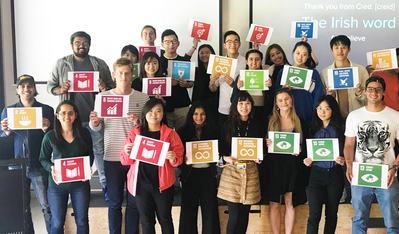
Image Credit: CRED (https://cred.global/)
FOUR POINTS CONSULTING
Four Points Consulting pledges more than 1%, in fact 2%, of their revenue from their consulting services to causes that they and their team align with. Their top priorities are the SDG 1: No Poverty and the SDG 4: Quality Education. And they have already provided special education programs to children, youth and families in Cambodia, India, Uganda and the Philippines. They also offer pro-bono work to support important causes.
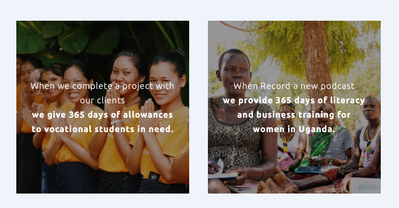
Image Credit: FOUR POINT CONSULTING GIVING STORIES (https://cred.global/)
B1G1
The B1G1 initiative itself is run by two entities: a Singapore-based Social Enterprise (also a BCorp) that manages the business program, and a US 501(c)(3) charity that manages its Worthy Cause program.
As a Pledge 1% Member, the social enterprise arm also pledges more than 1% of all its revenue to support a wide variety of causes in all of the SDGs. For example, every email their team sends, every meeting they have and every special occasion they celebrate results in a giving impact, while supporting other businesses to implement effective giving in their own unique ways.
So, on this GivingTuesday, B1G1 is sharing the #PLEDGE1%GIVES campaign with their members to encourage more of them to consider joining the Pledge 1% movement.
Together, we really can create a world full of giving where businesses with a real sense of purpose can change our world. For good.

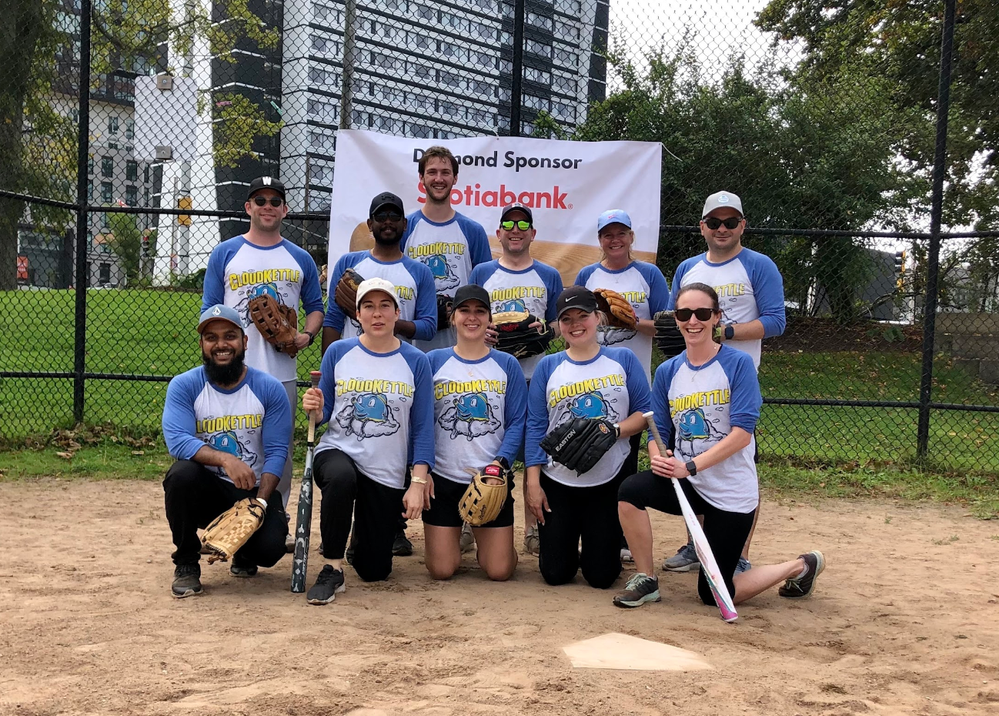
CloudKettle is a Salesforce Partner, and proud to be a Pledge 1% company. Over the years we have supported various organizations in our community in Halifax, Nova Scotia, including We Are Young – a foundation committed to granting unfulfilled wishes to seniors.
The mission of WAY is to raise awareness around the inequalities our seniors face, encourage respect for and appreciation of seniors, and facilitate inter-generational connection where our seniors experience inclusion and belonging in our communities.
CloudKettle has helped the WAY team with the implementation and configuration of their Salesforce NPSP org. We’ve spent time within the WAY org completing object configuration, data transformation and migration, automation, and connecting third party apps for the organization to help the charity run as smoothly as possible.
CloudKettle is also no stranger to getting out and having some fun as a team, participating in fundraising events like the WAY annual charity golf and softball tournaments. (If you’re a longtime member of the Salesforce community, you might recognize the number on the back of our team shirts.) We place high value on inclusiveness and are committed to improving our community, and are so happy to be able to contribute through the Pledge 1% program.
As a self-preneur, 2021 was a year of reflection. Improvements to do good (and do well) do not have to be a mammoth job nor a big convoluted process.
I like to keep things simple. On my own journey I discovered how quickly the overload of information comes. Reflecting on this, I ended up structuring my efforts with three key areas of focus:
– People
– Product
– Planet
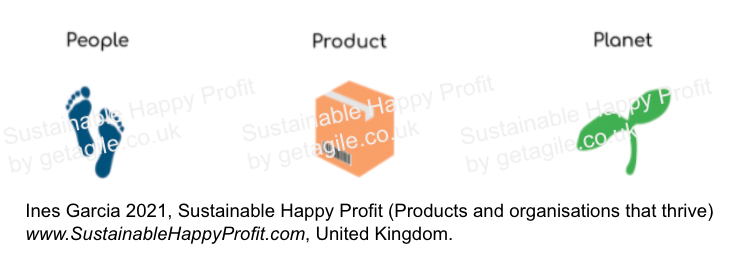
In terms of Product, 2021 was a year on since the release of my first book “Becoming more Agile whilst delivering Salesforce”. I’ve extended my pledge with a donation 5% of book sales to PepupTech, a wonderful non profit organisation dedicated to increasing the number of underrepresented people in tech.
Find your niche, find your core. What do you do already and what do you do well that can be extended?
Our third volunteering experience for Pledge 1% was at WoodGreen, one of the largest social service agencies in Toronto.
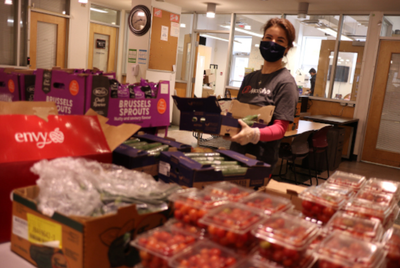
In this opportunity, we supported WoodGreen’s Food Bank, which is dedicated to alleviating food insecurity and hunger in Toronto. We know food bank visits have significantly increased since the pandemic began so we definitely wanted to make a difference in the lives of our neighbours that are struggling with insecure access to food.
Who is WoodGreen and how do they help our community?
WoodGreen was founded in 1937 and has since grown to over 36 permanent locations throughout Toronto, aiding over 37,000 individuals and families in being more self-sufficient and living independently within their communities.
WoodGreen supports people:
- Find safe, affordable housing
- Seniors live independently
- Homeless and marginalized people get off the streets
- Parents access childcare
- Internationally-trained professionals enter the job market
- Children and youth access after-school programs
- Newcomers settle into Canadian life
- Youth find meaningful employment and training
- Provide a variety of mental health supports
App Solve got involved with WoodGreen’s food program at one of their locations on Queen Street East, Toronto. In this location, WoodGreen also provides safe, affordable housing and a wide range of support services including on-site medical care, counseling, social recreational activities, life-skills training, and community volunteer opportunities.
App Solve Volunteering
Watch our video below and subscribe to our YouTube channel to stay up to date on all future videos.
WoodGreen’s food program happens every Tuesday and involves many steps.
Our team helped to unload boxes of food from the trucks of their food donors. After that, we categorized and sorted perishable and non-perishable food. We then bagged the food for client distribution, and finally handed out the food bags to their clients. Also, pet food was provided when needed.
“App Solve’s volunteering journey at WoodGreen was an amazing experience that will remain in our memories” says David Brabrook, CEO & Founder of App Solve.
We had a wonderful day with WoodGreen and we were delighted to be part of the help WoodGreen provides to those experiencing food insecurity.
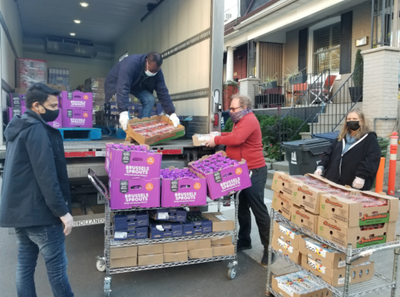
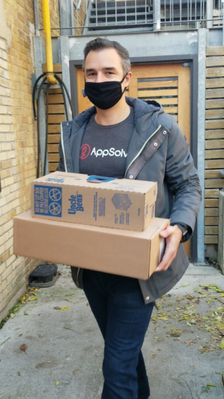
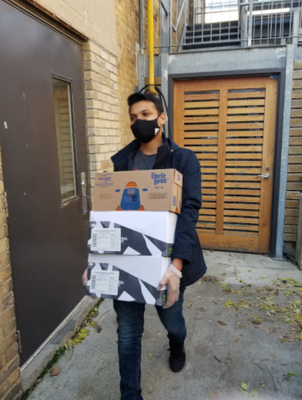
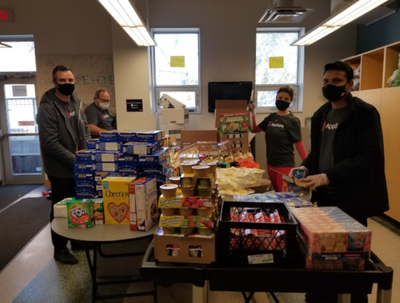
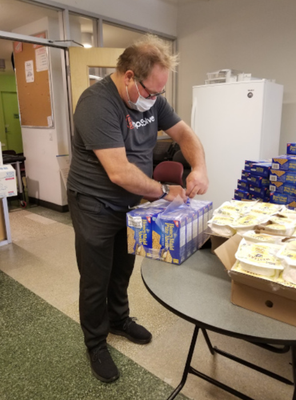
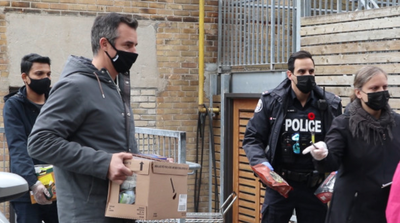
We want to say thank you to Kathy and Christine from WoodGreen who helped us with everything to ensure our volunteering day ran smoothly.
WoodGreen’s Food Bank could not achieve the transformative outcomes that it does without the support of its donors, corporate partners, and volunteers who step up to make a difference in our community. They count on the help of donors and volunteers to meet their needs.
Visit woodgreen.org to join their team by volunteering, or making a donation. You can also make a difference in the lives of people in need!

At the onset of the pandemic in 2020, Loop & Tie mobilized quickly to use its infrastructure to help gather and distribute tablets to ICUs so isolated patients could have access to video calls with their loved ones to say goodbye. Loop & Tie’s founder, Sara Rodell, formed Covid Tech Connect, with 5 other women in tech, the team quickly grew to 12 and has since become a standalone entity.
Covid Tech Connect started after Sara received a text about a New York nurse hoping to get a tablet to use with her patients to set up video calls before they were put on ventilators. In those early days, once people went on ventilators, the odds of coming off them were slim and she was hoping to help people say goodbye to their loved ones. She described a heart-breaking situation where in those quickly-escalating early days, patients arrived without phones, without chargers, or would move quickly between rooms and nurses couldn’t find their belongings and unlock phones ahead of the intubation. Nurses and doctors were lending their own devices, but without a standardized way for healthcare-providers to set up phone calls, many weren’t happening. The request was simple, “Do you know of anyone who can donate a few tablets we can use with patients and have them pre-configured for video calling.” Rodell thought, if this person is experiencing this, every hospital must be experiencing the same, as as this grows beyond New York, there will be many more hospitals with this need.
Rodell realized Loop & Tie was uniquely positioned to help, quickly. Loop & Tie’s core business is to help companies gift their clients and employees through a choice-based gifting experience where recipients can pick what they want, and tell Loop & Tie where to ship it. Loop & Tie easily pivoted to be an intermediary in tablet distribution, replacing “gift choice” with tablet and charge cord bundles; hospitals chose a bundle and let Loop & Tie know where to ship it. Loop & Tie received tablet donations at its warehouse and bundled them into packs of 15 tablets for re-shipping. Covid Tech Connect has placed over 20,000 tablets and 20,000 charge cords in hospitals and nursing homes since its founding, helping countless isolated patients have the comfort of a conversation with a loved one.
Covid Tech Connect ran in 2 phases. In the first phase we received and shipped tablets as quickly as possible. In order to execute this, our Fulfillment Team at Loop & Tie worked tirelessly to power Covid Tech Connect. After a generous grant from an anonymous donor, we were able to set up a stand-alone entity allowing us to hire a team for full time execution. In the first wave, we were able to secure obsolete supply from a few generous tech companies, but after the first 3,000 devices were placed, we needed to make our own purchases, in an increasingly tight market. Our full time team worked to source supply while also monitoring success metrics to ensure the tablets we were shipping were put to good use. In phase two, with a standardized set of devices (vs. the mix of different brands and configurations we’d received in Phase 1) we were able to pre-configure tablets so they were ready for use once powered on at the hospital. We were also able to solve a significant pain point in call coordination through creating the TeleHome app. A HIPPA compliant, no login-required solution for hospitals to coordinate calls.
After the initial wave in NYC, we focused on sending devices to underserved and rural communities throughout the US. As Covid hospitalizations thankfully declined, and fewer hospitals were requesting devices, we expressed the intention of connection through issuing grants to other nonprofits and helped communities in India. We used the remaining funds to make grants to US organizations addressing systemic inequality that was exacerbated during the pandemic, communities where food insecurity increased and death of family members threatened to impact children and their futures. We also expanded our reach to support communities in India. As Covid intensified there, we were able to fund projects such as building rickshaw ambulances, telehealth initiatives and food security programs. We’ve made grants to over 20 organizations.
At Loop & Tie, our mission is about connection, whether it’s through gifting, or something as intense as Covid Tech Connect. In those early days of self-quarantine, like so many others, our employees wanted to help, but didn’t know how. Being able to channel this energy into Covid Tech Connect helped our Loop & Tie team be able to show up in service and feel a sense of purpose in how we could support our global community. We joined Pledge 1%, pledging time and product, because we wanted to join a community of like-minded companies who are owning the responsibility and opportunity we all have to be thoughtful stewards of our power and resources. Joining Pledge 1% helps us be a part of what we hope is the future norm of conscious company building.