Originally posted on candorthreads.com
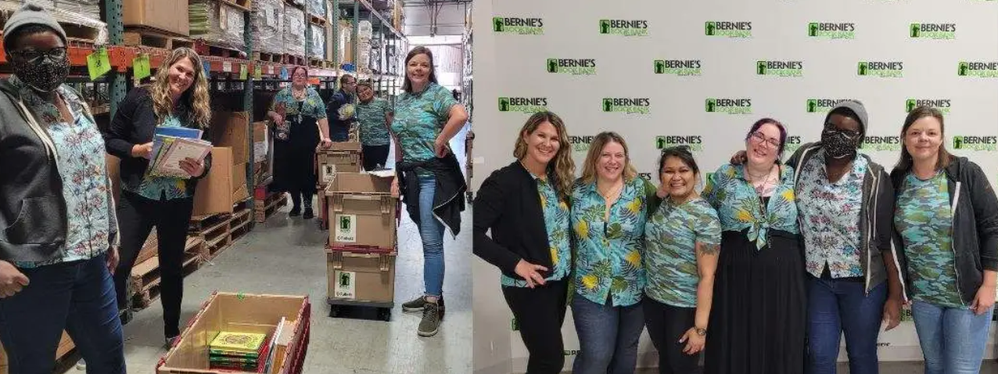
Here at Candor Threads, we’re always finding ways to live up to our mission and core values. Philanthropy is one of our favorite methods of checking all the boxes.
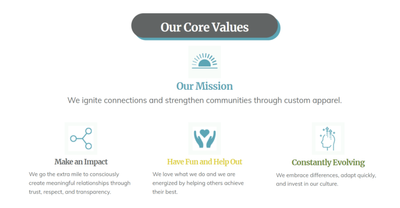
How We Give:
When a company is trying to ignite connections, strengthen communities, make an impact, and constantly evolve, all while having fun and helping out (PHEW!), one of the most logical solutions is philanthropy! Back in July of 2021, we pledged to give back 1% every quarter. That 1% can be comprised of equity, time, product, or profit. For our third quarter, we pledged to give 1% of our time by volunteering at Bernie’s Book Bank in Lake Bluff, Illinois!
Bernie’s Book Bank is a wonderful organization that is truly improving the literacy rate in Chicago. They have provided more than 22 million books to children since they started in 2012! That equates to a whole lot of literacy and we were excited to donate our time to such a worthy organization.

The Philanthropic Task at Hand:
We began this philanthropy journey by providing a bin in the lobby of the Green Exchange (our office building) to round up any gently used children’s books from other companies within our walls. Upon filling our bin with close to 100 books, we threw on our custom shirts, loaded our donations in the car, and off we went to Bernie’s! From the moment we entered the building, we were in awe of this massive operation. The facility is beautifully inviting and its mission is clear with children’s books bursting through the seams!
Our team was escorted to the back of the building where we came upon a number of large boxes, filled to the brim with children’s books. Our mission was simple: collect the designated number of books per box and fill our own rolling carts until full, then top each bin off with plastic totes. Once completed, a lucky group of young readers will receive 6 books to cherish and call their own. By the end of our time at Bernie’s, we had collected/sorted approximately 15,000 books for 2500 kids in Chicagoland!
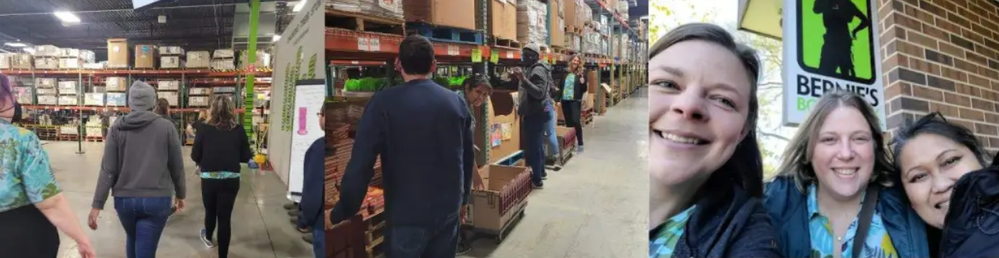
Making an Impact:
Philanthropy is so important to us and we felt great knowing that we made an impact on Chicago’s youth. We’re so thankful to Bernie’s Book Bank for allowing us this opportunity. Special thanks as well to our office mates who took the time to help us with this successful endeavor. If you would like to donate your time or dollars to Bernie’s Book Bank we highly recommend them for your next philanthropic project!
Coleman Insights
Raleigh, NC USA
Number of employees: 28
Coleman Insights provides quantitative and qualitative research—including perceptual research, music testing, content testing, focus groups, and online discussion groups—to audio brands in the radio, podcasting, and streaming industries. They have committed to pledging their Profit, Product, and Time towards helping the community.
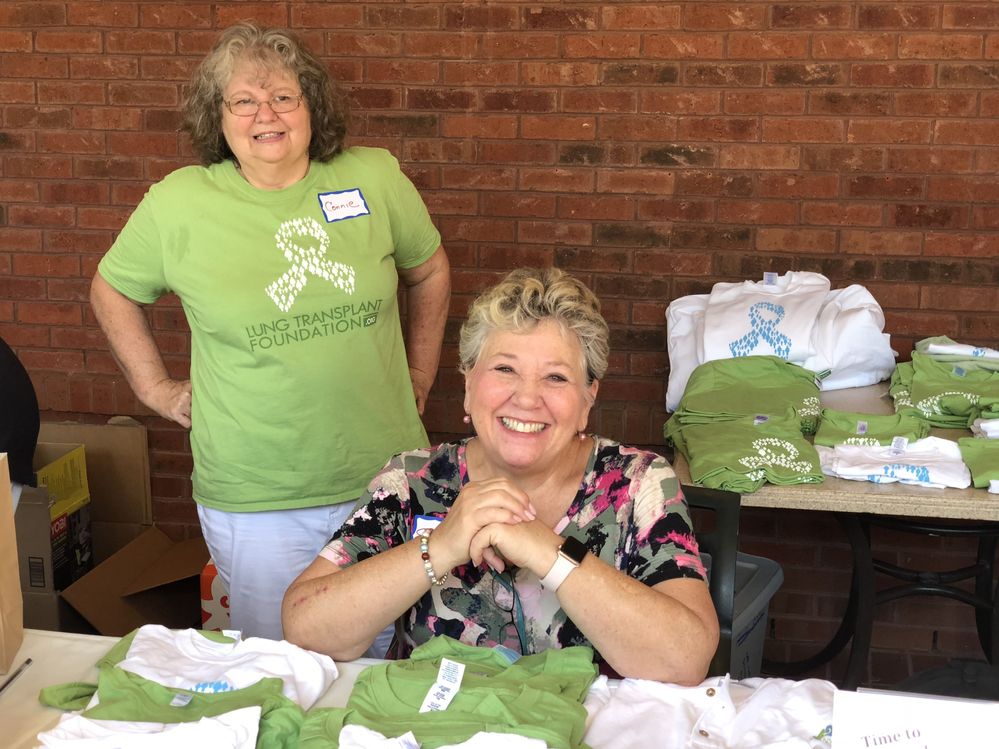
Since learning about the program at Salesforce’s Dreamforce conference in San Francisco a few years ago, Coleman Insights has integrated Pledge 1% and giving back into its DNA. Over the past five years, Coleman Insights team members have volunteered their time and given to charitable causes that span a wide range. This includes loading and unloading at the Urban Ministries Food Pantry in Raleigh, checking in golfers for the Lung Transplant Foundation‘s annual tournament, mulching in Raleigh’s Nash Square, and making wreaths for Donate Life NC.
Coleman Insights hosts a Pledge 1% page on its website: https://colemaninsights.com/about/pledge-1-percent.
This past year, our relationship with Exchange Family Center in Durham, NC rose to a new level. Exchange Family Center makes children’s lives better by strengthening their families, teachers, and communities through proven counseling, coaching, and training. Coleman Insights President Warren Kurtzman joined the EFC board, and team members Jay Nachlis, Meghan Campbell, Eileen Genna, and Lauren Richardson have volunteered to help make the agency’s 30th Anniversary Gala a success.
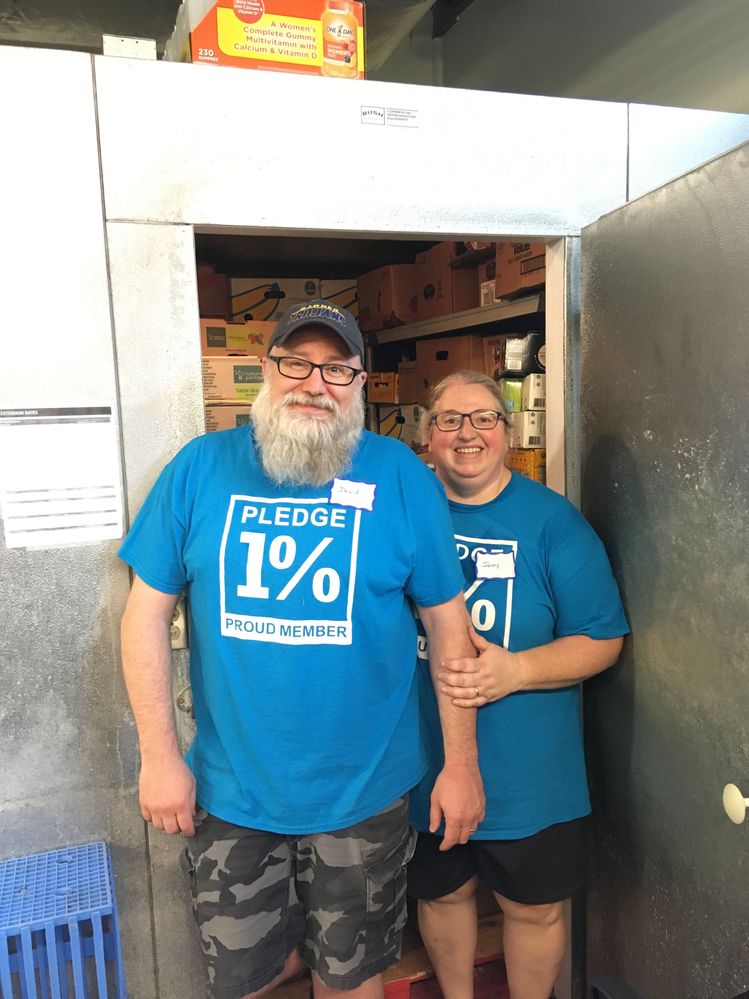
This past summer, the new Coleman Insights Culture Committee decided to focus on mental health as a company priority. This has included scheduling a family day at a farm on a Friday afternoon and fielding a team for Walk for Hope, which has helped fund millions in mental health research.
We are proud to be a Pledge 1% member and to make giving back an integral part of our company culture.
Their #1 tip or advice for companies?
It requires a core group of employees dedicated to making sure the program remains active and relevant. Not everyone will be actively involved, but a small group must be.
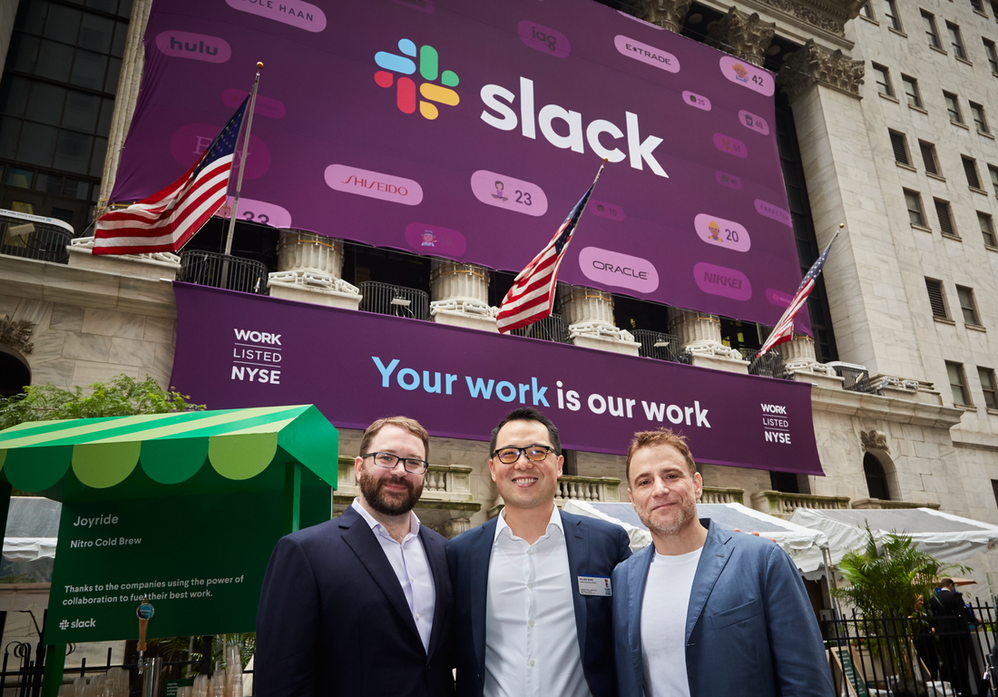
This story is part of Pledge 1%’s Impact Award Winner feature series. Learn more about the Cloud 100 List and other Pledge 1% members that were featured on the list here.
Why did you first decide to join Pledge 1%?
Being humble and being of service to others has always been incredibly important to our leadership team and a core part of the Slack culture. We joined Pledge 1% in 2017 to formalize our program and to deepen our philanthropic work. That year, every employee was given a copy of Bryan Stevenson’s Just Mercy. The book came with a note from our CEO urging us to remember the most vulnerable members of our society. As we started thinking more about the issues, we realized no one was really focusing on the formerly incarcerated population and we wanted to see how we could tackle some of the structural injustices they face as a tech company. So we piloted Next Chapter, a software engineering apprenticeship program that helps returning individuals build careers in the tech sector. Next Chapter has since expanded to 14 hiring partners – including PayPal, Zoom, Dropbox, Square and Asana – many of which are also Pledge 1% members.
As we built our impact program, we knew that to be successful, we also needed to change the culture within our company and engage our employees in order to address the stigma around incarceration. Our leadership gave us the time and space to think about how to best approach this issue and find a solution that engaged employees from the very start. We have since replicated this approach at every company that Next Chapter has expanded to: we organize an all-hands meeting, we train managers, and we host safe and open discussions about why this is important, where employees can raise any questions they have, so that they understand what we are trying to achieve. We’ve learned that bringing all employees into the program and educating them about the issues is an effective way to ensure they are not just onboard, but passionate about supporting our larger mission.
What does your Pledge 1% program look like in action? What does your program involve?
Our goal with Slack for Good is to increase the number of underrepresented individuals working in the tech space. We were honored to win the Pledge 1% Impact Award in 2018 for our Next Chapter program, which at that time was just at Slack. It was small – very much a pilot – and although we were still working on proving the model, we were really excited that we were trying something new.
Since then, we’ve proven that the model works – we have a 100% success rate, meaning everyone who has gone through the program has received a full-time job offer. In total, over 31 people have successfully gone through the program and reentered the workforce as software engineers.
Our goal today is to scale this program and help other companies bring Next Chapter to their organizations, so they can hire these incredibly talented individuals and play a part in expanding access to tech careers for people returning home from incarceration. To help accelerate this effort, we recently published a playbook with the Aspen Institute that helps companies break down the barriers to hiring this population.
Our Pledge 1% program includes other initiatives as well. We’ve committed 1% of company product to support thousands of nonprofit organizations with free or discounted plans. This effort was especially impactful during the pandemic with the shift to remote work and the need for better tools to support digital collaboration. For example, we provided product to universities and scientific research groups, like the Covid Tracking Project, and community relief organizations, like Frontline Foods.
We also commit 1% of company time to support employees in volunteering not only their time but also their expertise, and we’ve continued to expand that commitment, to seven days a year. It’s amazing to see how much faster NGOs can reach their goals when they have a little more resources and expertise to supercharge their programs.
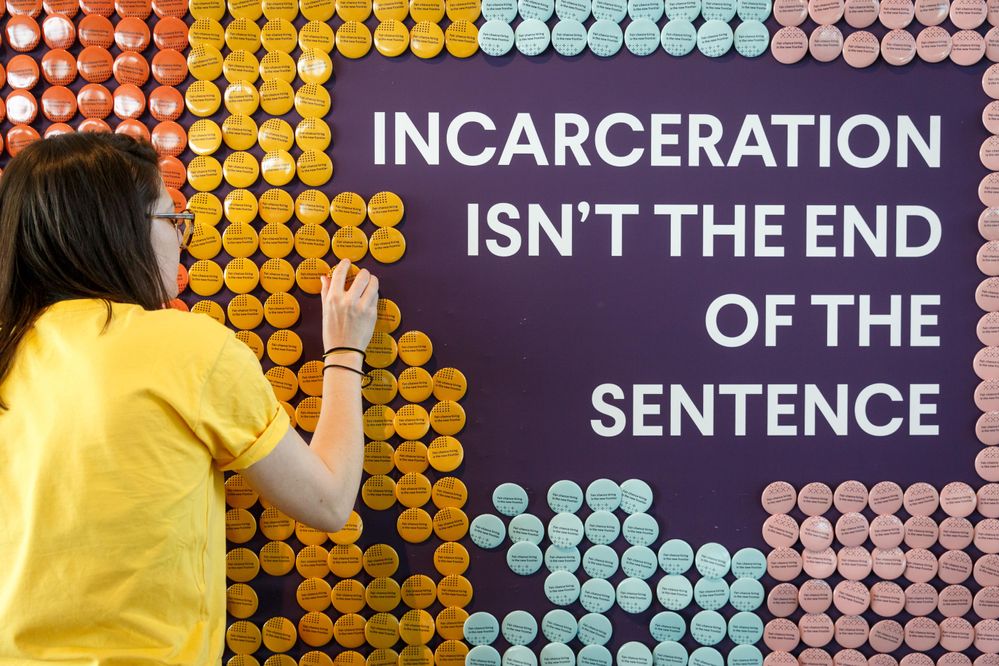
What have been some of the greatest highlights or impact moments to date?
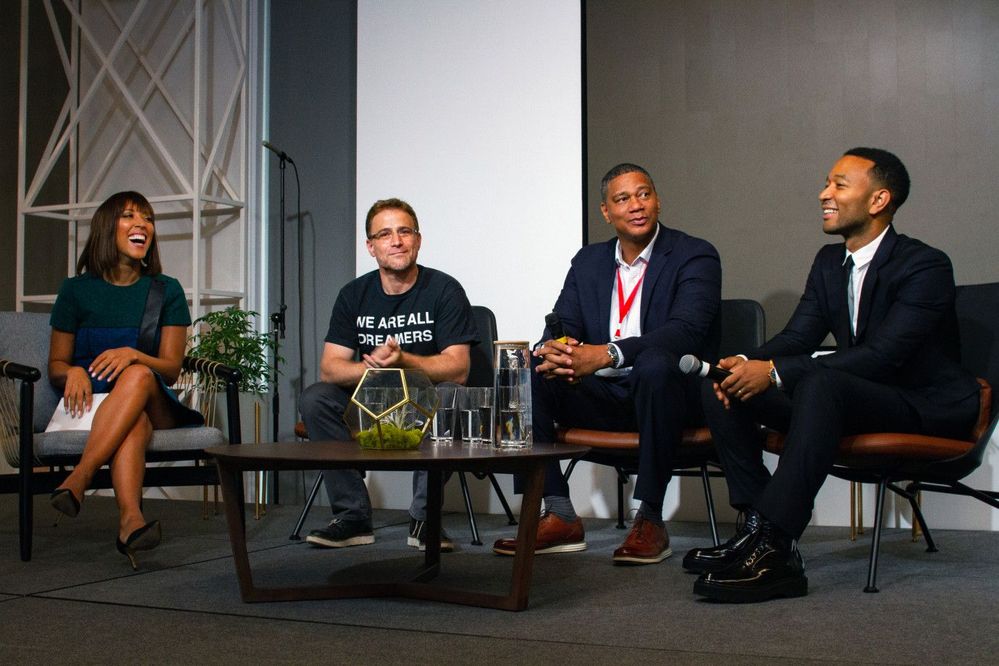
We could never have been successful without our partners. For example, through our wonderful partnership with The Last Mile, W.K. Kellogg Foundation and FREEAMERICA, we’ve been able to work with people who have experience in racial equity and criminal justice reform to build and scale Next Chapter. We’ve also worked with a lot of amazing thought leaders like John Legend and Common who are passionate about this issue and have helped us raise awareness about the importance of these programs.
With the Aspen Institute, we’ve launched a new joint initiative called Rework Reentry that is helping bring Next Chapter to more companies throughout the U.S, leveraging the expertise and reach of Aspen Digital and the Aspen Institute’s Criminal Justice Reform Initiative. In addition to the tactical blueprint we’ve created that companies can follow to expand career opportunities for returning citizens, we’re also working with Aspen to convene key stakeholders in the tech and justice ecosystems to educate them on how tech companies can help move the needle on this issue. And together we’re elevating documentary storytelling about the challenges faced by re-entering individuals, like the “Home/Free” documentary short film series created in partnership with Next Chapter, FREEAMERICA and the Equal Justice Initiative.
How has Pledge 1%’s framework helped you scale your impact?
The Pledge 1% framework has helped us invest in programs that are aligned with our values and ensure that our product can be accessed by those who are working to make the world a better place. It has also provided a framework for us to keep our employees proximate to communities they’re serving.
Why did you decide to pledge equity and how has this helped you scale your impact (if applicable)?
We knew as a young company that this was a priority to us, and we wanted to embed it in our priorities from the start. This early commitment of 1% of company equity has allowed us to scale our impact as we’ve grown and meaningfully pursue Slack for Good’s mission to increase the number of historically underrepresented individuals in the tech industry, in particular through Next Chapter.
Have recent events like the pandemic (and other crises) impacted your program? If so, how?
Next Chapter has continued to thrive during the pandemic by facilitating remote apprenticeships. In fact, remote work has allowed apprentices to return to their communities and be mentors and stable pillars of employment. This is helping employ people in communities that are outside of traditional tech hubs like San Francisco.
Through our 1% of product donation, Slack for Nonprofits became crucial during the pandemic. As organizations went from working in the office to working remotely overnight they needed collaboration solutions to work as distributed teams. Through our Spack for Nonprofits program, we were able to help nonprofits by giving them free and discounted plans so their important work wouldn’t skip a beat.
Can you share any key takeaways or learnings you’ve gained while implementing your program?
Our Rework Reentry Playbook contains all of the learnings and steps companies need to adopt Next Chapter at their organizations. It tells you exactly what you need to do to move the needle on this issue, especially as a small company.
Looking back, we’ve learned that it’s easier to start with over indexing on providing support and then making adjustments as the programs scale. Your business demands will only get more intense as you grow – so don’t delay, start where you are now.
Any words of encouragement or tips you can share with companies who are just getting started?
For companies that are just getting started, It’s okay to make mistakes. You don’t have to get it exactly right the first time.
Canva with Force For Good
This story is part of Pledge 1%’s Impact Award Winner feature series. Learn more about the Cloud 100 List and other Pledge 1% members that were featured on the list here.
Why did you first decide to join Pledge 1%?
Our mission is to “empower the world to design” and one of our key values is to “be a force for good”. We’ve always had a two-step plan at Canva: to build one of the biggest companies in the world, and then do as much good as we possibly can. Joining Pledge 1% was a very natural step for us to take as part of this mission and helped us to create concrete goals for how we can be a force for good.
What does your Pledge 1% program look like in action? What does your program involve?
We joined the Pledge 1% movement to meaningfully contribute towards making the world a better place. Our 1% of equity is pledged to the Canva Foundation. This is in addition to the 30% of equity that was pledged towards social impact back in September 2021.
Through the Foundation, we’ve been able to financially support a number of charitable projects and causes such as the Aussies for Afghanistan Appeal and those impacted by the war in Ukraine. We’ve also implemented an internal donation gift-matching initiative, where we match the donations that our team commits to nonprofit organizations dollar-for-dollar (up to $5000AUD each per year) to help them amplify their impact.
In terms of our product, we’re committed to empowering schools, teachers, and nonprofit organizations by giving them access to Canva for Teams, our premium product, for free. From UNICEF, to Red Cross, to the World Wildlife Fund, we’ve seen some incredible ways that organisations are using Canva for Nonprofits to promote and champion important causes. We’re also incredibly proud to support the future of creativity by providing over 25 million K-12 students and teachers around the world with Canva for Education, for free.
Each member of our global team receives 3 days of volunteering leave each year, bringing to life the 1% pledge of our time to helping our community.

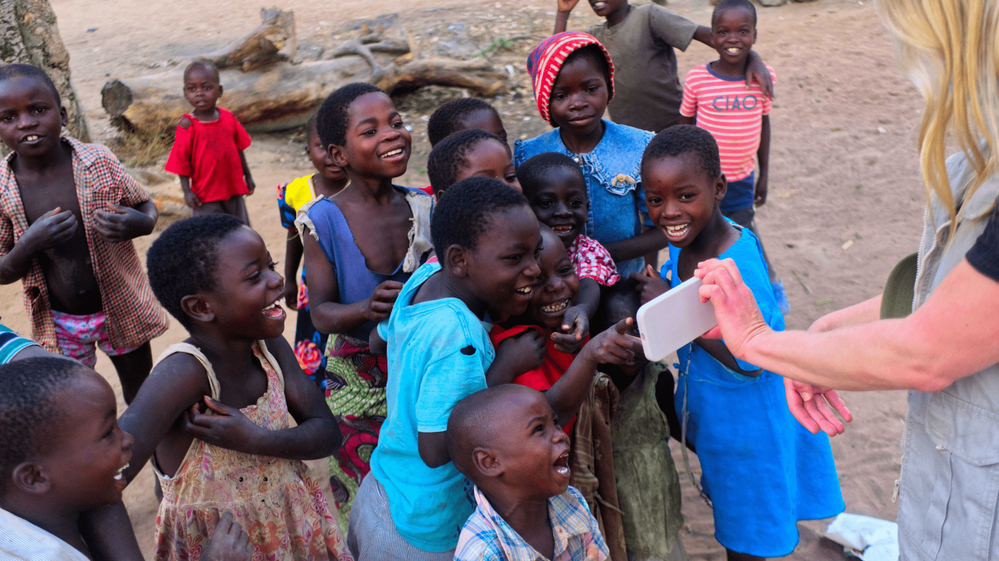
Photo from the Canva Foundation team’s recent trip to Malawi
What have been some of the greatest highlights or impact moments to date?
A huge impact moment for us was launching our first pilot program with GiveDirectly, where we distributed US$10 million of digital, unconditional cash to nearly 13,000 people in Malawi. This program also has a research component that will not only help Malawians, but future recipients of GiveDirectly programs.
How has Pledge 1%’s framework helped you scale your impact?
The Pledge 1% framework helped us bring to life a number of initiatives that allow us to live our value of Being a Force for Good. With our two-step plan in mind, the structure of Pledge 1% has allowed us to formalize our commitment to social good, create tangible goals to keep us accountable, and has helped us amplify our impact.
We’re now empowering over 260,000 nonprofit organizations with our premium product, as well as community educational workshops to upskill them with invaluable marketing and visual communication expertise. A great example is Amnesty International Australia, who curated the 21st century equivalent of picket signs that inspire followers to take action on important issues. We’re also empowering more than 25 million students and teachers each month to communicate visually in the classroom and beyond.
Through our internal donation-matching program, Canvanauts have donated a total of US$240,000 in the 2021/2022 financial year, which has all been matched dollar-for-dollar as part of our gift-matching initiative. That’s almost US$500,000 that has been donated to nonprofits by Canvanauts to help them amplify their impact!
We’ve recently been encouraging our global team to create their own Force for Good journey, and to make the most of their volunteering leave. To help empower Canvanauts to use their leave, we launched Force For Good Fridays, giving everyone the ultimate permission slip to volunteer and give back to their local community every month. In the last 12 months, we’ve had over 1,000 volunteers contribute more than 6,500 hours to over 70 nonprofits globally.
Another Canva Foundation initiative is our One Print, One Tree program — for every print order placed with Canva, we plant a tree – it’s a simple idea with a big impact. So far, we’ve planted 2.4 million trees (205 different native tree species) in over 18 sites in Kenya, Mozambique, the Philippines, Tanzania, Brazil, Haiti, USA and Madagascar, and we’ve committed to planting 5 million trees by the end of the year.
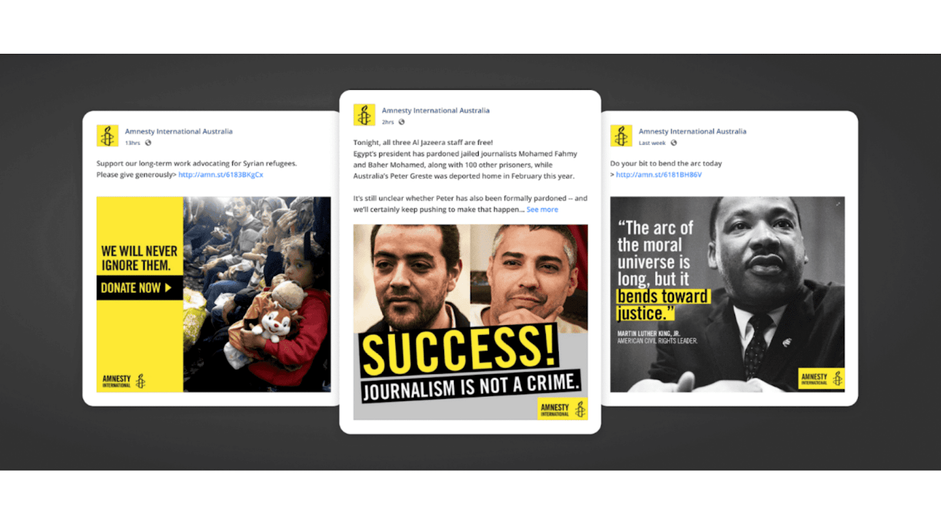
A few of the designs Amnesty International Australia has made on Canva
Have recent events like the pandemic (and other crises) impacted your program? If so, how?
During the pandemic, we needed to reimagine our volunteering opportunities. We switched to remote first volunteering, where we were able to help nonprofit organizations over Zoom. For example, through our monthly virtual Missing Maps Mapathon, we mapped over 8,700 buildings for Humanitarian OpenStreetMaps, supporting disaster relief projects in Guatemala and South Africa.
Another way we kept our Force for Good activities alive throughout the pandemic was by opening the kitchen in our Sydney office for the local community – our amazing Vibe team was able to continue using our office kitchen to prepare food for charities such as OzHarvest.
Through our equity commitment, we’ve also been able to play a small part in supporting some of the a number of recent humanitarian crises through initiatives such as the Aussies for Afghanistan Appeal and by raising vital funds to support those impacted by the war in Ukraine. Both of these programs helped to deploy and distribute emergency funds in partnership with grassroots organizations who are well-connected on-the-ground.
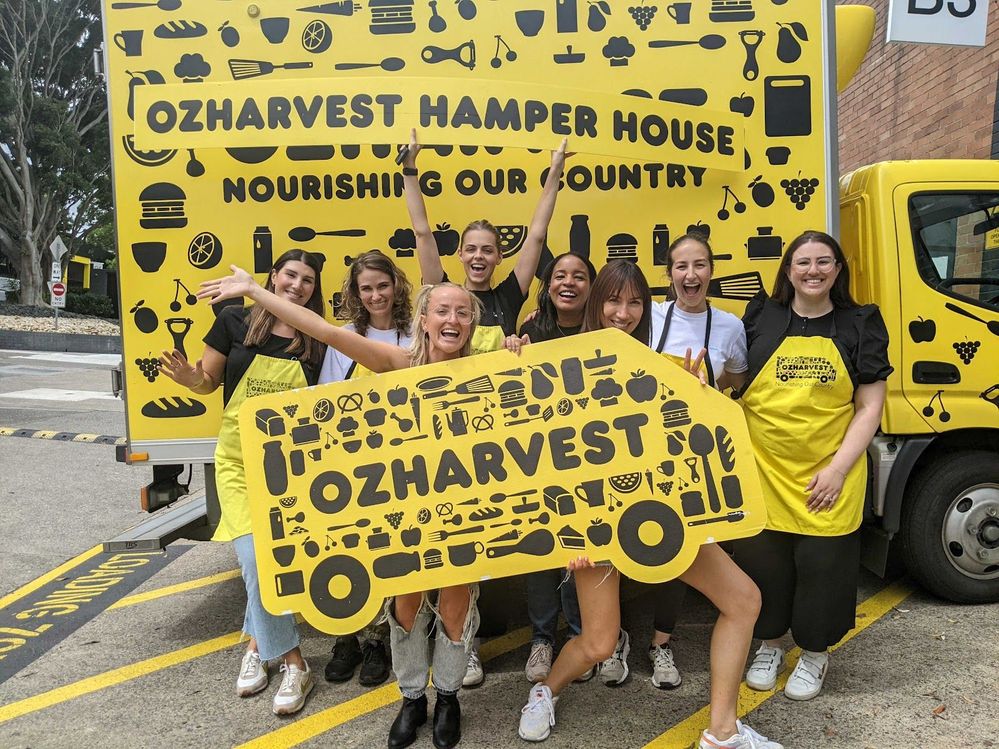
Our Employer Brand Team supporting OzHarvest for their volunteer leave
Any words of encouragement or tips you can share with companies who are just getting started?
Making a difference doesn’t have to be overwhelming — setting smaller, achievable goals is a great place to start. These keep us accountable and celebrating the small milestones is a powerful way to stay motivated and focused on your social impact journey.
Are there any future events, plans, or programs you are particularly excited about?
We’re really only 1% of the way there when it comes to our ‘simple’ Two-Step plan, but we’re so excited about the future Force For Good initiatives we have planned, and the impact they can have on the world.
This story is part of Pledge 1%’s Impact Award Winner feature series. Learn more about the Cloud 100 List and other Pledge 1% members that were featured on the list here.
Why did you first decide to join Pledge 1%?
Social impact at Procore first started happening through employee-led initiatives to create volunteer events and one-off product donations to educators that were referred to us by our customers. This culminated in Procore.org being formalized as the social impact arm of Procore in 2017, with a mission to advance the construction industry through advocacy, education, and technology.
Once we formalized with a dedicated team, we went through a benchmarking exercise with other organizations to help us get started. Throughout these conversations, rave reviews about Pledge 1% came up repeatedly. Pledge 1% has helped us maximize our impact on the communities we serve, providing invaluable learning experiences and networking opportunities from the first connection until today.
What does your Pledge 1% program look like in action? What does your program involve?
We’ve formally pledged to give 1% of our time via employee volunteerism, as well as donate 1% of our construction management software to nonprofit builders, educational institutions, and training centers.
Procore has various impact initiatives. Some of our programs involve:
Product Donations
Over 800 nonprofit builders, educational institutions, and trade association training and apprenticeship centers in 21 countries have in-kind donated access to Procore with unlimited users, data storage, and support.
Education
We provide product, training, and certifications to over 30,000 students in 10 countries. In fact, 96% of accredited construction management university programs in the US now have access to Procore through Procore.org.
- The Top Tool for These Leading Construction Management Programs: Technology
- Nelson Mandela University: Future-proofing talent in construction

Nonprofits
Procore.org provides in-kind donations to over 320 nonprofits dedicated to building for communities in need and rebuilding for those impacted by disaster. Nonprofit & NGO users leverage Procore to optimize efficiencies and make a difference where staff is spread thin and resources are limited in low-income housing projects, disaster response, religious institutions, and more.
Advocacy
In 2021, Procore.org began providing free product training and a discounted buying program to better partner with minority contractors to support and amplify the impactful work they’re already doing. By the end of the year, over 100 minority contractors had received free training on Procore.
We focused our advocacy efforts on taking action to increase the number of minority contractors and leaders in construction. We accepted AGC’s Education Research Foundation’s challenge to create a $250,000 donation gift to assist African American and disadvantaged minority students who are studying construction fields at historically Black colleges and universities, or HBCUs.
- Videos/article: Procore and AGC’s Education Research Foundation Create a Scholarship Fund for Students Studying Construction at HBCUs
Procore Cares: Employee Volunteering
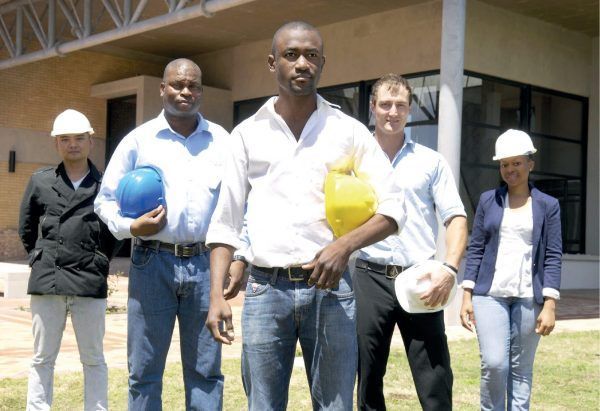
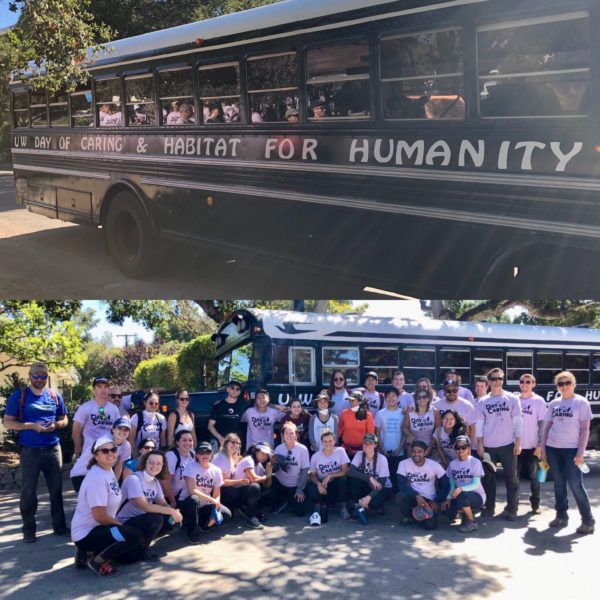
All Procore employees globally are encouraged to volunteer and give back to their local communities, with 16 hours of Volunteer Time Off (VTO) annually. All employee-led volunteering, donations, and other social giving opportunities are accessed through giving and volunteering platform Benevity.
Procore was the Cloud 100 Pledge 1% Impact Award Winner in 2019. We offered a $50 donation for every demo of our product–a program that helped raise over $30K for Team Rubicon to support relief efforts for those impacted by Hurricane Dorian.
How has Pledge 1%’s framework helped you scale your impact?
Since winning the award, the COVID-19 pandemic made us reimagine how we would run our programs. However, because of our partnership with Pledge 1% and Builders, we were able to learn from each other and adapt quickly to implement Benevity to scale our global employee volunteer efforts, build virtual classroom curriculum for instructors to use with students learning remotely, create our first large scale donation through the AGC ERF HBCU Matching Scholarship Fund, and start our program to support underrepresented groups in construction.
Has your Pledge 1% program changed since winning the Pledge 1% Impact Award?
We have not pledged equity or profit, however we have made a donation of $250K with AGC Education Foundation for HBCU students in construction management programs. We challenged AGC members – and the industry at large – to match our donation in order to double our impact, and we achieved our collection action goal of $500K within 4 months.
In addition, we implemented the use of Benevity so that our employees can give directly to the nonprofit causes they care about.
We also have invested in resources and new nonprofit partnerships that directly help our industry with a prevailing challenge, the labor shortage. Procore.org cares about the labor shortage in construction and the industry’s workforce development because Procore is built solely for the construction industry, and these are major top-of-mind challenges that the industry faces. Our new Workforce Development web page is a hub for construction professionals, educators, students and parents to access Procore’s workforce development resources and content in one place. In addition, we started a partnership with the National Center for Construction Education and Research (NCCER) as a founding member of CareerStarter, a new tool powered by NCCER’s Build Your Future (BYF) initiative that provides career-seeking individuals direct connections with local training programs and entry-level jobs.
What have been some of the greatest highlights or impact moments to date?
Awards:
- Procore Named Philanthropist of the Year by the United States Minority Contractors Association
- Procore Earns a 2021 Tech Cares Award From TrustRadius
- Procore Recognized with Forbes Cloud 100 Pledge 1% Impact Award
- AGC & Procore Meet Initial Goal of Raising $500,000 To Launch a New Scholarship for Minority Students Studying Construction at HBCUs
- Launching New Workforce Development Resources to Combat the Construction Labor Shortage
- Featured Company in National Institute of Building Sciences (NIBS) 2021 Report to President
- Procore’s commitment to customers in response to COVID-19
- Procore Promotes Construction Safety With Third Annual Procore Safety Qualified Program
- Procore.org Provides Construction Software to Habitat for Humanity
Children are some of the biggest victims of climate change, and almost every child will experience environmental hazards caused by our changing planet in the near future (UNICEF). Despite the huge implications for them, children have little power to limit the changes happening around them. A landmark study last year found that the majority of youth experience eco-anxiety and 81% of children who responded said that when they try to speak about climate change, they feel ignored or dismissed (University of Bath).
Many of us are not just corporate leaders – we are parents and family members. How we do business isn’t just about how we impact the climate; it’s about how we build the world for future generations. As a parent, discussions about climate change can be difficult for a variety of reasons, but it’s critical that we inform the next generation on the issues and lead by example – teaching them how we can live and work more sustainably, especially as we work from home.
If you don’t know where to start, that’s OK! One great resource is NASA’s Guide to Climate Change for Kids. This website provides a lot of useful answers to frequently asked questions about climate and covers themes, like weather and climate, atmosphere, water, energy, and plants and animals, using easy-to-understand graphics and cartoons to help explain things.
You can also refer to Talking to Your Kids About Climate Change by The Climate Reality Project. This webinar is a roundtable discussion with four leading experts who share their unique insights and best practices for having meaningful conversations about climate change with kids.
Do you have any advice for other parents beginning to talk about these issues with their children? We’d love for you to share helpful resources on our Climate Action Discussion forum.
Wildfires, drought, flooding, and more – by now, we are all familiar with images of the devastation caused by the ongoing climate crisis. If you’ve ever experienced a moment of worry caused by our rapidly changing planet, you aren’t alone. According to the APA, more than two-thirds of Americans have experienced anxiety over the effects of climate change, or what we now refer to as ‘eco-anxiety’.
While there is no medical diagnosis for eco-anxiety, it is defined by the APA as “a chronic fear of environmental doom” and can include fear of observing these changes and experiencing a concern for coming generations. Some of the symptoms include feelings of hopelessness, depression, frustration, and PTSD.
Eco-anxiety may be on the rise, but so are methods to understand the concerns caused by these events and how to handle them in a meaningful way. In the business world, understanding the impact of eco-anxiety means understanding how to help co-workers or employees who are struggling with these worries. Knowing tools to mitigate this specific stress means being able to take action and help overall employee mental health, which in turn boosts productivity and creativity within the workplace.
Here is a list of articles and resources to help manage eco-anxiety for yourself and for others:
- This article by Medical News Today discusses what eco-anxiety is, how it affects us, and how to cope with it.
- Refinery29 provides more insight into specific worries caused by climate change, especially parental guilt, generational anger, and policy despair, as discussed with a climate psychology researcher.
- Organizations like The Good Grief Network work to boost mental and physical resilience around climate change anxiety. Their platform offers a virtual, community-based 10-step program to help people work toward acceptance and recovery from eco-anxiety and climate grief.
- Finally, Ecoanxiety.com offers several ways to mitigate eco-anxiety, such as engaging with nature and nurturing your ecosystem.
Do you or does someone you know struggle with eco-anxiety? What steps do you take to refocus and recharge in today’s world? If you have resources we would love for you to share them in the comments below or our Climate Action Form.
In honor of Earth Month, we’re launching a Pledge 1% series all around Climate Action!
With the help and support of our members, we’ve developed some of today’s top tools and resources for companies to take climate action in a way that’s sustainable for their business and that’s aligned with their values. Every day in April, we will use this blog to build on these materials to share new case studies from our members, facts and tips from climate experts, and other actionable steps our teams can take today – at home and/or at work – to combat climate change.
We understand that the world is facing unprecedented challenges at the moment. Unfortunately, geopolitical tensions are only accelerating an already critical climate crisis. As teams and businesses, taking action has never been more urgent and needed.
When it comes to the climate, our collective 1%s can have a real and immediate impact. We are so grateful for all that you are doing – please use the Social Impact Forum to share your tools, strategies, plans, and ideas for how we – as businesses and individuals – can combat climate change.
Want to learn more about how to incorporate climate action into your business? Download our Brinkwire
The Duke of Sussex has issued a new rallying cry, stating that quitting should be ‘celebrated.’ The fact that more people are deciding to put their mental health and happiness first by leaving jobs that don’t make them happy should be “celebrated,” according to Prince Harry.
In a new interview, Prince Harry discussed how certain job resignations can benefit one’s mental health.
For the first time, the Duke of Sussex discussed his role as chief impact officer at BetterUp, a coaching and mental health firm founded in California eight years ago. Harry touched on job resignations and burnout as one of the topics he discussed.
These issues, according to the Duke, were “brewing for quite some time” before Covid brought them to the forefront of people’s minds. People are “finally paying attention” to the importance of mental fitness in the workplace, according to Harry, who believes we are in the midst of a “mental health awakening.” “I’ve actually discovered recently, courtesy of a chat with [BetterUp science board member] Adam Grant, that a lot of the job resignations you mention aren’t all bad,” he told Fast Company. “In fact, it’s a sign that self-awareness necessitates change.” “Many people all over the world have been stuck in jobs that don’t make them happy, and now they’re prioritizing their mental health and happiness.” “This is a cause for celebration.”

In March, Harry became a member of BetterUp, a company that provides mental health services and coaching to individuals and businesses. The Duke, who has long been an advocate for mental health and has spoken openly about his own struggles, has a wide range of responsibilities as chief impact officer, including public advocacy on mental health, philanthropy, product strategy, and advising the company on how to use capital raised through its commitment to Pledge 1 % – an initiative that encourages companies to donate 1% of staff time, profit, or equity to charitable causes.
During the interview, Harry also revealed that BetterUp worked with his former patronage, the Queen’s Commonwealth Trust, “earlier this year.” In 2019, the Duke and Duchess of Sussex were named President and Vice President of this organization, which supports young leaders throughout the Commonwealth. They resigned in February after informing Her Majesty that they would not be returning to their full-time positions as senior members of the Firm.
