By Hayden Brown, CEO of Upwork
This piece is shared as part of Pledge 1%’s #GivingTuesdayNow campaign, which highlights how Pledge 1% members and the business community are coming together as a force for good to combat COVID-19.
For over 20 years, Upwork has connected businesses with remote professionals to help tackle their most pressing challenges. Right now, we all face a common challenge—mobilizing our resources to mitigate the devastating impact of the virus on our communities and economy. This challenge requires us to work quickly and at scale across a broad range of skills and with fresh thinking.
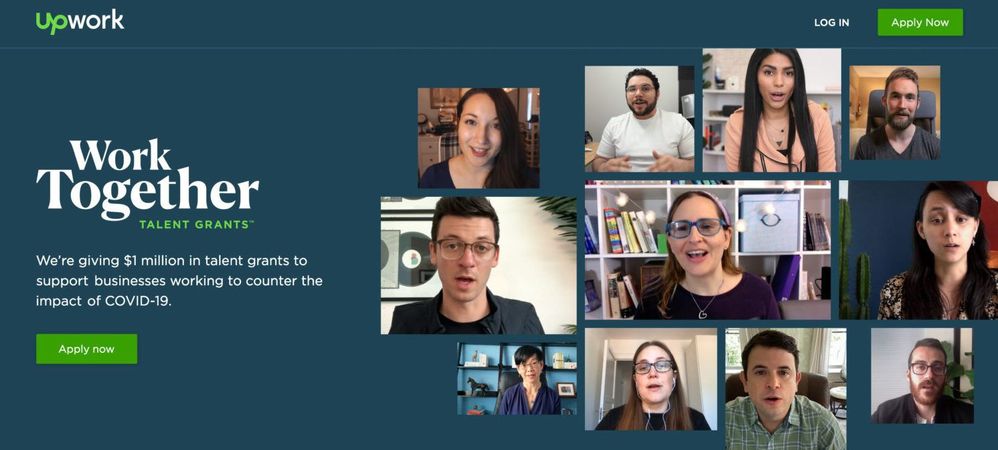
On April 28th, we announced the launch of our Work Together Talent Grants program. The program was created to help us meet these challenges head-on by offering businesses $1 million in talent grants to fund projects with missions directly tied to mitigating COVID-19’s impact on individuals, communities, and the economy.
Upwork will provide selected organizations up to $25,000 in talent credits to be used on the Upwork site, for a total of one million dollars in grant funding. In turn, these funds create economic opportunities for the independent talent hired to work on the grantees’ projects.
If your project is selected, our team will help match you directly with remote professional(s) who have the specialized skills you need. The grant funds will pay for some or all of their time on your project.
You can learn more about the Work Together Talent Grants here.
In addition to the Work Together Talent Grants, we are taking ongoing efforts to aid independent professionals and clients in maintaining business continuity, so they can remain resilient throughout the pandemic and emerge from it even stronger:
- Co-founded the Freelancers Relief Fund. In partnership with the Freelancers Union, the fund aids independent workers experiencing financial hardship as a result of the pandemic.
- Help talent gain payment peace of mind. Talent can enjoy the certainty of guaranteed payments on Upwork for their non-Upwork clients too by using our new Direct Contracts solution. We’re also working on ways to speed up payments to talent from clients on our platform.
- Created the remote work resources center. We share tips for building and successfully managing remote teams on a regular basis. Topics range from how to get started with working remotely, to leveling up security functions, and thought leadership articles on the future of work.
- Supported the #COVID19StartupWeekend. The online event brought together developers, marketers, nurses, students, scientists—anyone with an idea to tackle COVID-19. For 3 days, thousands of people from around the world joined forces to develop prototype solutions unique to each country.
As we navigate the new challenges ahead, our commitment to having a positive impact on our community remains at the core of everything we do. Our team is working around the clock to embody our company’s mission and ensure that the work we do today helps get the world back together tomorrow.
Upwork giving back in action can be found here.

This piece is shared as part of Pledge 1%’s #GivingTuesdayNow campaign, which highlights how Pledge 1% members and the business community are coming together as a force for good to combat COVID-19.
Procore is a people-first company, and its values of ownership, openness and optimism continue to guide its work during these challenging times. As the construction industry and global community grapples with COVID-19, Procore is committed to delivering resources and information that help support during these challenging times.
Procore’s mission to create a global platform for everyone in construction remains central to its daily operations in light of the new reality we face. Its employees, customers, and partners are critical to the work they do and the communities they serve, especially during times like these.
With this in mind, Procore has focused its efforts on supporting each of those groups with specific initiatives in response to COVID-19. Some of the latest initiatives include:
- Supporting our employees while we all practice social distancing
- Procore is in a fortunate position, as we are able to continue to run our business remotely. As we’ve transitioned into this new reality, one where many of us work alongside roommates or have children and pets joining our video conferences, we’ve introduced the following initiatives to help our employees as they continue to support the construction industry: prioritizing communication and connection, living our values, ongoing tech and facilities support, creating space for working parents and caregivers, and realizing our mission.
- Procore’s commitment to customers in response to COVID-19
- Relationships form the backbone of our industry. From general contractors to specialty contractors to owners, it’s the people that make this industry great. As the industry and the world continues grappling with COVID-19, this has never been more apparent. Procore is in this together with you — our customers, partners, associations, and the construction industry at large. Click here to read six new ways that Procore is offering customer support in these very challenging times.
- Team Rubicon mobilizing resources and volunteers in response to COVID-19
- To raise awareness of Team Rubicon’s efforts to support our neighbors and communities in response to the COVID-19, Procore is inviting those who are interested to get involved in the Team Rubicon mission.
Procore is focusing on making it easier to make a difference while providing the highest level of support. The company is committed to the health, safety, and success of their employees, customers, and our partners. As a partner to the construction community, we are all in this together.
This piece is shared as part of Pledge 1%’s #GivingTuesdayNow campaign, which highlights how Pledge 1% members and the business community are coming together as a force for good to combat COVID-19.
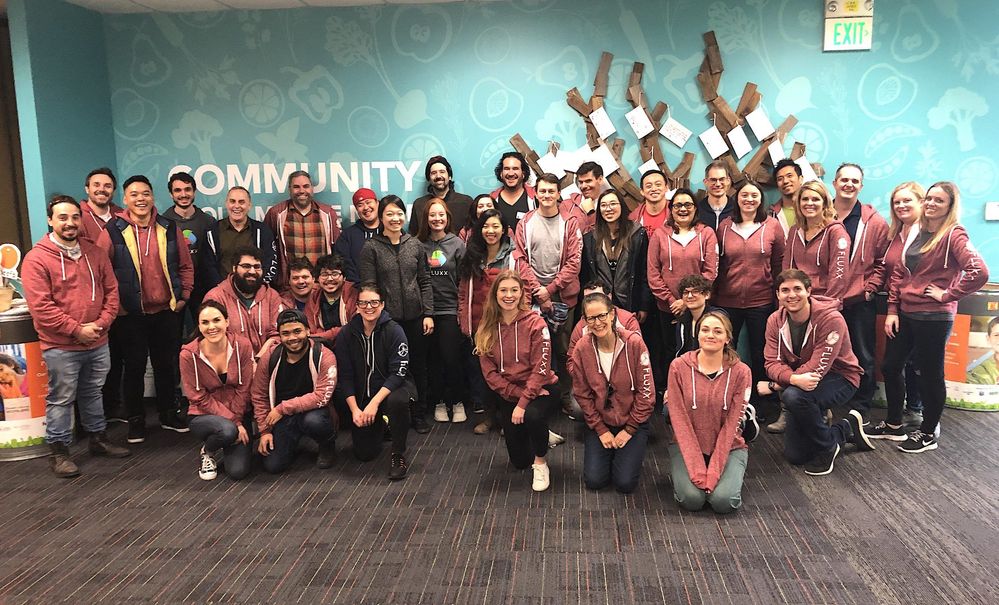
Giving Tuesday is different this year. COVID-19 has disrupted volunteering plans across the world, and it’s brought much of our society to a screeching halt. But as for our work at Fluxx? We’re busier than ever. Fluxx is a grants management platform that provides innovative solutions to power modern philanthropy. We help funders (those who give away money) and recipients (nonprofits) manage and streamline their grant lifecycle. And now we’re rallying around funders old and new to help them tackle COVID-19 in a multitude of ways.
Today we’d like to tell you about how we supported a brand new COVID-19 initiative – from ideation through deployment. Our team’s labor was provided at no cost. This pro bono work is part of our Pledge 1% commitment, and frankly, it’s the right thing to do at a time like this.
We’re excited to share that Fluxx was recently selected to power the new state-wide Colorado COVID Relief Fund. Driven by the Colorado Governor’s Office and supported by our client The Colorado Health Foundation, this initiative was formed to provide grants up to $25k to nonprofit organizations, local governments, school districts and small businesses of Colorado to help support communities most disproportionately impacted by the crisis.
Within two weeks, the Colorado COVID Relief Fund Fluxx solution was live. In record time our team built the Fund’s web portal for accepting applications and backend site for administrators to process and review grants through our solution. The fund started with $10 million and the team continues to fundraise in the hopes of growing that grant pool. The Fund received over 1,000 applications within the first two-week grant cycle.
“We’re forever grateful to Fluxx for donating their services to build the application platform for the Colorado COVID Relief Fund. We know that every minute help is delayed has a real impact on people’s lives, and this partnership has revealed the power of nimbleness in the midst of crisis. The team rolled up their sleeves and threw out the rulebook to stand this up quickly, and now, just a couple weeks later, funding is on its way to Colorado communities bearing the brunt of the health, social and economic ramifications of the coronavirus crisis. Fluxx is certainly more than grant management software. It’s a group of people who care about the same things we do,” said Karen McNeil-Miller, President and CEO of The Colorado Health Foundation and Executive Committee Member for the Colorado COVID Relief Fund.
With so many government and private institutions currently buckling under the strain of this global pandemic, we are proud to see philanthropy step up to the plate and rapidly deploy resources and assistance. We’re honored to support the Colorado Governor’s Office and The Colorado Health Foundation’s efforts to mitigate COVID-19’s impact on their state.
So this Giving Tuesday our team will continue to work and support all of our amazing clients, many of whom are fighting COVID-19 on the frontlines, funding research, and supporting innovative health-related solutions!

This piece is shared as part of Pledge 1%’s #GivingTuesdayNow campaign, which highlights how Pledge 1% members and the business community are coming together as a force for good to combat COVID-19.
The COVID-19 pandemic has affected millions of people worldwide, shut down businesses globally, and sent countries into lockdowns. The disruptions have started to threaten global food supply by cutting off supply chains and increasing food insecurity. The intricate network of food supply chains involving farmers, processing plants, fleet management systems, and retailers is under constant threat. In such unprecedented times, being aware of other people’s needs and helping each other is the least we could do. Propel firmly realizes that we all are in this together, and there is nothing as heartbreaking as not having food on the table.
As a 1% Pledge company, Propel pledges 1% of our time quarterly to organizations and charities in our local area. We believe in giving back to our communities as often as we can. Considering the lockdown in effect, this time our team of Propellerheads came together and donated to several food banks across the country.
As a company initiative, Propel initially decided to match all donations up to $5,000. We are humbled to announce that we raised and matched an overwhelming donation amount of $6,689.40 for Second Harvest and several other local food banks across the country. We are delighted to support our commitment as a company to do good.
Also, recently, as a part of our corporate initiative to fight against COVID-19, we launched Propel’s Healthcare Manufacture Community (HMC) to help build ventilators and other medical devices as quickly as possible. This free community is designed to help engineers, suppliers, distributors, manufacturers, and other professionals make faster production of medical devices a reality. To learn more about our community and to join it for free, please register here.
For more information on the community, read a recent blog from our founder, Ray Hein, announcing the HMC launch. Please email us to suggest additional products, suppliers, or other improvements that would benefit the community.
This piece is shared as part of Pledge 1%’s #GivingTuesdayNow campaign, which highlights how Pledge 1% members and the business community are coming together as a force for good to combat COVID-19.
Originally posted on Pluralsight.com
The COVID-19 pandemic has put new pressures on the way we live, learn and take care of one another. We’re social distancing, we’re caring for the sick, we’re doing our best to stay safe and healthy and flatten the curve. And that looks different for each and every one of us.
For vulnerable communities across the globe, this health crisis is compounding the crises already taking place
Refugees and displaced people have been experiencing one of the greatest and most challenging disruptions to everyday life long before COVID-19 turned our world on its head. But for many people who are displaced and living in densely populated camps or fleeing from home, the number one recommendation—social distancing—is often impossible. There’s an overwhelming lack of sufficient water and sanitation resources. Healthcare systems are insufficient and stressed. Xenophobia is on the rise and armed conflicts are forcing people to flee, inhibiting their ability to shelter in place.
Our students are trying to learn under new, challenging circumstances. According to a recent UNESCO report, 91% of the world’s students are experiencing disruptions in learning. Across the globe, girls have already been fighting for the right to education, a fight that has gotten that much harder with COVID-19 introducing new barriers to education. With sweeping school closures, teachers are pivoting their lesson plans quickly to accommodate distance learning. Devices and connectivity aren’t universally available which increases inequality in education. Computer science, an elective at most schools, is on the chopping block.
Unemployment rates have reached unprecedented numbers, with the crisis disproportionately impacting low-income families and people of color. With housing, food, connectivity and device security at risk, these communities are struggling to stay afloat.
Now more than ever, we must demonstrate our love of humanity
Pluralsight One’s commitment has always been to drive significant, lasting social impact by supporting our vulnerable communities, improving equal access to technology skills and investing in catalytic solutions. We believe this focus is more important today than ever before.
To help support our communities throughout this crisis, we’re granting $1.25M to support Pluralsight One’s nonprofit partners and bolster regional COVID-19 emergency responses in the communities where we live and work. We are providing nimble capital to our partners in support of tech-enabled health and education aid locally and globally with a focus on the most vulnerable populations. In addition, we have expanded our product solutions for nonprofits, teachers and students to ensure they can build the skills they need at this critical time.
How we’re deploying funds through Pluralsight One to help our partners weather this crisis
$250,000 grant to the Norwegian Refugee Council (NRC)
In addition to our already scheduled 2020 grant of $250,000, we’re issuing immediate additional funding to NRC to enable the development and deployment of digital and tech-enabled field-based solutions to support their global COVID-19 response. This will help prevent the spread in camp settings, enable teams to create digital solutions that serve the most vulnerable and focus resources on flattening the curve while maintaining critical, life-saving programs and services.
$300,000 grant to Malala Fund
This grant will span two years and support the work of five champions across Afghanistan, India, Nigeria and Pakistan who are focused on developing and implementing tech-enabled solutions to girls’ education and responding to immediate community needs during the COVID-19 crisis.
$250,000 grant to the Computer Science Teachers Association (CSTA)
Computer science is marginalized in K-12 schools nationwide, and as a result, it’s at heightened risk of being cut during school closures. Pluralsight One is supporting the development and implementation of digital resources for teachers with a focus on equity and inclusion. This support will:
- Help develop teacher resources that enable learning continuity during COVID-19
- Scale the CSTA Equity Fellowship to grow and establish an active Equity Fellow Alumni network
- Continue to build capacity and sustain CSTA’s chaptersDevelop rigorous professional development that grows the number of English language learner students enrolled in AP computer science
To support students and teachers during this time, we’ve also published a list of helpful resources to keep our students engaged and learning.
$250,000 grant to Year Up
Pluralsight One is supporting Year Up’s COVID-19 Emergency Fund, which enables learning continuity for program participants, interns and alumni. It also supports the organization’s work to assess and address evolving student hardship needs, ensure program continuity for current participants (including providing access to connectivity and laptops for students to operate virtually) and responding to youths’ urgent health and financial needs.
$200,000 to regional COVID-19 Emergency Funds
Pluralsight One is supporting the COVID-19 response in communities where our team members live and work through grants of $50,000 each to the Utah COVID Fund, Boston COVID Fund, Ireland Community Foundation’s COVID Fund and UN/WHO COVID Fund.
We’re all in this together
We remain committed to our partners and invested in their work and resilience. We are grateful for their expertise and tenacity in the face of challenging times and applaud the courage with which they are operating to provide life-saving programs and services at this critical time.
We have also built a set of free resources for nonprofits, teachers and students to help with learning continuity and tech skills development. Nonprofits can access Pluralsight One’s full suite of products at a deep discount or test out Pluralsight One’s Amplify solution with a 30-day free trial. That includes 7,000+ expert-led courses and advanced skills analytics to help you measure impact and progress. All educators who are CSTA members get free access to 30+ computer science courses that are mapped to national exams and aligned with CS curriculum. And high school students around the world can get free access to over 500 hours of Pluralsight courses to continue their studies and build the critical tech skills needed to land a great job. Learn what’s available and sign up for free access here.
If you’d like to get involved in Pluralsight One’s COVID-19 response efforts, please donate here or email impact@pluralsightone.org.

This piece is shared as part of Pledge 1%’s #GivingTuesdayNow campaign, which highlights how Pledge 1% members and the business community are coming together as a force for good to combat COVID-19.
In these challenging times, Dash is here to continue connecting the world in real-time as a community through radio. While many are feeling the emptiness of isolation, Dash is curated by live people-not algorithms. We are proud of our 450+ live hosts and DJs across 80 premium stations; there is something for everyone to pass the time, ease the tension, feel connected, or bring back fond memories.
We understand current circumstances are difficult for many people financially, and with economic uncertainty ahead of us, we want to emphasize that a quality ad-free audio experience is still what we do best. Dash is 100% free to use and free of traditional ads, and will remain this way!
In direct response to the pandemic, the Dash team has partnered with Providence St. Joseph Health & Ergo to introduce the first 24/7 Live COVID-19 update station, providing facts and guidance direct from clinical experts on how to protect yourself and updates on the spread of the virus as this information becomes available. We have partnered with various charities, including LA Regional Food Bank and Recording Academy Musicares, to raise money for those in need during this crisis.

In these extraordinary times, Silicon Valley Bank is doing some things differently. But what’s unchanged, as the world fights COVID-19, is our more than 35-year commitment to support our clients, our employees, our business partners and our partners in philanthropy. We are helping our clients adapt to rapid change and we are emphasizing our values to guide SVB COVID-19 charitable activities. We strive to be helpful, relevant and timely and fortify innovation as our north star.
At the outset of the pandemic, we laid out a multipronged philanthropic strategy that builds on our relationships with trusted partners, recognizes that the immense needs would quickly scale, and leverages the power and engagement of our extensive network in centers of innovation across the globe.
SVB is targeting philanthropic efforts in three primary areas: health, shelter and food security, and small business relief. The bank has committed $5.5 million to COVID-19 charitable relief initiatives across the nine countries and 15 US states where the bank operates. This includes corporate contributions to global, national and regional charities, direct community-based giving and tripling our match for employees’ donations to relevant causes where they are located. In addition, SVB announced that it will contribute net Paycheck Protection Program loan origination fees it receives from the Small Business Administration to relief efforts.
Our philanthropic efforts are immensely rewarding, and we are only getting started. Thanks to our strong partners, including Pledge 1%, exceptional SVB global team and our proven leadership in the innovation sector, we are aiming to invest and contribute where the need is most acute.
Engaging Community and Global Support
The COVID-19-related donations, which are being augmented by a 3:1 employee match, are directed by our regional office leaders to address the most urgent local needs. For example, SVB contributions have gone to purchase personal protective equipment for healthcare workers, resupply food banks and provide short term help for low-income families. The SVB Foundation is partnering with employees who volunteer at non-profit organizations to support those groups most impacted by the pandemic at an accelerated pace.
SVB, in partnership with Founders Pledge, developed the COVID-19 Global Impact & Innovation Fund, which we seeded with a $1 million contribution. Our goal is to identify and consolidate into a single fund several high-impact organizations that are focused on activities to help slow COVID-19’s spread, provide immediate relief to those affected and get better prepared for future pandemics. The fund is accepting contributions from the general public.
Access to Innovation
SVB’s Access to Innovation initiative is launching a monthly virtual series for emerging professionals to help them establish a network and get career coaching. These sessions are designed to address technical skills and provide vital career and networking guidance for young professionals who may not have had an opportunity or thought to consider a career in the innovation economy. The initial late April session attracted 76 young professionals and partners who got a first-hand lesson from an SVB banker of why developing data analytics skills is key for job readiness.
Startup and Small Business Resources
SVB is supporting emergency small business grants of $10,000 through Hello Alice’s Business for All initiative. It hosts a free COVID-19 Business Resource Center that is focused on linking women- and minority-owned businesses to relief programs, funding opportunities, mentors and other support programs at local and national levels.
Join Us
SVB has thrived for more than three decades by leading with our values. None of us can know what the future will hold but we are committed to preparing in order to help our clients, employees and communities manage through this difficult time. Together, we are stronger. To learn more, please visit SVB COVID-19 Response & Community Support here.

This piece is shared as part of Pledge 1%’s #GivingTuesdayNow campaign, which highlights how Pledge 1% members and the business community are coming together as a force for good to combat COVID-19. You can read the original post on the Twilio blog.
By Erin Reilly, Twilio.
Communicating with people during a crisis—whether they’re experiencing abuse, a natural disaster, mental health challenges, or otherwise—is never easy.
These communications require incredible empathy and immediate response from the nonprofits, governments, and healthcare agencies providing care.
COVID-19 is making communications in crisis even harder.
Spikes in unemployment, increased anxiety from the pandemic, and shelter-in-place ordinances have driven up demand for many social services. City governments and health care agencies are working to serve unprecedented numbers of people, as are the nonprofits that support with humanitarian services, emergency food distribution, mental health care, sexual abuse recovery, and more.
At the same time these service organizations experience increased demand, they also have had to find a way to shift their operations to remote work wherever possible. When it rains, it pours.
To adapt to the new conditions and serve our communities best, organizations on the front lines are optimizing for agility, accessibility, and scale.
Adapting technology quickly to new environments
Most organizations change technologies on a 6-12 month timeline.
COVID-19 has made that timeline feel like an eternity.
To keep employees and members safe, organizations have adapted their programming to remote environments—with new communication channels—and in a matter of days, not months.
Given how critical their work is to at-risk communities right now, nonprofit and service organizations are leading the way. They are rethinking their processes entirely, eliminating red tape, shortening approval processes, and embracing new technology.
For the City of Pittsburgh’s IT department, changing technologies previously took months of vetting, testing, and procurement. When they received the order to move all IT help desk and 311 call center employees home, they needed to do it immediately to keep city employees safe—many of which are in higher-risk groups.
“Digital government is no longer a luxury—it’s a necessity,” said Santiago Garces, Director of Technology and Chief Information Officer for the City of Pittsburgh. “I believe the lessons learned during COVID about how government can be agile and move quickly will change the way we work forever moving forward.”
Similar to the City of Pittsburgh, Lifeline Australia, a 24-hour Telephone Crisis Support service, had to make swift changes to support remote call supervision. In one week, they spun up an entirely cloud-based and remote escalation portal. Crisis supporters can escalate urgent cases to supervisors, and debrief each case remotely via webchat.
Ensuring communities can access critical services
Many organizations are working to serve patients, at-risk communities, and constituents that don’t have access to smartphones or reliable Wi-Fi.
According to Pew Research, 29 percent of low income households don’t have access to a smartphone, and 44 percent also don’t have access to reliable internet. This lack of digital access is compounded with soaring unemployment and school closures.
As a result, web pages, mobile applications, and email are not viable options to reach this group. To ensure their services are accessible to everyone who needs them, many organizations are adopting SMS:
- Stopcovid.co offers an SMS training program to help essential workers, like grocery store clerks and delivery workers, get up to speed on COVID safety.
- Kinvolved helps school districts and teachers keep parents up to date on their children’s assignments in 80+ languages via SMS.
- And Plentiful, a technology partner for City Harvest and the United Way, provides an SMS shortcode for New York City residents to text in to schedule a time to pick up meals from a food pantry.
Accessible channels are more important than ever given the increased demands for services. Kinvolved has seen a 200 percent increase in messages per student over the past month, with more and more parent-teacher communications moving digital. Plentiful has seen a 62 percent increase in residents texting in for food appointments due to the financial impact of the COVID crisis. Their SMS platform has empowered food pantries to continue to keep patrons and volunteers at a safe distance.
Scale communications systems to handle increased demand
The number of calls city governments, healthcare providers, and crisis services are fielding is going through the roof. As a result, organizations are moving to new cloud-based systems built for scale, automation, and work from home environments.
“It is an unprecedented time in healthcare as we face caring for increasing numbers of patients affected by the virus with limited capacity. Our vital healthcare resources are constrained in ways never seen before,” said Lisa Romano, MSN, RN, Chief Nursing Officer at CipherHealth, a patient communication platform,.
To manage this increased demand, organizations are conserving limited staff resources for the most difficult cases by offering self-service options for patients and constituents to get answers to common questions.
For questions that can’t be answered with automation, organizations are building systems to route the most urgent and unique cases to doctors, counselors, and trained city staff, ensuring callers are responded to quickly. Many are adopting video conferencing to escalate these difficult cases.
Organizations like CipherHealth are deploying chatbots and intelligent voice response systems to help answer common inquiries and identify symptoms before a provider joins a call.
United Way also built an intelligent voice response system into its 211 hotline, the easy to remember number that helps people identify and access social services they are eligible for. Due to the coronavirus, 211 networks nationwide have been seeing 2-4x call volume, at 75,000 calls per day, and some call durations averaging 20 to 30 minutes, compared to their average 4 to 6.
To scale up their service, the United Way developed a streamlined routing system with interactive voice response (IVR). People can call in to a single 1-800 number or their local 211, where they are testing an artificial intelligence-assisted IVR bot to help answer commonly asked questions about COVID-19 and related services. If the caller still wants to speak to a specialist about their unique situation, they are routed based on their location to a live agent.
We’re here to help
It’s been amazing to witness how nonprofit, public sector, and healthcare organizations across the world are demonstrating an unprecedented level of innovation—not to mention grit—to scale up operations and adapt to remote work with limited resources.
At Twilio, we work with many organizations providing crisis response services. Our customer engagement platform enables organizations to quickly pivot to working from home, reach constituents on common channels, and scale up to handle increased loads.
To support organizations serving the most at-risk populations, Twilio.org launched our Crisis Response and Prevention Initiative last year to support and fund organizations in this space and bring together the best minds in technology to serve people in crisis.
Today, we’re offering a number of programs to help organizations directly responding to the crisis caused by the coronavirus.
- We’ve expanded eligibility for our Impact Access program, which provides $500 in Twilio product credits plus additional 25% discounts beyond nonprofits to any organization providing direct response efforts benefiting the public around COVID.
- Twilio Video is now free for three months for healthcare, education, and nonprofit institutions.
- Twilio Flex, our contact center product, is giving 20,000 free hours per month to organizations helping with direct response through August 31.
- We’ll soon open a grant round to fund organizations helping at-risk communities recover from COVID. You can sign up for updates here.
- Our team is standing by if you want to connect about technical advice or building solutions together.
Supporting people in crisis has never been easy, and the coronavirus has challenged us all in ways we could have never anticipated. I’m encouraged by the innovation I’ve seen in the social impact space to adapt to this new environment and emerge stronger together.
To connect with Twilio on how we might be able to collaborate on solutions, reach out to us here. We’d love to hear how we can help.

Glowforge – Lasercut mask designs and initiative to print and distribute one million “ear savers”