
By Michael Quinn. Originally posted on the MediaMath blog.
I traveled to Nepal last December and had the amazing opportunity to spend time with Seva, our partner charity that is committed to transforming lives by restoring eyesight. While visiting hospitals and meeting patients from different backgrounds and circumstances, I was told a story of a mother of four who was blind with cataracts. Seva discovered her via their remote screening camps and arranged for her to be transported from her mountain village to the local eye hospital. After having operations on both of her eyes, thanks to Seva, her vision was fully restored!
This is one story of many that illustrates how the lost-cost surgeries MediaMath funds can dramatically change the lives of individuals and families in some of the poorest regions of the world.
In 2017, we launched a high-impact eyesight program, in which MediaMath funds one eye surgery for every 20 campaigns run in our programmatic platform TerminalOne. We also executed our first Global Impact Week in June and secured long-term funding through MediaMath equity.
A highlight from 2017 for both me and MediaMath CEO Joe Zawadzki was talking to our board of directors about MediaMath.org. We discussed the impact of the organization since its creation only one year prior, how it had made an impact on local communities through donations and hundreds of hours of time spent volunteering, as well as the over 2,000 eyesight-restoring surgeries performed in poverty-stricken regions across the globe. Upon the conclusion of the meeting, the board unanimously agreed to pledge 1% of equity to MediaMath.org, a bonus to our commitment to dedicate 1% of our time and technology for social good.
In 2018, we will focus much of our 1% efforts on helping great non-profits become great marketers. We believe that this initiative will allow us to make a tremendous impact at scale. We here at MediaMath strive for marketing to be a force for good, and want our clients, partners and the entire marketing ecosystem to be involved and engaged. Won’t you join us?
Originally published on the inWhatLanguage blog.
Originally posted: March 22nd, 2018
OUR MISSION
Our goal is to unify people and communities from all backgrounds through innovative translation and language service solutions. We’re always developing new technology and human networks to enable knowledge and information to flow more seamlessly between diverse communities. Breaking down language barriers creates an environment of trust and mutual understanding, increased access to critical information, and improved lives.
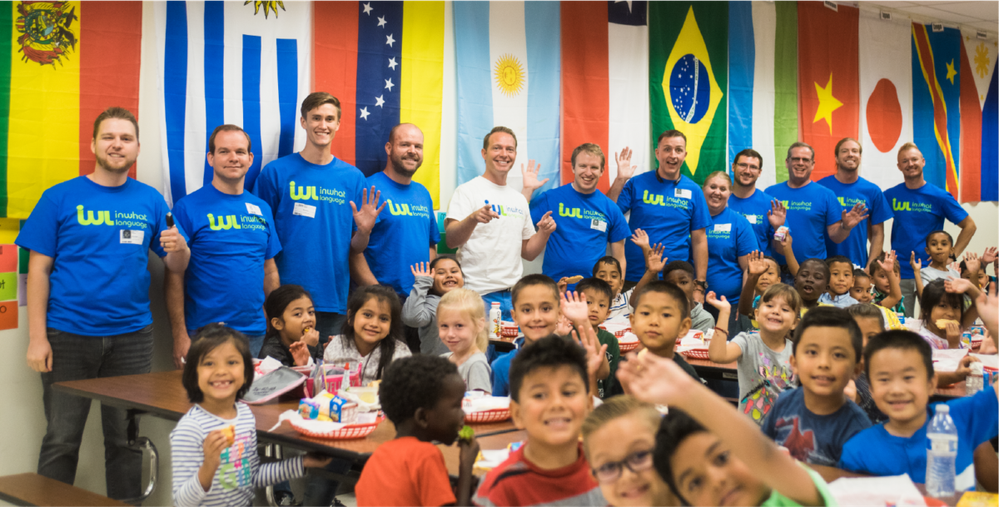
To nurture this vision, inWhatLanguage donated a total of 103,050 words to social impact related projects. The market value of those translations was almost $25,000 from June-December 2017. In addition to translation services, inWhatLanguage regularly volunteers in the community to help bring people from diverse backgrounds together.
ENGLISH LANGUAGE LEARNERS (ELLs)
A report by nprED stated that 1 in 10 public school students in the U.S. is learning to speak English. This group is categorized as English Language Learners (ELLs). Being able to communicate with and educate these ELL students–in English and other valuable school subjects they’ll need to excel in life–is one of the main challenges in public education today.
We recognized this as an opportunity to step in and provide translations for critical documents and parent-teacher communications, to empower diverse, non-English speaking students and their families with the information and resources needed to build successful lives.
Several organizations, including the United Way of Salt Lake, the International Rescue Committee, the Utah Transit Authority and many others have helped to make our mission a reality.
This category alone encompassed over 81,000 words valued at over $21,000 in language services. We are excited to work with these organizations to improve communication with our linguistically diverse community.
For more details on English Language Learners, visit our ELL page.
DISASTER AFFECTED COMMUNITIES
Areas of the world that are affected by devastating hurricanes, violent earthquakes, deadly outbreaks or other disasters, receive aid from around the world. It’s incredible to watch the world unite in times of crisis to assist people in tragic circumstances.
The only problem with volunteers from around the world, is the need to coordinate and communicate with each other to provide the most effective relief strategy. Unfortunately, this challenge has eluded a solution for many years. As a translation and localization company, inWhatLanguage jumped on the chance to offer assistance to people in need.
We’ve translated over 19,000 words for this initiative, worth almost $3,000 in language services. We look forward to developing this initiative to break down language barriers when the world unites to provide assistance in disaster-affected communities.
GRANT PROGRAM
We’re also excited to implement our new English Language Learners Grant program. We are offering 13 grants of varying amounts to organizations committed to supporting ELLs. The following grants will be given as translation services and the award amounts are the value of the translations to be conducted:
1 Grant for $5,000 of language services
2 Grants for $2,500 each for language services
10 Grants for $1,000 each for language services
Deadline for 2018 applications is March 15. All submissions will be reviewed by March 27. Grants will be awarded on March 30. Grant awards must be used for inWhatLanguage language services by August 30, 2018.
For more information about how to apply, visit our Grant Application page.
COMMUNITY OUTREACH
inWhatLanguage worked with the United Way of Salt Lake to provide vision screenings for elementary school students. In South Salt Lake schools alone, 18% of students are refugees and 44% are ELLs.
We were able to translate critical information so that parents would be aware of these free services available to them. Many team members of inWhatLanguage supported the initiative by showing up and helping these students with their vision screening tests.
inWhatLanguage also competed in the Startup Santa Utah initiative, which encourages companies to compete against each other to donate children’s books for kids living in low-income families.
The team quickly rose to the top of the leaderboard for our company size, with a total donation of 925 books. Many of the donated reading materials were written in various languages to support diverse communities.
About inWhatLanguage
inWhatLanguage is a localization and technology provider breaking down language and cultural barriers to unify people and communities around the world. Through technology and professional linguists, we connect organizations to communities by allowing them to create, control and manage all enterprise-wide content through a proprietary, cloud-based translation management platform called UNIFY.
Originally published on Glassdoor.
You can’t have it all. The popular refrain has been shouted from magazine coverlines and even folk songs as a means to caution women who try to excel in their personal and professional lives. However, it’s a phrase that has also been directed towards all job seekers.
Exciting projects, innovative coworkers, a beautiful office, excellent pay — you can’t have it all.
Or so they said.
According to employees at New York-based Silverline, having it all is possible if you work with them. “You can have a job that you love, at a company you admire, with phenomenal coworkers (both in terms of personality and productivity) – Silverline’s got it all,” raved one team member. A director added, “Silverline has grown significantly over the past two years, the company has been able to retain fun small company culture.”
Pair that with unlimited vacation, flexible work options, education reimbursement programs, learning & development programs, it’s no wonder Silverline has been honored as a 2018 Best Place to Work in Glassdoor’s annual Employees’ Choice Awards.
With a near perfect rating of 4.9, Silverline has become the #1 small business on the Best Places to Work list. At the helm of Silverline’s success is CEO Gireesh Sonnad, who has a 100% CEO approval rating on Glassdoor. We managed to catch up with Sonnad to discuss the win, learn more about Silverline’s culture and to find out “What’s your favorite interview question to ask Silverline job applicants?”
Glassdoor: Congratulations on your huge “Best Places to Work” win! How does it feel to know that your employees made this win happen?
Gireesh Sonnad: Thank you so much! I am honored by the magnitude of this recognition. It is incredibly rewarding to know that the people I see and interact with every day have taken the time to show this type of support for the company. This is truly an amazing accomplishment for all of Silverline.
Glassdoor: What have you done this year to double down on employee engagement?
Gireesh Sonnad: Transparency and consistent communication is key to helping to build a solid foundation. This will support the growth of a trusting environment and a team who feels that they can truly contribute to their success and the success of the company. We regularly employ multiple channels to foster this trust and overall engagement.
One of the best ways to foster trust and employee engagement is simply to listen and discuss feedback. In addition to a complete open-door policy, I hold office hours every other week with the primary purpose of supporting that feedback mechanism. Employees tune in from home and gather in the office to hear about new developments, company strategy, and exciting news. Importantly, I directly answer ANY questions that are submitted (anonymously, through our corporate social intranet) or that are asked on the spot. The company has seen fantastic participation and have found it to be a wonderful opportunity to discover what’s important to our employees.
Additionally, we hold several organization-wide gatherings, such as quarterly All Hands meetings, that bring employees together to discuss the state of the company, share corporate goals and progress, and engage with our colleagues face-to-face.
Finally, I have recently made it a point to physically connect with each of our remote teams who do not come into the main headquarters office every day. I am doing this through a ‘Vision and Values’ Tour in which I travel to each of our satellite offices and hold focused sessions on: where we are as a company, the values we hold dear as an organization, and the future that we see as a team.
Glassdoor: Your employees love working here as we see the strong rating on Glassdoor – How do you make this a great place to work day in and day out?
Gireesh Sonnad: As an organization, we continually look for new ways to help our employees learn, enhance their lives, and further their careers. We implemented learning and development and career path initiatives, called Silverline Synapse and PowerUp!, which offer a variety of programs to foster professional and personal growth. These programs allow individuals to improve their technical and consulting skills, become subject matter experts, and share knowledge with their peers. We are enabling a world-class workforce through high-quality and timely learning opportunities.
Silverline has established a robust system to gain transparency into our employee’s goals at work and at home that everyone can be aware of. We have leveraged the Salesforce Platform to create a tool that allows our team to set individual and department goals, along with objectives for each, then measure and report on their results on a regular basis. However, not all goals are company centered; we encourage employees to also set personal goals to maintain their health and wellness.. Goals can be collaborative and employees are encouraged to push themselves above general expectations.
We also have our philanthropic initiative, Silverline Cares, and we are a proud member of the Pledge 1% movement. The goal of this initiative is to create community engagement opportunities through donations of our time, product, and profit. We recognize that participating in these opportunities to give back will also enrich and inspire the lives of our employees while strengthening our communities. My hope is that every Silverliner feels that they have given back to the community through their involvement with Silverline.
Glassdoor: Good leadership is not just one person – How do you work w/ your management teams to make sure employees have great leadership here?
Gireesh Sonnad: Silverline adheres to a core set of values that every member of the team is aware of and lives by. This includes our management team who knows that the success of the organization is driven by the success of the individual, and uses these values as guiding principles.
We continually emphasize the concept of frequent and meaningful feedback at every level. This includes our management teams providing feedback to our senior leadership, as well as every individual communicating with our management team.
It is important to be able to receive feedback as well, and we strive to give our managers the support that they need to effectively connect with their teams. There is a dedicated group in the organization that combines all ‘Peoples Managers’, who meet regularly to coach, educate, and continually groom our managers to be effective and supportive.
Glassdoor: When you’re hiring, what do you look for in informed candidates?
Gireesh Sonnad: Ultimately, I look for someone who has the passion to be part of an organization that is rapidly growing, is focused on the success of their customers, and driven by the desire to contribute to the team as a whole. Certainly, skill in their role and the ability to bring a unique perspective are important traits. But I believe that if there is a strong and meaningful fit between a candidate and the team at large, then we will be capable of incredible things.
Glassdoor: What interview questions do you ask to ensure your companies recruit great employees?
Gireesh Sonnad: “Are you willing to learn as much as you teach? Are you willing to teach as much as you learn?”
“Describe for me the best example of day that makes you excited to jump out of bed that morning.”
We care deeply about the cultural fit of every new Silverliner – for their success and ours. While it may not be unique, we make sure that our candidates have dedicated sessions with a large cross section of individuals from throughout the company – not just their department – so that we can gauge an individual’s overall fit with what we have built. We spend a great deal of time with every candidate to make sure that they will be wildly successful as a Silverliner.
Glassdoor: What keeps you at the company for the long haul?
Gireesh Sonnad: The people! It has been a truly incredible experience watching this organization grow from just a handful of people to what it is today. I am extremely proud of who we are as a team, and inspired to continue to do better through my interactions with every Silverliner. I absolutely love what I do, and the people that I do it for. I cannot wait to see what we do next.
Glassdoor: How do you recruit talent – what are some of your best practices?
Gireesh Sonnad: We view employee happiness as a competitive advantage. Employees that are excited and engaged develop strong relationships with clients which in turn, ensures our customers are also happy and having a positive experience. Employee well-being can also impact strength in talent acquisition. We encourage our employees to bring in talent that will help grow the organization in a way that they can be proud of as well. The more talented people we have, who enjoy the environment that we have created, the more successful we can become.
Glassdoor: If you could speak to millions of job seekers interested in Silverline, what would you want them to know about what it takes to succeed at Silverline?
Gireesh Sonnad: At Silverline, we pride ourselves on striving for an unparalleled Employee Experience. We are a tight-knit team made up of the best and brightest people. Our employees are problem-solvers, self-starters, and innovative technologists. If you want to succeed at Silverline, you are a person who innately loves finding solutions to difficult challenges in a truly collaborative team environment.
Originally posted: January 15, 2018
At CRM Science we are committed to charitable causes in our community by contributing 1% of our time, profit, and product. One of our biggest passions is supporting the National MS Society, through our participation with the Salesforce & Friends Bike MS team.
In 2016 we had 8 team members travel to San Francisco for the Salesforce & Friends Bike MS Waves to Wine. After that amazing experience, we made a goal as a company to bring the excitement we had at Bike MS Waves to Wine to the East coast by creating a Salesforce & Friends team for Bike MS City to Shore. Our initial goal was to raise at least $15,000 with a team of 15 riders and we crushed it! On Saturday, September 23, 2017, our inaugural team cycled through the countryside of New Jersey on their way to Ocean City completing a total of 1,710 miles traveled, over $20,000 raised, with a team of 20 riders. We finished 2nd in the rookie team of the year recognition and had 2 riders in the Top 250 out of 6000+ riders for an event that is the #2 fundraiser in the world for MS.
Over the last 2 years, CRM Science has directly donated over $45,000 to the MS Society which accounts for well over 1% of our profit. Our total impact on the MS Society has been over $110,000 through direct donation, matching contributions and team participation and fundraising. We plan to continue into 2018 with another $25,000 direct donation to start the year and already have team members committed to riding again.
Originally posted: December 22, 2017
From the RFPIO team.
It’s hard to believe we’ve already made it to Q4 and are closing out what’s been such a great year for RFPIO. But beyond the growth of our business and the excitement that has brought us, something we are really proud of is our commitment to the Pledge 1% movement. Their objective is to integrate giving into the fabric of company practices, and we are in full support.
We’ve had a chance to return the favor back to our community in some incredible ways this year. We donated to the Oregon Food Bank, worked with SOLVE to clean up Kelley Point Park, and contributed to Elmonica Elementary School’s MakerSpaceprogram.
This quarter is a special one, though. Now that the holiday season is in full swing, we know it’s an extra difficult time for many people.
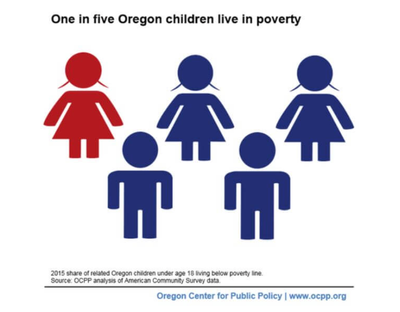
According to data from the Oregon Center for Public Policy, Oregon’s poverty rate is higher on average than the United States as a whole. Among those living under the poverty line in Oregon, one in five is a child under the age of 18.
With that in mind, the RFPIO team wanted to offer up some holiday cheer to children in our community. We came across many fantastic organizations to choose from, but found our match with the Christmas Family Adoption Foundation (CFAF).
CFAF was created in 2002 when founder Mike Burright gathered gifts for a local family that didn’t have much that Christmas. Since then, they have adopted over 2,500 families. The organization’s mission is, “to create a positive and memorable holiday by giving gifts, clothing, and necessities to families in need.” With their help, RFPIO had the opportunity to adopt an area family who is going through a hard time, and check some items off their Christmas wish list.
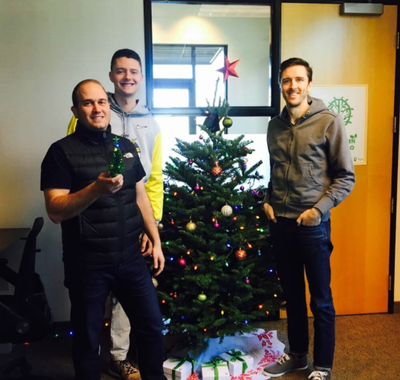
So in the spirit of the season, we encourage you to join us! You can go to the CFAF website and choose a family to sponsor or nominate for adoption, or take a look at the ways to donate financially.
Happy Holidays from the RFPIO Crew!
Originally posted: December 15, 2017
By the team at NEEV.
Every #GivingTuesday since NEEV was founded, we have supported our partner NGO the Power of Love Foundation with 30% of net proceeds. This year, we are giving 30% of net proceeds during our #GivingTuesday initiative to the Power of Love Foundation, an American charity empowering women impacted by HIV and AIDS in Zambia. Plus we are giving our customers, 30% OFF any purchase of our handmade products through December 17, 2017. Use Code LETSGIVE30.
You can read more about our campaign here.
As a BCorp, we are also honored to be on the B Corp Best of the World 2017 list – in no less than four categories. A link to our blog post on making the Best for the World 2017 list. Additionally, NEEV was featured on the BtheChange media on ‘Stories of True Changemakers: How These Companies Grew Their Impact‘.
Originally posted: December 15, 2017
By Ida Lucente, John Snow Labs.
If you have the skills to work as a data scientist then there are lots of job opportunities waiting for you in the Data Philanthropy sector. Have you ever observed that your talent could also provide benefits to nonprofit organizations and other mission-driven companies?
If we review some facts, the number of data scientists around the world is still increasing day by day. However social organizations are not able to find these skilled people to handle their projects. The reason behind is that they are not able to provide the right platform to attract these professionals. Data scientists are more likely to get attracted by workplaces that provide better opportunities to grow their own skills. They wish to work with an active community of data scientists within an inspiring environment where they have easy access to data. But the sad truth is that very few NGOs have such kind of interactive platforms to offer.
It is time to understand that data scientists are some of the smartest people in the world and so they love to work for a greater mission. Most of these experts love to use their creativity for Data Science, DataOps and Data Analysis, beyond the mere financial gain. They want to improve opportunities in the environment by working on more challenging and purpose-driven projects. Data scientists can even do better jobs for disease analysis and they can definitely solve more pressing social issues. These innovative people love to play with massive datasets, which are for them like creative puzzles to be solved. And the great news is that social organizations have indeed many opportunities for them. It means that data scientists can think of working on part-time social good data projects after their normal 9 to 5-day jobs to achieve some impactful results for the greater good and public interest.
We should start thinking about the mechanism that can connect data scientists to social projects. Up to now, this has been achieved by many for-profit employers and companies, which make sure to translate their company mission into solid social impact. These connections can also be created by third parties via their specially designed networks. For example, Rayid Ghani who was the Chief Data Scientist for the Obama 2012 Campaign, yet he is running a useful project for data scientists with its Fellowship on Data Science for Social Good program. This platform connects unlimited Data Science experts from the University of Chicago to work on meaningful projects, collaborating with various federal agencies, local governments, and nonprofits. Another big platform for data analysts is nowadays the UN Global Pulse, which allows data science experts to address various developing nations’ social issues that can affect their growth.
More recently, we have witnessed the enormous explosion of social good Hackathons. One example is DataDives, high energy, marathon-style events where mission-driven organizations work alongside teams of volunteer data scientists, developers, and designers to use data to gain insight into their programs, the communities they serve and more. These popular weekend events, organized by DataKind, attract various expert data scientists to address social issues that nonprofit organizations cannot otherwise solve with their limited source of in-house data science expertise.
There are more great tools that can develop meaningful connections such as is the “social good conferences”, as they provide an opportunity to start discussions on data solutions for social issues worldwide. However, they often stick to limited topics so we cannot completely rely on this resource. Ultimately, the major question is how talented data science experts can get easy access to various data for good projects on a larger scale.
Now, the great news is that if you want to join the “Data for Good Movement” then John Snow Labs, with its Data Philanthropy Program, can help you to get free and easy access to curated and updated datasets within the cybersecurity, life science, and healthcare category. The Data Philanthropy Program is all about allocating the right opportunities to the right people. It can help nonprofits to get skilled staff to complete their projects as well as Hackathons and universities under its 1% pledge so that more purpose-driven and social good projects can see the light. This is the case for Finder at HackPrinceton or Request2D at HopHacks.
To advance as a society we would like to see more data for good virtual marketplaces that can help data scientists to make direct connections with NGOs so that they can find the right opportunities to suit their own skills and time. It may appear a complicated thing for some of you but if you look at the progress made by technology within last few years when an email was just a dream, then we can believe that this is also possible in near future.
Originally posted: December 6, 2017
It is a timely reminder during Refugee week, from Sunday 18 June to Saturday 24 June 2017, which celebrates the contributions by refugees to Australian society, is that Australians of all status add to our society and give back to our communities in many ways.
Be it the recent announcement of the largest private donation in Australian history by philanthropists Andrew and Nicola Forrest, who donated $400 million of their personal fortune to charity, or immeasurable donation of time that volunteers give, there is notable momentum in philanthropy.
According to the Giving Australia 2016 report, corporate Australians donated over $17 billion during 2015 to 2016 and the report highlights that these donations come in all sizes. The immense donations from the like of Mr & Mrs Forrest and Graham and Louise Tuckwell, who have pledged more than $200 million to the Australian National University, is a rarity and not the norm.
In fact the report highlights that over 75% of all SMEs donate each year and increasingly donations from individuals and small business is increasing each year as a result of our desire to give back to the community and by the presence of new innovative organisations championing the benefits of philanthropy.
One such organisation is Pledge 1%, a global movement that is creating a new normal for companies of all sizes and stages to give back. Founded by Salesforce, Atlassian and Rally, the Pledge 1% movement encourages and empowers businesses to donate 1% of their product, profit, equity, and/or time to the charity of their choice. Already over 2,000 companies in 50 countries have publicly taken the pledge and committed to use their resources to have a meaningful impact in their communities.
One company is Wollongong Accommodation provider, Emerald and Aqua who specialises in the marketing and management of holiday homes in the Illawarra and have been members of Pledge 1% for over a year.
Greg Channer, Managing Director of Emerald & Aqua said, “we direct our pledge to assist refugees in our local community via Green Connect as we recognise that there are many members of our community that do not have a home, or they are making a new home in the Illawarra and while our business creates memorable experiences for those in a position to enjoy a holiday home we aim to give back to those re-settling their lives in Australia establishing a home.”
In addition to Mr Forrest, the chairman of Fortescue Metals Group, and his wife, whose donation has made the national Media, there are many organisations like Atlassian, the Australian software technology company, who consistently support many not-for-profits. When Atlassian was still very small, Atlassian’s founders, Mike Cannon-Brookes and Scott Farquhar pledged 1% of the equity, profit, time and product of the company for the benefit of the wider community. Following Atlassian’s success, that pledge has turned into a huge level of support for not-for-profits the world over.
One not-for-profit Atlassian works with is Settlement Services International (SSI), a leading community-based not-for-profit organisation for people from migrant and refugee backgrounds. Atlassian’s support has taken two forms – leveraging their supply-chain to purchase products and services from SSI and by providing skilled-volunteering assistance in a number of technology related projects.
Corporate Philanthropy does not need to be hundreds of millions of dollars. It can be small, it can be time and it can be as simple as 1%.
Originally posted: December 5, 2017
New York, New York – November 29, 2017 – Pledge 1% is ringing the Nasdaq bell today to honor the Pledge 1% companies who have gone public already, as well as the thousands of Pledge 1% members who are making a meaningful difference in the world long before their liquidity events. To date, the top Pledge 1% companies alone have already ignited over $500 million in new philanthropy.
Recently named one of Fast Company’s 50 Most Innovative Companies and #1 Most Innovative Non-profit, Pledge 1% is a global movement that is creating a new normal for companies to give. It’s simple, flexible and scalable model helps founders integrate giving back into their company cultures and values early by committing to give 1% of equity, time, product, and/or profit to any cause of their choosing.
With a growth rate of 150% a year since its inception, the Pledge 1% movement now includes over 3,400 member companies in 85 countries, including tech leaders like Salesforce, Atlassian, and Yelp, recent IPOs such as Twilio, Nutanix, and Okta, and some of today’s fast growing companies like Postmates, Pluralsight, PagerDuty, and InsideSales, among others. Influential Tech eco-system partners have also backed the movement, including 500 startups, Techstars, TechCrunch, SV Angel, Foundry Group, and Salesforce Ventures.
Why Pledge 1%? Aside from the huge potential for impact, leaders and investors are increasingly recognizing that there is an ROI to doing good.
“Pledge 1% isn’t just the right thing to do. It’s the smart thing to do. We invest in founders who understand this,” said Ron Conway, one of the leading venture capitalists in Silicon Valley and founder of SV Angel.
Expectations of tomorrow’s leaders and companies are changing. Much of this is driven by millennial employees, customers, and founders themselves. By 2025, 75% of workforce will be millennials (catalyst.org). According to the most recent Deloitte Millennial Report, 9 in 10 millennials (86%) believe that the success of a company should be measured by more than its financial returns. And according to the 2016 Cone Communications Millennial Employee Engagement Study, 76% of millennials consider a company’s social and environmental commitments when deciding where to work, and nearly two thirds won’t take a job if a potential employer doesn’t have strong social responsibility practices. Yet today, only 5% of the philanthropy in the US comes from corporate donations according to Giving USA’s annual benchmarking report.
Michael Litt, founder/CEO of Canadian based Vidyard, who was introduced to Pledge 1% through Salesforce Ventures, states “Pledge 1% is absolutely core to Vidyard’s ability to attract and retain top talent. We believe in this so strongly that we’ve based our executive compensation on an employee net promoter score driven in a large part by employee engagement and impact.”
Millennials want to make a difference in the world and they see their workplace as the place to do it. But even beyond “winning the talent wars,” millennial founders see culture and values as the key to building a legacy far beyond financial success.
“We’re seeing a shift in the status quo” states Amy Lesnick, Chief Executive of Pledge 1%. “In the past, companies have waited until they were larger and successful before they set up programs to give back. These programs were often run on the side via a separate foundation and typically through impact grants. With Pledge 1%, founders are recognizing that they can have an impact long before their liquidity event. Instead of at the end, on the side, and just money founders today are setting their aspirations to give back at the beginning, integrating it into the core, and leveraging much more than money. By weaving Pledge 1% into their culture and core business values from day one, they are empowering all of their employees to be part of something bigger than themselves, to share a piece of their success with the world.”
“People know they want to give more than 0% and less than 100% but often don’t know where to get started,” said Scott Farquhar, co-founder of Pledge 1% and co-CEO of Atlassian. “Pledge 1% gives people a working model to get started and the confidence of seeing thousands of other companies that have succeeded already. Committing to Pledge 1% was one of the best choices Mike and I have ever made – and I’m confident the same will be true for every founder who does the same.”
As Pledge 1% has proven, startups can have a real impact, even long before liquidity:
- “We are helping save children from being trafficked into slavery and prostitution,” said Ken Krogue, President of InsideSales.com. “And that’s just one of our many programs. Our team works hard to make our shareholders money and drive the company to great success, but at the end of the day they also want to be part of something bigger. They want to do well and do good. Pledge 1% gave us a model to get started and a community of like-minded companies from which to learn. We are thrilled to see this movement spreading.”
- “Pledge 1% is a wonderful framework for corporate giving, and we are pleased to be a part of this important movement,” said Amy Skeeters-Behrens, Executive Director of DocuSign IMPACT. “One example of our work in this area is that we recently joined forces with Team Rubicon, a nonprofit mobilizing over 40,000 veterans and first responders, as well as DocuSign’s local developer community, to facilitate medical care for over 3,600 Syrian Refugees in a camp in Northern Greece. By leveraging DocuSign’s product, our internal talent, and our network, we were able to empower medical volunteers with the digital solution they needed to access and record important medical records, data, and releases.”
- “At MediaMath, we wanted our philanthropy to reflect our own values: creating impact via measurable outcomes,” said Joe Zawadzki, CEO of MediaMath. “This year we launched a program called ‘Campaigns Count’ for every 20 campaigns on our platform, MediaMath is funding a sight saving surgery for someone who suffers from low vision or whose blindness is treatable. Through our charity partner Seva, we have transformed over 2,000 lives through sight restoration surgeries, as MediaMath grows, our impact grows. We’ve also recently set aside 1% of our equity for MediaMath.org, recognizing that a small piece of our future success can make a HUGE difference. We look forward to continuing to build the Pledge 1% movement and collaborating with other Pledge companies to drive even more substantial impact.”
These are just a few of the many examples of how Pledge 1% companies are having a positive impact. And Pledge 1% is only getting started.
“We’re excited for Pledge 1% to celebrate its three year anniversary,” said Suzanne DiBianca, Salesforce‘s EVP of Corporate Relations and Chief Philanthropy Officer. “Salesforce co-founded Pledge 1% to encourage companies of all sizes to build philanthropy into their business models and we are thrilled to see the continued momentum of thousands of companies taking the pledge. All companies can do more to give back! Today’s customers and top talent are rewarding companies who have strong values and social impact programs.”
“We are on a mission to create a new normal for giving back, ignite billions of dollars of new philanthropy through money, time, product – to drive meaningful change in the world,” summarized Lesnick.
To learn more about Pledge 1% or to join the movement, visit www.pledge1percent.org.
About Pledge 1%
Pledge 1% is an effort spearheaded by Atlassian, Rally, Salesforce and Tides to accelerate their shared vision around integrating philanthropy into businesses around the world. Pledge 1% encourages and challenges individuals and companies to pledge 1% of equity, product and employee time for their communities, because pledging a small portion of future success can have a huge impact on tomorrow. Pledge 1% offers companies turnkey tools and best practices, making it accessible for any company to incorporate philanthropy into their business model. To learn more or to take the pledge, please visit www.pledge1percent.org.
Originally posted: November 29, 2017