By the team at NEEV.
Every #GivingTuesday since NEEV was founded, we have supported our partner NGO the Power of Love Foundation with 30% of net proceeds. This year, we are giving 30% of net proceeds during our #GivingTuesday initiative to the Power of Love Foundation, an American charity empowering women impacted by HIV and AIDS in Zambia. Plus we are giving our customers, 30% OFF any purchase of our handmade products through December 17, 2017. Use Code LETSGIVE30.
You can read more about our campaign here.
As a BCorp, we are also honored to be on the B Corp Best of the World 2017 list – in no less than four categories. A link to our blog post on making the Best for the World 2017 list. Additionally, NEEV was featured on the BtheChange media on ‘Stories of True Changemakers: How These Companies Grew Their Impact‘.
Originally posted: December 15, 2017
By Ida Lucente, John Snow Labs.
If you have the skills to work as a data scientist then there are lots of job opportunities waiting for you in the Data Philanthropy sector. Have you ever observed that your talent could also provide benefits to nonprofit organizations and other mission-driven companies?
If we review some facts, the number of data scientists around the world is still increasing day by day. However social organizations are not able to find these skilled people to handle their projects. The reason behind is that they are not able to provide the right platform to attract these professionals. Data scientists are more likely to get attracted by workplaces that provide better opportunities to grow their own skills. They wish to work with an active community of data scientists within an inspiring environment where they have easy access to data. But the sad truth is that very few NGOs have such kind of interactive platforms to offer.
It is time to understand that data scientists are some of the smartest people in the world and so they love to work for a greater mission. Most of these experts love to use their creativity for Data Science, DataOps and Data Analysis, beyond the mere financial gain. They want to improve opportunities in the environment by working on more challenging and purpose-driven projects. Data scientists can even do better jobs for disease analysis and they can definitely solve more pressing social issues. These innovative people love to play with massive datasets, which are for them like creative puzzles to be solved. And the great news is that social organizations have indeed many opportunities for them. It means that data scientists can think of working on part-time social good data projects after their normal 9 to 5-day jobs to achieve some impactful results for the greater good and public interest.
We should start thinking about the mechanism that can connect data scientists to social projects. Up to now, this has been achieved by many for-profit employers and companies, which make sure to translate their company mission into solid social impact. These connections can also be created by third parties via their specially designed networks. For example, Rayid Ghani who was the Chief Data Scientist for the Obama 2012 Campaign, yet he is running a useful project for data scientists with its Fellowship on Data Science for Social Good program. This platform connects unlimited Data Science experts from the University of Chicago to work on meaningful projects, collaborating with various federal agencies, local governments, and nonprofits. Another big platform for data analysts is nowadays the UN Global Pulse, which allows data science experts to address various developing nations’ social issues that can affect their growth.
More recently, we have witnessed the enormous explosion of social good Hackathons. One example is DataDives, high energy, marathon-style events where mission-driven organizations work alongside teams of volunteer data scientists, developers, and designers to use data to gain insight into their programs, the communities they serve and more. These popular weekend events, organized by DataKind, attract various expert data scientists to address social issues that nonprofit organizations cannot otherwise solve with their limited source of in-house data science expertise.
There are more great tools that can develop meaningful connections such as is the “social good conferences”, as they provide an opportunity to start discussions on data solutions for social issues worldwide. However, they often stick to limited topics so we cannot completely rely on this resource. Ultimately, the major question is how talented data science experts can get easy access to various data for good projects on a larger scale.
Now, the great news is that if you want to join the “Data for Good Movement” then John Snow Labs, with its Data Philanthropy Program, can help you to get free and easy access to curated and updated datasets within the cybersecurity, life science, and healthcare category. The Data Philanthropy Program is all about allocating the right opportunities to the right people. It can help nonprofits to get skilled staff to complete their projects as well as Hackathons and universities under its 1% pledge so that more purpose-driven and social good projects can see the light. This is the case for Finder at HackPrinceton or Request2D at HopHacks.
To advance as a society we would like to see more data for good virtual marketplaces that can help data scientists to make direct connections with NGOs so that they can find the right opportunities to suit their own skills and time. It may appear a complicated thing for some of you but if you look at the progress made by technology within last few years when an email was just a dream, then we can believe that this is also possible in near future.
Originally posted: December 6, 2017
It is a timely reminder during Refugee week, from Sunday 18 June to Saturday 24 June 2017, which celebrates the contributions by refugees to Australian society, is that Australians of all status add to our society and give back to our communities in many ways.
Be it the recent announcement of the largest private donation in Australian history by philanthropists Andrew and Nicola Forrest, who donated $400 million of their personal fortune to charity, or immeasurable donation of time that volunteers give, there is notable momentum in philanthropy.
According to the Giving Australia 2016 report, corporate Australians donated over $17 billion during 2015 to 2016 and the report highlights that these donations come in all sizes. The immense donations from the like of Mr & Mrs Forrest and Graham and Louise Tuckwell, who have pledged more than $200 million to the Australian National University, is a rarity and not the norm.
In fact the report highlights that over 75% of all SMEs donate each year and increasingly donations from individuals and small business is increasing each year as a result of our desire to give back to the community and by the presence of new innovative organisations championing the benefits of philanthropy.
One such organisation is Pledge 1%, a global movement that is creating a new normal for companies of all sizes and stages to give back. Founded by Salesforce, Atlassian and Rally, the Pledge 1% movement encourages and empowers businesses to donate 1% of their product, profit, equity, and/or time to the charity of their choice. Already over 2,000 companies in 50 countries have publicly taken the pledge and committed to use their resources to have a meaningful impact in their communities.
One company is Wollongong Accommodation provider, Emerald and Aqua who specialises in the marketing and management of holiday homes in the Illawarra and have been members of Pledge 1% for over a year.
Greg Channer, Managing Director of Emerald & Aqua said, “we direct our pledge to assist refugees in our local community via Green Connect as we recognise that there are many members of our community that do not have a home, or they are making a new home in the Illawarra and while our business creates memorable experiences for those in a position to enjoy a holiday home we aim to give back to those re-settling their lives in Australia establishing a home.”
In addition to Mr Forrest, the chairman of Fortescue Metals Group, and his wife, whose donation has made the national Media, there are many organisations like Atlassian, the Australian software technology company, who consistently support many not-for-profits. When Atlassian was still very small, Atlassian’s founders, Mike Cannon-Brookes and Scott Farquhar pledged 1% of the equity, profit, time and product of the company for the benefit of the wider community. Following Atlassian’s success, that pledge has turned into a huge level of support for not-for-profits the world over.
One not-for-profit Atlassian works with is Settlement Services International (SSI), a leading community-based not-for-profit organisation for people from migrant and refugee backgrounds. Atlassian’s support has taken two forms – leveraging their supply-chain to purchase products and services from SSI and by providing skilled-volunteering assistance in a number of technology related projects.
Corporate Philanthropy does not need to be hundreds of millions of dollars. It can be small, it can be time and it can be as simple as 1%.
Originally posted: December 5, 2017
New York, New York – November 29, 2017 – Pledge 1% is ringing the Nasdaq bell today to honor the Pledge 1% companies who have gone public already, as well as the thousands of Pledge 1% members who are making a meaningful difference in the world long before their liquidity events. To date, the top Pledge 1% companies alone have already ignited over $500 million in new philanthropy.
Recently named one of Fast Company’s 50 Most Innovative Companies and #1 Most Innovative Non-profit, Pledge 1% is a global movement that is creating a new normal for companies to give. It’s simple, flexible and scalable model helps founders integrate giving back into their company cultures and values early by committing to give 1% of equity, time, product, and/or profit to any cause of their choosing.
With a growth rate of 150% a year since its inception, the Pledge 1% movement now includes over 3,400 member companies in 85 countries, including tech leaders like Salesforce, Atlassian, and Yelp, recent IPOs such as Twilio, Nutanix, and Okta, and some of today’s fast growing companies like Postmates, Pluralsight, PagerDuty, and InsideSales, among others. Influential Tech eco-system partners have also backed the movement, including 500 startups, Techstars, TechCrunch, SV Angel, Foundry Group, and Salesforce Ventures.
Why Pledge 1%? Aside from the huge potential for impact, leaders and investors are increasingly recognizing that there is an ROI to doing good.
“Pledge 1% isn’t just the right thing to do. It’s the smart thing to do. We invest in founders who understand this,” said Ron Conway, one of the leading venture capitalists in Silicon Valley and founder of SV Angel.
Expectations of tomorrow’s leaders and companies are changing. Much of this is driven by millennial employees, customers, and founders themselves. By 2025, 75% of workforce will be millennials (catalyst.org). According to the most recent Deloitte Millennial Report, 9 in 10 millennials (86%) believe that the success of a company should be measured by more than its financial returns. And according to the 2016 Cone Communications Millennial Employee Engagement Study, 76% of millennials consider a company’s social and environmental commitments when deciding where to work, and nearly two thirds won’t take a job if a potential employer doesn’t have strong social responsibility practices. Yet today, only 5% of the philanthropy in the US comes from corporate donations according to Giving USA’s annual benchmarking report.
Michael Litt, founder/CEO of Canadian based Vidyard, who was introduced to Pledge 1% through Salesforce Ventures, states “Pledge 1% is absolutely core to Vidyard’s ability to attract and retain top talent. We believe in this so strongly that we’ve based our executive compensation on an employee net promoter score driven in a large part by employee engagement and impact.”
Millennials want to make a difference in the world and they see their workplace as the place to do it. But even beyond “winning the talent wars,” millennial founders see culture and values as the key to building a legacy far beyond financial success.
“We’re seeing a shift in the status quo” states Amy Lesnick, Chief Executive of Pledge 1%. “In the past, companies have waited until they were larger and successful before they set up programs to give back. These programs were often run on the side via a separate foundation and typically through impact grants. With Pledge 1%, founders are recognizing that they can have an impact long before their liquidity event. Instead of at the end, on the side, and just money founders today are setting their aspirations to give back at the beginning, integrating it into the core, and leveraging much more than money. By weaving Pledge 1% into their culture and core business values from day one, they are empowering all of their employees to be part of something bigger than themselves, to share a piece of their success with the world.”
“People know they want to give more than 0% and less than 100% but often don’t know where to get started,” said Scott Farquhar, co-founder of Pledge 1% and co-CEO of Atlassian. “Pledge 1% gives people a working model to get started and the confidence of seeing thousands of other companies that have succeeded already. Committing to Pledge 1% was one of the best choices Mike and I have ever made – and I’m confident the same will be true for every founder who does the same.”
As Pledge 1% has proven, startups can have a real impact, even long before liquidity:
- “We are helping save children from being trafficked into slavery and prostitution,” said Ken Krogue, President of InsideSales.com. “And that’s just one of our many programs. Our team works hard to make our shareholders money and drive the company to great success, but at the end of the day they also want to be part of something bigger. They want to do well and do good. Pledge 1% gave us a model to get started and a community of like-minded companies from which to learn. We are thrilled to see this movement spreading.”
- “Pledge 1% is a wonderful framework for corporate giving, and we are pleased to be a part of this important movement,” said Amy Skeeters-Behrens, Executive Director of DocuSign IMPACT. “One example of our work in this area is that we recently joined forces with Team Rubicon, a nonprofit mobilizing over 40,000 veterans and first responders, as well as DocuSign’s local developer community, to facilitate medical care for over 3,600 Syrian Refugees in a camp in Northern Greece. By leveraging DocuSign’s product, our internal talent, and our network, we were able to empower medical volunteers with the digital solution they needed to access and record important medical records, data, and releases.”
- “At MediaMath, we wanted our philanthropy to reflect our own values: creating impact via measurable outcomes,” said Joe Zawadzki, CEO of MediaMath. “This year we launched a program called ‘Campaigns Count’ for every 20 campaigns on our platform, MediaMath is funding a sight saving surgery for someone who suffers from low vision or whose blindness is treatable. Through our charity partner Seva, we have transformed over 2,000 lives through sight restoration surgeries, as MediaMath grows, our impact grows. We’ve also recently set aside 1% of our equity for MediaMath.org, recognizing that a small piece of our future success can make a HUGE difference. We look forward to continuing to build the Pledge 1% movement and collaborating with other Pledge companies to drive even more substantial impact.”
These are just a few of the many examples of how Pledge 1% companies are having a positive impact. And Pledge 1% is only getting started.
“We’re excited for Pledge 1% to celebrate its three year anniversary,” said Suzanne DiBianca, Salesforce‘s EVP of Corporate Relations and Chief Philanthropy Officer. “Salesforce co-founded Pledge 1% to encourage companies of all sizes to build philanthropy into their business models and we are thrilled to see the continued momentum of thousands of companies taking the pledge. All companies can do more to give back! Today’s customers and top talent are rewarding companies who have strong values and social impact programs.”
“We are on a mission to create a new normal for giving back, ignite billions of dollars of new philanthropy through money, time, product – to drive meaningful change in the world,” summarized Lesnick.
To learn more about Pledge 1% or to join the movement, visit www.pledge1percent.org.
About Pledge 1%
Pledge 1% is an effort spearheaded by Atlassian, Rally, Salesforce and Tides to accelerate their shared vision around integrating philanthropy into businesses around the world. Pledge 1% encourages and challenges individuals and companies to pledge 1% of equity, product and employee time for their communities, because pledging a small portion of future success can have a huge impact on tomorrow. Pledge 1% offers companies turnkey tools and best practices, making it accessible for any company to incorporate philanthropy into their business model. To learn more or to take the pledge, please visit www.pledge1percent.org.
Originally posted: November 29, 2017
Easy Agile is an Australian based software company, creating agile apps in the Atlassian Marketplace. Their commitment to Pledge 1% began long before the birth of their company in 2015.
Co-Founder’s and Atlassian alumni, Nick Muldoon and Dave Elkan began their journey with Pledge 1% all the way back in 2007.
It was then that they learnt of Atlassian’s 1% commitment. For Atlassian, this meant committing 1% of equity and profit into the Atlassian Foundation, plus 1% of employee time and 1% of products.
As part of Atlassian’s 1% employee time commitment, Nick and Dave would spend 1 day per quarter volunteering in community initiatives of their choosing. From serving meals at the Matthew Talbot Hostel to raising $30K and participating in the Cancer Council Relay for Life at the Macquarie University – Nick and Dave saw the impact of their 1% time commitment firsthand, and the importance of giving back.
Room To Read
During their time at Atlassian, founders Mike and Scott, challenged all employees to think bigger! Stop trading one hour of time for one hour of impact. Find a way to be multipliers.
Atlassian illustrated this movement in their support for Room To Read, a charity established to help low-income communities become their own multipliers by:
- Building libraries alongside schools, filled with books in local language, so that children can get an education
- Providing scholarships to girls, improving long term community growth and health; and
- Providing schools to house the increasing number of children staying in education longer as a result of their scholarships
By focusing on literacy and gender equality in education, generations of young girls are becoming multipliers, increasing the quality of education in their own communities, lowering fertility rates and encouraging women to have careers.
Easy Agile were extremely proud to have made their first Pledge 1% contribution of 1% FY17 profit to Room To Read.
The choice to contribute to Room To Read was very personal for Nick and Dave as they both have daughters (Dave even has 2!). Wanting to ensure their own daughters had great opportunities in life, they think the same should be available for every young girl.
Since Easy Agile’s first contribution to Room To Read, they have thought a lot about how they can continue to be multipliers in their own backyards – Wollongong, NSW Australia.
100 Miles for Mat – 1% for Easy Agile
In Q1 of this financial year, Easy Agile showed their support for a local ultra-marathon runner who said he would be “going for a bit of a trot” to raise awareness and money to fight Motor Neuron Disease. It turned out “a bit of a trot” meant over 100 miles! Mat participated in the Hume and Hovell Ultra marathon finishing 3rd overall in an impressive 23 hours, 44 minutes and 35 seconds!
As a part of their 1% pledge, Easy Agile donated 1% of their quarterly profits to Mat’s cause, more than tripling the amount of money he was able to pass on to Cure MND Charity.
MND (and it’s derivative conditions) is a topic close to home for Mat and a number of the Easy Agile employees, so they were extremely proud of Mat’s accomplishments and their ability to help.
Continuing to impact locally, Easy Agile made their third donation to the Siligong Valley team participating in Movember – growing horribly brilliant moustaches during the month of November to raise money and awareness around men’s health.
A Snapshot into the Future
Easy Agile have some pretty ambitious goals for the next few years, and they are all driven by the desire to be able to make a large impact in their local area of Wollongong, NSW Australia. This goal sits at the core of Easy Agile’s painted pictures, and is centrepiece on the whiteboard that sits in the centre of their workspace.
“Our journey so far with Pledge 1% is something we are extremely proud of. Our commitment forms the basis of who we are as a company, and we sincerely urge others to jump on-board and make their own pledge!” – Nick Muldoon, Product Manager and Co-founder @ Easy Agile
Originally posted: November 28, 2017
See original post here.
It’s Giving Tuesday, and in the spirit of the holidays and helping others, the AppExchange team recently sought examples of how Salesforce partners are giving back to their communities, whether it be through product, equity, or the gift of time. In fact, we recently selected partner stories based on creativity, repeatability, overall impact, and their ability to inspire the reader to take action. Many of these partners addressed Pledge 1%, a movement to change the world through inspiring early-stage corporate philanthropy.
Winning stories will be featured in various content such as the Inside the Salesforce EcosystemMedium channel, and right here on this blog. In no specific order, here are the winners, and their stories, in their own words.
Classy is a social enterprise that creates world-class online fundraising tools for nonprofits – so serving the nonprofit community is at the core of everything we do. However, each year, we seek to elevate that promise through our 1% pledge – by putting our platform to the test. As we approach the year-end giving season, we’re once again kicking off our staff fundraising initiative, called Classy Gives (#ClassyGives), where we rally around a previous Classy Award winner and execute a peer-to-peer fundraising campaign on their behalf, using the Classy platform.
The Classy team gets incredibly passionate about banding together as a community and trying to smash our goals. Last year, the team set a goal of $30,000 for Classy Award winner, buildOn, and we ended up raising over $122,000. Because we more than tripled our fundraising goal, the funds not only supported a school build in Nepal, but they were also used to provide an adult literacy program for the community and build additional schools in Burkina Faso and Malawi. If that wasn’t rewarding enough, we took the experience full circle, with our top fundraisers taking a trip to Nepal to build the spaces with their own hands.
As of mid-November this year, we’re fundraising for Days for Girls, dedicated to strengthening women and girls’ sense of dignity and self-esteem by making sustainable feminine hygiene solutions and health education available around the world. And similar to last year, once fundraising is completed, we’ll send our top Classy staff fundraisers to an area in need to distribute kits on behalf of Days for Girls. But first, it’s time to put our money where our mouth is and get to fundraising with the power of the Classy platform.
Taking the 1% Pledge in 2015 was simple, as it aligned with our values. DocuSign IMPACT is based around the concept that our responsibility as a corporation requires more than simply donating funds. In the words of our DocuSign’s Chairman Keith Krach, our goal is to transform lives by transforming charitable causes.
Our Philosophy
We believe character is defined through action. With DocuSign IMPACT, we are committed to putting this character into action by harnessing the power of DocuSign’s people, products, and profits to make a difference in the global communities in which our employees and customers live and work.
Our Business
Since our founding in 2003, DocuSign has enabled millions of customers around the world to realize productivity and efficiency gains in their businesses while reducing their impact on the environment. We appreciate the opportunity to expand and grow the impact we can have on our communities and our planet through this integrated program.
Employee Volunteerism
We believe in promoting a culture of giving back and community support throughout our organization. Our employees are encouraged to take action in their own communities by volunteering with organizations and causes they believe in. And we are proud to support that action by providing up to 24 hours paid time off a year for these pursuits.
DocuSign for Nonprofits
By embracing DocuSign’s fully digital electronic signature solution, nonprofits are not only improving productivity and efficiency, they are ensuring more value gets to the communities they serve — where every dollar and minute is more important than ever. DocuSign enables nonprofits to have measurable impacts on their businesses, such as improved ROI and customer satisfaction. DocuSign offers an industry-leading eSignature solution to qualifying nonprofit organizations at a discount and donates designated web products to organizations with more limited budgets through our partnership with Techsoup.
The DocuSign Impact Foundation
The DocuSign IMPACT Foundation matches employee donations to qualifying 501(c)(3) organizations and global equivalents. Our Foundation is advised by DocuSign’s Chairman Keith Krach, Founder Tom Gonser, and General Counsel Reggie Davis, as well as a board of senior business and nonprofit executives.
Please see our IMPACT series on the DocuSign blog for more examples of how we contribute to the nonprofit community through our 1% pledge.
The past five years have been an interesting journey for Enxoo. We managed to grow from a small consulting company with 10 employees to a Salesforce partner with over 200 projects delivered for nearly 100 customers. This wouldn’t have been possible without motivated and engaged employees that believed in our vision. We were able to get here today because from the very beginning, one of our core values was to get better every day. We knew our strength was in serving our customers but we also wanted to serve and support our local communities.
We decided to build solutions on the Salesforce platform that were geared toward non-profit foundations. We currently have solutions on Salesforce that helps nonprofits improve their operating activities.
With our non-profit solution, we were able to help the Gajusz Foundation, Empowering Children Foundation, Jim Foundation and Foundation for Children “Kolorowy Świat” non-profit foundations. Helping others is contagious. Such initiatives have grown in our organization at the grassroots level. We regularly organize collections of the most needed things for orphan homes and animals shelters.
This holiday season, we are preparing something special for our employees where we will gather funds to support the Empowering Children Foundation. We are planning a Christmas lottery and bake sales for fundraising in our office. If we are able to raise a certain level of funds, our board members may perform in superhero costumes! We can’t wait to see our founder dressed up as Spider Man and our head of developers in The Lion King disguise. Expect pictures from us!
Sage Foundation is committed to transforming lives by investing our time, money, expertise and technology to create sustainable social, economic and entrepreneurial opportunity in our local communities around the world. Sage Foundation provides all 13,000 Sage colleagues around the world with up to five days of paid leave per year for volunteering in their local communities.
Sage Foundation provides grants that create social, economic and entrepreneurial opportunities for the young and disadvantaged as well as grants to match colleague charitable donations and fundraising efforts. Sage Foundation provides donated and discounted software to support charities, social enterprises and nonprofit organizations like we do any other business.
At Salesfix, our culture is still evolving. We are a SMB business with big dreams; not just for the business, but also for the impact we are capable of making on our community and the individuals within, including our own people.
Our philanthropic values have become an integral piece of our day-to-day business, being driven from management and as a core piece of our annual business planning days. It is at our annual conference that we put a dollar figure beside the 1% Pledge items of profit, services and time. Then we strategize how we are best able to fulfill these targets.
Every year is different, 2016-2017 included a week in Cambodia for a team of 11 out of 13; we packed hampers for Foodbank, we ran up and down the beautiful Sunshine Coast for Cancer, we supported our beautiful Maria as she cycled the mountains of New Zealand for the Smiddy Challenge, to name just a few.
It’s not always fun packed days, though. As a Salesforce partner, we are well positioned to provide valuable support to the administration of our Australian based Not for Profits. This can include Salesforce implementation, Salesforce support and/or Health Checks along with pro-bono sessions supporting our general NFP community.
We also support our Melbourne and Brisbane NFP Salesforce User Groups, in fact Wyan Carter is the Melbourne NFP User Group leader and a valued employee of SalesFix. Our CEO Jason Lawrence actively promotes a workplace culture of respect and equality and is at the forefront on our philanthropic endeavors. He sleeps under the starts every year for the CEO Sleepout (supporting our homeless community), sponsors all our individual charitable endeavors by donation matching, and more.
SpringCM gives back to our hometown of Chicago by spotlighting two or more organizations each quarter through at least four events. Since starting our initiative earlier this year, we’ve worked with a number of wonderful Chicago organizations including:
- Alliance for the Great Lakes
- Cradles to Crayons
- Chicago Greater Food Authority
- The CARA Program
- I.C. Stars, and
- Junior Achievement
We will add even more amazing organizations in 2018.
We contribute to these organizations by donating our time, money and goods. For example, we were able to generate a large amount of books and clothing need for Cradles to Crayons, as well as funds and adult clothing for the CARA program. Employees have also contributed personal funds to two campaigns for United Mitochondrial Disease Foundation and the National Hemophilia Foundation. Springers’, whose family members are affected by blood and mitochondrial disorders, ran these initiatives. Our donations attributed to making our Springers’ campaigns the most funded in the state.
Pledge 1% has truly sparked a culture of giving back in our company. We’re honored to be part of such an amazing organization and feel even more connected to the Salesforce Ohana and our teammates at SpringCM now that we are invested in giving back to our community.
We hope these stories inspire you to join Pledge 1%. Take the pledge now.
Originally posted: November 28, 2017
For foundations and most nonprofits, supporting issues and furthering causes is at the heart of what they do. And because of their status, these organizations are able to benefit from gifts and other third-party funding sources themselves. Whether its donations, volunteer hours, tax breaks, grants or other similar funding streams, special funds and gifts are primarily what keep many of these giving organizations afloat.
Conversely, most corporations are built around a “profit above all else” mentality. Historically, for these organizations, giving was often something reserved for PR reasons or certain tax breaks. Giving was “a nice thing to do,” but was far from being a requirement.
Thanks to the efforts of visionary leaders like John Elkington and campaigns like Pledge 1%, corporate giving today is far more than just a nice thing to do. Giving is now part of the bottom line for many for profit corporations – giving rise to the notion of the triple bottom line.
During the mid-1990’s, John Elkington strove to measure sustainability by developing a new framework to measure performance in corporate America. The new accounting framework he developed, called the triple bottom line, went beyond the traditional measures of profits, return on investment and shareholder value. It included environmental and social dimensions as well.
By focusing on comprehensive investment results, along with the interrelated dimensions of profits, people and the planet, triple bottom line has become an important tool to support corporate social responsibility and environmental sustainability goals. The reason for this is that behind the triple bottom line lies the fundamental principle that what you measure is what you get – because what you measure is what you are likely to pay attention to. Only when companies measure their social and environmental impact will they have socially and environmentally responsible organizations.
Not wanting to become a nonprofit, Brian and Patricia Fitzgerald, who founded Innovation Station in 2016, wanted to create a for profit enterprise that acted like a nonprofit by putting giving above all else.
“It’s great when companies develop philanthropic initiatives that are tied to what the company does, rather than being separate from it,” said Patricia Fitzgerald, Chief Innovation Officer at Innovation Station. “And this is what we were aiming to do when we launched Innovation Station. However, we took things a step further by creating a company that was developed 100% to support the advancement of Science, Technology, Engineering, Art and Mathematics (S.T.E.A.M.) education and opportunities in both rural and underserved communities.”
Developed for fairs, festivals, schools, amusement parks, community events and similar venues, Innovation Station features hands-on, immersive experiences that take visitors of all ages on an epic journey through the worlds of Science, Technology, Engineering, Art and Mathematics. Through hair-raising demonstrations, high-speed challenges and interactive exhibits, visitors not only become inspired to innovate and create, they walk away ready to experience the world in a whole new way.
“Innovation Station is a highly interactive experience that is great for all ages,” said Mark Hansen, Grounds Attractions Manager, San Antonio Stock Show & Rodeo. “Guests spent hours building, playing and learning together. This was a great addition to our event because it gave families a chance to bond while being immersed in all things STEAM. I look forward to the great ideas and exhibits that Innovation Station will continue to create!”
To date, Innovation Station gives roughly 20% of its revenue to paid internships, apprenticeships, giveaways, matching funds for schools and a new scholarship program (which is launching in 2018). Innovation Station also plans to develop a business incubator for talented people that want to get into S.T.E.A.M. related fields, but that don’t have the education or experience required by most organizations in the field today.
“Contrary to traditional thinking, we have been able to create a sustainable, profitable business by giving a lot of it away,” added Fitzgerald.
Originally posted: November 28, 2017
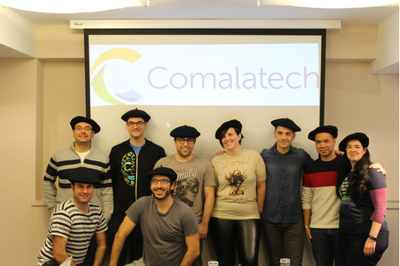
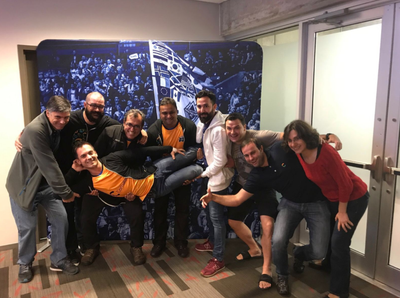
2017 marks the tenth year that Comalatech has been building software solutions inside the Atlassian ecosystem. A decade may have passed, but our core company values are still going strong. From the start, Comalatech has been committed to giving back to the communities we call home. But, as a distributed team that works in cities across the globe, giving back comes with its own set of challenges.
The Challenges of Giving at a Remote Company
Our team spans the planet, from Vancouver, to Brisbane, to Barcelona. With such a distributed group, giving back together is nearly impossible; we would all love to run a charity 5K together, if we weren’t 17,000K apart. And, with no physical office to share, the company bake sale would be poorly attended.
The challenges of distance and timezones are no different from our day to day work, so we meet them in the same way – disciplined communication, and teamwork. For the former, we use Atlassian Confluence to create our annual giving plans, a place for every team member to advocate for charities to support. Using Confluence along with our text chat app, HipChat, we can have the conversations that other teams might have around the water cooler, or in a boardroom. As for teamwork, management has created an open supportive environment where anyone is comfortable expressing their opinions, and so people are encouraged to share their own personal causes, resulting in a diverse set of charities we support.
We’re Committed to Pledge 1%
At the end of 2015, Comalatech followed the lead of tech companies like Atlassian, Sales Force, and CA Technologies to make a vow regarding our corporate giving – we committed ourselves to Pledge 1%. For our objective we chose to pledge 1% of our profits to charity. We are such big believers in this movement that we are once again committing to Pledge 1% in 2018, and we would encourage other business in our space to do the same.
As 2018 dawns we’re excited to grow Comalatech even larger, each new team member bringing with them a fresh perspective and background. But, no matter who joins our team they will be sure to share our corporate values, including a commitment to giving back to our communities. We can’t wait to see which new causes we’re going to support next year.
Originally posted: November 28, 2017
By Ben Rooks, ST Advisors, Inc.
After spending ten years of my career as a sell-side equity research analyst and six years as an investment banker, I began ST Advisors as a way to do the work I loved while living my values, one of which is intellectual integrity (something that was often challenging in the two prior phases of my career). Another core value is working to have a sense of gratitude for the multiple areas of good fortune in my life.
From inception I decided that ST Advisors would support charities that matched my values, historically around women’s empowerment, education and entrepreneurship. To that end, I looked for charities that support these causes. A few years after ST Advisors began, I was fortunate to be joined by a like-minded partner who shared my belief in supporting some of the many worthy causes that exist. Over the years as ST has grown, we have increased the donations each year, deciding a few years ago to commit to donating at least 1% of ST Advisors’ revenues to a portfolio of charities that supported causes we believe are important and reflect our core values.
In researching a company prior to meeting its CEO recently, I saw it had the Pledge 1% logo on its website. Intrigued, I clicked through and learned this was a way to institutionalize our commitment and, more importantly, to try to inspire others to do the same. As a small professional services firm, ST Advisors is profoundly unlikely to have a liquidity event, making its equity irrelevant. We are, however, proud to have taken the 1% Pledge and will continue to donate 1% of revenues to charities whose work inspires us. To date these charities have included:
- Year Up
- American Civil Liberties Union
- Propublica
- Reach Out and Read
- Endowing two perpetual scholarships with Plan International’s Because I Am a Girl campaign
- Heifer International’s Women’s Empowerment Project in Cambodia
- Acumen Fund
- Developments in Literacy
Originally posted: November 28, 2017