
By Joel Markoff, General Manager, Nexus Notes
Founded in 2011 in Adelaide Australia, Nexus Notes is a peer to peer marketplace that allows high performing university and professional students to monetise their course summary notes by selling them to students across the globe. Buyers get the benefit of seeing how the top students prepare for exams, and sellers make a passive income from selling their notes and helping other students learn.
We started Nexus Notes because when we were at university – we found it much easier to learn from other students, as opposed to university lecturers and tutors. We believed (and still do) that students are often the best teachers, yet there was no collaborative platform that enabled students to learn from each other.
And so from humble beginnings the company grew and yet in early 2014, we recognised that a lot of our high performing students were less interested in monetising their services and more interested in helping other students learn. We went back to our founding vision and looked to determine the best way to help our top students to give back to the student community through our platform.
After many late nights brainstorming how we could give back to the student community, we decided to partner with a charity organisation and allow students to donate their sales commissions directly to that organisation. After doing significant due diligence we eventually settled on partnering with AIME, Australian Indigenous Mentoring Experience. AIME is a not-for-profit with a simple mission: to get Indigenous students finishing high school and going on to university, further study or employment at the same rate as all Australians. Like Nexus Notes, AIME puts facilitates anyone to learn from top performing students and mentors.
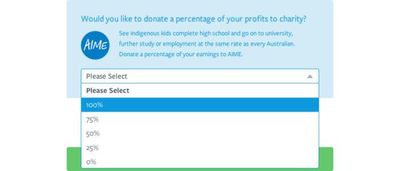
Since introducing the option to donate commissions to AIME, 11% of our note sellers have opted to donate part or all of their commission to ch. Our generous sellers have been amongst our top performing students, resulting in a massive 16% of total commissions occurring through our site being donated to AIME.
The model of donating commissions in a marketplace is something rarely seen across the world and we are proud of have come up with such an innovative way to give back to the student community.
Originally posted: November 28th, 2017

By Doug Cronin, Pledge 1% Member and Director of Change and Upstander, Our Race
Recently someone asked me why are you a Pledge 1% member, you are already giving back so much more than that.
My response was that for any significant change to happen, a movement if you will, it takes many voices standing together, not competing of who is doing more but what as a collective are we doing.
Later, I reflected on this answer and looked at what is it that my organisation can do in supporting a social impact movement like Pledge 1%. As a start-up and an organisation which aims to create more inclusive and welcoming workplaces and communities by connecting people through storytelling, mentoring and leadership, I realised we could definitely play a role with organisations who stand up against racism and see multiculturalism as one of our greatest strengths.
You may ask what are the similarities between these two movements?
This, for me is where it gets very interesting as both have an authentic purpose but also a positive impact on profitability and attracting and retaining talent.
We have all read the Benefits of Pledging on the Pledge 1% website and will look at how a few of these are related to Leading for Change: A Blueprint on Cultural Diversity and Inclusive Leadership. To do this I will refer to research conducted by the Leadership Council on Cultural Diversity, chaired by Dr. Tim Soutphommasane, the Race Discrimination Commissioner of The Australian Human Rights Commission.
Attracting customers and increasing productivity
“87% of consumers believe corporations should place equal weight on business and supporting communities”, yet do we need the data to prove this point or can we look around at our own spending habits and that of our friends and family?
At the same time, we often buy products and/or services that are aligned to our values, whether that be environmental, social or cultural. From there consumers ask the question does the company know how to provide goods and services to my preferences.
As a result, businesses find that having greater diversity they are able to reach a broader audience.
We all know there is a push for gender diversity and that this makes good business sense. A study of 366 companies from the United Kingdom, Canada, Latin America and the United States, found that companies in the top quartile of gender diversity were 15% more likely to have financial returns above the median, while companies with in the top quartile of cultural diversity were 35% more likely to have financial returns above the national industry median.
So just from a profitability perspective a culturally diverse leadership group just makes basic business sense. And with Australia increasingly becoming more culturally diverse (half the population were either born overseas or have at least one parent born overseas) working towards culturally diverse and inclusive leadership is a no-brainer.
Attracting and retaining top talent
“60%+ of Millennials state that a “sense of purpose” is a key reason why they work for their current employers, while companies with giving programs have 2.3 times the employee retention rate.”
The idea of a sense of purpose goes hand in hand with a sense of belonging because if there is no sense of belonging, how can one of a sense of purpose?
Businesses which have culturally diverse leadership, employees from diverse backgrounds feel a greater sense of belonging where their uniqueness and input is also valued. This then benefits both the business and employees.
As Ajay Banga, the CEO of MasterCard says ‘If you don’t have a diverse company, if you don’t have people around you who don’t think like you, don’t walk like you, don’t talk like you, didn’t have the same experiences as you, how will you ever make sure that you are not blinded to the same mistakes that you can otherwise make because you can only see things through one prism.’
Everyone can make a difference. Be part of something bigger than yourself
Finally, if we were only pledging 1% to increase profitability and attract more customers then what is the purpose?
And is an organisation employing one or two people from a different background just a tokenistic gesture?
After attending a breakfast with Atlassian founder Scott Farquhar, I could see the passion and the leadership he is showing in this movement. It is obvious that he is taking action on this but is also agitating the market to help grow the size of the movement, and therefore impact.
This same type of leadership from him is also being shown by many members of this group, which ultimately will lead to greater change.
A movement is also occurring in the area of culturally diverse and inclusive leadership starting with members of the Leadership Council on Cultural Diversity. As a result of this and other forward-thinking leaders, we are seeing organisations agitating in this space. This has been through their recruitment strategies, policies and training, but most importantly by starting the conversation and committing to the movement.
Both of these movements are very much in their infancy but some progress is being made. It now takes the agitators and leaders to show this staunch commitment.
Are you going to be a leader of this movement also?
If you are leader in this space and want to start the conversation, we would like to invite you to the launch of Our Race in Sydney on Thursday 4th December or organise another time to be part of this movement.

Originally posted: November 28th, 2017

Pledge 1% is proud to have partnered with India Dreamin this past September to inspire greater giving and philanthropy across the India Dreaming community. As part of the event, Pledge 1% was featured as the nonprofit partner for India Dreamin and all attendees were invited to take the pledge as part of this registration process. Through this integration, nearly a dozen startups joined the movement and shared their intent to give back through their business.
This exciting partnership is providing a new pathway for startups and companies around India to get involved in Pledge 1%, and give either 1% of their staff time, product, profit, or equity to charity. We are honored to have been featured as the nonprofit partner and we look forward to welcoming more of the India Dreamin community to Pledge 1%!
If you are interested in learning more about India Dreamin visit here or Pledge 1% for your company at p1.today.
Originally posted: November 5th, 2017

By Salesforce, originally published on Small Business Trends.
Salesforce serves businesses big and small today. But even as the company grows and its customers do, too, it hasn’t taken its eye off companies like yours.
Here is a list of 10 things every small business should know about Salesforce to get a better understanding of the company and what it offers.
Salesforce started small, too — 18 years ago in a small apartment.
The story of Salesforce’s beginnings is probably one to which many small business owners can relate. Back in 1999 Marc Benioff and three co-founders started Salesforce in San Francisco. To start Salesforce, Benioff gave up a successful career and struggled to find investors.
Today, the company is a tech titan. In the past quarter, Salesforce revenue reached $2.56 billion. That’s a 26 percent increase over the previous year. And it’s been recognized as the top CRM company in a competitive industry.
Salesforce has more than 150,000 customers, many of which are small businesses.
Once a small business itself, Salesforce got off the ground by serving small business needs. Today, some of the biggest companies in the world rely on Salesforce but still, many of its customers are startups and small businesses. The company is not taking its eye off the customers who got them where they are today.
DUFL is a great example of a company that has grown tremendously with Salesforce. Acting like a personal valet for business travel, DUFL cleans and stores garments customers need for their trips and ships them directly to their destination. DUFL uses Salesforce to keep a complete record of each individual’s unique needs so it can then deliver personalized, 1-to-1 experiences to its customers. With Salesforce supporting its sales and customer service, DUFL’s team of less than 50 employees has seen 10% month-on-month growth while maintaining a retention rate of more than 99%.
Today, Salesforce is much more than CRM.
Sure, Salesforce is nearly synonymous with CRM, especially for small businesses. But the company is getting a reputation for other services it provides companies like yours.
For instance, a few years ago Salesforce acquired Demandware, which it now calls Salesforce Commerce Cloud. Commerce Cloud allows small businesses to create unique shopping experiences for all its customers, including new ways of engaging customers on mobile devices at any time.
Salesforce also offers Quip, content collaboration tools for businesses.
Salesforce puts on one of the largest user conferences in the United States.
You’ll never walk alone at Dreamforce. That’s the annual user conference put on by Salesforce. And this is a big deal. It’s the largest software conference in the world.
Dreamforce offers the opportunity to learn first-hand how Salesforce — and any of its offerings — can help your small business. And if one of the many experts on hand isn’t enough, you’ll have a chance to meet the 175,000 or so attendees at this year’s event. That’s right — 175 THOUSAND!
“It’s bigger than a lot of cities,” says CRM Essentials co-founder Brent Leary, a regular at Dreamforce.
Many of those at Dreamforce are small business customers. This year there will be over 300 sessions dedicated to small businesses.
Salesforce has invested big in artificial intelligence.
Salesforce is integrating artificial intelligence with its CRM platform. The company calls its AI Einstein and promises to make everyone in your small business using it smarter.
In an interview with Small Business Trends, Salesforce’s Tony Rodoni stressed the role and impact of AI for a small business.
“No small business should have to have a data science department,” Rodoni said. “But we want to put functionality into the product that helps them see trends, recommend actions, and take next steps. And our SMB customers are going to see that in our products pretty darn quick.”
Your small business can access capital, find an investor, or get help on growth with Salesforce.
Salesforce has its own venture capital and investment arm called Salesforce Ventures.
The company has also created the AI Innovation Fund and is investing $50 million in startups that use AI to integrate their companies’ products with Salesforce.
Salesforce for Startups provides startups with access to the Salesforce technology, resources and expertise needed to become thriving customer and community-focused companies. Salesforce helps startups build, grow and give back through the AppExchange Partner Program, Salesforce Ventures, Pledge 1%, customer-focused products and much more.
Salesforce has a 1-1-1 philanthropy program.
Making an impact on your community, outside of being a successful company, adds value to any small business. Salesforce.org is based on the company’s own 1-1-1 model of social philanthropy.
And the 1-1-1 model is ideal for small businesses to donate from the beginning without stunting
their own growth. The 1s in 1-1-1 represent a percent of time, resources, and products that go to the common good of the community surrounding every business who’s pledged to contribute.
Salesforce.org says, to date, it has donated $168 million in grants, 2.3 million hours of community service, and product giveaways to more than 32,000 nonprofits and higher education institutions.
The AppExchange offers other apps for your business that automatically integrate with Salesforce.
Salesforce was the first to come out with an app store for third party integrations and extensions. It’s called Salesforce AppExchange. The AppExchange is where you’ll find other business apps that integrate with Salesforce.
The AppExchange recently reached its five million installs milestone, which shows the accelerating momentum of the AppExchange. Salesforce hit one million installs after six years, but in the last 12 months, it has grown from four to five million. This illustrates the exponential growth and strength of Salesforce’s partner ecosystem, which empowers SMBs with pre-integrated business apps to help them run their business efficiently.
Salesforce training is gamified.
Salesforce has a learning system dubbed Trailhead. The company calls it the fun way to learn how to use Salesforce.
Trailhead is free and offers learning modules and guided trails for every skill level. Check out this blog postto learn more about how small businesses can use Trailhead. There’s even a special “Trail Mix” designed especially for small businesses.
Originally posted: November 5th, 2017

Originally posted on the Our Big Kitchen blog by Jeff Newton.
Internet Technology company AppNexus visited Our Big Kitchen last week. The team from AppNexus showed that they were not just smart technologists, but also enthusiastic chefs. Their time in the kitchen involved preparing a large number of meals, which will be distributed by OBK to disadvantaged members of our community. The team had a lot of fun, and made a big effort to help those in need. A big OBK Thank You to our friends from AppNexus.
Originally posted: October 24th, 2017

Posted on the Docusign blog by the Docusign team.
At DocuSign it’s our mission to innovate — not just in the field of technology, but with our technology. Through our DocuSign IMPACT Initiative, we leverage the power of our product, our people and our profits to make a tangible difference in the global communities in which our employees and customers live and work.
We also strive to make a continual impact by encouraging companies around the globe to Pledge 1%. Co-founded by Salesforce, Atlassian and Rally, Pledge 1% is a global movement that has encouraged and empowered more than 2,700 companies in 60 countries to pledge 1% of profit, equity, product, and/or employee time to their communities.
In the wake of hurricanes Harvey, Irma and Maria, it’s more crucial than ever to place disaster relief at the forefront of the conversation and take action. And with Dreamforce right around the corner, we’ll be using the conference as a platform to help raise even more awareness around DocuSign IMPACT and the Pledge 1% movement. Individuals or businesses interested in how to become involved are invited to the DocuSign booth.
Additionally, Amy Skeeters-Behrens, executive director of DocuSign IMPACT, will join leaders from other Pledge 1% companies on a panel discussing the role and efficacy of integrated philanthropy.
Want to know more about how your business can make an impact in your local community and around the world? Come visit our booth at Dreamforce.
Originally posted: October 23rd, 2017

By Brian Fitzgerald of Pandadoc. Originally posted on Medium.
In today’s crowded marketplaces, organizations have to work harder than ever to break through the clutter and connect with their audiences. So why burn hours and resources doing the same thing as everyone else, when your efforts might go mostly unnoticed? Rather than doing the same thing over and over again, expecting different results, one way you can take your marketing message a step further is by aligning your brand with a cause that your consumers can relate to.
When properly executed, cause-marketing campaigns not only effectively communicate your key messages, they also have an impact on sales. In fact, according to a recent study conducted by Unilever, “33 percent of consumers buy from brands doing social or environmental good.”
Studies also show that with price and quality being equal, consumers are more likely to buy products that support a cause over products that aren’t. Some will go as far as switching to a new brand affiliated with a cause they support.
PandaDoc, and other likeminded companies, believe that being a good corporate citizen is just as important as delivering the best products and services available on the market. That is why they work hard to serve the public good by investing in programs and partnerships that make the world a better place.
That said, as attractive as cause-marketing may seem, executing a solid campaign is not an easy process. But here are some steps you can follow that will help you craft a great cause-marketing strategy.
Do Your Homework
Before you decide to support a specific cause, it is important that you are as informed as possible about what the cause is and what it stands for. Find out what the capabilities and limitations are and what synergies can make a partnership mutually beneficial. Ask questions to make sure the cause and your brand are compatible. Also, make sure to vet any organization you partner with. Ask for their financial records, or look them up on GuideStar.org to make sure that you are partnering with a legitimate cause.
Know Your Brand
As important as it is to know who you are partnering with, it is even more important to be clear about what your brand stands for and how it relates to the cause you are supporting. Having a clear understanding of what your brand represents, and your consumer’s expectations, will go a long way in creating a campaign that will work well for both your organization and the cause you support.
It Takes Teamwork
When starting a cause-marketing campaign, the partnership between your brand and your cause should be felt at all levels of your organization. Make sure that your employees and team support the partnership and are engaged in helping both parties meet their goals.
Set Goals
Partnering with a cause is a long-term commitment. Both partners must set a manageable plan for your campaign together and agree on key milestones and deliverables.
Give It Your All
In addition to alignment with your brand and your consumers, the cause you take on must be near and dear to your heart. If your organization doesn’t fully support the cause you are aligning with, then all the work you put in will be for not.
The PandaDoc Corporate Social Responsibility program was developed with the “Pandas Helping People” mantra as its cornerstone. The company invests in scalable and self-sustaining programs that use innovation to meet some of the society’s biggest challenges. The primary areas of focus include human rights, gender equality and social equity.
PandaDoc is also committed to the Pledge 1% effort, which was spearheaded by Atlassian, Rally, Salesforce and Tides to accelerate their shared vision around integrating philanthropy into businesses around the world. Pledge 1% encourages and challenges individuals and companies to pledge 1% of equity, product and employee time for their communities, because pledging a small portion of future success can have a huge impact on tomorrow.
I encourage anyone working within the Salesforce ecosystem to give Pledge 1% a look.
I also recommend that any organizations working in the Science and Technology fields support Science, Technology, Engineering, Art and Mathematics (S.T.E.A.M.) Education initiatives. These initiatives are key to making sure we have the people and resources needed to drive future developments and innovations. Innovation Station has a program that was developed to expose S.T.E.A.M. education to rural, underserved communities in the U.S. To date, the program has connected with over 300,000 people. I am sure they would love to hear from you.
That said, find a cause that works for your organization and start building your cause-marketing strategy today. Your brand, and the world, will be all the better for it!
PandaDoc helps organizations win more business by accelerating the way they transact. Learn more at PandaDoc.com
Originally posted: October 20th, 2017

By Elizabeth Dobrska, TUGG, original published on Medium.
Today is Tech Gives Back and it’s my favorite tech event of the year. This year is a extra special as we’re trying something new. It’s no secret that the tech industry has some major issues around diversity and pipeline and this October 19th, TUGG is proud to be piloting a new program as a part of our annual Tech Gives Back day of service aimed to inspire the next generation of techies from across Boston’s most under-resourced neighborhoods.
The Beginning
The 7th annual Tech Gives Back, organized by TUGG (Technology Underwriting Greater Good) and SVB (Silicon Valley Bank) is the largest day of service in the tech industry. The day is about so much more than fun afternoon out with the team. Tech Gives Back is about highlighting the impact our industry can have in a single day while empowering tech companies large and small to make a difference in the community. TUGG and SVB are dedicated to providing tech companies large and small with meaningful opportunities that are aligned with the ethos of the entire tech ecosystem: experimenting, education, innovation, impact, and community.
Earlier this year, The Boston Foundation asked us if we’d be interested in scaling Salsify’s outgoing community engagement program where they host a mini-shark tank with middle-schoolers from the Boston Public Schools. Our immediate response was YES, count us in! We knew this was a fit for our community and would make a meaningful addition to the Tech Gives Back roster. And so, the Tech Gives Back Guppy Tank Pilot Program was born.
Like Shark Tank, but with Little Fish
At its core, Guppy Tank is a mini-hackathon broken out into three sections: sales/marketing, product, and design/engineering. The day concludes with a shark-tank style pitch competition.
Salsify developed this model for their own company when looking to boldly address tech’s diversity problem. TUGG is proud to be scaling Guppy Tank to 10 companies around Boston.
Tomorrow, teams of sixth-graders will delve deep into their own ideas around healthy living and using the design thinking process. With a little help from some awesome professional techies, the students will prototype their own apps. This condensed STEM program will give these students a look into what it’s like to work in tech and bring their own ideas to life.
Community Leaders
With Salsify leading the way, and generously sharing their Guppy Tank blueprint with us, it wasn’t hard to generate interest among other tech companies. We’re thrilled with the 10 companies who signed on to lead by example: Buildium, Hubspot, InsightSquared, Mendix, Rapid7, Salsify, Threat Stack, Toast, Wayfair, WeWork.
Each organization has committed to hosting an on-site Guppy Tank with about 20 students from a local Boston Public School. We’ve been continuously impressed with how committed our participating tech companies are to making this an unforgettable and inspiring day for the students.
It Takes A Village
We’re so grateful to have some stellar partners who are helping to make this happen. When you have 250 kids going to 10 tech companies, you need more than a little help from your friends. Our Guppy Tank Pilot Program is made possible in part by generous support from The Boston Foundation and Silicon Valley Bank. It is powered by Building Impact, who has worked tirelessly with the folks at Boston Public Schools to ensure that the participating students are not only prepared for the day, but that Guppy Tank will contribute seamlessly into their STEM curriculum goals.
Boston Public Schools carefully selected the participating schools to ensure that students across the board were getting a chance to be a part of this and ensuring that this is truly an inclusive program — in fact most of the schools participating are “inclusion schools” meaning that students with special needs will also partake in Guppy Tank.
The Future Is Bright
Throughout the day, our team will be hopping from one Tech Gives Back Guppy Tank to the other, wishing we could clone ourselves and be at all 10 locations at once.
While we can’t know where these kids will want to work when they grow up, our hope is that they’ll be inspired by Guppy Tank. It is crucial that Boston’s most under-resourced and under-represented youth — the youth in our very own backyard — have the opportunity to become the next generation of Boston’s tech industry… After all, you can’t be what you can’t see.
Originally posted: October 19th, 2017

Originally posted on the AppNexus blog by the AppNexus team.
If you’ve browsed the web or turned on the news in the last couple of weeks, you’ve probably been confronted with images of the destruction caused by natural disasters in Texas, Mexico, Puerto Rico, and elsewhere.
They certainly struck a chord here at AppNexus.
Within days of the news that Hurricane Harvey had devastated much of the Houston area, AppNexians were thinking up ways to rally the company to raise money for victims. Fortunately, they weren’t alone – the AppNexus Impact Steering Committee was ready to help.
AppNexus Impact’s mission is to foster a culture of civic engagement and charity, and the primary way they do that is by providing the infrastructure and guidance for employees to spearhead initiatives for the causes they’re most interested in. That way, no one’s left in the situation of wanting to take a stand for something they’re passionate about and not knowing what the first step is – they can just contact AppNexus Impact, tap into their wealth of experience and resources, and get the ball rolling.
With AppNexus Impact’s help, we were able to come together and hold an informal, Texas-themed breakfast in our cafeteria that raised over $6,500 for disaster relief. In this article, we’re going to share some of the best practices that helped us achieve that goal and put us in position respond quickly and effectively when our employees want to promote their causes.
Build a playbook
One of the reasons that AppNexus Impact has become such a valuable resource is the wealth of experience and institutional knowledge its members have on what makes a successful charity event. Better yet, they’ve distilled this information into a handy, step-by-step playbook anyone at AppNexus can access. Some of the highlights include:
- Guidelines on what kinds of organizations to partner with
- Information on how to engage Community Groups within AppNexus to bring more attention to charitable initiatives
- A guide to marketing charity initiatives within the company
- A full rundown of all logistical needs for different kinds of impact projects
- A how-to on retroactive case studies to ensure every event results in new lessons learned
Our playbook makes it easier for us to execute on these kinds of events, and it’s always growing as we learn new lessons.
Play to your people’s strengths
Adriana McDonald, a member of our Global Office Operations team, had the original idea for the breakfast taco bake sale, and quickly got support from other members of TexNexus (our affinity group for proud Texans – there truly is a group for everyone here!).
But a successful event needs more than one person driving it. And it’s not just about getting more people involved – it’s about getting the right people in the right roles. AppNexus Impact helped Adriana identify the people with the skill sets, interests, and passion to make the event a hit. A few examples:
- The team asked Pablo Dominguez, our VP of Global Business Operations, to help publicize the event. As a senior leader, he had the reach to amplify the message to as many AppNexians as possible.
- They enlisted the help of Ashley Babinecz on the food front. Ashley is a Director in our Talent Acquisition Group but moonlights as a leader of BakeNexus (you guessed it, our affinity group for baking enthusiasts), so she was a natural choice to help the team cook up a great meal.
- They reached out to Neville Hall and Lillie Ratliff – leaders in the AppNexus Black Alliance and the AppNexus Latino Alliance respectively. Those are two of our most active affinity groups, and with their help, the team expanded their efforts to include a clothing and supply drive.
By being deliberate about who they engaged, AppNexus Impact and the volunteers were able to get the right people in the right roles to make the event a success.
Listen and be flexible
One of AppNexus Impact’s key strategies for getting engagement around these kinds of events is letting the people who drive them decide where the money is ultimately donated. People feel more connected to an event when they know they’re helping out organizations whose missions they connect with.
Flexibility in deciding who to donate to was also became important as time went on. As you probably remember, Hurricane Harvey was quickly followed within the same week by Hurricane Irma in Florida and an earthquake in Mexico. With AppNexus Impact’s help, the team was able to expand the scope of their efforts and send money to organizations in Florida and Mexico. This is the kind of decision that could have easily slipped through the cracks if not for the sense of focus and tested, repeatable processes provided by AppNexus Impact.
Ultimately, we ended up donating to five organizations in Texas, Florida, and Mexico:
- Houston Food Bank
- Houston Society for the Prevention of Cruelty to Animals
- Greater Community Houston Foundation (an organization that will help rebuild Houston’s damaged infrastructure)
- American Red Cross, South Florida Region
- Oxfam Mexico
We felt that each of these organizations served different but vital purposes in the affected regions.
Practice makes perfect
We’re thrilled to have helped the victims of these recent disasters, and it all started with AppNexus Impact’s experience and dedication to making these kinds of efforts as smooth as possible. In fact, by following these processes, we were able to quickly coordinate similarly effective events for those affected by Hurricane Maria in Puerto Rico – yet another example of how our system enables us to respond to quickly to what’s happening in the world. We hope that these best practices can help other companies make it possible for their people to advocate for the causes they care about.
If you’re interested in fostering a culture of philanthropy at your organization, consider joining us in partnering with Pledge 1%. They’re the experts in corporate giving and can help you come up with a plan to allocate more resources to worthy causes. Taking the pledge represents a commitment to donating 1% of your company’s resources (not just money, but time and products too) to charitable causes, and you can get started here.
Originally posted: October 19th, 2017