“Someone is sitting in the shade today because someone planted a tree a long time ago- Warren Buffett”
What is the best time for planting a tree? It was 20 years ago and next best time is now. We all grew up playing around the shelter of trees. They are the beautiful gift of nature. We often get busy with the virtual world around and keep ourselves busy. Our modern lives have become more gadget-oriented and this simultaneously is affecting the younger generation too. So we should focus on saving our nature as we all are aware that our nature has been depleting lately and needs to be paid more attention
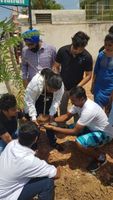
In this busy modern lifestyle, Dazeworks Bangalore has taken a small step towards boosting up employee’s lifestyle with an initiative called Pledge 1%. In association with it, a small plantation program was conducted on Saturday near Shishu Mandir, with an aim to encourage greenery around. Our team planted 50 saplings for which everyone took part and also had fun.
Through this small program we plan to spread awareness among all the people stating our future depends on the way nature stays. Even the government should encourage more civil societies and educational intuitions in tree plantation and awareness campaigns. Our future is not bleak if we live in harmony with nature.
Over the past few months, I’ve had several conversations about philanthropy and what we, as part of the tech community, are doing to give back to those in need. The same question always pops into my head:
Why do we give back?
As companies in the tech community, do we champion philanthropy because it’s good PR? Do we do it because our team members and boards ask for it? Do our efforts go beyond our tech bubble and actually provide benefits to the broader communities in which we live and work?
Maybe the most reflective question of them all is this: Are we helping the community — or are we helping ourselves?
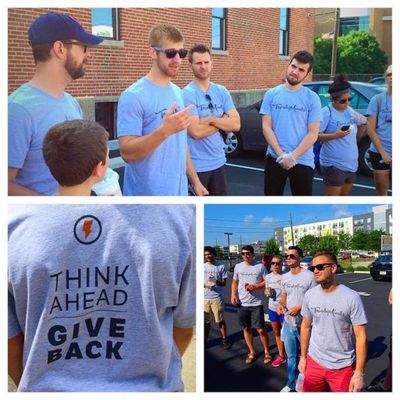
Every year, events like Giving Tuesday come up, and company leaders are quick to jump on the bandwagon. You see tweets about how employees took half a day to clean up a street or plant some trees. Don’t get me wrong, we do these things too, and they are important contributions that make communities better places to work and live.
Many people, including me, think there are still huge gaps, a notion that’s supported by tech companies who only add philanthropy as part of their principles after an IPO. After initial funding. After success. After profits. After the company is secure and even thriving.
For leaders and business owners, the financial commitment of many philanthropic opportunities can be a burden early on, an added stress to starting a business and keeping it successful. What I propose, however, is a new way to look at philanthropy, one that begins with a different type of IPO.
A Different IPO: Initial Philanthropic Opportunity
What if instead of a nice-to-have, we treated philanthropy as an integral part of doing business?
This is where the idea of an Initial Philanthropic Opportunity comes into play, and it can help answer that question I proposed earlier: Why do we give back?
I’m the son of a truck driver and a hair stylist. I was raised in a modest environment, even poor by most standards. Nevertheless, my parents stressed the importance of helping people who were less fortunate than us. While we didn’t have a lot of money, my parents had a strong belief to give back to our church, our community and to other families who needed help buying groceries.
My parents didn’t attend big fundraising dinners. They never had buildings named after them. Instead, they quietly helped out wherever they could, and they taught us the importance of giving back — even if it’s a small amount or tiny gesture.
And that’s the key. Your Initial Philanthropic Opportunity can be anything. It doesn’t have to make headlines or generate social media buzz. It sure as heck doesn’t need to make you a superstar.
In a recent search of large local arts and medical charities, I’ve noticed that the tech community is largely missing. We should be present. And we should be leaders in philanthropy.
Tech companies: join the fun! You don’t have to wait until you reach your IPO to do some good. As we all know, statistics show that many new businesses won’t make it more than a few years. The important thing is to start helping now, however you can. Then, if you make it big, you’ll be ready to do even more because it will have always been a part of who your company is.
So, how do you make philanthropy a core piece of your business and take advantage of your Initial Philanthropic Opportunity?
Seize Your Initial Philanthropic Opportunity
When first starting out, consider different types of philanthropic opportunities, such as getting involved in a local non-profit organization, providing consultation at no cost or offering in-kind donations of your services or products.
Notice I didn’t say you had to give away a pile of cash — there’s more to philanthropy than just the financial side. For many companies (and their employees), the option of sharing time or expertise may be more appealing than dipping into their own pockets. This is one way to increase involvement early in your company’s growth without breaking the bank.
At TrendyMinds, we started small. Starting with our founding in 1995, we requested 10-15 “Letters to Santa” from NYC kids. Before having our holiday party, our team would hit the malls and buy presents for these children in hopes our gifts would brighten their lives and give them something to smile about. Was this a huge investment? No. Did it establish a foundation for future growth that we still build upon to this day? Absolutely.
In 2016, we formalized our philanthropic program even more by joining Pledge 1%. We promised to donate one percent of our equity, time and product to philanthropic causes each year. Even though we’ve grown our philanthropic efforts during the past 22 years, we’re by no means finished.
As entrepreneurs, we are no strangers to finding creative solutions that solve complicated problems. Working philanthropy into the tight budget and demanding schedule of running a startup is exactly the kind of puzzle we love to figure out. In the tech sector, it’s still something we need to figure out, and it begins with being deliberate.
It begins with answering that question: Why do we give back? It begins with seizing that Initial Philanthropic Opportunity, no matter how small, and making philanthropy a part of our foundational principles. And, perhaps most importantly, it doesn’t end.
About the Author
Trevor Yager founded TrendyMinds while still a student at Anderson University. Today, he provides strategic planning, business development, marketing and technology guidance and support to local, national and international clients across the agency.
In 2009, Junior Achievement recognized Trevor as one of “Indy’s Best and Brightest,” and in 2011, Indianapolis Business Journal named him one of Indianapolis’ “Forty Under 40.”
Trevor serves as chair on the Board of Visitors for Jordan College of the Arts at Butler University and was appointed by Indiana Governor Mitch Daniels to serve as a commissioner on the Indiana Arts Commission, where he became chair in June 2013. He has been featured as a regular “Insider” on Inside Indiana Business and has been featured in outlets including MSNBC, ABC News, Politico, The Advocate, The New York Times, The Washington Post, PR Week, The Indy Star and Indianapolis Monthly.
Originally posted: September 11th, 2017
Sunday Friends, A Working Alternative to Charity, is a 501(c)(3) non-profit community service organization serving families in the San Francisco Bay Area. Sunday Friends meets on Sundays at three different locations. It has a unique approach where families make an effort to acquire long-term self-sufficiency skills and receive assistance with their basic needs. Sunday Friends partners with several organizations, profit and non-profit, to teach families and children many skills including, but not limited to, computer literacy and STEM.Qalaxiais one such organization.
Qalaxia is proud to join Pledge 1% and publicly announce their continuing time commitment working with Sunday Friends in helping students learn math. Qalaxia’s program at Sunday Friends involves students getting half an hour of computer time where children do 15 minutes of math on Qalaxia followed by 15 minutes of fun activity of their choice on the computers. Student and adult volunteers help children with successfully completing grade-appropriate math assignments on the platform. The unique question and answer format of Qalaxia allows children and volunteers to continue their engagement online. This approach allows volunteers to contribute their time at their leisure while students continue to get help even at home.
Qalaxia is a platform that facilitates connections between corporations honoring their 1% pledge and any non-profit organization to offer STEM programs at location. All that is required from non-profit organizations is the location, access to Qalaxia, and local adult supervision for students. And all that is required from industry experts is answering students’ questions at their leisure.
It’s back to school time, so the RFPIO team is giving back to our educational community. For our Q3 philanthropy mission, we’re partnering up with a local school in Beaverton to support their school year initiatives.
There are many causes, and each quarter we think about the best way to lend a helping hand to our community. There are plenty of options online, but we truly love to serve our local organizations. We are fortunate to have the support of our community as a rapidly growing startup and we feel it’s important to give back.
In Q1 we hosted the ROI of Compassion and helped Oregon Food Bank bring over 600 meals to families in need through online donations and an office food drive. In Q2 we got our hands dirty with SOLVE for the Go Green campaign and cleaned up Kelley Point Park on Earth Day. The result? Nearly 6,000 volunteers collected 35 tons of trash and debris from 162 sites.
Now we’re kicking off our Q3 initiative, the Give Back to School campaign. It was difficult to choose from so many wonderful schools near our headquarters, but Elmonica Elementary happens to be the same school where Ganesh’s daughter attends—so we reached out to find out how we could help.
That was when we discovered their amazing new program, MakerSpace.
Elmonica Elementary is beginning to use the idea of MakerSpace to enhance the learning environment by combining the benefits of library, media, and technology. The Elmonica staff believes in teaching students to be independent thinkers who will actively learn and create. MakerSpace blends the traditional library experience with 21st Century technology skills. Elmonica would like students to explore STEM learning while they research ideas.
Being a technology company, the RFPIO team was excited to help support this forward-thinking program to support the students at Elmonica. Last week RFPIO donated to the MakerSpace program, giving solar robots and a crazy fort (yes, we’re considering one of these for the office!).
“In a traditional library setting students listen to a book that is read to them, then check out a book. We want to flip this idea so that students can still listen to a book, then actively engage in processing and creating new information. Students interested in robots can read about them before entering challenges where they build a robot that can move weight or go a certain distance. Elmonica is looking to create active learners in all aspects of the school day. The MakerSpace program will make this learning style achievable.” – Cynthia Moffett, Principal at Elmonica Elementary School
Want to contribute to RFPIO’s Give Back to School campaign?
Supporting education is incredibly important and we’re excited to help make a positive impact on Elmonica’s bright young minds. You can help too!
We understand if you have local schools you want to work with, and we fully support that. If you’re not sure where to start, and you’d like to join forces with the RFPIO team, you can donate to Elmonica’s MakerSpace program easily by selecting items straight from their Amazon wish list.
A company is much more than its product. Take GlobeIn, for example, a subscription company that delivers “a fresh collection of useful and enthralling [artisan] items from around the world” straight to your doorstep each month. While the contents of their boxes are delightful, their fair-trade and philanthropic philosophy is equally important for members. By embracing their potential to lift communities in developing countries, they are creating not just a new line of products, but a sustainable change in our world. Such kind-spirited inventiveness inspires our team at Subscription Trade Association (SUBTA) to raise the bar and challenge ourselves to give back.
First and foremost, our newly launched Subscription Trade Association (SUBTA) understands the need for a unifying force in the rapidly growing subscription box industry. Currently, more than 2,500 subscription box companies comprise the industry that is projected to exceed $90 billion in annual revenue over the next decade, said SUBTA co-founder Christopher George. Our association is building the ecosystem for box companies and partners to provide networking, professional development, customer experience, profitable growth and research. Essentially, explains George, “we want to help our members grow enduringly fantastic businesses.”
In addition to profitable growth, SUBTA believes that part of what makes a business “enduringly fantastic” is a commitment to sustainability and philanthropy. “We want to foster a socially conscious sustainable box industry, where profitable growth and impact thrive together,” explains SUBTA cofounder Michelle Lange. Part of this holistic approach to successful business means engaging in “conscious capitalism.” This is where Pledge 1% comes into play.
According to their website, Pledge 1% is “a corporate philanthropy movement dedicated to making the community a key stakeholder in every business.” They do this by encouraging companies or individuals to contribute 1% of their equity, product and/or employee time to a local nonprofit of their choosing. Pledge 1% will help us integrate into a larger network of shared values and connect to non-profits in our area. We believe it’s important to start from day one fostering a spirit of philanthropy in our company. We hope that our commitment to philanthropy, sustainability and social responsibility will show our members and partners how they can also take small and immediate steps to being a more well-rounded business.
It’s nothing new to see corporate donations that complement the company’s core business and reflect its worldview. A set of grants last month from cloud communications firm Twilio certainly fits the bill. Totaling $1 million, the grants represent part of the company’s 2015 pledge to commit 1 percent of its equity to social impact programs. At some point during this calendar year, Twilio plans to give out another $1 million in grants.
Established in 2007, Twilio sells a cloud communications platform, essentially taking care of underlying infrastructure like servers and databases. Through Twilio’s API (app programming interface), clients can then construct their own bespoke communications systems. In 2013, the company launched a social impact arm, twilio.org, catering to nonprofit B corp and social enterprise clients. These eight initial grants were awarded through the newly created Twilio.org Impact Fund.
Twilio’s commitments here underscore the growing embrace of philanthropy among newer tech companies. As we’ve reported, a great many such firms have joined the Pledge 1% campaign, which Salesforce developed to spread its 1+1+1 model.
Twilio’s recent grantees represent an array of constituencies and causes. Linking the projects together, unsurprisingly, is digital communications, as well as several plans to utilize Twilio’s service. Like a lot of corporate funders these days, Twilio is clearly keen to align its philanthropy with its core competencies—a strategy that has the added benefit of promoting its brand and products.
Twilio’s niche is increasingly critical to nonprofits. As we’ve reported, communications can be the make-or-break factor for social service and aid campaigns. When information flows poorly, as is often the case in poverty-stricken or underprivileged communities, aid can be stalled. NetHope, an initiative to enhance connectivity amidst humanitarian crises, has gotten support from a range of tech titans like Google.org, Paul Allen, Gates and Intel. Cisco has also been a big player in global aid through tech. During the ongoing global refugee crisis, various tech and communications companies have stepped forward to address the connectivity needs of displaced people.
Many of Twilio’s grants benefit causes closer to home. Recipients like CareMessage and Mission Asset Fund serve underprivileged communities in the U.S., in part by engaging people via SMS and other mobile technologies. Trek Medics, an emergency care provider, is improving its dispatch system. And initiatives like Lesbians Who Tech and #YesWeCode present underrepresented communities with paths to potential tech employment. Another grantee, Fast Forward, serves tech entrepreneurs tackling social issues.
One interesting component of Twilio’s grants is a focus on civic engagement. A grant to the OpenGov Foundation supports open-source tools in the hope of decreasing the distance between elected officials and their constituents. Another grant to Democracy Works backs voter engagement by digital means (i.e. through messaging to remind voters when the polls open).
In a lot of ways, these kinds of grants come down to narrowing the digital divide, both in the United States and overseas. That’s a cause with significant traction among tech companies, carrying with it the bonus of potential new business along with their social investments.
Originally posted: July 12th, 2017
Ostendiohas joined the Pledge 1% movement, a national philanthropic organization encouraging companies to give 1 percent of their equity, employee time and products to good causes. Ostendio has committed to 1/1/1, which means committing at least 1% of employee time, equity and product to worthy causes.
At Ostendio we have a deep commitment to the concept that everyone deserves to have access to excellent and affordable healthcare, independent of where they live or how much they can afford. This is why Ostendio joined Pledge 1%, which now has over 2,700 members in over 60 countries.
Pledge 1% in Action
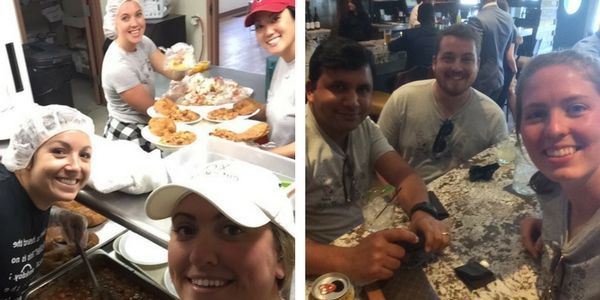
The Ostendio team spent an afternoon in February giving back to the local community by volunteering with the Arlington Food Assistance Center. Ostendio was tasked with bagging food for the Backpack Buddies program. The Backpack Buddies program provides weekend and holiday meal packs for food-insecure Arlington County schoolchildren.
A recent study commissioned by AFAC and conducted by Virginia Tech’s Center for Social Research estimates that as many as 9,400 children in Arlington are food insecure. For many of these children, their lunchtime meal at school is their only meal each day. Over weekends or holiday breaks, these children often go with little to no food. AFAC’s Backpack Buddies program strives to help these children.
The Ostendio Team Volunteering
On Fridays at their school, each child in the Backpack Buddies program is given a backpack filled with nourishment for the weekend. Items usually distributed in the backpacks are ready-to-eat meals, microwave soups, snack bars, fruit cups, shelf-stable milk, fresh produce, and canned vegetables. There is enough food in each pack to feed the child for two days (six meals, plus snacks). Members from Ostendio packed up 200 bags of food.
The Backpack Buddies program runs year-round. AFAC coordinates with all of the Arlington Public Schools as well as several community centers, after-care programs, and summer camps to make sure all children in our community have the food they need when the weekend comes.
The Ostendio team had a great time knowing that they had spent the day helping young children get access to additional food resources. We’re already planning our second volunteer day in August!
You already know about part of Salesforce’s impact in Indiana — the software giant is creating more than 800 new jobs and 500 new apprenticeships, and investing $40 million that’s causing a ripple effect of growth and prosperity in the state’s tech sector.
What you might not know is that thePledge 1% movement, a model of corporate philanthropy inspired by Chairman and CEOMarc Benioff’s 1/1/1 programat Salesforce, has the potential to compound that positive ripple effect through cooperation with other Indiana companies likeAppirio,TorchliteandTrendyMinds.
Founded in 2014 by Salesforce, Atlassian, and Rally, Pledge 1% is a new normal for companies of all stages and sizes to give back to their communities. By pledging just a small portion of future success —one percent of corporate equity, profit, product and/or employee time— these three founding partners proved that the model can have an enormous impact on their local communities, which will be the same for Indianapolis.
Even if you are not quite ready to take the pledge, you canfill out this formto stay in the loop and receive more information about the Pledge 1% movement.
For example, the Salesforce employees in Indianapolis will donate more than 200,000 volunteer hours by the end of this year, mostly within public schools. That massive amount of volunteer time is achieved by employees giving their time simply four hours a month, or a total of six days of paid volunteer time a year that has a huge impact for the schools as well as the employees.
Susan Marshall, Founder & CEO, Torchlite
“People today are looking for meaningful work. They don’t want to just show up and punch the clock,” saidSusan Marshall, founder and CEO of Torchlite. “In order to attract the best talent you have to look at them wholistically as people and help to provide what they need to feel connected to the work they do and really feel like they are making an impact.
“We have found that the Pledge 1% program just naturally brings people together and lets them get to know one another. I think when you find out what people are passionate about it reveals common ground beyond just getting the work done and helps improve collaboration, communication and empathy.”
THE TEAM AT TORCHLITE FOCUSED ON DONATING THEIR EMPLOYEE TIME AS A STARTUP COMPANY PLEDGING 1% TO THE MOVEMENT.
As a two-year-old startup, Torchlite signed up to participate in the Pledge 1% program from the beginning with a focus on donating employee time. Later this summer, however, the marketing tech platform and marketplace company will roll out a new feature in its software that connects freelancers with nonprofits they are passionate about so they can contribute to campaigns through creating content pro bono or at a discounted rate.
As a signatory to the Pledge 1% movement, companies can choose to focus on one aspect like donating employee time or products and services, or they can choose to do a combination or all three — profits, products and time — or even a fourth way via company equity.
Trevor Yager, founder and CEO of TrendyMinds, says that his company chose to commit to all three when they made the pledge a little over a year ago because it was actually something they were already doing and that the Pledge 1% program helped to make it official.
Trevor Yager, Founder & CEO, TrendyMinds
“One of the things I really like about the Pledge 1% program is that they have everything organized,” Yager said. “If you need a letter to send out to your team that says how the program works or how to set it up, they already have a structure in place that makes things so much easier to run.
“We were actually already doing a lot of what we still do today on our own, so for us it was more of a validation than trying to ramp up efforts. We didn’t need to change who we are or what we were doing, but it was a matter of validating our programs and joining forces with our neighbor companies and having an even greater community impact.”
Following its first year of official participation in the movement, TrendyMinds is starting to see most of its employees get involved. According to Yager, Pledge 1% is a very flexible program structure that accommodates doing things together as a company or as individual employees.
Over the course of the year, TrendyMinds provided $220,000 worth of in-kind product and service donation to a single client event as a company (just one piece of their total), but they also incentivize their employees to volunteer on their own. For example, after volunteering 12 hours with the company, one employee earned an additional eight hours of volunteer time off, which he used to take his little brother fishing through Big Brothers Big Sisters of Central Indiana.
“The great thing about Pledge 1% is that It’s not too hard to do; they just give you everything, so especially for small companies and tech companies that have a lot going on sometimes, it can be hard to come up with a program from the ground up. This is a great way to get everything you need to give back and not have such a heavy lift to get started,” Yager said.
Even large companies can adopt the program and sign on to the Pledge 1% movement without having to abandon their established philanthropic programs or their own branding. Appirio, for example, the Indianapolis-headquartered global cloud services company, started its own internal Silver Lining program a decade ago, and also chose to sign on to the Pledge 1% program.
Steve Pruden, SVP Human Resources, Appirio
“We kept the original Appirio Silver Lining branding, which interestingly also was inspired by Benioff’s 1/1/1 model, and it has grown way beyond the basics of the Pledge 1% mantra,” saidSteve Pruden, senior vice president of human resources for Appirio.
“All of our volunteer and philanthropic initiatives flow under the Silver Lining umbrella and so that’s how we brand it internally, but we also make sure we meet our commitments as a company signed on to the [Pledge 1%] movement.”
THE PLEDGE 1% PROGRAM ALIGNS WELL WITH APPIRIO’S OWN INTERNAL SILVER LINING PROGRAM, WHICH OFFERS EMPLOYEES FLEXIBILITY TO VOLUNTEER WITH CHARITIES THEY CHOOSE.
By lining itself up with thousands of other companies, and doing so publicly, Appirio is fulfilling a broader purpose than just selling more services or generating more revenue. The Pledge 1% program helps the company identify culturally with other great companies and it’s a key to holding themselves accountable.
“Whether we are doing things like setting budgets, tracking volunteer time or looking at what types of pro bono technologies we want to offer, we always look to make sure that we are meeting or exceeding our one percent obligation, and most of the time we go beyond it,” Pruden said.
At Appirio, the volunteer hours are measured in the tens of thousands and the amount of money donated through their Pledge 1% affiliated Silver Lining program is in the millions. The company has a Silver Lining program manager based in Indianapolis and champions in every physical office, including Tokyo, Dublin, London and more, as well as in different global regions to make sure its large virtual workforce is thoughtfully engaged.
Pruden thinks the impact of the Pledge 1% movement will dramatically increase in the near term as more Indianapolis-based companies become aware of the program and choose to sign on. “If you look at the combined impact of what all of the Pledge 1% companies are doing globally with just a small one percent pledge of time, product or profits, it’s amazing,” Pruden said.
“When you take a step back and look at what Appirio has accomplished over a decade of doing this and all that we alone have been able to do, it puts it into perspective how big that impact really is when you realize that there are now thousands of companies signed on to the movement having an impact all over the world. It just makes sense that companies like ours and Salesforce and so many others that are doing well are smart to join forces to give back, and the Pledge 1% program is a great way to go about doing it.”
Originally posted: June 28th, 2017
Hiring is hard. We make it easier.
Savvy Hiresis a consulting and workforce development firm that helps companies develop Strategic Internship and onboarding programs for pipeline development.
80% of employee turnover is due to bad hiring decisions. $136.5M/ yr in the US is wasted on bad hires. The result of a poor cultural fit can cost 50-60% the person’s salary. This turnover can be attributed to poor fit, or poor on-boarding/ training tactics. Savvy Hires was created to help.
A Strategic Internship Program, when done correctly, is invaluable to a business’ recruiting strategy and bottom line. The difference between having an intern and hosting a Strategic Internship Program gets boiled down to business objectives – what are the goals for the program, and are they achieved? The most impactful goal of any program is having an intern convert to a full-time hire – studies have shown employees who were interns are 40% more loyal (have higher retention rates) than their peers who were hired at an experienced level. They also have a higher ability to work cross-functionally, and are more likely to be a strong cultural and skill-set fit, because the company and student have an opportunity to evaluate each other during the Intern Program, prior to committing to a full-time offer. Large companies know this – they employ entire teams to create and manage Strategic Internship Programs and have large hiring “classes” that stem directly from their Intern Program. But for mid-size companies who don’t have the internal resources to manage such a program, the ability to hire this way was out of reach, until now.
Enter Savvy Hires. Savvy Hires uses our 3-phase approach to create and execute our Intern to Employee Program. It starts with a deep dive in to company culture, understanding the company’s long-term growth needs (what functions are growing, where will they need talent in the future, etc.), writing job descriptions, and creating advancement paths for the positions. We then work with our client to recruit and evaluate candidates, and build and execute an Intern Program. Our Intern to Employee program usually consists of pre-internship training for Hiring Managers, creating a Mentor Program, Orientation for the students, weekly development and networking events, and a work assignment/ evaluation process. Feedback is integral to any successful program, and we measure success through bi-weekly online 360 reviews with our performance analytics software, as well as formal mid and final program reviews.
Why Pledge 1%
The Founder of Savvy Hires (Felicia Fleitman) knew from the beginning that she wanted a mission tied to her company, and that her company should “give back” to the community in some way. Not only did the opportunity emerge quickly after she launched, but it has even opened a new line of business for Savvy Hires.
It all started at a networking event Felicia attended a few days after launching Savvy Hires. The keynote speaker was Priscilla Arena, Founder of SASI (Suffolk Asperger & Autism Support & Information – www.sasiny,org), and mom of a son on the Autism Spectrum. Felicia immediately “connected” with Priscilla, mother to mother – she was trying to create a better life for her son – every parent can relate to that. Felicia was surprised to learn how challenging it was for parents with children on the spectrum to support their children in public school, find sensory-friendly activities, etc. A new mother herself, Felicia understood how hard it was to be a parent, even more-so when the “system” is working against you. Then Priscilla said something that really struck a chord: over 90% (not a typo) of people on the Autism Spectrum are unemployed or under-employed. Felicia knew she could help. Felicia began volunteering with SASI to conduct job search strategy training to their population, and is working on the candidates’ behalf to help them find jobs. The work is incredibly rewarding – “we’ve volunteered for other things before (raised money for walks, packed gift bags for fund-raising events, etc.), but this is the first time we are using our skillset and business contacts to impact so many people,” Fleitman said.
The volunteer work has also led to a new line of business. Through a connection with SASI, Savvy Hires was retained by the Bridges Program at Adelphi University. The Bridges Program is for students who have been accepted to the University who are also on the Autism Spectrum. Bridges provides an additional layer of support to ease the transition. One of the best Bridges Programs in the Country, they have two national NASPA awards: The Gold Award for the best College Student Health, Wellness, and Counseling support program in the country; and The Grand Bronze Award for the third highest rated program in all categories. They want to build out their job placement program, and hired Savvy Hires to help. “We created relationships with two employers: Northwell Health, New York State’s largest employer) and Enterprise Holdings. Working with Bridges and the employers, we were able to “tweak” the employers’ hiring practices to make them more inclusive for our students, and get the students interview/ career ready. We’ve also provided training for employer staff, and will provide job coaches through the internships as needed,” said Fleitman. The students are working in several functions, including: IT, HR, Research, Marketing, Management Training, and Customer Service.
“As more employers recognize the benefits of having inclusive hiring practices for people on the autism spectrum, I expect this line of business to grow exponentially,” Fleitman said. “And it all started with our volunteer work.”