By Sean Dukes, Owner and CEO of Learnsmarter. Originally published on Medium.
The first time I heard about 1:1:1, the Salesforce philanthropy model, was at Dreamforce Europe 2008. Back then, Salesforce’s visit to London was a two-day event, held at the Barbican Centre. I discovered several interesting things during those two days (including ‘Platform as a Service,’ which sowed the seed for the creation of Learnsmarter), but the 1:1:1 model really made an impression on me — especially when Marc Benioff asked all the not-for-profit customers in the audience to stand up and everyone applauded.
For those of you not familiar with the concept of 1:1:1, it’s a philanthropic model where a business gives 1% of its equity, 1% of its product, and 1% of its time to good causes. Salesforce has done this from the start, and in that time has donated over two million employee hours, hundreds of millions of dollars of product value, and over $160 million in cash grants to good causes around the world.
It’s easy to say that Salesforce can do that because they’re a big company, but smaller companies can deliver on the 1:1:1 model, too.
We were slow starters, but we’ve been steadily moving towards 1:1:1 and I’m proud that in 2016 we finally took the 1% pledge. The thing is, it’s easy to pledge, but it’s action that counts.
1% Equity
The equity bit was done quite some time ago. When we did our first small funding round, we set aside 1% of the shares for the planet and registered this at Companies House. We’ve had a couple of small raises since then and have maintained the 1% stake. It’s pretty simple: what we do is issue one new share to the planet for every 99 we issue to anyone else.
1% Product
Product is even easier and we simply offer a discount for not-for-profits. It’s a minimum of 10% and can be much higher. We can’t directly control our customer mix of course, so the exact percentage of the benefit goes up and down. It has been more than 1% and although it isn’t there right now, we certainly hope that we get back to at least that level soon.
1% Time
Time is the tricky one. I can absolutely see the benefits of sending a group of employees out to work with a charity, but the truth is that our customers would probably notice if nobody turned up for the day. The idea that there are alternatives to having everyone out of the office was introduced to me when I decided to spend the night in a cardboard box.

Trinity Winchester is a charity that works with homeless and vulnerable people in Winchester where we have our offices. I see homeless people every day and wanted to do something positive to help. The ‘Big Sleep Out’ was an easy thing to sign up for and it was even quite good fun. I’m doing it again this year if anyone wants to sponsor me!
The Solution to Our Time Problem: Micro-Volunteering
Chatting to one of the Trinity staff the morning after the Big Sleep Out, I was talking about how we’d like to help more, but that finding the time was a bit of a problem. They explained that there are plenty of ways to contribute that don’t involve a huge time commitment. This is a concept known as ‘micro-volunteering.’
Another thing Trinity does is to provide a hot meal every day to those in need. The supermarket supplies the food for free, but this needs to be delivered. You can volunteer by dropping into Sainsbury’s on your way into work, filling up with half a dozen boxes of produce and then taking these to the Trinity kitchen. If any of my staff do this twice a month and get in 45 minutes later than normal, then they’ve done a great thing and we’ve delivered on our volunteering commitment in a way that we’ll hardly even notice, and that doesn’t negatively impact on our customers.
Of course, not everyone has a car or drives into work, so having got the micro-volunteering idea into my head, I started to search around for other opportunities. These aren’t hard to find.
A Few Other Solutions If You’re Short on Time
One organization looking for help is the UN. I’d always thought that volunteering for the UN would involve traveling to a conflict zone and working with refugees or something like that. It’s a great and incredible thing to do, but not necessarily something that’s very practical for us. However, if you visit unv.org, you can also sign up to volunteer online and access a range of opportunities — there’s plenty of translation work and requests for website builders.
Searching through the options, I came across a project that was a perfect fit for us.
The Tanzania Development Trust has a project that rescues girls who are threatened by FGM and takes them to a safe house. But they have a problem: unbelievable as it sounds, in Northern Tanzania there are almost no reliable maps. The rescuers are unable to reach girls in danger because they simply don’t know how to get there.
To create more effective maps, there’s an open-source mapping project that you can sign up for at crowd2map.wordpress.com. They select an area to work on and divide it into squares, then volunteers pick an unfinished square, overlay it with a Bing map and draw in roads, buildings, and other features. People on the ground in Tanzania add in place names and then the maps are available to use. It’s a simple thing to do, but very useful. Another way to help is to donate your old phones: operatives on the ground need smartphones so that they can participate in the project. If you have phones to donate, then you can contact the trust via their website (they want old laptops, too).
Making a Difference — and Seeing It
We’ve held one team ‘mapathon’ to date, and I’m delighted if any of my staff want to do a bit of mapping for an hour or so on any given day. What’s great, apart from the fact that it’s a really good cause, is that you can donate as much or as little time as you have and you’re making a difference: more girls were rescued last year and mapping played a direct part in that.
The final thing is to make sure we meet our target. You’ve probably heard the expression ‘what gets measured gets done,’ so of course we have built an object in Salesforce and a simple dashboard to measure this.
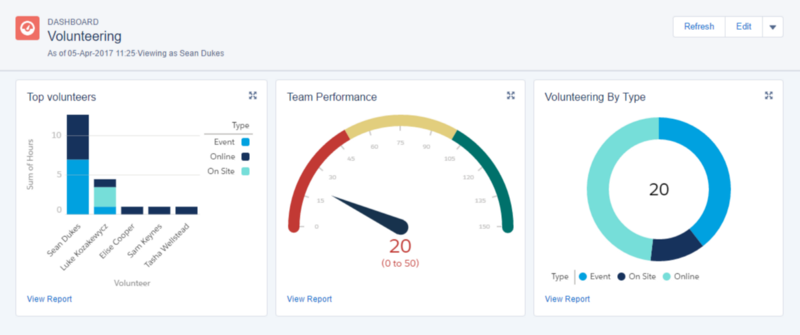
When we pledged 1%, we were signing up to an ideal without a clear idea about how we were going to deliver. Micro volunteering has given us the tool we needed to turn that aspiration into action. I’m not just proud to have pledged; I’m proud of what we are achieving too.
Originally published by Tim Smith, Director of Innovation Partnerships and Pledge 1% Boston on the Boston Foundation blog.
Brendan Ciecko is the founder of Cuseum, and a proud early member of Pledge 1% Boston. Growing up in Massachusetts, he got his entrepreneurial start as a teenager and has always been dedicated to making our region more vibrant and engaging. Brendan built and scaled a successful company in the fast-paced music industry and was named one of America’s top entrepreneurs by Inc. Magazine – all before he could legally buy a drink.
In his 20s, his attention turned to museums. “Museums should be easy to access and enriching for all,” says Brendan, who is driven to help museums improve their digital engagement. As more visitors turn to their smartphones, Cuseum enables museums to offer a “digital docent” to meet this demand and improve visitor experiences. Founded in 2014, Cuseum can now be found in some of the most renowned institutions in the world, including the Museum of Fine Arts Houston, Asian Art Museum in San Francisco, and the Institute for Contemporary Art in Boston. Cuseum recently launched a new digital membership fulfillment product to help institutions save time and money as well as increase member renewals and satisfaction.
As part of its mission, Cuseum has also developed tools to help museums address accessibility and inclusion with the support of multiple languages, assisting in mitigating a common barrier for diverse populations. Additionally, Cuseum has introduced elastic pricing models that make it possible for organizations of every shape and size to take advantage of their platform.
Early backers of Cuseum include Paul English (a fellow Pledge 1% Boston member), Techstars, Boston Syndicates (BOSS) and a lineup of savvy and successful tech industry leaders and investors. As Brendan has supported various nonprofits and community initiatives throughout his life, joining Pledge 1% Boston was an easy decision.
“As entrepreneurs and problem-solvers, we have an obligation to give back and drive positive change around us” he explains. Making the decision to pledge 1% toward the common good was totally aligned with the goals and culture of Cuseum.”
Brendan is also an emerging thought leader around ways that the nonprofit community can look to the innovative models of accelerator and incubator programs. Check out his recent opinion piece in TechCrunch.
5 Fun Facts About Brendan & Cuseum:
- Brendan has a Platinum record for his work with OneRepublic.
- Cuseum’s office is filled with whimsy… including artwork by Gary Baseman and Boston artist Pat Falco.
- Brendan is a graduate of the “School of College Dropouts.”
- At the age of 19, Brendan managed an alternative hip-hop group signed to Warner Bros. Records.
- Brendan is married to his high-school sweetheart and fellow do-gooder, Elizabeth Dobrska, who is Managing Director of TUGG and a member of the Boston Foundation’s Innovation Economy Leadership Council.

Originally published on FinExtra.
Today The Upside Foundation, a national charity that makes it easy for early-stage or high-growth Canadian companies to give back in a meaningful way, announced the launch of their campaign, 150×150: Turn Equity Into Charity.
The campaign aims to grow the number of companies who have pledged to give back to 150, as we celebrate Canada’s 150th birthday. Canadian startups who make the pledge will donate a small portion of their equity to The Upside Foundation (typically in the form of stock options), which are converted to cash upon a liquidity event and donated to the charity of the company’s choosing. The Upside Foundation is also announcing several prominent Canadian startups who have taken the Upside pledge, including Wattpad, the Toronto-based entertainment company for original stories, as the first company to kick-off the 150×150 challenge.
“The Upside Foundation provides an easy solution for both early-stage startups and high-growth companies who want to give back but don’t necessarily have the time or money,” said Rob Antoniades, Board Chair and Co-founder of The Upside Foundation. “Through this national campaign, we hope to empower 150 Canadian startups to take the pledge to donate a portion of their equity and help build a stronger future for Canada.”
The Upside Foundation is partnered with Pledge 1%, a global movement founded by the Salesforce Foundation and others to inspire companies around the world about the benefits of early stage corporate philanthropy. Through Pledge 1%, over 1800 companies have donated one per cent of their equity, people or product to charity. In Canada, over 75 companies have already taken the Upside pledge, including Hubba, which raised Series B in funding in December 2016. New members include Wattpad, Wealthsimple, and Overbond, with additional members to be announced leading up to Canada’s 150th birthday.
“At Wattpad, we believe startups aren’t just about profits, they’re about giving back to communities, at home and abroad. We’ve already made a remarkable impact on millions of people’s lives around the world. Today, we pledge to join the 150×150 campaign to demonstrate our continued commitment to positive social impact,” said Allen Lau, Wattpad co-founder and CEO. “Whether you’re in the early stages or a well-established start-up nearing exit, it always makes sense to support charities that serve your users and mean something to your team. If you haven’t already joined the Upside Foundation, what are you waiting for? Join the 150×150 campaign today!”
Any Canadian startup or private high-growth company can take the Upside pledge by committing stock options or warrants that will be converted to cash at the time of an exit or IPO, and donated to a registered Canadian charity.
“I’ve always believed in giving back to the community,” said Vuk Magdelinic, CEO of Overbond. “I’m proud that we have now found a way to make Overbond’s success mean that charities in the community will win alongside us.”
To date, there have been two exits from the Upside network, including BlueCat Networks, which sold for $400 million in February 2017; BlueCat CEO, Michael Harris donated the proceeds from a portion of his stock options to the Enbridge® Ride to Conquer Cancer® benefiting the Princess Margaret Cancer Centre. The first company to exit was Understoodit, who was acquired by EventMobi in 2013 and donated their equity proceeds to the East York Learning Experience and Mentoring Junior Kids Organization. The Upside Foundation is led by a coast to coast Board of Directors and Advisory Board of industry leaders and partners with leading incubators, accelerators and investors – creating a supportive community for members to be a part of.
“People work at startups because they want to effect change, and the Upside Foundation enables startup employees to have a meaningful impact on their community,” said Mike Katchen, founder and CEO of Wealthsimple. “Our team is proud to join the 150×150 challenge.”
How Companies Can Take the Pledge
The Upside Foundation encourages Canadian companies to join those who have already taken the pledge.
1. Companies will need to fill out the online pledge form found on The Upside Foundation’s website and a representative will be in touch.
2. Once the pledge form is received, companies will receive detailed instructions on how to contribute from an ESOP (employee stock ownership plan) or a simple legal form, with flexibility depending on the stage of the company.

Originally published on the Upside Foundation blog.
From the Upside Foundation Team:
Today we are excited to announce the launch of 150×150: Turn Equity Into Charity, our campaign to double our membership to 150 companies as we celebrate Canada’s 150th Birthday. We are also announcing several prominent Canadian startups who have taken the Upside pledge, including Wattpad, Wealthsimple and Overbond, as well as our second exit resulting in funds going to charity.
“The Upside Foundation provides an easy solution for both early-stage startups and high-growth companies who want to give back but don’t necessarily have the time or money,” said Rob Antoniades, Board Chair and Co-founder of The Upside Foundation. “Through this national campaign, we hope to empower 150 Canadian startups to take the pledge to donate a portion of their equity and help build a stronger future for Canada.”
Wattpad, the Toronto-based entertainment company for original stories, is the first company to kick off the 150×150 challenge.
“At Wattpad, we believe startups aren’t just about profits, they’re about giving back to communities, at home and abroad. We’ve already made a remarkable impact on millions of people’s lives around the world. Today, we pledge to join the 150×150 campaign to demonstrate our continued commitment to positive social impact,” said Allen Lau, Wattpad co-founder and CEO. “Whether you’re in the early stages or a well-established start-up nearing exit, it always makes sense to support charities that serve your users and mean something to your team. If you haven’t already joined the Upside Foundation, what are you waiting for? Join the 150×150 campaign today!”
Over 75 companies have already pledged to give back with the Upside Foundation. Recently, we had our second exit when BlueCat was acquired for $400 million. BlueCat CEO, Michael Harris, had previously pledged to donate proceeds from a portion of his own stock options to the Upside Foundation. The funds have been distributed to the Enbridge® Ride to Conquer Cancer® benefiting the Princess Margaret Cancer Centre, a 200-kilometre cycling trip which Michael is participating in- read more here.
We’re looking forward to working with our members, partners and supporters to grow the number of companies who have committed to giving back to communities in Canada to 150. Stay tuned for campaign updates over the coming months, including new members, events, and opportunities to join the movement.
Vuk Magdelinic, co-founder and CEO of Overbond, a primary bond issuance platform, said, “I’ve always believed in giving back to the community, and I’m proud that we have now found a way to make Overbond’s success mean that charities in the community will win alongside us.”
Any Canadian startup or private high-growth company can take the Upside pledge by committing stock options or warrants that will be converted to cash at the time of an exit or IPO, and donated to a registered Canadian charity.
“People work at startups because they want to effect change, and the Upside Foundation enables startup employees to have a meaningful impact on their community,” said Mike Katchen, founder and CEO of Wealthsimple. “Our team is proud to join the 150×150 challenge.”
How Companies Can Join the 150×150 Challenge
The Upside Foundation encourages Canadian companies to join those who have already taken the pledge.
- Companies fill out the online pledge form and a representative will be in touch.
- Once the pledge form is received, companies will receive detailed instructions on how to contribute from an ESOP (employee stock ownership plan) or a simple legal form, with flexibility depending on the stage of the company.
Others looking to get involved with the Upside Foundation and our 150×150 campaign are invited to check out www.upsidefoundation.ca/150×150/ or reach out at info@upsidefoundation.ca to connect with us.
ABOUT WATTPAD
Wattpad, the global multiplatform entertainment company for original stories, transforms how the world discovers, creates, and engages with stories. Since 2006, it has offered a completely social experience where people everywhere can participate and collaborate on content through comments, messages, and multimedia. Today, Wattpad connects a community of over 45 million people around the world through serialized stories about the things they love. As home to millions of fresh voices and fans who share culturally relevant stories based on local trends and current events, Wattpad has unique pop culture insights in virtually every market around the world. Wattpad Studios co-produces stories for film, television, digital, and print, to radically transform the way the entertainment industry sources and produces content. Wattpad Brand Solutions offers new and integrated ways for brands to build deep engagement with consumers. The company is proudly based in Toronto, Canada.
ABOUT WEALTHSIMPLE
Wealthsimple is a new kind of financial advisor — one that’s intuitive, affordable, and human. They provide world-class, long-term investment management without the high fees and account minimums associated with traditional investment managers. They invest your money in a globally diversified portfolio of low-cost index funds modeled after the same Nobel Prize-winning research used by the world’s savviest investors.
ABOUT OVERBOND
Overbond is transforming how global investment banks, institutional investors, corporations and governments connect and access the primary fixed income market. Overbond’s fully-digital platform for primary bond issuance eliminates inefficiencies, provides higher transparency, optimal price discovery, and investor diversification for all counterparties in the primary bond market.
ABOUT THE UPSIDE FOUNDATION
The Upside Foundation of Canada is a registered charity. The Foundation provides an innovative corporate philanthropy platform to help Canadian startups and high-growth companies “Share the Upside”. Since startups’ cash is scarce, as is time, the Foundation makes charitable giving quick, easy and cash-free.
The model is powerful: Earlier-stage and high growth private companies pledge stock options or warrants to the Upside Foundation. When the company has a liquidity event (e.g., IPO, acquisition), the Foundation monetizes the options and donates the proceeds to registered Canadian charities selected by the donors (and approved by the Foundation).
Originally published by Julia Frers-Karno, March 28, 2017 on the Yoobi for Business blog.
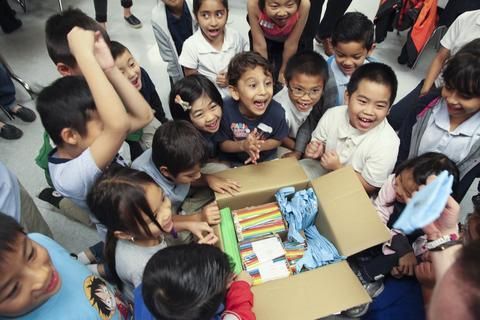
School Supply drives are growing more and more popular each year, they are such an incredible way to support kids who would otherwise start their school year off without the supplies they need to succeed. However, while most school supply drives are well-intentioned, they often have shortcomings – leaving it up to the donor to go out and purchase random items, which often results in oversupply of some things while failing to provide other critical items.
This year, Pledge 1% member Yoobi wants to eliminate the challenge of putting on a backpack drive with our a turn-key program that not only makes it simple to donate, but ensures all kids get the supplies they need.
INTRODUCING THE ALL NEW YOOBI BACKPACK DRIVE BUNDLE
With the purchase of this essential bundle, you can now easily donate all the supplies kids need for school. The best part is, through Yoobi’s One for You. One for Me. program, Yoobi will donate an additional school supply item for every item purchased, effectively DOUBLING THE IMPACT of any school supply drive. Pretty cool, huh?
WHAT GOES INSIDE?
Yoobi has built out this incredible backpack bundle with awesome essentials that will help kids start their year out right! Each backpack bundle contains the following items:
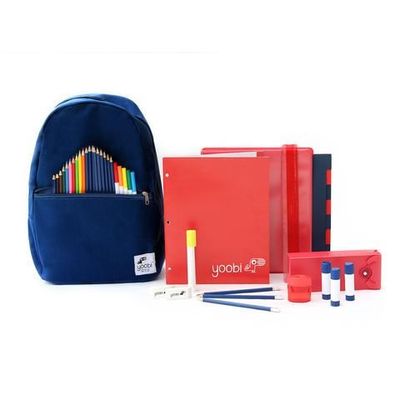
*Actual items in the Backpack Drive Bundle may vary from what’s pictured based on availability.
- BACKPACK
- 1” BINDER
- 8 TAB DIVIDERS
- POCKET FOLDER
- 2 PENCILS, 6 PACK
- COLORED PENCILS, 10 PACK
- HIGHLIGHTER
- GLUE STICK, 3 PACK
- PENCIL SHARPENER
- 12 “RULER
- ERASER, 2 PACK
- THIN WASHABLE MARKERS, 5 PACK
- PENCIL CASE
HANDS ON APPROACH:
One of the best parts of Yoobi’s Backpack Program, is that your employees can be involved. For example, they’ll ship all the supplies to your office, and your employees can work together to stuff each of the backpacks with the school supplies. Once you’re done with the packing party, have your employees join when you go to a school or organization to make the actual donation. There’s nothing like being hands-on when it comes to giving experiences. For some ideas, watch how we give here!
To learn more about Yoobi’s backpack program, please visit:
https://www.yoobiforbusiness.com/pages/backpack-drives or connect directly with our Yoobi reps at business@yoobi.com
Make today a good day to give.

Originally published in The Australian.
When Atlassian co-founder Scott Farquhar was in his 20s, he and his girlfriend made a four-hour trip from Ho Chi Minh City in Vietnam to visit a school.
Farquhar had been inspired to visit the school after reading a book by former Microsoft executive John Wood called Leaving Microsoft to Change the World.
One of the students, an eight-year-old girl, hugged them and burst into tears, thanking them for the support they were being given by the charity, Room to Read, which was founded by Wood. “Without you giving money and the help from Room to Read we wouldn’t have had an education,” the girl told them.
“It was somewhat embarrassing,” Farquhar recalls in an interview with The Weekend Australian, “as we hadn’t actually given anything. But from then on, we said, ‘How can we help this organisation?’ ”
Soon after, when Farquhar and his university friend Mike Cannon-Brookes founded their software company Atlassian in 2002, they decided that giving money to charity would be part of the DNA of their organisation.
Room to Read, which supports children’s education programs in developing countries, particularly in Asia, has remained one of their favourite charities, receiving more than $8.5 million from Atlassian, which has turned into a global software giant.
But their idea was to take a more systematic approach to corporate giving, which eventually turned into what Farquhar calls the One Per Cent pledge.
“About 10 years ago we decided (we would) give away 1 per cent,” he says. “We would give away 1 per cent of our equity to charity, 1 per cent of our profits, 1 per cent of our products and 1 per cent of our employee time.”
At the time, Atlassian’s equity was not worth much. But now it is a public company, having listed on the US Nasdaq in December 2015 and with a market capitalisation of $8 billion, that 1 per cent is worth about $80m.
“Back then, when we decided to do it, we didn’t have many employees or products or even revenue,” Farquhar says. “So it was 1 per cent of almost nothing. But over time it has grown.”
The 1 per cent pledge taken by Farquhar and Cannon-Brookes, now both 37, has evolved into a broader philanthropic movement. About two years ago Farquhar came together with like-minded US tech entrepreneurs, including Salesforce chief executive and founder Marc Benioff and Rally Software founder Ryan Martens, to form Pledge 1%.
“We said we have all got similar minds around this. We have all done some permutation of giving away 1 per cent,” Farquhar says.
“How about we codify this and try to get more companies to join?
“Since then around 2000 companies have signed the pledge, including 70 of our ecosystem partners. It’s now starting to get momentum,” Farquhar adds.
Farquhar says the pledge involves companies agreeing to give 1 per cent of their equity, 1 per cent of their employee time and 1 per cent of their products to charity or a philanthropic foundation. Some also give 1 per cent of their profits, as Atlassian does.
He says the goal is to encourage entrepreneurs to think about “giving back” from the time they start their company instead of waiting until later in life when they have made their money. “The old school model of giving is that you work until you have got grey hair, you retire and give your money away,” he says. “But people of my generation and younger want to give back throughout their lives. When Mike and I started Atlassian it was a core part of what we wanted to do.”
Farquhar says Atlassian’s policy of supporting charities and giving employees time off to support their own causes has helped in attracting talented staff.
“When we made the pledge we told our staff about it and made a big public commitment to giving back,” he says. “Over time we have given away $12m in cash, some $90m worth of our own software products and 20,000 hours in employee time.”
The money that has gone to the Room to Read charity, which helps children in developing countries learn to read, has helped more than 260,000 children.
“For our employees, it is one of the top three reasons why they work here,” he says. “When you talk to them, a commitment to philanthropy is almost always in the top three reasons they give for choosing an employer. It has been a huge benefit in attracting staff.”
Atlassian’s workplaces, which include offices in Sydney, London, San Francisco and Austin, Texas, are regularly voted in the ranks of top places to work in their field.
Farquhar argues that if entrepreneurs pledge to give 1 per cent of their equity to charity when they are starting out, the amount being given can turn big as they grow. “If all the unicorns (US tech companies worth more than $1bn) gave just 1 per cent of their equity, it would be worth almost $10bn. It could make a huge impact.”
The Atlassian Foundation is already one of the largest philanthropic foundations in Australia with assets of more than $60m.
Farquhar says his goal would be for every company starting out to automatically include the decision to give 1 per cent of their equity to charity as part of their articles of incorporation.
“If people did that they would be able to change the way philanthropy works,” he says. “Every company will do things differently, but we all agree that the world would be a better place if people in business gave back on a more organised basis and did not wait until they were old.”
Farquhar says Atlassian sends a group of people to Cambodia each year to see children in schools supported by Room to Read. It also encourages its staff to donate to charities or the foundation, with a “dollar a day” program where donations can be automatically deducted from their pay.
He says the company has supported several different charities by giving away its software, which helps team-based work.
This has included helping a US organisation called Mercy Ships, which operates a ship fitted out as a floating hospital that visits Africa to provide healthcare and medical assistance. Other groups that have been given its software include the American Red Cross and the Wilderness Society. In Australia, it has worked with a range of not-for-profits to help them set up websites and campaigns, while some staff volunteer to teach at school holiday computer science camps and work with Habitat for Humanity.
Farquhar says the company’s staff will often have their own charities, including a cancer charity that was supporting one of its own employees who had cancer.
He says he and Cannon-Brookes are passionate about helping children’s education.
“We are incredibly lucky to be born in Australia in this day and age,” he says. “And we were lucky to have a good education. We believe that every human life is equal and we want to give back to help a lot of other people who haven’t had the opportunities that we have had.”
Farquhar says there is a need for companies to step up philanthropy to help fill a gap by the declining role of churches and some other social groups. He says people may be working longer and don’t have as much free time to devote to community organisations but they still want to support charities in their own way.
The company recently hired Mark Reading, the former head of PwC’s Australian foundation, to run the Atlassian Foundation.
Reading says Atlassian’s culture was part of the attraction in taking on the job.
“Because Mike and Scott took the pledge so early in the Atlassian journey — and because Atlassian has subsequently been so successful — the foundation is now one of the most well resourced corporate foundations in Australia,” he says.
“At Atlassian we see huge potential in both business and education as a force for good. That’s why we’re so committed to growing the Pledge 1% movement and changing the way Australian businesses approach corporate philanthropy.”
Farquhar says the Pledge 1% movement also includes providing assistance to other companies to set up their foundations and charitable giving programs. Donors need to see there is return on equity for their investments and that the funds are well managed.
He says his goal is to see the 2000 companies around the world supporting Pledge 1% expand to more than 10,000 companies. “We have 2000 companies, which is an incredible achievement, but in terms of the number of companies in the world, we are really only getting started,” Farquhar says.
He says it is important that the commitment to give 1 per cent is made when the organisation is just starting out.
“There is an element of making the pledge when you have nothing so when it grows you wont have to worry about it,” he says.
“It is easy to plant a seed when it is small, but it is harder to plant a big tree. But if you plant a seed it can grow and you can change the landscape.”
To read the original article, visit Fortune Magazine. Photo credit: Duy Ho Photography.
It might be common for corporations to make charitable donations. But a few companies go above and beyond with their philanthropic work, with initiatives like food drives, cancer walks, and even volunteer bonuses. Fortune partner Great Place to Work combed through more than 350,000 staffer surveys to compile this list of the U.S. companies employees feel are doing the best job at giving back. Employees are asked detailed questions about how proud they are of their impact on the community, the difference they feel they make, and whether their work has special meaning. Outtakes of their responses are below.
Click here to read more about the list, and find out more about how the ranking is compiled here.
#1 Salesforce
Employees say: “This is an extraordinarily special place that really cares about its employees, customers, and community. We are strongly encouraged to give back. I have done everything from volunteering in a soup kitchen, to working at a children’s hospital in Morocco—all supported by the company. Most importantly, I look forward to coming to work everyday, working with our wonderful community, and doing satisfying, challenging work.”
“The thing I think that most separates Salesforce from other companies is the focus on giving back. Personally, it provides me with a greater sense of purpose when I come in each day.”
Worldwide Employees: 22,070
Industry: Information Technology
HQ location: San Francisco
Total Philanthropic Donations: $137,000,000
Offers PTO for Volunteering: Yes
Offers Employee Matching Funds: Yes
Learn more in the Great Place to Work review here.
Originally posted: February 9, 2017
Originally published on the RFPIO blog.
There’s no better way to ring in the new year than by inspiring others to give. As a local company, RFPIO understands the importance of community. Now they are paying it forward in a different way. To kick off 2017, the RFPIO team is giving back to our amazing community with a Q1 initiative…
RFPIO has talked a lot about ROI in the business world, focusing on what the ultimate reward will be for the effort we put in. The “ROI of Compassion” puts a little twist on the concept we know well, by channeling the return back into the community for the generosity we invest.
As Salesforce partners, RFPIO works with Pledge 1% to participate in the culture of giving. Though it was challenging to pick just one cause—as there are so many important causes in need of resources—the RFPIO team has decided to pledge their 1% community involvement to the Oregon Food Bank.
Did you know that January is one of the most challenging times for food banks? Giving drops significantly after the holidays—so let’s change that by bringing some warmth and cheer to the people that need it this time of year.
Oregon Food Bank takes a holistic approach to ending hunger by bringing our community together to provide food, education and hope to our neighbors in need.
Last year, the Oregon Food Bank Network distributed more than 1 million emergency food boxes to people facing hunger throughout Oregon and Clark County, Washington. On a monthly basis, Oregon Food Bank helps 1 in 5 households struggling with hunger.
It’s time to add value back into our community with a little time and kindness. We hope you’ll join RFPIO’s culture of giving through mid-February, so they can make a bigger impact on Oregon Food Bank’s needs.
Ready to join the ROI of Compassion initiative?
Donate online at Oregon Food Bank!
Every $10 donation provides 30 meals.
OR…
Stop into the RFPIO office and donate food to our bin at:
1915 NW Amberglen Pkwy #400
(Regus Building)
Beaverton, OR 97006
Originally posted: January 25, 2017
By Tommy Jarvis, FinancialForce4Good Council Chair
Here at FinancialForce, I can’t think of a better way to celebrate the closing of our 2016 volunteerism efforts than to announce our formal commitment to the Pledge 1% community and their efforts to build a movement of corporate philanthropy.
From its inception in 2009, corporate social responsibility, and the philanthropic leadership of the 1/1/1 model led by Salesforce, has been a top priority for FinancialForce. This was viewed on day one when our co-founder and CEO Jeremy Roche initiated FinancialForce4Good, the philanthropic wing of FinancialForce. The vision of this initiative has always been rooted in the belief that we are stronger and more effective when we work together. Therefore, FinancialForce, via FinancialForce4Good, is committed to provide our employees and non-profit partners the resources to maximize the collective impact of their efforts.
Over the past seven years our work to address social causes in our communities and improve lives of others by harnessing the talents, passions, and generosity of FinancialForce employees, partners, and customers has grown tremendously. Whether it was collaborating with our closest partner Salesforce on a number of events (ranging from a National Park cleanup in the San Francisco Bay Area, the Wine to Waves Ride to benefit MS research, or processing food at the Central Texas Food Bank) or raising funds for some of our beneficiary NPO partners (ex. St. Jude Children’s Research Hospital in the US or St. Michael’s Hospice in the UK), we are committed to making a positive impact in our communities.
Recently FinancialForce has taken a number of exciting steps to ensure that we are maximizing that impact. First, we have formally “Taken the Pledge” to commit to giving at least 1% of our employee time for our community. This has long been a goal of ours, but we wanted to formalize this commitment via Pledge1Percent.org not only to celebrate our current efforts, but also to collaborate with other pledged members to grow our Pledge of 1% to equity, profit, and/or product in the future.
Second, and perhaps most importantly, FinancialForce4Good has put forth a new charter of our philanthropic efforts. Now, for the first time since its founding, FinancialForce4Good will be governed by a diverse group of employee volunteers. Tasked with maximizing the resources we provide our employees and partners to achieve the most impact, the Council took on the unique experiment to ask our employees directly where we should focus these efforts and we collectively selected Underserved Youth Education to focus the majority of our efforts.
In conclusion, it is an exciting time to be at FinancialForce and we are excited to leverage the continued leadership of the Pledge 1% corporate community and our partnership with Salesforce to achieve even greater philanthropic success in 2017.
Originally posted: November 30, 2016