Original article here
Author: Pinterest
At Pinterest, our mission is to bring everyone the inspiration to create a life they love—and that includes fostering spaces where young people feel connected, supported and cared for. Over the past year, Pinterest has been leading a groundbreaking collective initiative called the Hidden Healing Fund, focused on uplifting cultural healing practices that center the mental health and wellbeing of youth.
Reimagining healing for young people
For many young people, especially in marginalized communities, traditional pathways to mental health support remain too often out of reach—whether it’s long wait times, difficulty finding culturally competent care, negative experiences or high costs. The Hidden Healing Fund exists to bridge these gaps by celebrating and supporting “hidden healing” practices: art, music, movement, rituals, nature and other practices rooted in community, connection and culture.
“Hidden healing” isn’t a new concept—it’s an acknowledgment that communities have long drawn on their own traditions as vital sources of strength and restoration. These practices offer innovative ways to foster belonging, resilience and hope, especially for young people navigating today’s complex world.

A collective model for change
Pinterest is honored to stand alongside SHOWTIME/MTV Entertainment Studios, lululemon and The Starbucks Foundation in steering the Hidden Healing Fund. Importantly, two community and youth-led organizations, Culture Therapy and Hidden Healers, are informing and stewarding the fund. Together, through collective dialogue, learning and decision-making among corporate brands, community partners and young people, Pinterest is proud to support this shared commitment to championing culturally-led approaches to youth wellbeing.
In a recent milestone, the Hidden Healing Fund awarded $1.1 million in grants to community organizations using their methods to support the wellbeing of young people in the US & UK. This significant investment enables grassroots groups to expand their reach and deepen the impact of their culturally-grounded mental health programming.
The Hidden Healing Fund is inspired by MTV’s “Hidden Healers” campaign, a first-of-its-kind digital video series that showcases the many pathways to healing that exist outside of traditional therapy rooms. By spotlighting different communities’ worlds of care—from drum circles to ancestral rituals to expressive arts—these stories illustrate the power of community-based healing.
Building a more accessible future
As a brand, we know inspiration begins when everyone feels seen and supported. The Hidden Healing Fund is a natural extension of Pinterest’s ongoing efforts to increase accessibility to mental health resources and innovative models of care. We’re inspired by the creativity of our communities and believe that healing should never be a privilege, but a possibility for everyone.
Brands and organizations committed to improving youth mental health are invited to join in, combining resources and expertise to champion new solutions for the next generation. The Hidden Healing Fund is just the beginning of what’s possible when we come together to reimagine how care, connection and culture can drive healing forward.
Author: Reia
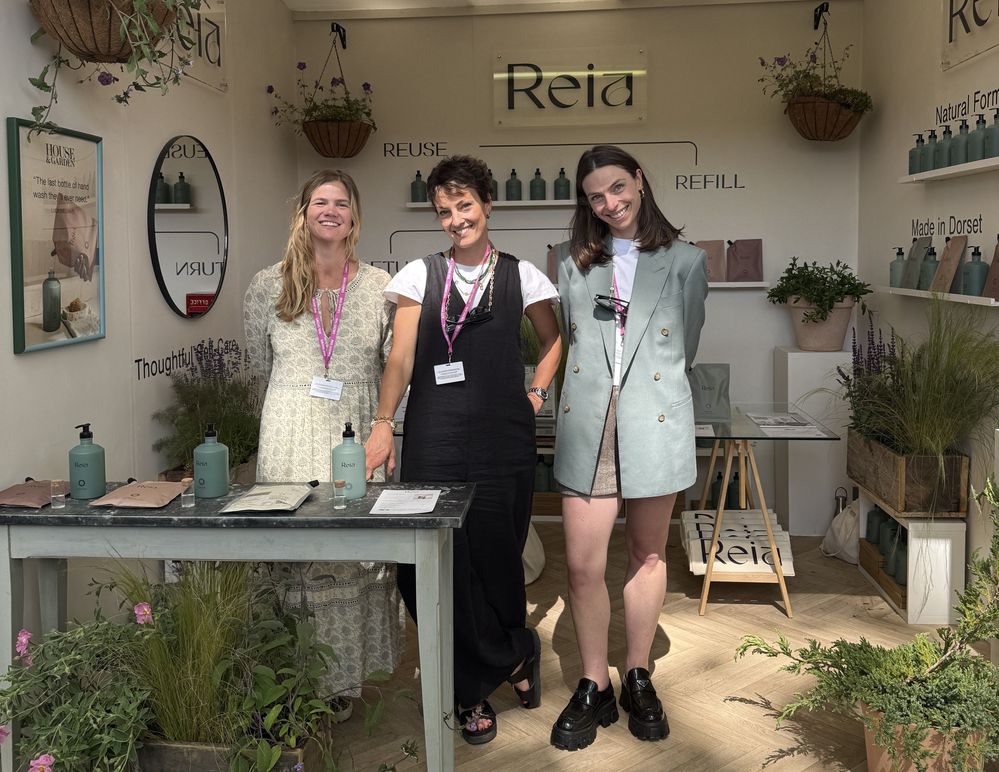
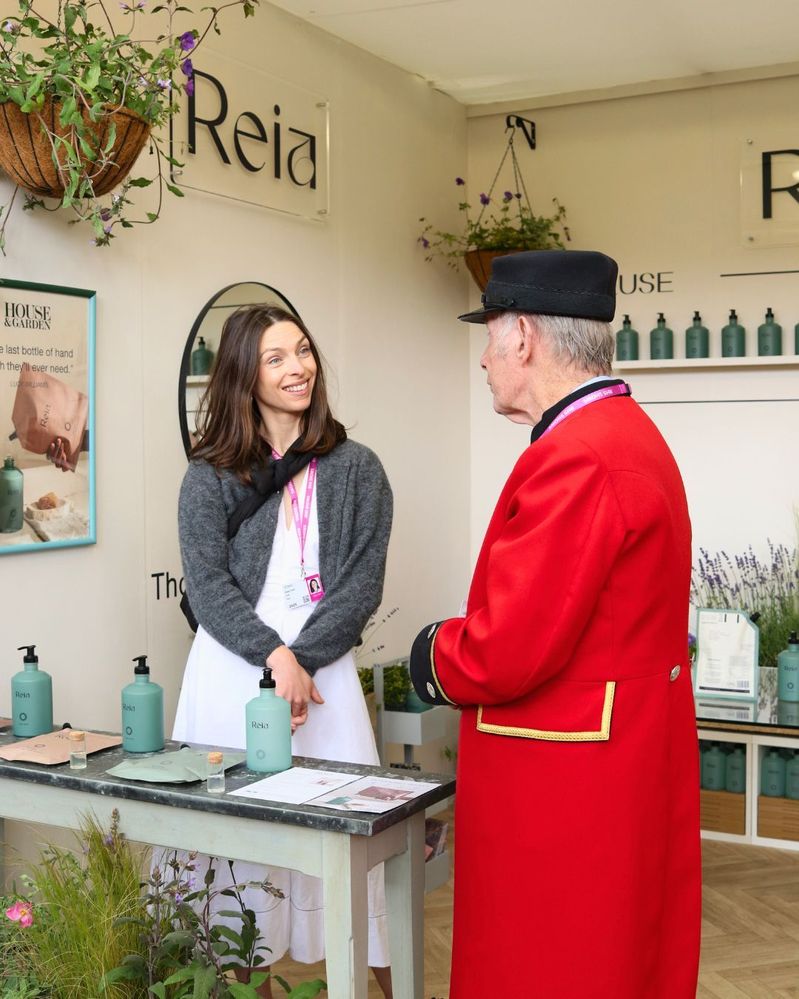
For our debut at RHS Chelsea Flower Show, we wanted to go beyond showcasing our products – and also use the platform to give back. As part of our Pledge 1% commitment, we partnered with We Are Grow, a community-led agroecological farm in North London.
Grow works with students from The Totteridge Academy, offering hands-on outdoor learning that nurtures connection to nature, food systems, and mental wellbeing. Through their programmes, they engage children, young people, and families who face barriers to education, wellbeing, and employment – using regenerative farming, nature-based education, and community workshops to build resilience and connection.
To support their incredible work, we donated 5% of all sales made at the Chelsea Flower Show to Grow. We’re also donating our plants from our stand to their site – some will find a new home in the Apiary Garden, others will be added to their agroforestry strips – ensuring the spirit of the garden lives on long after the gates have closed.
Our stand was designed in collaboration with garden designer Lottie Delamain, who helped translate the aromatherapeutic qualities of our three scents – SILVA, VERDE and FEN – into a layered, sensory planting scheme. Through soft herbs, textured foliage and thoughtful composition, the space brought our nature-led ethos to life.
At Reia, our mission is simple: to make it easier for people to care for themselves and the planet, without compromise. Supporting organisations like Grow is one of the ways we’re bringing that mission into action through Pledge 1%.

Original article here
Author: Savvycom – Software Product Development
We’re thrilled to announce that we have joined Pledge 1%, a global movement that encourages businesses to give back to their communities. This initiative has the participation of major technology leaders such as Slack, Atlassian, Canva, and Salesforce, all leveraging their success to drive meaningful social impact.
Why This Matters
In many underserved communities, young people face significant barriers to education due to financial constraints and limited access to quality learning opportunities. At Savvycom, we recognize the importance of investing in the future workforce by creating pathways for students to explore, learn, and grow.
Over the years, we have actively contributed to this mission through our CSR efforts. By joining Pledge 1%, we are further solidifying our commitment to making a lasting impact on education and youth development, as we continue to pursue our goal of sustainable development.
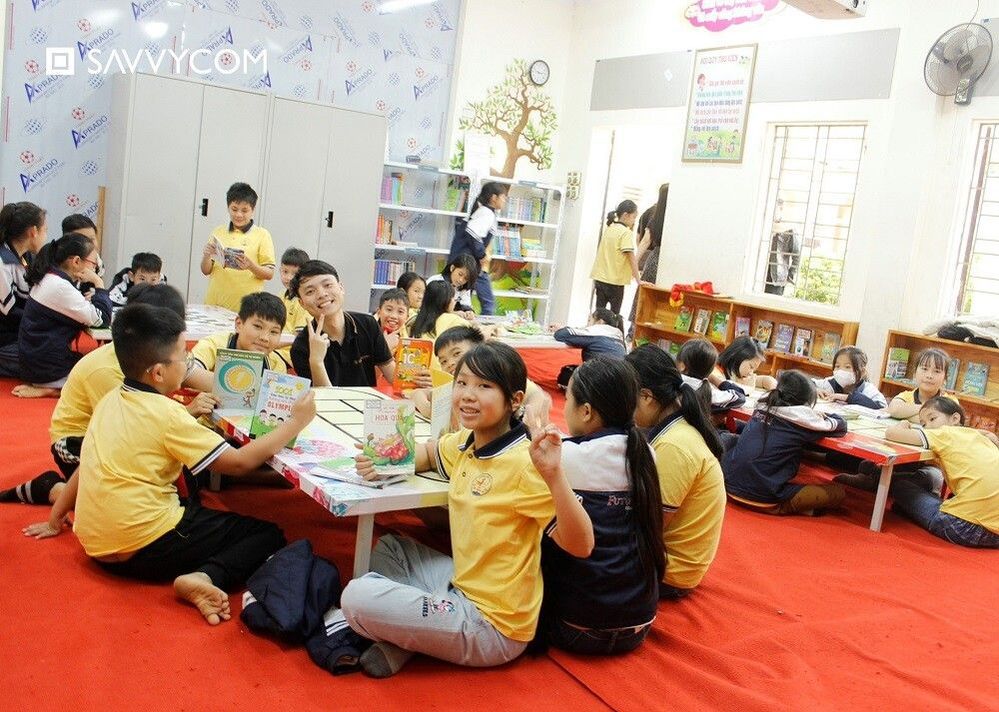
Savvycom’s Dream Bookshelf Program
“Since the very beginning, Savvycom has been committed to giving back, integrating social responsibility into our business journey. Success isn’t just measured by growth, but by the impact we create in our communities.” – Ms. Van Dang, founder and CEO of Savvycom.
Our Commitment to the Next Generation
Through our participation in Pledge 1%, we are commiting to donate 1% of our profit:
- Enhancing education quality by providing essential learning materials and equipment.
- Creating opportunities for young talents by offering scholarships and mentorship programs in technology.
- Contributing to sustainable development by fostering a knowledgeable and skilled workforce for the future.
We encourage other businesses to join Pledge 1% and make a meaningful impact. Whether through donating profit, products, equity, or employee time, every contribution helps build a more equitable and innovative world.
About Pledge 1%
Pledge 1% is a global movement that inspires and empowers entrepreneurs, companies, and employees to be a force for good. With over 18,000 members across 100+ countries, the initiative has generated more than $500 million in new philanthropy. To learn more or to take the pledge, visit www.pledge1percent.org.
At Savvycom, we are excited about this journey and look forward to making a lasting impact – one step at a time. Together, we can shape a brighter future for the next generation!
Original article here
Author: Sirocco Group
At Sirocco, we believe that businesses have a profound responsibility to drive positive change in the world. Today, we are thrilled to announce the renewal of our commitment to the Pledge 1% initiative, a global movement that inspires companies to dedicate 1% of their equity, profit, product, and employee time to causes that matter most. This pledge is not merely a corporate obligation; it is a reflection of our core values and an integral part of our mission to make a meaningful impact.
The Impact of Pledge 1%
Since its inception, Pledge 1% has grown into a global community of over 19,000 companies across more than 130 countries, collectively igniting over $2.4 billion in philanthropy through equity commitments alone. This movement provides a flexible framework, allowing companies to contribute in ways that align with their unique strengths and resources, whether through volunteer efforts, product donations, or financial support. By integrating social impact into our business model, we aim to empower communities and foster a sense of purpose that resonates throughout our organisation.
Volunteer Time Off: Making an immediate difference
A cornerstone of our commitment is our Volunteer Time Off (VTO) program, inspired by Salesforce’s model (which offers employees seven paid days of VTO each year). This initiative empowers our team members to dedicate their time and skills to causes they are passionate about, enhancing employee engagement, morale, and retention. By providing structured opportunities for volunteering, we not only contribute to the betterment of our communities but also cultivate a culture of empathy and social responsibility within Sirocco. We are working with our Chief People Officer on suitable themes for each year. In 2025, for example, we are teaming up with GeBlod on blood donation initiatives.
Collaboration in action: Sirocco and Salesforce Sweden
Our partnership with Salesforce exemplifies the power of collaborative efforts in driving social impact.
Recently, we joined forces with the Archipelago Foundation (https://skargardsstiftelsen.se/) in a Nature Reserve on an island in Sweden. Together, we worked on removing invasive reeds to restore grazing areas for cattle and improve spawning grounds for pike, contributing to a balanced and thriving ecosystem. This hands-on project not only had a tangible environmental impact but also strengthened our relationships with partners, customers, and employees, demonstrating the profound effects of collective action. The Archipelago Foundation is the third largest landowner in Stockholm County and is responsible for preserving and developing large and close-to-city recreation areas for visitors from Sweden and from all over the world.
On another occasion, Sirocco volunteers joined forces with Salesforce employees to support a local church (St:Clara Church) as they prepared for the bustling pre-Christmas season. Together, the teams cleaned benches, organised public areas, and assisted church staff with minor repairs and maintenance tasks. This collaboration not only helped the church create a welcoming space for its community but also demonstrated the strength of teamwork and the impact that even small contributions can make when people come together for a common purpose.
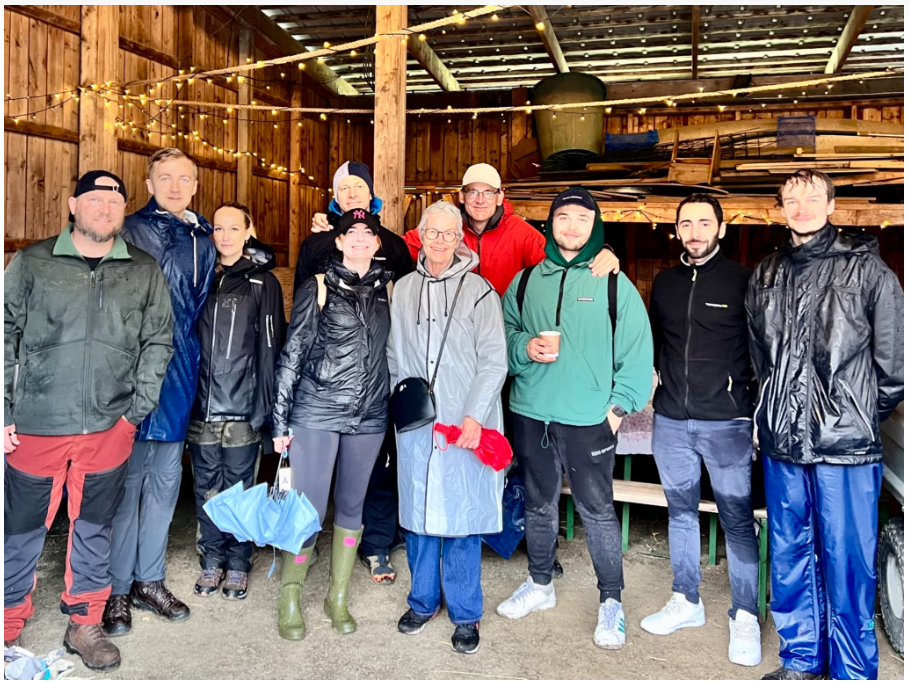
Salesforce & Sirocco Team at a recent VTO in Grinda (an island in the Stockholm Archipelago )
Leveraging technology for good
We firmly believe in the transformative power of technology to drive social change. Salesforce’s Nonprofit Cloud offers comprehensive tools for fundraising, program management, and outcome measurement, enabling nonprofits to manage their operations more effectively and amplify their impact. As a Salesforce partner, we are committed to supporting these efforts by helping nonprofits integrate these systems, allowing them to track donations, manage programs, and engage supporters more efficiently.
Looking ahead
Renewing our Pledge 1% commitment reaffirms our dedication to creating a better future. We are excited to continue leveraging our resources, products, and the passion of our employees to drive positive change in our communities and beyond. This journey is not just about giving back; it is about embedding social impact into the very fabric of our business, ensuring that as we grow, our contributions to society grow with us.
To our customers, partners, and team members: thank you for supporting us on this journey. Together, we can make a meaningful and lasting impact, proving that businesses can thrive while driving positive change. We would also encourage you to consider joining the Pledge 1% movement and/or teaming up with us on volunteer activities in our different regions. Contact us with any questions or ideas you may have.
Author: Vivian Chiang
What if the next great inventor, scientist, or innovator is sitting at your local library, their curiosity sparked by a simple yet profound question: What can I do with data?
At Atrium, we’re all about humans helping other humans make sense of data, and providing the resources to help people and organizations solve business problems with AI and analytics. We believe that the magic of data and the power of AI isn’t in their complexity or intelligence—it’s in their ability to inspire curiosity, creativity, and connection…. and that often starts with young people!
The spark of curiosity can begin in the unlikeliest of places—like your local library, where kids are checking out their favorite books, gathering for storytime, or simply letting their imaginations run wild. Sometimes, the most transformative stories start right there, in those quiet corners of possibility.
The story I am excited to share is about Data Detectives, a program born from a desire to make AI and data not just accessible but exciting and empowering for kids. Because if there’s one thing we’ve learned, it’s that when you give young minds the tools to explore, they’ll surprise you in ways you never imagined. Kids don’t see a cardboard box, they see an entire space station ready to blast off into the galaxy.
How It All Began: The Creation of Data Detectives
Armed with a passion for teaching and a commitment to giving back, our team set out to create something unique—an initiative that would bring data literacy to life for children aged 5-10.
We wanted to show kids that AI isn’t just a buzzword or a mysterious force behind their screens. It’s something they can engage with, understand, and even have fun with. That’s how Data Detectives came to life: a series of playful, hands-on lessons designed to make data and AI relatable and exciting.
And so, with detective hats on and magnifying glasses in hand, the first group of young Data Detectives set off on their learning adventure.

The Journey: Bringing Data to Life
In partnership with the Brownsburg Public Library in central Indiana, we piloted Data Detectives in 2024, running four sessions that blended storytelling, problem-solving, and hands-on activities.

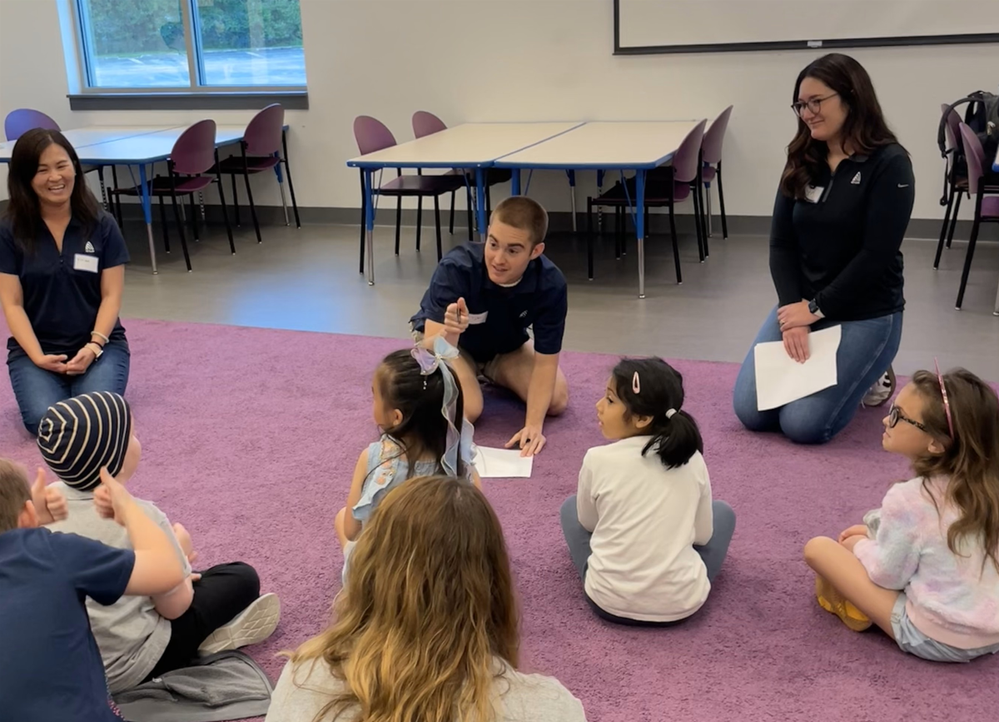
Pictured: Vivian Chiang (right) with our collaborator Megan McCain (left),
K-12 STEM Enrichment Coordinator, Brownsburg Public Library.
With each session, something magical unfolded. The children’s imaginations lit up as they explored concepts like AI, coding, and data visualization. Alongside them were our passionate volunteers—data professionals by day but big buddies at the event—guiding, encouraging, and sharing their expertise with enthusiasm. Each session became a chapter in their journey, where learning felt like play, and discovery sparked excitement.
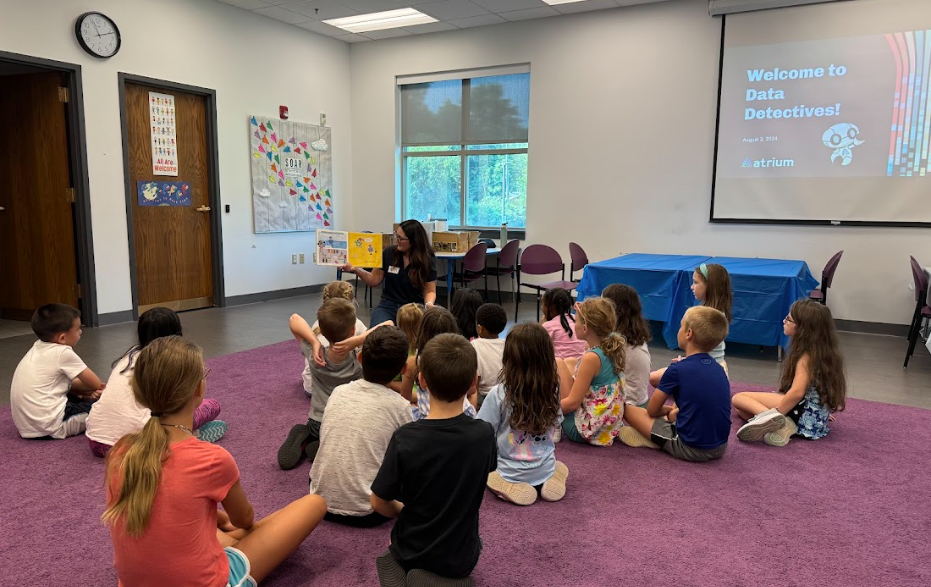
Pictured: Kristin Mangan, one of our Lead Strategy Consultants, reading <How to Code a Sandcastle> to the kids.
Our sessions included:
1. AI in Our Phones: The kids discovered how AI recognizes voices and images, connecting the technology to everyday moments like using a smartphone.

Pictured: Tyler Pollard, one of our Lead Analytics Consultants,
explaining how we use AI for voice recognition in our phones.

Pictured: Kristin Mangan, one of our Lead Strategy Consultants,
reading a book about AI.
2. Data Visualization Using Tableau: Armed with colorful charts and graphs, they learned to tell stories with data, uncovering insights and patterns along the way.
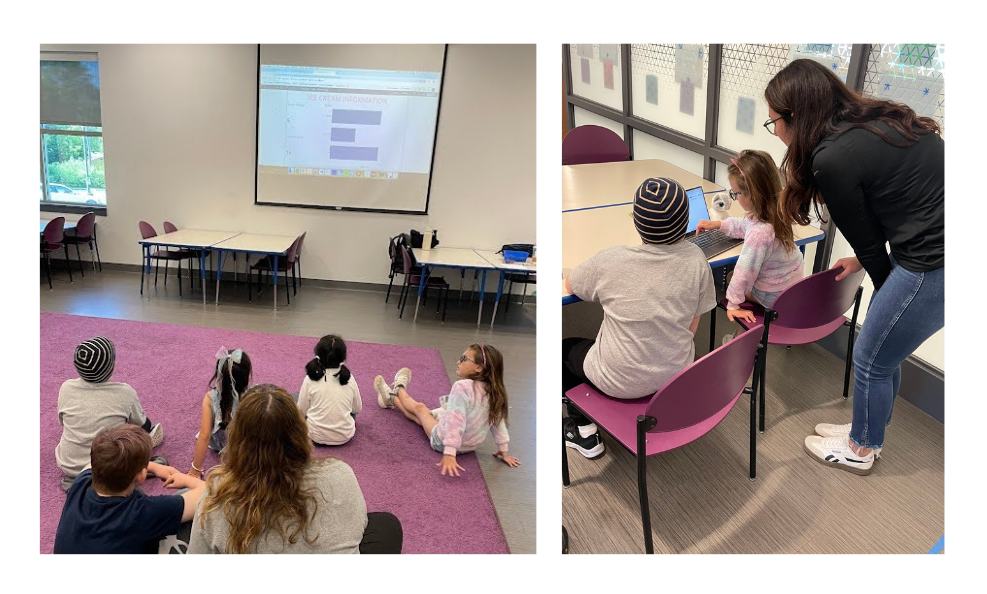
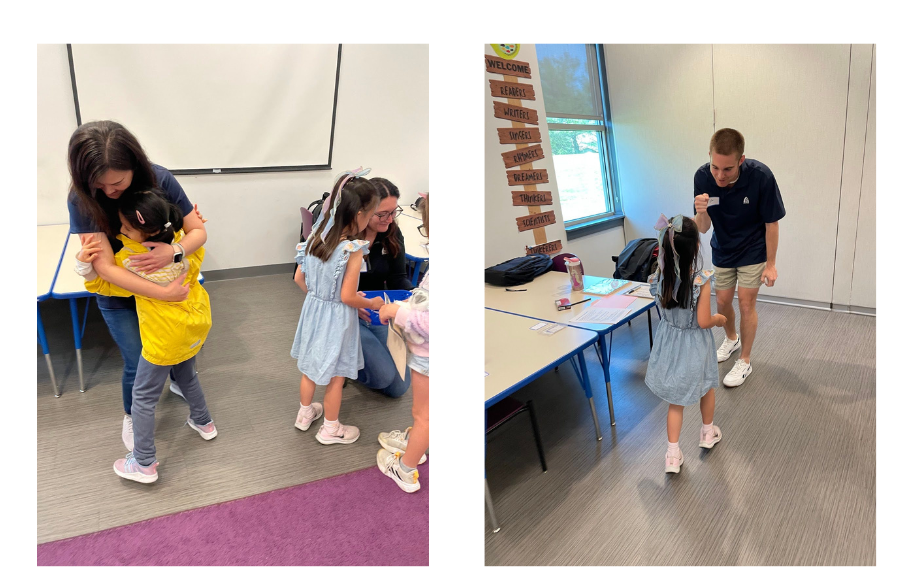
Guiding the children on collecting data and creating a bar chart using Tableau (hugs and fist bumps included).
3. Programmatic Thinking: Through playful activities like coding a sandcastle, they grasped foundational coding concepts like loops and sequences.

Pictured: Maddie Fuchs, one of our Data Scientists, reading <How to Code a SandCastle> to the kids.
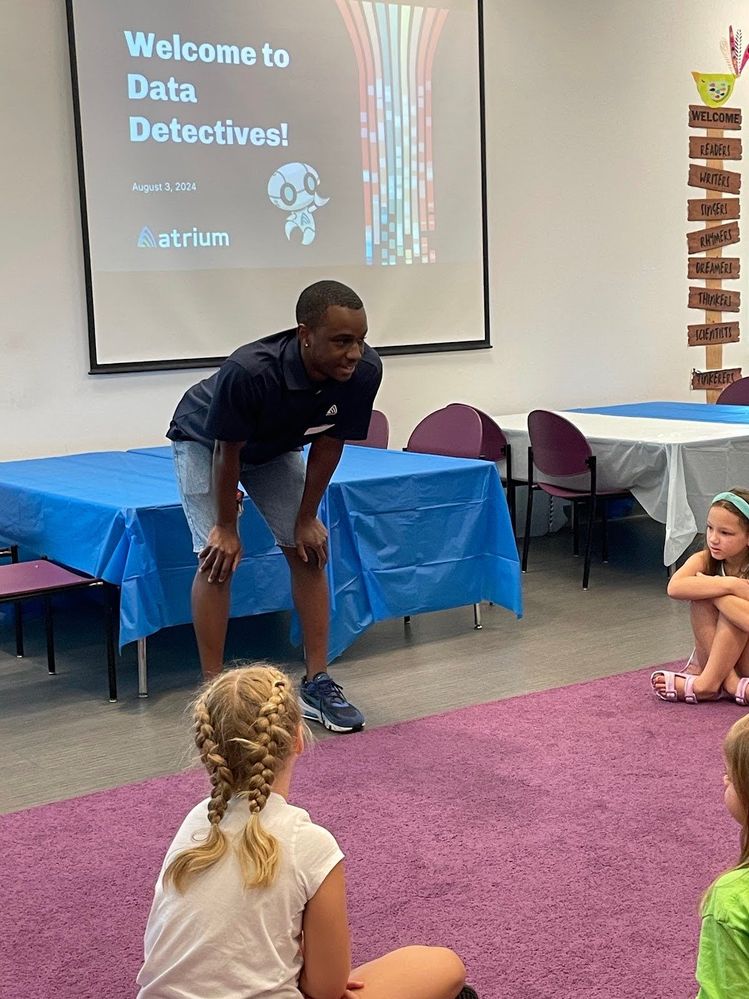
Pictured: Cary Martin, one of our Analytics Consultants, demonstrating how to use sequences and loops
to program a robot’s movements.

Creative Sandcastles
4. Magic Machine: Their grand finale was building simple AI models, exploring neural networks, and seeing the magic of machine learning come to life.
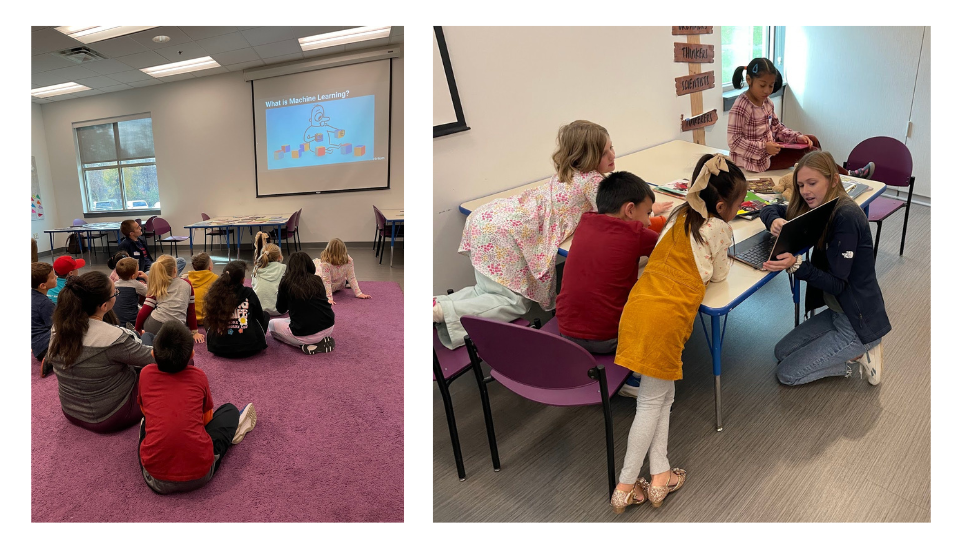
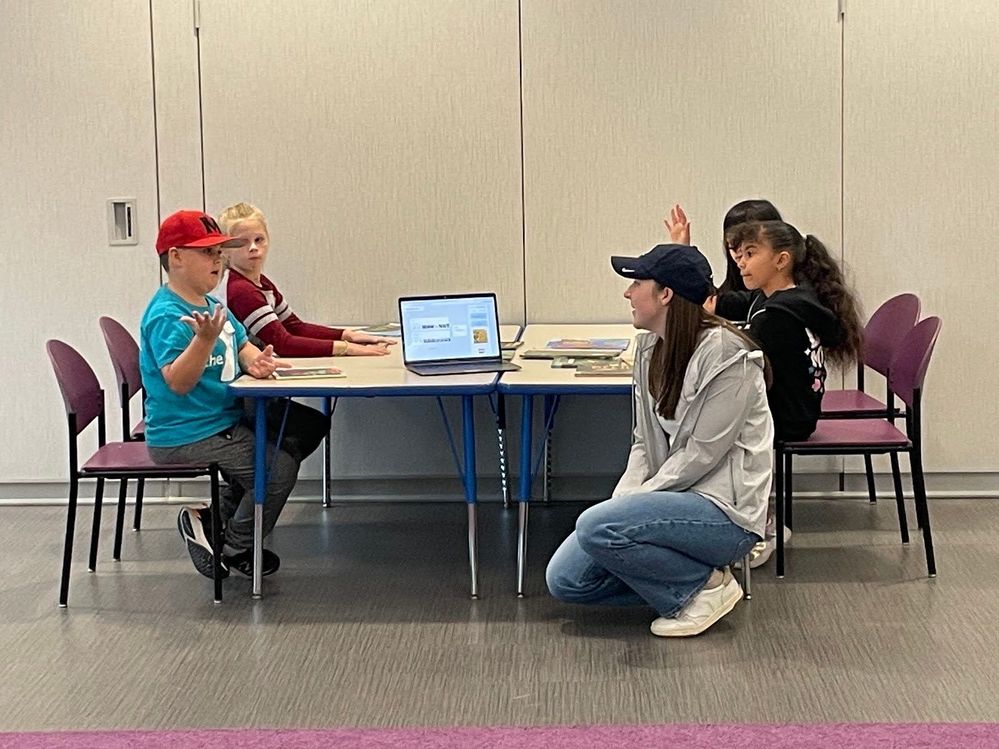
Pictured: Maddie Neely, one of our data scientists, working with the kids to train an AI model
to identify and distinguish different bug types.
Each session ended with a sense of accomplishment, the kids beaming with pride as they earned their certificates of completion. But the real reward was the spark in their eyes—that unmistakable look of curiosity ignited.
Why We Do This: A Data-Driven Mission to Share Knowledge and Build Community
At Atrium, giving back to our local communities isn’t just something we do—it’s who we are as an organization and a team. And Pledge 1% is a key part of that.
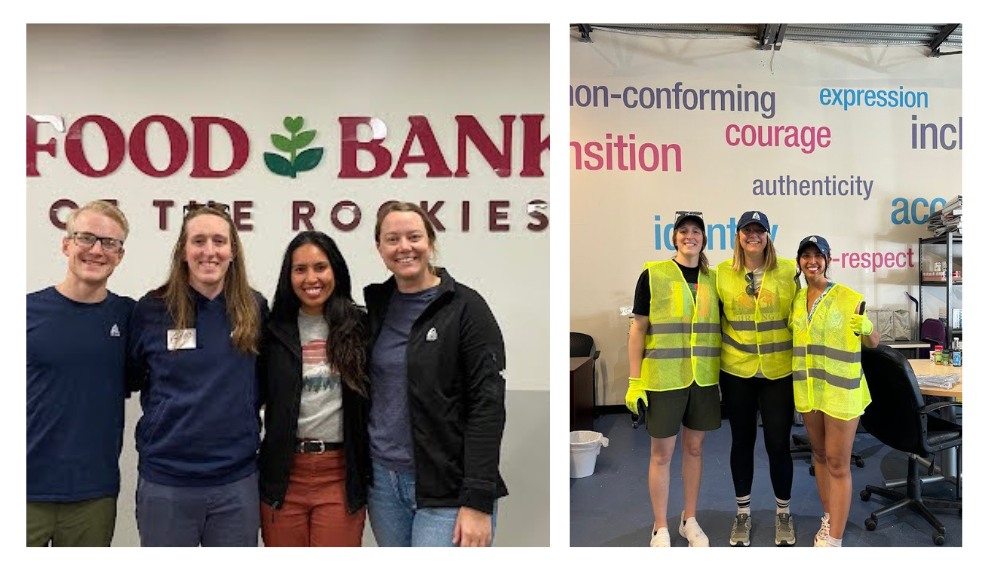
Pictured: Our CO crew in action! (Left) Volunteering at the Food Bank of the Rockies to help prepare meals.
(Right) Supporting the Transgender Center of the Rockies through volunteer efforts.
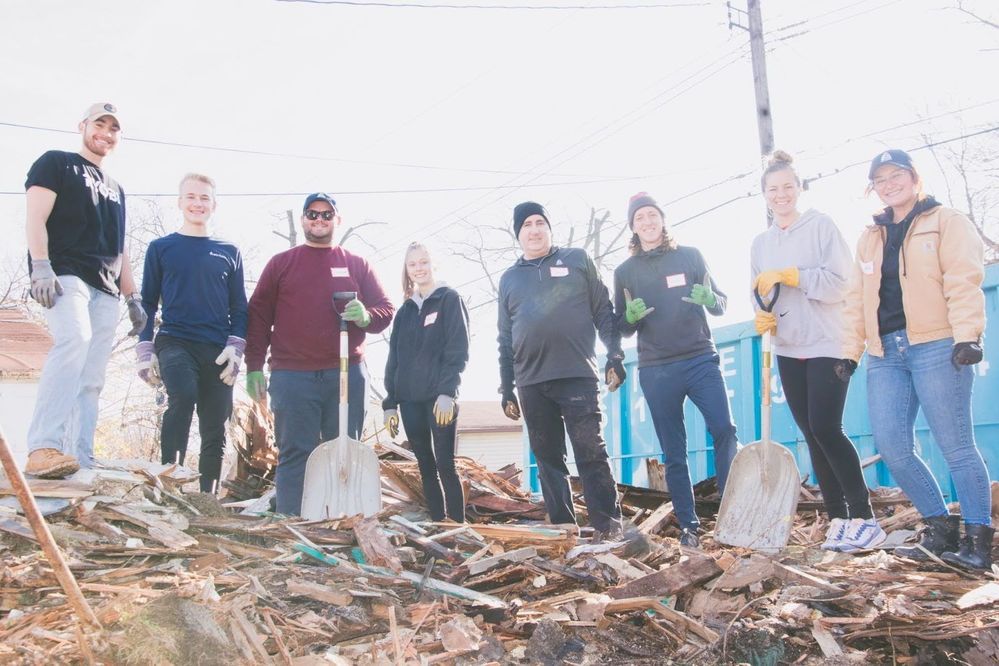
Pictured: Our Indy crew teamed up with Home Repairs for Good
to provide home repair support for older homeowners with disabilities.
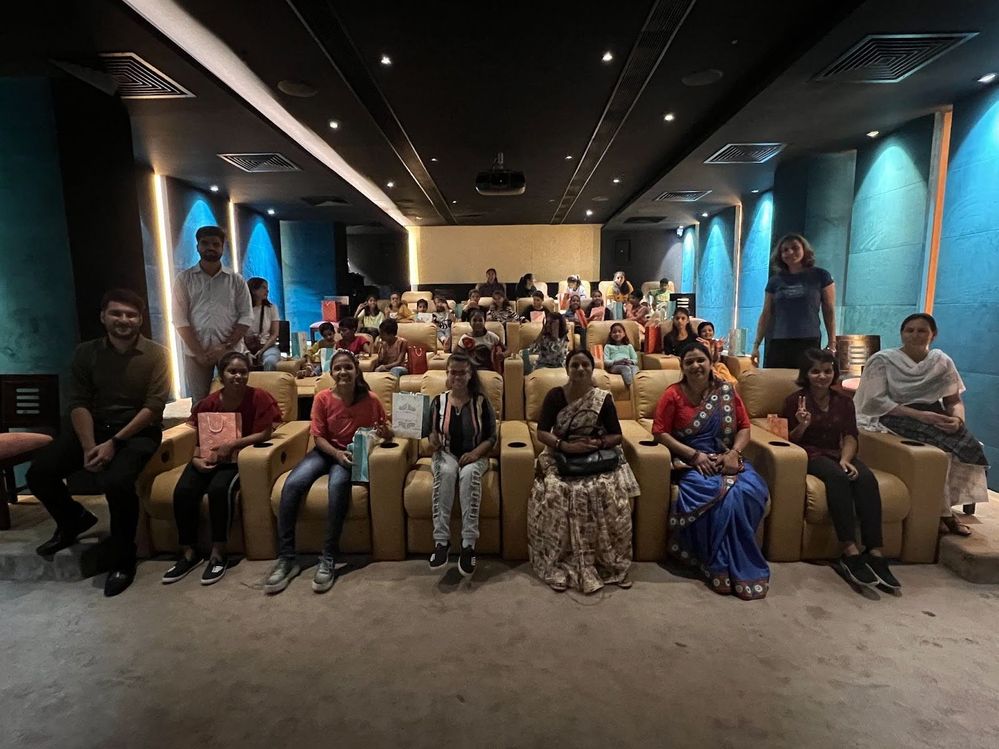
Pictured: Our Jaipur crew brought the joy of a movie experience to the children at Aashray Care Home in India.
“Pledge 1% is one of the most transformative corporate initiatives in the Salesforce ecosystem,” said Atrium CEO Chris Heineken. “We’re proud to have made Pledge 1% a cornerstone of our culture, as it makes our work more meaningful and creates amazing purpose for our team. Our social good initiatives like Data Detectives allow our team members to put their technical expertise to work in their local communities and for our nonprofit customers across the world.”
From the beginning, we’ve believed that education is the key to unlocking potential, especially when it comes to data and AI. We’ve seen firsthand how empowering people with the tools and knowledge to ask the right questions can lead to meaningful and long-term success.
For us, it’s not about flashy promises or quick fixes. It’s about keeping things transparent, understandable, and measurable. Because at the end of the day, it’s not just about creating technology; it’s about making sure it can truly make a difference in people’s lives.
This philosophy is at the core of Data Detectives—we’re not selling anything but knowledge! Knowledge is the first step in transforming curiosity into courage, especially when it comes to technology, which young people are engaging with earlier and earlier these days.
By partnering with local libraries, we’re building a bridge between businesses and communities, making data literacy accessible to all. We envision a world in which every child has the tools to ask better questions, solve bigger problems, and embrace the possibilities of technology.
Join Us in Shaping the Future
I hope our story inspires you—whether you’re a parent, educator, business leader, or someone who simply wants to make a difference—to explore creative ways to get involved in your community. From supporting local libraries to launching your own initiatives, every effort counts! We’d love for you to join us in empowering the next generation.
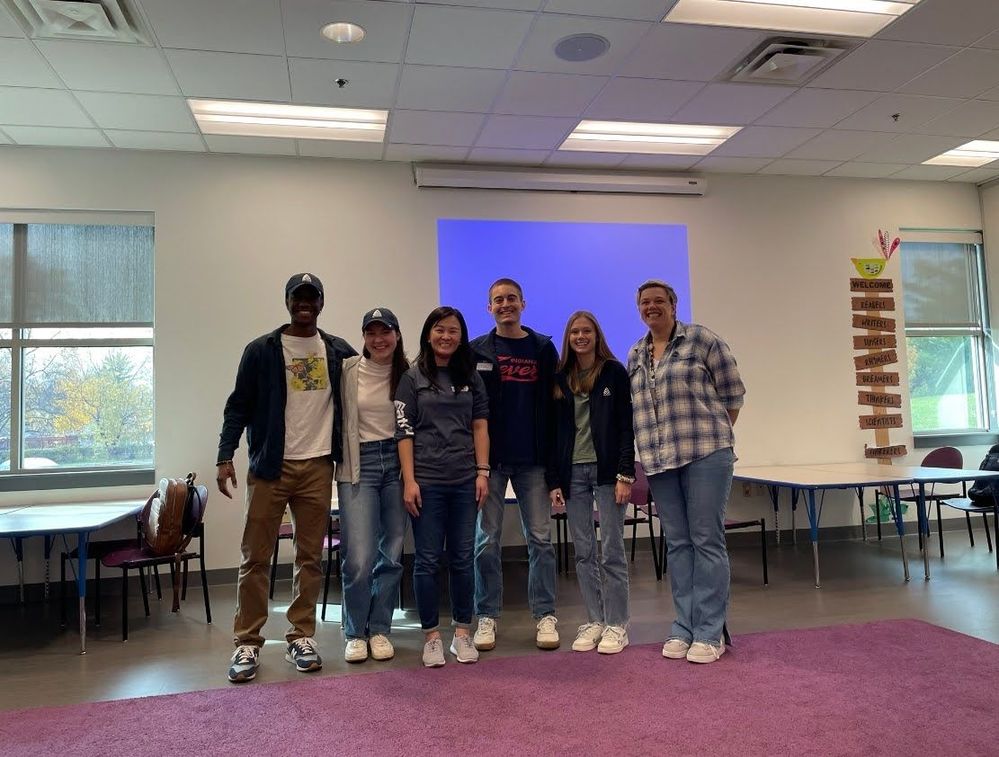
Data Detectives Facilitators: (from left to right) Cary Martin, Maddie Neely, Vivian Chiang, Tyler Pollard,
Maddie Fuchs, and Megan McCain

Author: Chess Jakobs
When we launched the Culture Amp Foundation, we shared our mission to make a better world of work more attainable. To realize that mission, we engaged Culture Amp employees, customers, partners, non-profit leaders, and prospective grantees to understand how we are uniquely positioned to support impactful organizations.
Our inaugural grantee, Indigitek, focuses its programming on increasing the percentage of Aboriginal and Torres Strait Islander people in STEM Careers in Australia. With our support, Indigitek funded marketing and production costs to expand its reach, supported staffing needs to implement its programs, and developed its educational platform so that educators around Australia can use the tools necessary to provide STEM education to students faster.
One of our company values is learning faster through feedback. By piloting an unrestricted grant program in close partnership with Indigitek, we have seen that unrestricted grants enable nonprofits to achieve their mission more effectively than the alternative standard practice– telling nonprofit leaders what to do every step of the way. If we want to help nonprofits turn their visions into realities, we must also trust the leaders of these organizations to do what is best to make that possible.
We have decided to expand our grantee portfolio and onboard new nonprofits that can utilize our unrestricted grants. This increases financial health and flexibility of use, whether investing in employee engagement and culture or expanding their fundraising capacity. It promotes innovation, empowering nonprofits to engage in the research and development necessary to pioneer marvels of social impact. It helps expand capacity, giving organizations autonomy to invest in technology upgrades or rising operational costs that all contribute to their mission and ours.
Welcoming six new Culture Amp Foundation Grantees
We are excited to welcome six new grantees who are making a better world of work more attainable for all people, including but not limited to first-generation college graduates, people impacted by the justice system, people who do not have access to decent work, and/or those who are transitioning to work that benefits society at large.
- BLK Men in Tech provides access, resources, and a community for Black men in the tech space and those interested in entering the industry. They focus on supporting the next generation of tech leaders and helping Black men accelerate into leadership.
- Color in Tech expands the range of inclusive pathways into the tech industry by partnering with leading tech companies to foster environments where diverse talent thrives. As creators of Europe’s largest event for diverse professionals, they have built a network of over 60,000 people, providing connections and opportunities at every stage.
- COOP Careers has almost 2000 fellows in five cities completing their fellowship annually. They help their fellows build the professional skills and networks that first-generation college graduates need to secure their first job after graduation. Their unique career accelerator brings together peer cohorts of 16 motivated, un/underemployed first-gen grads who meet nightly for 16 weeks (200 hours) to jumpstart their careers in digital marketing, data analytics, and financial services.
- The Karrkad Kanjdji Trust (KKT) supports women’s ranger programs that enable First Nations women to overcome the disadvantages of remoteness and access culturally-appropriate employment, training and leadership opportunities while caring for their custodial lands. KKT is a shared resource for eight First Nations community-controlled organisations in Arnhem Land today. It funds innovative on-Country employment opportunities, supports the preservation and revitalisation of culture, and the conservation of over 50,000 square kilometres of land and sea Country.
- The Last Mile provides opportunities for personal and professional growth for justice-impacted individuals through education and technology training. TLM develops job-ready employees who transition from incarceration to employment with the support of TLM’s reentry team. Fellows in the TLM program are trained in Web Development, Audio Video Production and coming soon Entrepreneurship, Music Management, Sales, Marketing, Project Management, and more.
- Work on Climate is on a mission to build the workforce to solve climate change equitably and justly. It has built the world’s largest online community for professionals working in climate change or seeking to enter the field. Through its programs, 3,000+ people have found climate jobs, and 3,000+ climate founders have been unblocked on their company journeys.
Our offerings do not stop at our monetary commitments. Our grantees are also eligible for a product grant, allowing them to leverage the Culture Amp platform to boost performance, engage employees, and develop talent. They can also utilize our employee volunteering program, which includes up to 40 pro-bono hours per year per employee. Employees can use their unique skills to help organizations achieve their missions. As a Pledge 1% Builder and B-Corporation, we know first-hand the importance of businesses giving back in more ways than one.
In the words of Culture Amp Co-Founder and CEO Didier Elzinga, “The Culture Amp Foundation is where what we do as an organization meets who we are as an organization.” We are familiar with taking innovative approaches to building. It is at the core of who we are as a company, and that is the same standard we have for the Culture Amp Foundation.


Author: Randall Ward, Co-founder and CEO of Appfire
On this Giving Tuesday I want to take a moment to talk about the other side of community and philanthropy: sharing my perspective from the receiving end of charitable giving and the transformative impact even the smallest gestures can make.
I lost my dad to cancer when I was 7 and my sister and I were raised by a single mom. We lived in a rundown apartment and my mom had to make really tough tradeoffs on a monthly basis, like “Do we want hot water, or toilet paper and essentials?” We lived slightly above the poverty line of $9,862 in 1982 which meant we were labeled as “low income,” or a family whose total income was less than 200% of the poverty threshold. Because of this, we didn’t qualify for relief programs and at the time there weren’t many anyway. Today that line is $31,200 for a family of four.
The United States is considered the richest country in the world, and yet in 2024, 37.9 million (11.5%) American families live in poverty. Add another ~93 million (29%) Americans who live with incomes less than double their poverty threshold. This translates to 40% of the U.S. population who are disconnected from the social safety net and in need of assistance programs to unlock basic human needs such as food, housing, medicine, mental health care, employment, transportation, and education.
Although statistically we were poor, we were fortunate to live in a community with many selfless people who gave generously. Whether donating money, clothing, food, transportation, shelter, or time, they gave often, sometimes without knowing the magnitude of their giving. These are just some of the ways that support took shape:
-
- The Bariteau family provided daycare so my mom could work two jobs. Daryl Bariteau helped raise me and to this day, I consider her my “other mom.”
- The Hsia family donated money necessary for me to join and participate in Scouting and afterschool programs, and Dr. Hsia was the single most influential person in my life while growing up. Dr. Hsia taught me the importance of integrity and of keeping my word, pushed me to see things through, reminded me that patience through collaboration is a critical skill, showed me that small course corrections lead to big changes over time, and provided so many more lessons like these that I was able to apply while growing Appfire years later.
- The Dyers donated money so we could join the ski program, an activity I still enjoy today.
- The Davis family donated food that they grew, their children (older than us) gave us their hand-me-down clothing, and when I was a teenager Mr. Davis hired me to work on their farm and taught me to drive.
- The Batsons gave my mom a loan to start her own business, a third job to help bring in supplemental income, and paid for us to go on camping trips. Bob Batson taught me engineering principles and at 15, I worked with his startup, Electric Vehicles of America, helping convert small pickup trucks from gas to electric. This was decades before Tesla and still one of my fondest childhood memories.
- Jean Haynes paid for our instruments so my sister and I could join the band and choir. My sister spent much of her older teenage years circling the globe in a traveling choir. I still play music. Jean also helped me buy my first car and then years later loaned me money to go to college.
- The Seeleys and Crowthers allowed me to sleep on their couches for a two-year period, from age 15 until 17 when my mom was hospitalized and I became homeless.
- Steve Morrissey became a father figure, mentor, and coach.
- The McMahons checked on my mom, sister, and me frequently and gave selflessly in so many ways: time, food, and, while I was homeless during high school, a place to sleep at their house 2-3 times per week. Their daughter Kerri became my best friend, and as teens, we talked on the phone every day for hours.
These are the givers I knew, but there were countless others too — some anonymous and some that I wish I could remember today to honor them in memory.
My life was positively shaped and changed by these generous givers to whom I credit many of my interests and passions, as well as my creativity, success, and my own philanthropic efforts through Pledge 1%, Appfire Town, and more — and without whom I would have walked a very different path.
On this Giving Tuesday and every day that you are able, I challenge you to give back in whatever way you can. Your giving can make a difference in the lives of millions of families, just like my own, that are in need today, tomorrow, and beyond.
About Randall
Randall Ward is the co-founder and CEO of Appfire. He is committed to helping teams everywhere tackle their biggest challenges by breaking down silos, boosting productivity, modernizing their tech stacks, and adding value to the platforms they already have. He began his career as a telecommunications signaling engineer and spent the past 25 years building and scaling software companies, from early-stage through IPO and acquisition, including Boston Communications Group (1996) and Net.Genesis (2000). He has consulted and worked for Boston Scientific, Oracle and Vodafone, and helped architect MIT’s OpenCourseWare platform. Randall also held a technology advisory role for LFM/SDM, one of MIT Sloan School of Management’s most prestigious programs, and worked as a visual learning researcher at Stanford University. He is an investor and advisor to emerging enterprise software companies in the US and Australia and is actively involved with investments in virtual workspaces, AI advancements in healthcare, and software automation. He firmly believes that making a positive impact is integral to business and proudly serves as a member of the Pledge 1% Global Visionary Council.
About Appfire
Appfire is the leading global provider of software that enhances, extends, and connects the world’s leading platforms to make work flow any way teams want to work, from planning to product ideation, product development, project delivery, and beyond. Appfire increases the value of platforms such as Atlassian, Microsoft, monday.com, and Salesforce, enabling teams to thrive and do their best work together. With more than one million users, Appfire’s popular solutions are helping teams with Enterprise Collaboration, DevOps, Workflow & Automation, Product Portfolio Management, IT Service Management (ITSM), Document Management, Business Intelligence and Reporting, Administrative Tools, Agile Tools, Developer Tools, Time Tracking, Publishing, and Integrations. Appfire has been selling its popular software products on the Atlassian Marketplace since it first launched in 2012, and today Appfire has the most widely adopted portfolio of Atlassian apps across tens of thousands of customers worldwide. Learn more at www.appfire.com.
Original article here
Author: Proctorio
Proctorio announced today that it has joined Pledge 1%, a global movement to create a new normal for companies of all sizes and stages to have a positive social impact through their business. Proctorio is joining over 18,000 companies around the world who have committed to Pledge 1% of company resources. We are proud to announce our commitment to donate 1% of time to the local community.
Proctorio is dedicated to philanthropy through initiatives that support educational access and digital equity, aiming to bridge the gap for underserved communities. Our commitment extends to partnering with organizations that focus on expanding learning opportunities and providing resources to those in need. Since the beginning, Proctorio has helped over 52 charities with a growing employee participation rate of 83%, making a $550,000+ impact on the community to date. We aim to hit our 1% goal of 1,430 volunteer hours by the end of 2025, and hope to continuously increase our goal as the years go on.
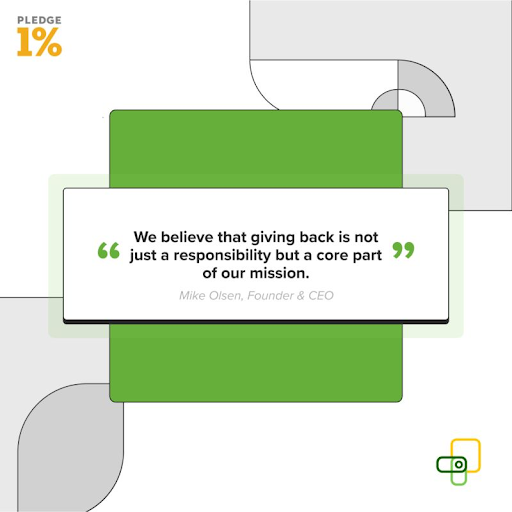
“At Proctorio, we believe that giving back is not just a responsibility but a core part of our mission. By pledging 1% of our time, we’re investing in the communities that have supported our growth while allowing us to increase opportunities for education in ways that align with our values. We’re honored to be part of this global movement and look forward to seeing what we can accomplish together.” – Mike Olsen, Founder & CEO of Proctorio
Proctorio is proud to join the Pledge 1% community and encourages other companies to take the pledge and leverage their business as a force for good.
To learn more about Proctorio’s program, visit https://proctorio.com/about/sustainability or contact press@proctorio.com.
ABOUT PLEDGE 1%
Pledge 1% is a global movement that inspires, educates, and empowers every entrepreneur, company, and employee to be a force for good. Over 18,000 members in 100+ countries have used Pledge 1%’s flexible framework to ignite half a billion dollars in new philanthropy. To learn more about Pledge 1% and to take the pledge, visit www.pledge1percent.org.

Author: Eleda Towle
What is the name of your company?
Triple Mountain, located in Hiram, Maine.
What do you do?
We are a niche collectibles business, catering to model horse collectors and LEGO™ collectors. We are a mom-and-pop business, but we ship models to collectors around the world. We sell both “regular” retail items and also vintage pieces on consignment, with an inventory of over 5,000 items.
Why did you choose to take the Pledge?
We were already donating 1% to charities using the Give & Grow app by Pledgify (through Shopify), as well as helping our local animal shelter and other local non-profits before we heard of Pledge 1%. We believe that businesses have the power to positively impact their communities and the responsibility to do so. We joined Pledge 1% as a way to be part of a community of like-minded businesses and as a way to display our pledge to customers.
If you could share one story about your company’s impact, what would it be?
There’s not one single “big” story I can share because a small business’s greatest impact is made in a series of small stories. As an animal-centric business, many of our impacts revolve around animals. As word came of horses and livestock trapped in the flood waters of Hurricane Harvey in 2017, we set up a fundraiser and donated 20% of our profits to the Texas Equine Veterinary Association, which spearheaded rescue efforts by boat and treated, fed, and housed animals they found until their owners could reclaim them. After the horrific attack in Lewiston, Maine, we donated all of our profits to the fund set up to help survivors and victims’ families with medical or burial costs.
We have a permanent consignment sales account set up for our regional animal shelter. Since 2016, people have donated model horses to the account, and when they sell, the proceeds have gone to the shelter, raising over $10,000 to date. The benefit of being a small business is that we can pivot quickly when there is a need and we can be ready to help within hours.
How do you measure the impact of your Pledge?
Being a mom-and-pop business, we don’t need to document or measure impacts like a corporation might; instead, we measure impact by the help we are able to offer our community. We visit many of the nonprofits we help, such as Harvest Hills Animal Shelter and Riding To The Top Therapeutic Riding Center, and see firsthand the ways our contributions are helping. It’s a great joy to have the means to help others.
What advice would you give to other small but mighty companies that are thinking about taking the Pledge?
If you have a small business, you are probably already active in your community. Why not put that love for your community into writing and use it in your marketing? As much as we help our neighbors in Western Maine, they return that kindness many-fold by shopping with us and spreading the word that our business helps area non-profits.
