Originally published on Next in Nonprofits.
Pledge 1% “is a corporate philanthropy movement dedicated to making the community a key stakeholder in every business. Pledge 1% encourages and challenges individuals and companies to pledge 1% of equity, product, and employee time for their communities.”
Co-founder and Rally Software CTO Ryan Martens joins host Steve Boland to talk about the important work of encouraging corporations – starting with the technology sector – to pledge to improving our communities through diverse giving. Ryan talks about working with community foundations, measuring the impact of in-kind gifts, and reaching sustainable business models for increased giving.
Listen now by clicking the player above, download the file for later here, or subscribe to the podcast on your phone for automatic updates. Get more details on how to subscribe on our podcast page.
Originally posted: December 1, 2015
By Therese Poletti. Originally published on MarketWatch.
As #GivingTuesday donation pleas flood social networks and in-boxes today in a worldwide effort to raise attention and funding for nonprofits, some might be skeptical of pleas or philanthropic touts from tech companies, which have an inconsistent reputation for philanthropy.
But Pledge 1%, a year-old corporate philanthropy movement, is using the fourth annual Giving Tuesday to announce that more than 500 companies, including many tech startups, have committed to the once-novel donation model created by Salesforce.com Inc. CRM, -0.66% co-founder Marc Benioff in the early days of the cloud-based software company.
Pledge 1% is a promise to give 1% of a company’s equity, 1% of the company’s product, or 1% of employee time back to communities around the world; Salesforce does all three.
“We try to make it easy for CEOs and for startup companies and CEOs to be focused with their philanthropy,” said Suzanne DiBianca, president of Salesforce.org, the company’s nonprofit arm. “We want every company to make their own decisions where their investments should be.”
San Francisco-based Salesforce.org is joined as a founding members of Pledge 1% by Atlassian, the Australian software company with a Slack rival called HipChat; the Entrepreneurs Foundation of Colorado; Tides; and Rally for Impact.
Among the list of 500-plus companies that have taken the pledge are a mix of unknown young tech companies and better known startups with hefty valuations, such as Twilio and Zuora Inc. Others are not even tech firms, like Half Moon Bay Brewing Co. Some venture capital firms — from well-known funders such as Bessemer Venture Partners to smaller shops like Blackbird Ventures in Surry Hills, Australia — are also joining in to make it part of the process for startups they fund.
The effort could help tech’s somewhat poor reputation for community outreach, which has festered despite the efforts of Microsoft Corp. MSFT, +0.90% co-founder Bill Gates, who created the world’s largest private foundation in the Bill and Melinda Gates Foundation. Benioff and the Salesforce model have often been highlighted as an example of a rare tech company focused on giving back to its community, especially as San Francisco Bay Area residents blame rising rents, evictions and the cost of living on the tech boom.
DiBianca defends tech companies and says any negative reputation is a bit of a myth.
“I don’t think it’s true, it’s true for some companies and some CEOs,” she said, adding that many companies just want guidance or help. “They just don’t know what to do and how to do it. We are just providing tools.”
A recent corporate philanthropy list compiled by the San Francisco Business Times based on 2014 cash donations made in the Bay Area shows that many tech companies are not the Scrooges they are often believed to be. Of the 83 companies cited, 26 are tech firms, with Google Inc. (now known as Alphabet Inc.)GOOG, -2.28% GOOGL, -2.26% topping the list with cash donations to Bay Area nonprofits of $40 million in 2014. Cisco Systems Inc. CSCO, +0.13% ranked No. 5 with $14 million in local giving, followed by Salesforce at No. 6, with $12 million.
The list does not include time spent volunteering by employees, product donations and equity donations, which Salesforce pioneered. A company spokeswoman said that since its founding in 1999, Salesforce has donated $100 million in grants around the world, employees have volunteered 1.1 million hours, and 27,000 organizations are using Salesforce software for free or at a discount.
The group has big plans for the initiative: Emboldened by their success this year, the Pledge 1% movement hopes to reach more than 1,500 pledges by Giving Tuesday in 2016. Here’s wishing them luck in pushing tech to follow Salesforce’s example in the community.
Originally posted: December 1, 2015
By Ludovic Ulrich. Originally published on the Salesforce blog.
Last year, Salesforce for Startups launched globally with the mission to empower startups to build, grow and give back. In that time, more than 3,500 members have joined the program from more than 85 countries. And we’re just getting started. To coincide with this milestone, the program has introduced a new offer related to Salesforce’s marketing automation tool, Pardot; a new partnership with enterprise technology venture fund Work-Bench; and new plans to grow and expand globally.
We’ve listened to the community.
The countless conversations we’ve had with entrepreneurs in our first year confirms there is no lack of passion, innovation and creativity across the global startup community. However, many entrepreneurs struggle with laying the right foundation for long-term success. As we’ve worked with startups over the last 12 months, it’s become clear that beyond choosing the right development environment or technology platform for their products, startups’ more pressing challenge is finding ways to better connect with their customers. We’ve listened to these concerns, and Salesforce for Startups is committed to helping these early-stage startups become customer-focused companies.
A vision to help startups become customer companies.
Startups that join Salesforce for Startups have access to the technology, tools and expertise needed to become thriving customer- and community-focused companies. We focus on helping startups build, grow and give back.
- Build – Through Salesforce for Startups, startups gain access to development platforms in the Salesforce App Cloud to quickly build any type of app at scale. We chose to build our Salesforce for Startup program on this very same technology, and we can help startups do the same so they can stay close to their customers’ needs.
- Grow – Once startups establish a product and market fit, they need to focus on growing efficiently at scale. Living in spreadsheets and multiple email inboxes is a recipe for failure. Salesforce for Startups’ goal is to provide startups with the tools they need to connect to customers across sales, service and marketing to support their growth. Today, we’re excited to announce we’re offering registered startups a 30% discount on Pardot to kickstart their B2B marketing automation efforts.
- Give Back – In partnership with Pledge 1% – an organization founded by Salesforce.org, Atlassian and the Entrepreneur’s Foundation of Colorado – Salesforce for Startups enables startups to easily adopt the 1-1-1 integrated philanthropy model that Salesforce itself pioneered at an early stage in its history. More than 25% of our members are currently working with Pledge 1%. Salesforce for Startups members who have recently taken the pledge include Auctio, LendUp and Yesware.
We’re just getting started.
By our second anniversary, our goal is to triple our membership and see our program reach all corners of the globe. Many thanks to our current network of accelerators and other startup organizations, including Communitech, StartupAUS, Startupbootcamp, Startup Grind and UPGlobal, who have introduced us to their innovative communities. We’ll continue to develop programming through partnerships like these.
And, speaking of partnerships, today we’re proud to announce our new relationship with Work-Bench, an enterprise technology venture fund and well-respected thought leader in the NYC enterprise startup ecosystem. Much of our growth can be attributed to support from organizations like Work-Bench, which helps startups accelerate product development and customer insights by connecting them with forward-thinking Fortune 500 companies. We look forward to working with Work-Bench and other partners to develop content and workshops in the coming year. Stay tuned for more news on that front.
Salesforce for Startups is the only global startup program guides startups through their build and grow phases, and is also focused on giving back. If you’re a startup that wants to become a customer company, join us!
Learn more about Salesforce for Startups at http://salesforce.com/startups.
Read great startup stories here: https://startups.salesforce.com/startup-customers.
Follow @Salesforcestart to keep up to date with our latest news and offers.
Originally posted: November 19th, 2015
SALESFORCE WORLD TOUR TORONTO—May 14, 2015—Salesforce, the Customer Success Platform and world’s #1 CRM company, today announced it is joining forces with the Canadian startup ecosystem. Salesforce also announced a new partnership with Communitech, an innovation centre that provides mentorship, training and resources to help high potential startups scale into profitable technology companies.
Comments on the News
- “We’re thrilled to join forces with the Canadian tech startup ecosystem to accelerate innovation,” said Ludovic Ulrich, director startup relations, Salesforce. “The tech startup sector is a critical part of the Canadian economy and we’re proud to provide the technology, tools and expertise entrepreneurs need to take their businesses into the future.”
- “Salesforce is an ideal partner for Communitech and the Rev program,” said Iain Klugman, CEO, Communitech. “With their industry leading technology and expertise, Salesforce can provide the mentorship, training and resources that will help our companies scale quickly.”
- “Many early-stage companies want to make civic engagement part of their business, but it can be challenging for them to establish a framework,” said Suzanne DiBianca, president, Salesforce Foundation. “In partnership with Canada’s Upside Foundation, we’re helping private Canadian companies build an integrated philanthropy model early on that will have a significant social impact on Canadian communities today and into the future.”
Salesforce and Communitech Fuel Technology Entrepreneurship in Canada
Salesforce for Startups to Accelerate Growth of the Canadian Startup Ecosystem
- Build: As part of the program, startups will have access to the Salesforce1 Platform, enabling them to quickly build any kind of app at scale.
- Grow: Salesforce for Startups provides access to curated content and tools to help startups delight customers and grow.
- Give Back: Startups are encouraged to integrate philanthropy into the fabric of their company from the very beginning.
Canadian Companies of All Sizes Join the Pledge 1% Program
About Salesforce World Tour Toronto
Connect with Salesforce
- Follow @Salesforce on Twitter and join the conversation
- Follow Salesforce Canada on its blog
- Follow @salesforcestart on Twitter for all the latest on Salesforce for Startups
- Take the pledge today, visit www.pledge1percent.org
About Communitech
About Salesforce
By Alex Heber. Originally published in Business Insider Australia.
About 10 years ago Atlassian founders Scott Farquhar and Mike Cannon-Brookes pledged 1% of their company to invest in philanthropic ventures. That 1% is now worth about $40 million.
“We’ve since helped over a quarter-of-a-million children just with our partnership with Room to Read. None of that would’ve happened without us originally pledging 1% back when it was really worth nothing,” Farquhar said. “Now that 1% of nothing is worth about $40 million.”
The pledge took the form of the 1-1-1 model which was formed by Salesforce CEO Marc Benioff. The model involves allocating 1% of employees’ time, 1% of product and 1% of equity or profit to charitable causes.
“When you start a business you’re hugely optimistic that you want to change the world and one thing that Mike and I knew we wanted to do as well as run a business was in some way give back,” Farquhar said.
“It was one of the smartest decisions that we made without really knowing it at the time.
“If you asked us now how are you going to give $40 million out of your own dollars to a foundation, you may have to think twice about it. When it’s worth nothing it’s a really easy decision.”
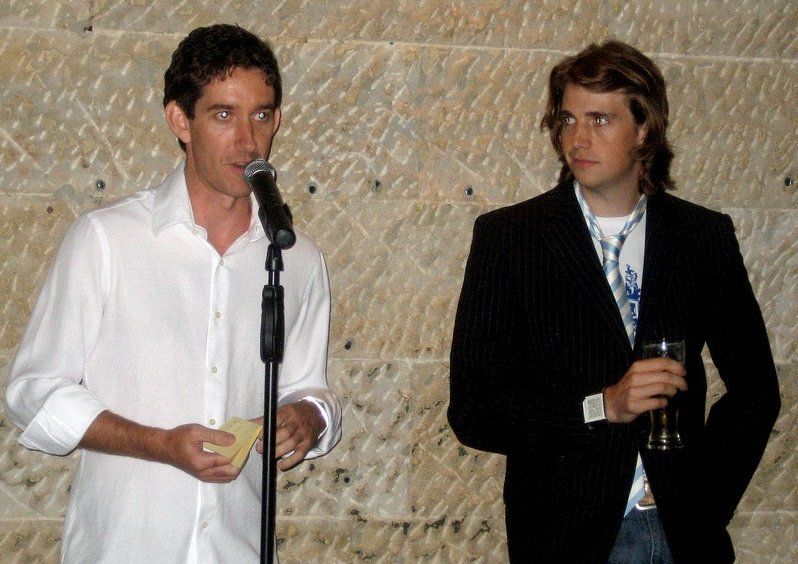
Atlassian co-founders Scott Farquhar and Mike Cannon-Brookes.
At the time Atlassian had less than 100 staff. Fast forward a decade and at the end of last year it had almost 1,000 staff and was still madly hiring. Last financial year Atlassian’s total revenue was $US215 million, it has a valuation of about $3.3 billion and preparing for a US listing, possibly as soon as this year.
Farquhar is now on a mission to get other companies to pledge 1%. It’s his passion project and he’s teamed up with Salesforce to make it happen.
To date, Salesforce has contributed 800,000 hours in time, $80 million in grants and has 25,000 non-profits using its products. Atlassian has to date donated $US3.9 million to charities and given away $41 million worth of product to non-profits.
The two companies are aiming to secure 500 1% pledges from companies before the year is out. So far they’ve received almost 100 pledges and Farquhar has a vision of having half of the ASX100 participating.
Suzanne DiBianca, president of the Salesforce Foundation, said the simple model of giving 1% of a company’s time, equity and product had been popular in the tech scene.
“I’ve got Pinterest calling me, and Yelp, and Workday, and all of these next generation companies,” she said. Yelp and Workday’s pledges generated about $120 million in their foundations last year.
Farquhar said they’ve split the task up between “whale hunting”, which is going after companies that are pre-IPO and will have the biggest impact in a short period of time, and looking at smaller companies that will be worth more in 10 years.
“The goal for us is that in my lifetime more than half the ASX 100 would’ve pledged 1% at some stage,” he said.
DiBianca is focussing on getting the program in front of companies which are about to have big exits and wants to generate about $500 million for the projects. On her list includes companies like Docusign and Pinterest.
Atlassian now works with some of the biggest companies in the world, but Farquhar says he doesn’t lose sight of the amount of impact you can have by working with startups. He is a big investor in Queensland-based startup SafetyCulture and regularly turns up to work in the company’s office.
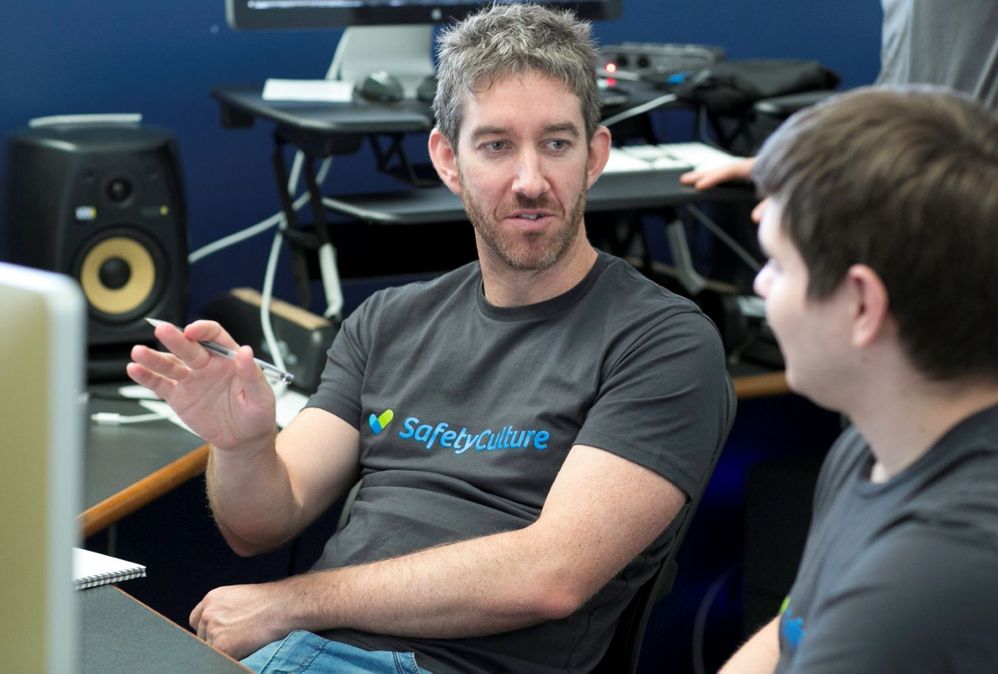
Atlassian co-founder Scott Farquhar. Image: Supplied.
His hands on approach and experience in the trenches is something which gives him an insight into how to get these usually under-resourced companies to stop and think about the future and consider pledging.
“It’s trying to work out the right way to work out the right way to reach out to some of these companies. The great part about it is pledging 1% is easy,” he said. “The goal is you can sign up and pledge in under 15 minutes.”
Salesforce and Atlassian have seen upside in company morale and culture from their investments in philanthropy.
“It’s important to get talent, it’s important for your brand and it’s important for your culture,” DeBianca said. “The brand is almost the least important thing. One thing I’ve seen is a real shift of philanthropy is it’s moving out of marketing and into HR. What CEOs are finding is it’s a talent issue.”
Hiring talented engineers and developers is competitive both in Australia and the US. DiBianca said the new generation filtering into tech companies don’t always distinguish between their work lives and social lives and in many cases both are merged. Because of this, it’s becoming important to many recruits that they work for good companies, she said.
Farquhar says one of the biggest challenges Atlassian faces globally is hiring talent, particularly around computer science.
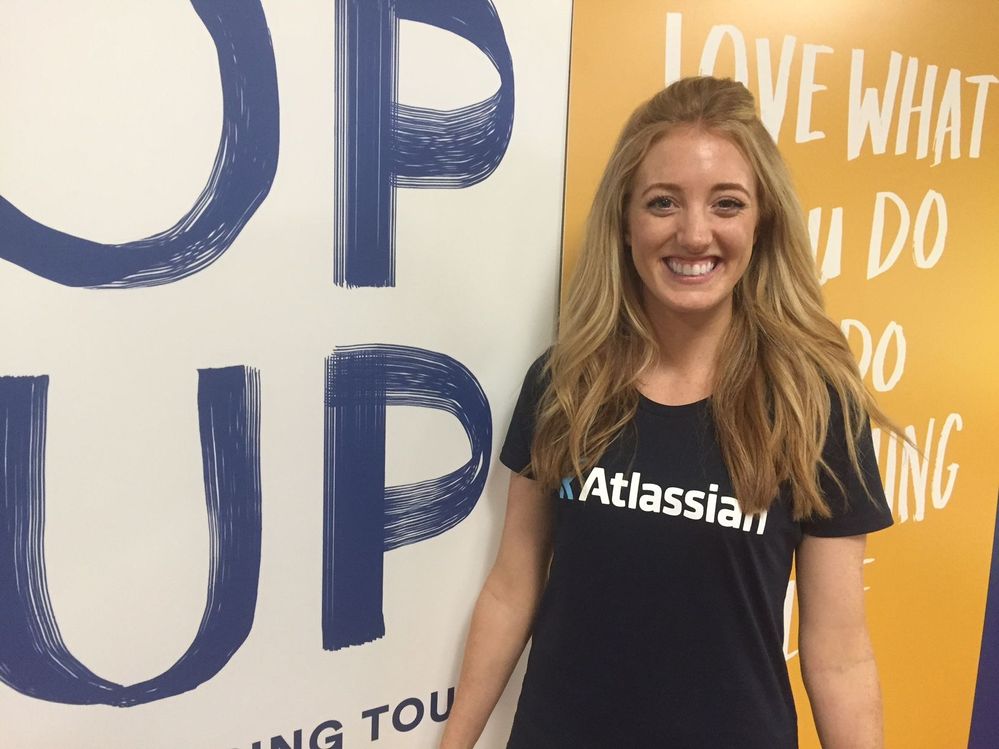
Atlassian APAC recruiting boss Caitriona Staunton.
“We never thought about [philanthropy] as something that is good at recruiting but when I do chat with people around why they joined Atlassian, our philanthropic efforts are the top three of why they joined,” he said.
“We do find that the people who are most aligned with philanthropy are also some of our highest performers.”
DiBianca agrees, saying figuring out which employees are putting their hand up is also a good indicator for leadership.
“We’ve found the people who have given the most time or raised the most money equate to the top performers in the company,” she said.
“If you’ve got an employee who’s volunteering, taking on new projects that wants to go over and above, it’s a really early indicator of high performance and leadership skills.”
She said two of the causes the foundation has supported include Room to Read and boosting the number of women in the tech sector. Both require more than money to get off the ground and volunteering employee time has been critical.