August 10, 2021 – Forbes’ The Cloud 100, the definitive list of the 100 top private cloud companies and the 20 rising stars poised to join their ranks, announced today that Guild Education, a mission-based company providing opportunities for America’s workforce through education, has received the prestigious Pledge 1% Impact Award.
The Pledge 1% Impact Award recognizes one company out of the Cloud 100 that is going above and beyond to have a positive impact. We are delighted to recognize Guild Education for their leadership in setting aside equity for impact, and for their ongoing commitment to helping large employers extend education benefits to their thousands of employees.
In addition, Guild has been one of the leading voices in the fight against the pandemic and is an active member of the Pledge 1% COVID-19 Coalition, a group of companies who are working together to respond to and help others navigate today’s health, social, and climate crises. Guild Education CEO Rachel Carlson is also a co-founder of Stop The Spread, a movement to provide a suite of information related to critical pandemic needs, such as PPE supplies, the development of novel therapies, and vaccine equity.
Not only that, but Guild Education has joined other Pledge 1% members in formalizing their equity pledge on the path to IPO, setting aside company equity to fund their corporate philanthropy programs in the future. This trend is becoming the new normal and paving the way for companies to step up and fill the gap to solve the most pressing issues of our time. Already over $1 Billion in new philanthropy has been ignited by Pledge 1% companies setting aside equity, including roughly 30% of the companies who exited the Cloud 100 list.
In honor of their work and dedication to social impact, Salesforce Ventures and Bessemer Venture Partners will be donating $10,000 to Guild Education’s nonprofit of choice.
Guild is joining past Pledge 1% Impact Award winners DocuSign, Twilio, Slack, Procore, and Canva, and are one of many Pledge 1% member companies recognized at the Cloud 100. We congratulate the following Pledge 1% members for making this year’s list: 6sense, ActiveCampaign, Automattic, AvidXchange, Canva, Celonis, Collibra, Culture Amp, Dataminr, Flutterwave, LaunchDarkly, Notion, OwnBackup, Rubrik, Samsara, Shippo, and Workato. You can learn more and view the full list here.
We are so proud of the Pledge 1% companies on The Cloud 100 list and our wider member community for all that they have done and continue to do to leverage their business as a force for good!

Originally published on Blend. Written by Nima Ghamsari, Head of Blend.
One of Blend’s core beliefs is that there’s a future that includes “better banking, for all.” When we say “all,” we truly mean all. We strive daily to improve the efficiency and quality of banking experiences for consumers everywhere, including those that are underbanked.
Around a year ago, I joined Blend’s Head of Diversity, Inclusion, and Belonging, Ulysses Smith, on the virtual stage at one of our partner’s annual events, Tech Inclusion 2020: The Next Wave of Leadership, alongside the former President of the National Bankers Association (NBA), Kim Saunders. While we were planning for the event, there was a number that Kim shared with us that I had to ask her to repeat for me.
The data she shared was from a 2020 report from Citigroup. It showed that if the financial inequality gap was closed, the U.S. would add $5 trillion in gross domestic product over the next five years. Inequity, like lacking access to loans for small businesses and high rates on mortgages, not only hurts underbanked communities — the repercussions impact everyone.
At Blend, we recognize that access to financial services is the key to a car, a home, and a better life for people and their loved ones. We also recognize that not everyone in the United States has been given this chance to build generational wealth for their families. A year ago, we started exploring the question: what does an equitable ecosystem look like? And how can Blend, our leadership, and our employees make a positive impact on the communities in which we live?
Today, I’m excited to share that conversation has inspired us to launch Blend Impact, our program for increasing access and equity in housing and financial services through our products, our time, and our partnerships.
Using technology to expand access where it counts
Throughout our history, we have focused on developing technology that minimizes the hurdles consumers face on the path to financial wellness. For example, we have simplified historically inscrutable processes, and we have created tools that allow people to apply for banking products on their preferred devices at any hour of the day or night. For those who aren’t able to access a bank easily — those who live far from a branch, or who work during a bank’s operating hours, or who for a myriad of other reasons are missing out on this basic access — this technology-led approach provides a new hope. But our work doesn’t stop there — because accessibility doesn’t stop there either.
Through partnerships with organizations that serve the underbanked — like the National Bankers Association (NBA) and HomeFree USA — we got insight into some of the systemic challenges that limit access to capital. We learned that financial institutions focused on serving underbanked communities — Minority Depository Institutions (MDIs) and Community Development Financial Institutions (CDFIs) — are often underfunded, limiting access to new technology, hamstringing staffing, and ultimately resulting in fewer product offerings for consumers.
As technologists, our first thought was to address the lack of technology. We now offer these institutions free access to our cloud banking platform, and we are continuously looking at ways in which we can help MDIs and CDFIs to better adopt the Blend technology.
It then became clear that Blend was in a position to bring together our customers, partners, and industry relationships under the Equitable Ecosystem Initiative (EEI) to further push the impact of our technology. We have expanded our focus, seeking long-term solutions to help increase access to pivotal resources that enable financial inclusion and economic opportunity.
With our partners listed above and customers including DHI Mortgage, we’re looking at what it takes to create homebuyer education courses, add support for additional languages to our platform, and utilize alternative data sources for credit underwriting.
This work is just the beginning, and it’s hard to express just how grateful we are for the customers and partners who are building this program with us. Because of their trust, expertise, and guidance, we are more confident than ever that we are working to build the equitable lending ecosystem of the future.
A focus on social good from the inside out
Driving positive change through our technology is just one piece of the puzzle. In May 2021, Blend signed on to the Pledge 1% commitment. This framework helps us to structure our thinking around how we allocate our time developing equitable products and resources that will serve underrepresented minorities and communities. In that same pledge, we also committed to allocating one percent of our product and employee time to supporting our Equitable Ecosystem Initiative.
“Blend Gives Back” provides the foundation for this community service: employees are encouraged to dedicate 24 hours of their own choosing to causes and volunteer work within their communities. Because of our employee-first policy — which allows most employees to work in the office or remotely, as they wish — employees will be able to volunteer across the United States for causes that most impact their local communities. On top of that, Blend will also designate a day of service each year for a cause that affects the financial services industry. This year, the company has rallied to provide support for homeless individuals, and we took a day in June to volunteer with organizations focused on serving the needs of homeless people across the country.
Over the course of the pandemic, Blend has also allocated over $450,000 to groups that work to address socio-economic, systemic, and social issues throughout the United States. Some of this money went to donating to organizations and nonprofits including the NAACP Legal Defense Fund, National Alliance to End Homelessness, National Urban League, Asian Pacific Fund, Asian American Legal Defense & Education Fund, and Indian Red Cross. Blend also helps fund organizations affecting change for the underbanked through partnerships with the National Bankers Association (NBA), HomeFree USA, and TechEquity Collaborative.
Blend has also deposited $5M into a bank with a plan to invest all interest on the money into the bank’s MDI Initiative, directly benefiting an MDI the bank has partnered with.
At Blend, it’s important that our decisions about how we spend time, build products, or give money are influenced by the people we employ, the causes they care about, and the communities they live in. I’m excited to see how Blend employees continue heralding the changes they wish to see in the industry and the impact they advance through continued work with our partners.
The future of Blend’s impact
“Better banking, for all” isn’t going to happen overnight, and it can’t happen without the help of even more partners and customers — leaders who are willing to challenge systemic inequities within the financial services industry and work to mend the pieces that are broken. Moving forward, we will continue to examine other areas where Blend can make distinct and effective changes, specifically in the areas of corporate governance and environmental impact, in addition to the work we’re launching today around social good. We are excited to begin the work it takes to build an equitable ecosystem to serve people across every financial milestone of their lives, and I hope that in time, we’ll have even more organizations joining this important cause to build the equitable financial ecosystem of the future.
Originally published at PRNewswire.
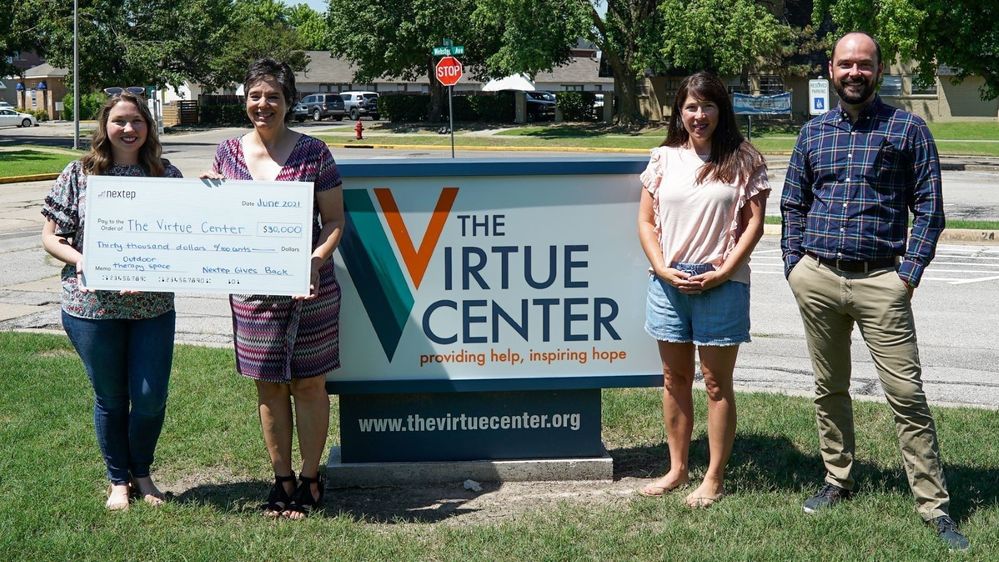
NORMAN, Okla., July 20, 2021 /PRNewswire/ — The Nextep Charitable Foundation supports The Virtue Center with a $30,000 donation toward their effort to build a new facility. The Virtue Center is a nonprofit organization in Norman dedicated to helping those struggling with addiction and related mental health challenges.
Individuals and families struggling with substance abuse, compulsive gambling, and mental health issues including trauma can utilize The Virtue Center’s services, including individual and group therapy, peer recovery support, case management, and more.
“We’re excited to partner with The Virtue Center for a number of reasons — most importantly, we love how their mission aligns with our values,” said Brian Fayak, Nextep founder and CEO. “Through our charitable foundation, we’re committed to supporting nonprofit organizations in need, and as a company, we’re committed to helping our employees better understand mental health and encouraging them to get the help they need. This made The Virtue Center an easy yes when they reached out for help.”
The Nextep Charitable Foundation’s donation will go straight toward The Virtue Center’s Capital Campaign to build a new facility, specifically the outdoor therapy space.
“The new facility will incorporate trauma-informed design principles to welcome people searching for recovery, help them to know they are important, and destigmatize the disease of addiction and mental health issues,” said Teresa Collado, Executive Director, The Virtue Center.
Nextep’s leadership felt sponsoring a therapy space would be a perfect fit because of Nextep’s commitment to mental health. Leadership encourages Nextep employees to find the help and space they need to become and stay mentally healthy. Last year, Nextep started sponsoring a meditation app for all of its employees and carved out dedicated meditation rooms for employees to use at any time during the workday.
You can support The Virtue Center by donating, volunteering, or giving gifts off their Amazon Wishlist. To learn more about The Virtue Center and its programs, visit thevirtuecenter.org.
About The Nextep Charitable Foundation
As a Professional Employer Organization (PEO), Nextep works with companies to provide outsourced services, including payroll, benefits, HR, compliance, and more. Since its beginnings, Nextep and its employees have had a heart for giving back. So, Nextep formed the Nextep Charitable Foundation to create a stronger platform to donate, volunteer, and give back. In partnership with the Pledge 1% movement, Nextep donates money, offers free services to nonprofits, and the employees volunteer their time, both in and outside of work.
About Nextep
As a CPEO, Nextep provides small and mid-sized companies access to big-company benefits and HR services, which can help them become premier employers. With Nextep as a partner, businesses have comprehensive HR, benefits, payroll, and risk and compliance solutions without the burden of administrative duties. For more info on how a PEO helps a business, visit https://www.nextep.com/services/peo.
The IRS does not endorse any particular certified professional employer organization. For more information on certified professional employer organizations, please visit www.IRS.gov.
Nextep, Inc.
www.nextep.com
Contact
Christy Hrencher
chrencher@nextep.com
Originally published at Uprise Partners. Written by Malinda Gagnon.
Contrary to popular belief, money is a neutral entity. Whether a business or entrepreneur does good has less to do with how much money they make and everything to do with how they use it.
This is a concept that, like many entrepreneurs, I have struggled with throughout the course of my career. My postgraduate education was in international relations (specifically: how to solve violent conflicts nonviolently through citizen and state solutions). Through the lens of global politics, big corporations and improving the world seemed incongruous.
But then lo and behold I landed a role at Google (which was a boon for my career) and had to reconcile with the fact that I was a part of a big corporation. It was hard for me to accept that I could enjoy and do both – that I could have a well-paying job and still support the causes I’m passionate about. Deciding to strive for a successful career in order to have more to donate to organizations I believed in was a pivotal moment.
There are so many ways of giving back to the local and global communities. Starting a non-profit is one method, but so is volunteering, donating funds, advocating for environmental issues, and marching for social change. In other words, “doing good” may not necessarily be your business’s primary focus, but having a successful business allows you to do more.
Big Scale Change Requires Money
Some of the biggest change-makers in the world are able to effect change because they have the money to do it. The top five givers for the last five years are Warren Buffett, Bill and Melinda Gates, Michael Bloomberg, the Walton family (the founders of Walmart), and George Soros. They are the biggest givers to philanthropic efforts.
They aren’t saints solely because of the amount of funds they donated – and this doesn’t mean that financial donations matter more than donations in other forms – but money doesn’t inherently equate to greed or control or ego. Money simply allows us to accelerate the change that we want to see happen.
Here’s a great example. During the February 2021 snow storm in Texas, Jim McIngvale, a.k.a. “Mattress Mack,” opened his gallery furniture stores for Texans to use as shelters. I doubt his corporate model included “providing heat and shelter to millions without power,” but that’s exactly what he did. And Mattress Mack was only able to provide immediate help because of his successful furniture store chain.
How Uprise Does Good
At Uprise Partners, we’ve chosen to include “doing good” within both our big picture mission and in our day-to-day operations.
We are proud to be a Pledge 1% organization, committed to donating 1% of our time, services, and profits to charitable endeavors. Pledge 1% is a movement to empower entrepreneurs, companies, and employees around the world to be forces for good, and it began with Salesforce founder Marc Benioff. The organization boasts more than 10,000 members and together they’ve ignited half a billion dollars in new philanthropy.
As those companies grow, so does their giving. And here at Uprise, we recognize that the better we do as a company, the greater our 1% becomes and the more we can give, too.
Our growth as a company doesn’t contradict our ambitions to effect positive change in our communities and the world – it actually helps amplify it.
The key is to make money the means and not the goal, and know it’s entirely possible to work for both an income and a cause.
This post was inspired by my discussion with Daughters of Change Founder and President Marie Sola on an episode of her podcast.
Originally published at Philanthropy Australia. Written by Mark Reading, Head of Foundation, Atlassian Foundation.
The non-profit Pledge 1% movement has prepared detailed guidance on ways for USA-based members to implement their equity pledges. There has been no equivalent guidance in Australia, until now.
Startup founders want to have an impact on the world around them. They are fixated on disrupting established industries in a way that makes life better for customers. They’re often also focused on wanting to make a philanthropic commitment related to social or environmental causes.
Businesses doing good in the world is also important to employees across industry sectors and in both large and small companies. In Atlassian’s 2020 Return on Action report, 69 percent of Australian workers said businesses should be just as concerned with their societal impact as their financial performance.
In 2014, Atlassian co-founded Pledge 1%, a non-profit that helps startups globally bake philanthropy into their business model.
Pledge 1% participants can choose to pledge 1% of equity, profit, time, product, or a combination of all four. As they grow, so does their contribution to society.
Pledging equity is feasible for all companies, but it is particularly relevant for startups, who are interested in giving back but may have low or even no profit.
Australian equity pledges have in the past been made via a public statement.
There’s been good intent, but no legal substance to validate this deep commitment to making a difference. A change in circumstances could mean that a well-intended pledge never translates into non-profit funding.
That is why the Atlassian Foundation partnered with PwC Australia, Herbert Smith Freehills and Australian Philanthropic Services, who each provided pro bono support, to create a Deed of Equity Gift. The Deed provides a clear legal pathway for founders to formalise their pledge of equity to their chosen non-profits, clearly demonstrating their commitment to employees, customers and other stakeholders.
At its core, the Deed legally commits founders to donate the nominated shares to an Australian Deductible Gift Recipient (DGR) entity in the event of a liquidity event occurring within 10 years of signing the Deed.
There was a slight concern that executing the Deed may give rise to adverse tax consequences – perhaps triggering an upfront tax bill or denying the donor a tax deduction for the gift. Consequently, the first person to execute the Deed, Andrew Herbert, the founder of data analytics and artificial intelligence startup, Cangler obtained from the Australian Taxation Office (ATO) a Private Binding Ruling (PBR). The redacted PBR, which can be accessed via the ATO’s Legal Database included confirmation that based on his particular facts and circumstances, there would be no unexpected tax consequences.
While founders should obtain independent tax advice for their own circumstances, the template Deed of Equity Gift and the redacted PBR allow founders and philanthropic shareholders to follow a process to confirm their tax position and focus on their impact for our communities.
The Pledge 1% movement has over 12,0000 members globally and more than 1,500 members in Australia. To date, the founders of more than 100 Australian companies have taken an equity pledge. Successful Australian companies whose founders have taken an equity pledge include Atlassian, Canva, CashRewards, CultureAmp, Mathspace and SafetyCulture.
Atlassian’s co-founders, Mike Cannon-Brookes and Scott Farquhar pledged 1% of equity, profit, time and product almost 20 years ago. As Atlassian’s business has grown, the Atlassian Foundation has been able to make a positive impact on causes around the world, particularly the education of youth from marginalised communities. Scott and Mike’s pledge has enabled the Atlassian Foundation to pass A$50 million in donations earlier this year and to have an asset base exceeding A$200 million.
For additional information, or to download a copy of the template Deed of Equity Gift, please refer here.
If you’re a founder interested in executing the Deed, feel free to contact me: mreading@atlassian.com. I’d be delighted to provide any support you need.
Originally published in PRWeb.com.
Shipshape Solutions Inc., a company with a vision for every home to be safe, reliable and efficient, today announced the establishment of the Shipshape Foundation and a corresponding grant of 2% of the company’s founding equity to the foundation. In addition to the equity grant, Shipshape pledged 2% of its product and 2% of its time to further its philanthropic mission.
“Shipshape was founded with the belief that the business of business is to build a better world,” according to Alexander Linn, Founder and CEO of Shipshape who, prior to founding Shipshape, worked at Salesforce as a Lead Solution Engineer on the Einstein Analytics & AI Platform. Shipshape’s 2-2-2 model was inspired by the 1-1-1 model pioneered by Marc Benioff and Salesforce. “Thanks to the leadership of Marc Benioff at Salesforce, we can do more so we decided to double the 1-1-1 model.”
Shipshape is in business to connect homeowners to service providers to help them save time, money and energy using technology. Shipshape aims to promote economic development and sustainability with every solution it sells. Its 2-2-2 model is designed to instill hyper alignment between the company, its stakeholders and the community.
“Technology is driving structural inequality into our economy. It is incumbent on us as entrepreneurs to design business models that drive equality and sustainable economic development. Otherwise, technology will become bad for mankind,” said Alexander Linn.
The Shipshape Foundation provides need-based grants to help low-income homeowners access home improvements that lead to safer, more reliable and more efficient homes. “Every day we meet homeowners that need our help. After just a short time with the company, I realized that the opportunity for us to make a difference in the world is huge, so I jumped at the opportunity to be involved in the Shipshape Foundation,” said Elexa Ruth, Director of the Shipshape Foundation.
With this announcement, Shipshape joins the Pledge 1% movement, a global philanthropic organization encouraging companies to give 1% of either their equity, employee time, profit and/or products to good causes. Through Pledge 1%, Shipshape joins a network of more than 12,000 companies in 100+ countries that have committed to philanthropic efforts.
About Shipshape Foundation
The Shipshape Foundation is a not-for-profit organization that owns 2% of the initial founding equity of Shipshape Solutions Inc. The foundation was formed by Shipshape Founder Alexander Linn to help low-income homeowners by providing need-based grants for home improvement projects that will reduce the carbon footprint and financial risks associated with ownership of their homes.
About Shipshape Solutions Inc.
Shipshape is on a mission to make homes smart enough to take care of themselves. Shipshape believes every home should be safe, reliable, efficient and well maintained. The company operates a first of its kind proprietary smart home predictive maintenance platform that offers solutions to homeowners to reduce the costs of home maintenance and operations. The Shipshape platform integrates an ecosystem of smart home hardware to enable advanced analytics and recommend actions that will reduce risks and improve system performance. Shipshape’s software platform unlocks the value of sensor data to enable a whole new era of the smart home.
Shipshape is based in Austin, TX. For more information, visit http://www.shipshape.ai.
About Pledge 1%
Pledge 1% is a global movement that encourages and empowers companies of all sizes and stages to donate 1% of their staff time, product, profit, and/or equity to a charity of their choosing. It provides a simple, flexible, and scalable model to integrate giving back into the DNA of all companies, especially startups. Already thousands of companies around the world have taken the pledge, and dozens of VCs, incubators and conferences have joined to push the movement forward.

Originally published on Protocol. Written by Biz Carson.
SPACs may have been the hottest IPO trend in the last year, but now a bunch of investors are hoping to make another aspect of going public just as cool: corporate philanthropy.
The blockbuster IPOs of companies like Coinbase and UiPath came with a pledge to set aside shares of the company for charity. This week, over 40 investors, including folks like Benchmark’s Peter Fenton and SV Angel’s Ron Conway, joined Pledge 1% as boardroom allies to help their portfolio companies follow the same path.
- UiPath’s CEO Daniel Dines heard about Pledge 1% during a Forbes event when he was talking to other CEOs who had gone through the process, like those from PagerDuty and Atlassian. The company had already engaged in some philanthropic activities through a nascent foundation, but when UiPath went public, it set aside nearly 3 million shares to be reserved for philanthropy as part of its new pledge.
- “When you look at the long list of amazing companies that are part of Pledge 1%, Salesforce included, this isn’t a new unproven approach to charity,” said UiPath CMO Bobby Patrick. “It’s actually quite well-proven, and in our view, this is what every up-and-coming tech company should be doing as a normal course of business.”
Companies need support to become effective in their philanthropy, said Amy Lesnick, CEO of Pledge 1%.
- “We really see a time that’s not so far away when setting aside equity for your philanthropy is really just as common as setting it aside for your employees. It’s just what people do,” she said. “To make that happen you need standards, you need an ecosystem of support and you need to make it easy.”
- Recruiting VCs to evangelize corporate giving is just the start. UiPath board member and CapitalG partner Laela Sturdy had often fielded questions from founders about how they should be giving, but it wasn’t until UiPath that she realized Pledge 1% had a playbook ready to go. “I’ve brought it up proactively with so many founders I work with and they’re just relieved,” she said.
It’s just one way the tech industry is trying to use its power and newfound wealth for good.
- When Airbnb went public, hundreds of Airbnb employees signed a pledge to donate proceeds of the IPO to charity. “So much of the conversation around tech company IPOs focuses on how the newfound wealth will be used for consumption,” Janet Frishberg, a recruiter for Airbnb from 2013 to 2019, told me at the time. “I was wondering if we could change that conversation and have at least part of the focus be on how we can give these newfound resources to help others and help our local communities and also help the world.”
- Investors are playing other roles too. Bloomberg Beta’s Roy Bahat also helps run a program through Stanford that’s meant to educate early startup employees on how to manage their wealth in an impactful way.
It’s not only good for the world, but it’s also just good for business, said Accel’s Rich Wong, who sits on UiPath’s board.
- The tech industry used to see itself as a niche upstart, but that’s changed. Companies who have seen this tremendous growth have a responsibility to give back, he said. “We have an obligation as a community to our communities,” Wong told me.
- There’s also a competitive advantage when it comes to hiring: “In the battle for the best talents, they want to work for a company that has a mission and has a heart, that’s not just about value maximization,” Wong said.
- UiPath agrees: “Not only is this at the heart of how our founder thinks, but our employees and our new employees coming to work for us, they want to work for a company that gives back,” Patrick said. “They care about the environment and social responsibility, and investors now care about corporate governance and ESG.”
Today, we are excited to announce that Pledge 1% has been named a Top 50 Finalist for the 2021 Classy Awards!
Classy, online fundraising software for nonprofits, launched the Classy Awards in 2009 to recognize the achievements of nonprofits and social enterprises operating in our communities and around the world, and to shine a spotlight on the new strategies, creative thinking, and ideas that move the needle on some of the biggest issues our world faces today. We’re proud to share that our Pledge 1% Equity Program has been recognized for its contribution to creating a new normal where companies leverage liquidity events to commit 1% of equity to future social impact.
The unprecedented social, health & economic challenges of the world cannot be addressed by governments & nonprofits alone. Pledge 1% aims to facilitate the essential role of high-growth companies in being part of the solution, starting with CEOs, venture capitalists & board members who can unlock business assets for social good. If every company pledges 1% of equity, there could be radically new resources available to help organizations around the world address today’s most pressing challenges.
We are already seeing many companies that are looking for ways to give back but lack the profit or resources to do so. Our equity program is changing both systems and structures by creating (1) tools & resources designed by legal & industry experts to help companies—no matter their size or stage—formalize their equity pledge in advance of a liquidity event, and (2) the Boardroom Allies program launched to accelerate this trend by helping top VCs & investors publicly show their support for portfolio companies who commit to a social impact program.
The social sector at large experienced immense challenges in 2020 to drive their missions forward, but in just 5 years, we are proud to have achieved 12,000+ member companies in over 100 countries. Currently, we have recorded nearly $1Billion in new philanthropy generated from Pledge 1% equity pledges alone.
This year, 13 Classy Awards will be distributed across four categories: Social Innovation, Adapt & Overcome, Lifetime Achievement, and People’s Choice. You can vote for Pledge 1% in the People’s Choice category here. Voting is open until June 25, 2021. Winners will be announced on September 28.
For more information on the Classy Awards, visit www.classyawards.org.
About Pledge 1%: Pledge 1% is a global movement that inspires, educates, and empowers every entrepreneur, company, and employee to be a force for good. Over 12,000 members in 100 countries around the world have used Pledge 1%’s flexible framework to ignite billions of dollars and hundreds of thousands of volunteer hours in new philanthropy. To learn more about Pledge 1%, and how your company can get involved, visit pledge1percent.org.
Originally pubished on uipath.com.
On Our Path to Automation for Good
Daniel Dines
The UiPath journey began with 10 people in an apartment in Romania. As our company has grown into a multinational business operating in nearly 30 countries, so has our belief in UiPath’s role and vision for impact in the world. Today, we aim to change the status quo for both our customers and society as a whole to create a brighter future. We aim to be at the forefront of critical conversations about what automation can do for us all – and how to harness technology for good – conscious of both our short and medium-term business goals and longer-term societal ones.
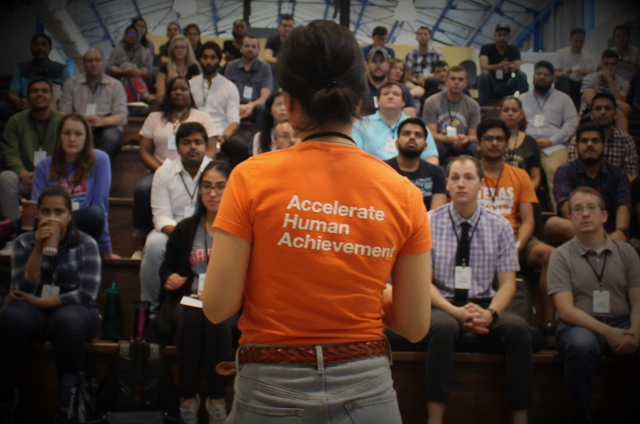
Our Company’s strong values, and more importantly our foundation of humility, have guided us through this past year and allowed us to be more responsive to the reality unfolding before us. This has been a defining moment for our society – and a defining moment for UiPath. We strive to be a brand of inspiration. We believe in the transformative power of automation to bring out the best in people, and the potential of people to bring out the best in our world. Ultimately, everything we do is grounded in a greater purpose: to accelerate human achievement and to liberate the boundless potential of people.
In support of our values and this greater purpose, I am pleased to share that UiPath is joining the Pledge 1% movement, and in doing so, joining an impressive network of entrepreneurs and companies across the globe such as Salesforce and Atlassian that have committed to philanthropic efforts. As part of our Pledge, we are committing to donate 2,810,082 shares of our Class A common stock over the next ten years to fund our social impact and environmental, social, and governance initiatives. We plan to continue to commit both our time and our rapidly evolving automation platform, in addition to our equity, to support our initiatives.
The surface level benefits of enterprise automation software are clear: save time, decrease costs, and speed up work. But our customers’ business goals aren’t simply to save time. They, like us, have greater missions to achieve. Now more than ever, leaders have to be connected to the world outside their organizations. From sustainability to social good, automation offers a practical path to achieving those goals that not only help organizations create a better work environment, but impact society around them.
At UiPath, we seek to promote the use of automation to encourage people to strive to learn more, do more, and have more fulfilling careers. We believe this commitment will help to make automation a force for good across our world.
While we’re proud of the successes we’ve seen, we know our work here is still just beginning. Our goal is, and always will be, for UiPath’s people, technology, and purpose to come together for good. We’ll never stop striving for better. Our purpose will always guide us, and our values will always push us forward – toward a better future for all.