By Joe Garofoli. Originally published in the San Francisco Chronicle.
Few entrepreneurs focus on charitable giving when they are building their companies — mere survival is a much bigger concern.
But leaders in corporate philanthropy circles say bigger companies find it even harder to make charity part of their business model, as investors have other priorities.
A campaign launching Tuesday aims to get growing businesses to do what San Francisco’s Salesforce.com did in its infancy 15 years ago: Promise to donate 1 percent of its equity, 1 percent of its employees’ time and 1 percent of the firm’s products to charity. Called the Pledge 1% Program — and led by Salesforce and others — it aims to get 500 other corporations to do the same over the next year.
Those who have bought into the idea have seen other benefits.
“It’s good for business, too,” said Bradley Heinz, program manager at Optimizely.org, the social impact arm of Optimizely, a firm which helps users enhance and grow their websites. The San Francisco company — which includes several top execs who used to work at Salesforce — is participating in the program.
It started early
Optimizely had already incorporated philanthropy into its business model when it was a 100-person firm. Now the 4-year-old company is three times that big. Employees saw the value of giving back when it donated its product to a campaign to help earthquake victims in Haiti four years ago. Improving the fundraising website led to $1 million more in additional donations toward earthquake victims, Heinz said.
“It’s much easier to integrate this when you’re a smaller company,” Heinz said.
But that can be difficult to sell to a growing company.
“I think it’s a mental barrier for most people,” said Ryan Martens, co-founder of the Entrepreneurs Foundation of Colorado, which is leading the campaign along with Salesforce and Atlassian, a software company. “People will say, ‘What will the venture capitalists say?’ Or, ‘Oh, that’s only for older adults who have made it, not for young ones.’”
“We’re just trying to make it easier for them to do this,” said Martens, who is also a co-founder of Rally, a software company that spends 4,000 hours annually volunteering and has donated $1.5 million through incorporating its principles over the past dozen years.
While saying that the goals are noble, privately some entrepreneurs say the hardest part is getting their employees — or VCs — to part with their equity shares. That’s why Martens suggested the “time to start talking about that is when it’s worth nothing. That’s the best time to talk to people about it.”
It is somewhat easier to convince a young firm to volunteer time and offer its product at a deeply discounted rate. Many young tech firms sell their software to nonprofits for up to an 80 percent discount, not only as a way to give back to the community, but also to broaden their customer base.
Aimed largely at startups and smaller firms, the campaign will provide a website where companies can learn how to enact each of the 1 percent pillars — and allow them to satisfy their commitment by taking on one challenge at a time instead of all three at once.
Making it easier
The hope is that if a younger company can make philanthropy part of its DNA when it is smaller, it will become a way of life as it grows. So far, 200 firms have signed up during the campaign’s quiet period.
Not every company can give with the volume of Salesforce. Founder Marc Benioff and his wife, Lynne, have donated tens of millions to the UCSF Benioff Children’s Hospital, to homeless families and to San Francisco public schools. In March,
Salesforce and the nonprofit Tipping Point Community formed SF Gives, an initiative to get the corporate community to raise money for Bay Area antipoverty programs.
Still, San Francisco’s income inequality divide — the fastest-growing in the country — is inspiring other growing companies to look at what they can do to help those less fortunate.
Employees at Practice Fusion, a cloud medical records company in San Francisco, decided that they would take $50,000 that would have been used for their holiday gift — usually something like a fleece pullover — and give it to the poor. Later this month, some of its 400 employees will box holiday meals for 700 San Francisco families and deliver them to three nonprofit organizations.
“People were not that into the gifts and swag,” said Practice Fusion CEO Ryan Howard. “They wanted to give back.”
Its biggest effort
While Practice Fusion has regular volunteer programs, this is the largest such outreach in its nine-year history.
Martens, one of the campaign’s leaders, hopes that by taking the pledge, such types of philanthropy can become institutionalized.
“It breeds a very virtuous cycle,” he said. “If you lean into it, it leans back on you and delivers way more benefit than you put into it.”
Originally posted: December 2, 2015
By Ken Yeung. Originally published on VentureBeat.
First we had Black Friday, then Small Business Saturday, and then Cyber Monday. So after a long weekend of spending money on ourselves and loved ones, why not turn that towards those less fortunate? Today is the third annual Giving Tuesday, and tech companies are rallying to help out.
Started in 2012, this event — founded by the 92nd Street Y cultural center in New York City in partnership with the United Nations Foundation — has come to symbolize the start of the holiday charitable season. Over the past three years it has seen participation by over 38,000 partners worldwide while also directly causing an estimated 470 percent increase in the number of online donations made during the same period.
Adobe stated that in 2014, it found that most people who gave to charities don’t know ahead of time which organizations to contribute to: 40 percent of all charity referral traffic is through search, while 3 percent is from social. This shows that raising awareness of causes, such as what various companies are doing on Giving Tuesday, can help donors to choose organizations to support.
This year we asked around to find which tech companies would be participating in this event. This is by no means an exhaustive list, and some companies told us that while they’re not participating directly in Giving Tuesday, they’re actively encouraging their employees to give back in their own way.
PayPal
PayPal has teamed with the 92nd Street Y on an ambitious mission to set a Guinness World Record for the “Most Money Raised Online For Charity in 24 Hours.” Last year, the company raised $8.6 million and has set its sights on generating more than $19 million in donations in the same time span this year.
Starting earlier today, at 12:00 a.m. Eastern Standard Time, you can participate by making a donation through PayPal to any charity, anywhere in the world. The company said that if you contribute more than $10 through its Give Cheer website, not only will 100 percent be passed through to the recipient organization, but PayPal will add 1 percent more to the amount.
Microsoft
A founding partner of the Giving Tuesday movement, Microsoft is encouraging customers to tell it about their favorite charities and why they should receive a software donation from the company. Additionally, it has created a dashboard powered by its business intelligence solution, alongside 92nd Street Y and Blackbaud, to help visualize real-time data of the 24-hour giving campaign.
Uber
The on-demand private car service is encouraging riders to make donations to the (RED) organization, whose aim is to eradicate AIDS from the world. At the end of your UberX ride in select cities, riders will be asked if they wish to make a $5 donation towards the cause. Each donation will be matched by The Bill & Melinda Gates Foundation.
eBay
eBay is encouraging people to donate to charities during this year’s Giving Tuesday event in perhaps the best way it knows how: by letting you shop. The company has opened up a new “store” where purchases made will go towards raising funds for various charities, including (RED).
With its eBay for Charity shop, the online marketplace wants to connect you with charities. Instead of asking you for donations outright, eBay is approaching from a commercial standpoint — you can buy a collection of limited-edition jewelry from Pamela Love whose proceeds benefit Fashion Targets Breast Cancer, bid on art from the upcoming Star Wars movie The Force Awakens to benefit UNICEF Kid Power, and much more.
Like Uber, eBay has teamed with (RED) to help fund the fight against AIDS. The organization will be auctioning off memorabilia, along with one-on-one brunch experiences with “iconic global business figures” like Coca-Cola chief executive Muhtar Kent; William Morris Endeavor co-CEO Ari Emanuel; Twitter cofounders Biz Stone, Ev Williams, and Jack Dorsey; and Warby Parker founders Neil Blumenthal and Dave Gilboa.
In another effort to get more charitable donations going, eBay is giving shoppers who select a favorite charity during the holiday season an opportunity to win a $2,500 shopping spree. The charity with the most new favorites will also receive a $25,000 grant from eBay.
Squarespace
The “do-it-yourself” website service kicked off its Giving Tuesday campaign earlier this week with $100,000 towards Code.org to assist the organization in providing computer science education to underprivileged groups.
Alphabet/Google
Through its Google.org program, Alphabet is encouraging users of its Google search engine to make contributions to DonorsChoose.org. The focus this year will be on providing assistance to educators who want to “increase inclusion, equity, and opportunity for students with diverse learning styles.” Just like it did with refugee relief, Google will be matching donations up to $1 million.
Already, Google’s Impact Challenge, whose goal is improving life for people with disabilities, has raised $1 million thanks to Android Pay. According to the U.S. Department of Education, 6.4 million students in the United States have special needs — that’s 13 percent of the school population. There’s not enough money being passed along to classrooms and teachers working to educate those kids.
As Facebook is a place for people to connect with the experiences of the community, the social networking company has released multiple stories to show the power charity has on the human spirit. The first story shows an architect who recounts the names and personal stories of every homeless person he helps directly. Seattle resident Rox Hohlbein has set up a Facebook Page to ask for goods and services requested by a person in need — in the past five years, Hohlbein said that every request posted has been answered.
There are other stories, including one featuring a family in North Carolina looking to raise funds for a sex education program in their area to stem HIV and other sexually transmitted diseases.
Facebook tells VentureBeat that it’ll be sending special messages to its users within the United States and Canada to help raise awareness of Giving Tuesday and the aforementioned stories. A spokesperson told us, “We know people around the world connect with their friends to celebrate special moments like holidays and other cultural moments on Facebook, which is why we’re sending them this message.”
Of course, with the company recently testing a new tool to help nonprofits raise funds, it’s probably not too far-fetched to see some causes and organizations try out this method. The company also just published several 360-degree videos from causes like Charity Water, TOMS Shoes, and the Clinton Global Initiative that are meant to help enhance their story.
Snapchat
The ephemeral messaging app company is participating this Giving Tuesday in association with (RED). Snapchat has created its first-ever global filter that, when applied, will trigger a donation to the AIDS-fighting organization. Users will find that there are three (RED) filters, designed by Tiesto, Jared Leto, and Jimmy Kimmel.
These filters will be available in all markets and will rotate throughout the day.
For 24 hours, every time any of these filters are used in a Snap, The Bill & Melinda Gates Foundation will donate $3 until $3 million has been raised. One hundred percent of the funds will go towards fighting AIDS — no overhead is taken by Snapchat.
Twitter isn’t shy about doing good in its community — it has a #Twitter4Good team dedicated to this cause. The company told us that its Neighbor Nest community space will hold Twitter 101 and 201 training classes for businesses in the mid-Market area of San Francisco, California. It also published an interview it conducted with the creator of the #GivingTuesday event, Henry Timms of the 92nd Street Y.
Nvidia
Although Nvidia isn’t doing a campaign like the ones listed above, it does have plans this weekend to replace its annual holiday party with time spent helping the community. The company said that its 1,500 volunteers will spend two days working to once again “improve key institutions in nearby low-income communities.” It’ll be targeting Sheppard Middle School and Painter Elementary School in the Alum Rock Union School District in East San Jose, California.
The company said it will be building outdoor classrooms and education gardens, painting murals, upgrading fitness facilities, creating new seating areas, and much more.
Adobe
Although Adobe isn’t doing any public-facing campaign, it is looking to its employees to help make a difference. The software company revealed that it has partnered with Oxfam International to supports humanitarian efforts around the world. For every employee who contributes this Giving Tuesday, Adobe will donate $1,000 — up to $50,000.
Salesforce
When it comes to philanthropy, one of the most prominent companies is Salesforce. The Marc Benioff-led company has been encouraging founders and chief executives to not think only about their company’s financial bottom line, but also what legacy they’re leaving in the community. This leads to the 1 percent pledge that today has over 500 companies committing to it — 1 percent of employee time, equity, and product or profit goes back into the community.
This 1 percent pledge was started by Salesforce along with Atlassian, the Entrepreneurs Foundation of Colorado, and Rally for Impact in 2014 and has received the support of companies like AppNexus, Campaign Monitor, Twilio, Glassdoor, Hampton Creek, Lookout, Weebly, and even venture capital firms.
Munchery
Munchery is doubling down on its year-long campaign to feed those in need. While the company already donates one meal to a local kitchen for every meal ordered, this Giving Tuesday, it’ll offer diners the opportunity to make donations directly towards a local food bank with each order. So not only will you be buying food for yourself, but you can help feed someone else too.
Apple
Apple’s App Store has partnered with (RED) and the developer Supercell to raise money to fight AIDS. Every time you buy a special (RED) packs for select Supercell games: Clash of Clans, Boom Beach, and Hay Day, 100 percent of the proceeds will go towards the cause. These packs will be available as in-app purchases until December 4 at 8 a.m. Pacific Standard Time. Each purchase will include a limited-time decorative item so you can highlight your support in the game.
By Levi Sumagaysay. Originally published on SiliconBeat.
Here’s what’s on the Tuesday menu.
A court document released Monday shows what NSLs are good for: The FBI uses national security letters to demand warrantless access to Internet users’ complete browsing history, online purchases and who they communicate with.
In other tech and policy news, the House is considering changes to the 1986 Electronic Communications Privacy Act. The changes would require the government to obtain warrants when they want to access communications that are older than 180 days.
It’s Giving Tuesday. Some tech companies are following Salesforce’s philanthropic example, MarketWatch reports.
Eddy Cue Q&A about Apple’s News app: It’s for everyone; it’s good for journalism; there are no censorship hurdles in China.
Messaging battle? Facebook looks to be blocking links to Telegram, a Whatsapp rival.
“Iterating Grace,” an anonymously written satire of Silicon Valley, now has a publisher. (NYT)
Now playing at the Google Cultural Institute: You, onstage at Carnegie Hall, via 360-degree videos. (NYT)
Hewlett Packard Enterprise teams up with Microsoft Azure on hybrid cloud.
AT&T raises price for grandfathered unlimited data plans, will be $35 a month starting in February.
Originally posted: December 1, 2015
By Mark Hubert. Originally published on MarketWatch.
Mark Hulbert discusses the growth expectations imbedded in Amazon.com’s current stock pick and how likely it is that they will be met. See full story.
These are the stocks for playing climate change
As a summit on climate change takes place in Paris, banks are thinking about the hot-button topic — including how to make money from it. Bank of America Merrill Lynch details stocks with “exposure to climate change-related solutions.” See full story.
On Giving Tuesday, tech companies follow Salesforce’s example
Pledge 1%, a corporate philanthropy movement, is using Giving Tuesday to announce that more than 500 companies, including many tech startups, have committed to the once-novel donation model created by Salesforce.com Inc. See full story.
What you need to know about China’s inclusion in IMF currency basket
Five things you need to know about the Chinese currency’s inclusion in the International Monetary Fund’s currency basket. See full story.
Millennials cheer as boomers retire
The underemployment rate for college graduates dropped to 6.2% this year from a high of 10.2% during the recession. See full story.
MARKETWATCH PERSONAL FINANCE
Based on the price per square foot in eight neighborhoods, New York looks like a comparative bargain. See full story.
Originally posted: December 1, 2015
Originally published on Medium.
Last year on #GivingTuesday, Salesforce.org, along with Atlassian, Entrepreneurs Foundation of Colorado and Rally, launched Pledge 1%: a movement to encourage high-growth emerging companies around the world to build philanthropy into their business. We’ve had an unbelievable year — hundreds companies have already pledged 1% of their equity, profit, product or employee time back into the community — and we’re on our way to hitting our goal of 500 pledges by #GivingTuesday 2015 on December 1st.
Today, as we kick off Salesforce World Tour New York City, we’re pleased to celebrate the incredible Pledge 1% members in New York.
- 212 Staffing, a company that provides consulting and staffing services to local and global enterprises implementing and using Salesforce, Oracle and SAP based applications, has pledged 1% of time, 1% of product and 1% of profit.
- Admittedly, an app that takes the guesswork out of school applications, has pledged 1% of time and 1% of product.
- AppNexus, the world’s leading independent ad tech platform, has pledged 1% of time.
- Auctio, Inc., is a referral management platform that enables companies (B2B) to launch and optimize referral and cross selling programs, has pledged 1% of equity, 1% of time, 1% of product, and 1% of profit.
- Care+Wear, a company designing innovative healthwear to create a more positive and effective healing experience for patients everywhere, has pledged 1% of profit.
- CariClub, a company that is connecting young professionals to nonprofit junior board opportunities, has pledged 1% of time and 1% of product.
- CartoDB, a company making it easy to map and analyze data, has pledged 1% of product.
- ChatID, a platform that connects consumers and brands from within the retail channel, has pledged 1% of time.
- CloudPixle, a leading innovator in the digital signage space, has pledged 1% of equity, 1% of time, 1% of product and 1% of profit.
- Dstillery, a company that creates data-driven marketing solutions that are brand-specific, cross-channel, and tuned to perform, has pledged 1% of equity and 1% of time.
- Goby, an expertly designed toothbrush, has pledged 1% of profit.
- enhatch, a mobile platform for field sales teams, has pledged 1% of product.
- Epic Foundation, an organization that connects the world’s leading philanthropists and corporations with outstanding organizations focused on youth wellbeing, has pledged 1% of time.
- Fundera, a company that makes it easy to save on a small business loan, has pledged 1% of equity, 1% of time, and 1% of product.
- General Assembly, a global network of campuses for technology, business, and design, has pledged 1% of time.
- Guggenheim Partners, a global investment and advisory financial services firm, has pledged 1% of time.
- Javelin, an all-in-one software platform for innovators, has pledged 1% of equity, 1% of time and 1% of product.
- Media Math, the top advertising software company for transformative results, has pledged 1% time, 1% product and 1% profit.
- Multi, which allows individuals to interact with local businesses in real time has pledged 1% of equity, 1% of time and 1% of product.
- Placemeter, Inc., an urban intelligence platform, has pledged 1% of time and 1% of product.
- Porter and Sail, the premium digital concierge for leading lifestyle hotels, has pledged 1% of time.
- Qubit, a digital experience leader, has pledged 1% of time and 1% of product. Reserve, a digital concierge service focused on making every part of the dining experience better, for both restaurants and diners, has pledged 1% of equity.
- Scott’s Pizza Tours, a company providing guided tours of New York’s best pizza, has pledged 1% of time and 1% of profit.
- Silverline, a Salesforce Platinum Cloud Alliance Partner focusing exclusively on the end-to-end deployment of salesforce.com products and powerful third party apps, has pledged 1% of time and 1% of product.
- TripExpert, a service providing trustworthy, professional reviews of hotels, restaurants and tourist attractions, has pledged 1% of equity.
- UltraLinq Healthcare Solutions, Inc., a cloud-based medical image and data management platform determined to help payors, networks and providers change how healthcare is delivered and practiced, has pledged 1% of equity, 1% of time and 1% of product.
- Vettd, the mobile app platform for alumni groups, non-profit and social organizations, has pledged 1% of time and 1% of product.
Thinking about building giving back into your company culture? Pledge 1% can help. Take the pledge today at www.pledge1percent.org.
Originally posted: November 11th, 2015
By Ryan Scott. Originally published on Forbes.
Attending SOCAP15, the recent Social Capital Markets conference in San Francisco, was one of the highlights of my year. A world-renowned conference series dedicated to increasing the flow of capital toward social good, SOCAP brings together impact investors, global innovators, foundations, governments, institutions, and social entrepreneurs for a forum on how best to change the world. It’s nearly impossible to leave without feeling inspired and ready to take on any challenge to social progress.
San Francisco is uniquely positioned to help define and embrace the evolving role that businesses play in social change. While all the attention is on the unprecedented wealth within the Bay Area, the reality is that one in five residents live in poverty. Fortunately, the same entrepreneurial mentality endemic to the region has also ushered in brand new tools to address this growing income gap and other pressing social issues.
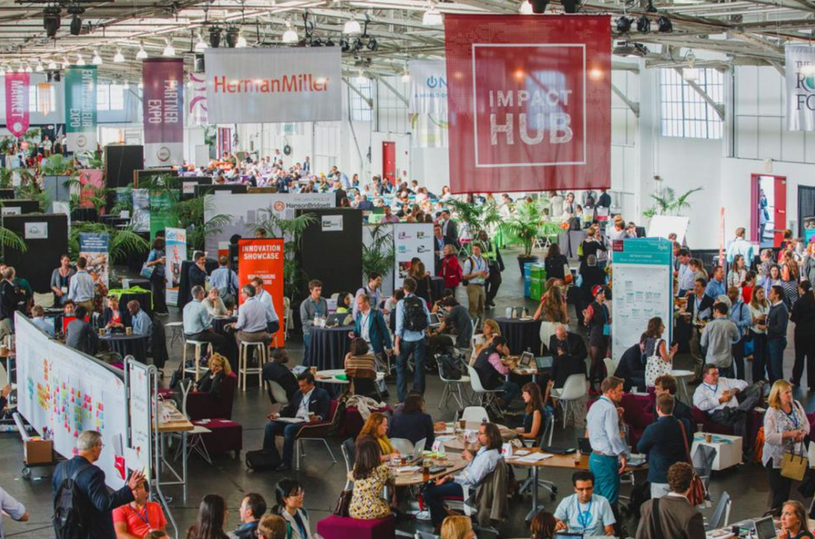
One of the most exciting of these new tools is the concept of equity pledges, and I was honored to participate in a dynamic panel discussion about how startups can use this commitment to do good from the start.
The discussion was hosted by Rob Joyce, Director of Special Projects for Full Circle Fund, an active network of 200 professionals who leverage their resources, skills, time, and funds to accelerate social good in the Bay Area. A year ago, inspired by Salesforce’s 1-1-1 model, the San Francisco nonprofit launched Founders Pledge, a program that helps companies bake giving back into their corporate DNA by pledging 1% of their equity to nonprofits. These pledge-making companies access resources and programing to cultivate a company culture that builds on their equity commitment; these companies also become a part of the Pledge 1% community, a national and international corporate philanthropy movement dedicated to making the community a key stakeholder in every business.
How are Founders Pledge, Pledge 1%, and other programs relating to models like the 1:1:1 and benefit corporations creating new opportunities for collaborative impact between the private and nonprofit sectors? How can a pledge of company equity be the first step to building a broader social-minded company culture? This was the line of inquiry Joyce posed to me and fellow panelists Dipti Pratt, Director of Pledge 1%, which has encouraged 450 companies to take the pledge so far; Carlos Garcia, Sr. Donor Relations Officer at San Francisco Foundation, which ranks among the nation’s largest community foundations in grantmaking and assets; Milicent Johnson, Manager of SF Gives at Tipping Point Community, which funds and partners with the most promising groups supporting the needy in San Francisco; and Joe Kleinschmidt, a board member of Full Circle Fund as well as CEO and co-founder of productivity software firm Obindo, a company that has also made the Founders Pledge.
The panelists I sat with agreed that there’s never been a better time to engage your company in community outreach, and it’s important to not wait to do so. As the founder of two companies, Kleinschmidt had a helpful perspective. “When you first launch a company, your resources are often extremely limited. But you do get to define the kind of culture you want your company to have.”
Ten years ago, when Kleinschmidt started his last company, he wanted to give back. “But the demands of building a company mean you have no extra time to say, ‘Now I’m going to get to that giving back,’” he observed. “I was always ‘about to get to that.’”
When he launched his second company, Obindo, Kleinschmidt recognized that there are always going to be other demands and giving back must be a part of its mission from the start.
Beyond doing the good work, you need to have systems in place to track how you’re giving back. And the biggest piece of data you need isn’t data at all; it’s the infrastructure to tell your story. Causecast is doing its part in this regard by offering our platform to any Founders Pledge company, and by connecting all of the pledge companies to volunteer and give together. This is particularly helpful to startups that may have a small headcount and no point person to manage their employee volunteer and giving programs. Through the Full Circle Fund, every pledge-making company will enjoy the benefits of the Causecast platform.
“We think about leverage every time we make a key decision at our company,” said Kleinschmidt. “The question we always ask is: how can we do this, not slightly better, but a thousand times better? When we apply that question to philanthropy, we feel the strongest answer is to leverage the community of people who are already doing this. Meeting other like-minded founders is pure gold. There’s an alignment there. Purpose drives you, and founders want to connect with people who have those values.”
The panel agreed that one challenge founders face in shaping their corporate philanthropy is investors. How will funders perceive the generosity of equity pledges?
The answer is that culture is a much broader consideration than what happens within your company. You can’t just add culture after the fact if it isn’t there; sometimes it’s too late. And if you aren’t building your culture with intention, it doesn’t mean it isn’t being built.
Startups compete with larger companies for more than market share; they also compete for talent. And employees these days aren’t just looking for balance – they’re looking for purpose. If you want to attract the best talent, you need to shape your company as a visionary on every level, and that includes philanthropy.
From early on, you are signaling what kind of company you are building. The consensus of my esteemed panelists is that prioritizing philanthropy is an essential tool toward creating a company that resonates through the noise and drives positive social change forward.
Originally posted: November 3rd, 2021
By Quentin Hardy. Originally published in The New York Times.
To view the full article, visit: https://www.nytimes.com/2015/11/08/giving/marc-benioff-salesforce-chief-on-the-strategic-benefits-of-corporate-giving.html?ref=giving
Originally posted: November 2nd, 2015
By Gillian Tett. Originally published in the Financial Times.
If you are strolling around downtown San Francisco these days you might notice an imposing superstructure springing up, changing the skyline. This is the new headquarters of Salesforce, the cloud computing company that was founded by Marc Benioff in 1999 and has since exploded at startling speed. (Among its clients is the FT.)
But Salesforce is using more than concrete to change the landscape — it is trying to use philanthropy too. In recent years, the group has run a big charitable foundation, which dispenses tens of millions of dollars of aid each year, along with donations of employee time and Salesforce products.
There is nothing unusual about that: most tech companies today run philanthropic programmes, and most newly minted billionaires are giving money away. Just look at how Facebook founder Mark Zuckerberg has joined forces with Warren Buffett and Bill Gates to implement a pledge to each give away at least half their wealth.
But what makes the Salesforce initiative striking is that the company started doling out cash as soon as it was founded, long before it could aspire to create a 61-storey San Francisco skyscraper. More interesting still, when Benioff’s company made its move into philanthropy, it did this by placing 1 per cent of the equity into a foundation — creating a windfall when Salesforce went public in 2004 for a $1.1bn valuation.
These days, Salesforce is on a mission to persuade other start-ups to do the same via a “1-1-1” pledge (a framework whereby companies give away 1 per cent of their equity, employee time and services for social good). This year, for example, it has teamed up with the Robin Hood Foundation, an organisation that seeks to address the problems of poverty in New York, to promote that pledge on the East Coast.
But the really big prize is Silicon Valley, which is now home to a herd of so-called “unicorns” — start-ups that have not yet floated on any stock exchange but are already valued at more than $1bn. For if those unicorns were to earmark 1 per cent of their equity for charity, it could eventually deliver a philanthropy bonanza. “We think that start-ups should be thinking about philanthropy right from the start,” says Suzanne DiBianca of Salesforce. This is a campaign to turn the tip of those unicorns’ horns into a force for good.
Not all unicorns seem to be convinced by this pitch, however. There is no sign that, say, the founders of Uber — arguably the most (in)famous unicorn around today — are about to give 1 per cent of their company to charity. Nevertheless, dozens of start-ups have signed up to variations of the 1-1-1 pledge, including Seth Levine (founder of Foundry), Dan Siroker (Optomizely), Ron Conway (SV Angel), Scott Farquhar (Atlassian) and Krista Marks (Simbulus).
To my mind, this is a fascinating development. In the past, it was generally assumed in corporate America that people donated money after they had become successful and rich. It was also assumed that companies ran corporate social responsibility programmes only when they had profits to disperse. But what the Salesforce model is trying to do is build philanthropy into the company from the very start. And that reflects a subtle shift in how Benioff and his ilk view companies — and capitalism.
For instead of assuming that companies are just about shareholders, or that corporate social responsibility sits in a separate mental or structural box from business, the 1-1-1 pledge tries to put them into a wider vision of social interest.
This is different from the Wall Street ethos — the concept of capitalism that people such as Buffett espouse (he does not believe in giving chunks of the company to philanthropy because it goes against shareholder interests). Indeed, the language of the 1 per cent pledge has more in common with centre-left ideas, or the 19th-century British Quakers who created companies such as Cadbury. “Companies can do more than make money,” Benioff insists. “They can serve others
If you want to be a cynic, it is temptingly easy to scoff. After all, 1 per cent of your wealth is not that much to give away (the traditional Christian church has usually demanded a 10 per cent “tithe”). And when the tech sector talks about philanthropy today there tends to be a hefty dose of self-interest involved — or, more accurately, self-preservation. The wild success of Silicon Valley is fuelling rising inequality, and savvy entrepreneurs know they need to do something to defuse the inevitable backlash.
To be fair to Salesforce, it should be noted that it started its 1-1-1 pledge well before the current boom. And even if you dismiss the idea as hype, it is worth pausing to consider what might happen if company executives of all stripes assumed that it was normal “business” to give part of their enterprise away. Would that make capitalism more effective (and loved)? Or would it muddy the waters in a dangerous way?
Personally I think Salesforce has it right — but the debate will continue long after the tech bubble has burst. Better keep watching the tips of those unicorn horns.
Originally posted: October 30th, 2015
By Caroline Preece. Originally published on CloudPro.
Salesforce has set aside a $100 million fund to pour cash into European start-ups.
The money will be allocated by the SaaS giant’s global corporate investment group, Salesforce Ventures, whose portfolio includes more than 150 start-ups, such as CartoDB, CloudSense, Cloud9 IDE, NewVoiceMedia, Qubit, Universal Avenue and YOUR SL, but only 17 of those are based in Europe.
However, John Somorjai, EVP of corporate development and Salesforce Ventures, said the money signalled a growing focus on Europe from the company.
“There is so much incredible innovation happening in Europe today and we want to empower the next generation of enterprise cloud start-ups in the region,” he said. “Our $100 million commitment strengthens our mission to help start-ups grow and give back to their communities.”
The public cloud software market in Europe is predicted to grow 12 times faster than other sectors, according to IDC, and is set to hit €33.3 billion by 2019.
Salesforce Ventures has invested in start-ups since 2009, and those present among its portfolio are encouraged to take up Salesforce Foundation’s 1-1-1 model that encourages companies to give back to their community with one per cent of their product, time or equity.
Ruben Daniels, co-founder and CEO at Cloud9 IDE said: “Salesforce Ventures provides not only funding, network and introductions, but also the mentorship and framework to help companies understand how they can give back as they grow.
“We are proud of our commitment to pledge one per cent and expand diversity in the technology industry by making the community a key stakeholder in our business.”
Thorsten Kohler, co-founder and CEO of mobile productivity solutions firm YOUR SL, added: “An investment from Salesforce Ventures offers a collaborative partnership. Salesforce Ventures has increased our ability to stay competitive as we grow and connect with new enterprise customers, delivering success to the entire spectrum of business.”
Originally posted: October 14, 2015