
Original article here
Author: Kristin Toussaint
Around the world, there are more than 100 million refugees who were forced to flee their homes because of violence, persecution, climate change, and more. Being displaced comes with a slew of challenges, of course, like finding work—made even more difficult by a language barrier or a mismatch in employment skills.
Japan, for example, has accepted thousands of refugees from Ukraine and Afghanistan, but they may not easily assimilate into the culture or master the language quickly enough to get a job. Still, refugees need to support their families, want the dignity of work, and don’t want to be seen as burdens to their host countries, says Neeti Shukla, cofounder and social impact officer of software company Automation Anywhere. “Technology can actually be that language that bridges this,” she says, “because you don’t need to learn Japanese to work in a technology job as a refugee.”
As the refugee crisis is growing, so too is the demand for workers with digital skills. Automation Anywhere has long focused on helping upskilling workers. In 2023, it expanded those efforts specifically for refugees through its Global Gateway Program, launched in partnership with Robo Co-Op, a cooperative that empowers refugees with digital skills. This program is the winner of Fast Company’s World Changing Ideas Award in the corporate social responsibility category.
“There’s all sorts of refugees in every part of the world now. So our aim is, how can we help them also become a part of this digital revolution that we are seeing, and not be left behind?” Shukla says. The Global Gateway Program teaches refugees automation skills in as little as three months, opening up remote job opportunities. Some may go through the program faster, especially if they already have tech skills. The curriculum is “bite-sized,” Shukla says, so people can choose how much time they put in daily and balance this upskilling with their other family or home obligations.
Robo Co-Op provides a supportive community for refugees as well as a curriculum, while Automation Anywhere provides scholarships, courses, certificates, and on-the-job training opportunities in which refugees can test new Automation Anywhere features and showcase their skills. In some cases, the company will also donate laptops and hardware. Automation Anywhere is a low-code or no-code software that allows people to create bots that automate business practices such as organizing or analyzing data in spreadsheets. “You don’t have to get a two-year engineering computer science degree to learn these technologies,” Shukla says.
Because Automation Anywhere works with all sorts of industries, those trained in these skills can expand on their prior workforce experience. “Let’s say I was a hospital administrator. I can be a better hospital administrator because I know automation,” she says. “Where they have worked in the past, or learnt in the past, or had a career in the past—it’s really augmented by this learning.”
Global Gateway began as a pilot program before officially launching in November 2023. There aren’t yet figures on the number of refugees who have gone through the program, but Robo Co-Op takes cohorts of 10 to 15 people at a time. A handful of Syrian refugees in Turkey and Ukrainian and Afghan refugees in Tokyo have already received digital skills training. A few of those refugees have gotten jobs training other refugees in these digital skills. Automation Anywhere and Robo Co-Op aim to create 100,000 job opportunities for refugees in the next three years.
Explore the full list of Fast Company’s World Changing Ideas, 281 projects that are making the world more accessible, equitable, and sustainable for everyone. We’ve selected the companies, organizations, and nonprofits making the biggest impact across 50 categories, including architecture, energy, finance, transportation, and more.
Original article here
Author: Appfire
Appfire, the leading global provider of software that enhances, extends, and connects the world’s leading platforms, has been named to Inc.’s annual Best Workplaces list for the second consecutive year. Prominently featured on Inc.com, the list is the result of a comprehensive measurement of American companies that have excelled in creating exceptional workplaces and company cultures, whether operating in a physical or a virtual facility.
Appfire’s mission to equip and connect every team so they can plan and deliver their best work is supported by its commitment to leveraging the latest in technology innovation. By increasing the value of platforms such as Atlassian, Microsoft, monday.com, and Salesforce, Appfire empowers customers to automate, modernize, and tune these platforms to make them their own and make work flow.
In conjunction with driving productivity and value for customers through technology, what makes Appfire unique is its dedication to fostering an environment where everyone feels respected and heard. With 800+ employees across 20+ countries, Appfire empowers everyone with choices — in how and where they work — providing the education, growth, and leadership opportunities they need to thrive. This people-first culture extends beyond Appfire and into the communities where its employees, partners, and customers live and work through initiatives such as Pledge 1% and Appfire’s corporate social responsibility (CSR) program, Appfire Town.
Since 2015, Appfire has committed to philanthropic efforts through the Pledge 1% movement, and in 2021 committed to all four pledge types — donating 1% of product, profit, equity, and employee time to improve communities around the world. In 2023 alone, Appfire donated millions of dollars in software licenses to nonprofit organizations and academic institutions. In 2022, Appfire launched Appfire Town to generate a strong local and global social impact. Last year, Appfire Town impacted 942 organizations, with volunteers logging more than 4,000 collective hours and donating more than half a million dollars to a range of causes. While the average industry employee engagement rate in CSR programs is roughly 26%, Appfire’s team engagement has been nearly 80%.
“It’s an honor to see Appfire included once again on Inc.’s Best Workplaces list,” says Randall Ward, Co-founder and CEO of Appfire. “It’s the people that make businesses extraordinary. I strongly believe that putting into action our number one core value, Be human, is the key to making sure our team members feel valued and supported, which has spurred our incredible growth.”
“Each year, Inc.’s Best Workplaces program recognizes the very best in terms of companies that have fostered a truly amazing culture,” says Inc. editor-in-chief Mike Hofman. “We use hard metrics and data as well as qualitative measures for judging in order to find the very best—and we’re proud that the program is highly selective.”
After collecting data from thousands of submissions, Inc. selected 543 honorees this year. Each company that was nominated took part in an employee survey, conducted by Quantum Workplace, which included topics such as management effectiveness, perks, fostering employee growth, and overall company culture. The organization’s benefits were also audited to determine the overall score and ranking.
Interested in joining Appfire’s dynamic team that values entrepreneurial thinking and innovation? Check out Appfire’s open opportunities and learn more about its people-first approach by visiting appfire.com and the company’s blog, and follow along on LinkedIn, X, and Instagram.
About Appfire
Appfire is the leading global provider of software that enhances, extends, and connects the world’s leading platforms to make work flow any way teams want to work, from planning to product ideation, product development, project delivery, and beyond. Appfire increases the value of platforms such as Atlassian, Microsoft, monday.com, and Salesforce, enabling teams to thrive and do their best work together. With more than one million users, Appfire’s popular solutions are helping teams with Enterprise Collaboration, DevOps, Workflow & Automation, Product Portfolio Management, IT Service Management (ITSM), Document Management, Business Intelligence and Reporting, Administrative Tools, Agile Tools, Developer Tools, Time Tracking, Publishing, and Integrations. Appfire has been selling its popular software products on the Atlassian Marketplace since it first launched in 2012, and today Appfire has the most widely adopted portfolio of Atlassian apps across tens of thousands of customers worldwide. Learn more at www.appfire.com.
About Inc. Media
The world’s most trusted business-media brand, Inc. offers entrepreneurs the knowledge, tools, connections, and community to build great companies. Its award-winning multiplatform content reaches more than 50 million people each month across a variety of channels including websites, newsletters, social media, podcasts, and print. Its prestigious Inc. 5000 list, produced every year since 1982, analyzes company data to recognize the fastest-growing privately held businesses in the United States. The global recognition that comes with inclusion in the 5000 gives the founders of the best businesses an opportunity to engage with an exclusive community of their peers, and the credibility that helps them drive sales and recruit talent. The associated Inc. 5000 Conference is part of a highly acclaimed portfolio of bespoke events produced by Inc. For more information, visit www.inc.com.
About Quantum Workplace
Quantum Workplace, based in Omaha, Nebraska, is an HR technology company that serves organizations through employee-engagement surveys, action-planning tools, exit surveys, peer-to-peer recognition, performance evaluations, goal tracking, and leadership assessment. For more information, visit QuantumWorkplace.com.
Author: Adara Development
It was a desire to make a difference that first put Pledge 1% on Ansarada Co-Founders’, Sam and Rachel Riley’s radar. And it was a transformative meeting with Adara Group Founder and Chair, Audette Exel AO, that led Ansarada to pledge 1% of their equity, time and product to Adara.
Ansarada is a global ASX-listed software as a service business that companies, advisors and governments rely on for securely managing critical information, workflow and collaboration in high stakes processes like deals, risk, compliance, governance and procurement. The Adara Group is an international development organisation delivering quality health and education services to people living in poverty in some of the world’s remotest places.
When Ansarada learnt of Adara’s life-changing work and their innovative business-for-purpose model (more on that here) it seemed like a meeting of minds and a natural alignment on purpose. It marked the beginning of a powerful partnership that is still going strong, ten years down the line.
This partnership has seen Ansarada staff give their time to set up technology platforms or provide marketing support as part of the 1% of time pledge. It’s seen Adara get access to Ansarada’s software thanks to the 1% of product pledge. And it has seen Adara become an Ansarada shareholder through the 1% of equity pledge.
Since the beginning of the partnership in 2015, both organisations have grown and evolved. But what’s held it all together?
“It goes back to the culture,” Rachel says. “As we have gone from start up to scale up, it’s culture that trumps all other strategic outcomes. And as you scale up, that culture can change based on the people you hire and the community around you. Culture is obviously influenced by the people and your growth journey. But the starting culture of a start-up business is arguably built by the values that the founder(s) have.”
The founders of Ansarada always knew they wanted to create impact beyond just their business. They built giving – and Adara specifically – into their culture, right from the very beginning.
“Adara hasn’t just fit into that culture, Adara has actually helped create that culture,” Rachel says. “If we did a survey today of everyone globally across the business, in terms of what philanthropic impacts they’re passionate about, they would say the disadvantaged, the women and children in poverty in remote places. That’s Adara. They’ve grabbed that passion, they’ve heard that story and they can see the impact of what they’re doing.”
By understanding the causes that would resonate with their staff and embedding it early, Ansarada built a powerful culture that has endured recruitment drives, capital raisings, ASX listings and stakeholder changes.
“In a million different ways, the culture of Ansarada and the culture of Adara have clicked really deep,” agrees Adara’s Founder, Audette Exel. “And I cannot emphasise enough how important culture is for a business – everything flows from there.”
It’s been a mutually beneficial partnership. And the decision to choose Adara as the sole beneficiary of Ansarada’s 1% pledge was conscious, according to Rachel.
“Having a foundational rock with a non-for-profit that you support really helps your business,” Rachel says. “Having the pillar that everyone is centred around, that’s where the deep impact comes from.”
This hasn’t stopped the Ansarada team from getting involved with other local volunteering opportunities. But it has meant they approach their corporate giving in a much more strategic and targeted way, with Adara at the centre, bringing it all together and creating a bigger impact.
Audette, a social entrepreneur in her own right, has one key piece of advice for any organisation looking to begin their Pledge 1% or social impact journey: “Do it early. Like really early. Do it quick. And then embed it. When you’re starting, 1% may be 1% of very little. Once you grow a business, if you’re lucky enough and if you’re able to build something to scale, the impact can be massive – as it has been for us at Adara.”
Rachel agrees. “Ansarada wouldn’t be what it is today without the Adara relationship,” she says. “But if these partnerships aren’t embedded early on, it’s a difficult story to tell stakeholders later down the line.”
The tangible impact of a 1% pledge became clear earlier this year when Adara sold their stake in Ansarada. This followed the announcement of the proposed sale of part of Ansarada’s business.
“We poured that money straight into saving lives,” Audette says.
For both Adara and Ansarada, the impact of this 1% of equity is more than you’d ever see on a balance sheet. It’s a baby opening its eyes in a hospital in rural Uganda, who otherwise might have died. It’s a 12-year-old girl in a school uniform, rather than a wedding dress. It’s a child who was pulled out of a basement on her way to the trafficking trade, graduating top of her class.
And that’s exactly what the Pledge % movement is all about. Using the power of business to create change. To save lives.
To be a force for good.

Original article here
Author: Alexander Puutio
Earth Day is upon us.
Since its inception in the 1970s, April 22nd has provided an apt opportunity for companies and their leaders to reflect on their impact on our shared planet and to take action to safeguard its future.
If you are still looking for a way of getting involved, you’re bound to find an initiative that fits your sustainability strategy.
For example, the EARTHDAY.ORG is rallying its forces around the theme of Planet vs. Plastics, seeking a 60% reduction in plastic production by 2024. The World Wildlife Fund offers guidance for companies looking to get started by giving them tangible starting points from 60 Actions for the Planet to dedicating an hour to serving earth. Elsewhere, a number of organizations are focusing on sustainable mobility with Earth Day Canada calling for a leg day and NYC is holding its biggest Open Streets ever.
If these initiatives aren’t enough, you can find hundreds of local events, ranging from cleanup projects to Earth Day Festivals registered on EARTHDAY.ORG’s event tracker. Clearly the global sustainability movement is finding its groove.
The same can also be said about corporate giving and sustainability efforts that go well beyond Earth Day. In fact, initiatives like the Pledge 1% are guiding millions of dollars into catalyzing climate action directly from corporate coffers.
For those who are seeking a way to commit to our planet for more than the going 24 hours, read below for an intro to how Salesforce and Atlassian have driven positive change by pledging 1% of their equity, time, product or profit.
How The Pledge 1% Works
Pledge 1% was established in 2014 by Salesforce, Atlassian and Rally. The initiative was built around Salesforce’s 1-1-1 model which began already in 1999, driven largely by a growing demand for peer guidance on how to navigate corporate philanthropy.
What began as a small initiative has grown into a movement with more than 18,000 members across the globe. Pledging is easy, and it comes with an active support framework with its own pledger community and a wealth of resources that will help you get started.
What sets the Pledge 1% apart is its inherent flexibility. Companies of any size and industry can join, and they can steer their philanthropic efforts towards goals that matter most to them. Today, a growing number of these goals are tied to environmental sustainability.
One company that is intentionally steering more funding into catalytic grants on behalf of the planet is Salesforce.
How Salesforce Deploys Their 1% On Behalf of The Planet
As a founding member of the Pledge 1%, Salesforce is walking the talk.
To date, Salesforce employees have dedicated 8.7 million volunteer hours, and the organization has doled out more than $700 million in grants, which includes a $100 million commitment by decade’s end dedicated to climate action.
In our recent chat with Naomi Morenzoni, SVP Climate and Innovation Philanthropy, she noted that these figures wouldn’t be possible if the pledge was anything else than a sincere commitment to positive impact.
“Our leadership understands that business is the greatest platform for change and that we have a unique opportunity to do good by doing good business,” Naomi explained as we discussed how Marc Benioff and the senior leadership team has built the 1% model deep into the firm’s DNA.
Even though the share of corporate giving trails behind individual charity, corporate philanthropic capital can be transformative when deployed tactically. “When considering where to engage and how, we look closely at where our funds could bring about an outsized impact. We look for opportunities to catalyze, even if it means having to be more patient, which is something philanthropic funding excels at,” Naomi added.
If your company is just getting started with its philanthropic programming, here’s our discussion concluded on three guiding principles that are good to keep in mind; listen deeply and intently to the grant recipient and their communities, go for smart philanthropy that works together instead of in silos, and embrace unrestricted funding even when it comes with less control over the outcomes.
“Corporate philanthropy has to be more risk tolerant if we are going to reach our global climate goals. Corporate philanthropists should be more like angel investors and comfortable that not every investment will be a breakout success.,” Naomi reflected on the narrative and hit rate that companies embarking on corporate giving missions should adopt.
What Matters From The Recipient’s Perspective
One grant recipient that is showing early signs of being a break-out success is RE-volv, a energy justice nonprofit that provides solar financing to community-based nonprofits across the country. RE-volv received an $850,000 grant from Salesforce to support underserved communities in accelerating access to solar energy.
In our chat with RE-volv’s Executive Director, Andreas Karelas, we discussed the recipient’s viewpoint at length.
“Our model is made possible by external funding, and we see first hand the impact corporate philanthropy has as it enables us to help our client nonprofits go solar and raise awareness about clean energy in their communities,” Andreas explained.
RE-volv has received funding from Wells Fargo, Salesforce, the Kresge Foundation and The Schmidt Family Foundation, among others, who have given unrestricted grants or operational capacity building grants that allow RE-volv to direct the funds to where they are needed the most.
“We’re thankful for the trust and support our funders have shown us, and quite frankly the impact we seek to deliver wouldn’t be possible at the scale and pace we want to see if we hadn’t been given funding for general support,” Andreas explained.
While every grant recipient is different, there are key considerations that you should keep in mind as you build and expand your corporate philanthropy programs.
First and foremost, make sure to take the time to understand the needs and objectives of the organizations. Lean on a partnership approach, rather than a purely transactional relationship, in order to foster deeper alignment and to build trust which is perhaps the most important ingredient in the mix.
Secondly, recall the importance of flexibility. Grant recipients like RE-volv are able to respond dynamically to the landscape they see unfolding in front of them thanks to the lack of restrictions, making it possible for them to maximize the effectiveness of every dollar donated.
Lastly, remember that patience and a long-term view are essential. In the end, true change, especially in areas as complex and vast as climate action, takes time and persistence.
 Original article here
Author: Eddie Pells
NEW YORK (AP) — American Olympic athletes have a new place to turn to lock down college degrees and other skills for life after sports thanks to a partnership U.S. Olympic leaders announced Tuesday with the Denver-based education company Guild.
The deal between Guild, organizers of the 2028 Los Angeles Olympics and the U.S. Olympic and Paralympic Committee is designed to help the Olympic organizations fulfill commitments to help athletes begin the next chapters of their lives after retirement.
Guild says it has more than 250 offerings on its online platform for U.S. athletes, including opportunities for undergraduate and graduate programs, certification programs and career counseling.
“You’d be hard-pressed to think that someone’s going to go in there and not find something that works for them,” said Carrie White, the USOPC’s vice president of athlete development and engagement.
White said in a recent survey of 5,000 Olympic and Paralympic alumni, around 60% of athletes who were 39 and younger said they needed help with career and professional development. She said within days of the program’s launch earlier this month, some 95 athletes had created profiles on the platform.
Guild CEO Bijal Shah said that because Olympic and Paralympic athletes spend most of their time early in life focusing on sports, they sometimes enter the workforce in need of skills for new careers that others in the job market have already acquired.
“We thought that their capabilities and the services Guild provides could be an amazing opportunity for those athletes,” Shah said.
Shah said Guild was formed in 2015 to offer solutions to the reality that “there was a problem in this country around the student-debt crisis,” along with the overall cost of post-graduate studies, that often stymied people’s quest for degrees and other adult education.
Guild works with employers — Walmart, Chipotle and Target are among its big-name clients — that offer programs for their workers through the company’s platform that helps them further their educations, tuition-free.
Shah said people who embark on Guild are 2.6 times more likely to move up in their company and that incremental wage increases earned by Guild learners are around two times larger than for those who don’t participate.
Jess Bartley, who heads the USOPC’s psychological services department, said post-retirement planning is one of the most consistently difficult conversations to start up with athletes. It’s another example of how this deal fits into what the USOPC and LA28 are trying to accomplish in an era in which they are increasingly being pressed to consider athletes’ overall well-being, and not just how they perform inside the lines.
Janet Evans, the four-time gold-medalist swimmer who serves as LA28’s chief athlete officer, said “Guild’s vision … aligns with LA28’s commitment to supporting the whole athlete, from their performance to their total well-being.”
White said the USOPC awarded more than $1.8 million in tuition grants in 2023 to qualified athletes, most worth around $4,500 that were paid directly to the schools they attended.
Those grants will continue, while the partnership with Guild offers a different option and, White said, more benefit because many programs are fully funded. For programs that are partially funded through Guild, the USOPC will cover up to $10,000 a year. Athletes who qualify will be eligible to use Guild for up to 10 years after they retire.
Original link here
Author: Alex Collmer
When we started our 501c3 foundation in 2017, the thinking was simple. It seemed like the rinse and repeat nature of striving to hit ever-expanding bookings and revenues numbers quarter after quarter would eventually get boring, and we wanted Vidmob to be more than just a company. I remember our lawyers laughing at us at the time, and politely pointing out that a 3 year-old start-up probably didn’t need a foundation. But we were steadfast in our vision to build a purpose-driven company, and Vidmob Gives was born. Shortly after that, we hired Burr Purnell as the first Executive Director, and started down the path of figuring it all out. In the years since, we’ve worked with hundreds of charities all over the world, working with causes aligned with all 17 of the UN Sustainable Development Goals. We also formally joined Pledge 1%, donating 1% of our equity to the foundation and committing to donate 1% of annual revenues in perpetuity. This was already a lot, but another of Burr’s contributions was to convince us to start doing annual service trips. The first trip saw 17 Vidmob employees go to Brazil to build houses for 2 homeless mothers. I’ll never forget watching the video recap of the trip during our end-of-year holiday all-hands, and promised myself that if I had a chance to join the next one, I was going to figure out how to make it work.
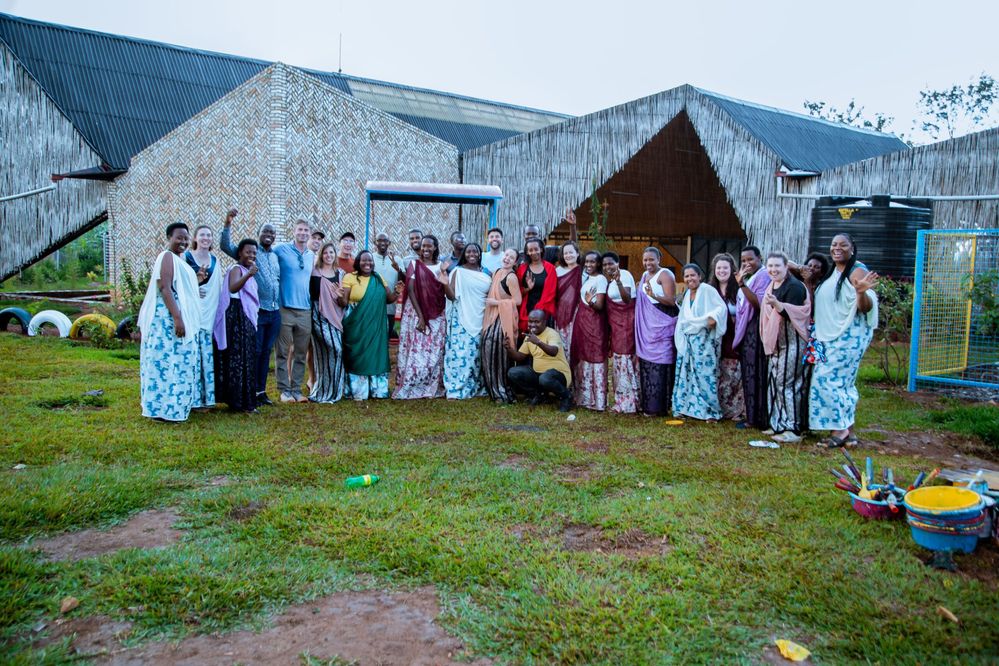
That opportunity came in February of this year, as Vidmob’s Jamie Bradley (Senior Director of Enablement) pieced together the details for an even more ambitious 2nd service trip. For the last few years, we’ve been working with an organization in Rwanda called Komera, which focuses on developing self-confident young women in the Kayonza district of the country, through education, community development and health. Their simple belief that investing in young girls is the fastest way to improve the world, resonated deeply with me, so I cleared my calendar, got my shots, and 2 days after a last-minute trip to London, headed off to Africa.
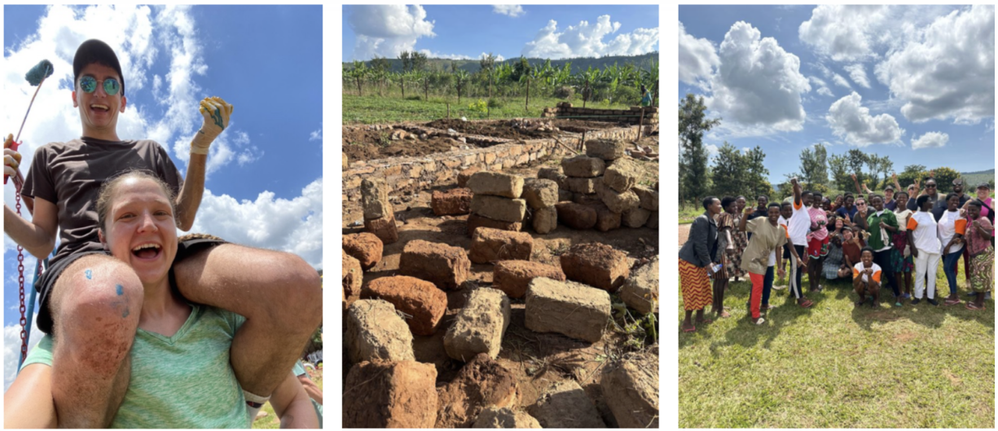
We spent a week working with the staff at Komera’s Leadership Center in Rwinkwavu. We were ostensibly there to do two things; (i) build a playground for the children of teen mothers so that they could continue their education, and (ii) build a chicken hatchery to provide a source of food through their eggs and a source of income through the selling of chickens. But it ended up being much greater than that. On one rainy morning, we taught a group of current students how to use gen AI tools, and collectively made children’s books, howling with laughter as a group when the miraculous images rendered on a projector in real-time in front of the class. We danced together with the staff and girls. We did yoga together. We laughed and shared stories together. But above all else, we carried rocks together. Big rocks.
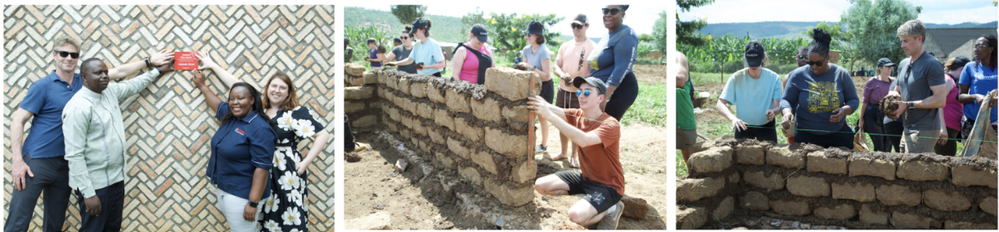
Now I’ve long believed that there are few things more wonderful than doing hard work. But doing hard work with a grateful counterpart that has completely different life experiences that they’re happy to share is about as good as it gets. Day after day, we moved the supplies necessary to build the hatchery and then assisted in the construction – side-by-side with the women who would be benefiting from it. We painted, learned how to skin bark off of trees to get usable timber beams, mixed cement, learned how to make a cement-like grout from just the local mud and water, helped build the foundation, stacked, shaped and grouted the bricks for the wall, and at one point, I even talked them into letting me do some welding.
It is not a stretch to say it was one of the best weeks of my life. And as I sit back in New York reflecting on the trip, here are a few of the takeaways from the week:
Service work is a key pillar of company culture. Put simply, more companies should do service trips. They can be tied to performance reviews, and there is no better way to get close to some of your co-workers. I cherished the opportunity spend so much quality time with a bunch of Vidmob’s rising stars.
Komera is an amazing organization. I cannot imagine a charity where our dollars would have more impact. To put a little math behind it, the average rent in Rwinkwavu is around $6-8 per month. Each mature chicken from the hatchery we helped build will have a value of about $1-2. And it will hold hundreds of chickens. Again, I am more proud of the work we did during this week than any other week I can remember.
There is no better investment than young women. We met one after another current students and alumni, and their stories are incredible. As just one example, on the weekend after our service work, we went on a tour of Akagera National Park, guided by one of the park rangers. Midway through the day, she told us her story. It turned out that she was a Komera graduate. When she was 12, her mother told her that they couldn’t afford to send her to school. So she begged her mother to reach out to Komera. After many interviews, she was accepted and they helped her complete primary and secondary school, and then get into college. Now in her mid 20’s, she had graduated, gotten her dream job, paid to build a new family home, and is hoping to soon begin re-investing any overflow income back to Komera to support future versions of herself. Now multiply that by the hundreds of girls that Komera works with, and you can see how quickly entire towns and districts can be impacted. Talk about girl power!
Some secrets are too valuable to keep to yourself. I believe this is the case as it relates to corporate service trips. If anyone wants to learn more about how we run these, about Komera, or how to set up sometime similar for your own organization, send us a note. We’re happy to share everything we’ve learned.
And if you want to join me and Vidmob in making a donation to Komera, here’s the link. I promise you it will be going to a great cause.

Original post here
Author: Plan HR
Plan HR, a female-founded boutique Human Resources consultancy, is set to launch operations this week. Their focus on AI and real-world business outcomes aims to disrupt traditional HR practices. In today’s business landscape, where technology and social responsibility take center stage, Plan HR will be a force for change.
Committed to its mission, Plan HR will offer pro bono services to qualifying non-profits and donate 10% of its first-year profits to charity, supplementing its participation in the Pledge 1% movement. The firm is not just reimagining Human Resources; it is shaping its future while giving back to local communities. This philanthropic approach reflects Plan HR’s core values of social responsibility and community engagement.
Driven by a team with experience supporting Fortune 100 companies, large non-profits, and startups alike, Plan HR is uniquely positioned to meet the needs of today’s evolving business climate, embracing innovation while leaving outdated practices behind.
For more information about Plan HR and its innovative approach, visit: Plan HR Website. Or follow Plan HR: LinkedIn or Instagram.
About Plan HR:
Plan HR is a forward-thinking boutique HR consultancy specializing in Executive Staffing, HR Support, AI, Culture, and Data strategy. Committed to innovation and social responsibility, Plan HR aims to reshape the future of HR while positively impacting communities across the United States.
Original link here
Author: Nicole Brose, Director Of Marketing, LiquiDonate
We’re thrilled to announce that LiquiDonate has been chosen as one of the 12 semi-finalists for Accelerate at Circularity ’24! This recognition highlights our dedication to advancing the circular economy through innovative technology.
Accelerate is a coveted pitch competition that takes place at the GreenBiz Circularity Conference each year. It is renowned for spotlighting entrepreneurs who are spearheading scalable solutions that create a more sustainable future. From compostable menstrual pads to innovative crop input solutions, the semi-finalists represent a diverse array of industries and innovations. As a female-led startup, we’re truly honored to be among this esteemed group!
Accelerating Towards a Circular Economy
At LiquiDonate, our mission is clear: to accelerate the transition to a circular economy through scalable technology solutions. Approximately 80% of returns are currently landfilled. By matching excess items from brands with underfunded nonprofits and schools, our platform reduces landfill waste while helping communities in need. Additionally, LiquiDonate helps brands cut costs, tell a positive ESG story, and address Scope 3 emissions all through a singular software solution.
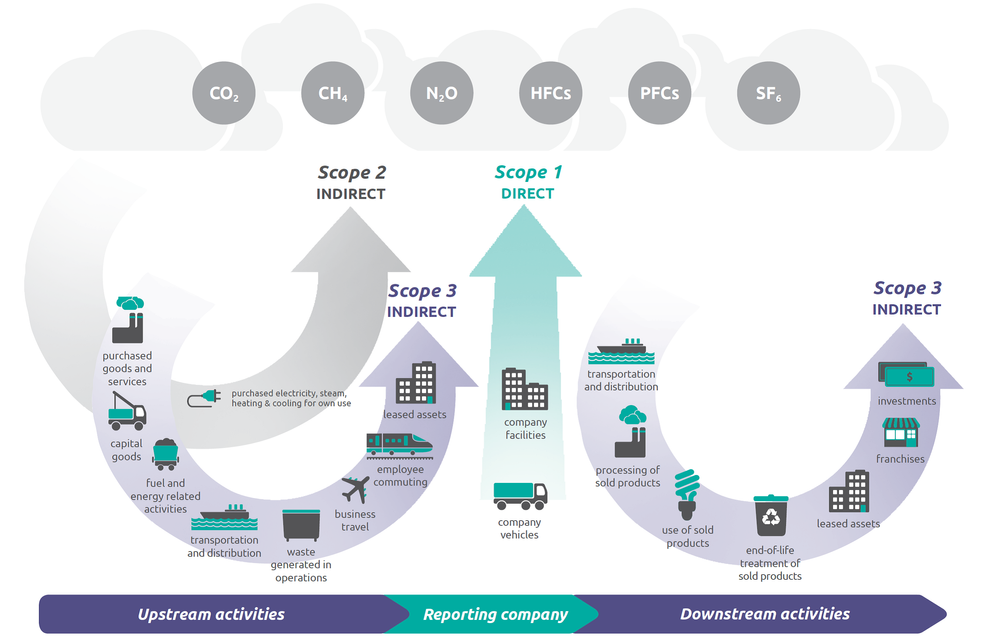
Scope 3 emissions, often the largest portion of a company’s carbon footprint, encompass indirect emissions from sources outside of a company’s control, such as transportation, waste disposal, and supply chain activities. By partnering with LiquiDonate, companies can seamlessly donate their excess and unsellable inventory, thereby reducing waste and the associated emissions.
Looking Ahead
As semi-finalists for Accelerate, we’re grateful to GreenBiz for providing a platform that amplifies the voices of early-stage startups committed to circularity. While we await the selection of finalists for the pitch competition, we’re honored to be part of a community driving positive change. The finalists will give their pitch on the global stage of Circularity ’24, taking place in Chicago, IL from May 22nd to May 24th, where votes will determine the ultimate winner.
A huge thank you to each of our partners and friends who enthusiastically believe in and support our mission. We hope you’ll help us celebrate this incredible milestone by sharing this blog with your network and tagging @LiquiDonate on any social platform.

Original link here
Author: Good Stuff Partners
“Our work at Good Stuff Partners is about so much more than just designing a brand or campaign, it’s about capturing the true essence of a cause to evoke emotion, intrigue, and action, and that’s what drives us every single day.”
— AIMEE KILMER, CO-FOUNDER AND CREATIVE DIRECTOR
Our agency’s milestone anniversary fuels next phase of community buildings and partnerships.
Recently, we celebrated 10 years of impact-driven work supporting local communities as well as global initiatives. On a mission to “build brands that give a damn,” our team at Good Stuff Partners has elevated campaigns and causes spanning social and political justice, sustainability, healthcare access, and more.
- For The Many, a grassroots movement seeking to transform New York experienced a 155% increase in fundraising.
- Pivotal, an agency in Silicon Valley supporting young adults in and from foster care, received $750K in unsolicited donations in less than a year.
- Community Action Marin, the county’s largest nonprofit, grew from a $17M organization to a $29M in just four years.
- Global Fund for Women, a nonprofit funding women’s human rights, continues to see a 500% increase in social media engagement year after year
You can find the full story 