Written by Suprita Makh. Originally published on Twilio.com
COVID-19 and its effects have disproportionately impacted those experiencing acute crisis, and in response, countless nonprofit organizations have stepped up to provide the life-saving support people need as the pandemic has worn on.
In fact, nonprofit organizations across 60 countries sent proposals in response to a grant round Twilio announced in May, seeking to leverage communications technology to help with crises from physical and mental health to lack of access to housing and food.
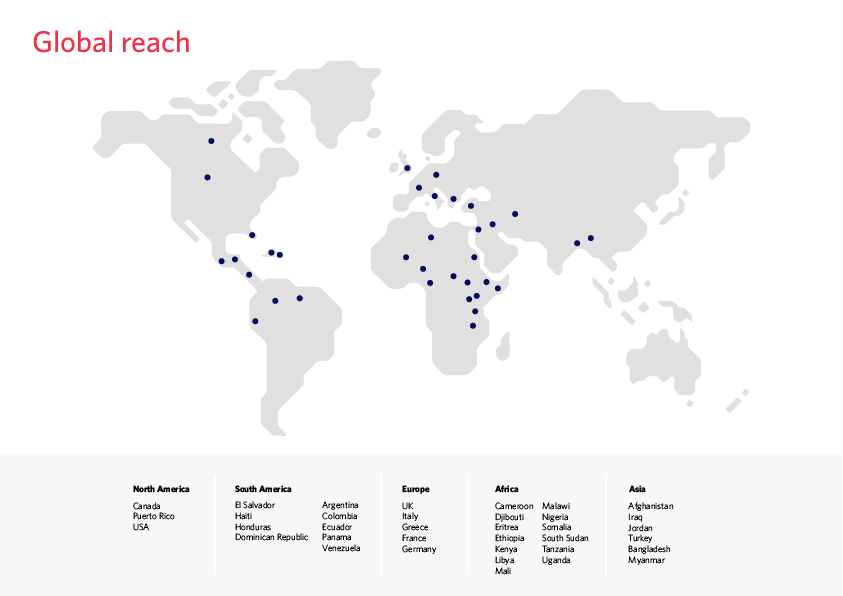
Twenty incredible organizations reaching 1.9 million people in 34 countries will receive $2.5 million as part of the grant round, and their efforts offer powerful insight into the ways organizations can support those in need as the pandemic continues.
Our grant recipients offer three distinct areas of support to communities:
- addressing systemic health and safety inequities;
- meeting a surging demand for crisis support;
- and addressing humanitarian crises compounded by COVID-19.
Health and safety inequities due to systemic racism
The COVID-19 pandemic has shined a spotlight on the impact of systemic racism on widespread health inequities in the US. Federal data shows Black and Latinx people have been three times as likely to get infected and twice as likely to die from COVID-19 as white people.
The disproportionately high burden of COVID-19 in Black and Latinx communities, compounded by the loss of income, health insurance, and even housing, has exacerbated the disparities in mental and physical health of Black and Latinx mothers. Even prior to COVID-19, Black women were three times more likely than white women to die of pregnancy-related complications in the US.
In response, grantee Jacaranda Health launched the COVID Moms Helpline, a crisis line for pregnant and postpartum people. The helpline provides support and security to expecting parents, with a focus on moms and pregnant parents in underserved communities that have unequal access to healthcare and might be struggling to navigate care during COVID. Perinatal educators and doulas on the line answer urgent questions and provide connection to local social, clinical, and mental health resources.
“Pregnancy can be isolating and stressful these days, and expecting parents are struggling to navigate care,” said Jacaranda Executive Director Nick Pearson. “We want to make sure that everyone feels they have someone to reach out to and receive holistic, empathetic support.”
Grant funds will support Jacaranda Health’s expansion of the COVID Moms Helpline to New York City and three additional geographies across the US.
Inequities due to systemic racism are not limited to healthcare. The murders of Ahmaud Arbery, Breonna Taylor, George Floyd and too many others have sparked a necessary reckoning of systemic racism in the US.
During protests in June, more than 2,000 people were arrested over a five-day period in New York City. Through grantee Good Call’s crisis line, anyone who has been arrested can alert their loved ones and connect with free legal services 24/7. Low-income communities experience higher rates of arrest most of which are for low-level misdemeanors. Good Call aims to provide legal help to prevent damaging events that can have lifelong consequences.
Grant funds will support Good Call’s plans to reach new communities and expand their services by improving the stability and reliability of their hotline; growing the number of lawyers on their platform; and raising awareness of their services.
Surging demand for crisis support
Millions of people are experiencing many forms of escalating acute crises simultaneously due to COVID-19. Many face reduced access to basic needs such as food, shelter, and job security due to shelter-in-place ordinances and a rapid economic shutdown. These stressors have also compounded mental health crises. Demand for crisis line services has surged in this time of unprecedented need, creating new operational challenges.
RAINN, a national sexual assault hotline, reported a record 60,000 survivors of sexual assault and violence accessed their crisis line in May and June. For the first time, half of the victims receiving help from RAINN’s crisis line were minors, 67 percent of whom identified their perpetrator as a family member and 79 percent of whom said they were living with their perpetrator.
RAINN will use their grant funds to build and implement an upgraded version of their national hotline, with omnichannel solutions including chat and queue resiliency features to enable hotline staff to meet the needs of their callers remotely—and give people in the same home as the perpetrator a discreet way to reach out.
The Partnership to End Addiction has reported a nearly 50 percent increase in connections to help families overcome addiction. They’ll use grant funding to expand their current opioid use programming to include other substance abuse, and provide comprehensive support for people struggling with any substance—not to mention support families when their loved ones are undergoing treatment and early recovery at home.
Since shelter-in-place ordinances were implemented in March in various parts of the US, Trans Lifeline, the only hotline created for and run by trans people, has seen a 360 percent increase in calls about domestic violence and 250 percent increase in calls about intimate partner violence.
Their team will use grant funding to expand their programming and depth of care for trans people experiencing domestic and intimate partner violence, which will help support 20 percent more callers.
LEARN MORE ABOUT HOW ORGANIZATIONS ARE INNOVATING TO SERVE THEIR COMMUNITIES DIGITALLY
Humanitarian crises compounded by COVID-19
For the nearly 80 million people around the world that have been forcibly displaced due to violence and persecution, the pandemic has amplified uncertainty and fear.
The International Rescue Committee (IRC), Norwegian Refugee Council (NRC) and the United Nations High Commissioner for Refugees (USA for UNHCR) are building and scaling crisis lines to provide live-saving information and resources to refugee communities in the U.S., Europe, South America, Asia, Middle East and sub-Saharan Africa.
Humanitarian support has traditionally been provided in a face-to-face format. Global travel restrictions, shelter-in-place ordinances, and safety measures such as social distancing have hindered humanitarian organizations trying to provide their usual depth of support in healthcare, education, housing, legal support, counseling, food, and employment resources.
In response, organizations are pivoting to more digital services to continue to provide resources and services to the communities they serve.
NRC will use grant funding to set up digital service centers to ensure continuity of existing services like legal advice and continued education, as well as add new services such as COVID awareness and monitoring.
IRC will use grant funding to expand Signpost, its two-way messaging system, to Greece and Italy, as well as roll out a two-way communications and case management platform for refugees and asylees in the US.
USA for UNHCR is building an omnichannel hotline for refugees and asylees in Argentina, connecting them with healthcare, employment opportunities, and legal support.
In addition to the organizations mentioned above, Twilio.org is supporting Child Helpline International, Fast Forward, National Alliance on Mental Illness, National Domestic Workers Alliance, Polaris, Tarjimly, Tech Matters, The Trevor Project, Trek Medics International, United Ways of California, and Vibrant Emotional Health in this grant round.
At Twilio.org, we believe communication has the power to change lives. Technology plays a critical role in how we can support people in need. Each one of our grantees is pushing forward and amplifying their impact with a tech-first approach. We are incredibly honored to support and learn from this inspiring cohort of crisis line organizations.
If you’re a nonprofit organization, volunteer group, or social enterprise looking to scale your communications, visit our Impact Access Program to learn how Twilio.org can help.
Excited by the work of our grantees? Click through the links above to find donation or volunteer opportunities with each organization.

[July 29, 2020] We are entering a new era of corporate giving. Now, more than ever before, top talent and customers want to work for and with companies whose values are aligned with their own. Companies that have implemented one or more of the Pledge 1% commitments (donating 1% of employee time, product, equity or profit) are at the forefront of this growing trend and are creating a new normal for businesses to leverage their impact for good.
With today’s unprecedented social, health, and economic challenges, it’s clear that companies have an important and essential role to play in being part of the solution. One way companies of all sizes and stages are securing their social impact work for years to come is by pledging equity. By setting aside equity for social impact, companies can demonstrate their long-term commitment to these values, differentiate their company from competitors, and sustainably fund their social impact work for years to come. In the last 3 years alone, top companies that set aside equity for social impact have ignited over $250 million in new philanthropy via their IPOs.
Pledging equity is especially valuable for startups that are interested in giving back, but have yet to see profit. It is also increasingly becoming the norm for top late-stage companies. In fact, many of today’s most successful companies, including Docusign, PagerDuty, Pluralsight, Sendgrid, Slack, Twilio, Upwork, and Zuora have pledged equity on the road to IPO.
We are also seeing tremendous support from the VC community, as individual investors from top venture capital firms, including Accel, Bain Capital, Benchmark, Bessemer Venture Partners, Foundry Group, Index Ventures, Jackson Square Ventures, Khosla Ventures, Mayfield Fund, Salesforce Ventures, Sequoia Capital, SV Angel, Techstars have supported their portfolio company CEOs in educating other Board members and setting aside equity for social impact.
“There’s never been a more important time for companies to leverage their assets to be a force for good. Setting aside equity now for social impact, ensures that companies will have the resources they need to tackle the most pressing issues in our future,” said Amy Lesnick, Chief Executive of Pledge 1%. “Pledging equity is increasingly becoming the new normal for successful companies who understand that this is not only good for the world, it’s also good for business as employees and customers expect them to do more than simply generate growth and profit.”
The new Pledge 1% CEO Equity Playbook and Companion Guide for CFOs and GCs was designed in collaboration with top CEOs and thought leaders to help companies of all sizes pledge equity. Contents include equity donation models for founders, corporate case studies, and more. The Companion Guide was created for CFOs and GCs to help their companies formalize the equity pledge, and contains legal templates and tools.
Today’s issues will not be resolved by governments and nonprofits alone. The companies who set aside equity for philanthropy pre-liquidity have been able to fund efforts around COVID-19 relief, social justice, economic development, and other global challenges. Download the Playbook to learn how you can pledge equity today for impact tomorrow.
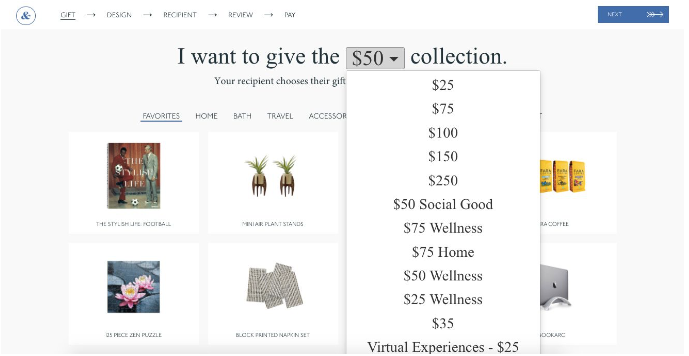
Loop & Tie is an engagement platform where you can send a price-blind collection of gifts to recipients and allow them to choose the gift they want. Working with companies such as the San Francisco 49ers, Indeed, Google, Greystar, Salesforce, and more, Loop & Tie has become the go-to engagement platform for companies across the country.
When COVID-19 hit, Loop & Tie’s founder Sara Rodell, quickly committed to finding a way to lend Loop & Tie’s resources and support those being affected. Through a friend of a friend, she was connected with 5 other women, and together they created COVID Tech Connect. An initiative focused on providing devices to the critically ill so they could have the opportunity to say goodbye to their loved ones.
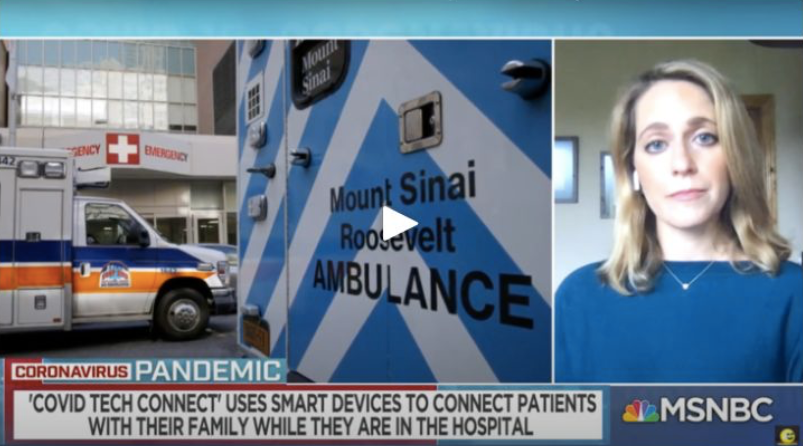
Loop & Tie has donated both hours and operational and fulfilment resources to manage the receiving and sending of devices all throughout the country! You can read more about the initiative and ways to donate here.

Delivering result-oriented support to organizations throughout the value stream is in our DNA at Pollen. As part of our social responsibility and 1% charity pledge, we endeavor to use our capabilities and services for a good cause wherever possible.
With this in mind, we reached out to The Bread & Butter Project – a non-profit organization as well as Sydney’s first artisan bakery run as a social enterprise! Breads and pastries are baked by refugees and asylum seekers from all over the world that the company employs as trainees alongside their qualified artisan bakers. Whilst learning the craft of artisan baking, trainees get to learn English and are coached to ensure they can kick-off a successful career after their traineeship.
We loved the mission behind the business and felt we had the perfect skillset and experience to make improvements to the business profitability – and in return we would get spoilt with delicious pastries and baked goods! So, the collaboration was launched…
“We care a lot about The Bread & Butter Project’s high quality products and especially their mission, which is extremely important. We love helping the people behind the company and appreciate the opportunity to really make a difference by sharing our industry experience.” Stephan Mang, Pollen Director
Using our expertise and industry knowledge, we provided solutions to some of the challenges The Bread & Butter Project were facing and delivered projects to optimize business operations:
- We put our STRATEGY in ACTION to work in two sales strategy workshops. In order to achieve the aspiration of becoming self-sustaining, The Bread & Butter Project revenues need to increase by 15% between August 2019 and September 2020. We facilitated the business in developing a 12-month growth plan and determining products and target customers to focus on. With our practical approach to strategy planning, we ensured the outcome was an implementation roadmap with clear actions for The Bread & Butter Project to make the roll out of the strategy a success.
- In a deep dive on The Bread & Butter Project production process, Pollen made recommendations on MANUFACTURING EXCELLENCE for cost improvements. We performed a bottleneck study and investigated both equipment and people utilization. An opportunity to save $250k annually was identified by streamlining the workload by reallocating staff to identified bottlenecks and streamlining the utilization of the ovens throughout the day. Examples of tips for quick wins were the introduction of Gemba Walks and standardizing the cutting process to reduce waste.
- Another project investigated the distribution process using our SUPPLY CHAIN EFFICIENCY expertise. Daily, The Bread & Butter Project’s fresh baked goods are delivered by drivers in minivans. The optimal number of delivery vans, the most efficient delivery routes and maximum time spent per delivery have been determined to increase labour productivity.
- The Bread & Butter Project’s supervisor is one of the participants in the POLLEN ACADEMY Front-Line Leadership program. The Front-Line Leadership program is especially designed to help front-line leaders develop the right skill set to lead teams, coach individuals and get the best out of their teams so they’ll become tomorrow’s confident operations managers.
“It was a real pleasure to work with Pollen. With their hands-on approach, they were able to make recommendations for efficiency improvements in just a few sessions. The implementation has been very valuable for us and we learned to think with a continuous improvement mindset.” Philip Hoban, General Manager, The Bread & Butter Project
Going forward, we plan to continue supporting the team in the Sales Strategy deployment with frequent refresh and planning sessions. The team at The Bread & Butter Project is one of engaged and driven bakers and trainees. We are sure that with Pollen’s recommendations and tools for structure and efficiency improvements the business is set up for a successful journey of continuous improvement.
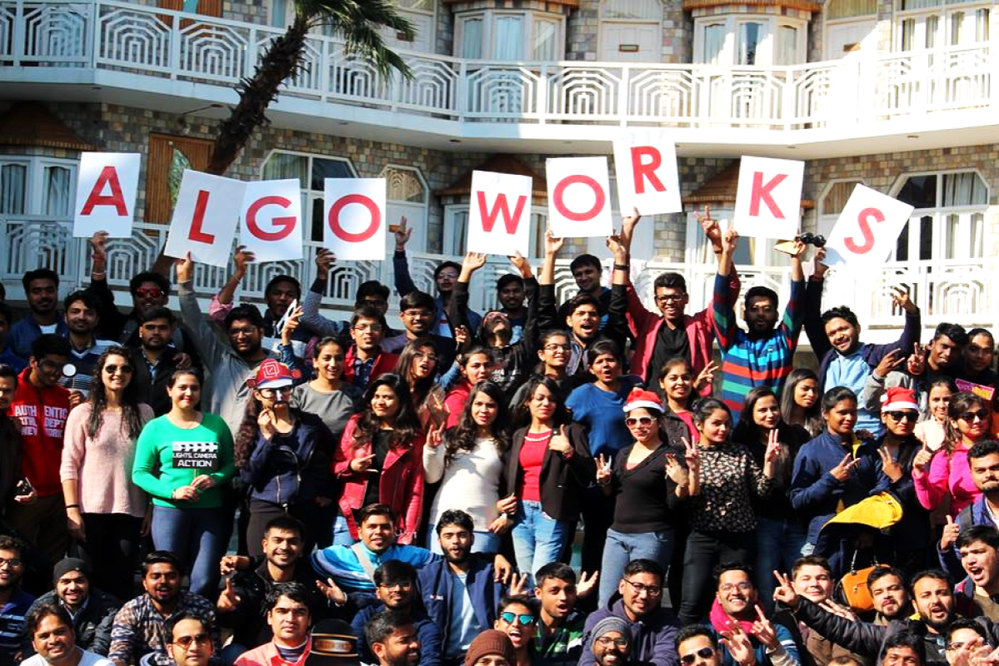
The global impact of COVID-19 has not only put the well-being of people at risk, but has also trembled economies, industries, and entire societies. With this pandemic keeping the world on their toes, Algoworks is doing its share to help mitigate the impact on its customers and employees, and the Indian government.
The company has donated 500,000 Indian Rupee to the PM Cares Fund, the official Indian government fund created to to help those affected by COVID-19 across India. Algoworks employees have also promoted the use of face masks and sanitizers in their communities. They’ve helped spread the word by virtually hosting meet-ups with their peers; educating them about the effects, symptoms, and prevention of the virus.
Algoworks has supported remote work and work from home well before the national lockdown took place, to protect their valued employees. As a result, none of Algoworks’ 400+ workforce in India or the U.S. has tested positive for COVID-19, despite the headquarters located in the most affected district near the capital, New Delhi.
Algoworks has also been concerned about the mental well-being of their employees. Various initiatives have been made to stay in touch throughout the lockdown. Complimentary 3-month access to online meditation and yoga sessions with MindHouse was arranged by the HR department to help employees relieve stress and anxiety. Management has gone the extra mile for particular cases needing additional assistance, while strictly complying to all rules established by the respective governing authorities.
With a well-prepared, ready to refer instructional guide on COVID-19, Algoworks helped its employees gain a better understanding of the virus, its effects, and how to prevent it. Algoworks launched the FAQ COVID-19 page immediately following the lockdown to maintain complete transparency and visibility with its clients, partners, customers and employees. Making the best use of its social media channels, Algoworks published information sourced only from credible sources like the World Health Organization and the CDC.
The well-structured BCP, or Business Continuity Plan was rolled out informing customers how Algoworks remains operational during this crisis. In times when it is not wise to host physical meetings or conferences with customers and employees, Algoworks has leveraged various communication channels and video conferencing applications.
The following quote is an excerpt from a notice shared to all employees across the organization by Rachit Agarwal, Co-Founder & Director of Algoworks.
“This situation is unprecedented for businesses and families, both. It is time we all support each other and help come out of this situation unharmed. I’d advise you all to be patient and calm if you are at home, safe, and sound. Remain positive and look after your family and personal responsibilities. Algoworks has a history of not being moved in any situation as we all have always stood together. This situation demands the same. As always, I stand with each one of you and expect the same in return. Let’s all be together, work together, and come out of it stronger. I request you all to work hard towards helping yourself, your family, and your colleagues in achieving success as we beat coronavirus forever.”
Algoworks’ leadership team is continuously hosting online meetings to evaluate the crisis and respond appropriately. The company is taking all necessary measures in accordance with guidance from public health authorities and the local government. We pledge to come back strong.
Written by Jay Parekh, VP of Partnerships and Business Development at Chime. Originally published on Medium.
You’ve probably heard the term ‘food desert’ — it’s used to describe a large geographical area where residents don’t have access to a grocery store. The term ‘banking desert’ similarly refers to an area where access to banking services is limited or costs significantly more than where services are easy to come by.
 As an online banking service, many of our members live in these banking deserts. Even though we don’t have much of a presence on the ground in these communities, we’re still able to provide them with the services they need without charging them exorbitant fees.
And while our members benefit from our services regardless of where they live, we are always looking for ways to connect in real life with the communities where our members actually live and work. Establishing a connection with and giving back to our communities has been important to us from the beginning. In fact, it was our founders, Chris and Ryan, who suggested we start a program to help Chimers give back. In 2018, they started the wheels turning on a company-wide pledge program and they asked me to help.
To start, we thought about different ways we could give back: our time, company equity, money, and our product. The more we thought about it, we realized it’s a bit hard to give away our product because it’s already free.
In the end, we decided to give 1% of our time — roughly 7,000 hours. We feel it’s a goal that speaks to who we are as a company and helps us further endorse our mission to help Americans live financially healthy lives with our actions and company culture.
While committing 1% of our employees’ time was a no-brainer, we came across a few challenges once we decided to do so: How would we decide where to spend that time? How could we make sure Chimers are engaged with our pledge program? How would we find organizations who would want to work with us? And how could we do all of this while our company scaled? It was important to us to think about this program holistically, make it accessible — and appealing — to all Chimers, and find organizations that could absorb our growing team and be aligned with our mission.
The How: Connecting our Why with partner organizations
To formalize the commitment we wanted to make, we partnered with the folks at Pledge 1%, who have had many leading companies make similar pledges, including Yelp!, Atlassian, and Twilio to figure out which organizations we should work with. Without any preconceived notions about who we’d end up partnering with, we started by gathering groups of Chimers to understand where they want to give back their 1%.
It was important for us to understand what people from all teams and levels of the organization were looking for out of this program, since our goal is to have every employee participate. Each focus group included employees from every part of Chime and covered topics of what matters to them, which communities they want to know more about, and which activities would make giving 1% of their time feel fulfilling.
Something emerged pretty quickly in the group discussions: Chimers were interested in how to help people with economic empowerment. Whether it was helping people manage their personal finances or educating them about businesses and entrepreneurship, Chimers’ interests in helping communities grow economically aligned quite beautifully with our mission. While we did guess that this would be important to many Chimers, it was exciting to see such consistency across our focus groups.
Once we’d narrowed down a theme to focus on — economic empowerment — we identified partner organizations. With an initial list of over 200, we narrowed them down by answering the following questions:
- Will the organization help us develop empathy for our communities by working directly with people? Our hope was to find partners whose work would allow Chimers to meet and get to know members of the community.
- Does the organization serve a diverse location or population? With many of our employees living outside of San Francisco and in Chicago as we scaled our second office, we wanted to make sure our partner organizations would represent folks from different geographies than where we work.
Once we’d narrowed the list to a handful of organizations, we invited them to meet with us — in person or virtually — so that we could get to know them better. We learned what their missions were, what was important to them when it came to taking on volunteers, and what they wanted to see from us, a potential volunteer partner.
After our meet-and-greets, we chose two organizations with whom to pilot our pledge. Both organizations would allow Chimers to meet community members directly. They were also open to collaborating with us on the early stages of our program. We’d found two partners willing to help us iron out the kinks as we got this program off the ground. Those organizations are Oakland Promise and WeThrive.
Oakland Promise: Oakland Promise provides resources and support to Oakland kids to empower them to achieve higher education and careers. We chose to partner with them because they think holistically about intervening positively in peoples’ lives, from offering financial support for low-income people who are about to have a baby to providing one-on-one mentorship when people are going to college. They also allow Chimers to engage at different levels, ranging from a phone call once a month to mentor someone in college, texts throughout the month to offer financial advice, or in-person meetings. We love how Oakland Promise empowers Chimers to develop long-term relationships with community members in the Bay Area.
WeThrive: WeThrive helps underestimated youth build businesses by providing schools with curricula focused on entrepreneurship and empowering kids to start their own businesses. We decided to partner with WeThrive because we felt truly inspired by their founder, Daquan J. Oliver. As the child of a single mother growing up in a low income household, Daquan discovered entrepreneurship at a young age and credits it with keeping him out of trouble through his adolescence. By providing schools with curriculum and volunteer support, kids can build and grow companies and while getting advice and mentorship from partner companies like Chime.
While committing time was important to us, we also realized that helping support Chime volunteers wouldn’t be “free” for the organizations, and wanted to also have additional impact. So we made unrestricted financial donations to both organizations since we know how valuable these kinds of funds are to non-profits.
Measuring success and overcoming challenges
Once we’d figured out how to partner with our community, we wanted to be sure we were holding ourselves accountable to some measurable metrics of success for the program. To measure success, we looked at our 1% Pledge program from a few perspectives: participation, engagement, empathy, and value provided to our partners.
The first measure of success is whether employees are donating 1% of their time. Without a full-time team dedicated to the program, we rely on champions across the organization to encourage participation — people who are passionate about volunteering and are developing their leadership skills, whose responsibility it is to get fellow Chimers involved in the initiative and act as cheerleaders for our partner organizations. Measuring participation is a first step to analyzing how the program is getting off the ground, as well as a proxy for how inspired Chimers feel to give back — both in and out of the workplace.
The second way we’re measuring the program is the relationship between employee engagement and involvement in our 1% Pledge. Already, we’ve heard that many employees feel a sense of pride that Chime is doing this, but long-term success will be evaluated after the annual engagement survey is completed. Our People team will analyze engagement scores and look for a correlation between engagement and involvement in the program.
The third measure of success of our 1% Pledge program is whether it’s building empathy among Chimers for our members. It’s important for Chimers to understand what our members are dealing with day to day because it informs our company culture and how we build our products. Helping people with their financial health contributes to how Chimers solve problems at work by empowering them to better understand and connect with our members.
Finally, we want to add value to our partners’ organizations by giving them our time. To that end, we’ll maintain an open line of communication between our Chime 1% Pledge champions and our partners to continue evaluating our partnerships. After all, they’re the ones we are hoping to positively impact.
The future
While our 1% Pledge program is in its infancy, we’re excited for Chimers to get involved with our partners and find ways to give back on their own — something many Chimers already do. It’s important for all of us to foster a culture where taking time away from work to support and help others in our community is a good thing. This program is just one part of that and we hope to see Chimers giving back in a number of ways.
Giving back during COVID-19
Due to the current shelter-in-place mandates in San Francisco and Chicago, all Chimers are currently working from home. Our top priority during this time is the wellbeing of our members and employees, so we are urging everyone to do what they need to take care of themselves. However, it’s often during times of crisis that people most want to help — so we’re finding ways for Chimers to do so during this time.
We’re working with both of our partners, Oakland Promise and WeThrive, to find ways to offer our time while we weather this pandemic. For example, Chimers are still offering financial advice via text and phone calls for Oakland Promise, as well as advising kids on their entrepreneurship and business ideas for WeThrive. A silver lining of schools being moved to an online model is that Chimers can now help students with their entrepreneurship ideas across the country in partnership with WeThrive.
Written by Terry Windell. Originally published on Massachusetts Newswire.
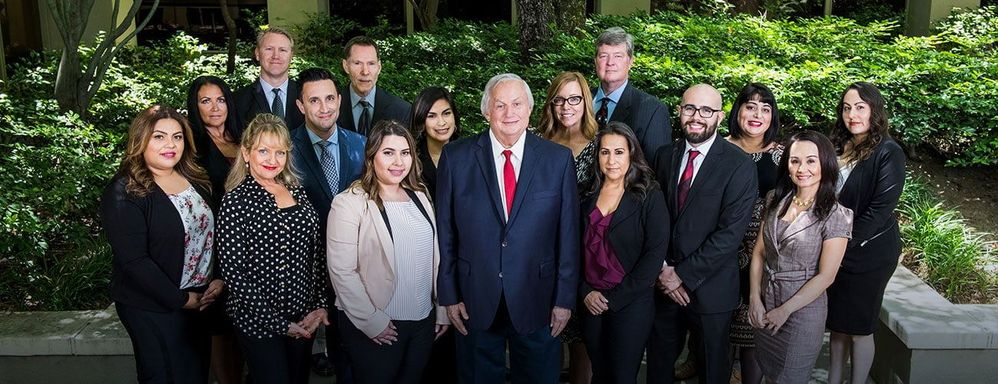
The Law Office of Edward A. Smith, dba AutoAccident.com, is providing food assistance to present and former clients of the firm by delivering groceries to their homes, free of charge.
Beginning May 1, clients can contact the firm and order up to $100 worth of groceries from their choice of either Whole Foods or Raley’s.
Each order will be inputted to the nearest grocery store available and delivered directly to the client’s doorstep.
Edward Smith, who has considered the plight of many during the Sacramento quarantine, especially those who are presently out of work, recovering from an injury or at elevated risk and who cannot shop without worry.
“We want our clients to know that we are all in this together,” says Smith. Disasters lead us to a deeper knowledge that at some level we all are kin.
The firm will provide this service to clients upon request until dedicated funds are depleted.
“We wish we could offer this service to everyone, of course, but our resources are limited,” says Smith.
But we’ll provide for as many as we can.
As of May 1, there are 1,077 confirmed COVID-19 cases and 43 deaths in Sacramento County, making this area among those most deeply affected by the pandemic.
An inability to afford or be able to personally shop for groceries has become a challenge for many.
The staff of AutoAccident.com continues to handle personal injury cases remotely via video consultation, and in-office by appointment.
Some clients have revealed that the added difficulty of dealing with formerly simple tasks such as grocery shopping makes their lives almost unbearable.
“During this stressful time, the last thing we would want is for them and their families to worry about hunger.”
For further information, visit AutoAccident.com.
For more information, contact:
Bella Wilson
Bella@autoaccident.com
916-921-6400
AutoAccident.com
Law Office of Edward A. Smith
1900 Point West Way #200
Sacramento, CA 95815
About AutoAccident.com:
Established in 1982, AutoAccident.com is a Sacramento, California based Personal Injury law firm providing legal assistance with cases involving auto accident and personal injury, motorcycle accidents, wrongful death, medical malpractice, consumer product liability and railroad injury. It is a top-rated member of Avvo, the Million Dollar Advocates Forum, the Better Business Bureau and National Association of Distinguished Counsel. They are also proud members of Pledge 1%.

By Susy Schöneberg, Head of Flexport.org
Hello everyone,
Almost four years ago, I founded Flexport.org, the impact team of Flexport, a global transportation company. After witnessing the power of Flexport to move goods efficiently, I knew that we have the ability to get medical goods and other aid supplies where they need to go during crises. And I know first hand how important this is, as I once struggled to receive medical aid myself when I contracted Cholera and fought for my life. Since Flexport.org was formed, we’ve shipped aid to over 50 countries during crises like the Syrian Civil War and the consequent European Migrant Crisis, Cyclone Idai in Mozambique and the California Wildfires.
Today, amidst this unprecedented pandemic, our work transporting medical equipment is more crucial than ever. We activated our COVID-19 relief efforts this January, three days before the World Health Organization (WHO) declared the outbreak a Public Health Emergency of International Concern, by shipping masks to medical clinics in Wuhan, China. As of today, Flexport has shipped over 96 million units for the response efforts, including 91 million masks and respirators as well as medical supplies and hospital equipment.
Since launching our GoFundMe Frontline Responders Fund campaign, we’ve raised over $7.4 million, 82% of which has already been awarded to over 65 incredible organizations who are equipping frontline responders with PPE and keeping communities safe.
Donations have already been used to bring goods to the frontlines. We have:
- Shipped over 10.8 million units of PPE and COVID-19 response items, including approximately: 9.5 million masks, 240,000 gowns, 1,000 ventilators, 235,000 gloves, and even 252,000 meals for vulnerable populations disproportionately impacted by social isolation
- Delivered to ICUs, emergency rooms, hospitals, and healthcare facilities, but also to medical distribution nonprofits such as MedShare, nursing homes and elderly care centers, government agencies, food aid distribution centers, and even supplies to domestic production facilities
- Sent goods throughout the US, particularly hotspots in New York and Los Angeles — you can see the concentration of shipments in the map below. And our focus is global to ensure every responder is equipped to safely fight this battle: we’ve helped ship to the UK, Ireland, Greece, Burkina Faso, and Haiti, with support coming for South America.
We’re grateful for those helping our mission, including:
- The Ellen DeGeneres Show and Shutterfly
- BeautyUnited, a coalition of beauty and wellness brands focused on awareness to our campaign, as well as coordinating product donations to health care workers from their own companies
- The National PPE Coalition, who is coordinating all response organizations activating for COVID-19 relief
- Atlas Air, United Airlines and Airlink, who have helped to provide chartered flights in an incredibly constrained air market
- FiveStar Freight, who are discounting all trucking services in the New York and New Jersey area for Frontline Responders Fund shipments
- You, our donors and supporters, we wouldn’t be where we are today without the support from each and every individual who has contributed to or shared our campaign.
This is what we have done in just a few weeks, but even as millions of supplies start to arrive, we know the response efforts will be a journey. The current demand outpaces our available funds: we can only support less than 30% of organizations who have applied for help.
Please share our mission and our Frontline Responder Fund initiative with your friends and families: beginning today, anyone can text FRONTLINE to 41411 to donate. With everyone’s support, we can provide the essential medical equipment that allows doctors and nurses to save peoples’ lives and continue to serve those who have been impacted by the economic repercussions of social distancing. Together, we can truly help more people.
Thank you,
Susy

By Salesforce Ventures. Read original piece here.
While these are clearly trying times, we see stories of generosity all around us as people find new ways to show solidarity with those who are most in need. In an effort to help people and organizations throughout the global community find solutions to this crisis, many companies are making their products and services more accessible. From free technology tools for first responders and healthcare organizations, to assistance for struggling individuals and businesses, companies are doing what they can to support the cause and quicken recovery.
We’ve provided a roundup of resources being offered by Salesforce Ventures portfolio companies below. For more information about these programs, please reach out to the companies directly.
Benefits for first responders and healthcare organizations
BugCrowd is offering emergency response teams, hospitals, & care providers free access to their Vulnerability Disclosure Program and Attack Surface Analysis for the next 90 days.
Guild Education has partnered with Southern New Hampshire University and Penn Foster to build free training courses to assist workers on the front lines of the COVID-19 pandemic with staying safe.
JazzHR is providing JazzHR PRO for free to Primary, Emergency & Urgent Care providers. Sign up by May 1, 2020.
Snyk’s cloud-native application security solution is free for six months to organizations in the healthcare, hospitality, travel and entertainment industries.
Free or discounted tools for organizations working on COVID-19 solutions
Algolia’s Pro Plan is free to any developer or team working on COVID-19-related, not-for-profit websites or apps.
Automation Anywhere has a free thirty-day trial of Automation Anywhere’s Enterprise A2019 to create bots for solutions to aid those affected by COVID-19.
CartoDB is offering its spatial analysis and visualization platform to private and public sector companies using maps to fight against the COVID-19 outbreak.
Copado announced the immediate availability of free access to its platform for anyone working on applications to fight COVID-19.
Dropbox Business and HelloSign Enterprise subscriptions are free for a three-month period to nonprofits and NGOs that are focused on fighting COVID-19.
Helpshift is offering our technology to community, government and healthcare organizations at no cost, enabling them to leverage the power of automation to rapidly scale operations without additional staff.
PropelPLM launched the Healthcare Manufacturer Community, a free and open community built on Salesforce Care which contains easy to navigate medical device designs, sourcing and component data, and documentation that allows companies to pivot and manufacture ventilators, as well as other life-saving medical equipment.
Free or discounted access for schools, teachers and students
AdmitHub is offering free access to the AdmitHub platform and its AI-powered bot to the government & educational community for 90 days.
Hustle’s texting platform is free through May 31, 2020 (up to 10,000 messages) to help governments, NGOs, and schools to connect with their communities.
Zoom is free to all new users and has lifted the 40-minute meeting limit for free Basic accounts for K-12 schools. Zoom is used by businesses for meetings, by families to keep in touch, and by teenagers who want to hang out with their friends.
Vidyard is offering free access to Vidyard for Schools to enable teachers and staff to record and share secure video messages for better engagement with students, parents, colleagues, and the community.
Services that make it easier to give back
Beliive is using technology and time exchange to help individuals connect with one another. By sharing an hour of knowledge or experience with someone in the community, you receive a credit that can then be used to learn from someone else.
Catalant is waiving their fee on projects for qualified 501(c)(3)s that need to accelerate strategic work to help people affected by the pandemic.
UniteUs is offering an option for new communities to launch a rapid-response network for the immediate crisis that also provides the infrastructure to grow in the coming months.
Financial assistance for individuals
FutureFuel launched a free service to help all student loan holders get on federal repayment plans that lower monthly payments, all the way down to $0 for 12 months.
Support for small businesses
Automattic’s WooCommerce has partnered with GoDaddy to offer 3 months of WordPress e-commerce and hosting for just $1.
BringgNOW, a last-mile delivery solution to immediately launch or scale your delivery operations is free for SMBs.
Digital Asset’s world-class legal team is available free of charge to advise small companies who may be struggling under the current circumstances.
Gusto has put together a compilation of federal, state, and private resources to help small businesses find loans, grants, and credits.
SmartRecruiters SmartStart is available to make hiring easy for teams and smaller organizations of up to 250 employees. SmartStart is entirely free with an unlimited number of users and candidates.
nCino’s SBA solution helps to quickly respond to regulatory changes as a result of the CARES Act and the Paycheck Protection Program by decreasing loan processing time and increasing capacity for new loan applications.
Ureeka has partnered with Salesforce for the Salesforce Care Small Business Grants as the grant application, judging and community partner. Ureeka will provide businesses with grant application support, ongoing resources, and counsel.
Tools to help companies take care of their employees
Pymetrics is offering two free solutions, Digital Interviewing and Internal Mobility to companies interviewing or looking to move current employees to different roles.
Simplrr is waiving implementation fees and offering a two-week deployment to support organizations with an enterprise-wide internal communications platform to keep the workforce connected and aligned.
Vidyard is offering its new internal communications tool free through June 30 to help companies adjust and stay connected to your remote workforce
Thousand Eyes is offering free use of their end-user experience monitoring agents for 90 days to IT teams that need to support remote workers at an unprecedented scale due to precautions businesses are taking in response to COVID-19. Reach out to their team by June 30, 2020.
Information and other resources
Forter has created this weekly report to share insights on consumer behavior and fraud trends during this unprecedented time.
Gusto has a resource hub that provides SMBs with updated news, information, and advice as you navigate this difficult time.
Traction on Demand, through their initiative, Respond Together, is sharing an online inventory of response solutions that highlight rapid development projects they’ve completed and made available to others who might benefit from their use.
If you want to join or support the cause
Loop & Tie Founder and CEO Sara Rodell along with other technology leaders joined together to provide donated tablets to hospitals across the United States to connect critically ill COVID-19 patients with family members. Loop & Tie repurposed their operational structure to help receive orders from hospitals, device donations, and manage shipping and handling of devices to matching recipients.
Spearheaded by Rachel Carlson, CEO of Guild Education, Stop the Spread (STS) is a coalition of 1,500+ volunteer CEOs working to unlock the collective potential of US businesses to catalyze action and bolster the public sector in response to COVID-19.