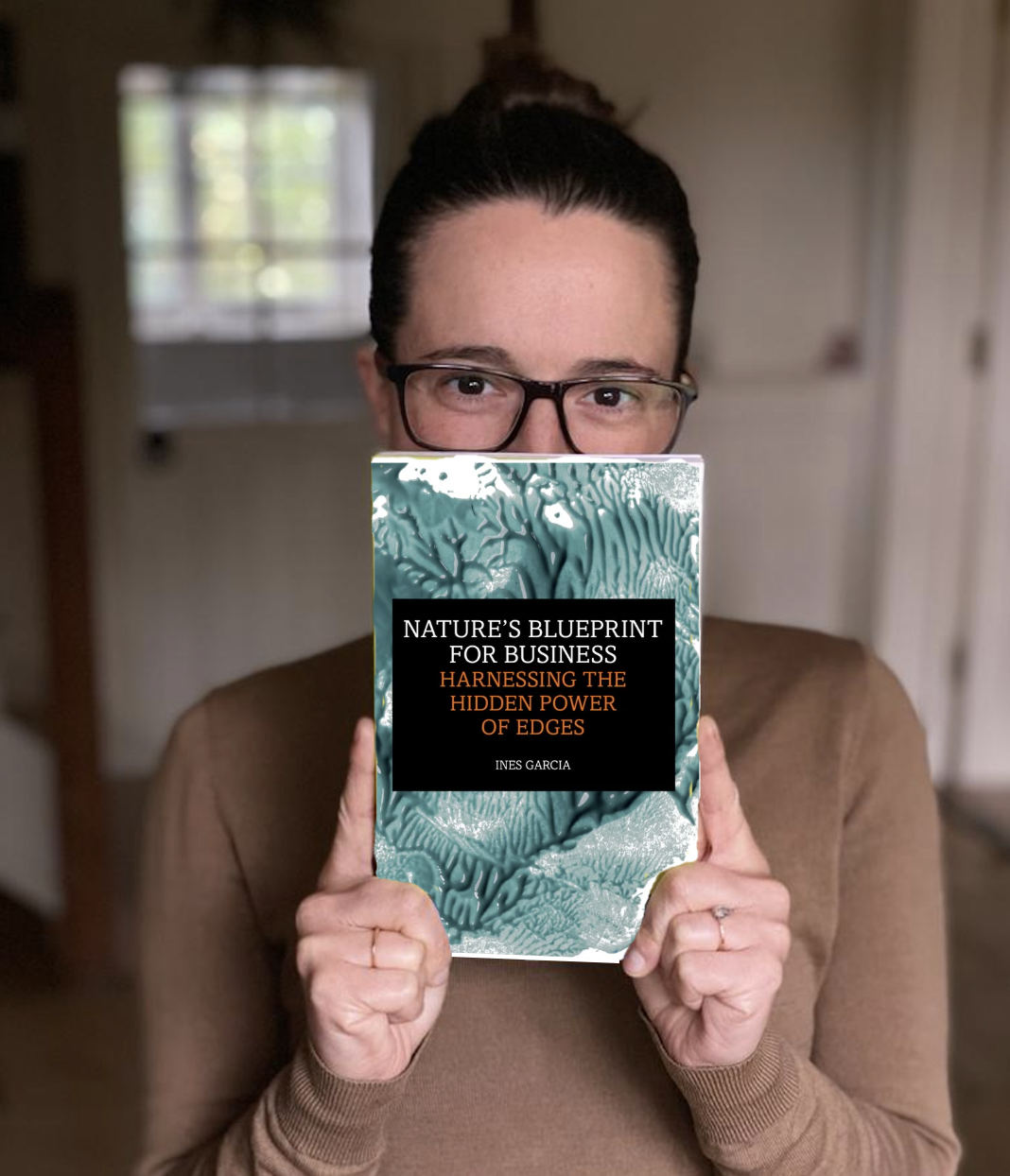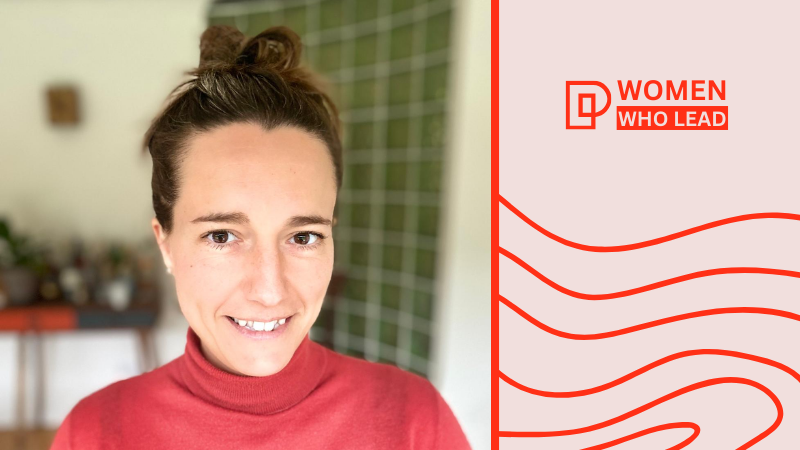
Ines Garcia
Agile & Climate Coach, Get Agile
📍Devon, United Kingdom
What qualities do you think leaders need to have in today’s world?
The leaders we need today are those who can operate at the edges: where disciplines intersect, where the unexpected happens, where innovation truly lives. Nature has shown us for 3.8 billion years that the most resilient and productive systems thrive not at their centres but at their boundaries. Leaders must cultivate that same quality: the ability to hold complexity, to remain permeable rather than siloed, and to draw strength from diversity of thought, background, and experience.
Beyond that, I believe today’s leaders need what I’d call “ecological intelligence”: the capacity to see their organisations as living systems, not machines. That means valuing circularity over extraction, collaboration over competition, and long-term regeneration over short-term gain. Sustainability and happiness are not at the expense of profit; they are a means to it. There is a better way to do business, the question is: Are you willing to be part of the solution?
If you had to describe your leadership style in one word, what would it be and why?
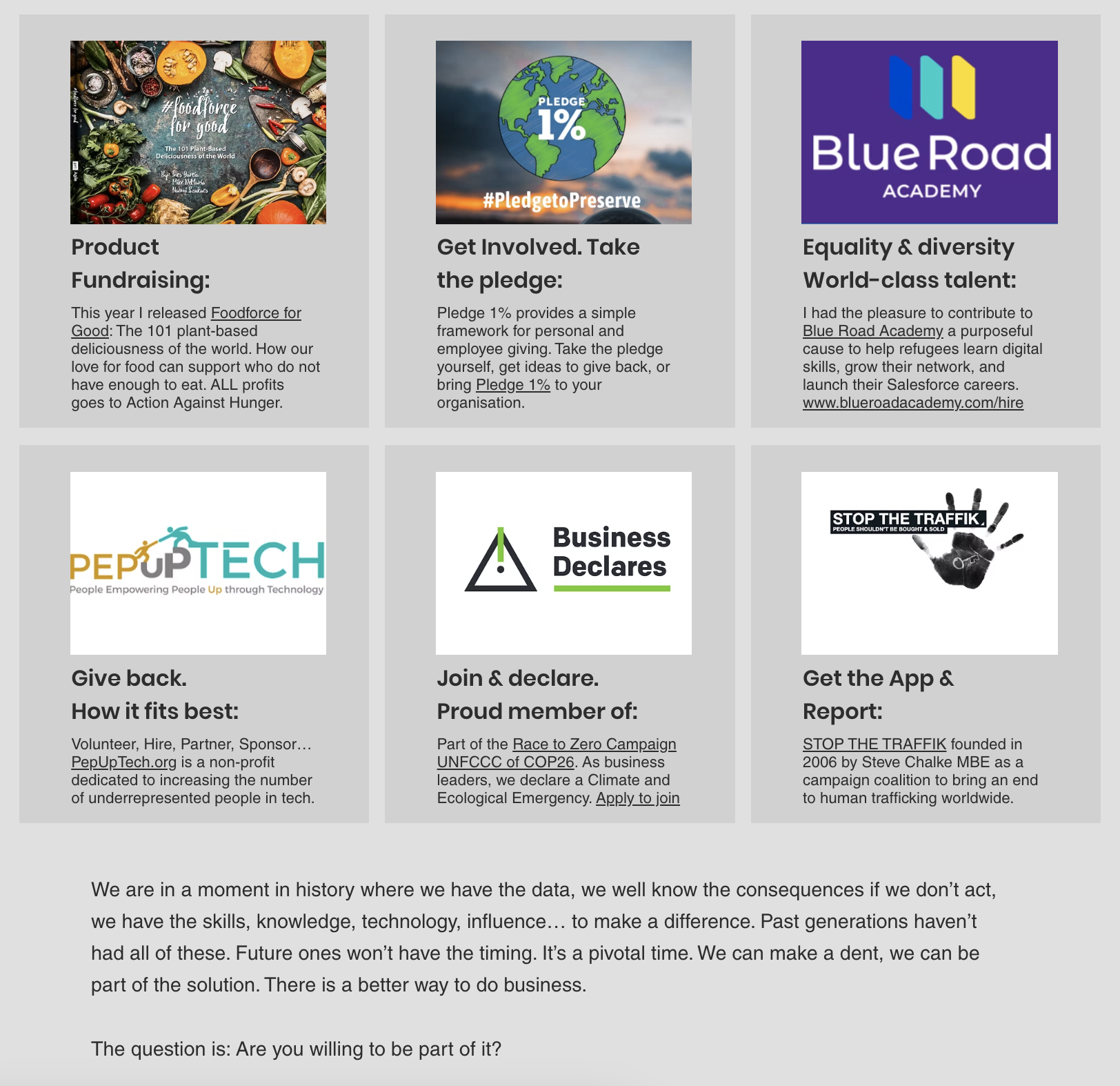
Regenerative. In nature, regenerative systems don’t just sustain: they restore, they enrich, they leave the conditions better than they found them. That’s what I aspire to in every engagement, every programme I design, every community I’m part of. Whether it’s through the “Pay It Forward” model we built into our Agile Sustainability programme, or through the organisations I support like Refugeeforce, Pepup Tech, or the Agile Alliance’s Sustainability Initiative; the intent is always to give back more than I take, and to build conditions where others can thrive independently of me.
How does your company’s Pledge 1% program help shape the kind of workplace culture you believe in?
Pledge 1% gives structure to something I deeply believe: that doing good and doing well are not in conflict. In fact, they nourish each other. For me, participating in Pledge 1% is a public commitment to the idea that the value of a company’s goods and services must be weighed against the waste it generates (social and environmental), not just financial. It signals to clients, collaborators, and my wider community that impact is not an afterthought. It’s embedded in how we work. It has also been evolving (expanding at the edges) since I first joined in back in 2018.
Culture is built through consistent, visible choices. When a business pledges its time, product, equity, or profit toward something greater, it sets a tone; one that attracts people who share those values and holds the organisation accountable to living them.
This year marks the 7th year of Pledge 1%’s #WomenWhoLead campaign. How can companies champion and support female leadership?
Start by expanding your definition of diversity itself. I once came across a diversity model that went far beyond gender and ethnicity — it mapped how people relate and connect, how they think and process information, what they believe, how they work, their physical traits and many more dimensions. Rich, functioning ecosystems are diverse in all these ways, and so are thriving workplaces.
For women specifically, companies need to dismantle the structural biases: the echo chambers, the unexamined privilege, the “old fashioned” cultural assumptions that still quietly shape who gets promoted, who gets heard, who gets funded. But equally important is creating the conditions for women to mentor each other, to lead programmes like The Mentorship Central and YeurLeadin, to be visible not just as success stories but as whole human beings.
Being objective is not a default, what we see and therefore what we think depends where we seat (experiences, culture, objectives…) understanding this and willing to work towards the common goal can be a great enabler. Let’s break free from dualism; there is more to us than any single attribute.
If you could write a note to your younger self on her first day of work, what would it say?
Let’s quiet our cleverness. The answers you’re looking for aren’t always found in frameworks or methodologies; they’re all around you, in the patterns of the living world.
Pay attention. The mechanisms, strategies, and solutions to the hardest problems have been evolving for 3.8 billion years; in forests, in coral reefs, in how rivers meet land. That is an R&D archive to tap into. You don’t have to invent everything from scratch. You just have to learn to read the patterns. And know this: the edges are where the magic happens. The places where disciplines intersect, where you don’t quite fit in any single category, where you feel the tension of standing between worlds. Those are your greatest assets, not your weaknesses. Don’t rush to the straight lines, the boxes, the centre. Stay curious at the edges. The world needs you to do both: do good and do well. They are not opposites. They never were.