Sustainable Infrastructure, Sustainable Careers
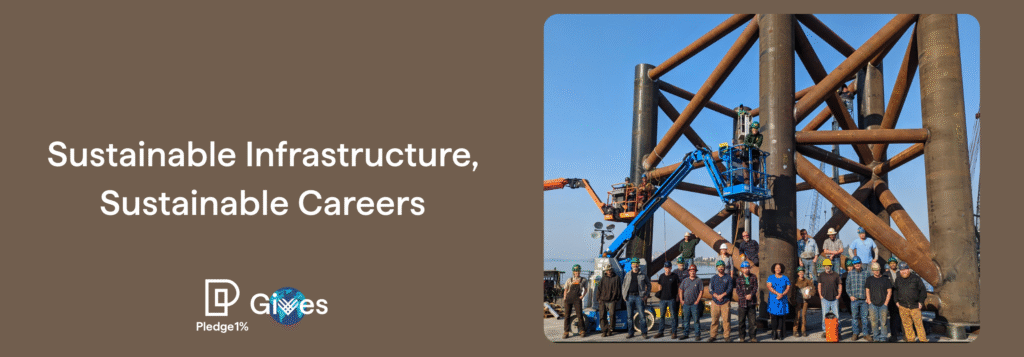
Willamette Technical Fabricators is a structural metal manufacturing company whose mission is to build sustainable infrastructure and sustainable careers. We focus on building transportation and clean energy infrastructure, as well as other custom, complex fabrication projects. We were founded in 2020 and certified as a Benefit Company in 2022 by Benefit Corporations for Good. Each year we publish an annual benefit report detailing how we are demonstrating our commitment to a quadruple bottom line of people, planet, profit, and purpose.
People: As a minority- and woman-owned small business, we strive to create a truly inclusive workplace. We work closely with community-based organizations to offer high-skill, high-wage, high-demand career opportunities to the communities that need them the most, including women, people of color, and people affected by the criminal justice system. We have retained our employees with extremely low attrition thanks to: transparent and highly competitive wages that reflect our budget for a given position instead of applicants’ compensation history; promotions based exclusively on merit; paid on-the-job training and tuition assistance; unlimited paid time off for salary workers, generous PTO for hourly workers, and flexibility for everyone to have a healthy work/life balance; the same comprehensive healthcare benefits for all employees and their families, and a company match of up to 4% total compensation for 401(k) contributions.
Planet: We have strategically located our facilities on the Willamette and Columbia Rivers to minimize the carbon impact of shipping heavy materials. We are conducting US Department of Energy-funded robotic welding research to improve the cost-competitiveness of American manufacturing for floating offshore wind and pumped storage hydropower, so that clean-energy infrastructure that makes us more resilient and energy-independent can be built locally instead of being shipped across the Pacific while keeping those jobs local. We recycle all of our scrap metal and purchase almost exclusively materials made with recycled content and manufactured in the USA. We adapted our production work schedules and support flexibility for those able to do their jobs from home to minimize carbon emissions from commuting. We use high-efficiency power sources for our equipment to minimize energy consumption, and electric vehicles in our fleet.
Profit: As a for-profit company, Willamette Technical Fabricators provides profit-sharing bonuses to salary employees and real cost of living adjustments for our hourly staff, plus PTO bonuses when we beat our production schedules. We have committed to donating at least 1% of company net profits to charitable organizations that serve our communities and advance the causes that our staff are passionate about. All staff members have the opportunity to vote on the non-profit organizations that we support, and corporate giving is decided collectively. This year we gave $25,000 to local organizations including the Boys & Girls Club, Children’s Institute, Clark County Food Bank, Columbia Land Trust, Evergreen Habitat for Humanity, Free Clinic of Southwest Washington, Friends of the Children, Humane Society , National Association of Minority Contractors, Oregon Business Academy, and YWCA Clark County.
Purpose: Our company leadership is active on many advisory boards and in appointed public roles, advocating on behalf of a more equitable economy, environmental stewardship, and support for businesses like ours working to those ends. In 2023 our CEO testified in support of the successful passage of Oregon House Bill 3572 that provides registered benefit companies with a sustainable advantage, and encourages more businesses to commit to people, planet, and profit as we have done. Our employees are actively engaged in community outreach and we frequently host visitors including elected officials, families, and students, to showcase how manufacturing jobs can serve as a positive force for change for the environment, improve connectivity, access, and resiliency, and drive economic development, creating life-changing wealth generation opportunities for members of under-served communities.