Reflecting on the recent Pledge 1% event hosted at our Melbourne offices, we were reminded that local action is the heartbeat of global change. Seeing the immense potential of corporate volunteering firsthand reinforced how our community commitments contribute to the incredible impact we are witnessing worldwide.
Rosterfy’s global footprint was recently recognised at the UN-partnered World Summit Awards in Vienna. However, the true value of presenting on the international stage wasn’t just the recognition—it was the powerful opportunity to spotlight our customers’ life-changing work.
At Rosterfy, our Pledge 1% promise is driven by the privilege of empowering organisations to mobilise volunteers at scale. We are incredibly proud to provide the platform powering volunteer programs for over 300 global customers, including:
- OzHarvest (APAC): 3,000+ volunteers distribute 750,000 meals weekly and divert 15,000 tonnes of food from landfill every year.
- End Overdose (USA): 2,000 volunteers educate communities on opioid addiction risks.
- WaterAid (UK): 650+ volunteers at Glastonbury funding clean water for remote African communities.
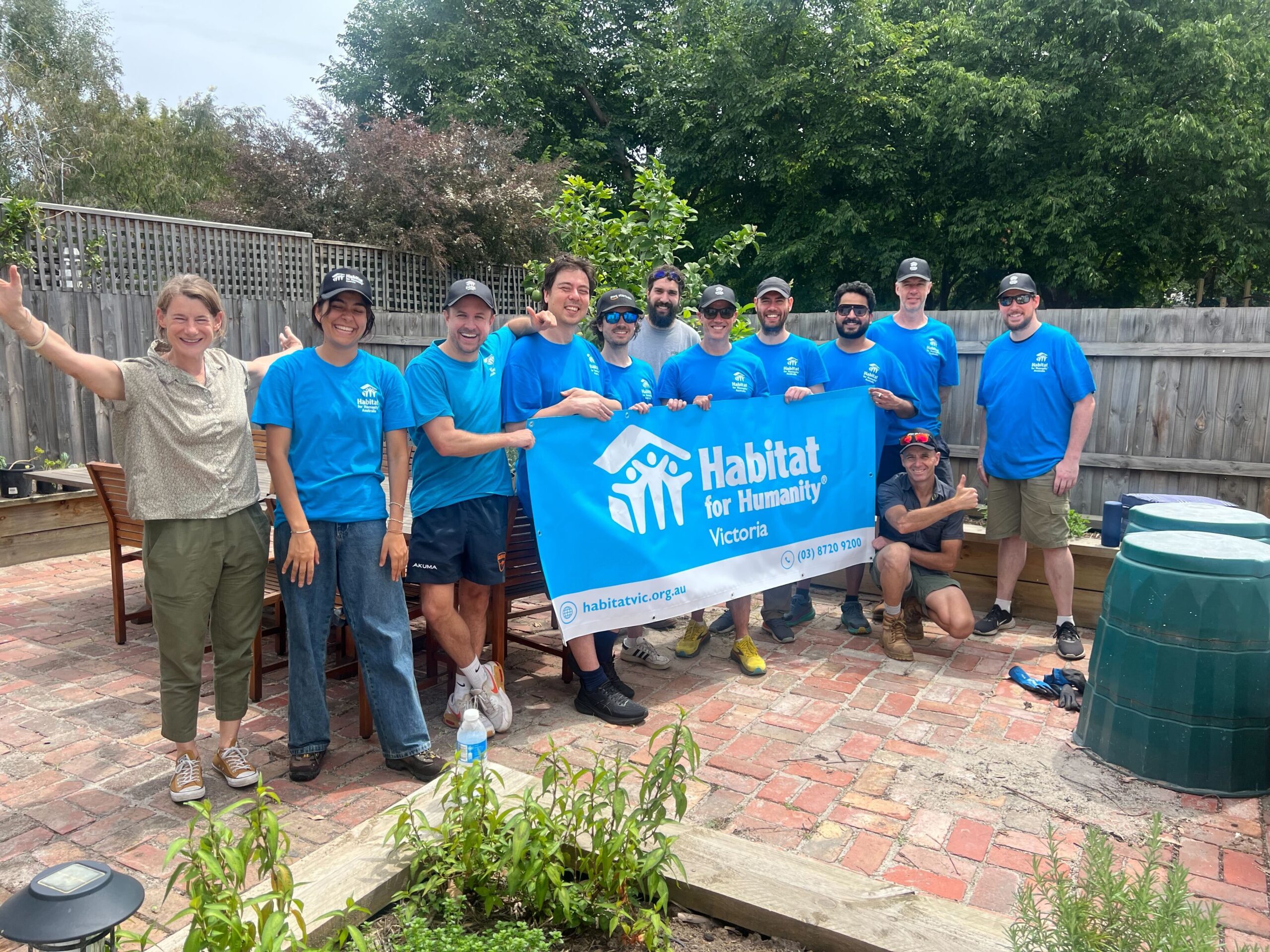
Our Melbourne event, alongside Orange Sky Australia and Foodbank Victoria, highlighted a critical trend: the increasing gap foodbanks face in corporate engagement, particularly in Australia. In response, our team is actively coordinating Rosterfy volunteer days toward the organisations that need it most—achieving our 1% goal while addressing this vital community need.
Beyond our own team’s efforts, this is exactly where our technology comes in. By seamlessly connecting NFPs with corporate partners, Rosterfy’s platform bridges a critical technology gap in employee volunteer engagement. The insights gained from our recent event are directly feeding our product roadmap, ensuring we can better support organisations in achieving their Pledge 1% goals well into the future.
To our team, partners, and customers driving change: we are proud to power your work.
Original article here
Author: Business Wire
MOUNTAIN VIEW, Calif.–(BUSINESS WIRE)–Bloomreach, the platform fueling limitless ecommerce personalization, today announced it has joined Pledge 1%, a global movement that inspires, educates, and empowers every entrepreneur, company, and employee to be a force for good. By committing 1% of company time to volunteering efforts and community service, Bloomreach underscores its dedication to enacting positive change in the world of ecommerce.
“As a global organization, our reach spans so many different countries and communities. We have the opportunity to make a sizable impact around the world with the time we pledge to volunteering and community service,” said Ursula Kralova, Chief People Officer, Bloomreach. “We’re proud to join Pledge 1%, and to continue in our mission to be a force for good in ecommerce and in the world.”
For many years, Bloomreach has been committed to bettering the communities and industries it serves through financial contributions to a number of global organizations. In 2022, Bloomreach established a new program to supplement these financial contributions with more service-based opportunities. With the launch of its Volunteering Time Off (VTO) program, each employee was offered five days of paid time off for volunteer efforts.
Participation in the VTO program has doubled since its inception, with employees volunteering at local food banks, animal shelters, zoological gardens, and more. In joining the Pledge 1% movement, Bloomreach formalizes this time commitment — offering employees the opportunity to give more than 1% of their working hours to deserving causes each year.
To learn more about Bloomreach’s commitment to a positive global impact, visit the company’s website and download its ESG Report.
About Bloomreach
Bloomreach personalizes the e-commerce experience. Its data engine unifies real-time customer and product data so businesses understand what customers really want. By connecting that understanding to every channel, the e-commerce experience becomes limitless — reflecting a changing customer as they shop. Amplified by the speed and scale of Loomi AI, Bloomreach’s AI for e-commerce, this creates endless new paths to purchase, greater profitability, and fast business growth. Bloomreach products include: Engagement, a marketing automation platform; Discovery, an e-commerce search solution; Content, a headless CMS; and Clarity, AI-powered conversational shopping. The company has multiple AI patents and serves 1,400+ global brands including: Williams-Sonoma, Bosch, Puma, and Marks & Spencer.
Original article here
Author: Proctorio
Proctorio announced today that it has joined Pledge 1%, a global movement to create a new normal for companies of all sizes and stages to have a positive social impact through their business. Proctorio is joining over 18,000 companies around the world who have committed to Pledge 1% of company resources. We are proud to announce our commitment to donate 1% of time to the local community.
Proctorio is dedicated to philanthropy through initiatives that support educational access and digital equity, aiming to bridge the gap for underserved communities. Our commitment extends to partnering with organizations that focus on expanding learning opportunities and providing resources to those in need. Since the beginning, Proctorio has helped over 52 charities with a growing employee participation rate of 83%, making a $550,000+ impact on the community to date. We aim to hit our 1% goal of 1,430 volunteer hours by the end of 2025, and hope to continuously increase our goal as the years go on.
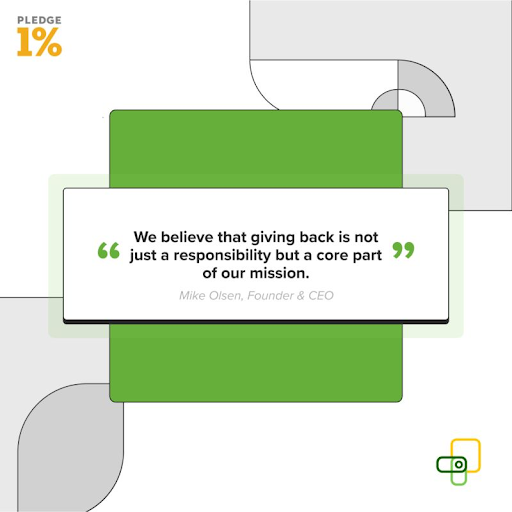
“At Proctorio, we believe that giving back is not just a responsibility but a core part of our mission. By pledging 1% of our time, we’re investing in the communities that have supported our growth while allowing us to increase opportunities for education in ways that align with our values. We’re honored to be part of this global movement and look forward to seeing what we can accomplish together.” – Mike Olsen, Founder & CEO of Proctorio
Proctorio is proud to join the Pledge 1% community and encourages other companies to take the pledge and leverage their business as a force for good.
To learn more about Proctorio’s program, visit https://proctorio.com/about/sustainability or contact press@proctorio.com.
ABOUT PLEDGE 1%
Pledge 1% is a global movement that inspires, educates, and empowers every entrepreneur, company, and employee to be a force for good. Over 18,000 members in 100+ countries have used Pledge 1%’s flexible framework to ignite half a billion dollars in new philanthropy. To learn more about Pledge 1% and to take the pledge, visit www.pledge1percent.org.

By now, most of us are all too aware that the shift to remote work, economic and political uncertainty, and evolving employee expectations have made it more challenging to deepen employee engagement. At the same time, team volunteering is a proven strategy to boost employee well-being, employee morale and retention, brand value, and community impact. But executing a successful team volunteering program isn’t easy. It requires a thoughtful approach and preparation.
 |
Check out these 5 top tips from Mary Dohrmann, Program Manager, Employee Impact at Twilio.org – a leading Builder member of the Pledge 1% movement. |  |
Twilio.org’s 5 top tips for building an effective team volunteering program
1. Encourage executives to demonstrate the behavior you want to see in other employees.
When employees see executives taking time to volunteer, it shows them that it’s ok for them to do that, too. Encourage your executives to champion a team volunteer event at their gatherings, reminding them the importance of leading by example and the impact that it can have on your company’s social impact goals. This will set your leaders up to be natural ambassadors of social impact across the organization.
2. Create proactive, nonprofit partnerships and start early.
Nonprofit partnerships are key to success in team volunteering. Create and foster nonprofit partnerships with turnkey volunteering opportunities in the cities where your employees gather. Remember that on and offsite meetings get planned months in advance, and volunteer events can often be the first thing to be left off of a tight agenda. Start planning with teams as early as you can to ensure you have time carved out of the agenda and have enough time to create a meaningful social impact opportunity in partnership with your nonprofit partners.
3. Have plug and play volunteer opportunities available.
Build a toolkit with meaningful, skills-based and other volunteering opportunities for teams looking to host a volunteer event during their gatherings. Partner with your people team to help promote that toolkit and, if relevant, to get it incorporated into other guides and resources. Include in your toolkit suggestions for making your volunteer opportunities more engaging. Can you offer 2x matching to the nonprofits that teams volunteer with? Can you create competition and offer giving credits? Incentives such as these can help drive energy and excitement around plug and play volunteering.
4. Build your internal brand and tell your story.
Continuously build cross-functional connections so that you’re aware of what team gatherings are happening and when. Awareness is key to finding the right moments to integrate social impact opportunities. And, once teams start to recognize your team as the ones that can help them create a social impact opportunity, they’ll start coming to you and referring others to you. Be sure you’re asking teams for photos and stories from their volunteer events so that you can share those with others to help generate excitement and new leads.
5. Be prepared to be hands on.
The most successful team volunteer events are the ones in which the organizer feels informed, supported, and prepared. If you don’t have the perfect plug and play opportunity ready for a team, help the lead with the search. If possible, offer to help create the event on your employee impact platform and help bulk upload volunteer hours. To stay organized as the volume of requests increases, have teams fill out an intake form and lean on those proactive partnerships you have in place.

Original article here
Author: LOUIS TÊTU
If you take a quick scan of recent headlines about corporate ESG momentum, you’re likely to see the word “trend” popping up time and again. It’s a word that could falsely imply the ESG movement is fleeting. But in fact, all signs point to permanence, with more ESG requirements poised to become mandatory in 2024 and beyond.
None of this is surprising. Investing in environmental, social, and governance (ESG) initiatives is the right thing to do for people and the planet. It also appears to be a sound performance strategy that helps to attract and retain talent—particularly as millennials and Gen Z become more dominant in the workforce.
The big question on the minds of many founders is not whether to embrace philanthropic leadership, but rather when is the right time. The answer might surprise you.
TIMING IS EVERYTHING
Back in 2021, my company, Coveo, joined Pledge 1%, a global movement to inspire, educate, and empower all companies to leverage their assets for good. The movement challenges organizations to pledge 1% of equity, 1% of employees’ time, 1% of profits, and 1% of technology capabilities. While our pledge date may not appear noteworthy on the surface, that changes when I reveal that we took the pledge during the run-up to our IPO.
Pledging equity on the road to IPO might feel off-limits, whether due to concerns around bandwidth, board pushback, investor dilution, or even the misconception that it’s too late. In fact, founders at many companies, including DocuSign, PagerDuty, and Twilio, all successfully spearheaded Pledge 1% commitments within a couple of years, or even a couple of months, of their own IPOs.
Not only is it possible to take action pre- or concurrent-IPO, it’s also much simpler to get shareholder’s approval. The upsides are plentiful, including the amazing potential to create billions of new philanthropy dollars that can be used to address significant societal issues for years to come. But just because it’s possible, doesn’t mean everything is simple.
The good news is you don’t have to go in blind. Here are five takeaways from my team’s experience with committing to Pledge 1%.
5 KEY LEARNINGS FROM A PRE-IPO PLEDGE JOURNEY
1. Get Your Board Aligned And Onside
Leaders who have been through the Pledge 1% process recommend meeting with each board member individually so you can connect and communicate with them in their preferred manner. I support this approach, as it allows you to feel out reactions and address questions one on one.
My company’s board was unwaveringly supportive of joining Pledge 1%, even given the timing. We were also fortunate to have a board member who had already participated in Pledge 1%. That individual’s support was invaluable throughout the process.
2. Think Long Term
The decisions you make early on are binding for years, so it’s crucial to make informed choices and consider all the regulatory complexities. For example, as a Canadian company, we faced constraints related to stock legends in the U.S. Fortunately, nothing proved insurmountable.
Your equity source can be corporate, founder, or a hybrid. We committed to a corporate upfront model with a sale schedule over multiple years. “Upfront” means investor dilution happens all at once and the full amount is on the cap table. This approach could allow you to benefit from stock upsides and speak confidently about your commitments, knowing your philanthropic vision is protected from management changes or M&A activity.
3. Surround Yourself With Experienced Advisors
Tax considerations weren’t a primary concern for us, but yours may require proactive measures to receive charitable receipts. Surrounding yourself with tax, legal, and accounting experts with Pledge 1% experience is a sound strategy, as it helps you avoid unnecessary expenses and time.
We also decided to partner with donor-advised funds, or DAFs, in the U.S. and Canada rather than setting up a private corporate foundation. This allows us to more easily give back to local communities where most of our employees and customers are based.
4. Tap Into The Expert Tools
The Pledge 1% program provides access to tools, networks, and expert guidance from its team and founders who have been through the process. Standing on the shoulders of these giants can help to significantly streamline the implementation process, particularly amidst the madness of IPO preparations.
5. Identify An Owner
Being part of Pledge 1% centralizes ESG efforts, easing reporting and coordination. Identifying a passionate in-house owner helps to drive long-term success. Even smaller companies that can’t invest in a dedicated senior impact executive can do this. For example, we’re fortunate to have our CMO leading our ESG efforts and rallying 50+ employees to join the committees.
At Coveo, we chose to be part of the Pledge 1% movement because it provides a proven, sustainable way to fund our social impact for years to come. It’s also an amazing way to keep us laser-focused on a mission that is highly meaningful to our organization and our people.
We put knowledge and education at the center of our 1% Pledge because we passionately believe that education is the ultimate social equalizer. Our initiatives prioritize programs for young people aged 6-18 years old in vulnerable social groups who are challenged with accessing knowledge and education. We’re already making great strides.
Since taking the pledge in 2021, we’ve donated more than a million dollars, plus thousands of employee volunteer hours, to worthy causes. Achieving this milestone wouldn’t have been possible without the willingness of our leaders and board to explore joining Pledge 1% while on the road to IPO.
I hope the insights I shared in this article ignite meaningful discussions about how to build a long-term liquidity vehicle for supporting organizations aligned with your company’s mission. The more late-stage companies that join Pledge 1%, the faster we can make meaningful corporate philanthropy the new normal.
Cobra CRM
We help organizations in the education, non-profit, and business market to optimize their business processes by implementing Salesforce products.
We at Cobra CRM enjoy our jobs, and we work hard to bring a smile to the faces of our customers. However, we challenged ourselves to not only make our customers happy but also to have a positive impact on the people that live around us. Therefore, we pledge 1% of our time to bring smiles to the faces of those who live in our local neighborhood.
During our VTO time, we visited Abdi in his workshop. Abdi was born in Somalia and because of the war, he fled to the Netherlands when he was 11 years old. After being active in the criminal circuit and being homeless he now runs his workshop. Here he welcomes homeless people to work in his workshop and to create pieces of furniture.
Personally, I was very inspired by Abdi’s determined decision to change his life. In the Netherlands, it is hard to reintegrate when your past is not what it is supposed to be. However, his persistence and deep motivation have brought Abdi where he is now, a local entrepreneur who inspires other homeless people to make better decisions. This is someone we can learn from a lot!
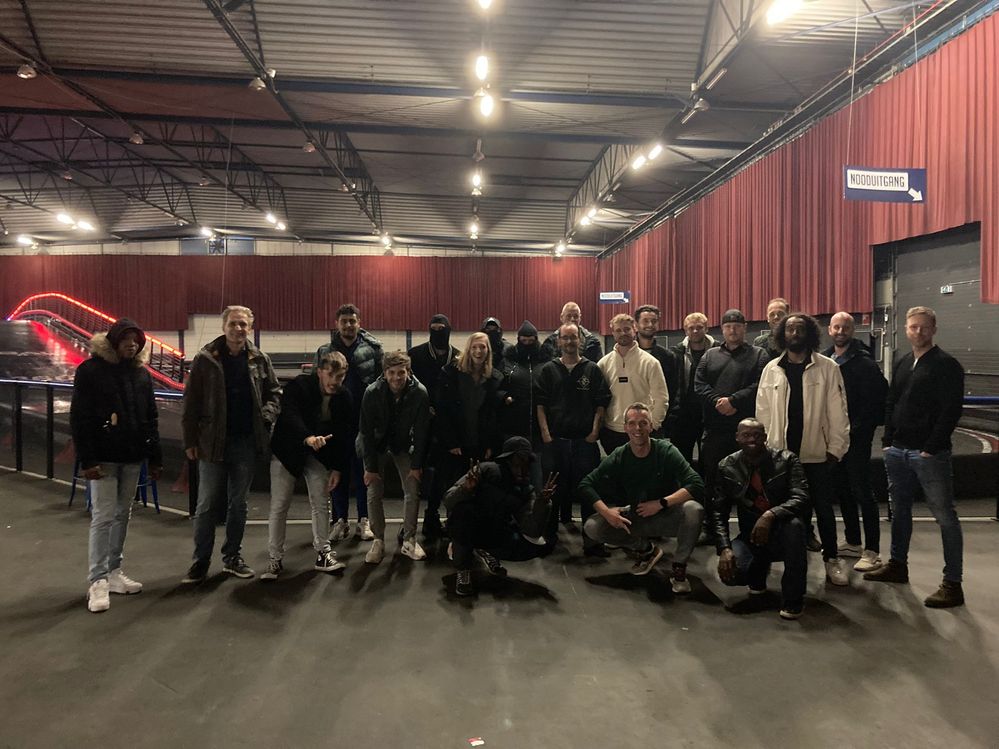
After the visit to the workshop, we went karting with the homeless people. It was great to see that during this activity our two worlds came a little closer. By competing in a game, we got along with each other and learned about our different lives even more. When one man said that this afternoon was one of the highlights of the year, we were honoured and glad that we could make this happen for those who don’t have much to look forward to in life.
This VTO time inspired us to build bridges and to care for others. Although our worlds may look very different, in the end, we’re all human beings who want to bring a little love into the world.
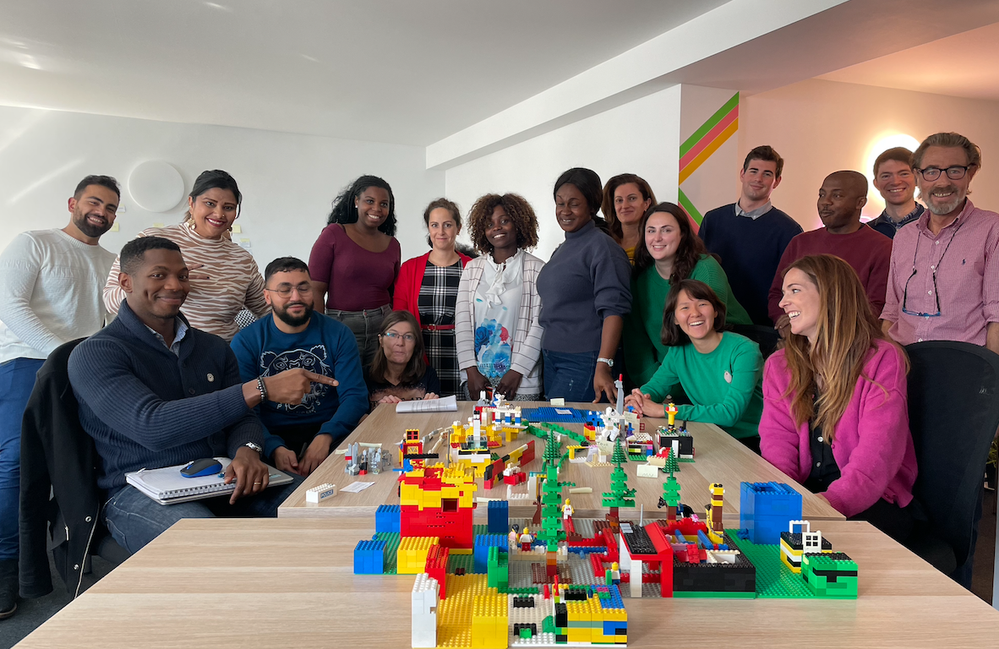
UPEO
We are a Salesforce implementation Partner in Belgium.
https://www.upeoconsulting.com
UPEO was created only a year ago, but we pledged 1% of our time from the start.
We knew the concept, working in the Salesforce ecosystem for many years, but the company we worked for didn’t translate their pledge to the floor, so we never got to participate. That’s why it was important to do things right.
We are 10 people, so we immediately “translated” the theoretical 1% of our time and donated that to YouthStart, a Belgian non profit who helps young people kick-start their professional life. With no 1% time left, but lots of ambition, we gave another 5% of my personal time as a founder, to found a Salesforce training program together with an association called Girleek. This program is a 14-week training for unemployed women to become Salesforce Certified Admins. The first 18 graduates will certify next month, in December
We are very proud to be able to give back to our ecosystem. It also teaches us loads, and the connections we make, the friendships along the way, make it even more worthwhile!
We have joined Pledge 1%, a global movement to create a new normal for companies of all sizes and stages to have a positive social impact through their business. We are proud to announce our commitment to donate 1% of our staff time to several initiatives in Uruguay.
One of our pillars is to help people grow and thrive with Salesforce and technology. Our staff will lead initiatives to help reduce the gender gap in IT and promote inclusive opportunities to rewrite your career in the industry.
Add to that, at Modelit we are committed to helping the community. We will team up with non-profit organizations and volunteer groups to support and strengthen low-income families in the Montevideo area.
Our co-founder, Diego Febles, said that it’s a great way to give back to the community.
“We’re very excited about being part of Pledge 1%. We think that with these initiatives we can give back and create a positive effect on our communities”.
Modelit is proud to join the Pledge 1% community and encourages other companies to take the pledge and leverage their business as a force for good.
To learn more about Modelit’s program, contact communications@modelit.xyz
ABOUT PLEDGE 1%
Pledge 1% is a global movement that inspires, educates, and empowers every entrepreneur, company, and employee to be a force for good. Over 12,000 members in 100+ countries have used Pledge 1%’s flexible framework to ignite half a billion dollars in new philanthropy. To learn more about Pledge 1% and to take the pledge visit www.pledge1percent.org.
Qalaxia and Pledge 1% have partnered to make it convenient for existing members and new members of the Pledge 1% community to pledge and fulfill 1% of their time at their leisure from home or office by helping provide the best answers to student-questions posted online.
Pledge 1% members can help solve a pressing problem via ten-minute bite-sized chunks. Many students leave their questions unasked because they are afraid of ridicule by peers, are concerned that they are wasting their teachers’ time, or do not have access to experts at home who can answer. Qalaxia changes that. Qalaxia, a Pledge 1% partner and an NSF funded startup, is working to ensure that no student question goes unasked. Qalaxia provides schools, afterschool programs and non-profit organizations that are working with underprivileged students with a free online student Q&A service that provides a safe environment and answers students questions on topics ranging from homework to career choices.
Many companies can only afford to start in the Pledge 1% community by pledging 1% of their time (1% of a 40 hour week is just 20 minutes!). Even this can be burdensome for early-stage startups looking for opportunities to give back to the community. Qalaxia changes that. With Qalaxia, members who are pressed for time can make a meaningful impact in students’ lives by doing it whenever and wherever they can find ten minutes in their calendar. Qalaxia’s downloadable reports also make it easy for members to measure their impact.
To learn more about Pledge 1% or to see how you can participate, visit pledge1percent.org or email the team at members@pledge1percent.org .
To learn more about Qalaxia and how to give 1% of your time in bite-sized ten minute chunks visit qalaxia.com, or email Raji at r@qalaxia.com.