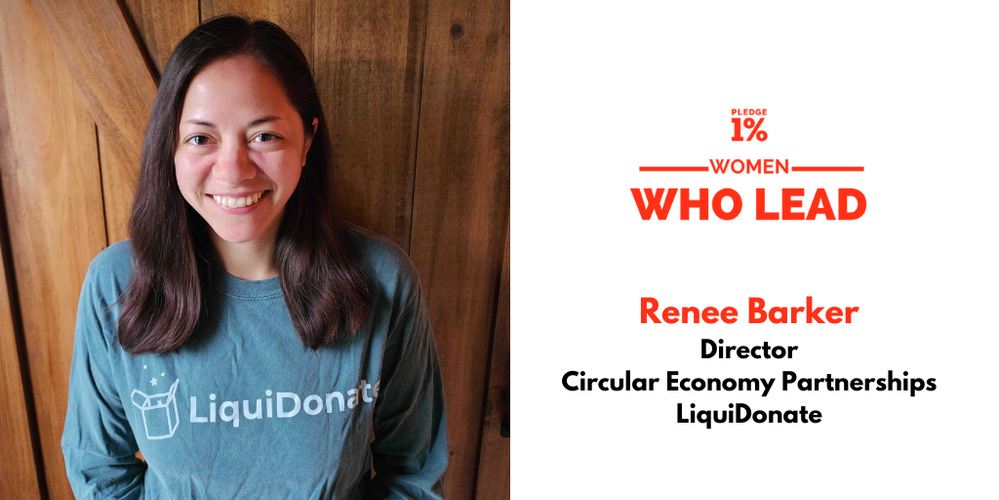
Renee Barker
Director, Circular Economy Partnerships, LiquiDonate
Nashville, Tennessee, USA
If you could describe yourself in one word, what would that be and why?
Adaptable – leading with the ability to adjust in changing circumstances is so important in an emerging climate tech industry. In my role, it is important to understand and adapt to the needs of our partners on both sides of the equation. For example, I explored how we can provide metrics and storytelling to retailers and nonprofits that match their needs. We do this through customizable reporting and shareable assets for both that relate to their audiences. Retailers want to know pounds diverted and number of recipients and nonprofits want ways to showcase donations in action with their clients.
Pledge 1% provides a framework for businesses to do good. Do you think it’s important for today’s corporate leaders to prioritize social impact? If so, why?
Definitely important! It is so needed to contribute to the future of our communities. We have to continue to collaborate to make a more sustainable world, and operate in a way that builds up society to be more equitable. A corporate culture of sustainability is an ongoing effort, and each time we prioritize social impact we are prioritizing our futures. No matter how large of a business you are, there are always opportunities.
Do you give back to the community with your team and work? If so, what does this look like?
I love that LiquiDonate offers paid volunteer time, and that we take initiative in volunteering when our remote team gets together. When we travel for a conference or event, we set aside time to work with a local organization. Some examples this past year include volunteering at a food bank, picking up litter, sorting items at a community center, food rescue, and more.
What’s the best piece of advice you’ve ever received?
You don’t know what you don’t know and that’s okay! Seek opportunities to connect with others and learn from people. Sharing and collaborating is how we can all grow.
“Seek opportunities to connect with others and learn from people. Sharing and collaborating is how we can all grow.”
This year’s International Women’s Day themes are focused on investing in women and inspiring inclusion. What can we do to make today’s workplaces more equitable and inclusive for women?
Workplace transparency is important and I believe we are past the days of safeguarding so many unknowns. To be equitable and inclusive, today’s workplaces can invest in their women and make clear opportunities for training, mentorship, and advancement pathways.
What advice do you have for women who are just starting their career?
Informational interviews! Find someone who has the job you want or does something you find interesting, and learn more directly from the source. Many folks are very willing to set aside some time to chat and answer specific questions about their career.
What are you looking forward to this year? Are there any goals (personal or professional), activities, or experiences you are excited about?
I’m excited to keep building on our product offerings and expand our network to more nonprofits and schools in need. We hit some great milestones last year — every state now has a member! There is so much more room to grow and help companies make a positive impact in all communities and I hope to move donations in every U.S. city.
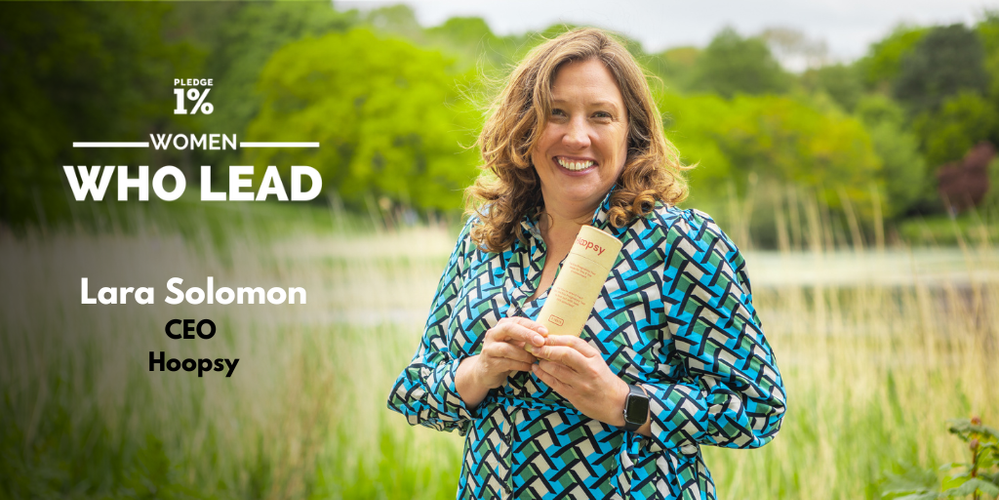
Lara Solomon
CEO, Hoopsy
London, UK
If you could describe yourself in one word, what would that be and why?
Resilient.
Do you give back to the community with your team and work? If so, what does this look like?
We give back through the product we sell in that it causes much less pollution than current pregnancy tests, and also through our free online fertility community that supports women on their fertility journey.

What’s the best piece of advice you’ve ever received?
If it was easy then everyone would do it.
This year’s International Women’s Day themes are focused on investing in women and inspiring inclusion. What can we do to make today’s workplaces more equitable and inclusive for women?
I think it starts with giving women a seat at the table, whatever table is relevant. Men can’t ever really fully understand what it is like to be a woman and therefore it is hard for them to make decisions on their behalf. Get women involved in the decisions and shape of the company to make others feel included.
“I think it starts with giving women a seat at the table, whatever table is relevant.”
What advice do you have for women who are just starting their career?
Don’t be afraid to challenge the status quo, often the only reason things are done a certain way is because they always have been done that way.
What are you looking forward to this year? Are there any goals (personal or professional), activities, or experiences you are excited about?
For Hoopsy I am excited about launching our pregnancy test into Europe and me personally combining travel within Europe with work by working remotely more often.
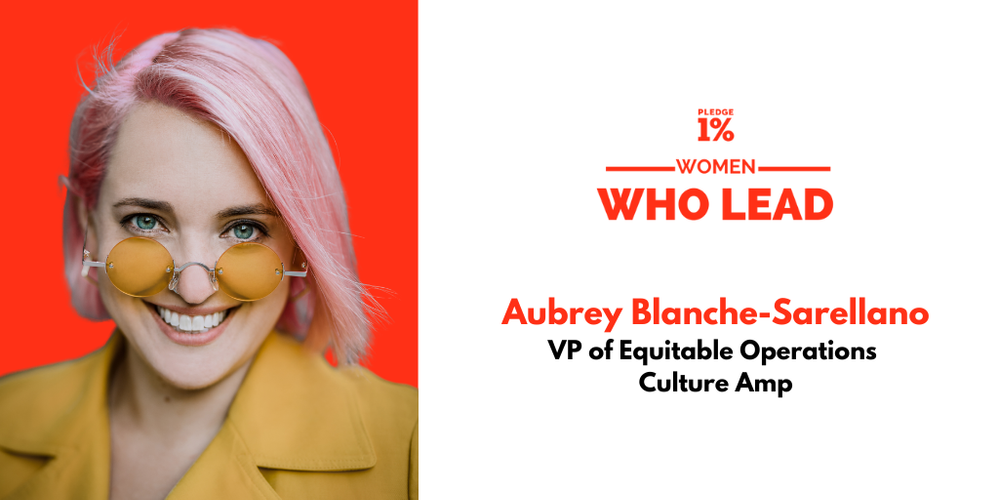
Aubrey Blanche-Sarellano
VP of Equitable Operations, Culture Amp
Sydney, Australia
If you could describe yourself in one word, what would that be and why?
Passionate: I’m someone who thow myself into the things I care about and the challenges that I see. I tend to gravitate towards issues that are difficult and also hold people back from achieving their potential — hence the career I’ve chosen!
Pledge 1% provides a framework for businesses to do good. Do you think it’s important for today’s corporate leaders to prioritize social impact? If so, why?
I believe that given the overall impact that businesses have on society, there is no excuse for them not considering social impact in their operations. It’s leaders’ ethical duty to engage in the world and take responsibility for having impact to make the world better than they found it.
Do you give back to the community with your team and work? If so, what does this look like?
I believe in sharing the specific skills and access that I have. That means that most of my volunteering focuses on free consulting for organizations who couldn’t otherwise afford it, and mentoring folks who haven’t always been given the chance to get support from people in their fields.
What’s the best piece of advice you’ve ever received?
“Know how to tell the difference between rules that are just and unjust, and know what you’re willing to risk to stand on the side of what’s right.”
What advice do you have for women who are just starting their career?
Don’t limit yourself to specific job titles. Figure out what skills you get energy from using and what problems are exciting for you to solve.
“Look for roles–or hack your current one–to do more of what lights you up.”
What are you looking forward to this year? Are there any goals (personal or professional), activities, or experiences you are excited about?
I’m looking forward to having my wedding after a whirlwind couple of years moving back and forth around the world!
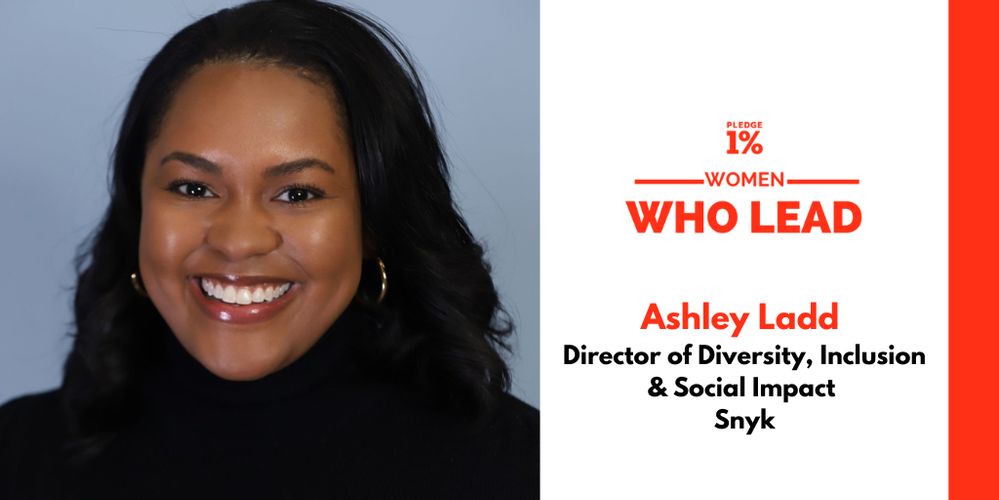
Ashley Ladd
Director of Diversity, Inclusion & Social Impact, Snyk
Boston, MA
If you could describe yourself in one word, what would that be and why?
Ambitious. My mom instilled in me at a young age to be curious, hard-working, and kind to everyone. She led by example in so many ways and it showed me that anything is possible when you put your mind to it. I take these lessons with me in all that I do, both personally and professionally.
Pledge 1% provides a framework for businesses to do good. Do you think it’s important for today’s corporate leaders to prioritize social impact? If so, why?
It’s incredibly important for leaders today to advocate for and prioritize social impact throughout their organization. Not only is it good for business but it’s a great way to pay it forward, maximize impact globally and ensure we’re taking care of the communities where we live and work.
Do you give back to the community with your team and work? If so, what does this look like?
Snyk has a wide array of Social Impact programs that run each year but one of our most impactful programs is our Snyk Week of Impact. As a company, we commit to participating in volunteer opportunities across the globe within one week to increase our impact exponentially. From renovating a school and street outreach to support the homeless to packing meals and cleaning up a community center our Snykers work together as One Team to leave a lasting impact.
What’s the best piece of advice you’ve ever received?
“When people show you who they are, believe them.” – Maya Angelou
This year’s International Women’s Day themes are focused on investing in women and inspiring inclusion. What can we do to make today’s workplaces more equitable and inclusive for women?
Creating more equitable and inclusive spaces for women begins with community and conversation. We need to ensure we’re having conversations about equal pay, promotions, and career growth, and doing so throughout the organization. From Employee Resource Groups to Leadership, these conversations need to happen often and include everyone.
What advice do you have for women who are just starting their career?
You may not know exactly what you want your career to be (and that’s ok!).
“Be intentional about deepening your understanding and skillset in the areas that will help you get that dream job. Lean in and take risks where you can – it will always be a great learning experience.”
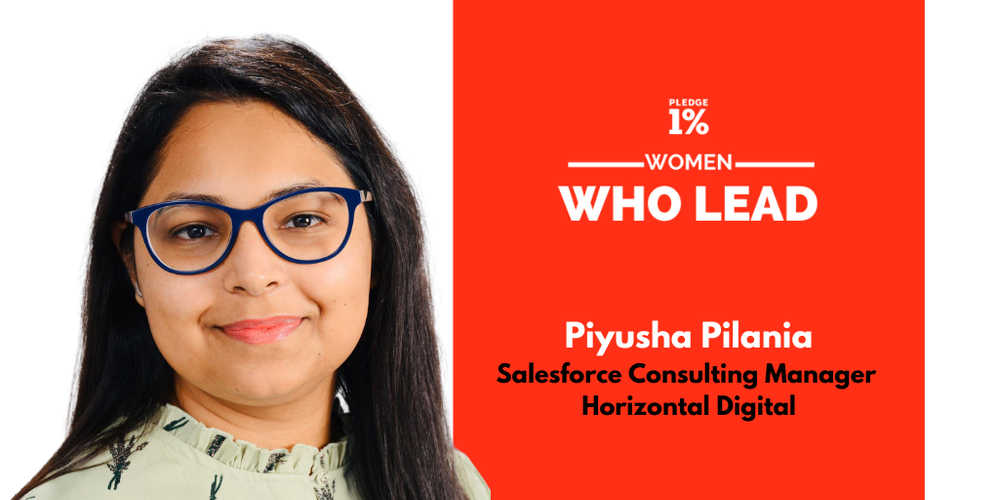
Piyusha Pilania
Salesforce Consulting Manager, Horizontal Digital
Vadodara, India
If you could describe yourself in one word, what would that be and why?
Resilience. I come from a very traditional Rajasthani family where girls are married as soon as possible, I was married at the age of 20 during my bachelor’s degree. I trained to be a housewife and dedicate my life towards family. But I wanted to do something to change this narrative, I built a career for myself and now I’m helping other females in the villages of Rajasthan to stand on their feet and have a career of their own.
Pledge 1% provides a framework for businesses to do good. Do you think it’s important for today’s corporate leaders to prioritize social impact? If so, why?
Leaders need to put social impact high on their list of priorities because it’s all about making a real difference in the world. By focusing on social initiatives, we can grow together in a way that includes everyone. These efforts are crucial for lifting up communities that might be struggling financially or facing other kinds of challenges. It’s about bringing people together from all walks of life and making sure everyone has a fair shot.
Do you give back to the community with your team and work? If so, what does this look like?
I love giving back, both on my own and alongside my team. Personally, I lead workshops in Rajasthan’s rural villages to inspire and empower women through education. I’m also deeply involved in organizing Salesforce events and mentorship programs, all aimed at empowering our youth with the skills they need for the future. Together with my team, we reach out to schools in underprivileged areas, donating essential school supplies and sharing a glimpse into the corporate world. Plus, we each get some time off every year to volunteer for a cause that’s close to our hearts.
What’s the best piece of advice you’ve ever received?
When I got married, I remember telling my teacher I thought I’d end up being a housewife forever because having a career seemed like an impossible dream. But she gave me some life-changing advice. She said, “You won’t know unless you try.” So, I took her words to heart, and look where I am now—balancing life as a mom and a wife, all while nurturing my career.
This year’s International Women’s Day themes are focused on investing in women and inspiring inclusion. What can we do to make today’s workplaces more equitable and inclusive for women?
One simple yet powerful idea is to start mentorship programs specifically designed for women. By pairing up-and-coming female professionals with seasoned leaders, we can create a supportive environment that not only nurtures their growth but also paves the way for a more inclusive culture. It’s about giving women the tools, confidence, and network they need to shine.
Another idea is to create a nurturing environment for new mothers in the workplace. They’re already on the incredible journey of caring for a little one, and having the support of their team can make all the difference.
“Imagine flexible working hours, dedicated mother’s rooms for privacy, and a culture that truly understands the balance between work and family life. It’s about showing new moms that they’re valued not just as employees, but as whole people taking on one of life’s most beautiful challenges.”
What advice do you have for women who are just starting their career?
You are no way less than the opposite gender so you need to overcome the imposter syndrome and grab the opportunities to progress in your career. Support other females as much as you can this camaraderie can help us grow significantly.
What are you looking forward to this year? Are there any goals (personal or professional), activities, or experiences you are excited about?
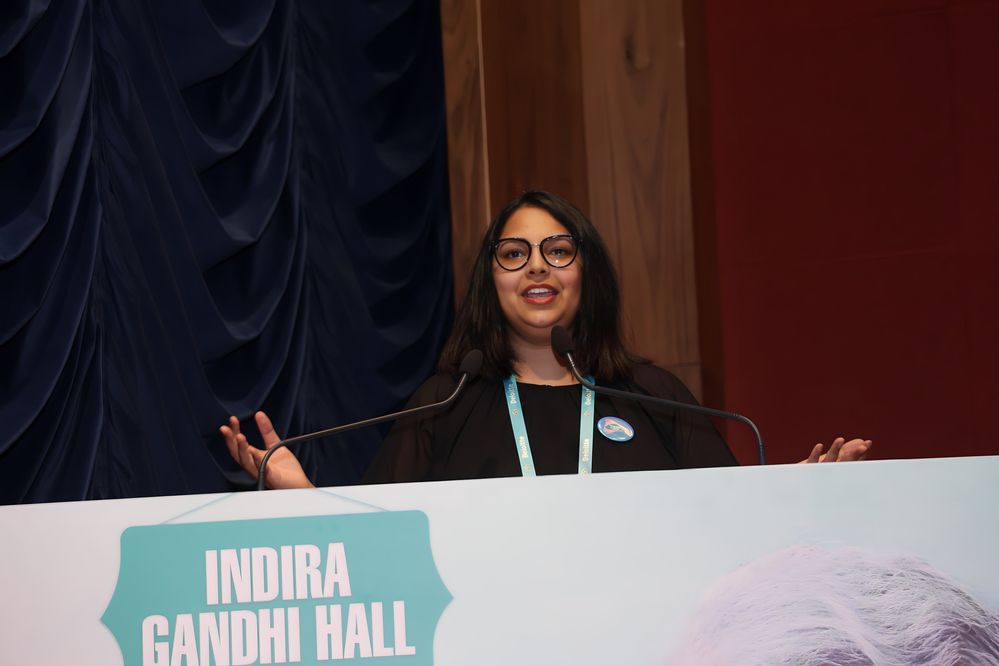
This year is already looking so bright, I have already presented a session at Philippines Dreamin, and I have started my new role this month onwards. For the upcoming months, I plan on getting some new certifications to upskill myself, run some more bootcamps, present a session at Dreamforce and organize at least one speed mentoring session each month.
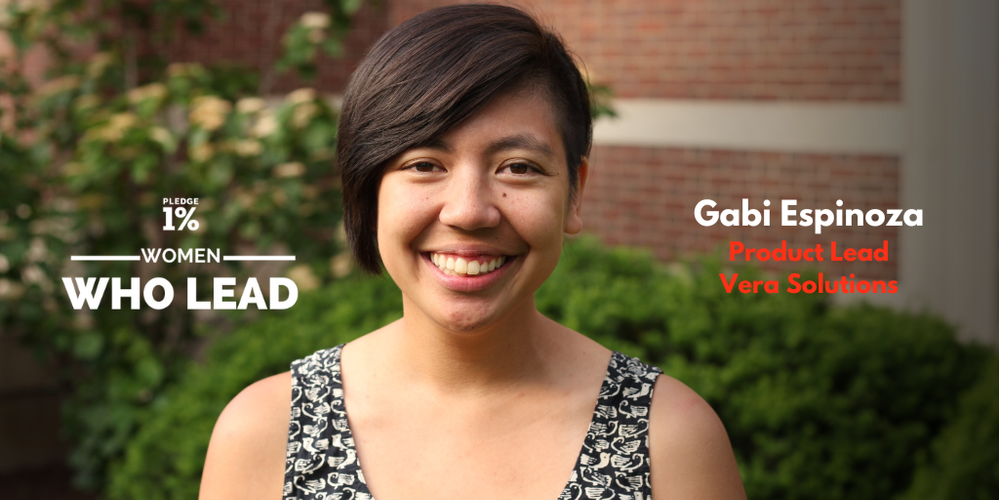
Gabriella (Gabi) Espinoza
Product Lead, Vera Solutions
Mumbai, India / Seattle, USA
If you could describe yourself in one word, what would that be and why?
Open. Whether it’s my mindset or my metaphorical door, I believe it’s crucial to create a space in which my teammates can feel comfortable to honestly share whatever is on their mind. My primary goal in leadership is to ensure my teammates feel empowered to navigate whatever challenge they face and to share whatever feedback they have.
Pledge 1% provides a framework for businesses to do good. Do you think it’s important for today’s corporate leaders to prioritize social impact? If so, why?
I think it’s absolutely important for corporate leaders to prioritize social (and, for that matter, environmental) impact. We have enough data now to fully understand the repercussions of business on both people and environment, whether from the supply chain, energy consumption, etc. With that knowledge, it’s imperative to continuously improve the role that business plays in society and in the environment.
What’s the best piece of advice you’ve ever received?
When I was early in my career doing admin at a nonprofit and feeling like I was falling behind my former university classmates, my manager comforted me by telling me that even she was still figuring her life out. Something clicked for me immediately to stop comparing myself with where my peers are at, and to simply forge ahead with what I want to achieve in life.
This year’s International Women’s Day themes are focused on investing in women and inspiring inclusion. What can we do to make today’s workplaces more equitable and inclusive for women?
First, we need greater intersectionality in DEI initiatives. By that, I mean we to increase visibility for women of color, transgender and nonbinary women, women from historically disenfranchised communities, and so forth. As Maya Angelou famously said, “The truth is, no one of us can be free until everybody is free.” It is every woman’s responsibility to work towards the equity and inclusion for all other women.
Second, I think it’s important to not ignore the role that men have to play in driving equity and inclusion. They also have the responsibility for making space for women to contribute and participate at the workplace, where women may otherwise not be present. Whether that’s actively sponsoring women to have a seat at the table or simply examining one’s own implicit biases, all of it helps to drive us towards greater equity and inclusion.
What advice do you have for women who are just starting their career?
Whatever you think you deserve in your career, you probably deserve more. I personally have struggled with low expectations of myself despite being a generally high-achieving person. It took a lot of mentorship and external validation before I fully started to comprehend what I deserve – and then to be able to actually ask for that.
“So whatever you think you deserve, wherever you think you’re at – be bold and ask for it.”
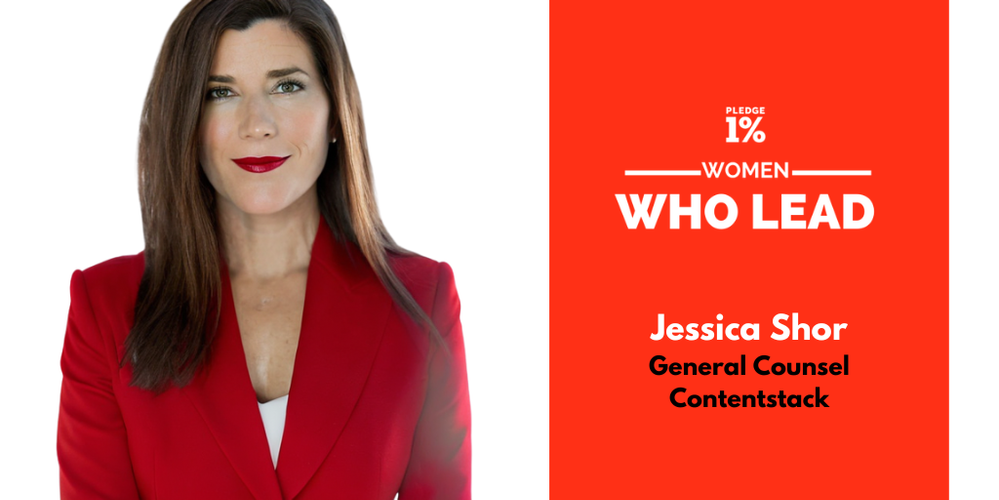
Jessica Shor
General Counsel, Contentstack
Golden, USA
If you could describe yourself in one word, what would that be and why?
Tenacious. I don’t believe in giving up or failure if it’s at all in my control. I also love solving problems even when they are outside of my “lane”. I once had a competitors offices raided by the Czechia police for theft of our IP. For me it comes down to fairness and equality, and I believe taking competitive information isn’t fair.
Pledge 1% provides a framework for businesses to do good. Do you think it’s important for today’s corporate leaders to prioritize social impact? If so, why?
Absolutely. I believe it’s critical for all individuals and organizations to do their part for equality, especially in our society today where we are so divided.
“Giving back and showing employees, customers and prospective employees that social impact is a critical part of who we are as an organization helps us keep growing our incredible culture and support our community.”
Do you give back to the community with your team and work? If so, what does this look like?
100%. For me, I live in Colorado and we have a group of employees here across different departments. We try to get together once a month and volunteer. We usually go to food for thought where we pack lunches for kids who might not otherwise have food for the weekend. It’s a great and easy way for us to come together and give back, especially in a remote environment. It’s nice to be able to get together.
What’s the best piece of advice you’ve ever received?
If someone is willing to give you feedback, it means they care so thank them.
This year’s International Women’s Day themes are focused on investing in women and inspiring inclusion. What can we do to make today’s workplaces more equitable and inclusive for women?
I’m the executive leader for our women’s ERG and I’m bringing in an amazing speaker and friend to talk to women about financial independence, negotiating for themselves and the value of equity.
What advice do you have for women who are just starting their career?
Always advocate for yourself. Decisions are made about you in rooms you aren’t in so you need to be your biggest champion.
What are you looking forward to this year? Are there any goals (personal or professional), activities, or experiences you are excited about?
Being more mindful with my time, body and family.
Pledge 1%’s #WomenWhoLead series celebrates female leaders who are paving the way for the next generation. While our featured leaders come from a variety of backgrounds and industries, they are united in their efforts to promote equality for all women in the workplace. We’ve asked them to share a bit about their journey to success, as well as lessons they’ve learned along the way.
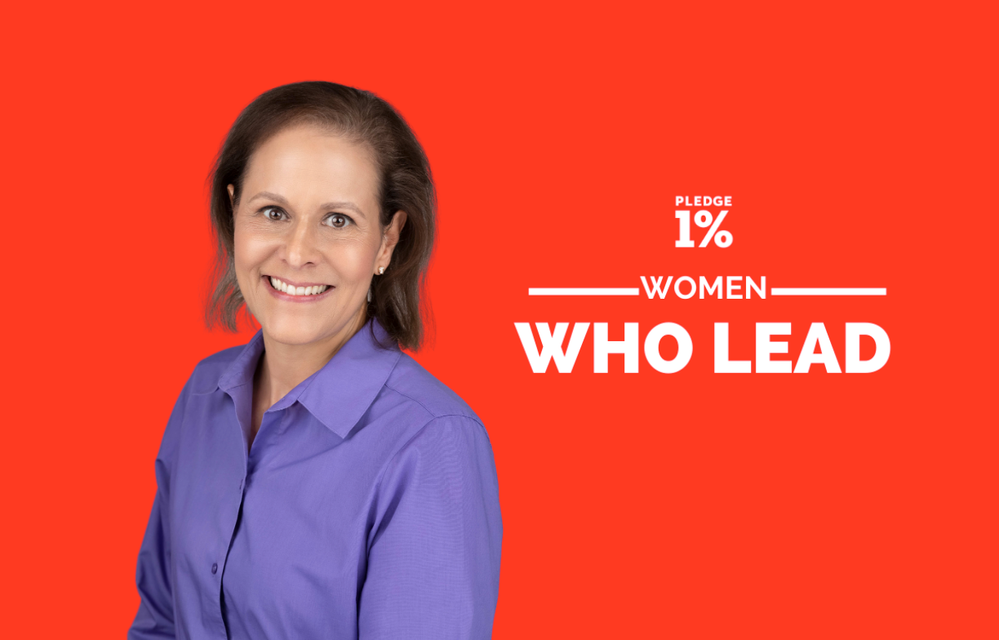
Jennifer Devening
Founder and CEO, YourHealth
Austin, Texas USA
What is your current role? Briefly describe in 1-2 sentences.
Besides overall management of YourHealth, I am an active Cancer Curator. I spend time talking with newly diagnosed breast cancer patients. I arm them with knowledge based on my 10-year battle, what I have learned from others who came before, and how to get through this life-changing event.
This year’s International Women’s Day theme is “Embrace Equity.” What does this mean to you? How can we build workplaces that are more equitable and inclusive?
Through my company YourHealth we embrace this every day by giving people, not just women, the ability to control and summarize their most critical health needs before an emergency happens. Our platform is consented based and you decide who to share your health information with. You are in control regardless of race or color, consumer, employee, or medical professional. Workplaces need to focus on better tools to make healthcare easier to manage.
Do you have any mentors or role models who have helped you on your personal journey?
Yes, my co-founder. He was a long-time mentor and advisor to me throughout my career in Silicon Valley and Austin. He was my litmus test for starting YourHealth. If I could convince him of my idea, I wouldn’t have started YourHealth.
What’s the best piece of advice you ever received?
Two things. In business, subscribe to the rule of 3. Always have an a, b, and c plan ready and pay that forward to your teams. Secondly, appreciate good health and find joy for yourself every day.
The past few years have brought many new and unprecedented challenges. What keeps you motivated or inspires you to stay optimistic?
That I am here 10 years later after being diagnosed with a chronic disease. As the rapper Pitbull says, “Every day above ground is a good day”. My passion is for changing healthcare so people/patients have control over their own health and wellness information. After all, isn’t healthcare supposed to be about the patient first?
Pledge 1% helps companies of all sizes and stages leverage their assets for social good. Why do you think it’s important that companies prioritize social impact? Do you have any specific stories or examples from your work or colleagues you can share?
Good health is not a given and from a young age we need to be taught how to keep and nurture it better. My inspiration for YourHealth came out of the untenable shock of how hard it is for any type of patient to consolidate medical records, medications, scans, etc. In any digital manner so that is with you 24/7 and when you need it the most. Healthcare is antiqued on every level.
If you could describe yourself in one word what would that be and why?
Tenacious.
Do you have any unique or useful life hacks to help get through your day?
The minute I think of something I have to get down, I write it down on Evernote. It is available to me digitally 24/7 and on all my devices. It keeps me on track and I am less likely to forget a detail.
Do you have any go-to apps or tools use love to use?
Yes. Evernote and Trello. Evernote keeps me organized and on task with my life, personally and professionally and Trello helps my colleagues and I navigate tasks from start to finish for all disciplines.
What are you looking forward to this year? Are there any goals (personal or professional), activities, or experiences you are excited about?
Yes. Grow my company and get YourHealth in the hands of as many people as I can, regardless of socio-economic status. Our first subscription is free to all. I want to be known for giving people control over their own health data, not providers or payers.
Pledge 1%’s #WomenWhoLead series celebrates female leaders who are paving the way for the next generation. While our featured leaders come from a variety of backgrounds and industries, they are united in their efforts to promote equality for all women in the workplace. We’ve asked them to share a bit about their journey to success, as well as lessons they’ve learned along the way.
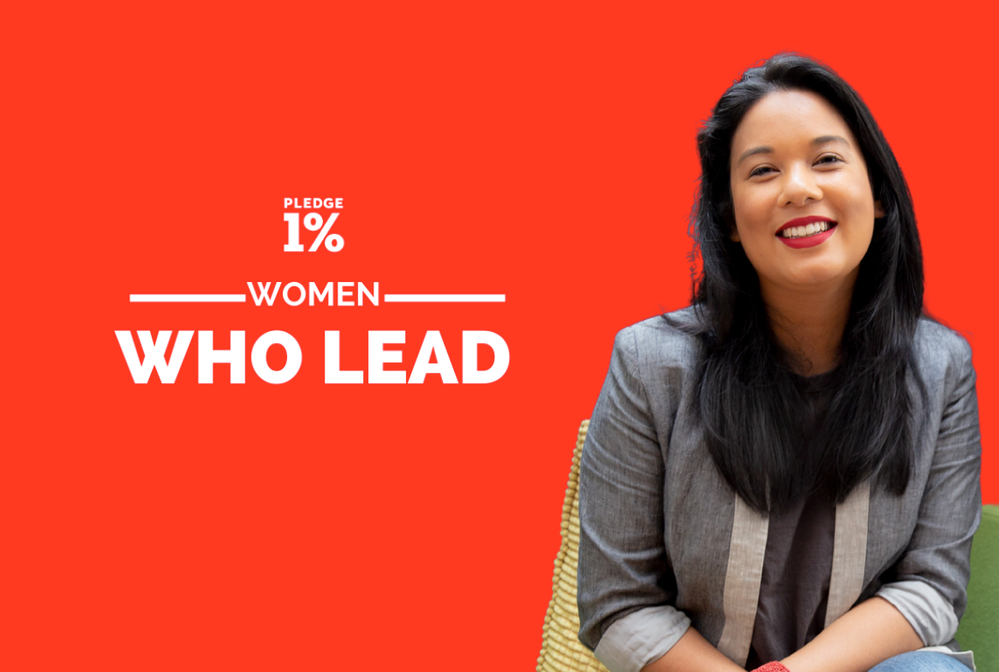
Amra Naidoo
General Partner, Accelerating Asia
Singapore / Thailand
What is your current role? Briefly describe in 1-2 sentences.
I serve as a general partner of Accelerating Asia, which is an early-stage venture capital firm focused on Asia Pacific.
This year’s International Women’s Day theme is “Embrace Equity.” What does this mean to you? How can we build workplaces that are more equitable and inclusive?
I think that equity means creating equal access to opportunities, while inclusion means creating spaces that are thoughtfully designed to enable equity. But how equity and inclusion are created should be ever-evolving. At the moment, in the startup and investment space, there are so many activities that are just noise and virtue signaling. There are so many mentor programs or networking events for women, or pitch events to get feedback on their startups. In order to really make a difference, I think we need to have a real conversation about the state of the ecosystem and put our money where our mouths are.
Case in point, I was recently considering attending a large conference for women fund managers where you could apply for the opportunity to pitch to investors for feedback. You would never see something like this at a typical investor conference where attendees are predominantly male – which given the nature of the industry, most attendees are. While I appreciate the effort by the conference organizers to create a platform for women to showcase their funds, I’m tired of feedback, tired of mentors, and tired of meaningless awards. I’m tired of being recognized as an “inspiring” female fund manager when female fund managers are considered a category of their own.
At this point, I believe that equity and inclusion means moving past labels. We should no longer call attention to the gender of a particular entrepreneur or investor, in much the same way we don’t label any other professional by their age, sexual orientation, or some other random personal attribute. Special programs to address under-representation are different from being labeled and bound by that label in your work. Excellence in any investing – or any kind of business activity – should not be bound by gender. If we want to build ecosystems, industries, and workplaces that are more equitable and inclusive, we need to do more than signal.
Do you have any mentors or role models who have helped you on your personal journey?
I don’t really believe in the whole mentor-mentee relationship for my personal life because I’ve always felt like there is a power dynamic and transactional nature of that kind of relationship. I also don’t think I’ve taken a very typical route in my career or personal journey and at each point in my life, I’ve needed or wanted different things. So I prefer to approach my relationships with people from a place of curiosity and pick and choose aspects of their lives or how they’ve dealt with certain situations as a framework for me to adapt to my own personal life. I really believe in surrounding myself with people who are doing interesting or different things and I actively seek these people out when I’m trying to learn something or solve a problem. They don’t need to be in the same industry as me, or at the same stage in their career, but I find energy in being around people who are truly passionate about their craft/ work/ life. I find that you can learn more from people who are not in your area with how they manage their work and their lives by potentially bringing across systems and ideas and adapting them to your own situation.
What’s the best piece of advice you ever received?
Your difference is your strength. Ten years ago, this kind of blanket statement would come across as any other general aphorism for self-empowerment. More research has shown that this idea is verifiably true: Organizations derive significant competitive advantage from being diverse. More diverse organizations perform better than less diverse organizations. On an individual level, people should celebrate what makes them different because this is what gives them an edge: They will recognize opportunities that others don’t, and view challenges from a different perspective. While I mostly speak from a professional lens, the idea that your differences are your strengths also applies to your personal life.
The past few years have brought many new and unprecedented challenges. What keeps you motivated or inspires you to stay optimistic?
Like many investors, we regularly back startups in business hubs like Singapore. Unlike other investors, we also make a concerted effort to back startups in emerging markets, including everywhere from Bangladesh to the Philippines. While there are undoubtedly more challenges in these markets – such as a still-developing business ecosystem and growing infrastructure – there are also many more rewards. Compared to a place like Singapore, a startup in an emerging market can more easily create exponential impact. That’s because their solution will not be merely an improvement over others as it would be in a developed market – it will often be leaps and bounds ahead of the legacy solution. With enough of this innovation, an emerging market rich with startups can leap ahead of its counterparts. We’ve seen this with Indonesia, we are seeing this with Vietnam, and we hope to see this in more emerging markets around the world. It’s easy to stay optimistic in this scenario: We’re not just investing in startups – we’re investing in the future of a country or region.
Pledge 1% helps companies of all sizes and stages leverage their assets for social good. Why do you think it’s important that companies prioritize social impact? Do you have any specific stories or examples from your work or colleagues you can share?
At Accelerating Asia, we believe that entrepreneurs are humanity’s greatest catalysts for positive change.
That statement is on our website and our collaterals, but it is one we really believe in and we try to live up to on a day-to-day basis as investors. We seek to support entrepreneurs, especially those who hail from underserved markets, such as Indonesia, Thailand, the Philippines, Myanmar, Bangladesh, and Pakistan.
Due to the nature of these markets, the entrepreneurs here are not just making a shiny app – they’re devising solutions that address major challenges in their country, including everything from transportation and healthcare to agriculture and small business. These solutions drive their citizens and economies forward.
Every company in Accelerating Asia’s portfolio addresses at least one sustainable development goal of the United Nations, and most address multiple SDGs. This alignment toward social impact is important because it ensures entrepreneurs remain user-centric in how they develop their products and services.
This user-centricity is evident in a cross-spectrum of our startups, who have not only enjoyed enormous business success, but who have clearly made a difference in their communities. In Bangladesh, iFarmer is extending finance to small farmers who would otherwise not have access to capital to grow their farms. In the Philippines, Beam and Go is making it easier for overseas foreign workers (OFWs) to provide key goods to their loved ones back home. In Thailand, Easy Rice is digitizing the quality assessment of staple food to improve sustainability in the supply chain. These are just three examples of why startups should prioritize social impact: Because these solutions are highly tailored to their end users, they put themselves in the best position to succeed and affect positive change.
If you could describe yourself in one word what would that be and why?
Determined. This word came to mind for three reasons: I am determined to guide the many brilliant founders in our portfolio as best I can; I am determined to produce winning investments for the limited partners who invest alongside us; and I am determined for our portfolio to affect change in Asia Pacific and beyond.
Do you have any unique or useful life hacks to help get through your day?
After experiencing burnout early in my career, which took a long time to recover from, I have two rules when I’m planning my day. First, I always fit in some kind of exercise. I used to do this 6 times a week. Since having a baby 3 months ago, I obviously had to take a break so I am working back up to this.
Second, despite the hustle culture prevalent in the startup world, I find energy in balance. I make it a point to spend time with my friends and family as well as get alone time. By setting aside this personal time, there is a palpable difference over the course of a day. I am more creative, productive, and fulfilled.
Because this work-life balance has been so beneficial to me, I try to promote this culture at Accelerating Asia. Our team members can take time off whenever they need, and we help them stay truly offline with an official calendar (so no one pings them when they should be rejuvenating). I would encourage others in my field to incorporate similar practices for themselves and their organizations if they can.
Do you have any go-to apps or tools use love to use?
Rather than name a flashy, new app, I would like to cite an old favorite: Google Apps, and in particular, Calendar. I am religious when it comes to scheduling not only professional activities, but also personal ones: I block off time with family and friends and even workout sessions with different color codes. This may seem like a small touch, but it really makes a difference in ensuring I live a balanced life. During a normal workday, it’s not enough to rely on good intentions to go to the gym or spend time with your loved ones. When things get busy at work, it will be easy to skip out on these personal activities. Scheduling them in advance keeps me committed and prevents ad hoc interruptions that may arise. So when I return to work from my “me” time, I am more energized than ever.
What are you looking forward to this year? Are there any goals (personal or professional), activities, or experiences you are excited about?
I’ve been off work for several months now due to maternity leave. I’m of course excited to get back full-time, and deal with the challenges of now attending to three babies: my dog, my newborn, and my first baby (in a manner of speaking), Accelerating Asia.
Personally, I’m looking forward to getting back into the gym and carving out me-time and learning how to balance the changes at home and continuing to grow Accelerating Asia. My return at Accelerating Asia also comes at a major crossroads. Our portfolio of more than sixty plus startups has collectively reached major revenue, growth, and valuation milestones, and our team that supports them has grown exponentially as well. When I return, I expect to be able to perform less operational work and focus on the bigger picture of becoming the best early stage venture capital firm in Asia Pacific. When promising young founders in the region need support, I want our name to be top of mind. This is of course a bold ambition given the many excellent investors operating here – I’m excited to work on the initiatives and programs that I think could bring us to this next level.