Michelle Baltrusitis
Head of Community & Social Impact, Fiverr
📍New York, United States
What qualities do you think leaders need to have in today’s world?
We’re living in a world where knowledge is instantly accessible and AI can execute many technical tasks, which means the qualities that set leaders apart are increasingly human. Emotional intelligence is essential. It allows leaders to build trust, read nuance, and understand what truly motivates people. Leaders with high EQ regulate their own reactions and respond thoughtfully under pressure. They create environments where people feel heard and valued.
In moments of change or uncertainty, that ability to lead with empathy and self-awareness directly impacts morale, collaboration, and long-term performance. Discernment is just as critical. With constant inputs and rapid innovation, leaders must exercise strong judgment. Discernment is about knowing what’s aligned with your values and strategy, what to prioritize, and when to move versus when to pause. It’s the ability to make sound, principled decisions even when the information is complex or incomplete.
If you had to describe your leadership style in one word, what would it be and why?
If I had to describe my leadership style in one word, it would be intentional. I try not to lead reactively or just for momentum’s sake. I’m thoughtful about where we’re going, why we’re going there, and how decisions impact the people around me. Whether it’s community strategy, partnerships, or broader initiatives, I value clarity, alignment, and purpose, making sure what we build actually serves the people it’s meant to support.
How does your company’s Pledge 1% program help shape the kind of workplace culture you believe in?
Pledge 1% reinforces that impact isn’t separate from the business, it’s part of how we operate. It helps shape a culture where purpose sits alongside performance and where giving back is embedded into how we think about growth. That’s how social impact becomes sustainable in a public company, when it’s woven into the foundation of the business rather than layered on top.
This year marks the 7th year of Pledge 1%’s #WomenWhoLead campaign. How can companies champion and support female leadership?
As someone still relatively early in my leadership journey, I’ve seen how much advocacy and access matter. I’ve grown quickly because I had incredible champions — including strong male leaders — who brought me into rooms before I felt fully ready, trusted me with meaningful responsibility, and advocated for me when I wasn’t there to do it myself. That kind of sponsorship materially changes a career. When companies institutionalize that level of belief, access, and accountability, advancement becomes structural rather than situational and that’s what creates real momentum for young women who are still building confidence and credibility.
If you could write a note to your younger self on her first day of work, what would it say?
On my first day, I’d tell myself: you don’t have to treat every single interaction like it’s a final exam on your worth. Caring deeply is a strength, but the pressure to be impressive, perfectly prepared, and exceptional at all times is something you’re putting on yourself. Most people are figuring it out as they go, even the ones who don’t look like it. When imposter syndrome shows up, it’s not proof that you’re behind; it’s usually a sign you’re in a room that’s stretching you. And when someone praises you at work, don’t immediately assume they just aren’t seeing the flaws or the parts you think you could’ve done better. Use it for what it is: evidence you’re doing a good job!
Aida Rodriguez
Director of Data Insights, Appfire
📍Malaga, Spain
What qualities do you think leaders need to have in today’s world?
I believe today’s leaders need three essential qualities: integrity, strategic thinking, and a learning mindset. Integrity is fundamental because trust is fragile; consistency between words and actions, ethical behavior, and honesty are non-negotiable. Leaders must also think strategically, looking beyond daily operations to identify patterns, anticipate trends, and connect short-term actions to long-term goals. Finally, with technology, markets, and societal expectations evolving so quickly, leaders need to be continuous learners and foster that same culture of curiosity and growth within their teams.
If you had to describe your leadership style in one word, what would it be and why?
If I had to choose one word, it would be empowering. I believe leadership is less about control and more about creating the conditions for others to succeed. An empowering leader builds trust, shares context instead of just instructions, encourages ownership, and supports growth. The goal is not to be the smartest person in the room, but to help others bring their best thinking forward. Empowerment also creates accountability — when people feel trusted and valued, they tend to step up, not step back.
How does your company’s Pledge 1% program help shape the kind of workplace culture you believe in?
Pledge 1% turns values into action and reinforces a culture of accountability and collective responsibility. It ensures that giving back is not a one-off initiative, but a structured commitment embedded in how we operate. At the same time, it brings people together across roles and geographies around shared causes, creating alignment and a sense of belonging. It signals that we measure success not only by what we build, but by how we contribute together.
This year marks the 7th year of Pledge 1%’s #WomenWhoLead campaign. How can companies champion and support female leadership?
Companies can champion and support female leadership by embedding equity into their structures and culture, backed by visible commitment from the top. This means implementing transparent promotion criteria, setting measurable representation goals, conducting regular pay equity reviews, and holding leaders accountable for progress. At the same time, organizations must foster inclusive environments where different leadership styles are valued, psychological safety is prioritized, and biased behaviors are actively challenged. Lasting change happens when executive leadership clearly signals that advancing female leadership is a strategic business priority, not just an initiative, and consistently allocates the attention and resources to support it.
If you could write a note to your younger self on her first day of work, what would it say?
You don’t need to be as perfect as you think you do. Focus on progress, not perfection, and trust your skills, judgment, and work ethic. Speak up sooner and don’t underestimate the value of your perspective — you deserve a seat at the table. Most importantly, remember that a career is a marathon, not a sprint. You don’t have to prove everything at once; confidence and impact are built over time through learning, consistency, and showing up.
Sveta Dawant
Senior Vice President, Head of Academy Business, Guild
📍Denver, CO
What qualities do you think leaders need to have in today’s world?
Adaptability and Humanity. We’re living in a moment of relentless change. The leaders who are thriving aren’t the ones with all the answers; they’re the ones who ask the hard questions, recalibrate quickly, and bring their teams along for the ride. The relentless pace of change is going to come with tough situations and choices – running the marathon rather than the sprint will require keeping humanity and empathy front and center.
If you had to describe your leadership style in one word, what would it be and why?
Grounded – is the word my teams have most frequently used. I have a steady presence driven by strong conviction that challenges are best faced head-on.
How does your company’s Pledge 1% program help shape the kind of workplace culture you believe in?
Guild’s Pledge 1% commitment helps create a culture where purpose and performance are intertwined. It sets the expectation that impact isn’t separate from the work and is a measure of how well we’re doing it. I believe in building teams that think beyond immediate outcomes and consider the broader systems we’re influencing. Pledge 1% reinforces that mindset, encouraging us to lead with intention and ensure that as we grow, the communities around us grow too.
This year marks the 7th year of Pledge 1%’s #WomenWhoLead campaign. How can companies champion and support female leadership?
Pledge 1% is a powerful framework because it asks companies to commit and not just aspire. That accountability is everything. Companies need to create cultures where women don’t have to choose between ambition and humanity. Where advocating for your team isn’t seen as “soft,” where taking parental leave is supported, where leading with empathy is recognized as a strategic strength.
I also believe now companies need to start seeing AI literacy as a gender equity initiative. World Economic Forum estimates that only 22% of AI professionals globally are female. If companies aren’t actively bringing women into AI strategy, AI governance, and AI-adjacent roles right now, they’re going to bake bias into the next decade of technology, and widen an already serious gap. Upskilling women in AI can’t wait.
If you could write a note to your younger self on her first day of work, what would it say?
Dear younger self, You’re going to find your footing as a calm, confident leader in a world that is continuously changing. Learn early that your instincts are data. The moment you feel something is off , or have conviction in an idea, that feeling is information worth noting. Practice honing and trusting those instincts. You’re going to make mistakes. And get feedback. Good. That’s the fastest education you’ll ever get, and surround yourself with people who will give you honest critiques directly. The more senior you become, the more important that is.
Oh and you’re going to spend a lot of energy trying to prove (mostly to yourself) that you belong in certain rooms or conversations. You don’t need to. You already do. Enjoy the ride, prioritize the people who are on it with you. P.S. don’t buy too many skinny jeans – they go out of style far too quickly.
Anjali Jha
Social Impact Lead- India, o9 Solutions
📍Bangalore, India
What qualities do you think leaders need to have in today’s world?
In today’s world, leaders must demonstrate purpose-driven thinking, along with an agile and learning mindset, to navigate a constantly changing environment and drive sustainable, responsible growth.
If you had to describe your leadership style in one word, what would it be and why?
Empower- I believe true leadership is about empowering others to grow by providing the right opportunities, guidance, and support to help them unlock their full potential. By fostering a culture of trust, collaboration, and purpose, I strive to empower individuals to take ownership, innovate, and drive meaningful change both within the organization and in the communities we serve.
How does your company’s Pledge 1% program help shape the kind of workplace culture you believe in?
At o9 Solutions, our Pledge 1% program plays a meaningful role in shaping a culture rooted in purpose and collective impact. Through this initiative, we actively cultivate a spirit of philanthropy and volunteering, encouraging employees to contribute not just financially, but also through their time, skills, and passion. It helps create a workplace where senior leaders and young employees who would become our future leaders, embrace the joy of giving, whether through small acts of kindness or large-scale initiatives. This fosters a culture of empathy, shared responsibility, and purpose, aligning individual values with our broader commitment to social impact.
This year marks the 7th year of Pledge 1%’s #WomenWhoLead campaign. How can companies champion and support female leadership?
Companies can meaningfully champion women’s leadership by intentionally designing systems that enable women to rise, lead and thrive. This means creating equitable opportunities for growth and visibility, building inclusive policies that support work–life integration and fostering safe, bias-aware workplaces where women’s voices are heard, respected and valued. It also requires a strong commitment to pay equity, transparent promotion pathways and equal access to leadership roles- ensuring women are not just present at the table, but empowered to shape decisions and drive impact.
If you could write a note to your younger self on her first day of work, what would it say?
Dear Younger Me, Always walk with confidence. Your voice, your values, and your perspective matter more than you realize today. Never be afraid to ask questions or share your ideas. There will be challenges along the way, but each one will strengthen your resilience and shape the leader you are becoming. Stay grounded in integrity, lead with empathy, and never underestimate the power of consistent effort. Most importantly, trust your journey, you are capable of creating an impact far greater than you can see right now.
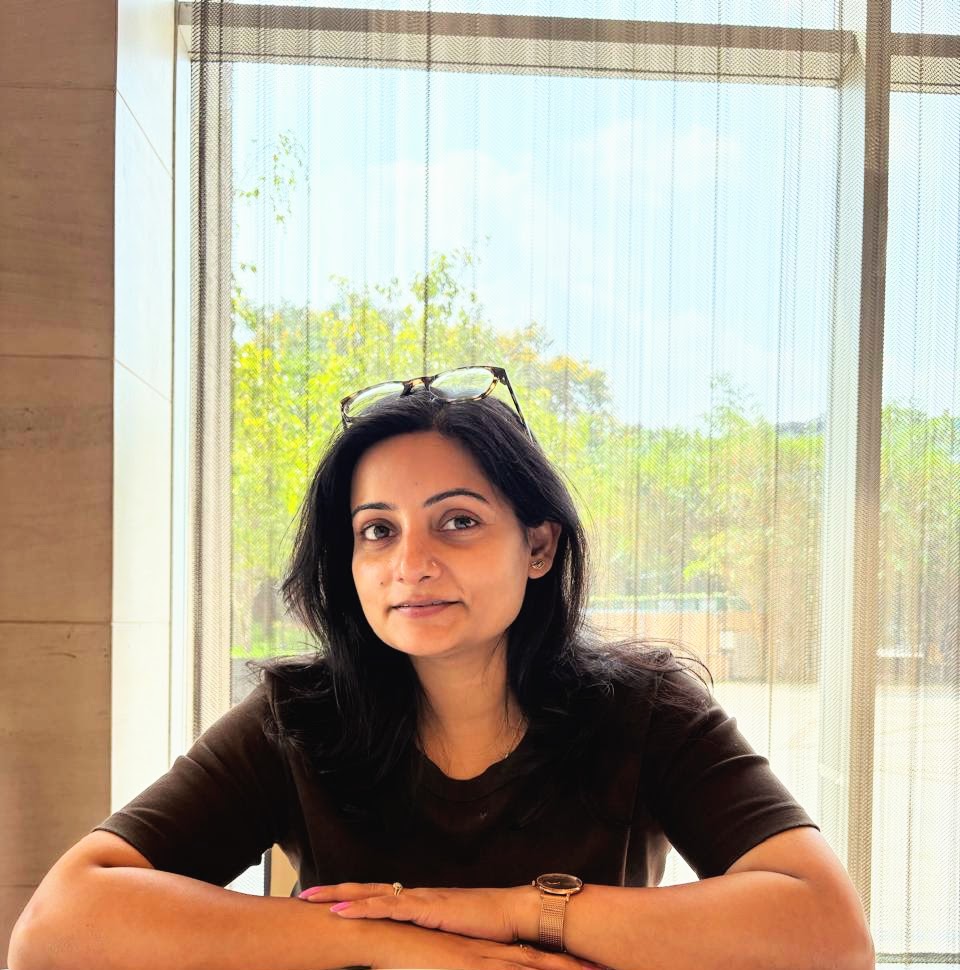
Rebecca Port
Chief People Officer, Okta
📍San Francisco, California (USA)
What qualities do you think leaders need to have in today’s world?
Curiosity and adaptability. The world is changing, and as we lead through that change, empathy and keeping an open mind will be more critical than ever before.
If you had to describe your leadership style in one word, what would it be and why?
Catalytic. As a catalytic leader, I think in systems and endeavor to create momentum, raise ambition, and make others better.
How does your company’s Pledge 1% program help shape the kind of workplace culture you believe in?
Giving back is woven into the fabric of Okta’s culture, championed by our leadership from day one. Since our founders took the 1% Pledge, our employees have actively participated in Okta for Good through dedicated giving and volunteering, all driven by a shared vision: building a more secure world where everyone can belong and thrive. In an era of complex, global challenges, coming together to support our communities doesn’t just make an impact—it builds a stronger, more collaborative, and more resilient workplace culture.
This year marks the 7th year of Pledge 1%’s #WomenWhoLead campaign. How can companies champion and support female leadership?
To champion women in leadership, formal mentorship, sponsorship, and transparent promotion pathways are the bedrock, but they are just the starting point. Holistic support requires an acknowledgment that ‘female leadership’ isn’t a monolith.
As a working mother, my career journey looks different from someone who isn’t a caregiver; likewise, a woman of color will have a very different experience in the corporate workforce than I do. Our job is to proactively reduce structural barriers, ensuring that when a woman earns her seat at the table, she isn’t the only one there.
Finally, we must celebrate authenticity and create a culture of belonging where leaders don’t have to conform to be perceived as capable. We don’t want more of the same—we want the unique perspectives that drive true innovation.
If you could write a note to your younger self on her first day of work, what would it say?
Dear Younger Me,
You don’t have to work so hard to deserve your place. I know how much you want to prove yourself. I know how often you question whether you belong. You think if you achieve enough, prepare enough, push enough, the doubt will finally disappear. It won’t. Belonging doesn’t come from proving. It comes from accepting that you are already enough.
Be ambitious — that fire in you is real and good. It will carry you further than you can imagine. But please learn this sooner: you do not have to be harsh with yourself to be excellent. Self-compassion is not lowering the bar. It is giving yourself the steadiness to clear it. Speak to yourself with the same kindness you so easily offer others. And when you walk into rooms that feel intimidating, choose gratitude instead of fear. Instead of asking, “Do I deserve to be here?” Ask, “How lucky am I to be here — and how can I make this space better?” Gratitude will soften your edges. It will replace defensiveness with generosity. It will allow you to contribute instead of compete. And that energy — warmth, steadiness, belief — will quietly change every room you enter.
Do not forget where you came from. The girl from Hull. The moves across countries. The moments of feeling new, unsure, different. Those experiences are not something to outgrow — they are the roots of your empathy. They will make you a leader who understands people, not just performance. Hold tightly to your relationships. The mentors, the friends, the family who ground you.
Success is not a solo sport and having people around you, who you love and love you will help will matter infinitely more than any title. Be kind. To yourself. To others. Especially when it’s hard. And when you climb — reach back. Lift as you climb. Notice who is just behind you and offer a hand. Create space at the table. Use your voice to widen the path. The measure of your success will not only be what you build, but who you help rise.
Slow down enough to feel your life as it unfolds. The laughter. The chaos. The ordinary, beautiful moments. Presence is not a distraction from achievement — it is the point of it. Be bold. Be grateful. Be kind. May you climb high, stay grounded, and always use your strength to lift others.
Love, me
Neha Sampat
Co-Founder and CEO, Contentstack
📍Austin, United States
What qualities do you think leaders need to have in today’s world?
Clarity, empathy, and courage. Clarity to cut through noise and focus your energy on what actually matters. Empathy to remember that while you’re building, people are walking that path with you. And courage to step into uncharted territory and create the path instead of waiting for one to appear. Pioneers don’t look for paved roads, they build them.
If you had to describe your leadership style in one word, what would it be and why?
Focused. I’m pretty disciplined about what we say yes to, and even more disciplined about what we don’t. A lot of leadership is just protecting the team from unnecessary noise.
How does your company’s Pledge 1% program help shape the kind of workplace culture you believe in?
I’ve always believed business can be a force for good. Pledge 1% turns that belief into action. It reminds our team that growth and generosity can scale together.
This year marks the 7th year of Pledge 1%’s #WomenWhoLead campaign. How can companies champion and support female leadership?
Recognition is powerful. To build on it, companies need to pair visibility with opportunity: real decision-making authority, access to revenue-driving roles, and executive accountability for advancement. When structure supports ambition, leadership diversifies naturally.
If you could write a note to your younger self on her first day of work, what would it say?
Learn the business. Not just your role, the whole business. The sooner you understand how decisions get made, the sooner you’ll be ready to make them.
Theia Gabatan
Grant Programs and Impact Lead, Blackbird Foundation
📍Brisbane, Australia
What qualities do you think leaders need to have in today’s world?
Empathy, adaptability, and strong conviction.
If you had to describe your leadership style in one word, what would it be and why?
I’d say curiosity. I think being curious about the problems I’m solving, being curious about different solutions, and being curious about people and their ideas has served me really well. Asking good questions and seeking out what is true also means you can make better decisions that aren’t purely based on emotion alone.
How does your company’s Pledge 1% program help shape the kind of workplace culture you believe in?
Our mission at the Blackbird Foundation is to unleash creativity in young people. To us, creativity can take many forms and shapes – we don’t think of it as existing squarely in the domain of the arts. Creativity can be evident in startups, in technology, in finance, in science, in sports, and in many other fields and industries. Through our work, we grant creative individuals who are bringing their passions to life. We spotlight these stories with our team, and over the past few years, we’ve seen a real shift in how our workplace views and values creativity. We’ve also seen a renewed and genuine interest in supporting young people to be creative. There’s much more enthusiasm and dialogue around how to support and nurture creativity and passion projects in young people.
This year marks the 7th year of Pledge 1%’s #WomenWhoLead campaign. How can companies champion and support female leadership?
I can only speak to my experience, but what has been true for me at Blackbird and the Blackbird Foundation is that the best way to champion and support emerging female leaders is simply to give them the space to lead their own projects and to do them in their own way.
If you could write a note to your younger self on her first day of work, what would it say?
Back yourself, trust your instincts, and do what feels right. Your first instinct is probably right – don’t talk yourself out of it.
Hanna Patterson
Senior Vice President, Employer Partnerships, Guild
📍Austin, TX, USA
What qualities do you think leaders need to have in today’s world?
We are living through some really challenging times across so many dimensions right now, and the expectations for the role leaders play have never been higher. The pace of change is relentless. Teams are navigating ambiguity, complexity, and often very personal stressors outside of work. In moments like this, leadership has to be about presence rather than performance. To meet this moment, I believe leaders need to be authentic, transparent, inspiring, and trustworthy.
Authentic, because people can tell when you’re performing versus when you’re grounded in who you are. Teams need leaders who are clear about their values, willing to admit what they don’t know, and consistent in how they show up. Transparent, because clarity builds stability. When priorities shift or hard decisions need to be made, bringing people along in the “why” creates alignment and reduces unnecessary fear. Even when the answer is “we don’t have it yet,” honesty builds confidence. Inspiring, because the work we do needs to feel connected to something bigger. Leaders have a responsibility to continually connect day-to-day execution to purpose, to remind teams that what they’re building matters and that their contributions are meaningful. And ultimately, trustworthy. Trust is the foundation that makes everything else possible. It’s built through follow-through, through making thoughtful decisions, through listening deeply, and through creating space where people feel seen and valued. Without trust, strategy doesn’t stick and culture doesn’t scale.
If you had to describe your leadership style in one word, what would it be and why?
Galvanizing. I don’t just set direction but I aim to energize people around what’s possible. I believe my leadership brings momentum and shared ownership paired with strategic rigor that makes inspiration durable.
How does your company’s Pledge 1% program help shape the kind of workplace culture you believe in?
Guild’s Pledge 1% commitment resonates deeply with me because it puts action behind something I’ve always believed: the most meaningful work a company can do is create real opportunity for real people. Knowing that a portion of what we build is reinvested into expanding access for working adults makes our work feel bigger than any single program or partner and part of a broader commitment to unlocking opportunity at scale. That belief connects directly to my personal “why.” I joined Guild to ensure that millions more people have access to education and support to reach their full potential. Pledge 1% ensures impact is woven into how we grow, not treated as something separate.
This year marks the 7th year of Pledge 1%’s #WomenWhoLead campaign. How can companies champion and support female leadership?
There are a few key things I believe companies can do to meaningfully grow, develop, and support female leadership, and importantly, these can’t be symbolic efforts. They have to be structural and sustained.
First, embrace different leadership styles. For a long time, leadership has been defined in fairly narrow ways. This has often rewarded the loudest voice in the room or a single model of executive presence. Some of the most effective leaders I’ve worked alongside lead with steadiness, deep listening, strategic rigor, or quiet conviction. Companies need to broaden the definition of what strong leadership looks like and actively value diverse approaches. When we do that, we don’t just support women, we build better organizations.
Second, provide stretch opportunities. Growth doesn’t happen in comfort zones. Women leaders need access to high-visibility projects, cross-functional initiatives, and moments that require them to operate at the next level before they feel 100% ready. I’ve seen firsthand how transformative it is when someone is trusted with real responsibility, and not just incremental work, but meaningful scope. That trust builds confidence and capability in equal measure.
And third, advocacy from other leaders. Sponsorship matters. Leaders in positions of influence need to actively advocate for women in rooms where decisions are being made. Advocacy is different from mentorship. It’s using your voice and credibility to create opportunity for someone else.
If you could write a note to your younger self on her first day of work, what would it say?
Hanna, You’re about to begin something that will feel both exciting and completely disorienting. The jargon will be overwhelming. You’ll ask yourself more than once why you took this job and how you were ever offered it in the first place. That voice? It’s just self-doubt. Don’t let it lead. Stay curious. Ask the questions. Trust yourself. Lead with kindness. Keep learning, even when it’s uncomfortable. The way you show up for people will matter more than you know. This first day will become the foundation for a career that is more meaningful and impactful than you can see right now. You’ve got this.
Shayoni Mukherjee
Global Head of Partnership & Alliances, Encora
📍Bangalore, India
What qualities do you think leaders need to have in today’s world?
Today’s leaders must be ecosystem thinkers, not just decision-makers. In a world shaped by AI and constant change, leadership is about collaboration, adaptability, and the ability to connect technology to real human outcomes. The most impactful leaders build trust across partners, empower diverse voices, and turn innovation into meaningful value for customers and communities.
If you had to describe your leadership style in one word, what would it be and why?
Ecosystem-Driven. I believe leadership today is about building bridges – aligning partners, platforms, and people to create value that no single organization can achieve alone.
How does your company’s Pledge 1% program help shape the kind of workplace culture you believe in?
Pledge 1% reinforces the belief that business success and community impact should grow together, not separately. It helps create a culture where innovation is guided by purpose, encouraging teams to contribute their time, expertise, and technology to drive meaningful change. For me, it reflects the kind of workplace we strive to build at Encora – one that values collaboration, responsibility, and using our ecosystem to create positive outcomes beyond business.
This year marks the 7th year of Pledge 1%’s #WomenWhoLead campaign. How can companies champion and support female leadership?
Companies can champion female leadership by moving beyond intent to intentional action – creating clear pathways to leadership, investing in mentorship and sponsorship, and ensuring women have a seat at decision-making tables. True support comes from building inclusive ecosystems where diverse perspectives are not just welcomed but seen as essential to innovation, growth, and customer impact. When organizations empower women to lead, they strengthen collaboration, resilience, and the ability to solve complex challenges.
If you could write a note to your younger self on her first day of work, what would it say?
Trust your voice – it will become your greatest asset. Don’t shrink yourself to fit rooms; grow until the room expands with you. Stay curious, build relationships with intention, and remember that leadership isn’t about having all the answers — it’s about creating space for others to rise alongside you.